

The Real Sparta Examined Through 12 Spartan Myths & Truths
 Reading Time: 16 minutes
 Popular conceptions of ancient Greece are still influenced by Spartan myths of austere supermen governed only by martial necessity. Ancient Sparta was never that simple. From political restraint to religious duties, Sparta had internal safeguards and opposition, as well as severe social inequalities that allowed the military system to exist. Few Spartans bothered with records, so most information about Spartan life comes from other Greek cities that envied, feared, or loathed them. Each perspective added to the mystery of Sparta.
Myths grew as successive authors uncritically cited older sources, until Roman philosophers projected their ideals onto the noble example of Sparta. Then Hollywood selected only the most visually striking legends, crafting entertainment that’s often mistaken for history. In this article, we tackle 12 of the largest Spartan myths about these ancient Greeks head-on. For every myth, we provide a corresponding fact. This way, you can easily compare each popular claim to the historical evidence and see exactly what’s true, what’s exaggerated, and what’s false.
Who Were the Spartans?
Sparta was one of many Greek city-states located in the southern Peloponnese, specifically in the region known as Laconia. Their influence extended throughout that peninsula, with centers of power in the valleys of the Eurotas River. Sparta grew into a position of dominance during the Archaic and Classical periods, ruling from roughly the 600s to 300s BCE, though she would remain one of Greece’s most famous city-states long after her heyday. However, unlike Athens, her glory was not built on walls nor ships. Rather, she constructed hers on land, discipline, and control.
Not all who lived under Spartan dominion were considered “Spartan.” At the top of the societal hierarchy were the Spartiates, those who were full citizens of the state. These people, a minority to begin with, were the ones who possessed political rights. They were expected to focus on military training and serving the state above all else. To most outside of Laconia, these would be the “Spartans” they were referring to. However, they were only one part of a larger society.
Perioikoi, which literally translates to “those who dwell around”, made up the next ring of society. These individuals lived in surrounding villages and worked as craftsmen and merchants. They could serve in the military and were expected to defend Sparta should the need arise, but they were not political equals to the Spartiates.
Helots were a large class of forced, non-free laborers. Tied to the land, they worked farms and provided food for their Spartan masters. This is what allowed Sparta her military might: because the helots produced food and other necessities of daily life, Spartan citizens did not have to.
Spartan strength was built not only on valor but also on a societal system that allowed one class to serve in the military by subjugating another.
12 Spartan Myths and 12 Truths
Myth 1: Every Spartan was a full-time soldier
Truth 1: Only Spartiates had full status; most labor was done by others
When people think of Sparta, they often imagine everyone being soldiers. From childhood, they train for war and do little else. It’s a nice narrative, and the imagery aligns with what most people picture when they think of ancient shields and legions. It also conveniently reduces an entire civilization into one line on a job application, as if Sparta didn’t need farmers, builders, merchants, cooks, etc.
Being “Spartan” was the exclusive status of the Spartiates. These were citizens with political privileges who were expected to maintain military readiness. But that lifestyle only worked because others did the jobs that allowed Spartiates to train. Helots, who were essentially the state’s farmhands, provided much of the produce needed to feed Laconia. Various perioikoi communities met most of the skilled labor and manufacturing needs. Spartan military might was very real, but it didn’t spring up in a vacuum. Society was structured so that labor and privilege were divided.
Even ancient authors who praised Spartan order knew this. Their military ethic was possible because so much of the responsibility was placed on the state’s subjects. That’s why this myth falls apart. Not because Spartans didn’t spend all day, every day training for war, but because it ignores the people who built that economy.

Myth 2: Sparta was purely a “warrior society” with no culture
Truth 2: Sparta had music, poetry, religion, and festivals
One myth about Sparta suggests that it had no culture: that Sparta was a city filled with nothing but warrior training. Books, art, music—they didn’t exist. Only drills, discipline, and stifling silence. It paints Sparta as Athens inverted, a city that replaced culture with brute force. It also neatly complements our ideals of “pure toughness.”
But Spartan life did have beauty, rhythm, and a rich religious life. Spartans sang and danced as part of public ceremonies. Dance and choral performance played an important role in civic religion. Sparta hosted pan-Hellenic religious festivals, a mixture of worship, competition, and entertainment. Religion dictated calendars, social responsibilities, and public life—not simply personal faith.
The Spartans even created poetry of their own. They were known for having unique forms of musical expression. Ancient authors connected Spartan society to orderly choruses and communal education in song. And much of that famous discipline was channeled through culture—implemented in the form of drumming, dancing, and group recitations that taught unity. Spartans lived militarized lives. But they were not devoid of culture. Spartan culture typically aimed to strengthen the bonds of community.
Myth 3: Spartans trained like modern special forces from birth
Truth 3: The agoge was harsh, but varied over time and wasn’t universal
One persistent myth tells us that Spartans were trained as warriors from birth, leaving home just as capable fighters as any modern special forces soldier. They supposedly entered a never-ending process of selection and training that prepared them to dominate opponents on the battlefield. One image sells books and headlines easily: from babyhood, Spartans were molded into brutal killers. It’s also deeply misleading. Despite centuries of warfare, Spartans had a society outside the barracks. They experienced childhood and old age. Families mattered. Wealth and poverty mattered. Rank mattered. Everything does until you describe an entire people by a single life stage.
While life in the agoge, the state-mandated training program, was difficult and Spartan training methods were communal, standardized, and intentionally grueling, training didn’t apply to everyone who lived in Sparta. It was mostly reserved for Spartiates, the privileged citizen class. You’ll often hear the agoge described as a sort of sieve—a way of winnowing down who could legitimately claim the title of Spartan. An old saying has it that Sparta didn’t breed heroes; it bred veterans. There’s something to that. If you could make it through agoge, you weren’t necessarily champion material, but you were fit, disciplined, and totally loyal to the state.
Equally importantly, however, the agoge wasn’t stagnant or unchanging. Spartan institutions changed over the centuries; training methods could vary based on politics, demographics, and warfare. Likely, some young boys had drastically different experiences based on family prestige and local circumstances. So no, the myth isn’t inaccurate because Spartan military training was soft – it most certainly was not. The myth is wrong because it portrays Sparta as a single, homogeneous boot camp that everyone attended their entire lives.
Myth 4: Spartans were always outnumbered but unbeatable
Truth 4: Sparta won many battles, but suffered major defeats too
One myth about Sparta is that they were always outnumbered, yet still never defeated. As if every battle were a noble last stand and every result heroic. It makes Spartan history into feel-good object lesson: discipline conquers quantity. It also encourages our contemporary tendency to treat Thermopylae as “normal” Spartan experience, when it was anything but normal, chosen for remembrance as much for military reasons as for its own sake.
The fact is that Sparta did win many battles. Sometimes, through training, cohesion, and good leadership, battles were their own kind of won. But Sparta also lost big. Hard losses that punctured their mystique. At Sphacteria in 425 BCE, Spartan hoplites surrendered. It was such a shocking outcome that the world stopped to consider how Sparta might not only be defeated, but compelled to submit. At Leuctra in 371 BCE, the Spartans were crushed by their enemy, Thebes, ending Spartan hegemony in Greece.
This matters because these examples show that Sparta was a normal state with limits, not an unstoppable juggernaut. Terrain, allies, demographics, and leadership all affected results. Spartan power was often overwhelming, but never absolute. The lesson there is far more helpful than any myth. Discipline can help. No society always inevitably wins, and reputations are fragile and can be overturned when variables change.

Myth 5: Thermopylae was typical Spartan warfare
Truth 5: Thermopylae was exceptional; most wars were strategic campaigns
The Thermopylae myth presents Spartan warfare as though every Spartan battle boiled down to a heroic rear guard action in a mountain pass. One fearless band of warriors holds tight until relieved…or dies covering the retreat. All courage and no tactic.
It’s beautiful, and it lets us distill Sparta down into a sound bite. But it also elevates a celebrity exception to ordinary strategy; it places Leonidas alongside Hysiamos as though Spartan kings regularly hunted for glorious places to kick the living hell out of themselves.
Thermopylae was different. The narrow pass, Leonidas’ tiny force, and even the solidarity of Greek city-states against invasion were anomalies of timing, geography, and politicking among allies. Typical Greek warfare involved campaigns—raids, sieges, logistics crises, army maneuvers, and negotiations among allies. Spartan commanders usually tried to win with their enemy weakened, often prioritizing the conservation of manpower over its heroic expenditure.
Ancient authors recognized Thermopylae as extraordinary. They preserved Leonidas’ story to lionize it because it was outside the norm. When we use it as a baseline, we overlook how tactics and objectives produced Sparta’s tactical competence: logistical coordination, alliance management, and deliberation spanning years or seasons of warfare. Thermopylae represents Spartan determination—but not the Spartan pace of war.

Myth 6: Sparta was a democracy of equals
Truth 6: It had mixed government, but deep inequality and coercion
Popular lore paints Sparta as if it were run by equals, each citizen expected to live the austere, militarized life of a camp follower. This meshes with our conception of “Spartan discipline” as universal for citizens rather than a prerogative. It obscures, though, the careful regulation of status and the many voices systematically silenced.
In reality, the Spartan government was mixed: it included kings, a council of elders, magistrates to conduct business and maintain order, and an assembly of citizens. It was neither an absolute monarchy nor a democracy by any standard we would use today. Only Spartiates, a minority of the population, were granted political rights, and full Spartiate status could be revoked if a man proved unable to fulfill his communal duties.
Below that level, society was structured around inequality. The perioikoi were allowed to live their lives as Spartan subjects, but had no political rights. The helots were tied to serflike labor and subjected to overt control. Where Spartan society was equal, it was so only within a privileged group maintained by exerting control over everyone else. The myth of Spartan egalitarianism collapses because it defines the disciplined few as the whole.
Myth 7: Spartan women were “free” in a modern sense
Truth 7: Women had unusual property rights, but lived under strict norms
One misconception is that Spartan women were “free” in a modern sense. That is, they’re thought to have existed as socially independent people, who were politically equal to men and able to live without restraint. The impression likely comes from comparing Spartan women with others across Greece. Especially in cities like Athens, Spartan women seem brazen, visible, and extremely powerful within their homes.
To a degree, this is true. Spartan women enjoyed more privileges and freedoms than their Athenian counterparts, and more independence than many women anywhere in Greece. But “greater freedom than Athens” does not equal freedom in the modern sense.
The biggest liberty Spartan women actually possessed was economic. They were allowed to inherit property and control their own wealth. Over time, many women owned vast estates. This gave Spartan women significant power in matters of family and daily life. To ancient authors, they were both impressive and intimidating. Plutarch reports one Spartan woman saying, “We are the only women who rule men.”
Customs and laws still tightly governed their behavior, however. From childhood, women were conditioned to become strong mothers and managers, serving the state via marriage and reproduction. They were still expected to raise sons who could become warriors. Their public lives were restricted by tradition and social pressure. Political power stayed centered in the hands of men. Spartan women could wield considerable influence, particularly through wealth and familial connections, but their society was still built to breed warriors and maintain order, not ensure liberty and equality.
Myth 8: Spartans banned trade and money
Truth 8: Sparta traded; wealth existed; limits were often ideological claims
One ancient falsehood portrays Sparta as deliberately attempting to exist outside the economy by banning both trade and money. Spartans allegedly turned their backs on wealth, refused to trade, and eked out an existence on rigorous frugality alone. This fantasy appeals because it exaggerates Spartan asceticism into an utter denial of “soft” wealth, creating an ideal city untouched by avarice.
Sparta traded. Wealth existed in Sparta. It ruled over lands and extracted goods produced by others. Networks of exchange brought commodities both into and out of Laconia on a regular basis. Trade and production, much of it specialized work by the Perioikoi, facilitated the material life of Spartan citizens. A state cannot muster armies, maintain festivals, and go about daily business without access to resources and the movement of goods.
What Sparta fostered was a suspicion of obvious wealth. Spartans attempted to limit particular kinds of wealth display by its citizens. Ancient authors emphasized these themes when describing Spartan life, and later thinkers echoed them as testimonials. Ideals are one thing, but the real world always complicates. Money and trade were managed, debated, and often portrayed as stricter than they actually were in Sparta.

Myth 9: The helots were treated like ordinary peasants
Truth 9: Helotage was a system of extreme exploitation and fear
This myth excuses Spartan cruelty by insisting that helots were simply peasants — poor peasants, but peasants nonetheless, and a regular feature of rustic life. It paints Spartan society as hard but fair, with helots dutifully paying rent and getting on with their lives. It lets Spartan legend survive, too, cleansed of the most repellent cornerstone of its military aristocracy.
In reality, helotage was a system designed to extract labor through terror. Helots were tied to the land and forced to provide food for their Spartan masters, which meant their labor directly subsidized the training and maintenance of Spartan citizens on campaign. Helots were also treated by the state as an internal security concern first and a rural demographic second. Our ancient sources are unanimous that Spartans kept them “in hobbling chains” of intimidation and ritualized violence intended to make rebellion unthinkable.
This matters because it reframes our understanding of “Spartan strength.” Discipline, drills, and bravery were key; so too was a political system maintained by brute force within the city walls. Understanding helots as a servile underclass sheds new light on Sparta’s military might, making it look far less saintly.
Myth 10: Sparta’s toughness came from simple living alone
Truth 10: It came from institutions, discipline, and a coerced economy
One Spartan myth attributes discipline to asceticism alone. Spartan children ate meagerly, wore minimal clothing, and rejected leisure. Adversity creates strength of character, so Spartan society was strong because it voluntarily denied itself prosperity.
It’s a nice story because it sounds like self-improvement advice: simplify your life, and you will become unbreakable. But Spartan resilience was not simply accomplished by eating barleycake. It was enabled by a system of institutions that trained its citizens from birth.
The agoge established expectations for all citizens and disciplined them through oversight and peer pressure. Common messes and military service continued that conditioning after Spartan boys left school. These institutions donned agency—laws, consequences, and cultural standards that shaped the behavior of every citizen.
They were also coerced. Because Spartan citizens weren’t consumed with producing food and labor, they could focus on becoming warriors. That doesn’t make them “lesser” soldiers—but it does alter our understanding of their society. Spartan resilience was real, but it was realized on the backs of forced helots and via an economy defined by control.
Myth 11: Spartans were anti-intellectual
Truth 11: Spartan education emphasized obedience, but literacy and debate existed
There’s a persistent stereotype that Spartans were anti-intellectual extremists, ashamed of reading, argumentation, and anything that could remotely be described as “thinking instead of fighting.” According to this idea, Sparta has brawn but not brains. Every aspect of Greek culture that doesn’t seem angry or violent is automatically assigned to Athens.
The stereotype exists for good reason: Spartan speech was notoriously curt and to the point. But instead of interpreting that style as stupidity it should be viewed as a rhetorical strategy.
While philosophy wasn’t exactly encouraged by Spartan education reforms, emphasis was placed on obedience, discipline, and sound judgment. That didn’t stop Spartans from reading or writing, nor did it make them incapable of public discourse. Spartans attended assemblies where speeches were given, proposals were made, and important topics were debated. Spartans had to learn how to speak deliberately and precisely.
Ancient authors associated Spartans with “pungent sayings”, the precursors of what we know as “laconic phrases.” That tradition values quick wit: you must think swiftly in order to speak concisely. While Spartan society didn’t glorify intellectual pursuits the way some other city-states might have, it didn’t discourage them either.
Myth 12: Sparta’s decline was sudden and purely military
Truth 12: It was long-term—demographics, economics, and politics mattered
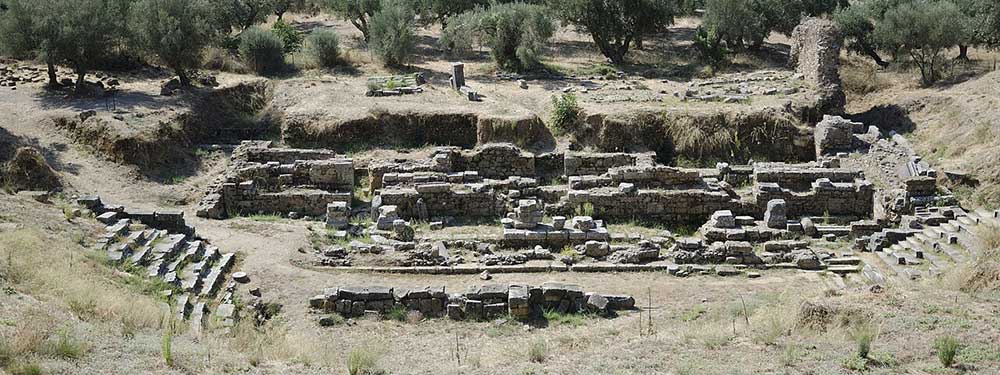
One modern Spartan myth is that the city-state “collapsed” due to a handful of military defeats. The trouble with this narrative is that it imagines Sparta somehow functioned as an entirely coherent system right up until battle revealed its fragility. Conveniently, this myth regards Sparta as a bit of clockwork, incapable of partial successes or complexities. There’s an appeal to this ending: win, lose, vanish.
None of it happened overnight. Sparta faced demographic problems because its citizen population slowly dwindled. There was less manpower, and the system’s social foundations gradually eroded. Economic problems caused wealth to concentrate and led to increased difficulties in meeting one’s liturgies, which in turn affected one’s full citizenship. Political factors led Spartans to ally with tough opponents, drawing them into demanding situations.
Whether due to losing too many peers in battle or to serving under former helots, Spartans certainly became fewer in number. Major defeats such as Leuctra exacerbated existing problems, but were not themselves the sole problem. Each was a catastrophic blow to an already weakened state.
What the Truths Change About the Spartan Story
With the myths stripped away, Sparta appears less miraculous and more maintained by control. Spartan “strength” was powered by helot labor that fed and financed their entire system, and that dependence created a need for rigid internal security. That famous discipline was aimed not only at foreign enemies but also at inward fear, because there were always more people doing the work than there were people with power.
That reality also resets some of our understanding of Spartan military prowess. Spartans could be fierce, but they were not indestructible. With a small citizen population, there simply were not enough reserves to easily replace losses, and as a result, strategies sometimes played very conservatively, with manpower preservation outweighing glorious offense. Sparta could win battle after battle and still barely maintain an empire of allies because reputation is not military logistics, demographics, or unified shifting coalitions.
Outside observers had reasons to idealize Sparta. Writers after the fact romanticized their order, laconic speech, and devotion to the group. These writers held up Sparta as a contrasting picture to draw flaws in their own society. Our modern lens cherry-picked the easiest stories of that legend–300 heroic shield walls, ferocious training, starving for strength–because they make for a better narrative. The true history is far more enlightening: centralized power, upheld by institutions, can project immense strength, but someone is always paying the price
Sparta’s Legacy in the Modern Imagination
The mythology of Sparta’s afterlife began almost immediately. For Roman writers who admired Spartan austerity—and used comparisons to Sparta as a critique against perceived luxury and political instability at home—the military city-state was a towering ideal of civic virtue. During more recent centuries, Spartan imagery has been similarly adopted by nationalists and social reformers looking for evidence that society could be, as Timothy Garton Ash put it, “made strong” through shared sacrifice and iron unity. Like their predecessors, these writers relied on histories of Sparta that were less factual than inspirational, molding the ancient city to suit their particular needs.
It’s no surprise, then, that “Spartan” emerged as a brand in popular culture. The word evokes minimalist toughness—you can get “Spartan” workouts that are short and intense; you can live by a “Spartan” regimen of self-denial and schedule. You might hate comfort, embracing your pain as a luxury. Films like 300 and award-winning novels paint Spartan heroes as warriors without fear and—more importantly—easy moral binaries. Spartans sell, in other words, because they tell you who you are: strong, harder than everyone else, invincible.
The problem with fictionalized history is that nuance gets lost. When we celebrate Sparta’s traditions without regard to context, we ignore the fact that they were founded on hierarchy, force, and free labor. When we imagine Spartan discipline as an admirable personal quality, we ignore the powerful social forces ensuring obedience.


