
The Battle of Castle Itter: When Americans and Germans Fought the SS Together
 Reading Time: 12 minutes
 On May 5, 1945, American soldiers were about to defend a medieval castle in the Austrian Alps. At their side were a small number of German Wehrmacht soldiers who had turned against the Nazi regime. Inside were notable French prisoners. Some of them picked up weapons and joined the defense. Armed members of the Waffen-SS were also approaching the castle. With Germany days from a formal surrender, former enemies were about to fight on the same side.
The Battle of Castle Itter has been called one of the strangest engagements of the Second World War. Its players included an American tank officer, a German major who had allied himself with the Austrian resistance, former French prime ministers, generals, a tennis champion, and SS troops still ready to fight for a doomed regime. Behind the almost cinematic story, however, was a deadly situation. The prisoners feared they could be killed before Allied troops could reach them. Their survival would require an alliance that only weeks before would have been unthinkable.
Castle Itter: A Prison for Hitler’s Most Valuable French Captives
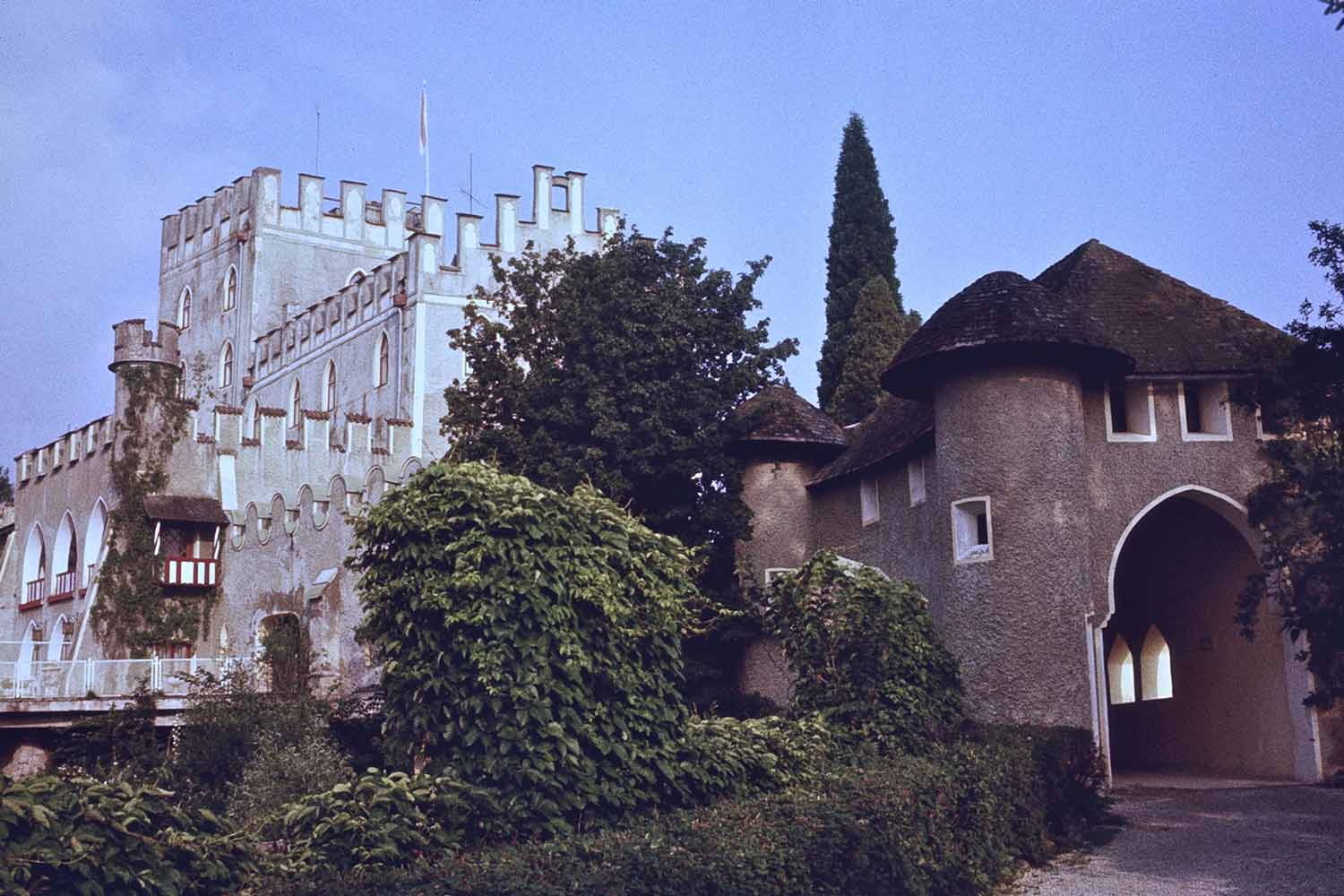
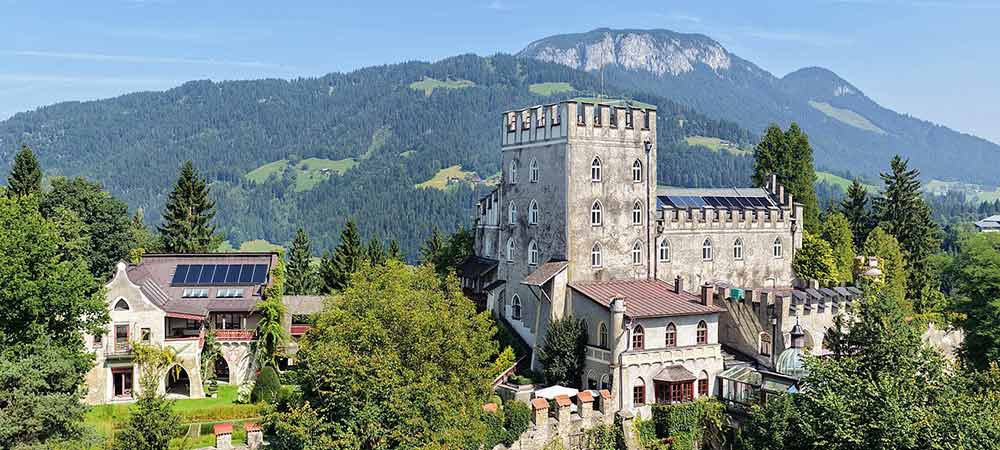
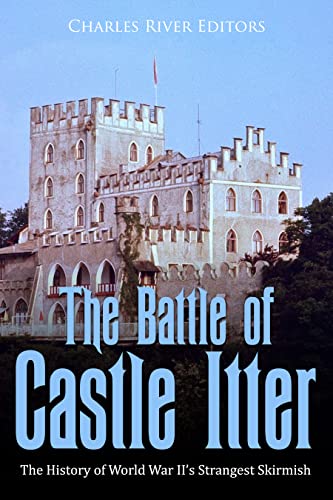
Castle Itter stood near the village of Itter in Austria’s North Tyrol region. In 1943, the SS commandeered the castle and converted it into a special prison linked to the Dachau concentration camp system. Dachau itself had been created in 1933 and became the model for the Nazi network of concentration camps. More than 200,000 people were held in Dachau and its subcamps before the camp was liberated.
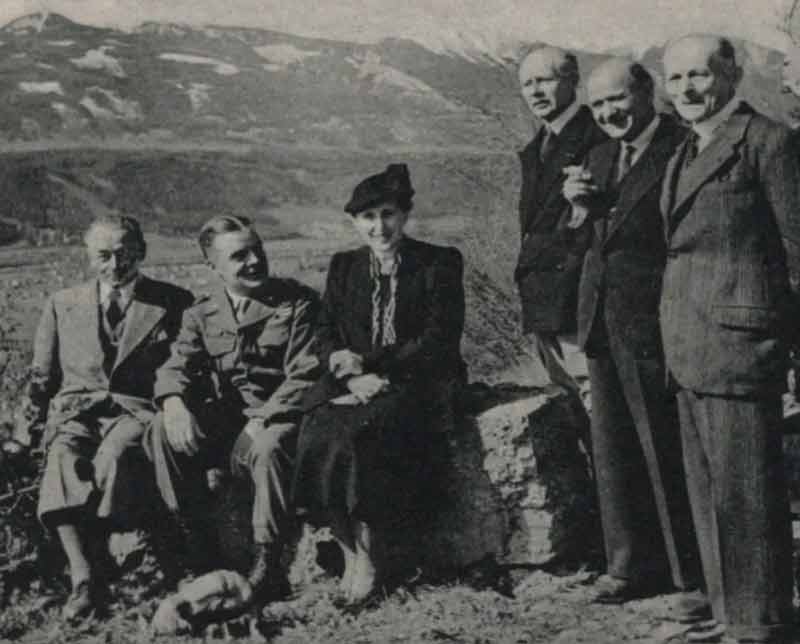
Itter was different in several ways, not least because many of its prisoners were part of France’s political and military elite. Former prime ministers Édouard Daladier and Paul Reynaud, generals Maurice Gamelin and Maxime Weygand, trade-union leader Léon Jouhaux, tennis champion Jean Borotra, and Charles de Gaulle’s sister, Marie-Agnès Cailliau, were all held at Castle Itter. Their notoriety in the eyes of the Nazis was one reason why they were held under special guard.
These men were not friends. Some had been bitter political rivals before France’s defeat in 1940. Reynaud and Daladier had been near the pinnacle of French politics, and Gamelin and Weygand had been closely involved in the military leadership during the calamitous campaign of 1940. Long years of captivity forced people with very different political views and personal animosities to live together.
Prisoners at Itter also lived in conditions that were very different from those suffered by ordinary concentration camp inmates. The degree of privilege they enjoyed does not change the basic fact of the larger system of which the castle was a part. Dachau and its satellites imprisoned political opponents, Jews, resistance members, prisoners of war, and many others. At least 40,000 are believed to have died in the Dachau system.
The danger facing the French prisoners at Itter increased in the spring of 1945. The Nazi state was falling apart, command structures were breaking down, and armed SS units still roamed the region. For the French prisoners, the question was no longer simply how long their imprisonment might last. It was whether they would live long enough to be liberated.
The Third Reich Collapses Around the Castle
The last days of April had shown that Nazi Germany was falling apart. Hitler committed suicide in Berlin on April 30. The German garrison in Italy surrendered on May 2. Allied armies were advancing through Austria and Germany. American troops had liberated Dachau on April 29. The disintegration of central authority, however, did not mean that every German unit would cease fighting.
That raised the possibility of last-minute SS action at Castle Itter. The prisoners knew their liberation was imminent. They could not, however, know what remaining SS personnel might do before the end came. All over the collapsing Reich, concentration camp prisoners were being evacuated in death marches. The SS had begun to march more than 7,000 prisoners out of Dachau toward the south on April 26. Guards killed prisoners who could no longer continue.
On May 3, Yugoslav prisoner Zvonimir Čučković slipped away from Castle Itter under the pretext of running an errand. Instead, he carried a message to the outside world requesting Allied assistance. Eventually Čučković found American troops near Innsbruck, where he told them about the castle’s prisoners. Delays in communication and rapidly shifting front lines, however, meant contact would not quickly lead to a rescue.
The castle’s command structure then broke down. The SS guards left, leaving the prisoners in effective control of their own prison. That freedom was far from assured. The castle was armed, but SS troops were also still armed and remained in the surrounding countryside. Prisoners were concerned that the SS would return.
A second messenger would therefore be sent. Andreas Krobot, the castle’s Czech cook, left for the nearby town of Wörgl to seek assistance. He met with members of the Austrian resistance. They in turn led him to a man who was already cooperating with them: German Wehrmacht Major Josef “Sepp” Gangl.
Josef Gangl: The German Officer Who Turned Against the Nazis
Josef Gangl was not a civilian who had only recently picked up a rifle. Born in Bavaria in 1910, he was a professional German soldier with years of wartime experience. In the final weeks of the war, however, Gangl and a number of men under his command had come to a different conclusion about where their duty lay.

In Wörgl, Gangl contacted the local Austrian resistance. Rather than follow orders that might well have made the town the site of another atrocity or obey an order to retreat, he cooperated with the resistance in their attempts to protect civilians during the collapse of Nazi power. He provided them with weapons and information, and did his best to avert unnecessary destruction.
Gangl now learned that high-profile prisoners were stranded at Castle Itter. He didn’t have enough men to keep them safe. Armed SS groups were still in the area, and any attempt to defend the castle might well leave his small group surrounded.
His solution was extraordinary. Gangl would find the advancing Americans, surrender to them, and then ask them to join him in rescuing the French prisoners. It was a striking reversal after almost six years of war. A German Wehrmacht major was about to cross the lines under a white flag, not just to surrender, but to request American military assistance against his fellow Germans.
Captain Jack Lee and the Americans Arrive
The American officer Gangl found was John C. “Jack” Lee Jr., an armored officer with the 23rd Tank Battalion of the U.S. 12th Armored Division. American forces had only just entered Kufstein as the Allied advance rolled through the Inn Valley. Lee had already spent months battling German forces across Europe.
Gangl explained the situation at Castle Itter. Lee agreed to help.

Before committing his men, Lee traveled with Gangl to scope out the castle and the surrounding terrain. He then began assembling a rescue force. The column that eventually formed was like almost nothing else on the Western Front: American soldiers and German Wehrmacht troops were moving in concert toward the same objective as allies.
The force that finally reached the castle was small. Challenging roads and a bridge that could not safely support the entire armored column reduced the number of men and vehicles Lee could bring to the front. He arrived with a limited American contingent, Gangl and several German soldiers, and a Sherman tank.
The French prisoners were delighted to see them, but the rescue force was hardly reassuring. The Americans had reached Castle Itter, but they couldn’t evacuate everyone on the spot. Enemy forces were still in the area.
Lee therefore had a new mission. In addition to freeing the prisoners, he now had to hold the castle.
Preparing Castle Itter for an SS Attack
Lee began to organize a defense. The thick walls and elevation offered some natural advantages, but Castle Itter was never meant to withstand modern artillery, anti-tank weapons, or prolonged automatic fire. It also had limited defenders and ammunition.
The American Sherman, usually referred to in accounts as “Besotten Jenny,” was stationed near the entrance to the castle. It provided the defenders with their most effective weapon, but it was also an obvious target. American and German troops were placed in strategic positions around the castle to monitor the woods and roads.
Another notable defender was Waffen-SS officer Kurt-Siegfried Schrader. Locally recovering from a wound, Schrader had turned against the forces that were still fighting for the Nazi regime and played a role in organizing the defense. Schrader’s presence further complicated an already unlikely alliance: At Itter, even a Waffen-SS officer found himself fighting against other Waffen-SS troops.
Lee wanted to keep the French prisoners out of the fighting. A few others did not agree. Men who had spent years as prisoners of war were now armed and inside their former prison. Among them were high-ranking officers with decades of military experience, even if their age and physical state made them unlikely candidates for fighting.
Outside, Waffen-SS troops were moving toward Castle Itter. Reports of their numbers vary and should be taken with some skepticism. What is not in doubt is that they heavily outnumbered the castle’s small defense. The rescue mission was turning into a siege.
May 5, 1945: The Battle of Castle Itter
The attack began on the morning of May 5. Waffen-SS troops opened fire on the castle and began probing the defenses. The Americans, Wehrmacht soldiers, and others inside returned fire from positions around the complex.
The Sherman tank had given the defenders an important advantage. Stationed near the entrance of the castle, the Sherman’s crew could use its 75mm gun to cover any targets that moved along the road. That advantage did not last long. Enemy fire eventually disabled the Sherman, removing the defenders’ heaviest weapon.
Without the tank, the battle became an increasingly even fight of rifles, machine guns, and the defenders’ ability to use the position. Ammunition started to run short. The attackers could keep applying pressure, but the men inside could not afford to waste rounds.
The French prisoners joined the fighting as well, despite Lee’s attempts to keep them safe. Former generals and politicians who had been in German custody for years now found themselves fighting alongside American soldiers and the very German troops whose country had imprisoned them. The political divisions among the French prisoners suddenly mattered less than the armed men approaching the walls.
Josef Gangl was shot and killed during the battle. Accounts of the battle commonly mention him as having been killed while trying to protect Paul Reynaud from enemy fire. The precise details of individual movements during a confused firefight are difficult to verify in every respect, but Gangl’s death during the defense is well established.
Gangl had joined the war as a German professional soldier. He died fighting alongside Americans and Austrian resistance members against SS troops only days before Germany’s surrender. His death became one of the battle’s defining episodes.
The defenders were still in danger. They had survived the initial attacks, but their ammunition was running low, and the Waffen-SS kept applying pressure. Someone had to get through the enemy lines.
Jean Borotra’s Dash for Help
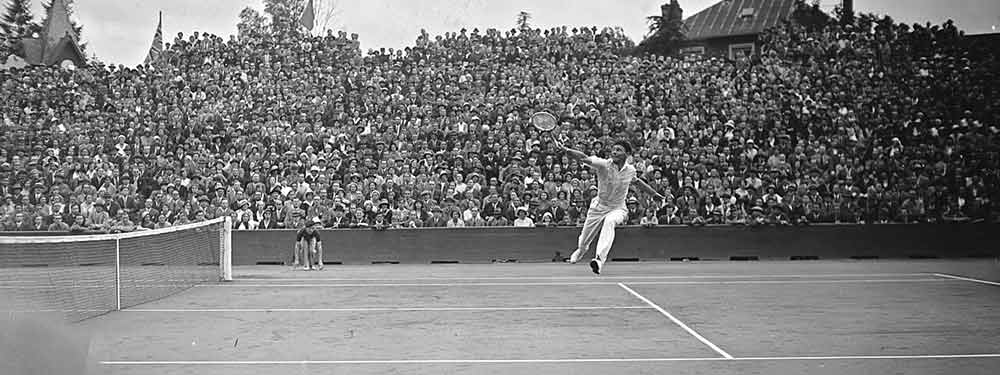
Jean Borotra was among the most well-known French athletes before the war. He was one of the so-called “Four Musketeers” of French tennis, a generation of champions that won all the major international championships in the 1920s and 1930s. At Castle Itter, the former champion volunteered to make a far more dangerous run.
Borotra left the castle during the battle and tried to pass through the SS positions. He planned to reach the American forces and explain how dire the situation had become.
The basic episode is well known, and Borotra’s escape has been retold many times. Later accounts have sometimes added dramatic details that are hard to verify. The important fact is remarkable enough: a former Wimbledon champion in his forties braved an active combat zone to go and seek help for a castle under siege.
Borotra succeeded in reaching friendly forces. American reinforcements were already trying to reach Itter, but the news he brought helped to confirm the gravity of the defenders’ situation.
Back at the castle, Lee’s mixed force continued to fight. No one knew whether relief would arrive before their ammunition ran out or the defenses were breached.
Then the sound and movement outside began to change.
American Reinforcements Reach Castle Itter
On the afternoon of May 5, American reinforcements from the 142nd Infantry Regiment of the 36th Infantry Division arrived on the scene. Their arrival changed the battle. The SS attackers could no longer isolate the small group within Castle Itter.
The siege ended in failure. Dozens of SS troops were captured; many others were killed, wounded, or simply ran away. Sources disagree on some of the exact numbers, so take the precise casualty totals with some skepticism. The fact remains: the defenders had held on long enough for a larger American force to arrive.
The French prisoners were safe.
For men like Daladier, Reynaud, Gamelin, Weygand, Jouhaux, Borotra, and Cailliau, years of German imprisonment had ended in one of the most unlikely battles of the war. Liberated not by a conventional Allied attack on their prison but by a tiny coalition of soldiers formed amid the Third Reich’s collapse, the prisoners of Castle Itter had been freed.
Timing made the battle even more remarkable. Germany signed its unconditional military surrender at Reims on May 7, and it took effect on May 8. The war in Europe was effectively over. The defenders of Castle Itter, however, had faced death only days before that final surrender.
Enemies Who Became Allies for One Final Battle
The battle had no impact on the outcome of World War II. Nazi Germany was already defeated, in all but name, by May 5, 1945. Berlin had already fallen. Hitler was dead. Allied armies already occupied large swaths of what was left of the Reich.
It is also, perhaps, what makes the battle so interesting. The men who were there were not fighting for the fate of Europe. Instead, they were making their own decisions against the backdrop of a rapidly collapsing dictatorship. Lee decided to risk his small American force for prisoners he had never met. Gangl and his men decided to turn against the Nazi forces still resisting around them. French prisoners decided to help defend the walls of their own prison.
Gangl paid the steepest price of all, dying on the battlefield and being buried in Wörgl, where his role in the Austrian resistance has been remembered ever since. A street in the town is named after him, keeping alive the memory of the German officer who died fighting the SS in Austria’s mountains. Austria’s ERINNERN project also features the unusual camaraderie between Gangl’s men and Lee’s Americans at Castle Itter.
Accounts of the battle sometimes claim that Castle Itter was the only World War II battle in which American and German soldiers fought side by side. That claim is too absolute. Other examples of cooperation in the final days of the war include Operation Cowboy in Czechoslovakia. Castle Itter is better described as one of the clearest and most remarkable documented examples of U.S. troops and German soldiers deliberately fighting together against Waffen-SS forces.
The story, then, needs little embellishment. On May 5, 1945, Americans, German defectors, Austrian resistance fighters, French prisoners, and even an SS officer who had turned against the regime itself, all defended an Austrian castle against Waffen-SS attackers. They held out long enough for American reinforcements to arrive. Two days later, Germany signed its unconditional surrender. In a war defined by armies of hundreds of thousands of men and destruction on an inconceivable scale, Castle Itter ended as something much smaller: a last battle, determined by the choices of a few people who decided, in the final hours, who they would be willing to fight beside — and what they would be willing to fight for.


