

Understanding Confucius: His Life and Legacy
 Reading Time: 10 minutes
 Confucius was an ancient Chinese philosopher who lived many years before the birth of Christ. During his lifetime, he lived through a chaotic period in Chinese history, when people were searching for answers and solutions to these problems. Confucius developed Confucianism as his philosophical system. He saw the most critical value in ‘doing the right thing’. He also focused on the traditional Chinese values of courtesy, ritual, and relationships. We will learn more about the life and accomplishments of Confucius. We will gain more insight into the philosophy that he developed. We will also try to understand why his ideas have had such an impact not only on Asia but also on the world we live in today.
The Man behind the Legend

Confucius was born Kong Qiu, also known as Kong Fuzi. In addition to being a Chinese philosopher, teacher, and political theorist, Confucius is known as the founder of Confucianism, one of the most influential philosophies in Chinese culture. Confucius was born in the state of Lu (in present-day Qufu in Shandong Province) in 551 BCE during the Spring and Autumn period.
He was born into the Kong family, a large clan that was neither very rich nor very powerful. Confucius’ father, Kong He, was an officer in the Lu military but died when he was three years old. The family was left poor.
Confucius had a strong urge for learning from childhood. He received a complete education, studying music, archery, charioteering, calligraphy, arithmetic, history, and poetry. He married at 19 and had one son and two daughters. He worked various jobs, from stable manager to bookkeeper for granary stores, to support his family.
Confucius’ political career began in his home state of Lu, where he served as the governor of a town. Still, it was quickly promoted to a much more critical post as the Minister of Crime in Lu because of his conviction that society could be made more harmonious and just if its people were suffused with a sense of virtue and propriety. He proposed that good policies were often thwarted by the ruling class, which had no interest in creating a better society but sought only to protect its own power and privileges.
The Rebellion of Gongshan Furao
In Lu, where Confucius served as Minister of Justice, the state’s power was held by three aristocratic families: Ji, Meng, and Shu. The Ji family was the most influential of them and effectively the rulers of Lu, while the Duke of Lu was a figurehead. Gongshan Furao, also known as Gongsun Yang or Gongshan Bao, was an official who opposed the Ji family (Viscount Ji Huan). Gongshan Furao rebelled against the power of the aristocratic families of Lu, the Meng, the Shu, and the Ji families, who had usurped the power from the Duke of Lu, and sought to return power to the Duke.
Confucius had recently come to power in Lu and was attempting to put into practice many of his ideas about a well-governed society, including efforts to limit the power of the aristocratic families and to return power to the Duke. Confucius naturally came into conflict with the Ji family, which was very powerful and held a position directly at odds with his ideas. Gongshan Furao’s rebellion was an attempt to remove the aristocratic families from power.
When this occurred, Confucius, as the Minister of Crime, had to choose between supporting Gongshan Furao or the Ji family. He decided not to support Gongshan Furao because he was rebelling, which was against his ideas of propriety. Still, he also could not support the Ji family’s monopoly of power, and as a result of this conflict of principles, he left the state of Lu without formally resigning from his office.
The rebellion did not lead to any particular victories or incidents, as Gongshan Furao could not amass sufficient support to overthrow the aristocratic families and their leader, the Ji family. As a result, his rebellion did not last long and ended quickly. However, as a result of his involvement in this incident and the difficult decision he had to make, Confucius decided to leave Lu, which marked the period of his life when he traveled from state to state.
Confucius left the state of Lu and spent 14 years wandering through the states of China, seeking a suitable ruler for whom he could work and who would listen to his advice and act on it. The main reason he decided to leave Lu was that Viscount Ji Huan was still alive; as long as he was, Confucius would not be able to return to Lu and work for its ruler, because Viscount Ji Huan would never allow him to implement his ideas for a well-ordered state.
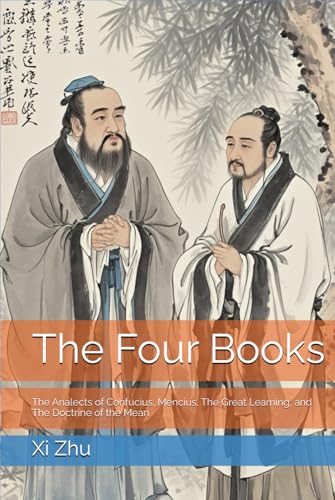
Confucius: The Wandering Teacher & Philospher in Exile
The 14 years of self-imposed exile were a crucial period in Confucius’s life. The philosopher did not want to support the rebellion of the enemies of the Ji family in his native state of Lu, but he could not support the family in power either. Confucius left his home in search of a benevolent ruler who would listen to him and welcome him with open arms.
In these 14 years, he visited the states of Wei, Song, Chen, and Cai. He roamed from state to state, constantly changing his residence, which was difficult for him, but during this period, he was able to develop his own teaching and philosophy fully. This period in Confucius’s life gave rise to a later teaching called Confucianism.
While traveling and teaching his disciples, Confucius gathered a large group of like-minded people around him. It is believed that the great thinker had about 3,000 students, but only 72 of them fully mastered his teachings. Confucius’s disciples did much to shape his teaching and spread it in the East. Many of them became known and influential people in their own right. Thanks to them, much of what he said and taught was recorded and later included in the famous “Analects.”

The teachings of Confucius were built around several fundamental principles. First of all, this is the idea of “ren” (humaneness, benevolence), which, according to Confucius, is the highest moral quality of man and the foundation of all other virtues. Confucius also devoted a lot of attention to the ideas of “yi” (righteousness, justice), “li” (rituals, propriety), and “zhi” (wisdom). The great philosopher considered these ideas to be the most critical moral qualities of a person and tried to develop them as much as possible.
Confucius believed that if a person followed the principles of humaneness, righteousness, ritual, and wisdom, he could cultivate his own moral nature and work for the good of society, and that society could also become harmonious and well-organized.
Confucius’s teachings also contained a number of other important ideas. This is the concept of “filial piety” (xiao), a sign of respect and reverence that children should show to their parents and ancestors. Confucius saw filial piety as the foundation of all other virtues and a key to social harmony. The great philosopher also attached great importance to education and self-cultivation as a way to improve oneself and society.
The teachings of Confucius had a significant impact on Chinese culture and society, and its influence has been felt for more than 2,000 years. Confucianism became the official state doctrine during the Han dynasty and became deeply rooted in Chinese culture, even after the fall of the imperial system in the 20th century. Confucian ideas continue to influence Chinese society in various ways, from the importance of family values and education to the need for self-cultivation.
The reaction of Chinese rulers and officials to Confucius’s activities during his exile was mixed. Some rulers and officials were open to Confucius’s ideas and even invited him to their courts to teach and advise. However, other rulers were more skeptical, or even hostile, toward Confucius and his teachings, as they were perceived as a threat to the existing power structures and social hierarchy. For example, in the state of Wei, Confucius was briefly imprisoned, and in the state of Song, he was the target of an assassination attempt.
The legacy of Confucius is enormous, and his teaching continues to be relevant and widely studied today. Hisideas on morality, ethics, and social order have had a profound impact on Chinese culture and society for over two millennia. Confucianism became the official state philosophy during the Han dynasty and remained an essential part of Chinese culture even after the fall of the imperial system in the 20th century. Confucian ideals have had a significant influence on Chinese society in many areas, from the emphasis on family values to the importance of education and self-cultivation.

The legacy of Confucius is significant and continues to influence life in Chinese society in the 21st century. Confucius and his teachings had a direct impact on the development of Chinese society and culture, and his ideas on morality, ethics, and social order have had a significant effect on Chinese society. These ideals, which have been deeply rooted in Chinese culture for over two thousand years, continue to influence the life of Chinese society in many areas in the 21st century, from the importance of family values and education to the need for self-cultivation.
The period of exile in Confucius’s life had a significant impact on his legacy. Although he did not achieve the political success he had hoped for, this period laid the foundation for Confucianism, a philosophy that would influence Chinese society for more than 2,000 years. His teaching, grounded in principles of morality, ethics, and social order, provided a framework for how a person should behave and live. Although he did not gain recognition or fame during his lifetime, his teachings were later canonized by the Han dynasty (206 BCE – 220 CE), and Confucianism became an essential and long-lasting part of Chinese culture.

Confucious Returns to Lu and Continues to Forge a Lasting Legacy

Confucius was 68 when he finally returned to his home state of Lu in 484 BCE. It is thought that the death of Ji Huan, the man whom Confucius had once openly criticized and defied, allowed for the once dangerous environment to become safe enough for Confucius to return. However, despite his expectation of receiving a government appointment, Confucius was not offered any significant position. Disappointed but undeterred, Confucius spent the last years of his life teaching his disciples and reflecting on his life’s work. Confucius died in 479 BCE at the age of 73.
Confucius’s legacy is significant and continues to this day. The Chinese have been heavily influenced by Confucius’s ideas for over two thousand years. Confucianism became the official state philosophy during the Han dynasty and remained an inextricable part of Chinese culture even after the end of the imperial system in the 20th century. Confucian ideals continue to inform Chinese society in many ways, from the emphasis on family values to the importance of education and self-cultivation.
Confucius’s influence is not limited to China; his ideas have also had a global impact. His philosophy has influenced other East Asian countries, such as Japan, Korea, and Vietnam, and has also found resonance in the West. In the West, his ideas on morality and ethics have been compared with those of ancient Greek philosophers such as Socrates and Aristotle.
In addition to his impact on philosophy and ethics, He has also had a lasting influence on politics, music, and poetry. He believed that a well-ordered society required a well-ordered government and that rulers should lead by example rather than by force. He also believed that music and poetry were essential to the cultivation of moral character and played a crucial role in his own teachings.
The life and legacy of Confucius are inextricably linked to the history and culture of China and the world. His teachings on morality, ethics, and social order have had a profound and enduring impact on Chinese society and have influenced cultures and philosophies across the globe. From his humble beginnings in the state of Lu to his wandering years in exile and his eventual return home, Confucius’s journey is a testament to the enduring power of his ideas and the indelible mark he left on the world.


