
10 Ways Sherman’s March to the Sea Impacted the Civil War and the South
 Reading Time: 15 minutes
 Sherman’s March to the Sea is one of the most famous and controversial campaigns of the American Civil War. This bold and brutal military operation, which took place from November to December 1864, was designed to destroy the Confederacy’s morale and infrastructure, and to hasten the end of the war. Sherman’s march has been both praised and criticized for its impact on the South and on American history. In this article, we will explore the details of Sherman’s march, its effects on the South, and its significance for the Civil War and beyond.
The march began in Atlanta, Georgia, which had been a key industrial and transportation center for the Confederacy. After the fall of Atlanta in September 1864, following a long and bloody campaign by Sherman and his 62,000 Union troops, Sherman decided to march to the Atlantic coast and cut the Confederacy in two. He did so with the intention of destroying the South’s will and ability to fight, as well as to demonstrate the futility of resistance to the Southern population.
The march covered about 300 miles from Atlanta to Savannah and involved the burning and looting of much of the land in its path. Sherman’s troops cut telegraph lines, destroyed railroads and bridges, and seized livestock, crops, and food supplies, while avoiding major engagements with the Confederate army. However, the march was not without its consequences, leaving a deep and lasting impression on the South and on the course of the war and the nation.

The Military Impact on the Civil War
Sherman’s March to the Sea was not just about the movement of forces, but instead was an exhibition of power intended to crush the enemy’s fighters as well as its ability to keep waging war. The military consequences of Sherman’s March for the Confederate war effort were severe and wide-ranging.
One of the main effects was the loss of key infrastructure. Sherman’s troops took out railroads, communication lines, and essential bridges along their route. This kind of attrition made it difficult for the South to move its forces, communications, and transport vital supplies, given its already scarce resources.
In addition to the loss of vital infrastructure, the March to the Sea also entailed key Union victories. The fall and burning of Atlanta, for example, was an important event, but there were also battles won during the march, such as the Battle of Griswoldville and the Battle of Honey Hill, that boosted the morale of the North and weakened that of the South. More importantly, Sherman’s March to the Sea was a show of the Union’s strength and an indication that the Confederates were destined to lose.

Economic Devastation: The Wounds from Sherman’s March
Sherman’s March to the Sea was not only a strategic move but also a campaign of economic destruction. As Sherman’s forces marched through the heart of the Confederacy, they left behind a path of destruction that crippled the Southern economy, already struggling under the weight of the war.
Railroads, bridges, and other vital infrastructure were targeted and destroyed. This disrupted supply lines, hindered troop movements, and closed off key transportation routes used by the Confederates to move goods and communicate. The destruction of crops and plantations, a primary source of income for the South, further decimated the Southern economy. This not only deprived Confederate forces of supplies but also left many Southern citizens facing hunger and scarcity.
Livestock were also confiscated or killed, leaving large areas of farmland useless and exacerbating the South’s economic distress. By undermining the South’s ability to finance the war, Sherman’s march hastened the collapse of the Confederacy.

The Psychological Aftershocks: Union Dominance in Confederate Territory
Sherman’s March to the Sea had a devastating psychological effect on the people of the Confederacy. The idea of Union soldiers being able to march through the South freely and with little to no resistance was one that the majority of Southerners would have found difficult to imagine. In addition to causing great physical damage, Sherman’s March to the Sea left the people of the Confederacy feeling defeated. The audacity of the march in and of itself was enough to shatter the hopes and the belief that the Confederacy had held up until that point that they would be able to win the war.
The towns that Sherman’s army destroyed and the crops and land that they burned were daily, physical reminders to the people of the South of what the Union soldiers were capable of. For people who took so much pride in their ability to withstand and fight back against the North, the fact that Sherman’s March to the Sea went unimpeded was an obvious indication that the Confederacy’s military might was no longer as strong as it had been. This loss of morale was in no small part due to the fact that the people of the South were beginning to realize that their dream of a Confederate nation was slipping through their fingers.
In addition to the constant reminders left by Sherman’s March to the Sea, the people of the South also became increasingly aware of it and the victories that followed as word spread. The idea that such a large Union army was able to travel so far into the South was only adding to the vulnerability that the civilians of the Confederacy were already feeling. This only further weakened the resolve of the Confederate soldiers and increased the South’s doubt about their chances of winning the Civil War.


Accelerated Emancipation: The Dawn of Freedom in Sherman’s March to the Sea
Perhaps less discussed consequence of Sherman’s March to the Sea was how it expedited the process of emancipation of the places it passed. The areas deeper in the Confederate territory had large populations of slaves, and the thousands upon thousands that followed Sherman’s troops were men and women and children in a state of captivity. At the arrival of the forces of the Union army, black people in the area would hasten to break free of their shackles and partake in the newfound freedom that Sherman’s men symbolized to them.
To the onlookers of Sherman’s troops, the sight of this great host of men, women, and children behind the army’s column, newly freed, was rather saddening but somehow also exulting. For many of the black men and women following Sherman, this was a sight for the ages. The great force of Union soldiers marching on was the actual Emancipation Proclamation coming to life, setting them free. As the Confederacy grew restless at the roar of Sherman’s march, they were also slipping away the shackles of the Confederacy’s dying grip.
The Union troops, of course, did not shy away from this new population; however, they were a military operation first and foremost. A great many of the freed people began to join in the grand column of the Union army, marching with them or merely trailing behind, despite the great military forces that opposed them.

The Advent of Total War: Sherman’s Strategy and its Lasting Implications
Sherman’s March to the Sea was different because it broke away from the norms of warfare of that time. For the first time, military action did not target an army or an important military base, but rather aimed at the very heart of the war-support system. The March was not only strategic but also psychological and industrial. Sherman waged what became known as “total war”, attacking civilians, industrial sites, bridges, and military targets.
Sherman’s March began the era of total war. Sherman and his army, which fought to protect civilians, targeted civilians. His soldiers made sure that every town along his path of destruction from Atlanta to Savannah would be razed to the ground. The objective was to hit where the Confederacy’s power lay: its infrastructure and industrial sites. The human cost and the act of sending the message of strength to the enemies were other essential factors of Sherman’s strategy.
On a deeper note, Sherman’s March to the Sea was a turning point in modern warfare. The rules of the game had changed; wars were no longer limited to the battlefield. The civilians became targets, and entire societies were now the purview of combat, opening a new era in war. We will delve further into the impact of total war later in the article.
Political Ripples: How Sherman’s March Bolstered Lincoln
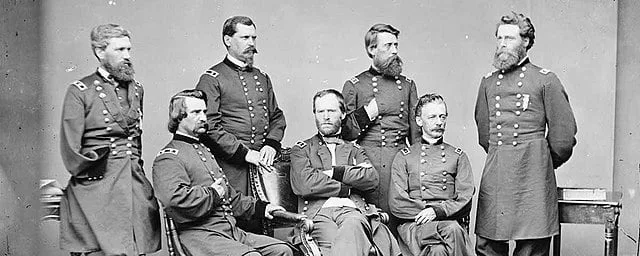
The effects of Sherman’s March to the Sea were not burned fields and seized supplies. They were not even Southern civilian casualties. Sherman’s March to the Sea also had a significant impact on the North’s political landscape, helping secure President Abraham Lincoln’s second term.
The North greeted news of Sherman’s successful March with a tidal wave of euphoria. For years, thousands of Union soldiers had died, and little to no progress was shown to suggest that the end of the war was anywhere close to being in sight. The fact that Union forces had managed to get that deep into the Confederate heartland and still be able to continue their campaign was a sign that the end was near. This had a massive impact on the war effort in the North: just months before the 1864 Presidential election, a renewed sense of hope in a victory-adjacent candidate, Abraham Lincoln, turned public opinion and cemented the President’s hold on office.
Lincoln’s second term in office in 1864 could be argued to have been an explicit vote of confidence in his dedication to the war effort. It was a vote of confidence in the reunifying of the United States. It was also an explicit vote of confidence that the Southern slave trade was to be brought to a definitive end. Sherman’s March to the Sea contributed to this: it was a show of Union power that showed the Union was gaining ground in a way that the Confederacy could never have imagined. With Lincoln in office for a second term, the Union was more prepared than ever to end the war and the institution of slavery.
The Deep Scars: Resentment in the South and the Emergence of the “Lost Cause”
Sherman’s March to the Sea was a defining moment in the American Civil War, not only for its immediate destruction but also for the profound emotional and cultural impact it had on the South. The Confederate city of Atlanta was left burning and in ruins. The troops and their movements, then in the middle of Georgia, were a direct threat to all the land they traversed. Southern morale suffered enormously with Sherman’s March. As the troops made their way through Georgia to the Carolinas, they not only left a path of destruction in their wake but also imprinted a burning shame on the Southern psyche.
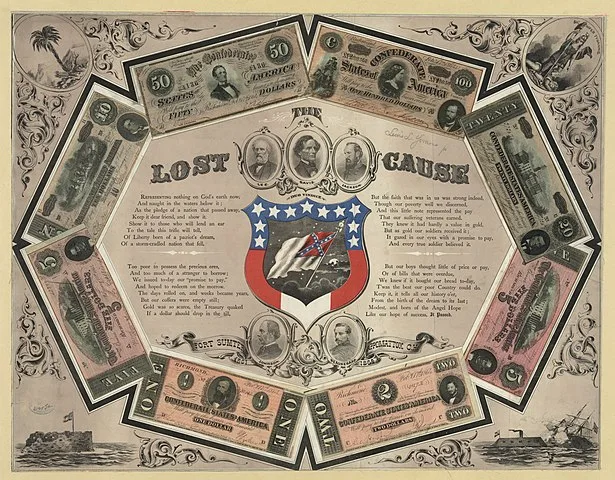
The end of the Civil War left the South in a state of shock, having lost so much in such a violent conflict. Emerging out of the ashes of defeat and despair came the “Lost Cause” narrative. The “Lost Cause” reimagined the war as a noble struggle for Southern honor and way of life, downplaying or outright denying the central role of slavery in the conflict. It is a version of history that has had a long and damaging influence on American culture and memory. Sherman’s March was appropriated as a prime example of Northern aggression and wanton destruction.
The March was not only a military campaign but was also a means of breaking the will and morale of the Southern population. The narrative painted Sherman and his troops as invaders intent on sowing chaos and destruction in the South. The deliberate targeting of civilian property and resources during Sherman’s March became a cornerstone of the “Lost Cause” narrative. By vilifying Sherman and his actions, the South could maintain a sense of dignity and righteousness, despite its defeat.
Over time, the “Lost Cause” narrative became deeply ingrained in Southern culture and memory, shaping how many Southerners remembered and understood the Civil War. The physical and emotional scars left by Sherman’s March to the Sea were thus not just a consequence of a historical event but a tool for shaping historical interpretation for generations.

Post-war Reconstruction Challenges: The Lingering Shadows of Sherman’s March
Sherman’s March to the Sea took on a mythological status that the South would battle for years to come. The destruction that the March left in its wake in Georgia and the Carolinas would prove to be some of the most devastating as the country went through a critical period of Reconstruction after the war.
In Georgia, a state with significant agricultural production, the loss of crops, livestock, and other infrastructure, such as railroads, would slow the state’s economic recovery for years. The state would have to rebuild its infrastructure and restructure society in a way that fit a post-slavery South. As for the Carolinas, the areas affected by Sherman’s troops would also have to rebuild in more ways than one.
The rebuilding of towns and communities destroyed during the March would be costly and would take years of hard work and investment to return to a pre-war normal. South Carolina, in particular, was subjected to more of Sherman’s ire because it was viewed as the spark that lit the fire of war. As the first state to secede and home of the Battle of Fort Sumter, Sherman’s March to the Sea through South Carolina was brutal. As a result, the state had to rebuild its economy and identity after the war.
Reconstruction was a period of great political, economic, and social change for the South. The areas that Sherman’s March to the Sea affected the most would now have to deal with the visible and lasting scars of war. The effort to rebuild infrastructure was both a massive logistical challenge and a way to prove that the South could be rebuilt from the ashes. It also served to provide questions to the South’s new identity and future as the nation headed into a new chapter of its history.

The Indelible Cultural Echoes
Sherman’s March to the Sea not only had a significant political and military impact, but it also occupied an important place in the American collective consciousness. Sherman’s daring raid and the events of those weeks were a frequent source of inspiration for songwriters, poets, and novelists. From ballads about the suffering of people who saw their homes burned to songs praising the military acumen of the March and the soldiers who carried it out, the range of cultural and artistic products inspired by the March and its events is broad.
For many writers, artists, and filmmakers, the March served as a source of metaphors about the war’s nature and a frequent allusion to the changes wrought by the conflict on the landscape, society, and people. Additionally, the stories about Sherman’s March have had their share of fact and fiction, with true stories of heroism and survival being confused with myths and legends. As such, the March and its tales have had a significant influence on how later generations have perceived and interacted with the events that occurred during the March and its context.
The cultural importance of Sherman’s March to the Sea is not limited only to the art and stories that it directly influenced. In the South, the recollection of the March and Northern aggression in general has been one of the sources of the enmity that, in some parts of Southern society, has endured to this day, however small.
The overall antagonism between the two regions has significantly subsided over the years, with most examples now confined to daily conversations, discussions, or books and films by authors and directors. However, the March’s influence on the culture of the South has left its mark on the country’s collective memory, forming part of Southern self-perception and its relationship with the North.

A New Dawn in Warfare: A Major Shift in Warfare Philosophy
Up until Sherman decided to make this audacious strike in the heart of the Confederacy, there was a predominance of Napoleonic-style warfare, especially on the Western Front. Combat operations in this style of warfare were decided primarily through close-range engagements with enemy forces. Objectives such as terrain, lines of supply, infrastructure, or economic assets were not at the forefront of most campaigns. The main objective was to defeat the enemy forces in combat. When Sherman went on his march, those objectives took a backseat.
The strategy for Sherman’s March To The Sea was not necessarily new in a traditional tactical or field-of-combat perspective; however, it showed that, to prevail, it was crucial to attack the socio-economic and human aspects that comprised the enemy. This particular objective was to attack the system that fueled the opposing ideology in any sense possible. In this case, it was the railroads, food supplies, basic structure, or anything else that was part of keeping the Confederate army fighting.
As previously mentioned, this new form of war (futuristically known as total war) established that civilian objects, economic resources, and infrastructure are inevitably linked to the field of combat; therefore, if all of these areas are attacked concurrently, the war should end sooner through any means possible. This form of warfare would be seen in many wars and would develop in some shape or form around the world.
Reflecting on the Echoes of Sherman’s March
Few campaigns have been discussed, analyzed, or questioned as much in American history as Sherman’s March to the Sea. Not only has it been the inspiration for many books and articles on the Civil War and military strategy more generally, but it has also had a wide-ranging impact on American historical memory, Southern identity, and culture.
The March left its mark on the postwar South through its effects on war production, freedmen and slavery, the economy, the development of total war, as well as infrastructure and population centers. Furthermore, the physical, material, and mental destruction of the march had an impact on the cultural climate and self-perception of Southerners as well as later generations of Americans.
The March to the Sea was also recorded in numerous songs, anecdotes, and myths, which either glorified or vilified it. This makes it difficult to summarize its effects, since they continue to be widely discussed. However, there is no denying the fact that Sherman’s march from Atlanta to Savannah had a massive impact on the war and the region that suffered through it.

![[Video] Godfrey de Bouillon: First King of Jerusalem](https://historychronicler.com/wp-content/uploads/2025/06/Screenshot-2025-06-13-at-3.14.50)


