
The Most Historic Building in Every U.S. State
 Reading Time: 22 minutes
 Colonial meeting houses, Native cultural sites, frontier forts, Spanish missions and civil rights landmarks are just some of the historic buildings that have defined American history. There is at least one historic building in every state of the United States that anchors it in the American story, be it through a revolution that was planned inside its walls, an alliance of people that gathered within it, an injustice that was righted by those who worked to save it, or a community that was built by those who first called it home.
This list of the most historic buildings in every U.S. state is a compilation of places where history has occurred and continues to unfold every day. In every corner of the United States, there is a Revolutionary-era tavern, a Spanish fortress, a frontier trading post, or a church at the heart of the civil rights movement that tells a story about the nation’s past. Taken as a whole, these sites offer an overview and a means to remember, explore, and better understand the different experiences that made the United States.
The Most Historic Building in Every U.S. State
Alabama – Dexter Avenue King Memorial Baptist Church (Montgomery)

It is where the modern civil rights movement was born: the church that organized the 1955–56 Montgomery Bus Boycott. Led by a young Rev. Martin Luther King Jr., the basement walls rang with meetings, strategy sessions, and nightly mass gatherings. Community organizers, ministers, and citizens met in the basement to plan carpools and peaceful resistance.
Walk the aisles of the church today and visit the area where King developed his ideas on nonviolent protest. This church remains both a house of worship and a place of pilgrimage. It reminds Americans that sometimes change begins in the most unlikely of places, where people show uncommon courage.
Alaska – Russian Bishop’s House (Sitka)

Constructed in 1842, the Russian Bishop’s House is one of the few extant buildings from the period of Russian American colonization that remains in its original condition. The house served as both the administrative headquarters of the Russian Orthodox Church in Alaska and the residence of Bishop Innocent, a missionary to Alaska who learned Native languages and sought to coexist peacefully with Native peoples.
The house was restored with great care and is furnished with its original interior and architectural details, including Russian log style and missionary schoolrooms. It is one of the few structures to remain from the time when Alaska was the meeting place of Russian, Native, and American cultures, and a place that demonstrated a different form of North Pacific colonial history.
Arizona – Mission San Xavier del Bac (Tucson)

Built for the Tohono O’odham people, this mission was founded in 1692 and completed in the late 18th century. One of the best-preserved examples of Spanish colonial architecture in the United States, the church’s glistening Baroque interior is adorned with original frescoes, sculptures, and altarpieces by Indigenous and Spanish artists. Unlike many of its counterparts, San Xavier remains an active parish for the community it was built to serve, with a long history of continuity that makes it a living historical site. In this place, the early history of colonialism, Indigenous survival, and cultural exchange unfolds every day.

Arkansas – Little Rock Central High School (Little Rock)
In 1957, Little Rock Central High School became the focal point of the national battle to desegregate public schools. When the Little Rock Nine, a group of black students, tried to enter the building, they faced a hostile mob and state resistance. Eisenhower sent the 101st Airborne to uphold federal law. The school building gained both symbolic and legal significance due to the events. The building is still a functioning high school, but civil rights are commemorated through a guided tour and a visitor center. It’s among the most evocative sites that show how ordinary students battled Jim Crow.
California – Mission San Juan Capistrano (San Juan Capistrano)
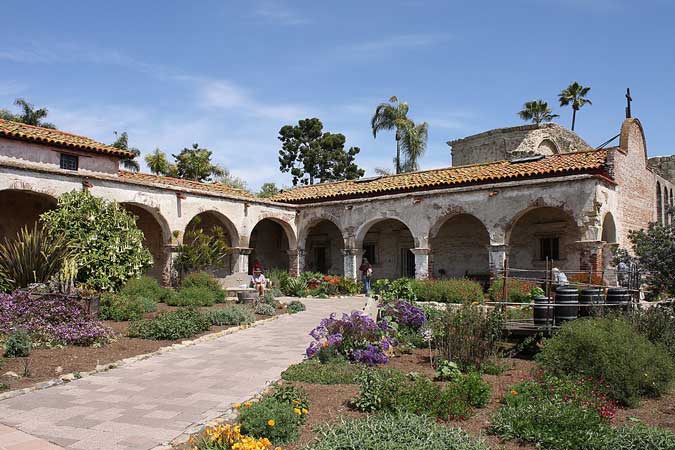
Established in 1776, this was the seventh of California’s 21-mission chain. It became a prosperous agricultural center with skilled artisans. The Great Stone Church, once the largest building in Alta California, collapsed in an 1812 earthquake. Its tumbled ruins are a significant attraction. Each spring, thousands of cliff swallows return to the mission and are part of a local legend. The spiritual and agricultural center of early California can be found in the courtyards, workshops, and chapels.
Colorado – Bent’s Old Fort (La Junta)

Constructed in 1833, Bent’s Old Fort served as a meeting point for Plains Indians, trappers, traders, and travelers on the Santa Fe Trail. It was one of the few places where diverse cultures gathered peacefully for trade, diplomacy, and shelter on the harsh frontier.
Reconstructed using historical records, the fort immerses visitors in 1840s life with furnished rooms, blacksmithing demonstrations, and costumed interpreters. It offers a rare window into the multicultural commerce that shaped the American West before widespread settlement.
Connecticut – Mark Twain House (Hartford)

Samuel Clemens, better known as Mark Twain, wrote The Adventures of Tom Sawyer, Adventures of Huckleberry Finn, and A Connecticut Yankee in King Arthur’s Court in this Victorian Gothic mansion. The interior decoration is as extravagant as Twain’s sense of humor, fortune, and imagination, and features numerous custom-designed elements tailored to his specifications.
Even the details are spot-on, such as the billiards room where Clemens often played with guests and made final edits to his work.
It is a pilgrimage site for Twain fans and an embodiment of the Gilded Age of American literature.
Delaware – Old State House (Dover)

Built in 1791, the Old State House was the capital of Delaware for over 150 years. This Georgian building, with its intact legislative chambers, embodies ideals of the early republic. Legislators gathered here to debate issues such as taxation and statehood. It is one of the few examples of early American government left largely intact.
Florida – Castillo de San Marcos (St. Augustine)
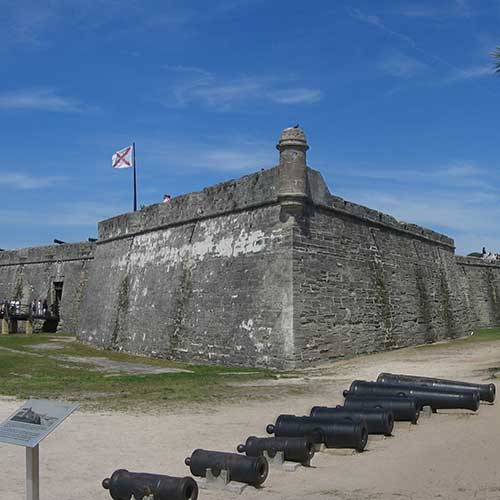
Completed in 1695, the coquina fort was the foundation of Spain’s military presence in Florida. The fort’s porous limestone shell absorbed cannon fire, becoming nearly indestructible in centuries of conflict between Spain, Britain, the United States, and Indigenous peoples.
Visitors can explore the fort’s bastions, casemates, and drawbridges that have withstood over 300 years of time. The fortification is a monument to both colonial competition and the resilience of America’s oldest city, with a continuous European-founded population.
Georgia – Swan House (Atlanta)

Built in 1928 for the Inman family, one of Atlanta’s great business dynasties, the Swan House exemplifies the splendor and social striving of the early 20th-century South. Classical and Renaissance Revival features of the home showcase the region’s transition from post-Civil War rebuilding to modern-day prosperity.
Preserved as it was originally lived in, the home’s interiors offer a glimpse into the life of Atlanta’s elite during a time of rapid growth and change. Today, the Swan House serves as a cornerstone of the Atlanta History Center, chronicling the city’s cultural development.
Hawaii – ʻIolani Palace (Honolulu)

Built in 1882, ʻIolani Palace served as the home of Hawaiian monarchs and was a political hub in the islands’ final years as an independent nation. ʻIolani Palace was outfitted with electric lighting and a telephone well before the White House.
After Queen Liliʻuokalani’s overthrow in 1893, the palace became the center of provisional and territorial administrations. Today, with its restored throne rooms, regalia, and artifacts, the palace pays homage to a rich history of sovereignty, resistance, and cultural pride.
Idaho – Old Idaho Penitentiary (Boise)
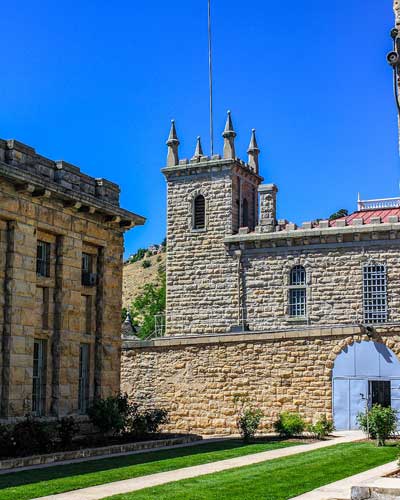
In operation from 1872 to 1973, the territorial prison was home to outlaws, murderers, and even early political radicals. Constructed of sandstone quarried from the hills by inmates, the buildings document a century of prison architecture.
Exhibits explore the history of riots and escapes, life on the inside, and the evolution of American philosophies of punishment. Its austere grounds put the place of frontier justice into stark focus.
Illinois – Old State Capitol (Springfield)

The Old State Capitol is entwined with Abraham Lincoln‘s political ascent. He delivered his “House Divided” speech here. He argued cases before the state supreme court and worked with future national leaders.
Following his assassination, Lincoln’s body lay in state in these halls. Restored to its appearance in the 1860s, the building is a stirring tribute to the man who saved the Union.
Indiana – George Rogers Clark Memorial (Vincennes)

A Classical monument commemorates Clark’s bold 1779 winter expedition that captured Fort Sackville. One of the most significant western victories of the Revolutionary War, it helped ensure the Ohio River Valley for the new United States.
Murals depicting the expedition emphasize the fortitude and perseverance of Clark’s men. The memorial is a tribute to the frontier battles often forgotten in the nation’s story.
Iowa – Amana Colonies (Amana)

The Amana Colonies were established by German Pietists who desired to live in a Christian community, sharing a common devotion to work and high-quality craftsmanship. For almost 80 years, members of the Amana Society lived as communalists, sharing labor and property.
The restoration of their homes, workshops, communal kitchens, and storehouses documents an unusual society that shunned industrialization and upheld a very high standard of craftsmanship. The Amana Colonies represent one of the most successful communal societies in American history.
Kansas – Brown v. Board of Education Historic Site (Topeka)

Located in the former Monroe Elementary School, this facility commemorates the landmark 1954 Supreme Court case that ruled segregation in public schools unconstitutional. Displays feature daily Jim Crow life inequities endured by African American students.
Interactive stations and oral histories highlight the bravery of families who stood up to unjust laws. The museum serves as a foundational resource for learning about civil rights.
Kentucky – Ashland, The Henry Clay Estate (Lexington)

Henry Clay—”The Great Pacificator”—lived and worked at Ashland, crafting significant national compromises. His influence in Congress possibly delayed the outbreak of the Civil War for decades. The preserved rooms reflect his political life and the agricultural realities of the antebellum South. Ashland is essential for understanding early American statesmanship.
Louisiana – St. Louis Cathedral (New Orleans)

Dominating Jackson Square, the St. Louis Cathedral is the oldest continuously active Roman Catholic cathedral in the United States. Constructed in the 1720s and again in 1850, it has undergone significant changes through the years of French, Spanish, and American rule.
Historic artworks, tombs, and religious artifacts housed in the cathedral’s interior reveal New Orleans’ multicultural character. The cathedral is the symbolic heart of the city.
Maine – Wadsworth–Longfellow House (Portland)

Constructed in 1785, this house was home to three generations of the Wadsworth–Longfellow family, including poet Henry Wadsworth Longfellow. The original furnishings are largely intact, providing a unique glimpse into early American domestic life. The house tells the story of New England family history, as well as the roots of one of America’s most famous writers. It is one of the most well-preserved 18th-century houses in Maine.
Maryland – Fort McHenry (Baltimore)

Fort McHenry’s successful defense against the British in the War of 1812 inspired the writing of “The Star-Spangled Banner.” The star-shaped fort withstood 25 hours of relentless British bombardment. Tourists walk along the ramparts where the battle flag flew throughout the night. The fort’s legacy as a symbol of American identity is undeniable.
Massachusetts – Old North Church (Boston)

Completed in 1723, Old North Church was the site of the lantern signals “one if by land, two if by sea” that set Paul Revere’s midnight ride in motion in 1775. The church’s steeple became a symbol of colonial defiance.
The box pews and galleries inside the Old North Church retain the look and atmosphere of 18th-century Boston. The church is a major stop on the Freedom Trail and a symbol of revolutionary defiance.
Michigan – Fort Mackinac (Mackinac Island)

Built by the British in 1780, Fort Mackinac had important roles in the Revolutionary War and the War of 1812. Perched high on a bluff, it commanded the gateway to the Great Lakes.
The restored barracks, officers’ quarters, and guardhouses illustrate military life at a remote frontier post. The fort is the centerpiece of Mackinac Island’s combination of natural beauty and military history.
Minnesota – Split Rock Lighthouse (Two Harbors)

Constructed in 1910 in the wake of a shipwreck tragedy, Split Rock Lighthouse was established to help protect Lake Superior’s treacherous waters. The lighthouse’s breathtaking location, perched high upon a vertical cliff, puts it among America’s most photographed. The original keeper’s home and lens have been carefully preserved for public tours that showcase early 20th-century technology. Split Rock reflects Minnesota’s rich history with the Great Lakes shipping industry.
Mississippi – Beauvoir (Biloxi)

Beauvoir was Jefferson Davis’s last residence, as well as later the home for the promotion of his memory and that of the Confederacy. The two-story Beauvoir mansion features elements of coastal architecture characteristic of Southern plantations from the latter half of the 19th century.
Beauvoir’s museum interprets the history of the Civil War, Reconstruction, and changing views of Davis’s memory. This historic building is controversial but key to Southern memory.
Missouri – Old Courthouse (St. Louis)

Best known as the site of the Dred Scott trials, the Old Courthouse played a central role in the national controversy over slavery. Scott’s case was appealed to the U.S. Supreme Court. Its ruling further divided the nation and moved it on the path to civil war. The courthouse was also the site of important women’s suffrage cases.
Today, the courthouse’s murals and restored courtrooms tell the stories of the fights for freedom, equality, and citizenship in America.
Montana – Little Bighorn Battlefield Visitor Center (Crow Agency)

Though a new building, the Visitor Center is located on one of the most historically significant battlefields in the American West. Little Bighorn is where Lakota, Northern Cheyenne, and Arapaho warriors defeated Lt. Col. George Custer and the 7th Cavalry in 1876.
Exhibits present Native perspectives and remember warriors like Crazy Horse, Gall, Two Moons, and Wooden Leg. The landscape of headstones for Native and U.S. soldiers also maintains a story of resistance, sovereignty, and the fight to defend Indigenous homelands.

Nebraska – Buffum House at Fort Robinson (Crawford)
The Buffum House is the finest example of an officer’s residence remaining at Fort Robinson. This major frontier military post was the epicenter of the Indian Wars of the late 19th century and the site of the death of the legendary Oglala Lakota leader Crazy Horse. As you walk through the house, you will see evidence of both the military life and the uneasy and tragic relationship between the U.S. Army and Native nations that helped shape the Great Plains.
Nevada – Old Mormon Fort (Las Vegas)

Built in 1855, this adobe fort is the site of the first non-Native American settlement in the Las Vegas Valley. Constructed as a trading post, way station, and brief religious outpost by Mormon missionaries in the middle of a harsh desert, this fort is where they made their temporary home. While only a portion of the fort remains today, its walls tell the story of how a remote desert water hole grew into a city of tomorrow.
The history museum on the site explores the interplay between migration, religion, and frontier survival that predated the modern global city by many decades.
New Hampshire – Strawbery Banke Museum (Portsmouth)

Strawbery Banke protects one of the nation’s oldest continuously developed neighborhoods. Historic homes from the 1600s to the 1900s illustrate how families adapted to the changing landscape of commerce, immigration, and war. The buildings are furnished as they would have been at different times.
The result is an immersive journey through New England history from colonial merchants to Ukrainian immigrants.
New Jersey – Thomas Edison National Historical Park (West Orange)

The property also encompasses Edison’s large laboratory complex, where he and his staff developed or refined the technologies associated with the incandescent light bulb filament, the phonograph, the film camera, the storage battery, and many others. The laboratories are kept as they were, with original equipment, notebooks, and rooms where chemicals and metals were stored.
The nearby home of Edison, Glenmont, reflects the private side of Edison’s life and his family. Taken together, the estate and laboratory showcase the tireless process of innovation and experimentation that helped usher in the modern technological era.
New Mexico – Palace of the Governors (Santa Fe)

Constructed of adobe in 1610, this is the oldest public building in the U.S. that is still in use. It housed the seat of government for the Spanish colony of New Mexico, the Mexican territory, and the American administration. The long portal has been a marketplace, a political stage, and a crossroads of Indigenous, Hispanic, and Anglo cultures.
Today, it anchors the New Mexico History Museum, an embodiment of four centuries of Southwestern history.
New York – Fraunces Tavern (New York City)

Fraunces Tavern is among the oldest buildings in New York. It was a hub of Revolutionary activity. Most famously, George Washington gave his tearful farewell to his officers there in 1783.
The Sons of Liberty met there, and the new federal government did as well at one point. The building is now a museum of artifacts, documents, and rooms.
North Carolina – Tryon Palace (New Bern)

Completed in 1770, Tryon Palace was the largest government building in colonial North Carolina and the home of the province’s royal governors. The palace quickly became a focal point of resentment over taxation and British authority, contributing to pre-revolutionary fervor.
Burned in 1798 and later rebuilt, the palace is today encircled by meticulously restored gardens and exhibits and is one of the most authentic glimpses into the colonial South.
North Dakota – Former Governors’ Mansion (Bismarck)

Constructed in 1884, this Victorian mansion was home to 20 North Dakota governors. This state house museum’s original rooms are preserved to depict the home life and political scene faced by territorial and state leaders.
The mansion’s furnishings and restorations show changes in styles, technology, and government from the late 1800s through the early 20th century. It offers one of the most complete looks at midwestern political history.

Ohio – National Underground Railroad Freedom Center (Cincinnati)
Situated on the banks of the Ohio River—the border between slavery and freedom—the center features buildings and artifacts that have connections to the Underground Railroad. It is a place dedicated to remembering the heroic efforts of those who helped African Americans escape bondage at great personal risk. Interactive exhibits feature narrative, art, original buildings, and multimedia presentations, linking past civil rights abuses to today’s human rights challenges. The site is a monument to freedom in action.
Oklahoma – Spiro Mounds Archaeological Center (Spiro)

Spiro Mounds is a pre-Columbian archaeological site in the United States. At its peak, the Mississippian culture that built it established extensive trade networks, political structures, and ceremonial complexes between 800 and 1450 CE. Excavated artifacts show remarkable skill in embossed copper plates, shell carvings, and textiles.
The site redefines our understanding of Indigenous civilizations before European contact.
Oregon – Pittock Mansion (Portland)

Constructed in 1914 by newspaper baron Henry Pittock, the mansion symbolizes Portland’s journey from frontier outpost to thriving metropolis. The eclectic blend of French Renaissance and Victorian styles displays extravagance and modernity, including some of the first central vacuum and elevator technology.
It sits on a hill, dominating Portland, with sweeping views of the Cascades. The mansion showcases the ambition and artisanship that shaped Oregon in the early 1900s.
Pennsylvania – Independence Hall (Philadelphia)
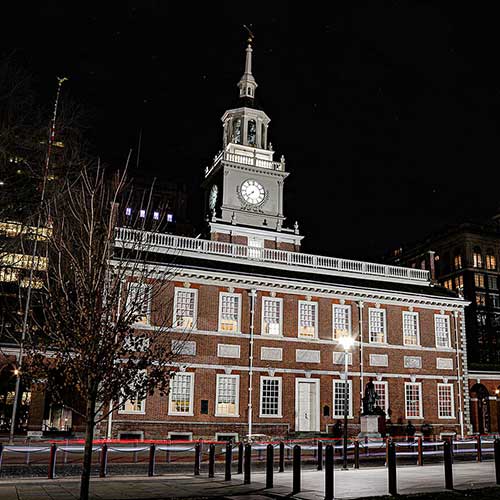
Independence Hall is where the United States was born. In its chambers, delegates signed the Declaration of Independence and the U.S. Constitution. The preserved Assembly Room is where Franklin, Jefferson, Adams, and Washington debated the country’s future. It’s one of the world’s most historically significant buildings.
Rhode Island – The Breakers (Newport)

Constructed in 1895 for Cornelius Vanderbilt II, The Breakers is the ultimate symbol of the excess of the Gilded Age. The 70-room mansion was filled with marble, gold leaf, mosaics, and European art imports.
The house is a testament to the immense industrial fortunes of the age and the extreme income inequality that accompanied it. The Breakers now serves as a monument to both artistic creation and unbridled capitalism.
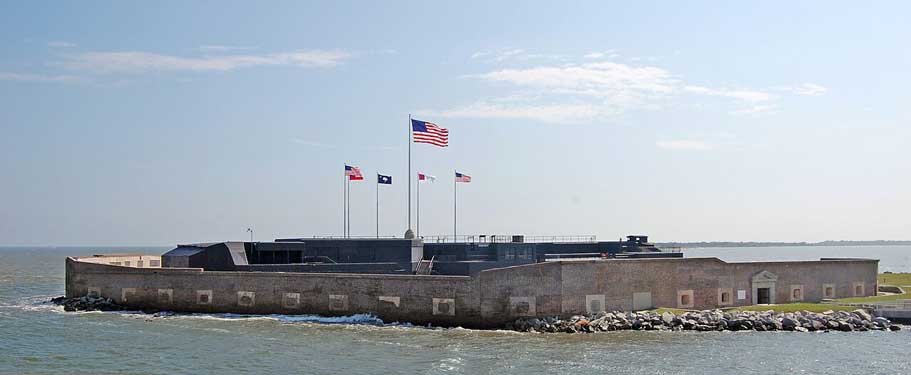
South Carolina – Fort Sumter (Charleston)
Fort Sumter is where the Civil War began. On April 12, 1861, Confederate cannons opened fire on the federal fort. The bombardment that followed forever reshaped the nation.
Visitors see brick ruins, cannons, and museum exhibits. They explore the complex events that led up to the war. The fort’s location in Charleston Harbor highlights the strategic—and symbolic—importance of the opening shot.
South Dakota – Mount Rushmore Sculptor’s Studio (Keystone)

The studio where sculptor Gutzon Borglum carved the 6-foot scale model of the mountain that became Mount Rushmore. His tools, sketches, and the original equipment are on display.
The studio also sheds light on some of the controversy surrounding the monument, including the carving on sacred Lakota land and the destruction of the Black Hills. It provides visitors with a comprehensive view of the monument, extending beyond its famous faces.
Tennessee – The Hermitage (Nashville)

The Hermitage was President Andrew Jackson’s residence and a working plantation that operated with enslaved labor. The preserved rooms provide a glimpse into the home of one of America’s most controversial leaders.
Slave quarters are located on the grounds, along with an extensive historical interpretation. It is a place where the history of a president and slavery intersect.
Texas – The Alamo (San Antonio)

Site of the 1836 Battle of the Alamo. The Alamo is a seminal event in Texas history. The mission church is the most recognizable remaining building of the original complex. Exhibits and restored areas tell the story of the fight for Texas independence, the Battle of the Alamo, and the conflict between Mexico and the encroaching settlers.
It is Texas’s most visited and most iconic historic site.
Utah – Beehive House (Salt Lake City)

Built in 1854, the Beehive House was the residence of Brigham Young, the leader of the Latter-day Saints and first governor of the Utah Territory. The architecture and furnishings of the house illustrate the pioneer skills and communal religious life.
The Beehive House is a symbol of leadership, settlement, and the establishment of a new society in the Great Basin. The Beehive House is of continued interest and central to understanding the early history of Utah and the Mormon frontier.
Vermont – Shelburne Museum Historic Village (Shelburne)
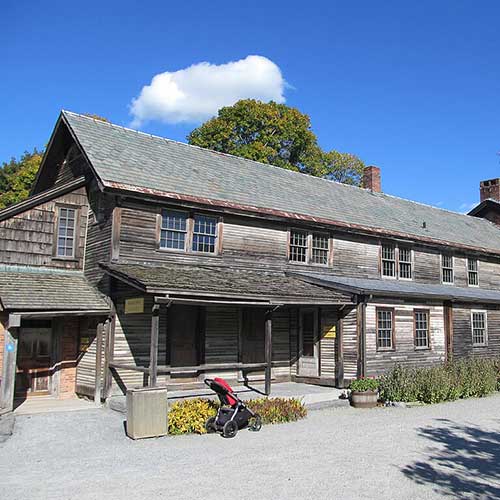
The recreated village features dozens of preserved buildings, including homes, barns, shops, and a meeting house, all relocated from various locations throughout Vermont. These structures provide a glimpse into rural life from the 1700s to the early 1900s.
Inside are collections of crafts, textiles, tools, and folk art. The collections represent one of the most significant historic landscapes in New England.
Virginia – Monticello (Charlottesville)

Monticello was Thomas Jefferson’s architectural vision, a combination of classical forms and Enlightenment ideals. It was also the product of the thinking behind his intellectual passions: science, gardening, philosophy, and politics. But it is also a place that never allows us to forget that it was built and maintained through the forced labor of enslaved African Americans, including the Hemings family.
Monticello is the home of the brilliance and the contradictions of one of our most contentious founders.
Washington – Fort Nisqually Granary (Tacoma)

Constructed in 1843, the granary is among the oldest of a scattering of Hudson’s Bay Company outposts left from its fur-trading empire in the Pacific Northwest. It is a tangible piece of the earliest economic and cultural exchange between Indigenous nations and European fur traders.
Today, the granary is part of a reconstructed fort that offers a glimpse into frontier economies and cross-cultural exchange prior to American settlement in the region.
West Virginia – West Virginia Independence Hall (Wheeling)

The 1861–63 convention, which elected Unionist leaders to leave Confederate Virginia and form the state of West Virginia, met in this building. The restored chambers of this hall house artifacts and documents related to the state of the union during the Civil War.
The hall itself is a symbol of self-determination and constitutional action under severe pressure. It is one of the most significant political sites of the Civil War.
Wisconsin – Villa Louis (Prairie du Chien)

Villa Louis offers a glimpse into the opulent world of the Dousman family, one of Wisconsin’s most successful fur-trading and entrepreneurial families. The villa is located on land that was an important military and trading post. Reconstructed rooms showcase the family’s wealth and sophistication, as well as their influence on Wisconsin’s economic development. Villa Louis is one of the finest examples of a historic house museum in the Midwest.
Wyoming – Fort Laramie National Historic Site (Fort Laramie)

Fort Laramie was a significant military and diplomatic outpost on the Oregon, Mormon, and California Trails. Emigrants, Native nations, traders, and the U.S. Army all came through here.
Preserved barracks, officers’ quarters, and parade grounds tell the story of western expansion and contested borders. The fort is one of the most historically significant sites in the American West.
In searching for the oldest building in every state, one fact is abundantly clear: The story of the United States has been written in more places than the marquee monuments and landmark locales. America’s history has been shaped in the regular spaces where people went about the day-to-day business of living.
Whether struggling to survive or finding ways to thrive, ordinary citizens found spaces to dream and work and raise families and found ways to build stronger communities and fight for their rights. These historic buildings are reminders that history is not just a series of facts and dates, but a story anchored in the geographies, cultures, and crossroads of particular places. These buildings are not only tangible witnesses to revolutions, migrations, innovations, movements, and changes of all kinds, but also gateways to the past.
Taken together, they form a countrywide patchwork of remembrance. The chance to visit even one such structure provides a window into a pivotal episode in the American experience, but the opportunity to see the collection as a whole illuminates the nation’s great variety and its rich complexity. As sentinels of the nation’s past, these buildings beckon us to learn about what has gone before, but also to consider how the past continues to impact the world in which we live today.


Most interesting 👍👍