
Beavers, Blankets, and Bloodshed: Hudson’s Bay Company History
 Reading Time: 16 minutes
 In 1670, a group of English investors received a royal charter to form the Hudson’s Bay Company. From this moment on, the Hudson’s Bay Company would come to control a vast area surrounding the Hudson Bay, known as Rupert’s Land in modern-day Canada. This chartered corporation, initially formed as a fur-trading business, would expand far beyond that.
Empowered by an English king and armed with monopoly rights to trade with Indigenous Peoples, the Hudson’s Bay Company would come to rule over rivers, forests, and people across much of northern North America. Described by one modern historian as “a company with the powers of a state,” the HBC would be one of the few cases in which a private company was granted sovereign authority.
Empowered by European demand for beaver pelts, the Hudson’s Bay Company became one of history’s most formidable corporations. The company’s trading posts were tools of empire that would help to drive exploration, settlement, and Indigenous dispossession across North America. By trade, colonization, and force, the HBC would leave an indelible mark on the continent—one defined as much by violence and displacement as by commerce and profit.
A Royal Charter and Unchecked Power
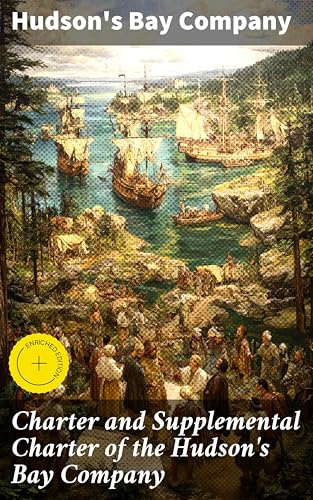
The Hudson’s Bay Company’s control over Rupert’s Land was granted by a royal charter issued in 1670 by King Charles II. The charter awarded Rupert and his company “absolute and undoubted Lordship of power, and Pre-eminence” over all trade across the entire watershed that drained into Hudson Bay. Covering millions of square miles, Rupert’s Land was much larger than most European countries of the time. The charter even used the strong language of absolute ownership, calling the HBC the “true and absolute Lords and Proprietors” of Rupert’s Land.

The charter did more than offer the HBC a chance to make a profit from trade in Rupert’s Land. It also gave them the authority to settle, administer, and defend it. The HBC had the right to erect forts, conduct warfare, make treaties, and mete out justice. The result was that the HBC effectively governed vast tracts of land with very little day-to-day oversight from London.
The indigenous nations that had already been governing the land and caring for the territories for thousands of years were not consulted about the charter. The authority of the HBC over Rupert’s Land was enforced, initially, by trade goods, armed forts, and the law made in Britain, but not local to the people who lived in the land itself.
Corporate rule was applied by small, remote trading posts and by company men who served as merchants, judges, and diplomats. Appointed by the HBC, its governors often had almost total control of a region hundreds of miles away from the nearest competing authority. As one critic later described it, the HBC ruled its territories “like a medieval lordship.” Company executives made decisions about thousands of people and tracts of land in boardrooms, many thousands of miles away in London.
A lack of competition and oversight often led to corruption and stagnation in the HBC’s rule over Rupert’s Land. The company’s trade monopoly stymied competition and innovation, and it had little interest in settling or developing the land. Its primary interest was in the profit of the fur trade. Indigenous communities in the region became heavily dependent on the trade relationships with the company, as the HBC’s trade goods and practices heavily disrupted traditional ways of life. By creating a corporate dominion over both land and people, the charter of 1670 established a territorial empire driven by profit rather than nationhood, setting the stage for centuries of colonial conflict, exploitation, and resistance in northern North America.
The Fur Trade Economy
Beaver pelts were the primary source of wealth for the Hudson’s Bay Company and the economic engine behind its swift growth. During the 17th and 18th centuries, beaver felt was a luxury used in fashionable European hats, denoting prestige and sophistication. Demand for beaver pelts skyrocketed in London, Paris, and Amsterdam. North America’s rivers became part of an international trade network. In the words of one witness, “fashion set in motion the forests of another continent, to connect consumers with First Nations hunters.”
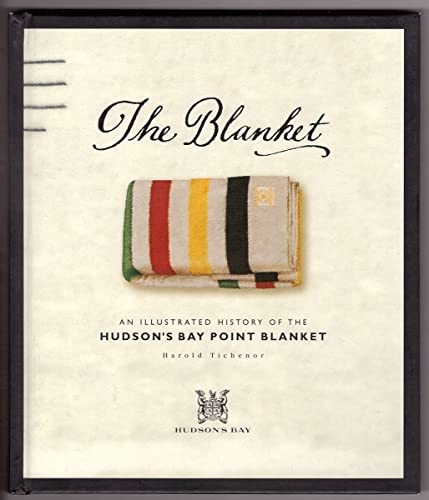
In exchange for pelts, the company traded European-made goods. Wool blankets, metal tools, kettles, glass beads, and firearms were all common products of trade. These items were practical and long-lasting, and increasingly they became necessities as well. Blankets became so ubiquitous that the term “point blankets” was often used as a metonym for the trade itself. These goods created a dependency on the HBC supply system.

European consumer demand drove the location of the HBC’s next trading post. As beaver populations dwindled along the coast, trappers and traders moved further inland to keep up with demand. New posts were established along rivers and portage routes. Traders were largely unconcerned with the established territories that these locations traversed. The demand for furs had a domino effect on wildlife and Indigenous hunting patterns.
While the trade enriched shareholders, it was often exploitive. Firearms exchanged through trade shifted power dynamics among Indigenous peoples. Indigenous dependency on European trade goods eroded traditional economies. What started as a trade for frivolities of style and sophistication became an extractive system with a vast human and environmental toll – a system that built an empire on the back of a hat.
Indigenous Partnerships and Exploitation
The HBC’s survival and prosperity relied upon Indigenous peoples. First Nations traders could navigate river systems and overland portages, and their seasonal movement of game animals was often unknown to European traders. Cree, Dene, Anishinaabe, and other nations all became key trading partners, providing valuable beaver pelts and taking trade further inland. Company officials of the early days did not hide the fact. One factor wrote in his journals that without the Indigenous traders, their posts would be “useless wooden shells on the edge of the bay.”

The relationship between the two groups was imbalanced. The company was able to exert control over who had access to European goods and at what prices. Indigenous people were often able to trade high-value furs in Europe for items that cost a fraction of their European value. The company was able to structure relations so that, over time, Indigenous people became dependent on the use of trade items such as firearms, metal tools, and blankets.
In times of increased competition, the company also pushed for overtrapping. It wasn’t long before local beaver populations were overexploited, disrupting traditional subsistence activities. Hunters had to travel farther and farther from home, disrupting family and seasonal routines. Debt, repaid in labour or more furs, became more common.
The consequences were long-lasting. Disease, alcohol, environmental loss, and changes in power relations, which the fur trade introduced, often destabilized Indigenous communities. Although some groups initially benefited from the trade relationship, the company’s greater long-term power, driven by its profit motive, worked against Indigenous peoples’ long-term stability. Cooperation with the fur trade had long-term effects on Indigenous cultures, communities, and their northern landscapes.
Forts, Frontiers, and Rivalries
The Hudson’s Bay Company established a network of forts that operated as both trading centers and military outposts. Forts like York Factory, Fort Albany, and Fort Churchill became focal points of corporate power in remote hinterlands, beyond the direct reach of the state. Positioned to control river access points and passage routes, these strategic locations enabled the company to monopolize trade routes and choke off competition. Yet, their isolated presence also made them targets and flashpoints of violence in a frontier rife with conflict.
Rivalries quickly developed with French traders and later the North West Company, an inland-focused competitor that directly threatened the HBC’s coastal strongholds. Competition soon turned violent. In 1697, amid King William’s War, French forces led by Pierre Le Moyne d’Iberville captured York Factory following a naval engagement in Hudson Bay. The fort’s repeated capture and recapture demonstrated how imperial conflicts spilled directly into commercial rivalries.

Violence increased during the late 18th and early 19th centuries. Employees from the Hudson’s Bay Company and the North West Company systematically disrupted each other, destroying caches of supplies, stealing furs, and intercepting trading parties. Armed conflicts became frequent along the Red River and in what is now Manitoba. Traders began to travel in armed groups, prepared for ambush rather than parley.
The rivalry came to a bloody head in 1816 at the Battle of Seven Oaks. A confrontation between HBC settlers and Métis allied with the North West Company resulted in over twenty deaths. Despite its brevity, the battle shocked British authorities and underscored how corporate rivalry had devolved into outright warfare.
These violent encounters had destabilizing effects on entire regions. Indigenous communities were drawn into alliances by force, trade routes became militarized, and profit increasingly depended on force. The eventual merger of the Hudson’s Bay Company and the North West Company in 1821 put an end to the bloodshed—but only after decades of violence had indelibly shaped the fur trade frontier.
Bloodshed and Colonial Expansion
Violence and expansion went hand in hand. Trade along the rivers became contested as posts were fortified. Canoe routes militarized into contested corridors enforced by men, cannon, and company writ. A wild and woolly world of beaver pelts drew empires, Indigenous nations, and competing companies into bloodied bids for profit.
Company trade often became the theater of imperial warfare. In 1697, during the French and Indian War, French Canadian commander Pierre Le Moyne d’Iberville captured York Factory in a sea battle in Hudson Bay. York was repeatedly lost and retaken during the imperial wars that followed, as global conflict reshaped who controlled the bay’s commerce. As one French commentator wrote, the victor in Hudson Bay was “decided by shot as much as by trade.”
From 1812 to 1821, a corporate rivalry over food supplies led to the Pemmican War. The Hudson’s Bay Company and its main trading competitor, the North West Company, jockeyed for control over pemmican. The foodstuff, consisting of animal tallow, meat, and often dried berries, made by Métis communities, served as fuel for long-distance trade, and HBC policies restricting its export threatened the livelihoods of producers. Raids, seizures, and intimidation of company personnel and posts soon followed, making food the weapon of choice in a violent corporate conflict.

Bloodshed came to a head in 1816 at the Battle of Seven Oaks. A short-lived battle between an HBC settler community and a group of Métis armed for the North West Company resulted in the death of more than twenty men. Brief as it was, the violence of Seven Oaks was shocking enough to drive home to imperial administrators that the unrestrained corporate rivalry had morphed into something more akin to outright warfare.
Violence also enabled the company to claim territory. Rupert’s Land was treated as if it were the Company’s to take and control. Forts both physically demarcated this expansion and choked access to traditional hunting areas for Indigenous communities. Trade dominance became geographic possession, and northern North America was remade in the process.
The company also assumed the colonial governance of those living and working in the Bay. The company had its own system of laws, adjudication, and punishments, many of which operated with an eye to the company’s own self-interests. Violence secured trade, and trade justified territorial possession, and possession required the authority to govern. In this way, trade, conflict, and colonial governance were made and remade, and the Hudson’s Bay Company’s empire was built through these many acts of bloodshed as much as through barter.
From Fur Empire to Nation Builder
Midway through the nineteenth century, the fur trade that had made the Hudson’s Bay Company started to decline. The demand for beaver felt waned in European fashion, over-hunting thinned the pelt supply, and steam transport cut the strategic value of the inland canoe routes. The empire by river and fort was no longer certain, as the annual profit sagged and the Company’s monopoly seemed to be of a bygone era.
The political winds soon changed as well. Britain no longer wanted to administer millions of square miles of North America through a private company. In 1869, the Hudson’s Bay Company signed an agreement to sell Rupert’s Land to the newly formed Dominion of Canada. For £300,000 and generous land grants, the company ceded political control over almost one-third of the continent. “We have purchased a nation,” one Canadian official gushed years later, “not by conquest, but by purchase.”

Argent, a cross gules between four beavers passant proper.
Crest: On a chapeau gules turned up ermine a squirrel sejant proper.
Supporters: Two bucks proper.
Latin Motto: pro pelle cutem (“skin for leather” , apparently a play on Job 2:4: Pellem pro pelle “skin for skin”. /Qyd, CC BY-SA 3.0, via Wikimedia Commons
The sale overnight reconfigured the national border. Rupert’s Land was reorganized into Manitoba, Saskatchewan, Alberta, and the Northwest Territories. Lines that had once loosely and pragmatically marked canoe trade routes now solidified into political borders. The transition was not smooth: Indigenous peoples and Métis communities who had been left out of negotiations fought back against what they saw as another land grab.
The Red River Resistance of 1869–70 laid bare the reality of the Company’s corporate rule becoming the national policy of the Canadian state. Métis leader Louis Riel refused to cede control of the area to Canada without meaningful local consultation. So the new state was forced to reckon with the human toll of its territorial expansion. The Hudson’s Bay Company, once both ruler and judge, stepped back as the Canadian state took over.
In its new role as a national fabricator, the Hudson’s Bay Company diversified into retail, land sales, and settlement support, becoming a mainstay of Canada’s economic growth and expansion. If the fur trade empire had faded, its influence would remain. Hudson’s Bay Company did not just trade in history. It drew the map of the nation.

Reinvention and Survival
By the late nineteenth century, fur could no longer be the driving force of the Hudson’s Bay Company’s business. Settlers were rapidly filling in the nooks and crannies of North America, and the frontier was quickly closing. The more remote posts lost their raison d’être, and the company began converting them to serve settlers, miners, and farmers as supply outposts rather than trading posts. This was the first in a series of steps away from fur and the economic model of North America’s frontiers.
This transition accelerated in the early decades of the twentieth century. Trading posts and depots became department stores in expanding towns and cities across Canada. The Hudson’s Bay Company sold clothes, household goods, and food, drawing on its well-developed historical logistics and supply chain. Bolts of cloth, tools, and the sundries and necessities of domestic life gradually replaced Beaver pelts.

Brand recognition became the key to survival in a crowded and competitive market. The company traded on its long history, and its corporate brand became a shortcut to trust and continuity in a rapidly changing country. The once-famous striped HBC blanket became a national icon. “We have learned,” one executive later wrote, “to sell our past while operating in the present.”
The reinvention was put to the test by a series of economic crises. The world wars, the Great Depression, and the changing currents of global trade forced continuous, and sometimes wrenching, adaptation. Diversification of investments, new accounting methods, new retail practices, and expansion beyond Canada reflected and responded to the globalization of commercial practices that HBC had itself helped launch.
In adapting to these changing economies, the Hudson’s Bay Company has outlived the world that gave it birth. Its survival history recapitulates the economic history of North America—from an imperial commercial system of fortified posts drawing down the wealth of fur-bearing animals to an era of globalization, consumer capitalism, and flagship stores.
Legacy and Controversy of the Hudson’s Bay Company
The Hudson’s Bay Company’s historical legacy is one of deep contradiction. The company’s economic impact was enormous, opening trade routes, driving settlement, and helping to define the boundaries of nations. But these accomplishments were not without a steep human cost: Indigenous people paid the price of displacement, dependency, and cultural disruption by a profit-driven colonial machine.
The company’s legacy revision has begun in earnest. Once heralded as a model of 18th-century entrepreneurship, the HBC is today more often cast as a corporate behemoth with political influence but no democratic mandate. The company’s journals and letters show that trade was frequently conducted through force, unequal exchange, and exclusion. As one contemporary critic put it, “commerce became the mask of conquest”.

Popular memory is changing too. The national reverence for the “Mighty Company” of museum exhibits, textbooks, and Indigenous elders alike is being challenged as newer generations of archaeologists, historians, and First Nations scholars problematize simplistic fur trade narratives. Archaeological sites document long-term impacts of disease, resource extraction, and social disruption.
The debate over colonial culpability is also ongoing. Arguments persist about whether the HBC should be judged by the standards of its time, or whether the actions and inactions of company officials merit further acknowledgment and redress. The company has issued statements acknowledging Indigenous partnership, but has been criticized for glossing over harm.
Today, the Hudson’s Bay Company is both a national icon and a contested legacy. Its story provokes difficult questions about how wealth was created, at what cost, and how we remember our past.
Commerce, Power, and Consequences
For over 300 years, the Hudson’s Bay Company (HBC) ruled much of North America with power unmatched by any other trading company in history. It set borders, controlled trade, directed settlement, and, in many ways, governed vast expanses of the continent through a royal charter. It was more than a fur trading company; it has permanently altered borders, economies, and Indigenous communities.
The Hudson’s Bay Company is a significant part of North American history because it redefined the intersection of commerce and statecraft. The HBC negotiated treaties, enforced laws, and waged economic and physical warfare on a global scale to maximize profit. It was, as one 18th-century critic put it, “a company with the powers of a kingdom. Few, if any, corporations have ever exercised such control over territory and people.
HBC’s legacy is also a cautionary tale about corporate power. The company’s commercial dominance fuelled exploration and nation-building, but also dispossession, violence, and dependence. Indigenous nations and individuals were key to its rise, but often paid the highest price for its rule. HBC’s history forces us to reckon with how profit-driven institutions can alter societies for generations.
In the 21st century, the company failed to evolve with a global retail economy. Acquired by American businessman Jerry Zucker in 2006 and then by NRDC Equity Partners in 2008, HBC transformed from a fur empire to a department store. The company went public in 2012, returned to private ownership in 2020, and slowly began divesting assets in response to retail pressures.
The end came quickly. After spinning off its U.S. assets into Saks Global in late 2024, HBC filed for creditor protection in March 2025. By June, its remaining stores were shuttered, and its IP was sold to Canadian Tire. In August 2025, the Hudson’s Bay Company itself was quietly renamed a numbered holding firm. The legal corporation and a 355-year-old brand both lived on, but the once-mighty HBC no longer existed.
HBC’s history shows how corporations can build nations — and outlive their usefulness. Its story remains an instructive case study in the power and consequence of commerce.


