

Blood, Battle, & Conquest: How Genghis Khan Forged the Mongol Empire
 Reading Time: 16 minutes
 In the annals of human history, few achievements match the breathtaking scope of the Mongol Empire. An unimaginable vista of land, from the steppes of Central Asia to the shores of Eastern Europe and deep into the heart of Asia, once paid homage to a single name: Genghis Khan.
This article chronicles the awe-inspiring rise of Genghis Khan from a modest nomadic child to the architect of the most expansive empire on Earth. We endeavor to dissect the life and times of Genghis Khan, scrutinizing his formative years, his unparalleled conquests, and the enduring legacy of the man who became a byword for empire and dominion.
The Rise of a Legend
Born as Temüjin in the steppes of Mongolia around 1162, Genghis Khan’s early life was characterized by hardship and uncertainty. Growing up in the nomadic culture of the Mongol tribes, he was exposed to the harsh realities of steppe life from a young age. The steppe was a challenging environment, requiring constant effort to secure food, water, and shelter for one’s family. The young Temüjin’s early life was further shaped by the frequent tribal conflicts and the shifting alliances that were a hallmark of Mongol tribal politics.
His father, Yesügei, was a tribal chieftain, and young Temüjin was initiated early into tribal politics and warfare. He learned the skills necessary for survival in the steppe, including horseback riding, archery, and hunting. However, Temüjin’s early life took a dramatic turn when a rival tribe poisoned his father. This event left Temüjin’s family in a vulnerable position, as they were now without the protection of a powerful chieftain.
In the aftermath of his father’s death, Temüjin’s family was shunned by their own tribe and became social outcasts, leading a life of poverty and powerlessness. Temüjin, along with his mother Hoelun and his siblings, was forced to fend for themselves in the harsh steppe environment. This period of Temüjin’s life instilled in him a deep understanding of the vulnerabilities of powerlessness, which later influenced his drive for power and unification.
Temüjin’s early experiences also honed his leadership and strategic skills. He learned the value of forming alliances and the importance of loyalty and unity among his followers. These experiences laid the groundwork for his future endeavors to unify the Mongol tribes under a single banner.


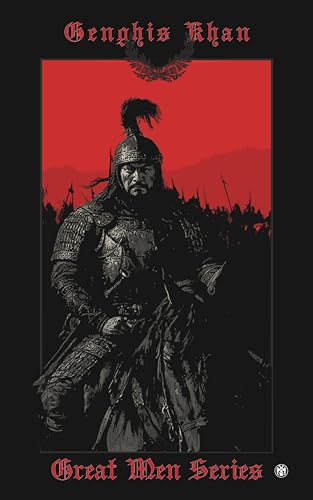
Rise to Power: From Temüjin to Genghis Khan
Temüjin rose to power long before he was a conqueror. Long before he was Khan, he was a young boy forced to fend for himself after his father was killed and his family abandoned by their clan. His early years were years of hardship, of constant struggle, of barely hanging on. There was fighting, even among his own household. At a young age, Temüjin killed his older half-brother, Bekter, to cement his own leadership and place as head of the household. His early years were cruel and hard and they set him on a path that would lead to his eventual rise as Khan. They also showed early on the ruthless and pitiless streak that would make his rise meteoric.
As time went on, young Temüjin was joined by loyal subjects who supported and believed in him. These included two of the most important men of the steppe, Jamukha and Toghrul (also known as Wang Khan). These alliances increased Temüjin’s following and raised his profile among the tribes of the steppe.
He then launched the mission that first brought him to widespread prominence: the rescue of his new bride, Börte, who a rival tribe, the Merkits, had kidnapped. Temüjin and his allies rode out, rescued his wife, and returned with her safely. Börte would remain by his side throughout his rise and rule, and her rescue only increased Temüjin’s fealty to his allies, as well as their devotion to him as a leader who could inspire such daring and bravery in his followers.
Temüjin’s growing power and alliances soon began to strain his relationship with Jamukha, who had been a childhood friend and blood brother. The two men fell out over their differences in leadership style and vision, leading to a series of bloody civil wars across the steppe that would pit friend against friend and brother against brother. One of these battles, around 1187, ended in a devastating defeat for Temüjin, and he may have spent the next few years as a servant of the Jin dynasty.
Regardless, he continued to build, and his eventual return in 1196 came with increased tactical acumen, a more robust fighting force, and the continued favor of small clans who needed protection from the politics of the steppe. As his following and power grew, it also drove a wedge between him and former ally Toghrul, who now saw Temüjin as a threat to his own rule.
The tension between Toghrul and Temüjin finally broke in 1203 when the former launched a surprise attack against the latter. Toghrul aimed to eliminate Temüjin before his growing following could grow any further. But it was Temüjin’s resilience that won the day, and after rallying his forces, he would defeat Toghrul’s Kerait tribe and continue his efforts to root out the remaining threats to his rule. Following the battle, Temüjin would continue to eliminate his remaining rivals. After defeating the Naiman tribe, he captured Jamukha and executed him. With Jamukha out of the way, the long civil war on the steppe was over.
With his last great rivals out of the way and tribal opposition to his rule broken, Temüjin was now the single, dominant force in Mongolia, and he had no one left to face on the steppe. His rise to power as the ruler of all the Mongol tribes was complete.

As Khan, Genghis began the long process of uniting the Mongols. After years of struggle, adversity, and exile, he started the long process of uniting the Mongols. He first took to forming alliances and friendships with other powerful and influential leaders. This allowed him to create a network of power and support that would serve him well in his quest for power. Genghis also had an acute sense of human nature, and he took steps to convert his opponents into followers.
Genghis Khan would also transform the Mongol approach to warfare. Breaking from the traditional tribal skirmishes that had been common, he forged a disciplined, efficient fighting force. He introduced new tactics, such as the feigned retreat and envelopment, as well as policies, such as taking capable enemies into his own ranks. These innovations in warfare helped Genghis to quickly conquer his rivals and further his rise to power.
In 1206, Temüjin was given the title of Khan of Khans, or supreme ruler of all Mongol tribes. It was at this point that Temüjin cemented his rule as the sole ruler of all the Mongol tribes. He had finally achieved his vision of uniting the Mongols.
Genghis solidified his power by continuing to build on the successes of his past and taking a page out of the book of the Jin. He created a code of law, the Yassa, that set the laws by which the Mongols would be ruled. He also fostered social and economic stability and, as a result, loyalty to him. Genghis Khan’s rise to power is a story of a man who united his people and realized his vision for them.
Early Battles and Conquests: The Foundation of Empire
Genghis Khan’s early battles and conquests were instrumental in the rise of the Mongol Empire. His initial campaigns following the Mongols’ unification were crucial in laying the foundation for the empire. These early military encounters highlight his strategic genius, leadership skills, and relentless drive for expansion.
One of the earliest recorded battles in Genghis Khan’s military career was the conquest of the Tatars, a neighboring tribe that had captured and enslaved him in his youth. The campaign against the Tatars was fueled by Genghis Khan’s desire for revenge and served as an opportunity to demonstrate his growing tactical and military skills. The successful subjugation of the Tatars solidified Genghis Khan’s position as an influential leader among the Mongols.
A pivotal early battle that signaled Genghis Khan’s emergence as a major force was the conquest of the Khwarezmian Empire. A trade dispute and the mistreatment of Mongol envoys triggered the campaign against the Khwarezmian Empire. The Mongol military, known for its mobility, adaptability, and innovative tactics, employed psychological warfare, speed, and siegecraft to decimate Khwarezmian defenses and capture key cities. The fall of the Khwarezmian Empire not only brought immense wealth and resources to the Mongols but also established their reputation as an unstoppable force.

Genghis Khan also fought other battles to conquer regions beyond the Khwarezmian Empire. In Genghis Khan’s Northern Chinese Campaign, there was the Battle of Yehuling. Yehuling was a decisive Mongol victory that paved the way for their conquest of Northern China. The primary battle was between Genghis Khan’s Mongols and the Western Xia Dynasty. The Mongols, with their well-disciplined cavalry and superior tactics with bows and arrows, defeated the enemy. The Invasion of the Jin Dynasty ended with the Siege of the Jin capital, Zhongdu (Beijing). This was a brilliant siege and a good use of psychological warfare. It demonstrated Genghis Khan’s ability to conquer sedentary empires.
Despite the immense success of his conquests, Genghis Khan did not go unchallenged, both internally and externally, from both those who opposed his rule and the stability of the Mongol Empire. He had to put down dissent in his own ranks, ruthlessly quelling revolts and using public executions to assert control and authority over the growing Mongol Empire.
He also had to contend with the powerful Khwarazm Shah, who in turn raised his own armies and people against the Mongol invasion and incursion into his lands. The Battle of Parwan and the Battle of the Indus River would see Genghis Khan put his considerable strategic mind to the test, while also seeing him flex and adapt his tactics and forces to different terrain and multiple theatres of war.

The early battles and conquests of Genghis Khan were marked by strategic brilliance, military innovation, and a calculated use of both fear and diplomacy. Khan’s campaigns against diverse adversaries showcased his adaptability, as he tailored his tactics to the unique challenges posed by different foes and environments. These triumphs not only solidified his power but also laid the groundwork for the expansion of the Mongol Empire, which would continue to shape history for generations to come.
The Mongolian Lifestyle: Nomads Built for conquest
The nomadic lifestyle of the Mongols greatly influenced their conquests and the formation of the largest contiguous empire in history. This lifestyle, adapted to the harsh climate and vast open spaces of the Central Asian steppes, gave them distinct advantages when expanding their territory. Nomadic societies, like the Mongols, were conditioned by their way of life to become incredibly mobile and familiar with the terrain.
Moving constantly in search of fresh grazing lands, they were able to cover large distances at a time. This mobility gave them a strategic advantage, enabling them to move quickly and unpredictably in warfare. In addition, their close connection with the environment allowed them to understand and adapt to new terrain quickly, giving them a strategic edge in unfamiliar territory.
The Mongols also had exceptional skills in horsemanship and archery, which were crucial to their military success. Mongol warriors could move quickly and accurately while mounted. This skill allowed them to perform hit-and-run tactics and strike swiftly and with precision. Their light cavalry was also highly mobile and could cover long distances quickly. This combination of speed and accuracy made the Mongols a formidable force in warfare, particularly in the open steppe but also in unfamiliar terrain. The mounted Mongol soldier would become the core and the strength of the empire.

The Mongol herds of horses and livestock provided sustenance for their armies as they conquered new territories. Unlike sedentary societies, which relied on agriculture, the nomadic Mongols could subsist on the milk, meat, and blood of their animals. This independence from land-based resources meant they could move quickly, without being tied to fixed resources like farms and settlements. This mobility gave them a strategic advantage, enabling them to strike rapidly and unpredictably, making it difficult for more sedentary societies to anticipate their movements. The Mongols were able to quickly assemble large armies and deploy them en masse, often catching their enemies by surprise.
The interdependence of the Mongol tribes also enabled them to mobilize large armies from across their territory rapidly. As the Mongol clans united under a common cause, they would form a single army for military campaigns. The large armies the Mongols were able to field were also a result of the strong kinship ties among the various Mongol tribes. This unity of purpose enabled Genghis Khan to field a large army of warriors skilled in horsemanship and warfare, making it easier to fight on multiple fronts simultaneously.
Welcome to the Mongol Empire
The Mongols showed great variety in their actions and treatment of the people that they subjected. They were pragmatic in their political, economic, and cultural relations with the peoples and states that they conquered, as their empire included many different cultures. At times, they were ruthless, but on other occasions, they took many measures to ensure their authority and control over the far-flung regions they dominated.
This behavior was due to a host of factors: the local population’s resistance to Mongol rule, the composition of local society, and the usefulness of the local populace to the Mongols. They were not motivated to conquer and subjugate by religious conviction, nor had they a positive interest in subjugation for its own sake. In general, though, they were not noted for being averse to brutality.
Genghis Khan’s successors institutionalized his methods and continued the innovations he began to manage the conquests he had achieved. Under Genghis Khan, they created a fast messenger system called the “Yam”, which helped to govern their far-flung empire.

The Mongols were pragmatic rulers who recognized the value of local leadership and institutions. In many cases, they co-opted the existing ruling elite, allowing them to retain their positions of power as long as they pledged loyalty to the Khan and paid tribute. This approach helped the Mongols consolidate their rule by leveraging existing power structures while minimizing the risk of local uprisings. They would also often take skilled artisans, scholars, and administrators from conquered territories and integrate them into their empire, further enriching Mongolian culture and economy.
The Mongols could be ruthless when faced with resistance or in conquering new territories, as shown in the sack of the cities of Nishapur and Baghdad. However, they were also known for their religious tolerance and cultural exchange, often adopting the administrative practices, technologies, and even religious beliefs of the peoples they conquered. This exchange of ideas between East and West, along with the Pax Mongolica—a period of relative peace and stability across their empire—facilitated trade and cultural diffusion.
In territories where the Mongols met resistance or challenges to their rule, their response could be severe, as evidenced by the sack of Nishapur and Baghdad. However, these instances were not typical of their overall treatment of conquered peoples. In most cases, the people living under Mongol rule experienced a level of governance that, while different from their previous systems, often allowed them to continue with their lives as long as they recognized the authority of the Mongol Empire & its ruler.
Later Campaigns and the Ever Growing Mongol Empire
Genghis Khan’s campaign against the Kievan Rus was a major military endeavor that showcased his strategic brilliance. The Kievan Rus was a federation of East Slavic tribes and principalities, and Genghis Khan sought to expand his influence over these territories. His forces, led by his generals, engaged in a series of brutal battles against the Rus, employing tactics such as psychological warfare, siege warfare, and cavalry charges. The Mongols eventually emerged victorious, defeating the Rus and establishing their dominance over the region. This campaign exemplified Genghis Khan’s ability to adapt his military strategies to different terrains and his mastery of psychological warfare to intimidate and defeat his enemies.
Another significant military campaign was Genghis Khan’s conquest of the Khwarazm Shah’s empire. The Khwarazm Shah was a powerful ruler of a vast empire, and his defeat would require meticulous planning and execution. Genghis Khan, known for his adaptability, overcame the odds through strategic planning and innovative tactics. He employed tactics such as feigned retreats, defector operations, and encirclement to defeat his enemies. His campaign against the Khwarazm Shah extended from modern-day Iran to Uzbekistan, and the conquest of this empire provided him with immense wealth and further cemented his reputation as a great military leader.
In his campaign against the Eastern Xia Dynasty, Genghis Khan demonstrated his strategic acumen and adaptability in waging war against settled societies. The siege of Caizhou was a defining moment in this campaign, as Genghis Khan and his forces besieged the city for almost a year before finally emerging victorious. Genghis Khan’s ability to plan and execute such a protracted siege demonstrated his strategic genius and his determination to achieve his objectives

Genghis Khan also had imperial designs for the Middle East, most immediately Transoxiana, which was under the rule of the Khwarezmian Empire. The Battle of Parwan was yet another example of the Mongol leader’s ability to function in a campaign field other than the steppe. Khan also made brilliant use of the pincer movement to attack on multiple levels at once. Mobility and accuracy gave the Mongols the advantage over the more sedentary societies they encountered.
Genghis Khan’s later expansionist campaigns were not focused purely on gaining ground through battles. When he began expanding into Eastern Europe, he also sought to establish trade agreements and alliances with the West.

derivative work Bkkbrad / *File:Gengis Khan empire-fr.svg: historicair 17:01, 8 October 2007 (UTC), CC BY-SA 2.5 https://creativecommons.org/licenses/by-sa/2.5, via Wikimedia Commons
The End of the Man: The Continuation of the Mongol Empire
Genghis Khan was the renowned Mongol ruler whose conquests in the 13th century established the largest land empire in world history. His death in 1227 marked a turning point in the Mongol Empire, paving the way for the succession of power to his descendants and shaping the empire’s future. The circumstances surrounding Genghis Khan’s death remain a topic of speculation and historical debate.
It is believed that he died during one of his military campaigns in central Asia, possibly from injuries sustained in a fall from his horse. This was later followed by the succession of Ögedei Khan, his third son, as the Great Khan of the Mongol Empire. The succession plan and division of the Mongol Empire were left to Genghis Khan’s four sons, Jochi, Chagatai, Ögedei, and Tolui. In this, Ögedei was the most suitable candidate for the position. He was chosen by his father to become the next Great Khan of the Mongol Empire based on his father’s will, which would place the Mongol nation under a unitary rule.
Ögedei Khan was a capable leader in his own right, having proven himself both on the battlefield and in diplomatic negotiations. He continued his father’s expansionist policies, leading successful campaigns against the Jin and Song dynasties in China, as well as in the Middle East and Eastern Europe. He also oversaw the completion of the conquest of the Western Xia and continued his father’s administrative and legal reforms, centralizing authority and consolidating the gains of the Mongol Empire.
Ögedei Khan maintained the momentum of the Mongol conquests and ensured the empire’s stability in the years following his father’s death. He was known for his ability to utilize the talents of his generals and administrators, delegating authority while maintaining firm control over the empire. The reign of Ögedei Khan was marked by the Mongol Empire’s continued expansion into Asia and Europe, as well as the consolidation of Mongol rule in the newly conquered territories.
In conclusion, the death of Genghis Khan in 1227 marked a significant turning point in the history of the Mongol Empire, paving the way for the succession of power to his descendants and shaping the empire’s future. Genghis Khan’s death was followed by the succession of his third son, Ögedei Khan, who continued his father’s expansionist policies and effectively governed the Mongol Empire. The leadership and legacy of Genghis Khan and Ögedei Khan continue to shape the history and legacy of the Mongol Empire to this day.


