Hard to Believe History Facts that Are True
 Reading Time: 27 minutes
 Hard to believe history is riddled throughout our past. It’s difficult to imagine that our past is not as clean as the history books suggest. Battles and dates and government names are the easily defined lines drawn on the pages we learn from, but between those borders are odd curiosities and perplexing incidents not captured by the summation of a paragraph.
Some of these events are so unlikely or ridiculous that they could pass for modern internet hoaxes; all of them, however, are documented, observed, and recorded in the correspondences, chronicles, and official documents of the era. These are actual moments of our past, defined by the people of the time, that reinforce how strange, how messy, how surprising our past was (and is) compared to what we are taught.
In this article, we’ve gathered some of the events and facts that are the epitome of hard to believe history. Events and anecdotes that run against common sense, boggle the mind, and plain make you question what humanity is capable of. We’ve got crazy political decisions, scientific weirdness, improbable coincidences, and every other kind of hard-to-believe story in between. If anything proves that history isn’t always just serious and important, it’s that it’s also weird, unpredictable, and a lot of fun.
Billy the Kid: The Wild West Outlaw with New York City Roots

The Wild West outlaw Billy the Kid was born in New York City. Known for his involvement in the Lincoln County War, his murder of a blacksmith, and his life of cattle rustling and horse stealing, the Kid was shot and killed by Sheriff Pat Garrett when he was only 21 years old. He was actually born Henry McCarty in 1859 and raised on New York City’s East Side before moving to the frontier as a child. The Kid later went on to kill eight men. Billy the Kid’s life and death on the frontier have made him an icon of the American Wild West.
Hildegard of Bingen: The Medieval Visionary Who Transcended Her Age
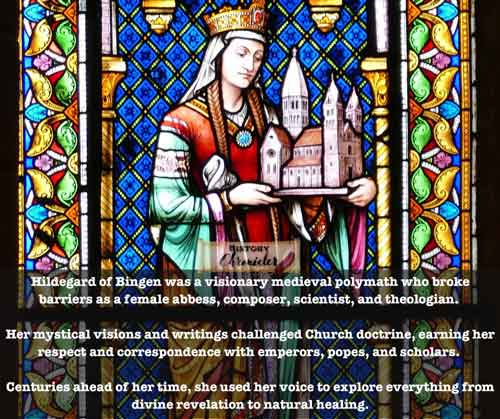
Hildegard of Bingen is one of the most significant personalities of the medieval era. She was an exceptional woman in her day. An abbess, a composer, a scientist, a mystic, and a theologian, Hildegard of Bingen challenged assumptions with her extraordinary and unique writings. Mystical revelations paired with her observations of nature, and at times, her text was considered radical and a threat to Church doctrine.
Hildegard caught the attention of emperors and popes, and all levels of society sought her advice. She was also well ahead of her time, an herbalist, chemist, philosopher, and cosmologist, and her legacy lives on.
Lord Byron and the College Bear
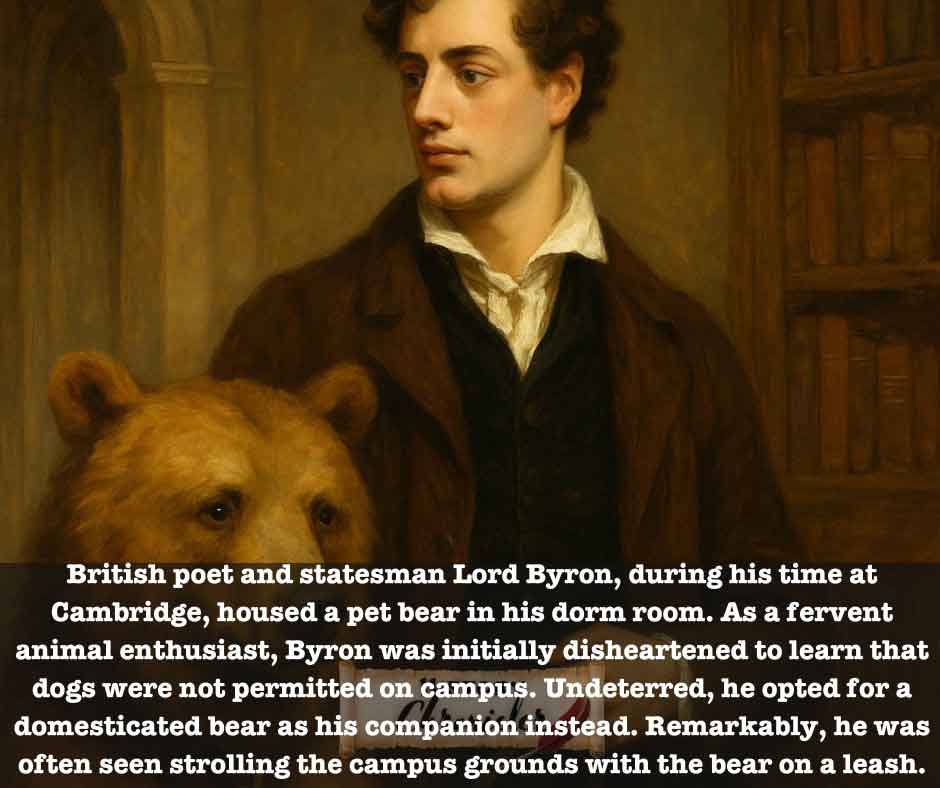
The tale of Lord Byron’s college pet sounds like something out of legend. When Byron was told he could not bring his dog to Cambridge, he insisted on having an animal companion—and ended up with a tame bear. With no prohibition on bears, he was able to keep it legally in his dorm and was even witnessed taking it on a leash around the grounds. The incident encapsulates Byron’s rebellious and dramatic spirit, transforming an act of protest into one of the most memorable tales from his tumultuous life and a perfect example of hard-to-believe history.
The Venetian Rule That Changed Public Health Forever
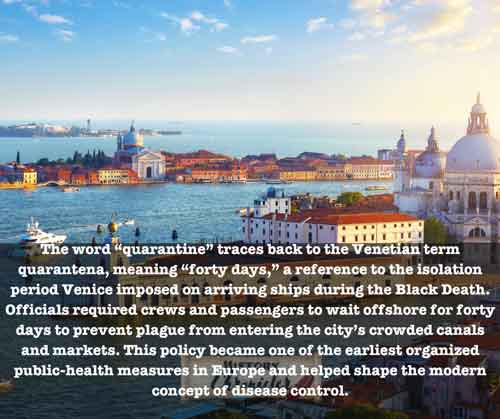
The etymology of the term “quarantine” tells us the story of how disease was once managed with a pinch of creativity. In the plague-ridden, merchant-booming, fast-traveling medieval city of Venice, officials in the late Middle Ages put an unprecedented concept into practice. Ships that wanted to enter the city had to wait forty days at anchor before landing.
During this quarantena, “no one was permitted to disembark upon the city’s cobblestone lanes and canals”. This step, of course, was “neither a cure nor a prevention of the Black Death but one of the earliest recorded attempts at a public-health policy.” Venice’s pragmatic combination of commerce, medicine, and law enforcement proved an immediate success and remains the foundation of the policy of isolation still used today.
Stalin’s Secret Fascination with the American West
In direct opposition to Stalin’s vitriolic anti-Americanism, he also had a personal obsession with American Western movies, with some of his last conscious requests being for film reels to be brought to his bedside so he could continue watching them. He was known for inviting his close ministers late at night for secret cinema shows, whether they wanted to watch, during which he made them watch cowboy films he described as his favorite kind of film, and he was known to adore anything with John Wayne.
Small in the American Revolution

Following the Siege of Boston in 1776, smallpox represented a major threat to both military forces and civilians throughout the Revolutionary War. As many American colonists had already been ravaged by the disease, both armies feared new outbreaks when people began to travel between British occupied cities and American outposts. Rumors spread that General William Howe was intentionally sending infected men out of Boston, causing many Americans to fear a systematic and hostile germ warfare campaign. These rumors persist today, though modern historians have yet to reach a consensus on whether the fear of biological warfare was exaggerated or justified.
One fact that remains certain is how George Washington handled the situation. Aware that smallpox would do more damage to his army than the British could, Washington had his troops inoculated in 1777 at great risk to himself and his men. The results proved decisive; inoculation greatly reduced sickness and mortality in the American ranks and fortified his army when it was needed most.
Pals Battalions and the Cost of Community at the Somme

Pals battalions were created to help recruitment by allowing groups of friends, neighbors, and workmates to volunteer together for military service. This initiative greatly increased volunteering in the war’s earliest stages. The downside was that when a Pals battalion was heavily depleted by casualties, whole communities at home could be affected by the loss of their Pals. This cruel lesson played out dramatically during the early stages of the Battle of the Somme, which saw large numbers of Pals battalions suffering heavy casualties within the first few days of the campaign.
The photograph above shows the Preston Pals, otherwise known as D Company of the 7th (Service) Battalion, Loyal North Lancashire Regiment. They were recruited in Preston, Lancashire, and like many other Pals battalions, they were nearly wiped out on 1 July 1916. On that day, the Preston Pals had been scheduled to go over the top as part of the initial wave of attacks, but fortunately for them, their assault was cancelled when the attacks in front of them began to falter. Although they survived the first day, the battalion suffered further large casualties over the coming weeks at High Wood, Delville Wood, Fricourt, and Guillemont. By the time the Battle of the Somme had finished, nearly half of the battalion had been killed or wounded, and replacements sent to the battalion from outside of Preston diluted the Pals’ identity.
The Great Molasses Flood: Boston’s Sticky Disaster
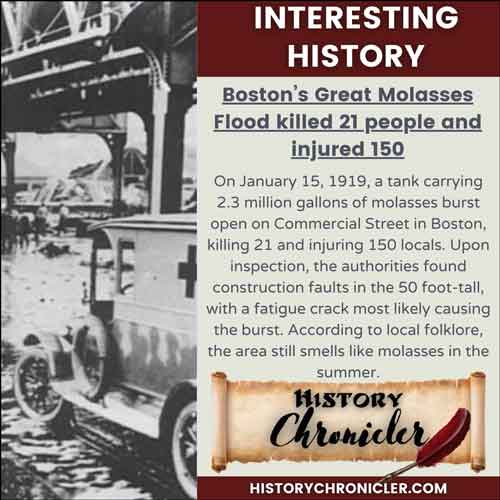
The Great Molasses Flood was a real event, yet it’s almost too hard to believe history event. A 50-foot storage tank burst and unleashed a tidal wave of fast-moving molasses up to 25 feet high onto Boston’s working-class neighborhood on Commercial Street. Twenty-one people were killed, and another 150 were injured in this tragic accident.
Investigators later found numerous flaws in the way the tank was built, including metal fatigue and an inadequate pressure test. Rushed construction and shoddy repairs were also to blame for the nation’s most unusual industrial accident. Locals insist that there’s still a sweet smell of molasses in the neighborhood when the weather is hot and humid.
Rome’s Circus Maximus: The Ancient World’s Ultimate Stadium
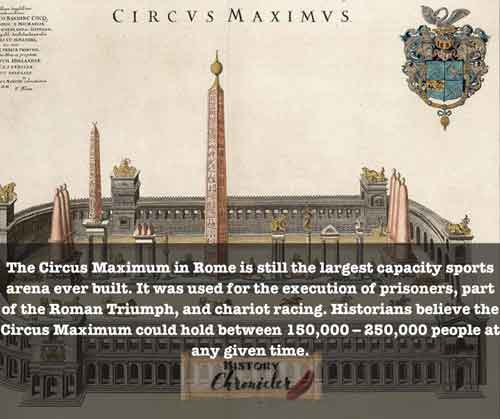
Rome’s Circus Maximus was the standard by which all other stadia have been judged throughout history. Although it had no seating for spectators at its beginning, it is believed to be the first stadium to host over 100,000 spectators for a game. The Circus Maximus in Rome could seat an estimated 150,000 spectators (estimates reach 250,000) and measures nearly 2,000 feet in length.
This Roman spectacle was a place for chariot racing, a place for triumphal processions, and even a place for public executions. The Circus Maximus, besides its sporting purposes, was a place where “politics, display and identification” took place to make “ordinary Romans aware of Rome.”
Mozart’s Daring Feat Inside the Vatican’s Forbidden Music Vault
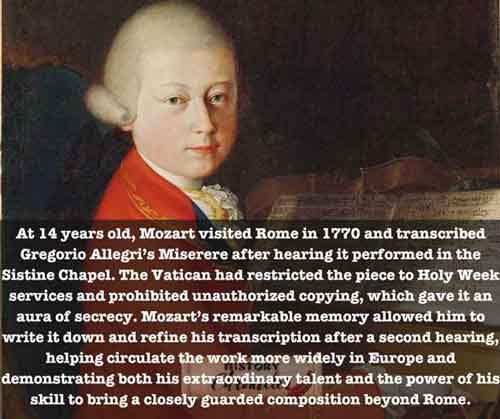
The Miserere by Gregorio Allegri was one of the Vatican’s most fiercely guarded musical secrets. The music, sung only twice a year in the Sistine Chapel, was subject to severe penalties for copying. At the age of 14, Mozart heard this piece and wrote it down from memory with astonishing accuracy, after hearing it only once.
He revisited the Chapel, just once more, to correct a few notes. He thus broke the Roman monopoly on music and, with it, enabled the Miserere to spread across Europe for the first time. It is a story of immense talent meeting an almost superhuman gift for hearing and music.
Pavlov’s House: The Strongpoint That Became a Symbol of Stalingrad

Pavlov’s House was a four-story apartment building on one of Stalingrad’s main squares. Captured and defended by a platoon-sized Soviet force led by Sergeant Yakov Pavlov in September and October 1942, the building became famous as one of many strongpoints during the Battle of Stalingrad. Pavlov’s defenders armed their post with machine guns, mines, barbed wire, and anti-tank rifles, and managed to hold out for over two months against relentless German artillery and infantry attacks.
The desperate and bloody defense of Pavlov’s House only absorbed a tiny fraction of the total forces that fought for control of Stalingrad. The Battle of Stalingrad caused millions of casualties between both sides and proved to be the turning point on the Eastern Front. It is not necessarily true that German casualties suffered while assaulting Pavlov’s House outnumbered those suffered when they conquered Paris in 1940; in fact, there are no reliable statistics for the former at all.
“Mad Jack” Churchill: The Soldier Who Brought Medieval Weapons to World War II
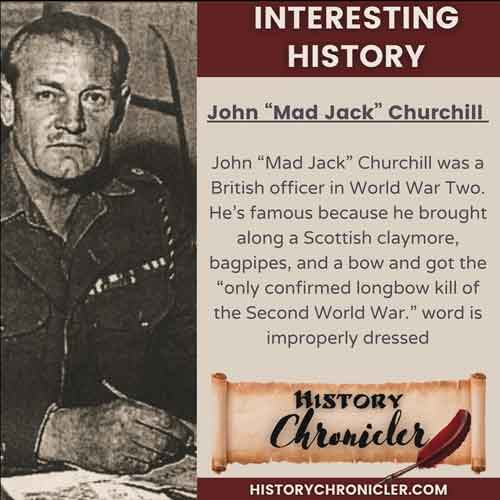
John “Mad Jack” Churchill was an eccentric British officer who seemed to fight like a man out of time. Joining the fray in World War II, he went to war armed with a revolver, a Scottish claymore, a longbow, and yes, even a set of bagpipes. Churchill became famous for scoring the only verified longbow kill of the entire conflict.
Churchill once said, “Any officer who goes into action without his sword is improperly dressed,” and he carried the weapon into battle. Charging fearlessly into combat, Churchill was always a bold man with an eye for showmanship and the bizarre. His unusual valor would make him one of the Allied forces’ most memorable figures.
The Myth of the Medieval Chastity Belt
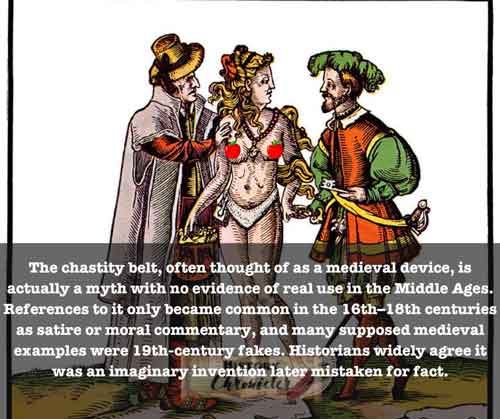
Despite its reputation as a medieval torture device, the chastity belt is closer to myth than reality. There is no solid proof that it was used during the Middle Ages, and most purportedly “genuine” examples now in museums have been discredited as 19th-century forgeries or joke props. The concept emerged in early modern Europe as a moral in-joke, rather than an actual device. Only through centuries of repetition in literature, art, and Victorian exaggeration did a whimsical creation become a commonly accepted historical fact. The true history of the chastity belt is more instructive about modern fallacies than medieval history.
China and the Forgotten Scale of History’s Deadliest Wars

China was the theater of seven of the ten deadliest conflicts in recorded history (measured by death toll), including many of the deadliest civil wars, dynastic conquests, and revolutions in history. The Taiping Rebellion, a civil war that took place in the mid-19th century, had a death toll that was more than twice that of World War I. Many of these events are marginalized in Western narratives of the deadliest conflicts in history. Still, their impact on China’s political, social, and cultural systems was significant and continues to reverberate through Chinese history.
Harriet Tubman: The General Who Never Wore a Uniform
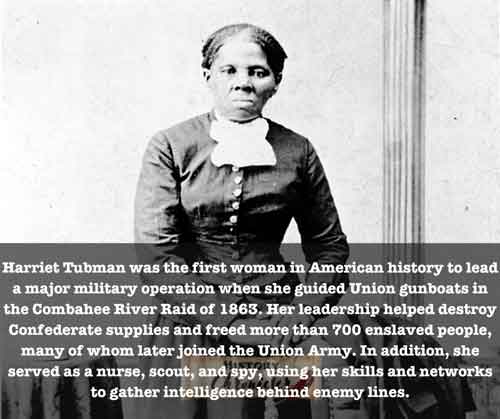
Best known for leading enslaved people to freedom on the Underground Railroad, Harriet Tubman achieved other remarkable wartime feats. In 1863, Tubman became the first woman in U.S. history to plan and lead a large military raid when she guided Union gunboats on the Combahee River in South Carolina. Her intelligence and precise execution resulted in more than 700 enslaved people gaining their freedom and severe disruption of Confederate supply lines. Tubman also worked as a nurse, scout, and spy, using her keen knowledge of terrain, people, and survival to support the military effort. Her military service remains one of the most unique and underappreciated stories from the Civil War.
Mansa Musa: The Emperor Whose Wealth Reshaped Economies
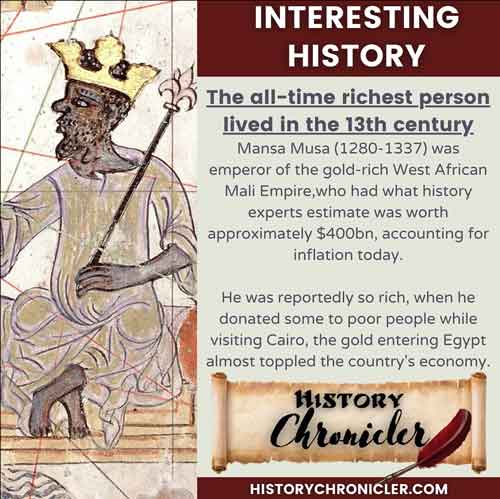
Mansa Musa, who was the king of the Mali Empire in the 14th century, is often described as the wealthiest person ever to have lived. During the medieval era, Mali was rich in gold, the precious metal from which most of the world’s money came. In 1324, he embarked on a journey to Mecca, and the rich caravan he took with him passed through Egypt.
There, Musa gave so much gold to the people he met that Egypt’s gold reserves were inflated, and the price of the metal dropped for a decade or more. Musa also expanded the Mali Empire across West Africa, and under his rule, the city of Timbuktu became an intellectual, cultural, and economic hub.
Peter the Great’s Battle Against the Beard
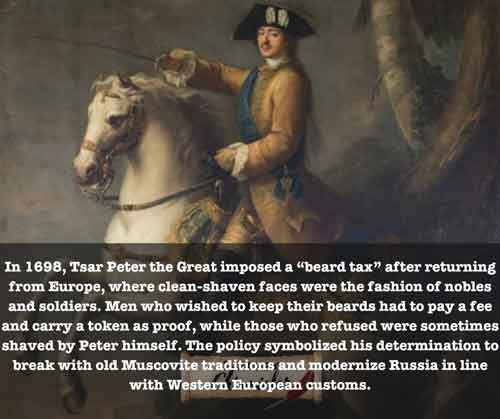
Tsar Peter the Great had just come back from Western Europe, and he was bent on pulling Russia kicking and screaming into the next century, starting at the chin. In 1698, he decreed the “beard tax,” which made all men pay to have a right to facial hair, while also making them carry around a small token as proof of payment. If any gentleman balked, sometimes the tsar would show up with a razor himself, snipping away with glee.
In addition to a grooming style, the tax was a new allegiance to a new, non-Muscovite and European identity, a visual and cultural separation from the past. It was one way Peter was trying to make his people more like their neighbors to the West in customs, dress, discipline, and military effectiveness.
Macuahuitl: The Razor-Sharp Weapon That Defined Aztec Warfare
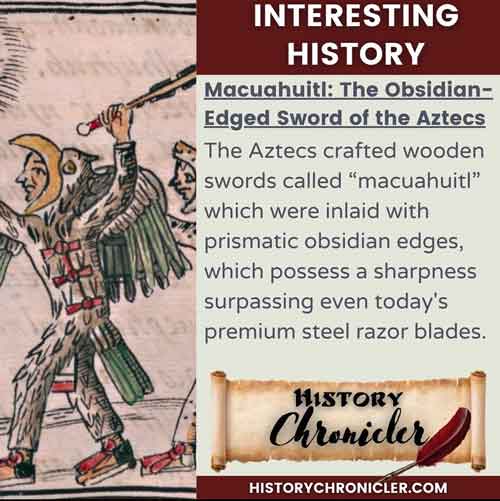
Aztec warriors used a weapon known as a macuahuitl. This “Mexican sword” was much deadlier than it looks. Along the edges of the wooden club were razor-sharp obsidian blades. Tests suggest that the obsidian’s cutting ability rivals (or exceeds) surgical steel. Spanish conquistadors noted that one swing of the macuahuitl could slice a horse’s head clean off. (In their astonishment, however, they may have exaggerated this.) The macuahuitl was a symbol of military discipline, artistry, and Mesoamerican technological skill.
Queen Victoria’s Remarkable Survival in an Age of Danger
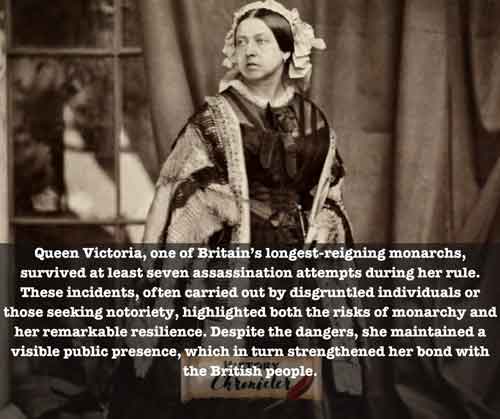
Several assassination attempts punctuated Queen Victoria’s reign. It is generally accepted that at least seven men deliberately and unsuccessfully tried to kill Victoria, motivated by a variety of motives, including political grievances, the desire for fame and notoriety, or mental instability. Victoria refused to be intimidated by these attempts, however, and did not withdraw from public life as a result.
Oxford’s Ancient Beginnings: Older Than Empires

The University of Oxford is so ancient that it existed when civilizations many people regard as incredibly old had not yet come into existence. As early as 1096, it was used as a place for teaching, over 400 years before the Mexica established Tenochtitlán (the city that became the center of the Aztec Empire) in 1325. When the Aztec people were only beginning to establish themselves as a significant power in Mesoamerica, Oxford was busy laying the foundations of what was to become the first universities of Europe.
Julius Caesar and the Pirates Who Misjudged a Future Dictator
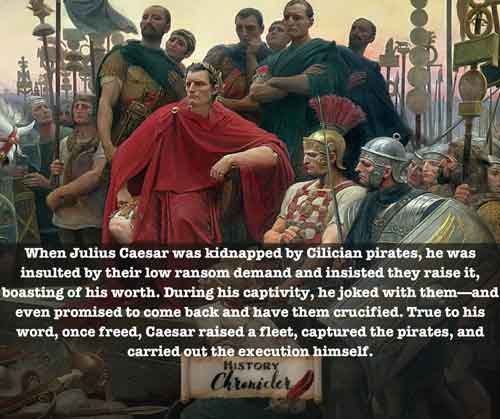
Long before he conquered the Roman world, Julius Caesar was kidnapped by a group of Cilician pirates. Mistaking him for a wealthy young nobleman, they had done so—but they had wildly underestimated his ambition. Annoyed that his captors were too low in their ransom demands, he bullied them into raising the price, treating his kidnappers more like insubordinate underlings than his own executioners. He joked with them, demanded they keep quiet while he slept, and (half-jokingly, half-seriously) threatened that he would one day return and punish them.
Upon his release, Caesar did just that: he raised a fleet, pursued the pirates, and oversaw their execution personally. The incident was a harbinger of the boldness, ruthlessness, and chilling certainty that would come to define his rise.
Andrew Jackson’s Giant Cheese: America’s Strangest Open House
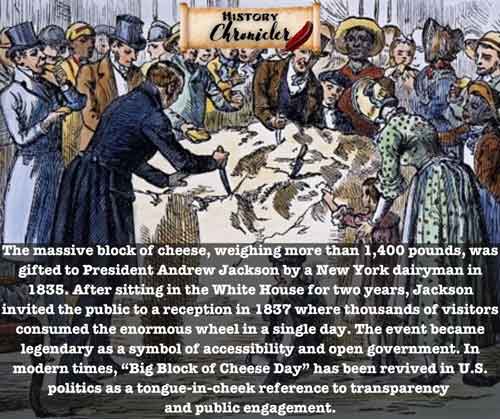
Presidents have received some strange gifts over the years, but in 1835, Andrew Jackson got one that stands out. A New York dairyman sent the president a 1,400-pound wheel of cheese. Jackson aged the cheese in the White House for two years, and then invited the public to attend a huge reception where the cheese was consumed by thousands of people, slice by slice, over the course of a day.
It’s considered a symbol of openness and accessibility to the American government, as well as a testament to Jackson’s willingness to bring average Americans into the executive mansion. The day is even the source of a modern political term, the “Big Block of Cheese Day”, used to refer to openness and transparency to the public.
Napoleon: The Conqueror Who Never Declared War
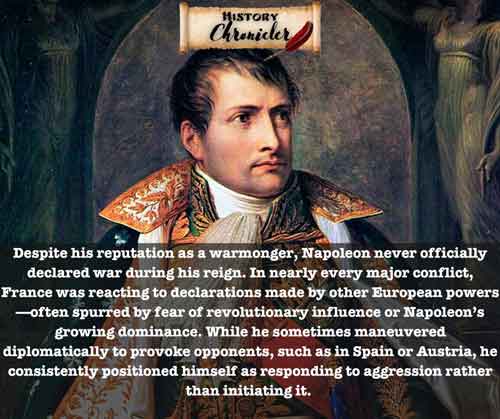
Although Napoleon’s name is often synonymous with conquest, the French emperor never formally declared war on another nation during his reign. In most significant conflicts of the Napoleonic era, France entered hostilities only after other European powers issued the first declaration, usually out of fear of his expanding influence or the revolutionary ideas reshaping France.
Napoleon was undeniably ambitious and skilled at maneuvering diplomatically to provoke opponents, yet he consistently framed his actions as defensive responses rather than acts of naked aggression. This strategic positioning allowed him to justify sweeping military campaigns while cultivating an image of a leader forced into conflict by the anxieties of rival empires.
The “Wine Bricks” Loophole That Outsmarted Prohibition

During Prohibition, California grape growers decided not to let their industry die—and the solution was both brilliant and deliciously ironic. Grape growers started selling blocks of concentrated grape juice called “wine bricks,” each block with a lighthearted warning: “Do not place this brick in water and set aside for 20 days as fermentation will take place and wine will result.”
Well, that’s exactly what was going to happen. This loophole created a boom in acreage and helped the wine industry not only survive, but grow. By the late 1920s, wine consumption had doubled. America couldn’t keep its wits—or its taste buds—under control.
H. H. Holmes and the Dark Legend of Chicago’s “Murder Castle”
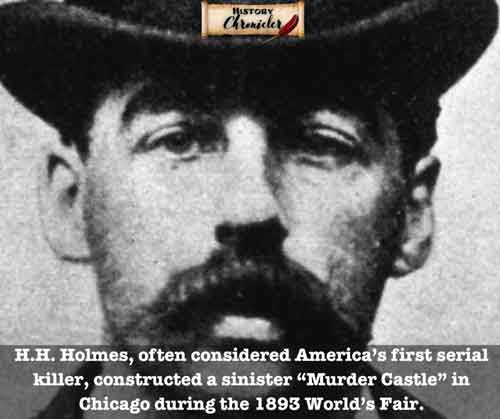
In the midst of the 1893 World’s Fair, Holmes built a bizarre, labyrinthine structure in Chicago, which came to be known as the “Murder Castle.” The three-story building was designed with a confusing layout of hidden rooms, false hallways, and secret, locked chambers. This provided Holmes with a convenient cover for his ongoing schemes of fraud and murder.
Although sensationalism has embellished the story over the years, most historians agree Holmes was proven to have killed at least nine people, while he himself claimed 27. Some turn-of-the-century newspapers reported up to 200 (an extraordinarily high and unlikely number). Even at the low end, Holmes’s known crimes are enough to establish him as one of America’s first and most notorious serial killers.
Wilmer McLean: The Man Whose Homes Bookended the Civil War
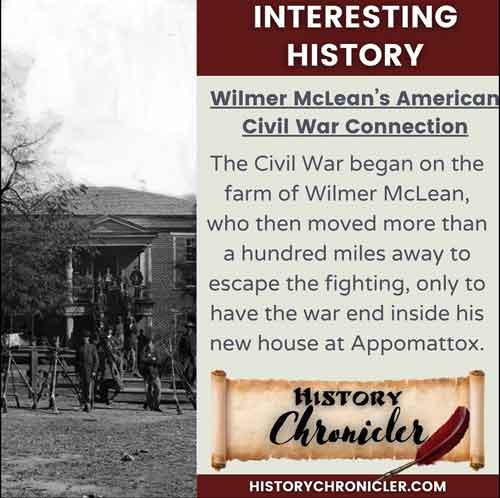
Wilmer McLean was one of those people for whom “the truth is stranger than fiction.” In 1861, the American Civil War began on his farm near Manassas, Virginia, when the First Battle of Bull Run was fought on his property. In an attempt to find a more peaceful life, he moved over 100 miles (160 km) south to a small village named Appomattox. However, the war soon caught up with him again, for on his new farm in Appomattox in 1865, McLean unwittingly provided the site where General Robert E. Lee surrendered to Ulysses S. Grant, thus ending the war. As McLean put it, “The war began in my front yard and ended in my front parlor.”
Marie Marvingt: The Fearless Aviator Who Redefined Wartime Bravery
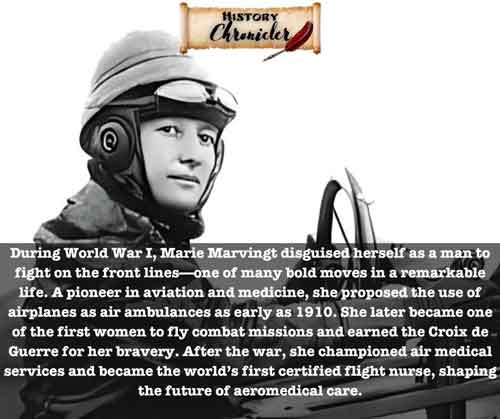
Marie Marvingt was a woman who went to extraordinary lengths to break barriers long before it was socially acceptable for a woman to do so. She put on a disguise as a man and joined the front lines of World War I to fight in the war she had been training for. She was also an avid aviator. It was Marie Marvingt who first recognized and suggested using airplanes as air ambulances as early as 1910.
The idea was a million-dollar one, years before anyone would take her up on it, and it set the standard for the lifesaving concept of aeromedical care, now a part of emergency medicine. She became one of the first women to fly in combat and was awarded the Croix de Guerre for her services after the war. She then helped pioneer and develop the use of airplanes as lifesaving air ambulances and became the world’s first flight nurse.
Sybil Ludington: The Teenage Heroine Behind a Hard to Believe History Ride
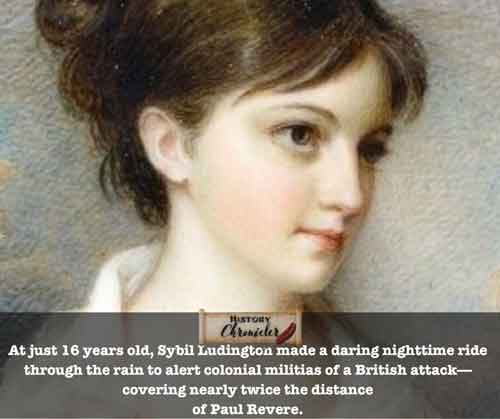
Sybil Ludington’s night ride is one of those moments in history where you have to do a double-take and make sure the story is true. This young girl was only 16 years old when she rode through the night to warn the colonial militia of an impending British attack. She rode through darkness, rain, and over bumpy trails through the countryside to warn the men who had previously been scattered in different locations.
She covered nearly twice the distance that Paul Revere rode. Sybil’s ride mobilized hundreds of militia and helped to ensure the region was fortified and ready for battle. While Paul Revere is the most famous rider in the Revolutionary War, Sybil Ludington’s ride was one of the most incredible acts of bravery in the war and all of American history.
Vladimir Pravik: A First Responder Who Faced the Worst of Chernobyl

Vladimir Pravik was one of the first to respond to the Chernobyl disaster. He was one of the first firefighters to arrive at the Chernobyl Nuclear Power Plant on the morning of April 26, 1986. Pravik and other firefighters walked into one of the most radioactive places ever recorded. The fire that they were fighting was covering them in radioactive dust and contaminating them in a matter of minutes.
Within 15 days of Pravik being exposed to the radiation, he died. Dramatizations have exaggerated the physical transformations that Pravik’s exposure created; however, it is known that Pravik died of extreme radiation poisoning. Pravik’s heroism symbolizes all the firefighters who responded to the Chernobyl disaster before the scope of the incident was known to them.
The Year the Sun Went Dark

536 AD: Violent volcanic eruptions spewed ash and soot into the atmosphere, blotting out the sun. Temperatures in Europe plummeted by 2–2.5°C over the course of 1 year. Chroniclers of the time wrote of crop failures, famine, and a sun that “cast no light.” Scientists agree it was one of the most intense climate catastrophes ever recorded. This hard-to-believe historical fact also marked the beginning of a decades-long global cooling period, now known as the Late Antique Little Ice Age.
The Eiffel Tower Sabotage That Defied the Nazi Occupation
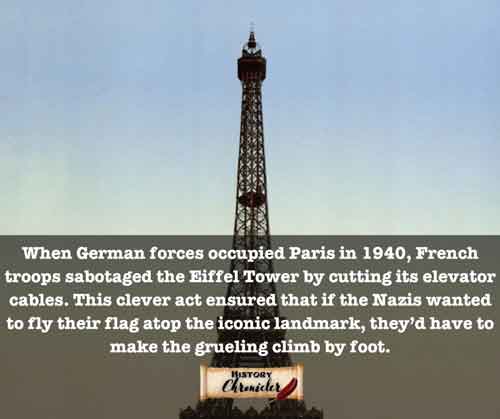
During the German occupation of Paris in 1940, French resistance was carried out in various ways, both openly and covertly. In the most famous instance, the cables to the elevators of the Eiffel Tower were secretly cut by French workers before the Nazis could claim the structure. This did not prevent them from occupying the city, but it sent a clear message: if the German troops were determined to hoist their flag over the most famous building in Paris, then they would have to climb the 708 steps to the top on foot.
Abraham Lincoln: The President Who Dominated the Wrestling Ring
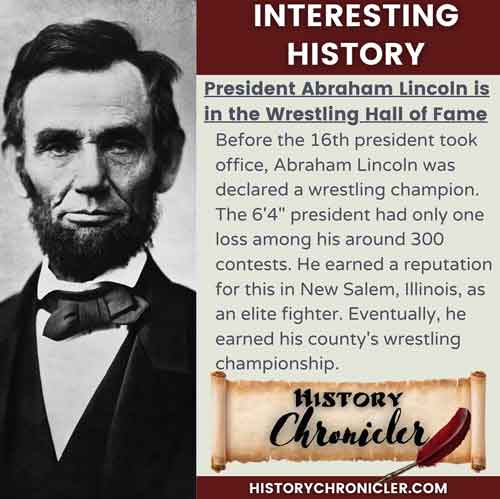
Abraham Lincoln’s claim to wrestling fame came long before he led the country through its most difficult times. Before his presidency, Lincoln made a name for himself in frontier Illinois as an exceptional wrestler. Known for his impressive height of 6’4”, along with his strength and agility, Lincoln reportedly had 300 matches, only losing one. This near-flawless record made him well-known in his community as a formidable competitor.
Renowned for his tenacity and fair play, Lincoln eventually won his county wrestling championship. Lincoln was posthumously inducted into the National Wrestling Hall of Fame. This early aspect of Lincoln’s life showcases a rougher, more competitive side of the 16th president.
The Tragic Irony of General Sedgwick’s Final Words
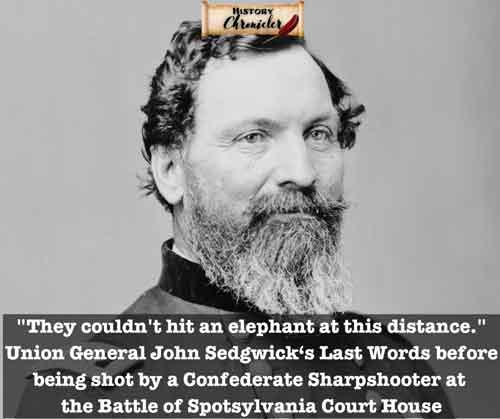
The death of Union general John Sedgwick at the Battle of Spotsylvania Court House was one of the most well-known, tragic events of the Civil War. General Sedgwick, known for staying cool in the midst of battle, was trying to calm his troops as Confederate sharpshooters opened fire from long range. “They couldn’t hit an elephant at this distance,” he said to the soldiers. A moment later, he was killed by one of the marksmen. Sedgwick’s last words are an iconic reminder of the Civil War’s ever-increasing levels of precision.
Phillis Wheatley: A Literary Pioneer Who Defied the Impossible
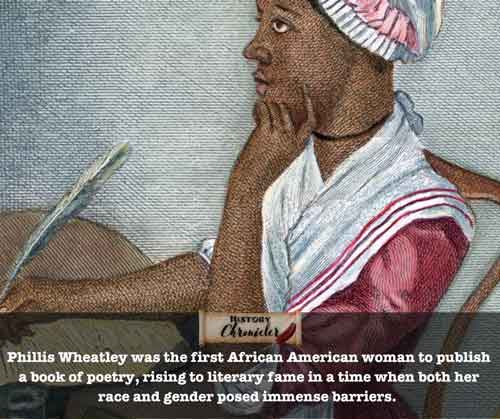
Phillis Wheatley’s story is one of the most incredible rags-to-literary-stardom tales in early American history. As a young girl, she was captured and sold into slavery and transported from West Africa to Boston, where she quickly learned to speak and read English. In just a few years, the girl who had been kidnapped from her home continent was composing poems that were drawing the attention of important figures on both sides of the Atlantic.
In 1773, she became the first Black woman in America to have a book of poetry published. Wheatley’s voice challenged long-held beliefs about race, gender, and intelligence and opened space for other Black writers in the early years of the nation’s history.
The Whitworth Rifle: The Civil War’s Game-Changing Precision Weapon
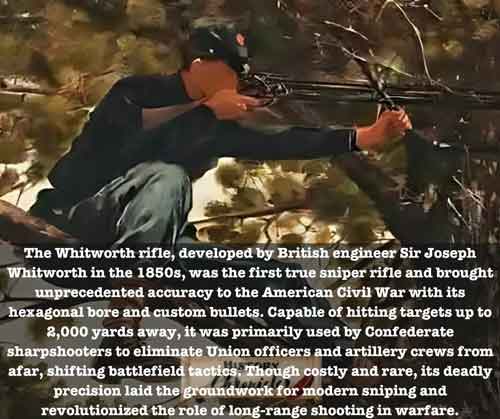
The Whitworth rifle, an innovation dating back to the 1850s and developed by the British engineer Sir Joseph Whitworth, is widely regarded as the first real sniper rifle in history. Its distinct hexagonal bore and meticulously machined bullets enabled sharpshooters to hit targets at previously unthinkable ranges of up to 2,000 yards. Confederate sharpshooters in the American Civil War used this rare and costly weapon to significant effect, picking off Union officers and artillery crews from concealed positions. Despite limited production, the Whitworth rifle’s impact was immeasurable, laying the groundwork for modern sniping and redefining long-range combat tactics for generations.
When Tomatoes Took the Blame for a Hidden Poison

18th-century Europeans were scared of tomatoes. Aristocrats believed the brilliant red fruit to be poisonous. But it wasn’t the tomato’s fault at all; it was the plates it was served on. Wealthy households would dine on pewter plates, which often had high levels of lead. The acidity of the tomato caused the metal to dissolve into meals. The resulting symptoms of lead poisoning were blamed on the tomatoes. It took decades before tomatoes were cleared of being deadly. The truth of this myth is a lesson on how easily one can be misled without science to catch up to everyday life.
Jeannette Rankin: The Trailblazer Who Entered Congress Before Women Had Nationwide Voting Rights
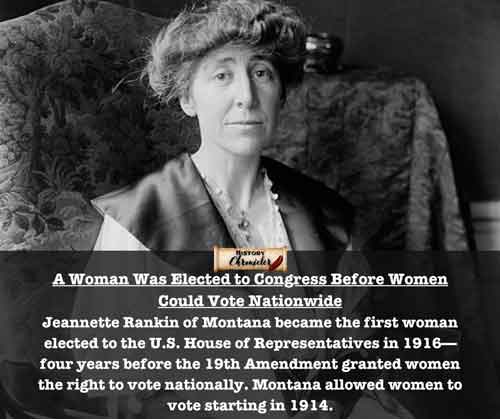
On November 7, 1916, Jeannette Rankin won election to the US House of Representatives. She represented the State of Montana, which, in 1914, became the first state to grant women the right to vote. Rankin was an activist, reformer, and lifelong pacifist. She was elected as war clouds darkened over Europe and came to office determined to challenge the political status quo, both as a woman in a man’s world and as an outspoken opponent of war.
Rankin had been elected at a time when most women in the US could not vote. Her election and the women’s suffrage movement’s growing political strength presaged the 19th Amendment to the United States Constitution, adopted four years later.
Cher Ami and the Winged Heroes of World War I
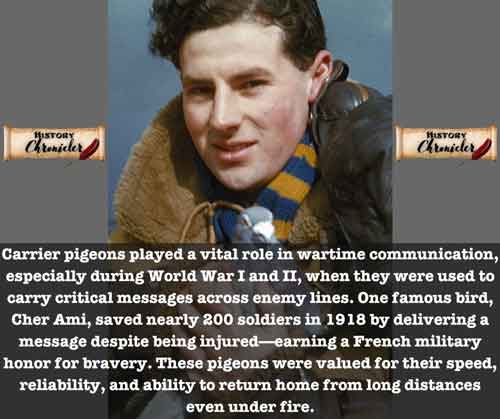
Before radios could be relied upon in combat, carrier pigeons were used to get messages through to units surrounded by enemy fire, mud, and general carnage. No pigeon became more famous than Cher Ami, the bird that is credited with saving the lives of almost 200 American soldiers in 1918.
Shot, blinded, and with one leg severely wounded, the pigeon nonetheless delivered the coordinates that enabled rescuers to reach the trapped “Lost Battalion.” Tales such as Cher Ami’s show why pigeons were used rather than relying on technology – their instinctive homing ability and sheer determination often meant success in conditions where human communication would break down. These unlikely war heroes showed that valor is not limited to humans.
Nellie Bly: The Journalist Who Rewrote the Rules of Reporting
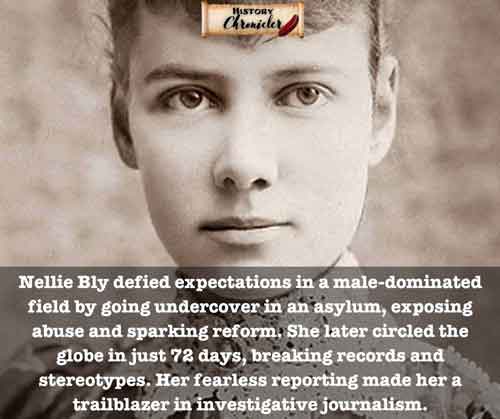
In the 19th century, Nellie Bly’s audacious approach to journalism and her commitment to exposing injustice through immersive, firsthand reporting pushed the envelope of what a reporter could achieve. By feigning insanity and infiltrating the notorious Blackwell’s Island asylum, Bly unveiled the squalid conditions and inhumane treatment that the mentally ill endured, galvanizing public outrage and prompting reforms that saved lives. This groundbreaking stunt not only set a new standard for investigative reporting but also challenged societal norms about women’s roles, inspiring a generation of female journalists.
Bly’s subsequent feat of circumnavigating the globe in 72 days, a nod to Jules Verne’s “Around the World in Eighty Days,” captured the public’s imagination and further solidified her status as a pioneer in both journalism and women’s rights. Her legacy lives on as a testament to the power of fearless reporting and the impact of putting oneself in the shoes of the stories we cover.
The Althing: Iceland’s Thousand-Year Experiment in Democracy

The Althing is often cited as the world’s oldest parliament. Formally inaugurated in 930 CE, it represents one of the earliest known attempts to establish a parliamentary democracy. Gathering Icelandic chieftains, lawmakers, and ordinary citizens, the Althing was a place to resolve disputes, enact laws, and generally manage the political affairs of the island nation.
Over the centuries, the Althing’s form and function have shifted, but its central role in Icelandic governance persisted, despite colonial influence, natural disasters, and significant social upheaval. The continuous history of the Althing provides a unique perspective on the early development of legal systems and on how they contributed to the formation of a society focused on consensus, community, and the rule of law.
Napoleon and the Great Rabbit Rebellion
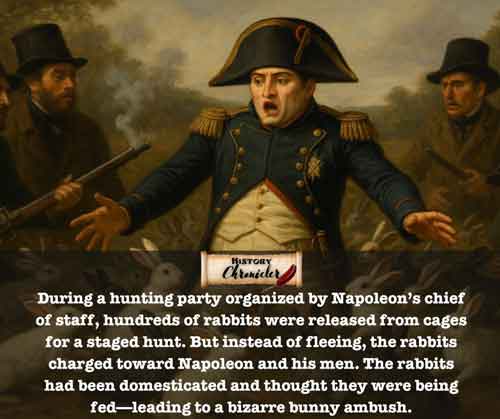
One of the stranger incidents of Napoleon’s life involves rabbits. Napoleon and his men were out on a hunting trip when the hunters released several hundred rabbits for sport. However, instead of running away, the rabbits ran directly toward Napoleon and his men. The rabbits, accustomed to humans as a source of food, had mistaken Napoleon and his men for their keepers. In a battle of wills, Napoleon and his men were chased by the rabbits, much to the amusement of many onlookers.
The Tragic Oregon Blast: America’s Only WWII Casualties on Home Soil
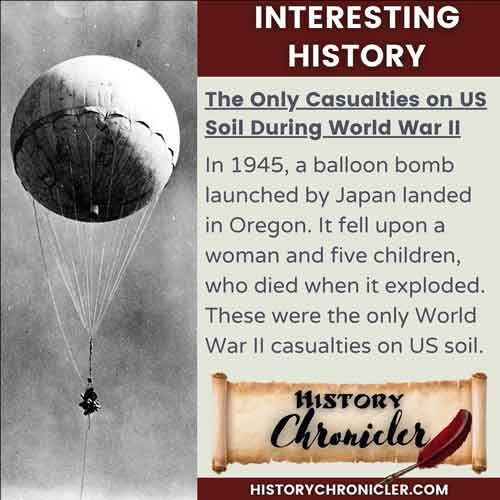
In the last year of World War II, the war unexpectedly came to America. Japan had sent thousands of balloon bombs (early experimental weapons) over the Pacific Ocean on the jet stream, and one of them floated into the forests of Oregon in 1945. A local woman and five children found the odd object, and it exploded, killing all six. These were the only deaths on American soil at the hands of an enemy during World War II.
Alexander Graham Bell’s Lost Greeting: A World That Might Have Been

Alexander Graham Bell’s preferred way to answer the phone was “Ahoy!” Admittedly, this is a fun little piece of trivia that tickles the imagination, imagining a world where a sea-faring hello is the norm on the phone. Alas, Thomas Edison overruled Bell, and the telephone greeting, later adopted as the global standard, “Hello” has become part of our daily vernacular. Amazing how these decisions of new-fangled technology during the first stages of development can shape language for future generations.
A Mother’s Revenge Against Her Father & Her King
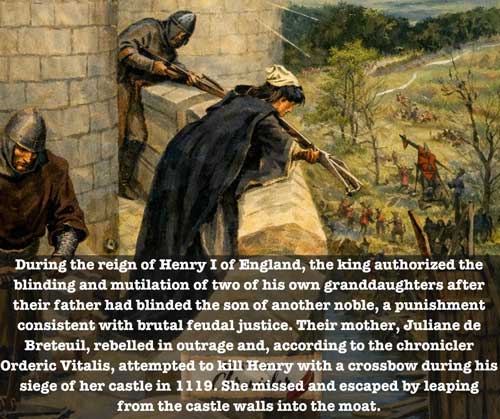
This story comes from the infamous and bloody political climate of Norman England during the reign of Henry I (r. 1100–1135). The king had just ordered two of his granddaughters to be blinded and mutilated as punishment for their father’s blinding and mutilation of a child from a rival noble family. Their mother, Juliane de Breteuil, went to her castle and called her knights to arms in revolt against the king.
Medieval historian Orderic Vitalis wrote that, during Henry’s siege of the castle in 1119, Juliane attempted to shoot the king with a crossbow. She missed and leaped out of the castle window into the moat to evade capture. Her historical fate is not recorded after this.
Uncanny Cannibalism

The disturbing coincidence between fact and fiction makes the entire story behind The Narrative of Arthur Gordon Pym of Nantucket one of the most intriguing and disturbing in literary history. In Poe’s story, a group of shipwrecked sailors tosses dice to see which of them should be killed and eaten by the others to survive.
Poe wrote the novel several decades before the actual shipwreck occurred, and the act was included as a realistic bit of morbid detail that illustrates the psychological and physical desperation that sailors can face out at sea. Instead of the story coming before the real-life act, however, the act came after, with one of the shipwreck survivors being a cabin boy named Richard Parker, a name identical to the cabin boy in Poe’s story. The exactness of the copycat event, both in detail and time period, was so shocking that it still baffles historians, writers, and readers to this day.
Before Alarm Clocks, People Paid a Human Alarm

Before alarm clocks, British workers hired “knocker-uppers” to wake them for early jobs. Armed with long poles, soft hammers, or pea shooters, these human alarms tapped on windows at appointed times. The job had one big flaw, the racket often woke up nearby neighbors who hadn’t paid a penny.
Liechtenstein’s Last War: The Army That Came Home With One More Soldier

The Paratrooper Who Hung Above D-Day

On June 6, 1944, U.S. paratrooper John Steele of the 82nd Airborne Division was caught in the church steeple of Sainte-Mère-Église while his parachute was still open during the D-Day invasion. Hanging for about an hour and a half with German troops firing at his location on the ground, Steele was shot and wounded, as he feigned being dead until being captured by Germans before escaping later to survive the war. His ordeal was portrayed in the classic film The Longest Day, and remains one of the most iconic images of D-Day.
As you can see, the past is full of unbelievable events, stranger than fiction, but that’s how life is. These hard to believe history events prove that reality is often stranger, funnier, and a lot more astonishing than our imagination. And this list is only the tip of the iceberg. There are many more amazing facts from history waiting for you here, so stay tuned! We will continue to add new mind-blowing stories from the past, and you will never see the end of it because history is full of mysteries!


