How Mansa Musa Flooded Cairo with Gold—and What Happened Next
 Reading Time: 18 minutes
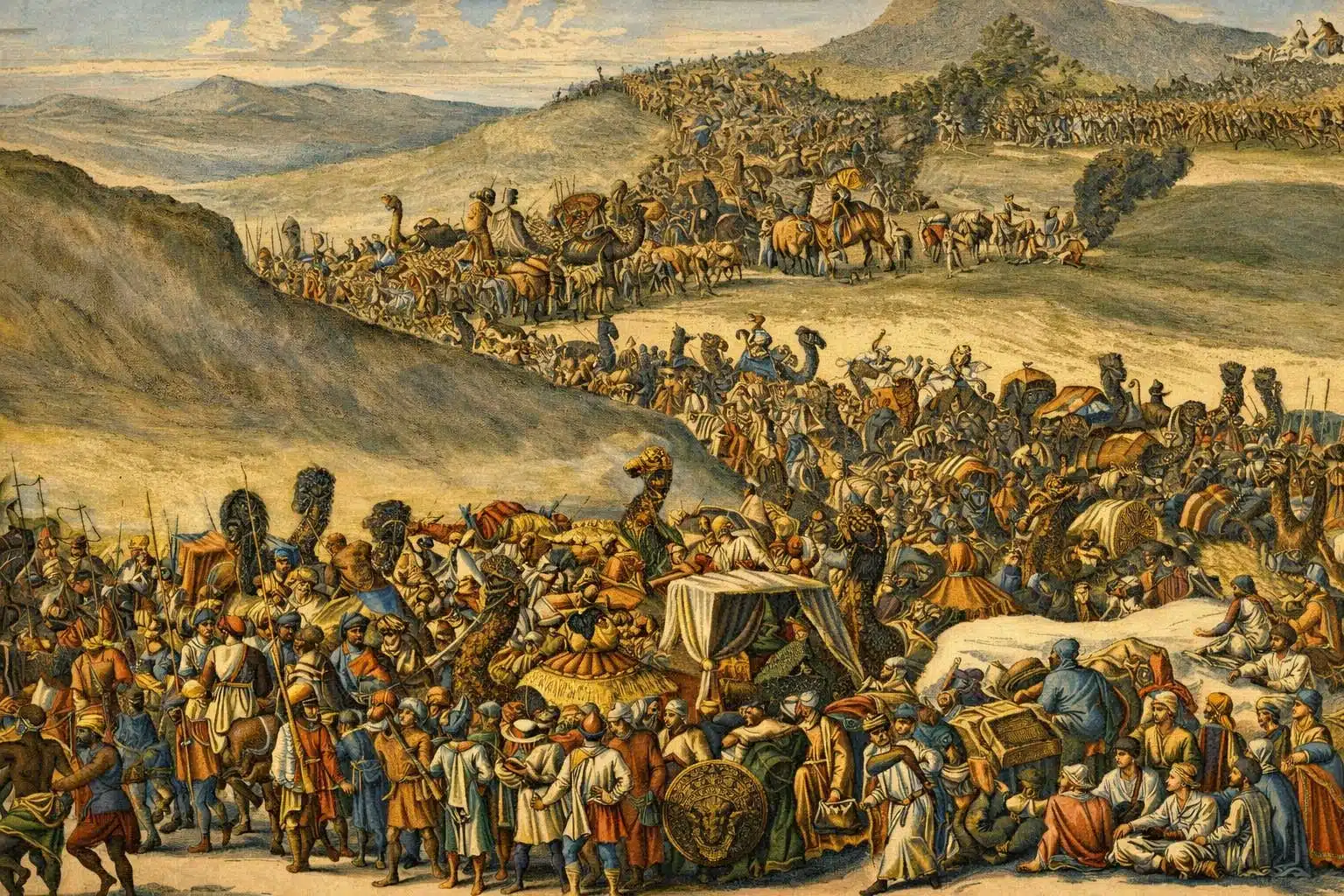
 In the 1320s, Mansa Musa made his way to Cairo, leading a caravan so laden with gold that centuries later, writers still insisted you could smell wealth rotting in its markets. Chroniclers wrote that once Musa dispensed lavish gifts, stocked up on food and supplies, and generously gave alms to the poor, the metal became less valuable. Embellished as the tale is, the image at its heart is striking: the apparently overnight inundation of a foreign economy with bullion was recounted as much an economic event as a royal pilgrimage.
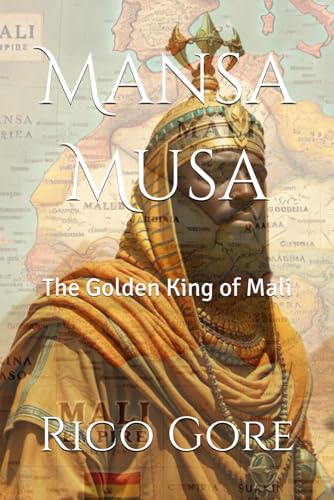
But who was Mansa Musa? The Mansa was the ruler of the Mali Empire, whose political power rested on goldfields and trade across the Sahara. His journey to Mecca was meant to be an expression of piety—but one that also took Mali’s mystique to the center of the Muslim world. The gold he carried did more than wow onlookers. It served as currency for diplomacy, piety, and monetary upheaval all at once—triggering immediate inflation in Cairo and altering perceptions of Africa for centuries to come.
Mali at Its Peak
Built on the southern edge of the Sahara Desert, Mali commanded settlements where savanna kingdoms connected to caravan routes. Its towns regulated river travel, desert inroads, and trade coming south from places like Ghana. Their abundance of gold also gave them an advantage over routes flowing north, where salt was mined. Caravans carried salt to the south, gold to the north, and other trade in both directions. Mali’s wealth depended on both resources.
Precious metals were not the whole economy. Mali profited from reaching mining regions, as well as from managing gold’s arrival into commerce. Kings taxed trade passing through their cities. By influencing where gold dust entered circulation, the state could translate topography into treasure.

Administration of resources translated into broader claims of authority for rulers like Mansa Musa. He presided over towns, provinces, and client kings as a monarch would. Mali leaders could appoint loyalists to office and collect taxes in return for protection. Fundamentally, governance meant maintaining order along trade routes. When a government can make the roads safe, merchants and notables are often willing to accept its leadership.
West Africa was wealthy, but Mali was also recognizably Muslim at the top. Musa’s journey demonstrated that Africa was not on the edge of Islam’s geography, but part of it. His visit to Cairo made Mali known across North Africa and the Middle East.
At its height, Mali was not simply “rich.” Its wealth was mobilized as taxes, protection, diplomatic ties, and reputation. Beyond its obvious advantage, Mansa Musa’s rule depended on being able to leverage resources at scale. As a devout Muslim, he connected Mali to networks beyond Africa’s desert border. Through his pilgrimage, Mali was written into the recorded history of the medieval world.
The Pilgrimage and the Procession
The hajj was an act of devotion but also an act of diplomacy for medieval Islamic rulers. Their journeys were journeys of display because display relayed information that diplomatic language could not: this ruler is legitimate; this ruler is protected; and this ruler is wealthy enough to give gifts. For Mansa Musa, journeying to Mecca was more than religious obedience: it was a public statement that Mali had its place in the same religious landscape as Cairo, Damascus, and the Hijaz.
Musa’s journey to Mecca was long—and it was carefully staged. One suggested itinerary, based on contemporary accounts, envisions a trip of over 4,000 miles across the Sahara, pausing in Cairo en route to Mecca. The logistics of travel at this scale meant access to water, security, guides, and, most importantly, ready cash to keep thousands of people moving across deserts and cities.
Cairo was critical to that plan because it was the intersection where pilgrim caravans paused, and rulers could be seen by Egyptian scholars, merchants, and officials. Cairo’s prominence is clear in descriptions of the traditional Egyptian caravan. This caravan used Cairo as a major stopping point to “gather together” pilgrims before they traveled south and east toward Arabia. If Cairo was where pilgrims were meeting before journeying farther east, then stopping there, let Musa be processed in public before an audience that could take the story across the Mediterranean and beyond.
Medieval writers often recount the number of people who accompanied Musa. In many cases, those numbers are inflated in retelling, but quantity was not the point. Instead, it is the retelling that matters: servants, courtiers, soldiers, and attendants from Mali traveling as part of Musa’s royal court. Scholars involved with Northwestern’s Caravans of Gold project summarize the historical record as follows: “Mansa Musa was accompanied by a large entourage of courtiers, slaves, and warriors.” That detail would have signaled to any medieval observer that this was a ruler who traveled like a state, literally with the weight of his state accompanying him.
Gold was the statement that made sure no one forgot to see. Gifts were given freely by Mansa Musa during the journey. The poor were supported along the way. Supplies were purchased at every stop. Officials were given enough gold to make news. When chroniclers like al-Umari describe Musa giving “each emir of his court and every attendant a load of gold,” they are reporting gestures that were not just random kindness- it was prestige-building deployed as politics.
Devotion and diplomacy went hand-in-hand. Generosity announced piety, but it also generated goodwill among religious leaders and local officials. Spending gold in Cairo told the local populace that Mali had a ruler who was devoutly Muslim in ways that mattered to Egyptians who valued religious status and orthodoxy. Gifts would generate stories of generosity—everything a far-flung empire needed to matter back home.
That work was done before Musa continued across Egypt and reached Mecca. Thanks to Cairo, Mali was now part of the pilgrimage network connecting West Africa to North Africa and the Middle East. Rumors that gold could tilt economies were in motion. The route itself was sacred, but Mansa Musa’s spending was strategic, using gold as both religious offering and diplomatic announcement: Mali had indeed arrived.
Cairo in the 1320s
Fourteenth-century Cairo was the commercial, religious, and administrative center of Mamluk Egypt. Taxes on agriculture (grown primarily along the Nile) and on trade between the Mediterranean and the Red Sea filled the Mamluk treasury. Cairo was cosmopolitan and cultured, but also regulated. Markets functioned as vital nodes of economic exchange, but were heavily policed to ensure stable prices and proper coinage.
Coinage and credit flowed through multiple tiers. Gold, silver, and copper were used at different scales to buy different goods, while commercial partnerships facilitated exchange at a distance by circumventing the need to physically transport currency. Prices in Cairo were particularly sensitive to abrupt influxes of specie because agricultural produce had to be imported by sea and by caravan, and many high-demand goods were still available only through trade networks abroad. Large-scale exchange was routine.
Positioned astride key trade routes, Cairo further increased its prominence. The city imported goods from the Indian Ocean via Red Sea ports and served as a hub along routes linking Egypt and Mediterranean ports, European kingdoms, and Levantine cities. Routes circulating goods also facilitated flows of information about political and economic conditions, as well as reputations. News that failed to become commonplace in Cairo often did not get very far. Cairo mattered.

The city also mattered as a site of pedagogy and piety. Communities of jurists, judges, scholars, and students lived around Cairo’s mosques and madrasas. Religious authority was thus linked, visibly and tangibly, to Cairo itself. Political leaders paying a visit knew this. Being publicly acknowledged by Cairo’s scholars could confer legitimacy throughout the Muslim world, particularly because popular perceptions of what was “legitimate” and “pious” were shaped in cities like Cairo. Legions of pilgrims passed through the city each year.
The regulatory presence of the Mamluk state was another factor. Cairo functioned as the capital of a militaristic dynasty that ruled through force, officials, and courtly ritual. Maintaining political order was crucial, and authorities were keenly aware that the markets were one piece of that stability puzzle. Excessive price volatility or exchange-rate instability could easily lead to public disorder. To someone arriving with massive amounts of gold, Cairo therefore represented opportunity and risk.
Residents of Cairo were accustomed to the wealthy donative practices of foreign rulers, including sultans on pilgrimage or depositing juridical petitions. They were used to impressive processions, diplomatic gifts, and exchanges with royals and officials. Cairo’s market participants may also have expected Musa to move through Cairo as other monarchs did, leaving heaps of gold behind him as he generously processed through the city, disrupting markets only minimally or temporarily.
The drama of Musa’s pilgrimage thus seems to have emerged from what Cairo residents anticipated and what they experienced. Coins were reportedly flowing from Musa’s entourage so consistently that they entered everyday transactions. Markets could react in real time. They could even absorb a royal gift. But something was very different about the hajj of Mansa Musa, challenging expectations of how generous a monarch could reasonably be without disturbing the perceived value of gold itself.

Flooding Cairo with Gold
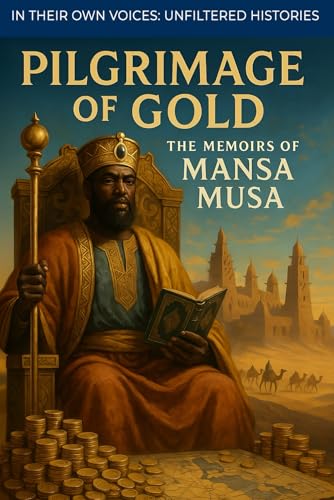
In its simplest form, Mansa Musa’s gold found its way into Cairo’s economy through gifts and spending. Diplomatic gifts were dispensed to officials and courtesies throughout the court. Supplies were purchased to maintain his massive traveling procession. Almsgiving and charity provided another avenue for distributing gold to those who would otherwise have liquid funds. Some gold may have changed hands as payment, as a promise of payment, or as an exchange.
Gifts were part of formal meetings. Hosts expect payment; religious leaders expect thanks and charitable donations. Distributing gold was one way Musa could advertise his wealth and connections. In a society that valued reputation, Rumors of Musa’s gifts circulated even before he gave them. Presented properly, a gift said that Mali was richer than they realized, well-connected enough to reach Cairo, and powerful enough to give gold away in the center of the Islamic world.
Trade was another major outlet for gold. Feeding, clothing, and caring for a caravan of Musa’s size required animal, food, textiles, lodging, and numerous other services. Merchants and sellers who received gold currency wanted to turn it into other currencies, pay debts, or purchase more stock. Their expenditures, in turn, fueled other exchanges. Even if the gold itself did not spread very far, the economic impact did.
Not every recipient was wealthy. Elite officials and notables received expensive gifts. Merchants and craftspeople received payment for trade. Common families received alms that they would almost immediately spend. Churches and mosques would have received donations that strengthened Mansa Musa’s religious standing with city scholars and local mosques. Distributing gold across social classes means its effects were experienced not just in royal accounts but also in Cairo’s everyday markets.
In fact, later chroniclers made a point of this. One written account attributed to al-Umari goes so far as to say Musa “depressed” the price of gold in Cairo. This is interesting as it treated a royal visit akin to a major economic event. Whether the scale was historically exaggerated or not, the impression is accurate. If the market suddenly has more gold than is commonplace, it will take more gold to buy the same goods, leading to rapid inflation. Supply and demand at its simplest.
The effects of that would be noticeable. Prices in gold would rise even if there is no immediate change to how much bread, cloth, or rent is available. Markets can recover from that kind of flux if everyone adjusts at once. But to individuals who are paid a set salary or who are trying to build savings in gold coins, the situation can seem chaotic. Cairo was a major trading hub with long-distance connections to many regions. That means small changes in market sentiment can trigger dozens of others as traders rethink what is “fair” priced.
The main aspect is that Mansa Musa poured gold into Cairo through normal means of exchange. Markets processed that gold just as they would have processed anyone else’s gold, only on an incomparable scale. That’s why the “legend” caught on. It wasn’t about him amassing treasure or secretly funneling gold to his palace of own coffers. He put it into everyday life, the public, where everyone could see it. Enough gold that, in the short term, it dazzled them. Long enough, it distorted prices and expectations. This made people realize Mali wasn’t just an unfamiliar African kingdom but one powerful enough to flood markets.
What Happened Next The “Gold Crash” and Its Limits
“Inflation” in a medieval market sense could look more like changes to exchange rates and customs around bargaining than any particular published price index. Gold competed against silver, and vice versa; merchants had memorized ratios of how much silver was expected per unit of gold and adjusted prices when the available supply of either metal shifted. You could pay your merchant in gold coins or negotiate for him to charge less in exchange for goods, or agree to sell but insist he convert the gold to silver coins at a different rate. A disruption would alter the scarcity of a precious metal, and buying habits would take time to reset, as much as the metal’s physical scarcity did.
One famous anecdote comes from the Arabic writer al-Umari. He claims that before Mansa Musa’s arrival and spending, the typical rate for purchasing a mithqal of gold would’ve yielded about 25 silver dirhams. Afterward, it suddenly bought only about 22 dirhams’ worth of silver, “and it has remained cheap till now…for about twelve years.” The key part of “Mansa Musa crashes the gold market” is not that Egypt crumbled, but that locals noticed gold was briefly worth less and remembered it a dozen years later.
Scholars argue over how much actual change that represents. One school will accept al-Umari, saying twelve years straight: that’s how long the great gold influx distorted the economy. Another reckons it fell within the standard fluctuations of gold–silver prices during the Mamluk period, and later writers exaggerated how low or how quickly the ratio fell. Warren Schultz’s summary of theories is where many readers learn the “normal fluctuations” counterargument; his conclusions suggest the story shouldn’t be sensationalized as if it were a 14th-century Wall Street collapse.
Even within “normal ranges,” the value could’ve yo-yoed as markets overreacted to such a large caravan coming and spending intensely. Perhaps buyers and traders guessed correctly that so much gold would soon be used to trade for goods and rushed to exchange their own silver for gold while prices were favorable. Maybe they hid their gold reserves or raised prices across the board to hedge against anyone else panicking. Either way, money changed hands unusually quickly, and local businesses had to recover after Mansa Musa’s pilgrimage sprinted through the market.
The next part of the story becomes as interesting. Manasa Musa, in turn, needed to borrow money. Accounts concisely related here and elsewhere claim that Musa and his forces eventually found themselves low on cash in Cairo on their return home and took out a loan “at a very high rate.” They effectively removed gold from circulating again while hoping to raise enough money to return home with dignity intact. This borrowing stabilized gold’s value—because borrowed gold is gold that cannot easily be spent, thereby pulling demand down. Once Musa gave away that gold or repaid the loan, its value would jump up again.
Borrowing also solves a reputation problem. Word spread of Musa’s generosity, but people also talk: a rich king coming home empty-handed and needing credit from his subjects. If you borrow enough money to host your court, pay your soldiers, and leave Cairo without pausing your campaign, you avoid that problem. Financing allows damage control.
The takeaway is that there wasn’t one sudden depression followed by a clean rebound. A spending spree landed, the value of gold felt different enough that historians noticed about a decade later, and then a variety of measures kicked in—to good effect or not, we can’t say—to restore some sense of normalcy. The big-picture lesson is that people remember Mali as wealthy, then richer.

The Diplomatic and Cultural Aftershocks
Mali was no longer just a rumor beyond the desert after Cairo. Mansa Musa’s journey made West Africa the subject of gossip at courts because it associated Mali with one thing outsiders knew: gold. Stories of Mali flooding markets with gold reached Europe on trade routes shared with pepper and cloth. Mali was visible in a way beyond geography; its reputation was real.
Maps began to reflect this new visibility. The renowned Catalan Atlas depicts Mansa Musa sitting on a throne with a gold nugget in hand, labeled “Mellic,” lord of Guinea. This was not some upstart African chronicle. Mediterranean mapmakers were showing viewers that Africa had a king to place beside emperors, sultans, and familiars. Mali became a recognized wealthy country on maps.
All that gossip at court became another kind of currency: diplomacy. Impress Cairo’s scholars, and scholars will travel. Become “known” to kings who believe Cairo’s opinions of you, and you open doors across the Islamic world. This fostered scholarship, judges, diplomatic marriages, and an increasingly visible economic market. Musa traveled far, but his word Hajj traveled even further.
That spirit likely funded programs back home that turned reputation into architectural fact. Chronicles consistently record that Musa commissioned and renovated significant structures in Mali’s cities, particularly in Timbuktu. Big buildings sent a clear message: Islam’s king of gold could house its scholars and publicize its piety across Mali. Piety itself became proof of power.
The same currency circulated among people. Stories circulated of Musa inviting scholars to his court, and experts of various kinds flocked to Mali. A city capable of attracting and housing teachers, jurists, and architects became part of a larger network. The hajj reached beyond Cairo in another sense.
Eventually, Mali had a reputation as more than just Africa beyond the desert. Europe had a picture of Mansa Musa on a map holding gold. The Cairo stories of wealth and Islam’s largest pilgrimage created an image of wealth far beyond imagination. Even as later authors exaggerated details, they echoed the same concept: Mali was a power to be reckoned with.
Myth vs Evidence
The Mansa Musa story persists because it’s satisfyingly simple. An absurdly wealthy ruler travels across their known world on a religious excursion and unwittingly causes economic havoc. But the actual evidence is sparser…and human.
It’s true that medieval writers noted Musa’s conspicuous spending in Cairo. It’s also true that they were medieval writers—not economists or historians in the modern sense. Eyewitnesses describe what they saw, and secondhand reporters describe what they heard, which in Cairo probably circulated through court gossip and merchant discussions. Repeated conversation can hone a story as much as distort it.
So what do the medieval sources say? In general, they agree on three facts: Musa had a large entourage, he spent prodigiously, and the sudden presence of gold drove prices or the value of gold up or down. Some later writers suggest this effect lasted for years. What they don’t provide, of course, are audited figures: specific weights of gold donated, price lists updated daily, and comprehensive knowledge of how much was spent in Cairo versus taken along Musa’s return journey.
The more times the story is retold, the larger the crowds, the quantities of gold, and the sums spent become. Cairo becomes “the market” rather than many markets spread across a city. Round numbers sound more impressive than actual ones, so repeatable claims are often the most extreme rather than the most plausible. Fame promotes extremes.
It also doesn’t help that “flooding a market with gold” sounds like “destroying the economy.” Medieval Cairo had millions of residents and a diverse economy based on agriculture, trade, and state finance. Temporary pressure on gold–silver ratios or the price of key goods doesn’t equate to said economy “crashing.” The city didn’t come to a halt. Workers still worked, merchants still traded, and taxpayers still paid taxes. People adjusted to new market conditions.
Parsing fact from fiction requires focusing on mechanisms. If a large pool of people suddenly has more gold, they’ll naturally pay higher prices in gold. Merchants might inflate their prices preemptively, and money-changers might adjust rates. This was a distortion—significant and visible to contemporaries—without being an apocalypse. It was the economic equivalent of a shocking gust of wind, not a hurricane.
Then there’s the question of repayment. Some versions of the story claim Musa had to borrow gold at a steep rate from Egyptian contacts years later. That would remove some gold from circulation and reset market conditions a second time if true. Pinning down precise weights and exchange rates is unlikely, but anecdotes about repayment suggest the story wasn’t one action (“flooding Cairo with gold”) but a series of transactions: giving, spending, trading, then contracting through loans.
The best surviving evidence appears strong in one area, then quickly weakens. Musa’s presence likely disrupted Cairo’s gold markets and caused notable price confusion that visitors remembered decades later. The most persistent legend is also the weakest: that Musa single-handedly “crashed” Egypt’s economy. A far more reasonable conclusion would be far more mundane: Musa temporarily strained markets in one of medieval Africa’s largest capitals. This feat would be remarkable enough for medieval Africans to ensure his wealth was touted wherever his name was remembered.

Lessons and Legacy
Mansa Musa offers a lesson in how wealth can serve as a source of soft power. Generosity was diplomacy. Lavish gifts to officials, public acts of charity, and conspicuous spending were assurances of legitimacy and strength to audiences that counted. For merchants, scholars, and sultans who would communicate Mali’s reputation to others and display amplified Musa’s credibility, authority, and willingness to project power across the desert.
There is an obvious economic lesson too: sudden increases in the money supply influence perceptions before they affect actual conditions on the ground. When people anticipate that a precious metal will be more plentiful, they adjust prices, exchange rates, and expectations. That change has both psychological and physical consequences. Economies aren’t just stockpiles of goods, minerals, and metals; they are human networks of trust and convention. Large volumes of new spending can cause panic, speculation, and price inflation even if farmers, artisans, and freighters carry on as usual.
It’s also a story about fame and globalization. The Sahara was a bridge, not a barrier. Mali’s gold made it powerful beyond the desert, but that power depended on connections to North Africa and the broader Islamic world. By undertaking the hajj, Musa routed that wealth through Egypt and converted it into a news story. And news stories have a way of spreading. The fact that the account reached world chroniclers and cartographers gave it new life—that of a legend. Here, less was known about specific amounts, but the meaning mattered.
Centuries later, Mansa Musa’s extravagant pilgrimage endures in large part because it sounds like it can’t possibly be true. It was almost beyond comprehension that a king could spend his way across an entire city’s worth of markets. The tale thrilled because it made the African continent visible and larger-than-life to people living in the Mediterranean World and beyond.
Conclusion
In the short term, Mansa Musa’s gold flooded Cairo. In the long run, the gold made Mali’s impression on the world stage. The former was a market reaction—prices, exchange rates accommodating a flood of bullion, then normalizing as the shockwave rippled outward and financial conditions tightened once again. The latter was political. Through his pilgrimage, Mansa Musa established that West Africa could mobilize resources, stability, and religious commitment on a level that demanded the attention of the Mediterranean.
The reaction was economic and geographic. Cairo never forgot the inflation. Chroniclers wrote down their disbelief. Mapmakers expanded the known world to include Mali. Centuries later, the figures get fuzzier and the story cleaner, until all that remains is the myth of gold. But beneath that legend sits a geopolitical milestone: Mansa Musa made Mali known to the world, and that made longevity far beyond gold’s temporary devaluation.