How Otto von Bismarck Shaped the Destiny of the German Empire
 Reading Time: 19 minutes
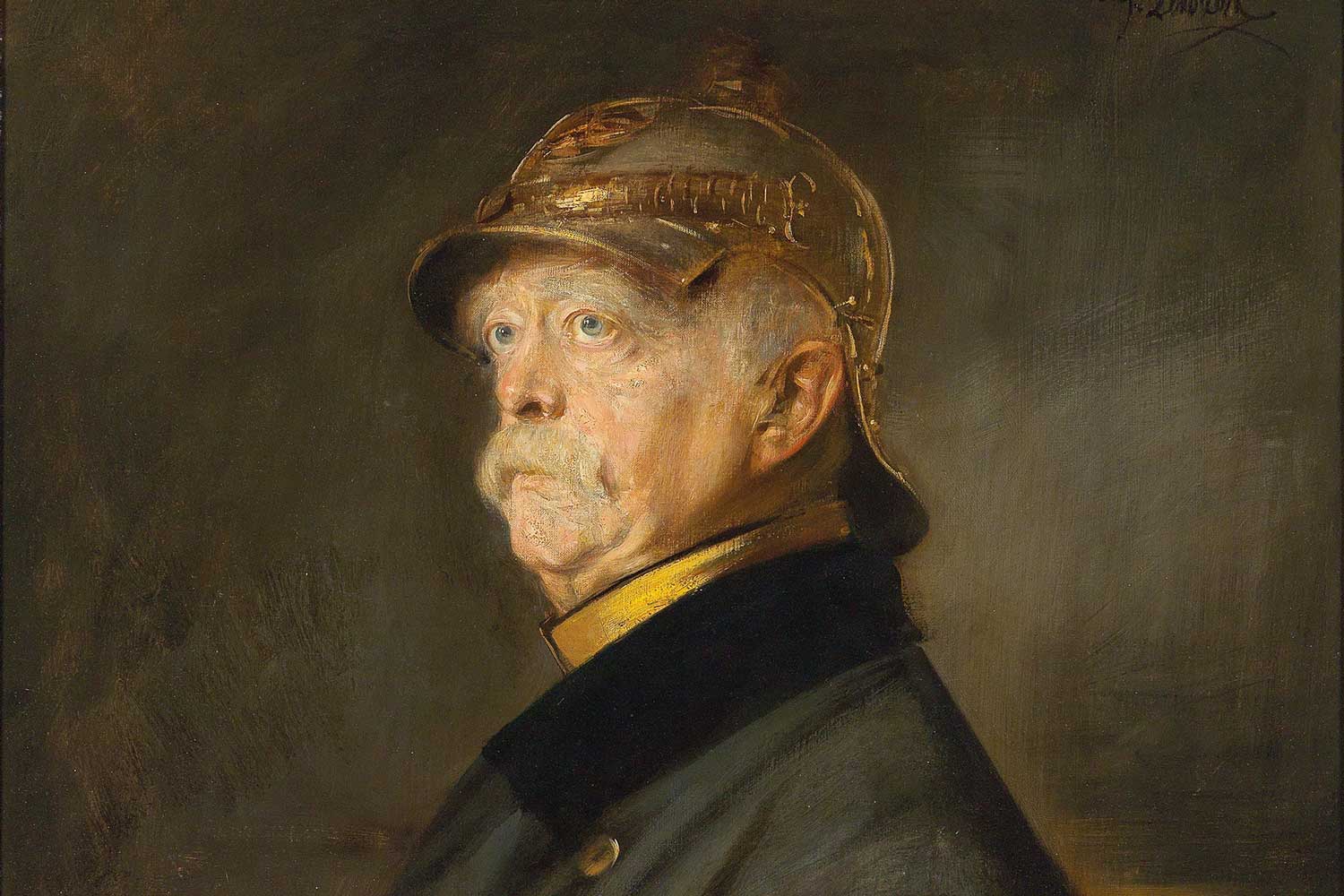
 Otto von Bismarck, who rose to power in the middle of the 19th century, was one of the most influential political figures in European history. Bismarck became the Minister-President of Prussia in 1862 and was known for his dismissal of idealism in favor of a realist tradition of power politics. He is remembered as a statesman who reshaped the political map of Europe and as the author of a policy of “blood and iron,” which famously summed up his rejection of sentiment and emphasized the use of military force and diplomacy.
The establishment of the German Empire in 1871 was a deliberate, well-planned process under Otto von Bismarck’s leadership. Bismarck was a shrewd statesman who guided Germany from a loose confederation of independent states to a powerful empire. He used a series of wars, diplomatic alliances, and nationalist sentiment to unify Germany while maintaining a balance of power in Europe. Bismarck’s leadership and policies shaped the German Empire’s political structure, foreign policy, and internal stability.
Early Life and Political Formation
Otto von Bismarck was born into the Prussian Junker class, a landowning aristocracy known for its devotion to the crown, military service, and social hierarchy, in 1815. Raised on rural estates in Brandenburg and Pomerania, he imbibed a strong attachment to Prussia’s traditions and authority from a young age. Bismarck inherited a firm belief in strong leadership over popular rule, deeply influencing his later political maneuvers.
His education was sporadic but influential. Bismarck studied law at the universities of Göttingen and Berlin, where he gained a reputation for a sharp intellect, heavy drinking, and a combative debating style. Although he showed little academic discipline in his early years, he developed a keen sense of legal systems and political strategy. After an unsatisfying stint in the legal profession, he entered Prussian politics and quickly discovered that real power, rather than theoretical governance, was his true interest.
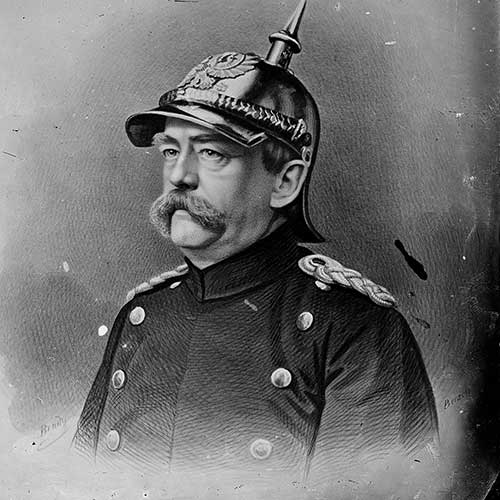
Otto von Bismarck’s early diplomatic postings further shaped his outlook. As the Prussian envoy to the German Confederation in Frankfurt, and later to Russia and France, he experienced firsthand the rivalries and ambitions that characterized European politics. These years convinced him of the efficacy of diplomacy supported by strength. He later famously described politics as “the art of the possible,” reflecting his pragmatic and often ruthless approach to statecraft.
Central to Bismarck’s political formation was his conservative worldview and a profound distrust of liberalism. He considered parliamentary democracy an inherently unstable form of government and believed liberal movements were a threat to social order and Prussian hegemony. While Bismarck could strategically cooperate with liberals when it suited his purposes, he never fully embraced their ideals. Instead, he held that the monarchy, the army, and the bureaucracy were the true pillars of the state.
By the time Otto von Bismarck emerged on the national stage, his beliefs and principles were well established. He viewed history as a power struggle, with tradition and necessity rather than moral or ideological aspiration guiding statesmen. These early influences laid the groundwork for the policies that would later unify Germany—and indelibly mark its future.
Rise to Power in Prussia
In 1862, Otto von Bismarck’s ascent to power culminated in his appointment as Minister-President of Prussia by King Wilhelm I. Prussia was embroiled in a constitutional crisis, with parliament refusing to allocate funds for the army’s modernization. King Wilhelm I was seeking a leader who would not shy away from clashing with the legislature, and Bismarck’s reputation as a hardline conservative made him a prime candidate for the role. His appointment marked a turning point in Prussian politics.
Not long after his appointment, Bismarck delivered a speech that came to be known as the “Blood and Iron” speech. In this speech, he declared that the major issues of the time would not be settled by speeches and majority decisions, but by force and bloodshed. The speech was later often paraphrased; his message was clear: he believed that laws of history were made by power, not by persuasion. This speech solidified Bismarck’s image as a realist who was not afraid to challenge traditional diplomatic norms.
Bismarck’s early tenure as the head of the Prussian government was marked by a power struggle with parliament over military reform. The liberal deputies in the parliament insisted on having a say in the budget, while Bismarck continued to collect taxes and fund the army without their approval. This bold move was based on Bismarck’s interpretation that, under the constitution, the government had the right to act in the event of a legislative deadlock. Bismarck was accused of lawlessness by his opponents, while his supporters praised his strong will.
Bismarck’s gamble was rewarded with military victories, and as Prussia’s military successes continued in subsequent conflicts, much of the opposition in parliament was silenced, and Bismarck’s actions were retroactively legalized. Many liberals who had previously been opposed to Bismarck accepted his leadership once unification was within sight. Power, as Bismarck knew it, had rewritten the law.
By choosing confrontation over compromise, Otto von Bismarck turned a domestic crisis into an opportunity. His rise in Prussia showed how calculated defiance, backed by success, could elevate a statesman to a position of historical influence.
Realpolitik and Statecraft
Otto von Bismarck’s Realpolitik, translated as “real politics” or “practical politics,” was a form of politics or public policy based on considerations of power, practicality, and actual circumstances rather than ideological notions or moralistic ideals. The term was not coined by Bismarck but was inculcated in his work, as he believed that “politics is the art of the possible.” To him, politics was not about achieving perfection but about the art of making the best out of every situation.
Statecraft and policy decisions were pragmatic under Bismarck. He had few inviolable principles, aside from promoting the power of Prussia and the nascent German state. Liberalism, conservatism, nationalism, or even the constitution were means to that end, which could be bent, stretched, or discarded when necessary. Ideology came second to the state’s interests. Thus, he could outsmart those on the political right and left whose convictions were unyielding.
He also had the knack of ensuring that Prussia was never truly isolated or encircled by hostile great powers, and always able to confront one or two at a time. Before the 1866 war against Austria, he ensured French neutrality and Russian goodwill. Before the 1870 conflict against France, he was equally certain that Austria and Russia would not move against Prussia. The timing of war was always based on meticulous calculation and was never haphazard or rash.
Bismarck was also an expert in manipulating rivals and potential enemies. He would goad and bait an adversary into a conflict when it was politically expedient and avoid war with them when it was not. Alternatively, he would also employ diplomacy, judicious concessions, and calculated escalation to keep enemies off balance. The publication of the Ems Dispatch, which was a slight but edited slight to the French, was a case in point, where the written word could be as powerful as actual bloodshed.
In conclusion, under Bismarck, Realpolitik transformed the art of diplomacy from being a foreign policy tool into a strategic instrument of statecraft and nation-building. Bismarckian statecraft was, in many ways, a testimony to the fact that restraint and ruthlessness, when exercised in appropriate measure at the appropriate time, can and would change history.
Wars of German Unification
Germany did not become one country as a result of a revolution or an agreement. Instead, its unification was brought about by wars that were well-planned and limited in purpose and duration. These wars were engineered by one man: Otto von Bismarck. He decided that Germany’s unity would be achieved by “iron and blood,” not by argument and debate. The wars he pursued against Denmark, Austria, and France were fought in turn, and not simultaneously, as Bismarck’s strategy was to isolate his enemy first, win quickly, and then reorganize the map before other powers could respond.
The first of Bismarck’s wars was the Danish War of 1864. Prussia and Austria attacked Denmark over two German provinces called Schleswig and Holstein. Bismarck stoked legal claims and nationalist sentiment over the two duchies to whip up support for war against Denmark, and he was careful to diplomatically neutralize other European powers to prevent any foreign intervention.
The war was short and swift. The Prussian army proved highly efficient, overwhelming Danish resistance and forcing Denmark to cede the two duchies. Fought against Denmark with Austria as Prussia’s ally, Bismarck’s first war set in motion a rivalry between Prussia and Austria, as control over the two duchies became a bone of contention between the two Germanic states.
The conflict between Austria and Prussia came to a head in 1866 in the Austro-Prussian War. Bismarck diplomatically isolated Austria and neutralized French and Russian support for it by issuing guarantees to both France and Russia.
The war lasted just seven weeks, and once again Prussia’s newly reorganized army proved far superior to Austria’s. At the Battle of Königgrätz, the Austrian army was decisively beaten. This stunning result in 1866 left Europe in shock. Bismarck could have humiliated the Austrian government, but instead, he counseled moderation, and Austria was removed from German affairs while remaining a potential future ally.
Prussia used its victory to dissolve the old German Confederation and create the North German Confederation, a union of northern states that were unified under the King of Prussia. The Southern states were left independent but were strongly drawn to Berlin. German unification was now a matter of time, not of chance.

In the summer of 1870, the final stage of German unification was set into motion. In a diplomatic dispute over the Spanish throne, Bismarck saw an opportunity to set off a crisis with France. He doctored a telegram, known as the Ems Dispatch, in order to insult the French government and the French public. The French Emperor Napoleon III decided that war was the only way to save face, and on July 19, 1870, he declared war on Prussia.
The French declaration was a godsend to Otto von Bismarck, who now used the force of nationalism to unite the German states. German states north of the River Main put themselves under the protection of Prussia in response to the French declaration of war. The southern states were equally concerned about a war with France. In September 1870, German armies decisively defeated the French army at Sedan and captured Napoleon III.
As one observer described it, the Franco-Prussian War of 1870–71 “made Germans of us all.” Southern states decided to throw in their lot with Prussia, and once Paris had been put under siege, there was little to stop German unification. On January 18, 1871, German Princes gathered in the Hall of Mirrors at Versailles and there proclaimed the King of Prussia, Wilhelm I, as the German Emperor.
On January 18, 1871, the German Empire was proclaimed. Through limited wars, Germany became a unified state. The unification was not brought about by a revolution or an agreement, but rather by the wars of Otto von Bismarck, who carefully balanced speed and deliberation in order to reorganize Germany. The newly created German Empire was powerful, and its army had proven its mettle against the best of European armies. What was lacking, however, was support from the German people, who had not revolted against their governments in order to be unified, but rather were made to be unified by a stroke of Bismarck’s pen and by the precision of the Prussian army.
Chancellor of the German Empire
When the German Empire came into existence in 1871, Otto von Bismarck was appointed its first chancellor by Kaiser Wilhelm I. They had formed a strong bond over the years leading up to unification, with Wilhelm respecting his right-hand man’s efficiency and devotion, and Bismarck recognizing that he could not govern without the emperor’s support. “I am not a man who can be pushed,” he once said. However, he was careful never to make his politics appear too personal, always framing them to serve the best interests of Wilhelm’s monarchy.
The constitution centralized executive power in the hands of the chancellor. He decided questions of foreign policy, steered domestic legislation, and set the government’s political agenda. Although laws and budgets were debated in the Reichstag, power ran vertically through the chancellor’s office. Bismarck felt that executive power needed a strong hand, and that unity could only be maintained if decisions were quick and resolute.

Unity did not necessarily mean equality. Germany was a federal monarchy composed of constituent kingdoms, duchies, and free cities. To prevent any opposition that full centralization might provoke, Bismarck allowed this system to remain intact, but Prussia was made supreme over the others. It had the largest population, provided the army, and, through a permanent majority in the Bundesrat, retained control of the government.
Bismarck treaded a careful line between the constituent states. Using both compromise and threats when needed, Bismarck kept the smaller kings in line but did not wish to take away their autonomy entirely. Bavaria, Saxony, and Wurttemberg were allowed to maintain their own monarchs and certain sovereign rights, but the final say in all matters remained in Berlin. Bismarck felt that unity required hierarchy.
The keystone of the whole enterprise was the army. It was, by constitution, still a federalized army. But in reality, it was firmly under Prussian command, trained by Prussian officers, and instilled with a sense of Prussian pride and tradition. Under Bismarck’s system, the army’s allegiance was only to the emperor. This meant that the military was insulated from parliament, but also allowed for very little democratization of the state.
Otto von Bismarck maintained his office until 1890. Throughout his time in power, he built an empire that valued stability above all else. Germany was a disciplined country; conservative and powerful, but with little say from its people.
Domestic Policy and Social Control
Domestically, Bismarck regarded Germany as a field of battle upon which he must fight to ensure loyalty to the state. Politics, he once noted, “is the art of the possible.” Just as Germany needed to be respected abroad, so too must it be unified at home. To that end, Bismarck repressed anyone who seemed likely to challenge imperial power. Yet Bismarck also set aside his conservative instincts on occasion if he felt threatened.
Bismarck’s first great domestic battle was the Kulturkampf, a decades-long struggle with the Catholic Church. Bismarck feared Catholics placed their loyalties to the Pope before their German rulers. In response, the government placed education and clergy appointments under state control and expelled religious orders, such as the Jesuits. Bismarck provoked fierce resistance with these policies, and Catholics quickly organized under the Center Party. The Chancellor was forced to compromise by the late 1870s, ending most provisions of the Kulturkampf as Catholic voters had made their priorities clear.
Undeterred, Bismarck set his sights on Germany’s next threat: socialism. The Industrial Revolution had created a large working-class population concentrated in urban areas. Socialist political parties appealed to the workers by promoting reform and railing against inequality and authoritarianism. In response to this growing threat, Bismarck established the Anti-Socialist Laws in 1878. Socialists were banned from holding meetings or publishing newspapers and books.
“It is perfectly correct to repress socialism by force,” Bismarck announced. “Socialism is a disease.”
But repression wasn’t enough for Bismarck. He used repressive laws alongside an ambitious social welfare program in order to buy the workers’ support. Germany instituted health insurance, accident insurance, and old age pensions between 1883 and 1889. It made Germany the world’s first modern welfare state. But Bismarck wasn’t motivated by idealism. He did it all out of pure pragmatism.
In fact, Bismarck didn’t even bother hiding the motive behind these programs. He argued that if the state cared for the worker, then he would be less likely to entertain revolutionary thought. Bismarck effectively domesticated the working class with socialist-inspired welfare designed to link their economic security to the preservation of the empire. Socialists were still banned, but their substantive goals had been co-opted.
Social repression and welfare provision would become hallmarks of Bismarck’s domestic policy. He fostered dependence through both intimidation and livelihood.
Foreign Policy and the Balance of Power
Germany’s position as a new great power threatened the balance of power that Bismarck had helped to build in Europe. When Germany unified, Europe saw a new arrival on the international scene. Otto von Bismarck’s foremost concern was to maintain peace on the continent, for he saw the greatest threat to the new empire as success itself. An overly powerful Germany would invite challenges and threatening coalitions from other nations, particularly vindictive France. As such, his foreign policy would focus on defending Germany’s position rather than gaining more territory or achieving prestige.
His first priority was to diplomatically isolate France. Bismarck worked to contain French power and influence, buying time for Europe to accept the new German Empire. He insisted on defensible borders, but no more territory. “My map of Africa lies in Europe,” he famously said. The idea was simple, if constantly threatened: keep France alone, and she would not seek war.

First among Bismarck’s balancing treaties was the League of the Three Emperors. By tying Germany, Austria-Hungary, and Russia together in a mutual defense pact, Bismarck sought to end great-power competition in Eastern Europe. When Russia and Austria-Hungary nearly went to war over Balkan affairs, Bismarck tilted the scales to keep the peace. He was a staunch conservative, but put little stock in ideology if it damaged German interests. Treaties were means to an end, friendships optional.
When the Three Emperors League broke apart in 1887, Bismarck worked twice as hard to fashion backup plans. The Dual Alliance between Germany and Austria-Hungary was signed in 1879. Germany and Italy would later join the Triple Alliance. Each of these agreements offered stability and protection against unpredictable neighbors, but Bismarck never allowed Germany to become bound to any one of them. The Nordoostpolitik, or Reinsurance Treaty with Russia, ensured that if Germany and Austria-Hungary went to war with a third power, Russia would remain neutral.
Above all, Otto von Bismarck understood public perception. The Congress of Berlin in 1878 showcased Otto von Bismarck’s diplomatic acumen. The Congress of Berlin was formed to alleviate growing tensions between the European powers in the aftermath of the Russo-Turkish War. Here, Bismarck played the role of “honest broker” impeccably. He was amiable to everyone, cordial but not close. Russia wanted dominance of the Balkans, but Europe would not allow it. Instead, Bismarck redrew the map to satisfy everyone just enough that no one felt wronged. Russia gained some territory in Bessarabia and reached the Bosporus, but it did not take Constantinople.
The Congress itself was considered something of a disappointment. But again, as long as no grievances were severe enough to cause war, Europe was held at peace. Bismarck had also endeared himself to Europe’s leaders by casting Germany as the neutral party interested only in maintaining peace and stability.
For two decades, Bismarck maintained this careful balance. There were no full-scale European wars, and Germany successfully avoided diplomatic encirclement. German foreign policy was based on avoiding war. When Bismarck retired in 1890, his system was disrupted – and Europe was plunged into war fourteen years later. Such was the power of Bismarck’s system.
Fall from Power
Bismarck’s position by the late 1880s was built on unstable ground, supporting an elderly Kaiser Wilhelm I. However, in 1888, Wilhelm I died and was replaced by his grandson, Kaiser Wilhelm II. The new Kaiser idolized pomp and grandeur but disliked being lectured by an elderly statesman who believed policies should be based on slow, careful planning.
Wilhelm II wanted to rule rather than have a chancellor rule in his place. He supported grand gestures and the colonization of foreign lands, and he cared about being popular with his people. Bismarck believed in tradition, opposed tabloid politics, and distrusted rapid changes in leadership. “The ship of state,” he proclaimed, “cannot be steered by changing captains every hour.”
Internal disputes between Bismarck and Wilhelm grew when Wilhelm wanted to relax the Anti-Socialist Laws and appeal to the working class as a friend of reform. Bismarck refused to give an inch and angrily opposed Wilhelm’s attempts to meet with ministers without him. Bismarck viewed Wilhelm II’s behavior as childish and contrary to the strict hierarchy that had given Germany strength.
Wilhelm and Bismarck’s differences in foreign policy soon became apparent. Wilhelm was frustrated by his chancellor’s complex system of secret alliances and by his maintenance of neutrality towards certain foreign powers. Wilhelm wanted to be more forward with Germany’s intentions. Bismarck believed that this new approach would alienate world powers and weaken Germany’s position. Bismarck’s control over both domestic and foreign affairs was starting to slip.
Wilhelm finally demanded Chancellor Bismarck’s resignation in March 1890. The charismatic statesman who had ruled Prussia and then Germany for nearly 30 years was out of a job. It is said that as Bismarck passed through the streets on his way out of office, crowds lined the streets to pay homage. Bismarck left government bitter, believing he was forced out and that he had done nothing wrong.
From the comforts of his home, Bismarck began to speak out against the current chancellor’s policies. Bismarck warned that Germany no longer had the security it once had and that leaders were being reckless in their decisions. The now-famous quote attributed to Bismarck stated that World War would break out in some form within the next 20 to 30 years if countries did not maintain the old alliances. While there is no record that Bismarck actually said this, the quote captures the mindset he held.
Bismarck died in 1898 without witnessing the outbreak of World War I, but his system of control did not outlive him. Germany lost its position of stability when Otto von Bismarck died.
Otto von Bismarck’s Legacy and Historical Debate
Otto von Bismarck will always be remembered for creating the foundation of modern Germany. He unified over thirty-nine sovereign German states into one nation under Prussian rule in only seven years through both war and diplomacy. When his German Empire was realized in 1871, the new nation was already a juggernaut of industry, military might, and international prestige. Some historians even consider Bismarck to have single-handedly turned Germany into a great European power virtually overnight. “The man who brought the ship into harbour was,” as one historian put it, “even if others sailed her on to different shores.”
Proponents of Otto von Bismarck highlight the effectiveness of his blend of monarchy, federalism, and limited parliamentary democracy. Germany was well-run under his system. He was an innovator with his reforms to placate the working class, such as pensions and government-supported health insurance. Furthermore, Bismarck famously believed that true stability could only come from preventing revolution. “A preventive war,” he once said, “is like committing suicide out of fear of death.”

But problems existed within his system. There was too much power held at the top. Germany’s liberal democracy was the late bloomer of Europe, leading many to decry the lack of democratic thought and culture amongst its people. Yes, the Reichstag was a factor in government, but real power ultimately resided in the imperial throne and the chancellor who served under Kaiser Wilhelm. The system was built to create obedient politicians rather than active ones. When skilled leadership vacated the system, it proved unable to correct itself.
Otto von Bismarck also gave Germany a warped view of what Realpolitik politics could and should look like. There was nothing wrong with compromise for the sake of stability, even if it meant not taking a moral stance. But what Bismarck considered a compromise, others saw as evil, laws bent to enhance the state’s power. Future German politicians would inherit a culture of authoritarianism with little tolerance for relinquishing absolute power. While Bismarck left Germany with the world’s strongest army and third-largest economy, he gave it no tradition of democracy to check it.
In some ways, historians can trace German politics back to Otto von Bismarck and beyond to World War I. His alliance system fell apart quickly after his resignation, yet German leaders remained eager to secure their nation’s place in the world through war and intimidation. Some historians blame Germany’s lack of genuine democratic institutions on Bismarck’s authoritarian policies. They argue that WWII was Germany’s reaction to the authoritarian stranglehold of liberalism over Europe. Others disagree with this notion.
The Paradox of Power
Otto von Bismarck unified Germany through popular feeling, but he hated mass politics. He wasn’t a fan of liberal democracy and always thought that crowds were uncontrollable and reckless. Although Bismarck employed nationalism to unify the country, he sought to rein it in after unification. He once declared that universal suffrage created “the tyranny of the majority.” Bismarck was democracy’s worst fear realized. He used the people to fashion his nation but wanted to maintain control over them. He built a unified Germany without mass political participation.
Bismarck built his system of government on his own authority rather than on institutions. It worked for him, but Germany struggled to maintain his system after him. After Otto von Bismarck was fired in 1890, Germany unraveled. He still looms large in history because his life comes with so many questions. Bismarck teaches us how singularly talented politicians can change the course of history. He also teaches us the dangers of building a nation around one person.


