How the Black Death Reshaped Europe’s Economy and Society
 Reading Time: 14 minutes
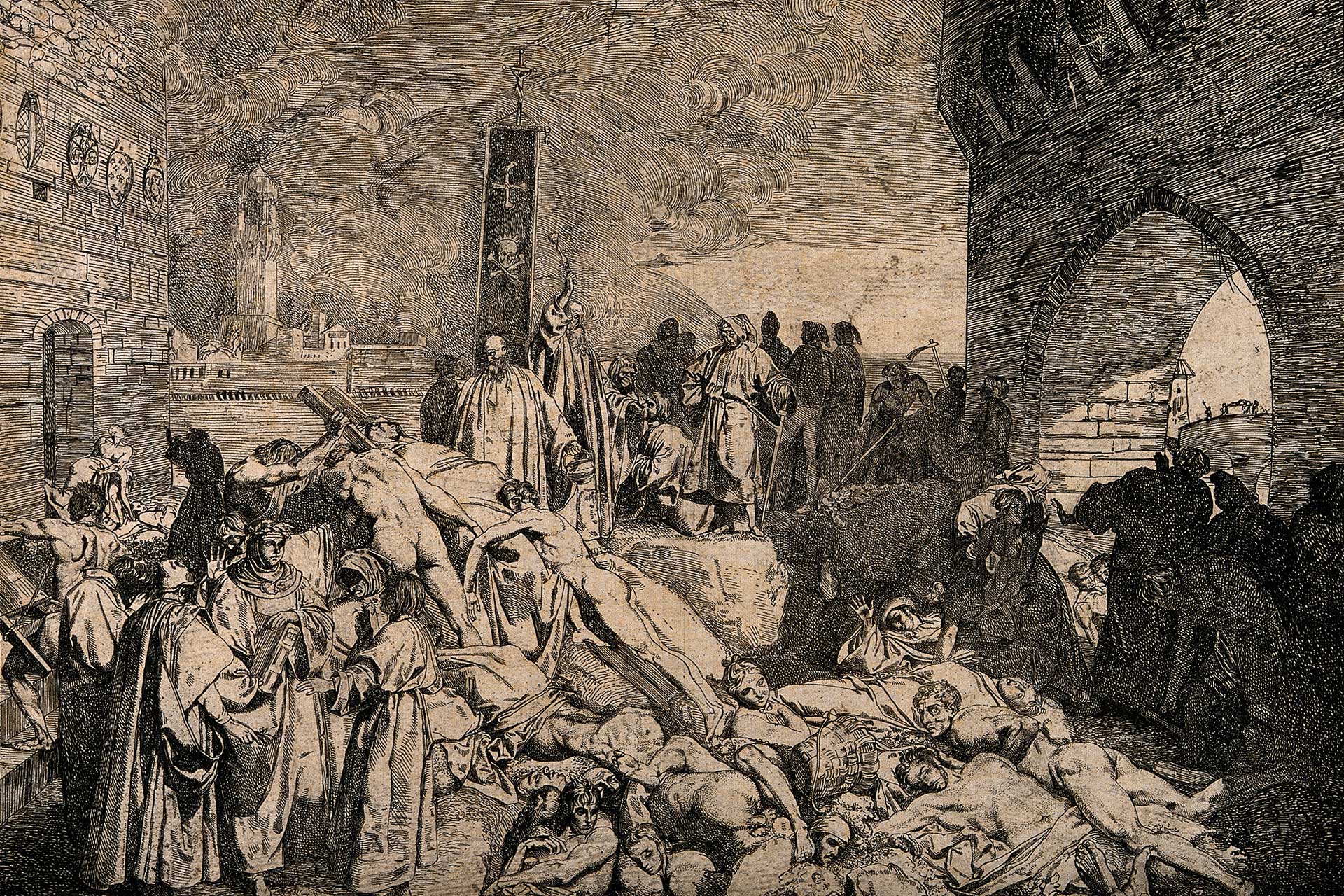
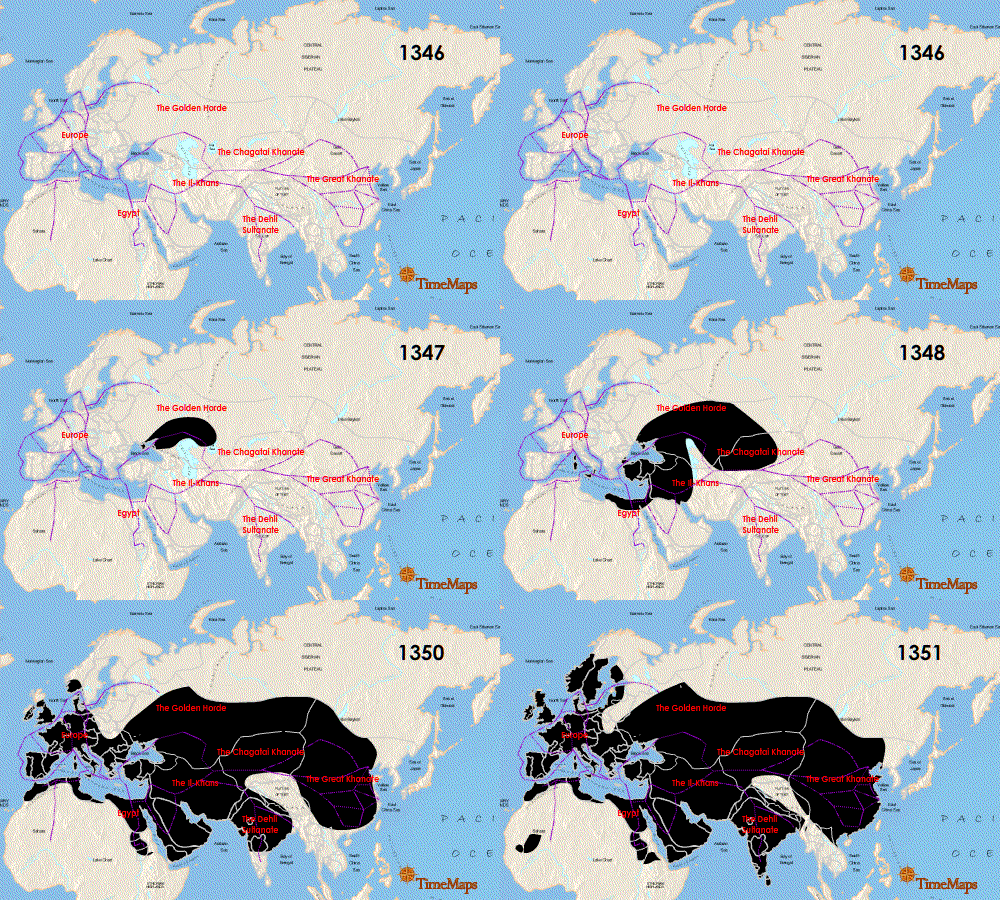
 The Black Death arrived in Europe in 1347 and traveled rapidly through trade routes across the continent by 1351. Reaching Mediterranean port cities first, it then spread to cities and villages. People of the time did not know how to process what was happening around them. Italian writer Giovanni Boccaccio said that it spread “so quickly that it seemed as if it was disposing of mankind in the shortest time possible and that no human means could prevent death.” By the time the plague left, whole towns were decimated. Churches were empty, and everyday life had ground to a halt.
30 to 50 percent of Europe’s population died according to modern estimates, although some areas experienced higher mortality rates. But the Black Death wasn’t only about the death of millions of people. The bubonic plague challenged assumptions about work, wealth, religion, and order. Europe’s economy was transformed, old social structures began to loosen, and people started to question their world and their place in it.
Europe on the Eve of the Plague
At the dawn of the Black Death, Europe’s feudal economy revolved around land, obligation, and hierarchy. Serfs worked as peasants tied to the estates of nobles or the Church. Wealth flowed upward, serfs downward. It was impossible to get ahead. Tradition kept society unequal. Chroniclers described “an ordering of ranks such that each knew his place,” and few believed those places could change.
By the early 14th century, Europe was stressed by overpopulation. Farming had expanded onto marginal land, deforested hillsides, and peat bogs. Harvests had less slack. A series of poor seasons finally hit all at once with the Great Famine of 1315–1317. Millions starved, and those who didn’t were the more susceptible to it. Hunger persisted across the continent for decades.
Europeans science could offer little help. Doctors explained disease through bad humors, poisoned air, or God’s will. They practiced astrology and the teachings of ancient Greek authorities instead of empiricism. Medical care often involved cutting people open, letting them bleed out, and sending them on their way, more easily murdered than before. When the medical faculty of Paris suggested that this disaster was caused “through a corruption of the air,” they were not wrong, but it did not help.
Europeans turned to religion to make sense of what little science could not. If disease was God’s punishment for sin, then only prayer and repentance could help. Processions, prayers, and pilgrimages gave churches time to catch the disease and spread it faster. When the Black Death struck, Europe was ill-prepared: economically exhausted, nutritionally weak, and intellectually incapable of handling the disease. What could have been simply the latest crisis killed tens of millions instead.
Demographic Collapse and Labor Shortages
In four short years from 1347 to 1351, between one-third and one-half of Europeans died of plague. Villages became ghost towns, monasteries communities of the dead, and churchyards filled past capacity. The Black Death was unimaginable for many contemporaries. Italian writer Giovanni Boccaccio reported that it happened so quickly that one “supped with his friend today and tomorrow he found him death.” Communities were decimated, leaving behind millions of grief-stricken survivors who had lost loved ones.

The most pressing problem was the dramatic reduction of the workforce. Agricultural and urban industries alike suddenly found themselves short-staffed. Farms had few who could till and harvest the fields, while cities lacked apprentices, freight handlers, and construction workers. Laborers were suddenly in demand and knew it. Real wages across Europe increased for the first time in centuries, reversing a trend of stagnant or falling pay. Serfs and others who had simply been commanded to work found themselves negotiating terms of employment with their employers.
Surviving peasants were in a position to change their working conditions as a result of the demographic catastrophe. Manorialism depended on relationships between lords and villeins, often formalized by custom rather than writing.
When the Black Death struck, entire villages of villeins would perish or flee in search of better opportunities. Lords were no longer able to demand unpaid labour services from their tenants, who were keenly aware that their labour was needed. Authorities lamented that workers had become lazy, obstinate, and selfish.
Governments tried legislation to keep wages low and workers in place. England passed the Ordinance of Labourers to freeze wages at pre-plague rates and prevent mobility. Such attempts were largely ineffective as peasants were no longer bound to their manors by custom and habit. Workers commanded by their lords had opportunities before now and traded their labour for what they wanted.
In the long term, these changes ended permanent labour obligations for many peasants and replaced rent payments with labour services. Mobility increased, and peasant freedom grew. The feudal order had suffered a catastrophic blow from which it would never recover.
The End of the Old Feudal Balance
Peasants also gained more freedom as they could now bargain for better terms from their lords. Due to labor shortages, peasants asked for higher pay and fewer responsibilities. They also demanded better living accommodations. Some peasants stopped performing labor services owed to a lord that had been required of families for generations. A French contemporary observed that workers now “would not serve unless they received excessive pay,” an ironic comment given how power in society had recently shifted.
Land usage also shifted. Marginal lands were no longer tilled, and poorer soils were left to recover. Holdings were consolidated into fewer units, and pasture usurped grain in many areas. Because animals demand less work than crops, landlords who switched to pasture were better off, and peasants benefited from being freed of backbreaking toil. Fields that once supplied entire villages were left to laborers and Nature.
The elites were predictably displeased. Rulers took legislation rather than compromise. England’s Ordinance of Labourers and Statute of Labourers both limited wages to their pre-Black Death levels and forbade workers from changing employers. These regulations were duplicated throughout Europe. Predictably, these laws were essentially unenforced.
They couldn’t be, at least not everywhere. Many local officials looked favorably upon the peasant class and were powerless to force the proud survivors to return to their lords’ land. If peasants couldn’t strike a bargain with their lord, they migrated elsewhere. Those who threatened legal action found themselves unable to work their lands. The laws might as well not have existed.
Serfs could still work for a lord, but personal service was on the decline by the late 1300s. Cash rents became more common, and social climbing was possible for peasants who survived the plague. The old feudal order was broken.
The End of the Old Feudal Balance
The plague dramatically increased workers’ and artisans’ bargaining power. Labor had become scarce enough that people had actual choices about where and how they wanted to work for the first time since before the mid-1300s. Craftsmen, builders, plowmen, and others in skilled positions were able to demand higher wages than before the plague. English chronicler Henry Knighton lamented that peasants were “so lifted up and obstinate that they would not obey the king’s command.”
Workers began to demand more and move more as wages continued to rise. Peasants were less reliant on any one lord or town for wages and instead began moving between manors, cities, and even regions to find the best deal. Labor mobility undercut ascribed status and made experience valuable. For perhaps the first time in centuries, people had something to gain by working hard and negotiating wages.
A small but distinct middle class began to emerge. Artisans, merchants, and shopkeepers pooled their earnings in towns and created a base of savings, and owned property. Tenant farmers also began to grow and thrive as they, too, had access to cash incomes. The majority of the European population was still not rich, but there was a new space between nobility and peasantry defined by revenue rather than duty.
Payment in money further empowered peasants and workers. Labor obligations and payments in kind gradually shifted to cash payments, drawing villagers into larger markets for goods. Coinage, contracts, and fixed rents replaced relations of duty and tradition.
Markets themselves continued to grow. Local fairs grew larger, regional markets became more common, and wage labor connected villages to towns. Europe’s economy had become more monetized and more market-driven.

Urban Change and the Growth of Towns
The agricultural system had always demanded labor, but the plague loosened agriculture’s hold as the only source of livelihood. Those who survived the plague had new opportunities to move into crafts and other skilled work. Masons, metal-smiths, tailors, brewers, carpenters, and other artisans were able to command higher prices for their labor as towns repaired structures lost to plague and met increased demand for other goods. Labor migrated more easily to where work could be found, and skill began to outweigh birthright as a qualification.
Attractions to town life continued to outweigh the effects of plague death in urban centers. Empty houses and shops awaited entrepreneurs, and few cared who filled jobs that had been left vacant. Peasant laborers found better wages in town, away from those who would try to restrict their movements. An English commentator quietly summed up the attraction: cities that had “been emptied by death were again replenished with men seeking advantage.”
Guild restrictions on membership became less stringent as town economies sought to recruit new labor. Town councils sometimes provided incentives to former villagers to build houses, repair marketplaces, and perform other needed services. Domestic production resumed, and trade routes expanded once more. Towns became places not just of administration, but of trade and exchange, places where credit was offered and manufactured goods could be obtained.
Women also experienced some improvements in employment opportunities, however slight. Shortages of skilled labor made some urban positions available to women who would otherwise have been restricted to working in their husbands’ trade. Women were able to take over workshops if their husbands had been the primary breadwinners. Widows were sometimes able to maintain ownership of businesses such as taverns and shops.
The migration of outsiders and day laborers meant that some of society’s marginalized members were also able to demand higher wages or leave towns if they were not paid enough. While these individuals might still suffer poverty in towns, they did not face villeinage.
By the end of the 14th century, towns were beginning to thrive again. Their populations grew as people adapted to society’s recent trauma by choosing employment based on wages rather than inheritance.

Social Unrest and Resistance
The Black Death also shattered social relations. Competition for better wages and conditions led to resistance and revolt. Serfs and peasants across Europe defied attempts to reimpose traditional requirements. The most well-known rebellion occurred in England in 1381. Thousands of protestors marched towards London demanding an end to serfdom. They also wanted lower taxes and fair treatment by justices of the peace. One chronicler, Thomas Walsingham, observed that “the peasants thought that bondage was not lawful, and that the laws of bondage ought to be utterly abolished.”
Resistance bubbled up wherever authorities attempted to tighten their hold. Wage controls, laws limiting mobility, and new taxes felt like betrayals by the systems that had failed so many during the crisis. Workers bristled at elite calls for order while they suffered. Peasant-worker confrontations broke out in villages and towns while journeymen challenged their bosses in workshops. Economic resentment turned into political dissent.
Cities also became centers of unrest. Artisans protested wage controls or when guild leaders tried to restrict entry into their workshops. Shortages of cheap bread could trigger riots, as could higher rents and taxes. Revolts highlighted the increasing fragility of urban stability.
Europe’s elites were nervous about these developments. Memories of abandoned farms and villages were still fresh, and many thought society was on the brink of chaos. Laws became harsher, and punishments were publicly brutal. Authority turned cold and defensive.
These reactions could not undo the transformations taking place below. Revolutions were typically suppressed or co-opted, but not before their grievances spread among the population. If unrest became more common, it was because obedience had become less certain.
In many ways, the revolt was as revolutionary as the ongoing social reform. If the Black Death forced Europeans to change their economy, it also forced them to rethink power.
Cultural and Psychological Transformations
Psychologically, people were different. Europeans’ views of life, death, and purpose also changed. Death was always nearby, and many had lost so many friends and family that they subscribed to the idea that you lived your life and death would take you when it wanted. This was depicted in art through the Danse Macabre: death dances with people of all statuses because no one can escape death. One person in Florence described the attitude of people as if they lived “as though tomorrow did not exist.”
Faith remained important to most Europeans, but confidence in the church had diminished. Many people had prayed, fasted, and preached as their spiritual leaders had asked of them, only to watch their friends and family die in droves. Hundreds, if not thousands, of priests died of the plague. Others simply abandoned their posts. As one writer at the time put it, the sheep were left without shepherds when they were needed most.
The Black Death did not make Europeans atheists, but it certainly made them skeptics. If the church leaders did not know why God was allowing this to happen, how could they know what He wanted of people? Alternative religious groups sprouted up, and more common folk began practicing their faith independently… and peculiarly. Mysticism became popular, and some chose to abandon religion altogether.
Independence of thought was another psychological result of the plague. People who never would have normally been able to improve their status in society found themselves with property and weren’t married off young. People started to think life was more fragile and that things were more focused on the individual than before. With the structure of life no longer cemented in place by tradition, people sought opportunity.
Lastly, people began to focus on the worldly rather than the spiritual. Why worry about the afterlife when you could be wondering how to prevent yourself from getting sick? Why trust poor clergy about the workings of your body when you could consult a physician? These questions didn’t eradicate medieval mentality overnight, but they planted the seeds of secularity.

Long-Term Economic Consequences
The plague reshaped Europe’s economy as much as it disrupted it. Because labor became expensive and land cheap, people were suddenly able to demand and negotiate wages for their work rather than being forced to work for others out of obligation. One contemporary observer lamented that workers “would not serve without high pay,” signalling that peasants were in a position to ask for more. Proto-wages, labor, and voluntary exchange were born.
Demographic decline also led people to focus on increasing productivity rather than on the size of their workforce. Lords tried to coax more gains from their lands by throwing capital (in the form of equipment and animals) at the problem, and by introducing better management techniques. Craft industries started placing more emphasis on skill and quality. People began looking for ways to do things better rather than simply doing more of the same.
In the centuries that followed, serfdom began to loosen its grip on Europe. Cash rents became more common. Labor services were converted into cash payments. Mobility increased. Markets expanded. The customs of buying and selling, hiring and paying wages began to feel less exceptional with each passing decade.
The plague’s aftermath did not affect all of Europe equally. Regions that relied on adaptable institutions rather than feudal lordship or mercantilist taxation were able to channel the skyrocketing wages commanded by their surviving workers into commercialization and industry; England and the Low Countries were especially affected by this trend. Regions that remained dependent on the other systems started to fall behind, further widening the economic gap between European regions.
The plague sped up Europe’s divergence. Some areas chose to build on the growth and development that emerged from the catastrophe of the Black Death and turned it into an opportunity.

The Black Death and the End of the Medieval World
Europe was already changing before the plague. Feudalism had started to unravel. Towns had begun to expand. Currency was circulating in everyday use. The plague hit Europe like someone punching a weakened structure. Ideas and institutions that had existed for hundreds of years collapsed overnight when it came to survive. One chronicler from Florence describes it best by saying that “the laws of men were silent.”
Some of these changes include major social and economic effects that have grown rapidly. For example, due to labor shortages, serfdom began to decline as wages rose and labor mobility increased. Some lords yielded to change, while others crumbled. Many people moved to towns as trade and specialization boomed, shifting wealth to the cities. Social forces propelled medieval Europe toward movement and change rather than medieval stasis.
The psychological impact of everyday death also helped change the way people thought. Unquestioned respect for authority began to fade, while people became more aware of their own experiences. Emotional piety replaced Stoic theology in both art and literature. The Black Death didn’t destroy religion, it did make people question it and therefore made religion more personal. Individualistic thinking became more widespread.
The Renaissance was caused by these changes. Many merchants and artisans became wealthier, allowing them to expand education and sponsor the arts. Europeans began to look back on classical texts with interest again. The humanistic thinking that would be sprinkled throughout the early modern period of Europe bubbled up from the ashes of the plague.
Disaster as a Turning Point
Few things have transformed Europe like the Black Death. No prince or pope could fully control its outcome or predict its repercussions. Throughout Europe, the deaths of millions of people undermined medieval society. Familiar hierarchies of power and authority were strained as labour scarcity undermined feudalism, wages rose, towns rebounded, and people began to demand more from life. Some contemporary observers understood the magnitude of the moment. “From this time forth,” one chronicler noted, “the world was never the same again.”
The societal transformation caused by so many deaths was unintentional. Death rearranged society to create space for mobility, renegotiation, and creativity. Death allowed many Europeans to find their place in a world suddenly rich with opportunity, despite the persistent trauma and absence caused by their loss. Centuries-old systems reliant upon human labour and dense societies suddenly found themselves without enough people to maintain the status quo. Labour itself, skilled work, and worker productivity would never be viewed in the same way again. Out of death came newfound agency, freedom of thought, and religious expression.
Shockingly, the Black Death’s aftershocks can still be felt throughout European history. The disease helped accelerate the transition from the medieval world and set in motion the early modern period, the Renaissance, and the emergence of the world’s first economists.


