
Navajo Code Talkers and Their Lasting Impact on WWII
 Reading Time: 8 minutes
 Navajo code talkers provided the U.S. military with an impenetrable line of communication during World War II. Navajo Native American Marines designed, developed, and implemented a code based on their language to transmit secure communications in the Pacific. The code talkers’ efforts helped prevent enemy interception of critical military communications and enabled American forces to communicate quickly and effectively in some of the war’s most crucial battles.
The secure line of communication was vital because any intercepted or deciphered message could result in catastrophic consequences for military personnel and operations. The U.S. military faced significant challenges with previous encryption methods, which were either too slow or susceptible to enemy code-breaking efforts. Navajo code talkers leveraged the complexity and unwritten nature of their language to create an innovative code system that the Japanese military could not decipher. This gave U.S. forces a distinct strategic advantage, enabling them to execute missions with greater accuracy and precision.
Navajo code talkers had a significant impact on the outcome of World War II. They sent thousands of encrypted messages without error from Guadalcanal to Iwo Jima, directly contributing to the success of several major campaigns. Their ability to relay encrypted orders in real-time helped save countless lives and secure victory in the Pacific. However, the significance of their contribution was not recognized until long after the war, as their efforts remained classified for several decades.

The Origins of the Navajo Code
The story of the Navajo Code Talkers began in 1942, when the U.S. Marines realized they needed an unbreakable military code to baffle enemy cryptographers. In the past, military officials had used coded communication methods, but these were not secure or fast enough for the fast-paced battles of World War II.
The Marine Corps turned to Navajo speakers to help. The Navajo language was a perfect choice because it was one of the most complex languages in the world and was spoken only within the Navajo Nation, so no one outside of the Navajo community could understand it.
The person behind this brilliant idea was Philip Johnston, a World War I veteran and former missionary who grew up among the Navajo people. He suggested using the Navajo language as a military code, and Marine officials were impressed by the idea’s potential.
They selected 29 Navajo recruits to serve as the original code talkers. They assigned each military term to a Navajo word and developed a system that was both secure and easy to use. The code talkers used this code to transmit messages back and forth during battles, with messages sent and received more than 800 miles away in a single hour.
The Navajo Code Talkers played a significant role in major battles in the Pacific Theater, including Guadalcanal, Iwo Jima, and Leyte Gulf. As the war continued, more Navajo speakers were recruited and trained as code talkers.

The Role of the Code talkers in Combat
Navajo code talkers were instrumental in several key battles in the Pacific. During the Battle of Guadalcanal, they were used to coordinate attacks and defensive positions, ensuring that troop movements, supply requests, and strategic decisions were secure. Their ability to transmit coded orders in real time allowed commanders to adapt quickly to changing battlefield conditions.
The Battle of Iwo Jima saw even greater use of the Navajo Code Talkers. More than 800 encrypted messages were transmitted without error by only six Code Talkers during the five-week battle. They directed Marine attacks on enemy bunkers, called in airstrikes, and communicated casualty reports. Without their rapid communication, coordination would have been much more difficult, likely resulting in a more prolonged battle and more casualties.
The last major battle in the Pacific, Okinawa, also saw significant use of the Navajo code talkers. As American forces met stiffening resistance, the Code Talkers provided secure real-time transmissions that allowed reinforcements and supplies to reach the front lines. Their ability to deliver encrypted messages in seconds rather than hours gave the U.S. forces a decisive advantage and helped bring an end to the Pacific War.


Individual Navajo Code talkers Stories and Lives

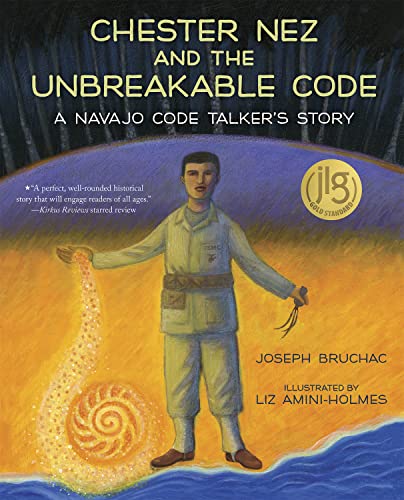
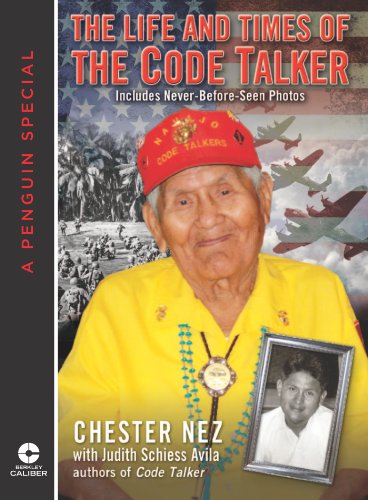
In addition to their collective efforts, each of the Navajo code talkers had their own unique journey and experiences. Chester Nez, one of the original 29 Navajo Marines who developed the code, experienced discrimination before and after the war but was immensely proud of his service. He pursued an education and eventually published his memoir, ensuring that the Navajo code talkers’ sacrifices would never be forgotten.
Peter MacDonald was another prominent figure in the history of the Navajo code talkers. A young Navajo speaker at the time, he enlisted in the Marine Corps and served as a Code Talker during World War II. He later became a tribal leader, advocating for Navajo rights and preserving Navajo culture. As Chairman of the Navajo Nation, MacDonald played a significant role in the government’s recognition of the code talkers, including the awarding of the Congressional Gold Medal in 2001.
Many other Navajo code talkers returned to their homes and communities at the end of the war, working as farmers, teachers, and leaders. Their contributions were kept classified for many years, but their legacy lives on through their families and continued efforts to recognize their service. Today, they are honored as an essential part of both American and Native American history.

Post-War Recognition and Legacy
The Navajo code talkers did not receive credit for their service for decades after the war, as the military needed to keep their role a secret to prevent it from becoming known that the coding system had not been broken. The Navajo language was very rarely used in any context in the United States or elsewhere in the world, and there was a very real possibility that their services might be needed again in the event of another war.
When they returned home from their service, most of the Code Talkers received no recognition for their heroism and bravery. It was not until much later that the original 29 Navajo Code Talkers were awarded the Congressional Gold Medal by President George W. Bush in 2001, with subsequent honorees being awarded the Silver Medal. At last, the Code Talkers were nationally recognized for their work. Their legacy has been shared with many people through books, documentaries, and feature films.
The legacy of the Navajo code talkers is still being felt today, long after the end of World War II. The concept of using one’s language as a basis for a coding system has found its way into the development of more advanced methods of military encryption. Encryption of communications has become increasingly important in recent years, both in the military and in cybersecurity, and the legacy of the Navajo Code Talkers as innovators, cultural heroes, and contributors to the military is still celebrated and studied today.

The Lasting Legacy of the Navajo Code talkers
The legacy of the Navajo code talkers in ensuring Allied success in the Pacific is immeasurable. The use of Navajo during the war for secure communications was a key factor in saving many lives. The ability to transmit encrypted messages in real-time provided a significant tactical advantage for U.S. forces in crucial battles. Although their contributions were kept secret for many years after the war, it is now widely acknowledged as an incredible military feat.
In addition to their direct impact on the war, the use of the Navajo code talkers has had a lasting effect on the perception of Native Americans and their place in U.S. history. The bravery and resourcefulness of the Navajo code talkers demonstrated the importance of Indigenous knowledge and skills to the U.S. military. It also led to greater recognition of the value of Native American languages and culture. The use of the Navajo code talkers during the war also had a lasting impact on the development of modern military encryption methods. The success of the Navajo code in the Pacific theater demonstrated that language-based codes could be practical and virtually unbreakable.
The Navajo Code Talkers’ contributions during World War II are a testament to the power of language and the strength of the human spirit in the face of adversity. Their legacy lives on through various memorials and educational programs, ensuring that their story is not forgotten and that future generations will continue to learn from their example.

![𝐂𝐡𝐢𝐚𝐧𝐠 𝐊𝐚𝐢-𝐬𝐡𝐞𝐤 𝐚𝐧𝐝 𝐂𝐡𝐢𝐧𝐚’𝐬 𝐖𝐚𝐫 𝐄𝐟𝐟𝐨𝐫𝐭 – 𝐓𝐡𝐞 𝐅𝐨𝐫𝐠𝐨𝐭𝐭𝐞𝐧 𝐅𝐫𝐨𝐧𝐭 [VIDEO]](https://historychronicler.com/wp-content/uploads/2025/02/Screenshot-2025-02-19-at-8.42.39)


