
Ranavalona the Cruel: The Mad Queen of Madagascar
 Reading Time: 17 minutes
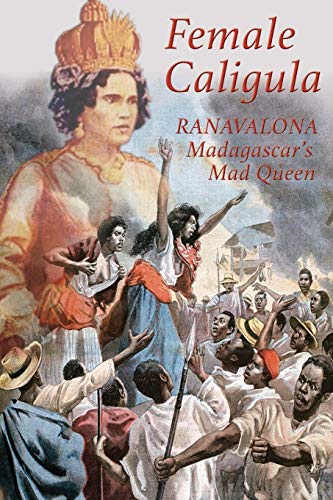
 Ranavalona I is one of the most notorious monarchs of the 19th century, her name now a byword for cruelty, isolation, and death on a mass scale. Writing from Madagascar during her reign, European observers painted a picture of a “mad queen” and cruel tyrant who held Madagascar in the grip of terror, maintaining her power through the executions and painful trials of those around her. Missionaries and travelers recorded a country shuttered to the outside world, where thousands perished at the whim of a single, despotic ruler. By the time of her death in 1861, Ranavalona’s reputation in Europe was firmly sealed as one of history’s most merciless monarchs.
But behind the legend of Ranavalona lurks a more complicated truth. While her reign was indeed brutal, leading to forced labor, purges, and deadly ordeals, her policies were also shaped by a strong anti-foreign sentiment and stiff resistance to colonial powers during a period of rampant European expansion. In this article, we will explore the intertwining of fear, power, and anti-colonial resistance to show how the legend of Ranavalona was constructed.
Madagascar Before Ranavalona
Before Ranavalona I came to power, Madagascar was undergoing a period of rapid political change under the dominance of the Merina Kingdom. Centered in the island’s central highlands, the Merina rulers gradually expanded their authority through conquest, alliances, and centralized administration. By the early 19th century, much of Madagascar was unified under Merina control, creating a stronger, more cohesive state than had existed previously.
European contact intensified during this period, especially with British and French traders, missionaries, and diplomats. Coastal communities had long engaged in the Indian Ocean trade, but the Merina court now became a focal point for foreign interest. Firearms, textiles, and manufactured goods flowed into the interior, while European powers sought influence in exchange for military and economic support.
This engagement reached its height under King Radama I, Ranavalona’s predecessor. Radama pursued an ambitious program of modernization, welcoming British advisers and Protestant missionaries. He signed treaties that curtailed the slave trade and introduced Western-style military training, education, and administrative reforms. One British observer praised his openness, calling him “a prince eager to learn the arts of Europe.”
Radama’s reforms reshaped Merina society but also generated tension. Traditional elites feared the erosion of Malagasy customs, while forced labor and military conscription placed heavy burdens on the population. Christianity spread rapidly, challenging long-held spiritual practices and royal authority rooted in ancestral traditions.
By the time of Radama’s sudden death in 1828, Madagascar stood at a crossroads. The island was more unified and internationally connected than ever before, yet deeply divided over the pace and meaning of change. These unresolved tensions set the stage for the dramatic and violent reversal that would define Ranavalona’s reign.
Rise to Power
Ranavalona was born Rabodoandrianampoinimerina in 1788. She grew up in poverty and was given the childhood name of Ramavo. The daughter of a commoner, she appeared to have no claim to the throne. It was only after her father uncovered a conspiracy to kill Andrianampoinimerina (r. 1787-1810), a man on the rise whose own brother was anxious to displace him in the line of succession, that her fortunes changed. Ramavo’s father betrayed the plotters, and the young prince rewarded him by adopting her into his household. The move instantly transformed the girl’s life.

The king’s adoption of Ramavo would have future benefits. She later married the king’s son Radama (r. 1810-1828), and when the former’s father died in 1810, Ramavo’s husband acceded to the throne as Radama I, with her as his queen. Radama’s subsequent policies of modernization and close relations with Britain were designed to elevate Madagascar’s status and improve its trade relations. Still, they would cause her traditionalist elite subjects to view foreign ideas with great suspicion in the years to come.
Radama I died unexpectedly in 1828, and his queen, Ranavalona, defied his orders to place his nephew on the throne. She quickly made alliances with military commanders and the traditional nobility who had grown deeply wary of Western influence and suspicious of the king’s modernizing policies, and was crowned herself within days of her husband’s death. Her rise to power was complete.
Consolidation of Ranavalona’s power began with widespread bloodshed and terror. Many members of the royal family and court, government officials who had embraced Radama I’s reforms, and other perceived enemies were quickly executed or exiled. Christian missionaries and converts were also targeted, as the new queen was hostile to the religion that was associated with European interference. According to one contemporary account, “the court was cleansed by blood”. The new queen’s hold on power was not to be threatened again.
Ranavalona also found it necessary to legitimize her rule. She emphasized the ancient traditions of the Malagasy people and their traditional beliefs. She claimed to be the defender of the old ways and the ancient customs of the ancestors, and encouraged the restoration of the royal taboos, or fady, which had been cast aside under her husband’s reforms. Obedience to the queen was now obedience to the ancestors themselves, and Ranavalona used Madagascar’s ancient past to consolidate her own position as ruler.


Rejection of Foreign Influence
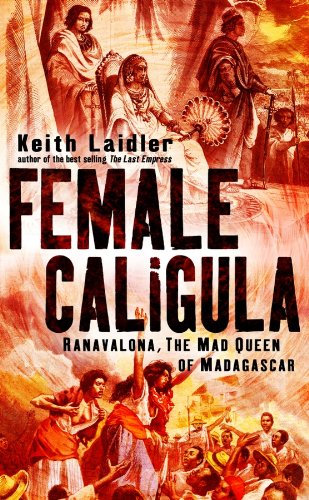
Ranavalona I reversed the policy of openness to European influence that had characterized the rule of her predecessor Radama I. European advisers, especially British missionaries and military instructors, were expelled or marginalized. Mission schools were closed, treaties flouted, and Europeans restricted to the coastal enclaves. As one missionary put it, Madagascar became “a land sealed against the world.”

The Christian religion was considered a threat to royal power and the ancestral customs. In 1835, Ranavalona banned the practice of Christianity and commanded converts to turn against their faith or be severely punished. Churches were destroyed, Bibles burnt, and Christian practices forced into clandestinity. Western-style education, also promoted by missionaries, was discouraged as a source of foreign influence and as a cause of divided loyalties.
The queen presented these actions as a defense of Malagasy traditions and independence. She proclaimed that “the laws of our ancestors are sufficient” and no longer recognized European missionaries’ claims to moral or cultural superiority. Positioning her resistance as one of cultural survival, she mobilized traditional elites fearful of the erosion of longstanding beliefs and social structures.
Isolation became official policy. Foreign trade was curtailed, diplomatic ties limited, and travel strictly controlled. While these policies prevented foreign interference, they also isolated Madagascar from technological and economic advancements. Ranavalona’s rejection of foreign influence maintained sovereignty but worsened the daily lives of her people.
Rule by Terror
Death and fear were Ranavalona I’s methods of control. Tens of thousands of people were conscripted for corvée labor (fanompoana), such as work on royal building projects, military service, or simply for building the royal capital, and many died of maltreatment and overwork. Political opponents and dissenters were often executed or purged. One historian estimated, “death was the queen’s most constant instrument of rule.”
The tangena ordeal was an established judicial ritual, based on indigenous Malagasy belief. It was elevated to a tool of mass terror under Ranavalona. Suspects were made to drink a poison prepared from the seeds of the tangena nut, which were often mixed with ritual substances. In many cases, they were also made to swallow three pieces of chicken skin. If the suspect vomited all three pieces, then they were acquitted. Most did not, as the poison itself would make it impossible to vomit. This outcome was taken as proof of guilt and a death sentence.
The test was designed to be lethal. Tangena contains potent poisons which act to paralyze respiration, cause convulsions and stop the heart. Even those that were determined to be “innocent” would often die from its effects hours or days later. Families or entire communities might be accused at once and forced to undergo the ordeal en masse. Accusations of treason, sorcery or secret Christian practice were common. Some foreign accounts at the time described mass trials in which several hundred individuals were forced to take tangena in one day.
Tens of thousands are estimated to have died annually in the 1830s and 1840s at the height of its use. British missionaries and foreign diplomats described the ordeal as a “slaughter masquerading as justice.” By leveraging superstition, fear, and royal authority, Ranavalona would turn an ancient practice into one of the deadliest judicial systems of the 19th century, and leave a deep scar on Malagasy society.

Executions were public and intended to maximize fear. Heads were struck off, or the victim was speared to death, or they were thrown from a cliff. This happened in front of crowds of people who had been forced to attend the public spectacle. In all cases, the deaths were designed to remind the population that the queen’s word was law and that no one, no matter how high-ranking or well-connected, could question her authority. Fear became the primary tool that bound subjects to the monarch.
Ranavalona’s Cruelty on Display
Her reign was characterized not just by calculated terror, but also by actions that horrified even some of her most hardened supporters. Ranavalona did not hesitate to personally whip those criminals and perceived enemies that she deemed required an example. In one of her most notorious acts, the queen’s favourite companion, Andrianamihaja, was accused of adultery. Ordered to take the tangena poison ordeal to prove his innocence, he refused to submit and instead requested that his executioner finish him off quickly. His execution was made a public example to demonstrate that even the queen’s bed offered no sanctuary.
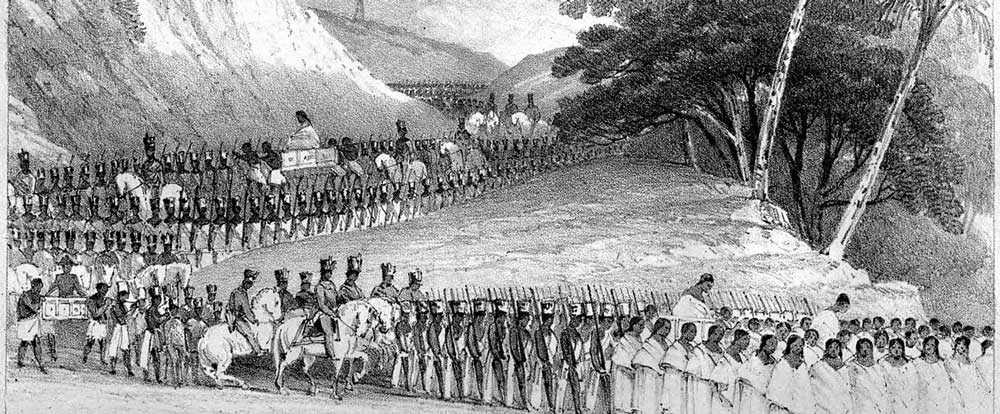
In 1845, Ranavalona staged one of the most ruinous exercises of royal power in Malagasy history. Commanding her entire court and an army of subjects numbering almost 50,000 men, women, and children, she embarked on a royal buffalo hunt. Travelling with barely any supplies and forced to create roads as they marched, the vast column moved through the interior for four months before tens of thousands were dead from exhaustion and starvation. Not a single buffalo was ever trapped.
The punishments she employed borrowed heavily from medieval traditions of torture and execution. Per reports, some criminals were lowered into boiling water or oil, others were burned alive, or buried and allowed to slowly suffocate. Some were put into coffins and then left, others thrown from great heights or simply beheaded or dismembered in the street. They were not clandestine executions but highly visible public punishments intended to demonstrate that the new regime’s idea of order was founded on fear.
Fanompoana (forced labour) demands that could not be met were used to send subjects to brutal labour camps or sell them into slavery to build up the state’s coffers. Christians, war captives, political traitors, and those who could not pay taxes were primary targets. Reports from the time estimate tens of thousands perishing each year from exhaustion, malnutrition, and punishment.
The acts she sponsored and the excesses they represented blurred the lines between government and spectacle. To her supporters, she was an upholder of traditional authority; to her victims, a purveyor of cruelty unchecked by any sense of mercy or justice. The outrageousness of the regime she led ensured that fear, not fealty, would define her legacy.
The Human Cost
The greatest burden of Ranavalona I’s reign fell on ordinary Malagasy people. Farmers, laborers, soldiers, and families were drawn into cycles of forced labor, military service, and punishment that left little room for everyday life. Entire communities were uprooted to serve royal projects or campaigns, often with no concern for harvests or survival. One foreign witness observed that “the people toiled not for reward, but to avoid death,” capturing the atmosphere of constant fear.
Famines became frequent as labor demands stripped villages of working adults. Fields went untended, food stores ran dry, and long marches for state service weakened bodies already on the edge of survival. Disease spread rapidly among exhausted populations, while trade restrictions and isolation worsened shortages. Social structures that had sustained communities for generations began to collapse under the strain.
Eyewitness accounts describe scenes of widespread suffering. Missionaries and traders wrote of roads lined with bodies and villages emptied by death or flight. Survivors recalled families torn apart by executions, ordeals, or forced relocation. One missionary noted that “the silence of deserted homes spoke louder than any accusation.”
Ranavalona’s policies caused the population of Madagascar (5 million before she was crowned) to decline by an estimated one-third to one-half. As a result of execution, forced labour, famine, and disease, large swathes of the country were depopulated and the social fabric of the island torn by the time she died in 1861.
Ranavalona and the West
Missionaries, traders, and diplomats exiled from Madagascar in the 1830s and 1840s sent reports to Europe describing a vicious regime of terror. Ranavalona was cast in their accounts as a bloodthirsty, delusional ruler. These accounts were widely disseminated in the press and travel literature, feeding powerful European narratives of barbarism and savagery that would be resurrected long after her death. Madagascar’s sudden closing to the outside world fed imperial anxiety that European culture and power were being pushed back at a time when other colonial powers in Asia, Africa, and the Americas were expanding. Ranavalona’s public executions, ordeals, and mass deaths were emphasized by a press that largely supported expansion and colonization as a civilizing project.
French and British diplomats and commercial interests with long-term imperial ambitions in the Indian Ocean used the power of propaganda to further political ends. Her regime was cast in their accounts as uniquely cruel and perverse, irrationally hostile to all things European. Madagascar was no longer a sovereign kingdom but a hapless victim of an evil despot. This selective interpretation of events served to make the case that imperial rule was justified.
Historians today have still not reached a consensus on Ranavalona’s image as a bloodthirsty tyrant. Most accounts of Madagascar from the period were from secondary sources or from foreign exiles and former government employees who had been forcibly removed from positions of power and privilege. Some contemporary critics suggested European writers ignored similar brutality within the colonial systems of other powers but were harsher on Ranavalona for being a foreign female ruler who did not conform to Western expectations.
French and British governments did not stop at rhetorical posturing. There were plans in both capitals to stage military coups or install a new, more pliable ruler. British and French warships began probing Madagascar’s defences in the late 1840s, convinced that decades of isolation had left it ripe for the picking. These frustrated colonial ambitions led Ranavalona to believe that Europe was a constant threat to the Malagasy.
Her reaction to the perceived threat was dramatic but not unprecedented. After successfully fending off at least one such invasion in 1845, Ranavalona ordered the heads of European soldiers killed in the attack to be cut off and put on pikes. The heads were then lined up on the beachfront in the hundreds, both a practical warning to other invaders and a political statement for her supporters. While this event did little to improve her standing with European powers, it only strengthened her own hold on power. After decades of invasion, war, and famine, Ranavalona had concluded that any engagement with Europe would be the end of Madagascar.
Colonial narratives of her time in power would become more entrenched following her death. Later, French imperial rule in Madagascar would use her image as a cruel and bloodthirsty monarch to justify its own rule. By the late 19th century, the cult of “the mad queen” had reduced her political and cultural motivations to a personal pathology understandable only to European mental health experts.
Death and Immediate Aftermath
Ranavalona I died in August 1861 after a reign of over thirty years. Her death brought an end to one of the most ruthless and isolating regimes of the 19th century. For Malagasy, her passing was a source of cautious relief after decades marked by corvée labor, executions, and terror. For foreigners, it was a strange and sobering transition, as the once-vibrant court that had rebuffed them with such finality suddenly went quiet and still, the towering political figure at its center gone.
Ranavalona eventually had an heir after the king’s death, a son named Rakoto. Rakoto was an outspoken critic of his mother’s isolationist, anti-European stance, and made several attempts to supplant or check her authority. All of these were unsuccessful, but upon her death in 1861, Rakoto became King Radama II of Madagascar.
Radama II set about immediately dismantling many of his mother’s policies. Christianity was re-legalized, missionaries were once again welcomed, political prisoners were pardoned and released, and relations with both Britain and France were renewed. As the architect of Madagascar’s turn inward and militarization, Ranavalona had been lionized in death as a queen who had fiercely and tenaciously preserved Malagasy cultural traditions and political independence. Her son, by contrast, was quick to back down and open the island to foreign influence and reform.
Her funeral provided an appropriately on-the-nose summation of her controversial reign. An explosion at the funeral ceremonies killed several people and destroyed surrounding buildings. An anti-imperialist queen to the end, even in death, Ranavalona I could not escape the association with sudden and violent loss of life that had marked her rule.
The immediate consequences of her death laid bare the undercurrents of fear that had characterized Madagascar. Rapid political changes created an instability among the elites who had propped up her regime. Meanwhile, the world that Ranavalona had so vigorously rejected came knocking at Madagascar’s door again. In the decades following her reign, Madagascar would be colonized by France.
Ranavalona I’s death was the end of an era of extreme isolation, fear, and terror. But it was not a reprieve or a pause for Madagascar. It exposed a country hollowed out by decades of autocratic rule, defined by resistance, brutality, and unchecked power.
Reassessing “The Mad Queen”
Modern historians increasingly question the label of “mad queen” applied to Ranavalona I. While the scale of violence during her reign is undeniable, scholars argue that European accounts often stripped her actions of political context. Many descriptions came from missionaries and diplomats expelled from Madagascar, whose writings reflected both outrage and loss of influence. As a result, Ranavalona’s image was shaped as much by colonial perspective as by her policies.
The debate now centers on whether Ranavalona was solely a tyrant or also a nationalist ruler responding to existential threats. Her rejection of foreign control occurred during an era when African and Asian states were being rapidly absorbed into European empires. By isolating Madagascar and enforcing tradition, she sought to preserve sovereignty, even as her methods caused immense suffering. In this view, her brutality was not madness but a calculated, if devastating, strategy of resistance.

Gender also plays a significant role in her legacy. Female rulers who exercised absolute power were often judged more harshly than their male counterparts. European writers emphasized emotional instability, cruelty, and excess in ways rarely applied to male monarchs who committed comparable violence. Ranavalona’s defiance of Western expectations of womanhood amplified these portrayals.
At the same time, reassessment does not absolve her of responsibility. Tens of thousands died from forced labor, ordeals, and famine, and her rule fractured Malagasy society. Recognizing political motive does not erase human cost.
Today, Ranavalona is viewed as both a tyrant and a defender of independence—a ruler whose reign exposes the dangerous intersection of fear, power, gender, and colonial pressure. Her story resists simple judgment, demanding a more complex understanding of leadership under imperial threat.
Reassessing “The Mad Queen”
Ranavalona, some modern historians consider me to have been undeservedly vilified by 19th-century European accounts, and less of a “mad queen” and more of a strong nationalist queen who had every reason to fear foreign influence and invasion. The extent of the violence of her reign is not disputed.
Still, the Europeans’ descriptions of her reign have been found to remove much of the political context, especially since most accounts of her rule were written by expelled missionaries and diplomats who were either directly offended by her reforms or keenly felt the loss of influence. Colonial-era depictions of her governance are therefore often suspected of bias.
Questions now being raised by historians include whether Ranavalona I was a tyrant, a nationalist queen who reacted to what she and her court saw as a clear and present threat to the independence of the Malagasy people, or both. In the context of a time when other African and Asian states were being forcibly incorporated into European empires, her attempts to close off Madagascar to foreign influence and her insistence on tradition were efforts to hold back the colonial tide. In that light, it can be argued that her extreme measures were effective, but also a sign of extreme brutality, rather than madness.
There is also the issue of her gender and how it factored into historians’ later views of her. Women who wielded absolute power have generally been held to a higher standard of “reasonableness” than male monarchs who committed similar atrocities. European writers were prone to emphasize the perceived emotional and sexual excesses, cruelty, and arbitrary violence of female rulers more than male rulers who had engaged in the same or similar violence.
At the same time, revisionism is not an attempt to exonerate her of responsibility for the death of tens of thousands from overwork, ordeal, or famine, or to suggest that her policies were not deeply destructive to Malagasy society. Her actions can be understood in a political context without diminishing the price her people have paid.
Power, Fear, and Legacy
Ranavalona I’s rule forever changed the course of Madagascar’s history, many aspects of which remain visible today. Madagascar’s population, social order, and place in the world were all transformed in the queen’s decades on the throne. Forced labor, executions, and isolation all took a toll on the communities of the island. It hampered economic development for years to come, even as her defiance bought time for Madagascan sovereignty. The effects of her reign left a wound on the island nation that would take generations to heal. Madagascar’s traumatic entrance into the modern era would never quite be the same.
Ranavalona I is, for better or worse, one of the most infamous rulers in global history of the 19th century. To European observers, she became an arch-villain personifying cruelty and intransigence, while to modern historians she is both an emblem of defiance and a tragic figure trapped by a hostile geopolitical situation. Ranavalona’s story forces us to consider how easy it is for fear and resistance to calcify into tyranny and oppression. As one contemporary of Ranavalona wrote, the queen ruled “with the will of iron and the hand of death”.
The lesson of Ranavalona I’s long and troubled rule is the danger of absolutism and paranoia. In clinging to power through terror and refusing to reform, Ranavalona ensured that her name would be remembered for all the wrong reasons. This is how she became Ranavalona the Cruel, a ruler whose paranoia of domination wrought destruction at home.


