Ivar the Boneless: The Most Feared Son of Ragnar Lothbrok
 Reading Time: 13 minutes
 Ragnar Lothbrok, a legendary Norse hero and one of the most famous Vikings in history, was known for his daring raids across Europe and his tragic death at the hands of King Aella of Northumbria. His legacy lived on through his sons, who became fierce warriors and leaders in the Viking expansion. Among these sons was Ivar the Boneless, who became one of the most infamous and enigmatic figures of the Viking Age.
Ivar the Boneless was known for his strategic brilliance and ruthless nature, leading the Great Heathen Army in a massive invasion of England that would shape history. Despite much speculation, the origins of Ivar’s unusual nickname remain shrouded in mystery. There is no doubt, however, that Ivar was a formidable leader whose tactics and brutality earned him a feared reputation across Europe.

Ivar’s Early Life and the Mystery of “Boneless”
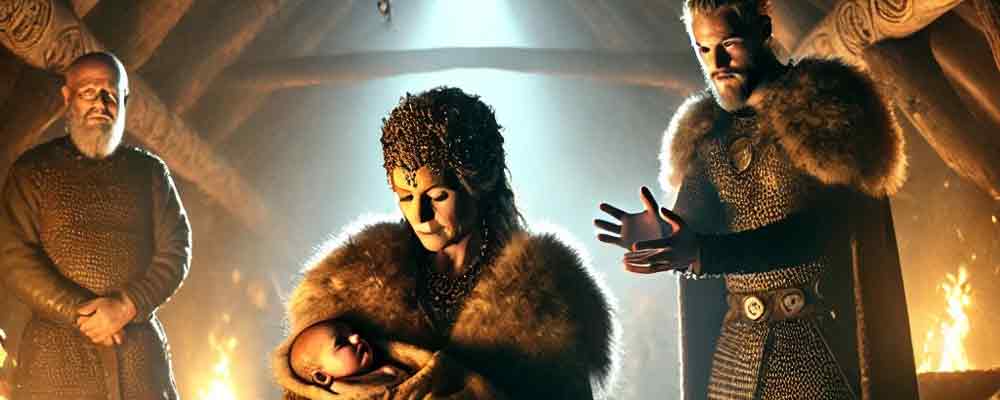
Ivar was the son of the legendary Viking Ragnar Lothbrok and his wife Aslaug. Very little is known of his early life, medieval Scandinavian sagas depict him as having been born a unique child. Ragnar’s wife, as described in The Saga of Ragnar Lodbrok, was a seer.
Before the birth of Ivar, she warned Ragnar that if they were to have a child too soon after their marriage, it would be a wolf in disguise and would curse them. Ragnar, not heeding his wife’s warning, did not wait, and their son Ivar was born without bones (or with a physical deformity). However, he was raised to become as strong as his brothers, through cunning and intelligence, in place of brute strength.
The name “Boneless” has been a source of speculation for years. One of the most accepted medical theories is that Ivar had osteogenesis imperfecta (brittle bone disease). This genetic disorder can cause extreme weakness in the bones and serious mobility issues. This is also consistent with other accounts that describe him as unable to walk. Ivar, however, would have been carried on a shield to go into battle if this were the case. Some historians have found this theory unlikely, citing that Ivar was not described in historical texts as being crippled, but rather as an active warrior and military leader.
Another theory about Ivar’s possible name is that “boneless” had nothing to do with a medical condition and instead referred to his agility. In Viking culture, it was not uncommon for warriors to earn nicknames based on their combat style or abilities. It is possible that Ivar earned the nickname for his flexibility and ability to move in ways that seemed almost supernatural. The nickname may have been a reference to his agility or his ability to dodge attacks, and some historians suggest he developed a unique fighting style that gave him an untouchable aura. As such, his name did not always indicate a physical weakness, and he was still feared as a warrior.
The nickname could have been given to him as a poetic reference to his intelligence and strategic prowess. Ivar’s personality has been described as quite different from his brothers’. While they were more prone to brute force, Ivar was seen as more cunning, relying on psychological tactics and meticulous planning. He is often said to have been ruthless in his pursuit of power. A strategic mastermind who outsmarted his enemies rather than overpowering them, Ivar’s moniker could have symbolized his lack of moral constraints or his ability to adapt to any situation without being constrained by the typical warrior’s code.
The medieval sources do not all agree on the details of Ivar’s condition, and it is possible that his name had a different meaning or origin. Some sources portray him as a crippled genius, while others depict him as a strong and fearless warrior who led Viking armies throughout England and Ireland. Whether it was a medical condition, a fighting style, or a symbol of his strategic prowess, Ivar the Boneless remains one of the most mysterious and intriguing figures of the Viking Age. His legacy continues to be a topic of interest and debate, keeping his story alive in history and legend.


Ivar’s Role in the Great Heathen Army
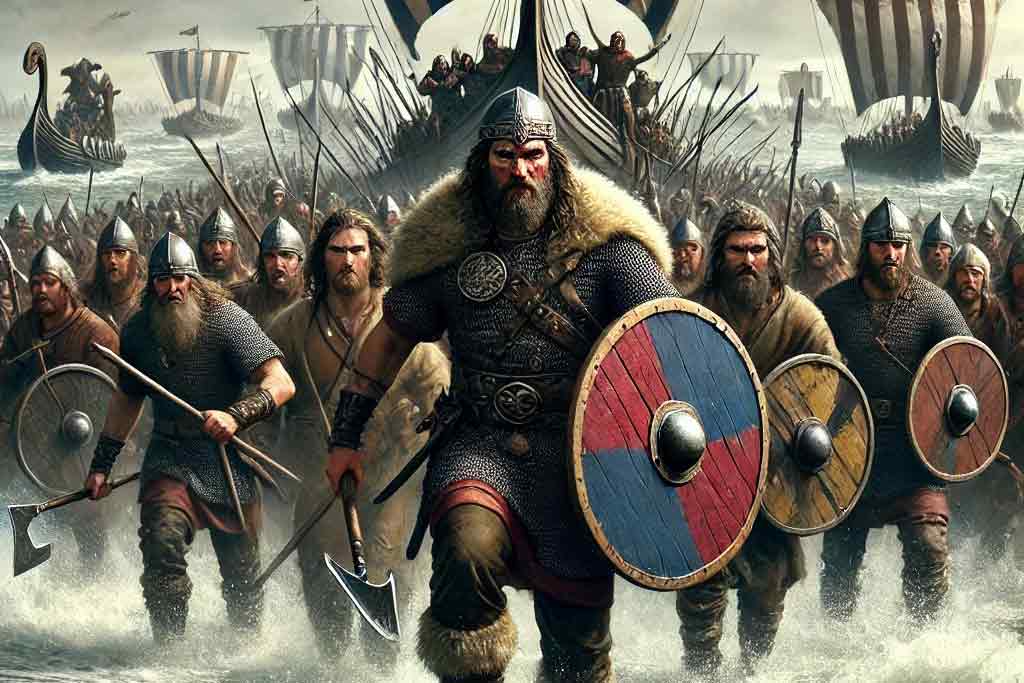
In the year 865 AD, the Great Heathen Army, an enormous force of Viking warriors, began its invasion of Anglo-Saxon England. This was no ordinary Viking raid; it was an organized military campaign aimed at conquest and revenge. Led by the sons of Ragnar Lothbrok, including Ivar the Boneless, the army set out to avenge the death of their father by punishing King Aella of Northumbria, who had thrown Ragnar into a pit of snakes to his death. Ivar was a key figure in the unification of Viking forces and the development of a long-term war strategy. He is remembered as one of the most fearsome Viking leaders of his era.

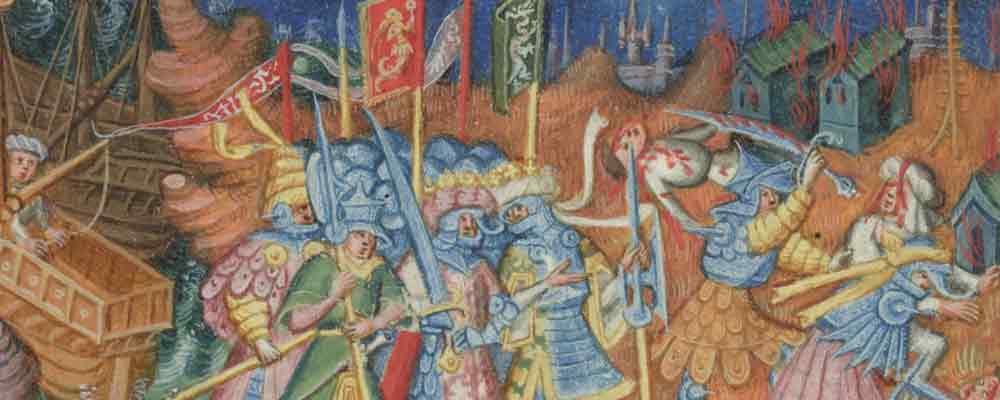
Ivar the Boneless’ leadership was crucial to the Great Heathen Army’s success against Northumbria. A strategic tactician, Ivar preferred psychological warfare and deception over brute force, which set him apart from his brothers. He meticulously planned the attack on Northumbria’s capital, York, and lured Aella into a trap. In 867 AD, the Viking forces overwhelmed the Northumbrians, capturing King Aella in the process. The Vikings exacted their revenge in one of history’s most infamous executions—the “Blood Eagle.” Legend has it that Ivar ordered Aella’s back to be cut open, his ribs pulled apart, and his lungs pulled out and spread out like wings.
In addition to avenging Ragnar Lothbrok, Ivar was also a key figure in the Viking occupation of England. Ivar’s vision went beyond traditional Viking raiding and looting. He had a strategic eye for the land and sought to conquer and hold territories. Ivar, as the leader of the Great Heathen Army, expanded the campaign into Mercia and East Anglia, securing key victories that further weakened Anglo-Saxon rule. He commanded the battlefield and outsmarted his enemies, and his tactical use of alliances, fortifications, and surprise attacks showed an advanced understanding of warfare.
Ivar the Boneless was a leader of remarkable military genius. He was not a berserker, relying instead on a deep understanding of his enemies’ weaknesses. He was a precise commander, employing deception and tactical maneuvers to defeat numerically superior foes. His leadership would transform the Great Heathen Army from a Viking raiding force into a legitimate threat to the English kingdoms.

Ivar’s Conquests and Rule
One of the most powerful Viking kings of England, Ivar the Boneless, was one of the most feared warlords of the Dark Ages. After the Viking capture of York, the seat of power in Anglo-Saxon England was broken. The Norsemen began raiding towns with the intention of establishing permanent settlements. Ivar the Boneless is known for turning York, known to the Vikings as Jorvik, into a Viking stronghold in England. He managed to defeat all opposition in the region, making it the center of Norse power. Jorvik would be the launch point for a new period of Viking expansion.
Ivar also had an alliance with two of his brothers, named Ubbe and Halfdan. In an attempt to further their conquests, the Vikings launched a series of invasions and conquered East Anglia and part of Mercia. Several Anglo-Saxon kings came to terms with the Vikings, with some areas being placed under Viking rule.

One of Ivar’s primary adversaries was King Alfred the Great of Wessex. Alfred was a tenacious foe, and he put into place several new military strategies to protect his kingdom from the Viking invaders. Alfred was able to keep Ivar from conquering Wessex by adapting to Viking tactics and strengthening his defenses. Although Ivar the Boneless initially won battles in an attempt to destabilize Anglo-Saxon rule, he was not able to defeat the Anglo-Saxons under Alfred’s leadership. Ivar’s battles with Alfred the Great set the stage for future conflict between the Norse and the Anglo-Saxons and played a key role in determining the political map of future England.
In addition to his activities in England, there is some evidence that Ivar the Boneless also campaigned in Ireland and was associated with the Norse kings of Dublin. Ivar the Boneless was both a strategic genius and a brutal conqueror, leaving a mark on the Viking Age that would last for centuries after his death. He was respected by his fellow Vikings and feared by his enemies, and he would continue to rule or influence events in northern Europe, even after his death.
Ivar in Viking Legends and Sagas
The Saga of Ragnar Lodbrok and The Tale of the Sons of Ragnar are two of the most well-known Viking texts that focus on Ivar the Boneless. Both texts often portray Ivar as highly intelligent, vicious, and conniving. He is said to have been the most intelligent of Ragnar’s children and was feared not for his physical strength like his brothers, but for his tactical and cerebral might.
The legendary account of Ivar portrays him as a meticulous and calculating leader who would never attack or fight without first knowing he would win. This was a stark contrast to the brute strength of most Vikings. Ivar was therefore a man to be feared, not because of his power, but because of his cunning and wit.
The most prominent and well-known saga of Ivar is his involvement in Ragnar’s death and the revenge that followed. As the story goes, King Aella of Northumbria killed Ragnar by throwing him into a pit of snakes, leading Ivar to vow revenge against him. In the saga, Ivar was noted for having waited with “great patience” and not joining the invasion of England until he was sure that Aella’s death was a priority. In the end, Ivar is noted for convincing his brothers to defeat Aella, while he feigned surrender to Aella. He then, when he had amassed sufficient strength, returned and vanquished Aella.

The sagas also exaggerate Ivar’s physical description. The sagas claim that he was either born without bones or with a physical deformity that did not allow his bones to develop properly. The supernatural aspect of the Boneless Saga is often overlooked, but the historical records indicate that it is unlikely that Ivar led his armies as a physically challenged man. As mentioned previously, some historians have suggested that his nickname is allegorical and may relate to his strategic flexibility or fearlessness in battle.
The legendary Ivar from the Norse sagas has been exaggerated to a near-mythical, supernatural being. The real Ivar was a skilled warrior, an intelligent tactician, but he was all too human. Legends of this sort often create this type of amalgamation of fact and fiction, and this was the case in Viking sagas as well.
One part of Ivar the Boneless that does not change, however, is his character. He was a feared and respected leader, and the sagas often refer to his deep intelligence. Ivar from the Viking legend was a warrior who defied expectations and showed the world that true strength lies in muscle and the power to shape the world through cunning. Ivar the Boneless remains one of the most compelling figures in Viking mythology, whether a brutal warlord, a brilliant general, or a cunning schemer.
The Mysterious Death and Legacy of Ivar
The details of Ivar’s death are not well known. Different sources conflict over the details of his death, and it is even possible that the various sources refer to different people known as Ivar—some claim that he died in battle, others that he died of illness or old age. According to the Anglo-Saxon Chronicle, Ivar took part in Viking raids until at least the late 860s. However, it is silent on the details of his death and does not indicate where he was or when he died. If Ivar suffered from a medical condition, as some theories claim, it may have led to his death from natural causes or disease rather than on a battlefield. The Norse sagas do not help much here either, as they often gloss over details and tend to focus on his deeds and feuds.
A Viking burial site in England is one of the most interesting finds that could be connected to Ivar. Discovered in the early 2000s, it contained the skeletal remains of a warrior buried with numerous weapons. The body was placed in a huge grave, and the bones of several men (likely sacrificed in death to accompany the warrior into the afterlife) were found with it. The skeleton appears to have had physical abnormalities, possibly lending support to the theory of Ivar having a crippling condition. It has been suggested that this could be Ivar’s final resting place.

Whether Ivar died from natural causes, fell in battle, or met another end, his influence on Viking history and Norse mythology remains significant. As a legendary Viking warrior, he is celebrated in Norse sagas for his strategic brilliance and his reputation as a merciless leader. His physical condition, coupled with his legendary status as one of the most feared Viking warriors, makes Ivar a subject of fascination and speculation in both historical and popular narratives.
His historical role in leading the Great Heathen Army in England has made him a symbol of Viking ambition and military prowess. The enduring legacy of Ivar the Boneless, whether as a historical figure or a mythologized character, ensures that his story will continue to be examined and reinterpreted by historians and enthusiasts alike. His life and deeds have been adapted in modern media, including the TV series Vikings, where Ivar the Boneless is portrayed as a complex and formidable character, contributing to the ongoing interest in his life and times.
The Enduring Legacy of Ivar the Boneless
Ivar the Boneless was a legendary Viking leader whose life story cemented his place in history. His ruthless ambition, cunning strategies, and the air of mystery surrounding his persona make him a fascinating historical figure. Questions surrounding his physical condition, his military acumen, and his impact on Viking expansion fuel both historical inquiry and mythic speculation. Was Ivar truly impaired, or did his name symbolize a different kind of strength? The tales of his leadership and brutality continue to resonate through time, inspiring stories, research, and speculation. Ivar the Boneless lives on not just as a conqueror but as an enduring enigma of the Viking Age.
There is no doubt that Ivar the Boneless was one of the most prominent Viking leaders of the Viking age and the 9th century. As one of the sons of Ragnar Lothbrok, and also one of the co-commanders of the Great Heathen Army alongside his brothers, Ivar played a pivotal role in the Vikings’ conquest of large areas in England, and the Norse hold over certain parts of the British Isles for the following centuries. The details of Ivar’s life are told in sagas and historical documents, the most prominent ones being the Anglo-Saxon Chronicles and The Tale of Ragnar’s Sons. Stories of his ferocity as a warrior and skill as a strategist have permeated through history. Whether these stories paint him as a ruthless killer or a tactical genius, the name Ivar the Boneless still resonates in popular culture. The actual historic figure behind this legacy has had a lasting influence, as his name continues to be featured in many books, articles, and in the current day, even TV series.
Ivar the Boneless is a historic figure who will forever be remembered and have a place in Viking history and research. As with many of the Viking leaders that we are familiar with, there is more myth to Ivar’s story than there is fact. Ivar’s physical condition likely made him a target for ridicule, which led to the nickname. Despite this, Ivar the Boneless lived on to show that he was more than just his condition. Whether a fearless warrior or a ruthless invader, Ivar has become a part of history that will not be forgotten.


