
The Doan Gang of Bucks County: America’s Revolutionary Rogues
 Reading Time: 15 minutes
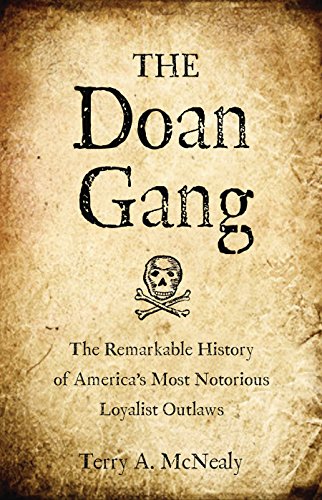
 The story of the Doan Gang during the American Revolution is one filled with crime, loyalty to the crown, and famous exploits. The Doan Gang was a group of bandits in Bucks County, all of whom were Quaker-born brothers and friends. Their crimes as spies and horse thieves for the British during the American Revolutionary War are well-documented, as are their escapes from capture by local Patriots. They were among the most-wanted men in Pennsylvania at the time, but others considered them rebels against the new form of government. No matter where one stands, they are a part of American history.
The brothers and friends involved in the Doan Gang did, indeed, commit crimes against the Patriots in colonial Pennsylvania during the American Revolution. This included some of the most famous robberies in American history, as well as espionage work on behalf of the British crown. Whether they were criminals or rebels is up for debate, but both sides are true. The deeds of the Doan Gang on both fronts have made them a part of American history.
The Doan Gang has a fascinating history filled with warfare, betrayal, and escape. While the American Revolutionary War was a fight between two armies, men like the Doans showed that opposition could take many forms. Their legendary theft of the Bucks County Treasury has made them all but immortalized as notorious outlaws in Pennsylvania folklore. In the end, they were eventually caught and killed. However, their story and legend live on, and they remain one of the most famous members of the Bucks County bandit family.
The Doan Family and Their Quaker Roots
The Doan family had deep roots in Bucks County, Pennsylvania. They belonged to the Religious Society of Friends, commonly known as Quakers. This pacifist religion played a central role in their lives. Quakers had migrated to Pennsylvania centuries before in search of religious freedom. They believed in honest, godly living and the pacifist ideal. To this end, Quakers had disarmed and taken no part in violence or war.
The Doans were far from the only Quakers to take up the Patriot cause; in fact, the majority remained neutral or even supported the British. Maintaining neutrality was challenging for various reasons, and many Quakers chose to support one side or the other. The six Doan brothers-Moses, Levi, Aaron, Mahlon, Joseph, and Abraham-favored the British. For them, the Revolution was not a fight for freedom, but an outright rebellion against authority.

Quakers remained neutral in the war. Most rejected both the Patriot cause and the British, not seeing either side as particularly moral or peaceful. Several Quakers remained loyal to the British crown, while others openly supported the Patriots. Some chose to become Patriots under pressure. The choice was difficult for many, given the centrality of Quaker values and traditions to their way of life. The Doan brothers chose the British because of the core Quaker belief in pacifism. They were disarmed and not under arms when the war came to them. To side with the Patriots would be to go to war and to fight against their fellow Quakers and neighbors.
On the other hand, the Doan gang also held a natural, unshakeable loyalty to the British crown. The Quakers, being natural pacifists, did not see themselves as subjects of the Revolution, but rather as subjects of King George III. To the Doans, the Patriot movement was one of suppression and hypocrisy. The Patriots sought to force their neighbors to take an oath of loyalty to the new government. They fined those who refused and seized property from suspected Loyalists. To a family that had been pacifists under both British and American governments, this was the very definition of tyranny.
Quakers were also not known for their revolutionary ways. The Doans remained quiet, God-fearing citizens, and far from the only Quakers to side with the British. Many Quakers took their values and beliefs to heart, eschewing violence, theft, and the taking of life. The Doans, on the other hand, took up arms, spied, and killed. They were once ordinary Quaker farmers, but the Revolution turned them into violent outlaws. The Doans despised the Revolution, not content to ignore or disavow it. The brothers would outmaneuver the Patriots, forces in their home territory, and generally got away with whatever they plotted. They were extremely proud of their anti-Revolutionary status and proved a thorn in the sides of their Patriot neighbors.
The Doan Gang and Their Loyalist Allegiances
Amid the growing conflict, the Doan brothers took an oath of allegiance to the British Crown and became fervent Loyalists. By July 1776, Moses and Levi Doan had presented themselves to British General William Howe and offered their services as spies and informants to the Crown. Moses was adept at traversing the Pennsylvania countryside undetected, and the British gave him the name “Eagle Spy” for his vigilance and skill as an intelligence gatherer. As most able-bodied men had already enlisted in the Patriots’ militias, much of Bucks County was ripe for Loyalist recruiting, allowing the Doan Gang to move and operate with relative ease.
Moses proved his worth to the British in short order. On August 27, 1776, Doan provided General Howe with key information on the lightly guarded Jamaica Pass in Brooklyn, New York. This allowed the British to flank General George Washington’s forces during the Battle of Long Island and rout the Continental Army, forcing them into full retreat. British commanders had an unimpeded path into New York City, setting the stage for their successful occupation, in part due to Doan’s ground intelligence. Spies and informants like Moses Doan demonstrated that Loyalist intelligence-gathering could be incredibly effective in the early stages of the war.

The Doan Gang returned to the intelligence business as the Continental Army spent the winter of 1776 hiding from British patrols. On the night of December 25, 1776, as Washington was executing his famous crossing of the Delaware River, Moses Doan was rumored to have ridden out to Hessian Colonel Johann Rahl to deliver a warning about Washington’s movements. Rahl, who was commanding the British-allied Hessian forces in Trenton, New Jersey, supposedly received a note from Moses Doan that read: “Washington is coming on you down the river, he will be here afore long. Doan.” Rahl never read the note, considering it unimportant and throwing it away.
Washington and his men completely surprised the Hessian forces the following day and scored a major Patriot victory at the Battle of Trenton, a turning point in the Revolutionary War. If Rahl had read the note and heeded the warning, the Battle of Trenton would have been a very different affair, and the outcome of the Revolutionary War could have been very different as well.
In addition to battlefield intelligence, the Doan Gang functioned as couriers between Loyalists and British commanders. They used their superior knowledge of the Bucks County countryside to travel the land without being detected by Patriot patrols. In this way, they also used their guise of local communities to relay messages and communicate between Loyalist organizations in Pennsylvania and the British high command. As the British would use informants and spies to best upend Patriot strategies, the Doans provided a valuable resource to keep the Crown apprised of Patriot movements.
As a result, the Doan Gang received support and praise from British commanders, who were grateful for their service. But it would also make them among the most wanted men in Pennsylvania. Patriot leaders and militiamen knew of their crimes against the revolution, and efforts to track and capture them were redoubled throughout the war. But their ties to Loyalist militias and sympathizers made them among the most effective outlaws in Pennsylvania, defying capture and rewriting key moments of the war through their intelligence-gathering.

Crimes and Notorious Activities
As the Revolutionary War dragged on, the Doan Outlaws transitioned from spies and Loyalist operatives to one of the most feared and notorious criminal gangs in Pennsylvania. The Doans’ primary source of income was robbing Whig tax collectors and stealing horses, two activities that directly impacted and interfered with the Patriot cause. The gang regularly targeted tax collectors, who were seen as representatives of the newly formed American government. The Doans would raid the tax collectors’ homes, seizing the funds they had collected for the Patriot war effort.
As their reputation for robbery and general lawlessness spread, they became well known across Bucks County and the rest of Pennsylvania. Despite claims that their actions were carried out in support of the British Crown, it was often difficult to differentiate the Doans’ political loyalty from simple banditry.
One of the most common crimes committed by the Doan Gang was horse theft, and they stole over 200 horses from their patriot neighbors in Bucks County. The stolen horses were then sold to British officers in Philadelphia and Baltimore, who used them to transport Redcoat troops. The Doans’ detailed knowledge of the Pennsylvania countryside and wooded areas allowed them to snatch prized horses under the cover of darkness, then vanish before authorities could arrive to stop them. The gang members were able to successfully evade capture and arrest, adding to their infamy as America’s most notorious outlaws. Patriot authorities viewed the Doans as a significant threat to the American war effort.
The Doan Gang also gained a reputation for violence, which included some highly disputed allegations of murder. On June 7, 1780, Abraham Doan was accused of shooting and killing a woman in her home as she lay on the ground surrounded by her nine children. While this story can be found in several historical sources, there is no official evidence that the woman was murdered, and her husband later recanted the claim.
However, a broadside published in 1788 about Abraham and Levi Doan did confirm that the pair shot and wounded a French merchant on the banks of the Susquehanna River. The Frenchman later died from his wounds, and the Doans were directly responsible. Pennsylvania state archives have further records that detail the gang members’ plan to shoot and kill tax collectors who refused to meet their demands.
Arguably, the Doan Gang’s most legendary crime was the raid of the Bucks County Treasury in Newtown on October 22, 1781, three days after the British surrender at Yorktown. The gang successfully overpowered the treasury guards and took the building’s 1,307 pounds sterling, which was an astronomical sum at the time (equivalent to over £200,000 in 2021). The county had raised the stolen funds for the Patriot war effort, but they were not recovered.
With this major heist, the Doan Gang solidified their reputation as master criminals who could successfully rob the most well-guarded and secure buildings in Pennsylvania. As the war was beginning to draw to a close, the Doans’ raids continued to increase in frequency, directly challenging the new American government, no longer simply Loyalist resistance but high-stakes crime.
In addition to high-profile robberies, the Doan Gang frequently robbed tax collectors in Pennsylvania. In 1782 and 1783 alone, the gang robbed at least nine different tax collectors, often targeting them at their homes in the middle of the night. In addition to simply taking the collectors’ funds, the raids were an intentional strategy to stop the government from collecting the funds needed to finance the war.
In one incident in June 1783, Moses and Abraham Doan organized a series of robberies across Bucks County against at least four tax collectors. After the final robbery, the county officials placed a 100-pound bounty on Moses and Abraham Doan, which was an enormous sum at the time (equivalent to over £15,000 in 2021).
However, despite this pressure from Patriot authorities, the Doans remained elusive. Their years living in Bucks County gave them a better understanding of the forests, caves, and other secret hiding places than most of the local Patriot forces. In addition, the Doans had a network of Loyalist sympathizers who provided the gang with food and shelter, much to the dismay of Patriot officials. Even when law enforcement forces surrounded them, the Doans were still often able to escape by using hidden escape routes and other diversions. The gang’s skill at evasion, along with their audacious raids, would solidify their place in history as America’s most infamous Revolutionary outlaws.

The Pursuit and Capture of the Doan Gang
As the Revolutionary War was drawing to a close, Pennsylvania officials redoubled their efforts to capture the Doan Gang. Frustrated by their brazen robberies, pro-British sympathies, and record of bloodshed, the new government moved quickly against the outlaws. Bounties for the capture of each man increased, but for a time, the Doans managed to elude their pursuers. Expert in the rural backcountry of Pennsylvania, the gang relied on their knowledge of the land and the support of Loyalist sympathizers to maintain a network of safehouses and provisions. The repeated failures to apprehend the Doans frustrated lawmen, and they began organizing more forceful manhunts to finally put an end to the gang.
Word reached a 14-man posse that the gang was in a specific location, and on August 28, 1783, the armed men went to arrest them. Levi and Abraham escaped, but Moses was shot and killed after a brief struggle. Major Kennedy, another member of the posse, was hit in the head by a bullet from one of the Doan guns and died of his wound three days later.
Found in Moses Doan’s pocket was a note which read in part, “If Joseph Doan is not released from prison, the head of Frederick Muhlenberg, Speaker of the United States, will be the reward for this.” Muhlenberg was serving as Speaker of the United States House of Representatives, and this final act of the gang seemed to signal that they would not back down, not even in the face of death.

Pennsylvania authorities raised the reward for the remaining fugitives to 300 pounds apiece, indicating that the government was serious about finishing the gang once and for all. The increased bounty did not lead to further arrests immediately, but it did increase the pressure on the remaining fugitives. Mahlon Doan escaped from a Bedford, Pennsylvania jail in 1783 and fled to New York City. He is not recorded in history after that date.
Joseph Doan Jr., who had been sentenced to death for murder, escaped from a Newtown jail in 1784, fled to New Jersey, and assumed an identity as a schoolteacher in New Jersey. Eventually, locals discovered this ruse and learned of his history. Doan fled to Canada and lived in exile for the rest of his life.
Aaron Doan was arrested and sentenced to death for his crimes. He was granted a pardon in 1787 on the condition that he leave the United States forever. While not all of the gang members escaped death, Levi and Abraham Doan were the last to remain at large, and they were not as fortunate as their relatives. Arrested and convicted of treason, the two men confessed to aiding the British and were hanged in front of a large crowd in Philadelphia on 24 September 1788. While their deaths marked the end of the Doan Gang in a legal sense, their outlaw legend was only beginning in Pennsylvania folklore.
Moses Doan was buried in Plumstead Township. His gravestone was later moved and is today part of a hedgerow near the original burial site; it no longer has an inscription due to exposure over the years. Levi and Abraham were not allowed burial in the Friends Meeting House cemetery in Plumsteadville because of their history of violence, as this violated the Quaker testimonial of peace and a life free of violence.
They were buried instead just outside the cemetery’s perimeter stone wall. Their original headstones were made from native brownstone quarried from the area. These stones were undecorated and lacked inscriptions, in keeping with the Quaker custom of the time. More modern replacements have been added to recognize their outlaw status.
Public Opinion of the Doan Gang
Public opinion about the Doan Gang was mixed, ranging from fear to dislike to begrudging respect. To Patriot communities in Bucks County and throughout the Thirteen Colonies, they were villains—bloodthirsty outlaws who robbed, murdered, and aided the British. They were Loyalist traitors who stood against the Whig cause and harassed local communities. Authorities were frustrated that the Doans had managed to elude capture for so long, and people were rightfully afraid of the damage they could cause, having already committed robberies and murders. They were considered dangerous to the new government and social order in the uncertain years following the Revolution.

On the other hand, to Loyalist communities, the Doans were far from villains. In the eyes of some, they were heroes, rebels who stood up to the government and fought back against the confiscation of Loyalist property and forced exile of families from their homes. The Doans’ ability to outwit law enforcement and their never being caught, at least not for long, added to their legend. Stories of the Doan Gang lived on in Pennsylvania folklore for years after their deaths and even into modern times. In some stories, the gang became mythologized, portrayed as flamboyant highwaymen rather than simple criminals.
For those who had been robbed or threatened by the Doans, there was no doubt that they were violent brigands. However, for others, and especially for Loyalist families, they were seen as victims of the Patriot cause, even of persecution. Over time, their legacy shifted to a combination of history and myth. Modern historians often note their cunning and resourcefulness even as they characterize them as a cautionary tale about divided loyalties during the Revolutionary War. Their story is part of Bucks County’s history and a reminder of the internal conflicts that tore communities apart during the war.
The Doan Legacy
Over time, the story of the Doan Gang has been romanticized into Bucks County folklore. Passed down from generation to generation, it tells a tale of outlaws, rebellion, and survival. While the crimes of the Doan Gang were well documented, the passage of time has blurred the line between fact and folklore, and some retellings portray the Doans as audacious highwaymen rather than mere criminals. Their ability to evade capture for so long and their connections to Loyalist espionage have given them a reputation as almost mythic figures in local history. Even now, the name “Doan Gang” sparks curiosity and debate among historians and storytellers, with many wondering if the gang was ruthless traitors or misunderstood revolutionaries.
One of the most persistent legends associated with the Doan Gang is that of hidden treasure. According to some, before their capture, the gang buried a substantial cache of stolen gold and silver coins somewhere in Bucks County, where it remains hidden to this day. Over the years, many treasure hunters have scoured the countryside in search of the Doans’ lost loot, though no verified treasure has ever been found. The rumor of the hidden treasure only adds to the intrigue of the gang’s story and keeps their memory alive in local folklore. The most infamous of their heists, the robbery of the Bucks County Treasury, fueled speculation that their stolen loot remains buried somewhere in Bucks County.
In addition to folklore and treasure legends, the Doan Gang is also part of American history as a symbol of rebellion and resistance. Though their actions directly opposed the Patriot cause, the Doan Gang exemplifies the internal conflicts and divisions that tore at communities and families during the Revolution. Their crimes, whether seen as heroic or villainous, highlight the chaos and uncertainty that characterized the birth of a new nation. The Doan Gang’s story is a cautionary tale that reminds us not all participants in the American Revolution fought or resisted for noble reasons.
Their legacy can still be seen in Bucks County today, with historical markers and oral traditions preserving their story for future generations. Historians continue to research and debate the extent of the gang’s crimes and the motivations behind their actions. Were they self-serving criminals taking advantage of the chaos of war, or did they genuinely believe in the Loyalist cause? The legacy of the Doan Gang is an open-ended question. This cautionary tale serves as a reminder of the thin line between patriotism and outlawry in times of revolution.


