
The War of 1812: Causes, Battles, and Lasting Impact
 Reading Time: 24 minutes
 Buried in the shadow of the Revolution and the Civil War, the War of 1812 has often been labeled inconclusive, unnecessary, and even a failure. America’s Second War for Independence remains the most misunderstood war in American history. Fought within the context of the global Napoleonic Wars, America’s war against Britain was anything but a side-show. Cutting off American trade, British impressment, and Indian attacks on the frontier were all driven by the broader conflict between Britain and France for control of Europe and the seas. Spurred into war by these events, the United States would fight a mighty power in a conflict that spanned two oceans.
The issues at stake in the war would determine questions of sovereignty, stable borders, and even survival. Despite neither side gaining nor losing a single drop of territory, the war would forever secure America’s independence from British rule and interference. Both nations would enjoy stable borders in North America and engage in a lasting peace. As John Quincy Adams famously said following the war, America had finally begun to earn its place in the world.
Roots of Conflict: Why the War of 1812 Began
The War of 1812 was fought over a number of lingering issues leftover from the American Revolutionary War. The British still did not fully accept Americans as equals, and infringed upon American rights both on the high seas and the western frontier. National pride also came into play, as Americans felt that their honor was being questioned by British actions.
The biggest problem was impressment. The Royal Navy stopped American merchant ships and forcibly took men whom they thought were British. Thousands of American sailors were taken against their will. Americans began catching phrases like “free trade and sailors’ rights”.
Trade issues also plagued American merchants. The British were at war with Napoleonic France, and both were trying to defeat the other at all costs. Neutral trade was severely hampered by blockades and orders. American ships were boarded, seized, or turned away from European ports. Many Americans felt that the British were trying to strong-arm the United States into allowing British control of American trade.

The United States tried to fight back with trade sanctions, but nothing worked. The Embargo Act of 1807 punished American merchants and sailors even more than the British had been. Rather than bend to American demands, the British refused to change their policies.
Americans were also attacked on the frontier by various Native nations. Many of these tribes had access to British-supplied weapons from Canada. American frontiersmen like Tecumseh tried to prevent Americans from settling Native lands, and many Americans put the blame on the British for inciting aggression on the frontier.
War Hawks in Congress began to feel that enough was enough. Led by men such as Henry Clay and John C. Calhoun, Congress believed America’s honor was at stake. They wanted to fight the British to protect American rights, and perhaps gain some Canadian territory while they were at it.
President James Madison wanted to avoid war, but negotiations had broken down, and the continued harassment of American ships would cheapen the American reputation if nothing was done. Congress declared war in June 1812.
The United States Declares War (1812)
Congress declared war on Britain in June 1812. Support for the war came primarily from the southern and western areas. Lawmakers in these regions wanted to defend national honor and safeguard the frontier against British interference. However, some New England merchants and Federalists felt that war would ruin trade and might not even be justified.
President Madison was aware that the United States was badly divided when he asked Congress to declare war. Congress voted to declare war by the closest margins of any time in U.S. history. Madison agreed that war was a dangerous course of action, but he said that years of British abuse had left him with little choice. As one anti-war voice cautioned, the decision to go to war left the United States “rushing blindfolded into war.”
In June 1812, the United States had an army of less than 12,000 men spread across the country. These troops were disproportionately made up of recent recruits with little military experience. Weapons and supplies were also lacking, as was comprehensive training. Many of the American army’s senior commanders had seen their last conflict during the Revolutionary War. The United States Navy was professional but small. State militias, upon which Americans heavily relied in the coming war, were unpredictable and would refuse to move past their home state in some cases.
As the nation entered the war with Britain, it was financially handicapped. After years of declining trade with Britain and its allies, the U.S. government lacked the funds for war. The charter of the national bank had expired a year earlier, leaving the government to rely on inadequate loans to fund the war. Americans went to war against the world’s greatest empire on a shoestring budget.
American leaders set aggressive early war aims. Americans assumed that Canada would be a quick and relatively easy target for conquest. Some Americans assumed that Canadians would welcome an American invasion; others believed that the British were too weak in Canada to put up much of a fight. Former president Thomas Jefferson even wrote that conquering Canada would be “a mere matter of marching.” To capture Canada, American plans centered on three separate invasions spreading from three locations.
The attacks would sever the British supply lines, and the troops would fight their way inward. Britain would then be forced to sue for peace. American optimism soon faded when the initial campaigns of the war stalled.
The War on the Northern Frontier
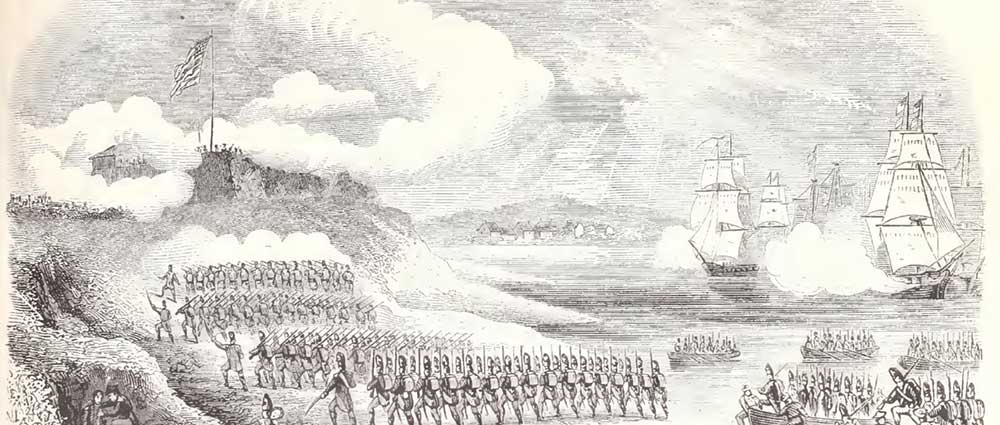
The War of 1812 was fought primarily along the northern border. Many hoped that if Canada were invaded decisively enough, the British presence there would collapse. Americans underestimated how difficult it would be to conquer Canada. However, three major invasions in 1812 ended in disaster as poorly coordinated amateur armies panicked and ran. At Detroit, they surrendered without firing a shot in 1812.
Native allies and Canadian militia attacked the retreating Americans, while the leadership of militia generals who refused to attack caused further retreats. Instead of causing Canada to fall, the war there quickly escalated as the British used professional troops that could concentrate against larger American forces. What had started as conventional warfare on the frontier would become one long string of raids and counter-raids between armies and supply lines.
American troops captured and burned York (present-day Toronto) in April 1813. Government buildings and military supplies were destroyed. The raid did little militarily, except to harden Canadian resistance, but it made British reprisals against American towns politically palatable.
Control of the Great Lakes system became one of the war’s main goals in the North. Control of Lake Erie and Lake Ontario allowed the armies to operate or be starved for supplies. In 1813, one of America’s future naval heroes, Oliver Hazard Perry, squared off against the British fleet on Lake Erie. Perry’s heroic dispatches announcing victory would become legendary: “We have met the enemy and they are ours.”

Perry’s victory ensured that the American army could recover Detroit and invade Upper Canada. This invasion would result in one of the most famous American victories of the war at the Battle of the Thames. Although a great victory for the United States, the battle would have consequences that reached far beyond the war itself.
Native American alliances were a significant factor in the war in the North. British officials had long nurtured Native American discontent with American expansion beyond the Appalachians after the American Revolution. One man emerged as the leader of Native American opposition to the Americans in the West: Shawnee chief Tecumseh.
By building a confederacy of tribes, he helped check American settlement in the Northwest. With the death of Tecumseh at the Battle of the Thames, organized Native American resistance to American settlement in the Old Northwest would greatly suffer.
Naval Warfare and the Battle for the Seas
Naval battles gave the War of 1812 global significance. Despite having the largest navy in the world, Great Britain tasted some bitter defeats early in the conflict. In 1812, American frigates, including USS Constitution, triumphed over British opponents in several single-ship battles. These unexpected wins thrilled Europeans and buoyed American spirits.
The USS Constitution dismantled HMS Guerriere in less than an hour. British sailors on deck witnessed cannonballs bouncing off the Americans’ thick hulls. They nicknamed her “Old Ironsides” soon thereafter. Alone, these engagements did not dent Britain’s naval advantage. But they showed America could hold her own against British ships.
America’s small navy was augmented by thousands of privateers. Private ship owners could request government licenses to attack British merchant ships. Operating on every ocean, American privateers seized or destroyed thousands of British boats. They drove up insurance costs, creating panic among Britain’s business communities.

Privateering was remarkably effective. America lacked the manpower to match the Royal Navy ship-for-ship, but its privateers attacked British shipping wherever they found it. American privateers inflicted real damage on British trade, angering merchants back home. Attacks were centered around ports like Baltimore.
In retaliation, the Royal Navy blocked major American ports. Their ships prevented Americans from exporting goods, and imported staples became scarce. American customs receipts dropped significantly as the blockade expanded in 1813 and 1814.
Britain’s blockade hurt the American economy and drove a wedge between regions. New England merchants suffered greatly as trade became centralized at ports in the South. Americans hated the blockade, but seaborne trade proved especially important to New Englanders.
At war’s end, the British navy still dominated the seas. However, Britain’s early struggles against American frigates had boosted its international reputation. Moreover, privateering had greatly inconvenienced British trade during wartime and ensured the seas remained contested.
The Southern Theater and Native Resistance
The war between the United States and Native nations continued to rage in the South during the War of 1812. Americans fought two simultaneous conflicts in the region. Officially, they were at war with Great Britain. Unofficially, the U.S. Army and the powerful Creek Nation were engaged in hostilities over Native resistance to American expansion into the frontier.
Members of the Creek Nation who opposed American settlement there were called Red Sticks. The Red Sticks were not formally allied with the British, but they maintained friendly ties with the British and Spanish colonies. American aggression increased in 1813 after attacks on frontier outposts. U.S. leaders decided Native resistance could become a strategic threat to American settlements if not quelled. Soon, the southern war was about territory as much as national security.
Led by Tennessee militia commander Andrew Jackson, American forces aggressively moved into Creek territory. Jackson made allies of competing Native nations and used force to justify further territorial infringements on the grounds of defending the frontier.
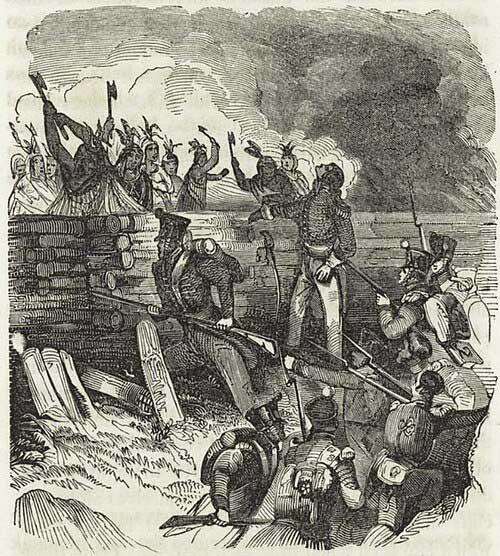
The Creek War reached its climax in March 1814 at Horseshoe Bend in modern-day Alabama. Jackson’s troops overwhelmed Red Stick defenses, killing over 700 warriors. It was described by one American officer “a slaughter rather than a battle.”
The Treaty of Fort Jackson was enforced upon the Creek Nation following the battle. Under the treaty terms, the Creeks ceded over 20 million acres of their land to the United States. Some Creek warriors had fought alongside American troops in the war, but their contributions did little to prevent the invasion of their homelands once the war had ended.
Native American resistance to American settlement in the South effectively ended after the Creek War. Native confederacies ceased to oppose American settlement, leaving the door open for thousands of settlers to move south.
The Burning of Washington and British Counteroffensives
The War of 1812 took a dangerous turn in 1814. As Britain moved from defense to counteroffense, American cities and towns up and down the coast suddenly found themselves targets. Napoleon was finally defeated in Europe, and Britain was able to send its veteran soldiers and powerful navy to the Americas. Raids on ports and cities stretched along the eastern seaboard from the Chesapeake Bay to New England. The British squadrons wanted to destroy ships and supplies, hurt American trade, and force the United States to come to terms, but they did not aim to hold territory. Instead, they wanted to punish and intimidate, and for a time they succeeded.
Americans along the coast knew that they could be raided at any moment. British ships could slip up and down the coast with ease since few troops were stationed to defend these areas. When British forces landed near the Chesapeake Bay in August 1814 and marched on Washington, D.C., American forces crumbled. Militia units panicked and retreated at the Battle of Bladensburg rather than fight. When the British reached Washington, there was scarcely any resistance left. The nation’s capital had fallen to enemy forces. Americans reacted with stunned disbelief. Never before had a foreign power captured any part of the United States government. After two years of fighting, the British were demonstrating how vulnerable the United States truly was.
British troops wreaked havoc in Washington, D.C. After camping on nearby fields that night, they set fire to public buildings, including the Capitol and the President’s House. Americans watched in horror as the conflagration consumed district buildings. Dolley Madison saved a portrait of George Washington from the White House before fleeing the city. One British officer even allegedly snuck into the city to burn public buildings as a proper retaliation on the Americans for burning Canadian territory, including York.” However, fortunately for the city, heavy rain put out the fires the next day and limited damage to some public buildings.

British efforts against Washington DC did not end the War of 1812, however. The focus quickly turned north to Baltimore, Maryland. Baltimore was a large port city that was home to many privateers who irritated the British. Quickly realizing its importance, the British planned an attack. On September 12 and 13, 1814, British troops landed near Baltimore while the Royal Navy attacked it from the harbor. American troops and militia frantically strengthened their defenses while Fort McHenry protected the harbor. The British staged a ground attack against the city, but by then it was too late. Baltimore would not suffer the same fate as Washington.
Fort McHenry withstood 25 hours of bombardment from the British ships in the harbor. The next morning, Americans watching and waiting eagerly saw the enormous American flag still waving over the fort. Francis Scott Key, a lawyer who had watched the attack from a ship, wrote a poem about the sight that later became the American national anthem. The Star-Spangled Banner describes Key watching the bombardment, eagerly awaiting the result of the battle. “‘Tis half past four, one o’clock in the morning,” he wrote, and “our flag was still there.” The huge American flag still standing signaled to the Americans that their nation had weathered the attack. Sure enough, the British retreated and called off their plans to attack Baltimore.
British raids after Baltimore represented the apex of British offensives in North America. The Burning of Washington humiliated the United States of America, while the successful defense of Baltimore inspired a sense of American pride. While British attacks on coastal towns continued into 1815, these two events forever changed the way Americans viewed the war.


The Battle of New Orleans
The Battle of New Orleans represents the most spectacular American victory of the War of 1812. It was fought in January 1815, thrusting General Andrew Jackson into the national spotlight. Jackson led an improbable assortment of regulars, militia, free Blacks, Native allies, and pirates to defend the approaches to New Orleans. The American general chose his ground carefully, building stout defensive earthworks astride the Rodriguez Canal. Once there, he hardened his army with discipline and stern training. Under effective leadership, his troops delivered a meaningful blow against Britain.
The British assault plan was straightforward; they would launch a frontal assault against American positions. On January 8th, the redcoats marched across open ground under withering fire. The effect was catastrophic. The Americans smashed the attacking British troops, inflicting horrific casualties while sustaining only a handful of losses. Eyewitnesses reported the field being “covered with the dead and dying” British bodies, while Jackson’s men maintained their positions almost untouched. The massive disparity stunned both armies and proved that Americans could hold their own against the world’s most powerful military when properly motivated and led.

Oddly enough, the Battle of New Orleans was fought after the war was officially over. The Treaty of Ghent had been signed in December 1814, but news had not yet crossed the Atlantic. When combat began on January 8th, both armies believed they were still at war. In many ways, this did not matter. The battle had little impact on the peace negotiations, which had continued without interference from military commanders. However, it did affect how Americans felt about the conflict. After years of stalemate and humiliating retreats, New Orleans provided a welcome victory for the United States. To them, it validated the trial-by-fire that was the War of 1812.
American confidence soared after the victory at New Orleans. The war had battered national pride, beginning with the problem of securing American frontier settlements. The burning of Washington still rankled, and New Orleans helped the country forget it. Patriotism soared as citizens celebrated their latest military triumph. News of the peace treaty was virtually ignored in favor of glorified stories of Jackson’s triumph. Books, newspaper articles, and pamphlets praised Jackson as the man who had saved the republic from British aggression. The battle has lived on in American folklore ever since as proof that the United States secured its independence.
Jackson’s prestige would lead to a political career that forever changed America. His reputation as a populist fighter-first general was only bolstered by New Orleans. The battle also gave the United States leverage in postwar negotiations. Never mind that they had already concluded; America had reason to believe that it could stand toe-to-toe with the British lion and walk away victorious. Britain, on the other hand, had already realized that it could not win by force of arms in North America. Canada was secure, and Britain’s attention turned to expanding its empire in Asia and Africa.
New Orleans is remembered as the site of the final battle of the War of 1812. In truth, it was one of the first major engagements of the conflict’s second session. Either way you slice it, the battle drastically altered American perception of the war. News of victory quieted voices calling for war crimes trials against American generals. The United States had reason to feel proud; it had not conquered its greatest enemy, but it had held its own against him. That would be enough for generations of Americans who romanticized the fight at New Orleans.
The Treaty of Ghent (1814)
The Treaty of Ghent ended the War of 1812. Negotiated in Ghent, Belgium, both sides ratified the treaty on Christmas Eve 1814. Americans and British were exhausted by the war and ready for peace. The defeat of Napoleon changed European politics, allowing Britain to focus elsewhere. By the time negotiators met, both sides just wanted peace. Punishment and victory became secondary objectives. “Our object,” one British official said, “is merely to put an end to a most unnatural war.”
For most intents and purposes, the treaty restored the status quo ante bellum. Each side returned the land it captured and agreed to stop fighting. Borders reverted to their original locations, and no land changed hands. While this upset expansionists on both sides of the Atlantic, it pleased politicians who feared unrest should the war continue.
The treaty specifically avoided addressing the causes of war. Gone were calls for an end to impressment, rights of neutral trading, and freedom on the high seas. There was no need for Britain to continue impressing Americans now that Napoleon was defeated. Both sides simply ignored the causes of war and agreed not to fight anymore.
Native Americans, once again, had little consideration in the treaty. British negotiators wanted to carve out a Native buffer state from Minnesota to Indiana, but Americans refused. Native people who had fought against the United States received no protection under the treaty. Indigenous nations were loyal to the British during the war but earned no British favor at peace.
Despite its modest language, Ghent endured. It began centuries of peaceful American-British relations. Differences would henceforth be settled diplomatically instead of militarily, changing North Atlantic relations forever. Perhaps the most significant statement made by the Treaty of Ghent was the one that remained unwritten.
Though there were no winners or losers when Ghent was ratified, it still affirmed America’s independence, maintained Britain’s dignity, and secured a century of peace between old rivals. The war came to a quiet close, but it altered the course of history nonetheless.
Who Really Won the War?
In America, the War of 1812 became remembered as a glorious victory. Having survived a war with the most powerful empire on earth only strengthened American nationalism and pride. Many came to believe they had fought a second war of independence. When Baltimore had held, and Andrew Jackson had triumphed at New Orleans, the forces of America had shown their mettle. “Who then will dare to tell us,” triumphed one post-war newspaper, “that we are not able to maintain ourselves, and to stand among the powers of the earth.”
For their opponents, this was never the central issue. To Britain, the war had always been a sideshow. The British government never wavered in its primary goal of defeating Napoleon in Europe. Once that was done in 1814, there was little appetite in London for continuing an expensive war thousands of miles away. The Treaty of Ghent shows this. Britain made peace, gaining no territory for its struggles in North America. London had achieved its primary goal of maintaining Canada but had avoided overextending itself.
Canada also remembers the war as a victory. Despite multiple invasions, the British regulars, Canadian militia, and Indigenous fighters always drove America’s armies back. Nothing was lost during the war, and Canada’s separate sense of identity and attachment to the British Empire grew stronger because of it. The Canadian story of 1812 focuses on the union against invasion, when foreign armies landed but were repulsed, not on territory lost.
The Native nations that fought in the war have no stories of victory. Britain had once promised many Indigenous tribes that it would help stop American expansion if they joined the war. But those promises were empty. In defeat, Britain offered nothing in the Treaty of Ghent to protect Native lands. Native leaders like Tecumseh were dead and unable to rally their people against American encroachment. After 1815, westward expansion came quickly and ruthlessly from the U.S. As Richard White wrote many years later, Native peoples “fought and lost everything” in a war that gave them no peace.
So was it a draw? In one sense, yes. No borders changed hands. Neither side “won” the war according to their objectives. But in another sense, America won new confidence and long-term security. Britain had won enough to move on to other priorities. Canada had survived to one day become a country. But what of the many Indigenous peoples who died in defense of their homeland? Victory is relative, depending on who you count as having had an outcome.

Date : 23 October 1861
Lasting Impact on the United States
One of the legacies of the War of 1812 was an increased sense of nationalism. The United States had survived a war against the strongest empire on earth and come out on top. The country had tangible evidence of nationalism, like the Star-Spangled Banner, and victors to celebrate in places like New Orleans. Americans felt their republican experiment had passed its trial by fire and survived. As one observer noted years later, Americans had discovered “a feeling of nationality which they had never before possessed.”
The war also had political effects at home. Support for the Federalist Party, which had opposed the war, collapsed after the conflict. The Hartford Convention of 1814, where New England Federalists tried to engineer constitutional amendments to limit presidential power and where some members suggested secession, did irreparable damage to the party’s image. Federalists had largely opposed the war and were out of step with the nation’s mood after peace was declared. Within a few years, the Federalist Party evaporated from national politics, leading to the “Era of Good Feelings.”
Americans became far less dependent on foreign trade during the war. With imports from Britain blocked by the Royal Navy, Americans began manufacturing goods they would have otherwise bought from abroad. Textile mills and ironworks spread across the Northeast, along with a spirit of entrepreneurial capitalism. The war, according to Secretary of the Treasury Albert Gallatin, “forced us to manufacture for ourselves.” This economic effect would take several decades to realize itself.
Americans also grew more confident in their military. The United States had faced horrific defeats early in the war, but fought better once it gained experienced leaders and improved its organization and professionalism. Although only a small branch of the military, the American Navy proved it could hold its own against the world’s greatest naval power. Confidence in the United States’ ability to defend itself on land and sea grew. The American diplomatic tone could now project American interests more aggressively. National faith in American institutions was restored after the war. Americans had looked inward before 1812, but after the war, they would seek out their place in the world.
Britain and Canada after the War of 1812
For Britain, the War of 1812 signified a major shift in its relationship with the United States. The war had never really been Britain’s priority in North America while Napoleon remained a threat in Europe, and after Napoleon’s defeat, the British government came to terms with the reality that continued competition with the United States was expensive and unnecessary. The Treaty of Ghent laid the foundation for centuries of peaceful relations between the United Kingdom and the United States. As one British commentator would later write, the Americans had helped Britain win “a quarrel which could profit neither side,” allowing the matter to be resolved by diplomacy rather than force.
The war also brought an end to British support for America’s Native foes along the frontier and ended Britain’s willingness to interfere with American trade and sailors. The forcible impressment of sailors, trade restrictions, and the provision of weapons to Native Americans dissipated after 1815. Some issues would remain, but Britain no longer saw America as a challenging former colony. In the years following the war, both nations slowly moved towards settling future differences through negotiation instead of conflict, forging the peaceful Anglo-American relationship that lasted for most of the nineteenth century.

British North America was also significantly changed by the war. Preventing American invasions became a Canadian origin story. Stories of brave militia units standing toe-to-toe with the feared Americans, Indigenous allies, and reinforcements from Britain “proved” to many that Canada could not easily be defeated if the people wanted to resist. Heroes like Isaac Brock were memorialized for generations, and the War of 1812 became embedded in Canadian culture as a successful defensive war.
Long-term Canadian defense was also changed forever by the war. Fortifications were strengthened, military planning received greater attention, and cooperation between regular and partisan forces was viewed through a new lens. The war also helped to provide a nascent sense of shared identity among British North Americans that would slowly override colonial political divisions. While neither Britain nor the Canadians truly saw Canada as its own nation yet, the war helped foster a new Canadian identity distinct from Britain and the United States.
For Britain, the war ensured that Canada was secure and capable of remaining a part of the British Empire. For Canadians, they gave the country confidence in itself, staying power, and a story that would be told for generations: we survived.
A Turning Point in U.S.–British Relations
The War of 1812 saw the emergence of friendship and partnership out of hostility between Britain and the United States. Prior to 1812, both countries deeply distrusted each other due to revolution, trade conflicts, imperialism, and warfare. By the time peace was declared, both sides claimed victory, and the issues that had lingered after the American Revolution were addressed. According to one British statesman, after the war had ended, peace would bring “mutual advantage where war had brought only loss.”
Diplomacy replaced hostility in the post-1815 era. Treaties such as the Rush–Bagot prevented navies from massing on the Great Lakes. Impressment faded from national memory. Commerce flowed freely between the two nations. Each country began to see the other as a potential friend and ally rather than an enemy bent on destruction. This was amazing considering how recently they had tried to kill, coerce, and subjugate each other.
The border between the United States and Canada became the longest undefended border in the world. Forts became customs offices, armies retreated, and both nations began to share waterways. Border disagreements were settled at the negotiating table and by arbitration rather than war. The undefended border remains a testament to this transformation even today.
Anglo-American cooperation affected both British and United States politics. Britain had finally recognized that the United States would not revert to a colonial status and would be a permanent part of the international landscape that Britain needed to take seriously. Americans no longer needed to define themselves in opposition to Great Britain. Trade and commercial relations flourished. Both countries found themselves with more in common than not.
The memory of 1812 served as a reminder of how bilateral relations should not be conducted. Anglo-American cooperation in World Wars I and II was built upon the trust established after 1815.
Why the War of 1812 Still Matters
In many ways, the War of 1812 remapped North America and addressed lingering questions left unresolved by the American Revolution. As soldiers put down their arms, borders did not change, but their significance did. Britain came to terms with America’s continued existence, while Americans realized their nation could survive without conquering Canada. Violence gave way to stability as North America transitioned from a competitive imperial zone to a balanced continent characterized more by coexistence than conquest.
The entangled countries also learned lessons about power and limits. Americans were convinced their nation’s independence had been preserved again, which strengthened their collective ego. British leaders were war-weary after decades of fighting in Europe and learned that further aggression only created stiff resistance. One observer at the time said that when “honor was satisfied on both sides, peace returned.” Respect replaced resentment.
Finally, the war extinguished any British imperial ambitions in the United States. London gave up on using force, tribes, or politics to maintain a foothold in America. The War of 1812 ended North America’s period of imperial competition and ushered in a peace that would define the next several generations.


