Ubba: The Relentless Warrior Son of Ragnar Lothbrok
 Reading Time: 9 minutes
 Ubba’s historical reputation as a Viking is solidified as one of the most fearsome and violent Norse warriors of the 9th century. Emerging as a prominent leader of the Great Heathen Army and a significant figure in the Viking invasion of England, he struck terror in the hearts of the Anglo-Saxons. Ubba took part in exacting revenge for the death of Ragnar Lothbrok alongside his brothers and aided in expanding the Vikings’ control over several kingdoms in the region. He terrorized his way through England, making his mark on history.
His death in the Battle of Cynwit was a significant turning point in the Viking invasion; however, his reputation continued to live on in history and beyond. Medieval chronicles depict him as a merciless and mighty warrior whose ambition and prowess made him one of the most feared of Ragnar Lothbrok’s sons, and the legends of Ubba continue to live on today, much like his brothers, among historians and enthusiasts alike.

Ubba’s Early Life and the Road to Invasion
Ubba is known to be one of the most notorious and fierce Viking warriors of the 9th century. He is said to be one of the many sons of the famous Ragnar Lothbrok. Norse sagas tell of Ragnar as a bold seafarer and warrior who fearlessly raided all over Europe. His sons grew up in the shadows of his legacy and were eager to prove their might. Ubba had many siblings, including Ivar the Boneless and Halfdan. He was raised in the Viking warrior culture, honing his skills in combat, tactics, and leadership that would later shape his historical role.
As a son of Ragnar Lothbrok, Ubba was already a battle-hardened warrior before the Viking invasion of England. There are few known details about his early life. Medieval sources depict him as a ruthless and skilled fighter, leading Viking forces on raids throughout the British Isles. It is believed that Ubba also participated in Viking raids into Ireland and Francia, further honing his tactical acumen and combat skills. He was also a respected and effective leader who could command the loyalty of those under his command. This would lead him to become one of the most feared Norsemen of his day.
Ubba’s most significant moment of his life came with the Viking invasion of England in 865 AD. The Great Heathen Army, of which Ubba was a part, landed on English shores. The force was composed of Norse warriors led by Ubba, Ivar the Boneless, and Halfdan. This was not the same type of raiding of coastal villages that had previously terrorized Britain for decades. The Vikings came with a whole army to conquer land and overthrow Anglo-Saxon rule. They were also motivated by personal vengeance, seeking to avenge their father Ragnar’s death at the hands of King Aella of Northumbria.

Ubba and the Great Heathen Army
Ubba fought as a member of the Great Heathen Army. The Great Heathen Army was one of the most powerful Viking forces to ever invade Anglo-Saxon England. The massive army, a coalition of Norse warriors, sailed to England in 865 AD. The Great Heathen Army was very different from previous Viking raids on the island. Instead of a fast and furious raid, the Great Heathen Army came to England to conquer and settle. He led Viking warriors with his brothers, Ivar the Boneless and Halfdan, to kill, ravage, and pillage the Anglo-Saxon Kingdoms. He helped to subdue the local forces, overwhelming them with their numbers and battle experience. He would help the Vikings to rule over much of England.
One of the reasons for this invasion was revenge. King Aella of Northumbria had Ragnar Lothbrok’s head and threw it into a pit of snakes. This was an act of war, and the sons of Ragnar would seek revenge. They made Northumbria their first target, and their first major conquest was York in 866 AD. Aella was one of the first victims of this campaign, and some sources say that he was made to experience the blood eagle. A brutal Viking execution, he was slowly ripped apart while still alive. Ubba was present and participated in this battle, cementing his legacy as a fierce and bloodthirsty warrior.
Ubba and the Great Heathen Army continued to Mercia and East Anglia, two of the most essential places in the country. The Great Heathen Army invaded East Anglia in 869 AD, where they found King Edmund. The Viking army was refused entry, which gave them cause to attack. Ubba and the rest of the Vikings are thought to have taken part in the capture and execution of Edmund.
Edmund was later deemed a Christian martyr, but the loss only served to increase the Vikings’ might. These victories and many more would allow the Vikings to take a foothold in England. They were able to take over large swathes of territory and demand tribute from Anglo-Saxon rulers.
Ubba fought alongside his brothers and other Viking leaders. He used a mix of strategy and simple brutality to expand the Viking territory. His alliance with Ivar the Boneless and Halfdan of the Great Heathen Army unified their armies, enabling larger invasions and wars. The Great Heathen Army would cause much distress to the Anglo-Saxon kingdoms, forcing them into a state of crisis.
The Viking rule of the island would last for years. Ivar loved to use psychological warfare against his enemies, while Halfdan was after a more permanent conquest. Ubba was no pushover and loved to fight, striking fear into his enemies’ hearts. Ubba’s conquests shaped the Viking Age, and he would become one of the most fearsome Norse warriors in history.
The Battle of Cynwit and Ubba’s Death
The year 878 AD was a turning point in the Viking conquest of England. The Great Heathen Army had conquered large parts of the country, and the Anglo-Saxon kingdoms were struggling to defend themselves. Ubba, one of the most feared and effective Viking leaders, marched his army to the southwest of England with the intention of crushing the last vestiges of resistance in Wessex. He laid siege to a fortified Saxon position, possibly located at Countisbury Hill in Devon. A group of Saxon warriors, led by Odda, the ealdorman of Devon, had taken refuge in the fortress. Confident in his superior numbers and battle-hardened warriors, Ubba began the siege, expecting a quick victory.
Ubba’s army, probably in the hundreds, encamped on the hill and cut off the Saxons from supplies and reinforcements. The Vikings were experts in this kind of siege warfare, and the defenders were likely to starve in a matter of days. Odda and his men, however, refused to give up. After a few days, the Saxons decided to make a move. At dawn, they launched a sudden, ferocious counterattack against the Viking camp, catching the Norsemen completely by surprise.
The Vikings were in a vulnerable state, many of them off guard and drinking, and the Saxons made short work of them. Ubba was killed in the fighting, and his warriors were either slaughtered or scattered. The battle was a complete disaster for the Vikings, who were forced to retreat.
The defeat at Cynwit was a major blow to the Viking campaign. Ubba was one of the most experienced and fearsome commanders of the Great Heathen Army, and his death left the Norsemen in England leaderless. The victory at Cynwit was a considerable morale booster for the Anglo-Saxons, who had suffered a long series of defeats and humiliations. The battle was one of the first major Saxon victories against the invaders, and it gave the defenders of Wessex, who would later rally under King Alfred the Great, a much-needed confidence boost.
Ubba’s death at Cynwit is seen as a turning point in the Viking invasion of England. The Norsemen continued to fight and wage war, but the loss of such a key leader weakened their military position. Without Ubba’s cruel efficiency and ferocity on the battlefield, the Viking forces in England became more disorganized and less effective. His death was one of the most important and decisive moments in the conflict between the Saxons and the Vikings, marking the first time the once-mighty Norse war machine had been seriously challenged.
Ubba in Viking Legends and Historical Accounts
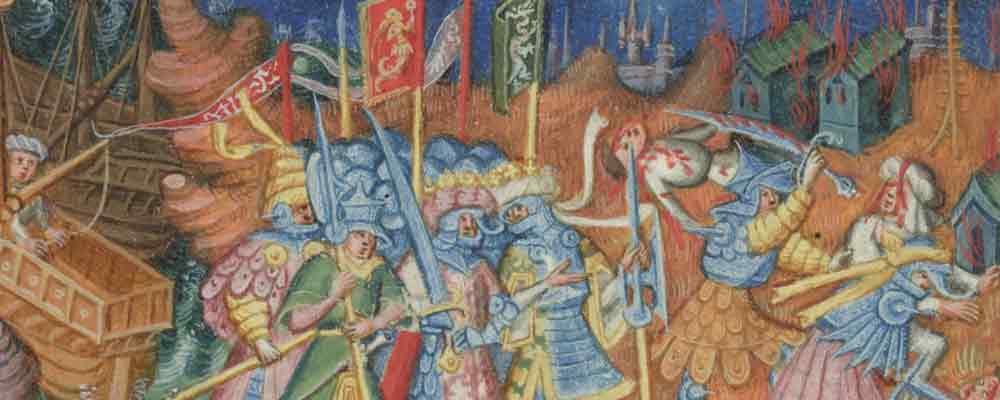
Ubba was among the most notorious Viking warriors and leaders of the 9th century, as described in Norse sagas and historical chronicles. The Anglo-Saxon Chronicle portrays Ubba as one of the leaders of the Great Heathen Army who conducted many raids and conquests in England. He is also associated with his brother, Ivar the Boneless, as they both led Viking forces in many battles against Anglo-Saxon kingdoms.
The Chronicle describes his defeat by the Mercian army at the Battle of Cynwit in 878 AD. However, not much is written about Ubba’s life except for his part in the Viking invasion of England. On the other hand, the Norse sagas offer a more dramatic, embellished account of Ubba’s life, exalting his strength, loyalty, and vengeance.
In comparing the historical records to his portrayal in Norse sagas, several key differences arise. The Norse sagas present Ubba as one of Ragnar Lothbrok’s sons, a legendary Viking king. These sagas claim that Ubba had a great desire to avenge his father’s death, which was considered to be one of the most savage and cruel deaths among the Vikings. These sagas also exaggerate Ubba’s power in battle, making him appear to be an almost superhuman force. However, historians have little to no evidence that Ubba was Ragnar’s son, and some would say it was added later to make Ubba fit into the Ragnar legacy.
Ubba’s portrayal as a ruthless and savage warrior is evident in both his historical record and Norse legend. In the Anglo-Saxon Chronicle, Ubba is described as a fierce leader who inflicted great harm on the Anglo-Saxon peoples of Northumbria, Mercia, and East Anglia. His depredations helped to drive the Anglo-Saxons from their kingdoms, and his acts are what people of this period feared from Viking incursions. His involvement in the execution of Edmund, King of East Anglia, is also attributed to his forces.
Ubba is remembered as one of the most infamous Vikings of the 9th century, mentioned in both sagas and historical chronicles. The Norse sagas that mention Ubba portray a larger-than-life Viking king and warrior, but he seems to have had a real and lasting impact on the Anglo-Saxon resistance to the Viking invasion of England. Whether as a real person or a larger-than-life Norse saga character, Ubba’s name will continue to be remembered in history.
The Lasting Legacy of Ubba
Ubba will always be known as one of the most cruel and ruthless Viking warriors to march through England during the 9th century. History has many accounts and retellings of his conquest, and he has appeared in the Anglo-Saxon Chronicle and historical sagas as well. He left a substantial impact on England and is remembered as a bloodthirsty king who ruled with an iron fist. Although his fall at the Battle of Cynwit was a considerable relief to the Anglo-Saxon resistance in England, his name will remain synonymous with Viking savagery.
Ubba is a character who has been recounted in a wide variety of historical works, non-fiction, and fiction books, TV shows, and films. He has secured his place in history as one of the most brutal Norse warriors to ever live. There will never be a complete confirmation of the actual truth and story of Ubba. He will, however, remain as one of the most ambitious, brutal, and resilient Viking figures to have lived.


