
Life in Iran Before and After the 1979 Revolution
 Reading Time: 22 minutes
 The Iranian Revolution of 1979 marked a defining before-and-after for many Iranians. Far more than just a date on the calendar, Iran’s recent past revolves around questions of who controls history, national identity, and collective memory, and what sort of country Iran should be. In transforming Iran from a monarchy that had forcefully modernized into an Islamic Republic structured around religious governance, the revolution affected every aspect of daily life and political expression.
Debates over freedom, conservatism, morality, and human dignity are often understood as a conversation with the millions of Iranians who demanded systemic change from their state in 1979 and who welcomed the establishment of a republic that promised moral reform, chanting “Neither East nor West, Islamic Republic.”
In this article, we will explore the Iranian before and after through the lenses of daily life alongside those of traditional politics and policymaking. We will compare working, education, dress code, social life, and how daily routines both affect and are affected by structures of control. We will also chronicle Iran’s economic changes due to oil profits, war, sanctions, and government spending, as well as how culture, media, and religion dictated parameters of public expression.
Iran Before 1979
Until 1979, Iran was ruled by Mohammad Reza Shah Pahlavi as an absolute monarch. His government emphasized a strong centralized state and initiated a large-scale modernization program. Following his restoration after the 1953 crisis, the Shah focused on rapid industrialization and economic development. In addition, his regime tried to increase its control over Iranian politics. To justify his policies, he promoted nationalism and painted his modernization program as strengthening Iran and bringing it independence.
The Shah oversaw an ambitious program of economic development and social reform that he called the White Revolution, which began in earnest in the early 1960s. Policies included land reform, guarantees of voting rights, the expansion of universities, and the promotion of greater legal rights for women to work outside the home. While some viewed these policies as positive reforms, others criticized them for being imposed from above without consideration of their impact on Iranian society, particularly rural society, and for failing to develop democratic structures that provided fair political representation to all people.

Urbanization and industrialization continued apace. Freeways, factories, and white-collar jobs created a fairly sizable middle class. Universities enrolled millions of students who were introduced to new ideas in politics and literature, as well as political philosophy and sociology. In the cities, especially Tehran, cinemas, westernized pop music, chic women’s clothing styles, and imported consumer goods were highly visible.
Oil money poured into the treasury after oil prices skyrocketed in the early 1970s, and much of that money went to new industries, the military, and ambitious infrastructure projects. However, the wealth was not evenly distributed. Teachers, nurses, engineers, and other professionals did much better than many peasant families who were forced to leave the countryside to seek work in the cities. In the cities, many struggled with rising prices and crowded living conditions.
More Iranians than ever before went to school and were literate. Education continued to expand. Life politics were very much mixed; although many Iranians enjoyed the superficial effects of modernization and benefited from the rapid development of education and industry, political life grew more restricted.
Opposition political parties had fewer opportunities to meet or organize, and those who criticized the regime or allowed themselves to be perceived as dissenters were likely watched by the secret police. SAVAK, the Shah’s political police, became synonymous with his regime for many Iranians.
It was the monarchy’s stance that the developments required control of Iranian politics to prevent chaos. It was not tolerated to voice criticism against the Shah’s policies. From the outside, what appeared to be a modern, prosperous state under the surface, an unsettled populace was about to boil over.
The Road to Revolution
As Iran modernized rapidly in the 1970s, cracks began to show by decade’s end. Capital from oil-funded large development projects, but inflation, housing pressure, and unequal wealth distribution heightened public frustration. Growing skepticism toward Mohammad Reza Shah Pahlavi emboldened the notion that reform wasn’t enough—revolutionary politics questioned who should rule and on what grounds.
Demonstrations expanded through 1978, with the regime often using violence to aggravate the crisis. Security forces killed hundreds of protestors on “Black Friday,” Sept. 8, 1978, firing into crowds of demonstrators while martial law was enacted in Tehran’s Jaleh Square. Strikes unraveled the nation’s infrastructure. Strikes in Iran began with government workers and spread to oil workers from November 30 to December 2, 1978. Oil stopped flowing, and the country’s economic lifeblood was stunted by the work stoppage. Critically, the nation’s mosques and clergy helped organize and guide dissent.
The religious establishment became the focus of revolution. Clerical networks provided communication, fundraising, and coordination for protest activity. Religious gatherings became a venue for public politicking and mourning victims of state violence.

The coalition against the Shah included disparate groups. Not all who opposed Mohammad Reza Shah agreed on what should take its place. Leftists, secular liberals, religious students, and numerous others could not agree on their vision for Iran. But they came together over their criticism of the Shah. This gave the movement life when other dissident groups were arrested or intimidated by the state.
Ultimately, the monarchy fell apart in just one month. On January 16, 1979, Mohammad Reza Shah left Iran for exile. Ayatollah Ruhollah Khomeini—who was the most recognized public figure rallying for the downfall of the monarchy—returned from exile on February 1, 1979. Iran’s Islamic Republic was founded on a civic philosophy that rejected partnering with foreign superpowers. The revolutionary slogan, “Neither East nor West, Islamic Republic,” suggested that Iran would not become a client state to either side.
Building a New Order After 1979
In the immediate aftermath of the fall of the Shah, revolutionaries quickly sought to establish new regulations and centers of authority to replace the institutions of the old regime. In a 1979 national referendum, Iranians voted in favor of establishing an Islamic Republic. A new constitution was implemented soon after the referendum, which institutionalized aspects of the electoral process with clerical oversight, made ultimate political authority the jurisdiction of the Supreme Leader, and ratified organizations tasked with enforcing the ideological orthodoxy of the revolution.
Institutions supporting and enforcing the revolution continued to develop after the Constitution was ratified. The Islamic Revolutionary Guard Corps (IRGC) was founded in 1979 to oversee the defense of the revolution and functioned as a counterweight to the traditional military. Local revolutionary committees and revolutionary courts were tasked with organizing conformity to the new regulations in neighborhoods, on university campuses, and in workplaces, especially in the immediate aftermath of the revolution. Mass mobilization would continue to be harnessed to the revolutionary regime.
For example, volunteer forces collectively known as the Basij were formed in 1979 by a decree from Ayatollah Khomeini and would later be used extensively during the Iran–Iraq War. From revolutionary committees to the IRGC, these groups contributed to shaping who was watched over, who behaved according to expected norms, and how political authority was enforced on the streets.
Islamization of public life continued to occur across legal regulations, education, and media, and social enforcement of norms. From revolutionary tribunals to new restrictions on attire and behavior in public, everyday life was rewritten with new vocabularies of morality and Iranian revolutionary identity. The revolution became enshrined as an Islamic one; Khomeini himself said the regime formed after the revolution should be referred to as an “Islamic Republic—not a word more, not a word less.”
Enforcement of the mandatory hijab is one of the most visible aspects of social regulation after 1979. Enforced veiling began through informal regulation and policing of public spaces in the early years after the revolution, and was later codified in law, including as part of the Islamic Penal Code. Social enforcement has varied across decades and under different authorities, but the practice of mandatory veiling remained an indication of who was allowed to appear as they wished in public, and it is a part of life that has changed irrevocably after 1979.
Social regulations regarding women and gender present additional complexities. Public social codes were adjusted to place a larger emphasis on Islamic values and family in the public sphere. Legally and socially, women lost certain freedoms after the revolution. However, women also became more visible than ever in higher education and many career fields. What this meant for women was that they could be publicly reprimanded for their attire or behavior that did not adhere to the government’s regulations, while also navigating work and educational settings where they outnumbered men.

This is just one example of how life after 1979 became defined by the tensions between public regulation and what people wanted or tried to achieve in private. These contrasts can be seen today in Iranian workplaces, universities, and on the streets.
By developing new institutions centered on religious authority, enforcing regulations that countered the social norms of the Pahlavi dynasty, and empowering groups to assert a revolutionary identity in the public sphere, the Islamic Republic established new foundations of politics in Iran. Life after 1979 wasn’t just a change of regime, but a reconceptualization of what it meant to live in public.
Culture, Education, and Social Control
Culture soon became another front for the new state after the 1979 Iranian Revolution. Authorities conceived of the media and universities as weapons to defend the revolution rather than forums for objective discussion. Editors of newspapers and radio (and eventually television) were expected to advance Islamic values and revolutionary fidelity. Writers and artists quickly discovered that public expression now had “red lines” they needed to ensure they did not run afoul of.
Censorship did not end creative production in Iran, but it did reshape it. Filmmakers, poets, painters, graphic artists, and musicians found ways to work within the system through metaphor, allegory, and simple framing devices. Director Jafar Panahi summarized the environment bluntly: “Censorship is very strong in Iran, but filmmakers always found a way around it.”  This pattern of official restriction followed by art that evaded those limits became a hallmark of Iranian culture after the revolution.
Similarly, the new regime set about restructuring universities. Institutions of higher education had incubated much of the political activism against the Shah, and officials feared they could become a locus of resistance to the Islamic state. Universities became physical and ideological battlefields between factions in the spring and summer of 1980, and the government sought to assert control through both violence and policymaking. The result was a shutdown of universities, which the government later dubbed the Cultural Revolution.
Lasting until 1983, the closures were initially supposed to bring about an “Islamization” of the university and remove antagonistic elements. Supreme Leader Ayatollah Khomeini called for “a revolution in universities this year as well, and professors must either renew themselves or leave…. We have professors who are tied to the East or the West.”  Leaders acted on these words with dismissals and purge committees. Universities were eventually allowed to reopen, but departments were reorganized, and an unofficial gatekeeping system formed around who was allowed to teach and what could be studied.
Even when universities reopened, educators found that the curriculum had changed. Mandatory “general culture” courses were added to university programs to explicitly teach revolutionary and Islamic values. Scholars of Iran note that these required general knowledge classes became a staple of university education for all majors, even in technical fields. In short, education became a way to transmit moral and political messaging along with job-related skills.
Screening students and professors for ideological fitness became another facet of university life. Background checks and intrusive loyalty tests were especially common for applicants and faculty hires in humanities and social science departments. Gradually, the notion of “purification” in universities took hold. Officials and allied organizations began talking about removing liberal scholars, Marxists, and others not suitably Islamic from campus life. Official pressure made educators and students more cautious. Many professors and students avoided risky topics in class.
Daily life sent similar signals through official media. Iran’s state broadcasters prioritized programming about the revolution and fighting Iraq in wartime, Islamic instruction, and rebuilding the nation. Films, television programs, and songs deemed too risky, immoral, or licentious faced restrictions. Private conversations might have been freer, but publicly accessible media remained tightly managed. The cumulative effect was a public and private disconnect in cultural life.
From censorship to university purges to media guidelines, Iranians grew accustomed to negotiating these restrictions. Some citizens learned to say what they wanted through humor, allegorical art, or by reading between the lines. Others stopped participating in public culture or left Iran altogether. But within these constraints, some innovation was possible. Indeed, because of limits on free expression, art and higher education in Iran became something that students and creators had to work extra hard to pursue.
War and Its Home-Front Effects
When Iran was invaded by Iraq in September 1980, the Islamic Republic was less than one year old. The effects of the Iran–Iraq War (1980–1988) quickly extended from battlefield to home front as families, workplaces, and schools were mobilized into a prolonged emergency. As Iranian officials later dubbed it, the “Sacred Defense” turned ordinary life into survival.
Across the country, Iranians faced rationing as part of everyday life. Many recall the 1980s as the “coupon era,” named for the lines at shops that Iranians waited in for eggs or butter. Empty shelves reordered routines and diets, since Iranians learned to track and discover goods, share rumors and news, and make meals last by stretching them out.
War also made itself felt through social mobilization. The government erected voluntary organizations that deepened outreach into volunteering, neighborhood associations, and wartime austerity. Revolutionary institutions reached into society with greater intensity. Basij, an organization established after the revolution that would play a central role throughout the war, solidified the connection between government authority and local neighborhoods. 
War soon arrived in the streets. Missile strikes and aerial raids hung over homes, particularly in cities. Basements and interior corridors became common refuges when alarms pierced cities with a threat. Daily life became infused with the war, creating chronic anxiety: interrupted sleep, schooling, or employment; relatives or neighbors drafted.

Citizens learned to find resolution through the culture of martyrdom. Mass funerals, posters, and commemorations offered a way to grieve while celebrating those killed as heroes for God, country, or family. Scholars have described how martyrdom became foundational to the memory of the “Sacred Defense” after the war.
Remembrance extended to living veterans. Many Iranians returned home injured or wounded, both physically and emotionally. While the state recognized the fight through commemorations for sacrifice, families experienced the costs firsthand: caring for disabled children, economic pressures, and memories that could not be quietly stored away. Over time, the war influenced perspectives on security and the military for an entire generation that had reached adulthood because of it.
In accepting a United Nations brokered ceasefire in 1988, Grand Ayatollah Ruhollah Khomeini described it as “drinking from a poisoned chalice.” Reflecting on the ceasefire agreement, Khomeini spoke to the psychological toll of agreeing to stop fighting when Iran had not achieved its wartime objectives. Many years later, Iranian officials reframed the war as building Iran into what it became. Supreme Leader Ayatollah Ali Khamenei said that Iran’s “Sacred Defense brought blessings too” by adding a militant and hardened aspect to the now state run institutions,
Economy and Everyday Survival
Since 1979, Iran’s economy has expanded public ownership, and institutions affiliated with the state—including religious foundations and security forces—have emerged as powerful economic actors. Experts have referred to this phenomenon as Iran’s “military-bonyad complex,” which controls vast swaths of the economy, and grown resilient in the face of decade-long crises.
Public sector institutions were better able to insulate themselves from economic shocks and direct resources to where they were needed. But the gates that opened for some insulated institutions did not open as widely for others. For businesses without access to know-how and connections, Iran’s economy became shaped less by market forces and more by who can navigate regulations, who has access to rationed goods, and who knows someone at the right bureau.
Sanctions weren’t just part of dinner table discussions about foreign policy; they directly affected Iranians’ day-to-day lives. Sanctions on Iran’s financial sector and crude oil exports reduced the government’s access to foreign currency, hampered imports, and increased the costs of medicine and other goods. In a PBS Frontline documentary about the impacts of sanctions, Iranians described how inflation and resource shortages affected their livelihoods “right in the wallet”, even if they felt disconnected from politics.
Some of the harsher impacts of sanctions and economic crises have been felt in Iranians’ monthly paychecks. In recent years, as Reuters covered the rapid devaluation of the Iranian rial, high inflation compounded the problem: While exchange rates plummeted, Iranians’ salaries lost purchasing power.
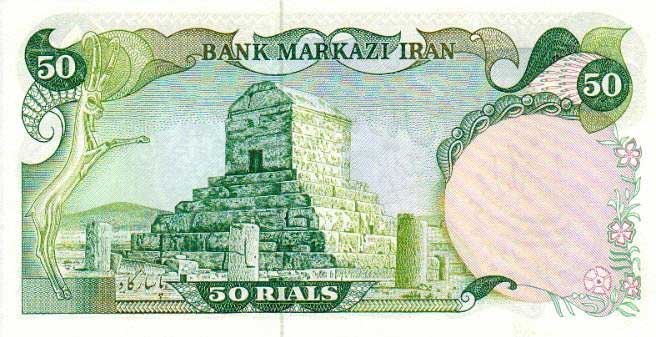
Money that won’t last from month to month leads to less planning and more improvisation. In conversations with Iranians, we heard that they coped by stocking up on groceries, reducing portion sizes, and squeezing deferrals from their landlords or school systems. Many also rely on Iran’s large informal sector. Casual, undeclared work, second jobs, in-home labor, cash-economy services, and bartering through personal networks can provide levity for families as prices rise, but these jobs don’t come with the safety nets of formal contracts or employment.
With rising costs, housing has been one of the largest factors driving insecurity. Iranian and international analysts note that government housing subsidies and market forces have long plagued Iranians’ access to housing. Many Iranian renters live in chronic insecurity, while home ownership rates have declined among younger Iranians.
Rent and mortgage payments can dictate when Iranians feel ready to get married, how many children they want, and whether they leave home to study or work in urban centers.
Despite decades of challenges, Iran’s economic vulnerabilities haven’t affected all dimensions of well-being equally. A study with Iran’s domestic statistics organization found that inequality has persisted despite improvements in absolute poverty levels, and that poorer households experienced gains in health and access to basic services.
Private Life vs. Public Rules
After 1979, Iranians negotiated a subtle but important shift: learning to live with two sets of expectations about what they could do in public versus in private. Official public space is full of signals: how to dress, where men and women can go, and how they should act. These codes are reinforced by official permission and punishment. Private homes become where people unwind, listen to music, and speak their minds. This divide lives on within people because it fosters awareness of context, audience, consequences, and most importantly, risk.
Public life still revolves around family. But dating and marriage developed around restrictions on public mingling. People date through introductions, trusted networks, and supervised meetings. Conversations happen through set groups, private homes, and sometimes coded language. Married people have remained the majority, though economic instability—including limited housing and jobs—has led many young adults to postpone marriage.
Iranians also navigate social boundaries between what the law allows and what they’re comfortable with. Family negotiations set limits based on the neighborhood, social class, extended family, and other factors. Some families are fine with mixed company in their home; others won’t allow it. Families negotiate boundaries of what they’re willing to accept—and visitors learn to read their environment. Subtle decisions about clothing, speech, and posture carry potential signals.

This divide matters most for women because the code of conduct for public appearance is most vigorously enforced for them. Some choose to comply and avoid confrontation; others test limits through minor style shifts in the “gray zone.” But behind closed doors, many women relax their appearance, host members of the opposite sex, and act as they please in private. Living between the two can be exhausting. It turns daily routines into strategic decisions.
The internet has expanded this private sphere, but also introduced new limits. Social media allows Iranians to connect with each other and be seen. But not without risk—crackdowns on internet freedoms include both filtering and surveillance. People circumvent blocked sites with proxies and virtual private networks, while learning to tailor accounts, audiences, and language. It can feel like a public/private dichotomy accelerated—but it’s harder to contain
Everyday resistance can take the form of living your life as you want, despite official expectations. That can be a mixed socializing where you bend the rules, play banned music, or push a hair accessory a little too far. Some use art to resist; others practice it in their private lives. Some of it is refusing to be presentable for public life. Filmmakers Behtash Sanaeeha and Maryam Moghaddam recently faced charges for screening a film that depicted couples dancing and characters not wearing hijab.
Two systems of expectation have become a tacit rhythm of life: being careful in public and freer at home; more formal in public settings, casual with friends. It doesn’t mean your public self isn’t real, or that you can do whatever you want in private. It means that many Iranians negotiate dignity, safety, and expression every day. That negotiation—relearned by Iranians every time they leave their home—is one of the ways life in Iran was changed forever after 1979.
Continuities and Regional Differences
To many visitors and outside observers, Tehran can seem like its own country, set apart from the smaller cities and villages of Iran before and after 1979. Home to government ministries, universities, and major hospitals, the capital attracts many firms seeking proximity to those services. Tehran also sets trends in style, slang, and entertainment consumption. But while Tehran is certainly Iran, it is not the whole of Iran. Daily life can look different—and feel more communal—in cities elsewhere.
Provincial towns and cities in Iran may blend newer services with older expectations. Citizens may have access to the internet, satellite TV dishes, and university education. They may still have stronger social pressure to follow conservative rules of public behavior. Reputation has weight when your neighbors know your family history. That can breed a culture of safety and support within cities. It also means limits on certain kinds of public behavior. What is considered “normal” behavior in North Tehran could get you into trouble if your small town’s loudest censor is the street itself.
Life outside cities can still look different. Work routines, geography, and local kinship all play a role. Families may rely more on collective work than on outside salaries. They’re tied to seasonal patterns, or local networks of neighbors and friends. Public expectations for conservative conduct may stay strong in rural areas. But private life may also operate with more flexibility. Many villagers migrate to cities for work and job opportunities not found in their hometown. Others leave to access specialized medical care not available locally. This leaves rural Iranian populations changing over time, with families helping each other across distances.
Through cities and towns of different sizes, one commonality has been family networks. Families aid each other with childcare, introducing job opportunities, lending money, and finding places to live. Family in Iran has provided something like a safety net as cities have grown more individualized. In many regions of Iran, major life choices—getting married, moving, starting a business—are still made with family members’ opinions in mind. That consistency explains how “before and after” questions can have different meanings, depending on who’s asking and where they live.
A similar thread continues in how religious faith is practiced. Religious expression may be public and communal in some regions. That means daily rituals being practiced together, or religious parades on prominent holidays. In other regions, faith is more private. Religious traditions make an appearance in daily life without public slogans. The Islamic Republic offers a nationally televised and enforced version of religious life. But Iranians experience their religion differently, depending on where they live, their class, and age.
Nationalism is yet another shared thread. No matter their politics, Iranians may still have strong feelings about Iran as a nation and culture. That includes love for Iran’s language, shared history, and national identity. In times of national crisis, patriotism can translate into solidarity with Iran’s citizens. Not just expressions of support for the government itself. It’s a reason tourists and outsiders often misunderstand Iran’s population as a single mood, when in reality it’s complex and diverse.
Photographer and artist Maryam Firuzi spent time with families in rural Iran. She told us that “When I was staying with them, I felt as if I was part of the family, like I had many grandmothers.” Iranians outside the country often describe their identity as tied to their fellow Iranians. Writer Marjane Satrapi sums up the belief that being Iranian is rooted in its people and not government: “The world is not divided between East and West… The difference between you and your government is much bigger than the difference between you and me.”

Sharia Law
Revolutionaries rebuilt Iran’s legal order to ensure that state law would conform to Islamic criteria. Article 4 of the constitution states that all laws “must be based on Islamic criteria.” Islamic criteria guide criminal law, adjudication in courts, restrictions on media and education, and public norms of dress and speech.
In application, Iran doesn’t use a single Sharia code to legislate policy. Parliament makes laws, but the Guardian Council vets all legislation for compliance with Islamic and constitutional law. Rules about attire, criminal evidence, and moral “offensives” enter Iranian law through that review process. The principles of Sharia guide family law—marriage contracts, divorce, custody, inheritance—which often govern gender relations and familial roles in Iranian society. Family laws also govern access to housing and employment, which makes this body of law deeply connected to socioeconomic factors.
What we call Sharia at the policy level influences criminal law, economics, and public norms. Punishments for moral crimes, adultery, or politically sensitive speech are areas where Islamic jurisprudence influences formal justice. Iran’s criminal code uses Sharia categories like hudud, qisas, diyat, and ta’zirat to determine punishment for specific offenses. Public norms are another policy space where citizens regularly encounter laws based on Islamic criteria. For example, hijab rules are enforced by “morality police” whose interpretation of mandatory dress has changed over time. Punishments for moral crimes enter the public sphere through articles or anecdotes that raise awareness of violations and consequences.
Expressions of Iranian culture are restricted via the Islamic Penal Code’s “offenses” related to public morality. Books can be banned, films restricted, and art interpreted through regulation. Practically speaking, this creates a demand for metaphor, symbolism, and creative methods of smuggling ideas into public consciousness without outright banning.
Criminal justice is another area in which Sharia-linked rules can be invoked to carry out harsh punishments, including the death penalty for certain crimes, according to Iran’s Islamic Penal Code. Rights organizations have reported widespread executions in Iran over the past few years for crimes such as murder and drug-related offenses. They also point out that punishments such as flogging and amputation are still written into Iran’s penal code, despite being inconsistently applied. That has led to continued debate within and outside Iran about deterrence versus due process, and whether harsh punishments are being utilized as much for social control as for public safety.
Some regions might enforce laws more strictly than others. Sharia as practiced in urban centers will likely differ from that in regions with more conservative populations. Public attitudes toward religion, the state, and enforced morals will affect how policy is enacted and resisted.
Since 1979, Islamic law has served as the framework for Iranian courts and legislative policy. As a state-sanctioned religious authority, Sharia impacts public life and private expressions of faith in Iran.
Conclusion
The aspect of life that changed most after 1979 was the relationship between the public realm of politics, law, and official culture to daily life. Everyone suddenly had to live their lives according to a particular religious framework. There were rules about what you could say and wear and do. Institutions like the police and morality patrols enforced the rules. The thing about life that changed least was that most personal stuff: family ties that redistribute wealth and provide social welfare; Iranian national feeling; religious observances that reach back centuries. When Iranians today fight about politics, they’re often still able to agree on those things that bind them to their country: its language, geography, and history.
The “before vs. after” binary also persists because it’s how many Iranians experience life in public versus private. It remains how the country projects itself in the world. 1979 lives on in Iran’s foreign policy, sanctions, immigration, and trends in globalization—but also at home, where Iranians continue to negotiate everyday life as they think about the law, their beliefs, and their rights.
FEATURED IMAGE CREDIT: Mostafameraji, CC BY-SA 4.0, via Wikimedia Commons