
Hammurabi’s Code and the Origins of Legal Systems
 Reading Time: 18 minutes
 Hammurabi’s Code- inscribed on a stone monument that helped create a certain idea of law: not as a private deal between parties, but as a public measure supported by an authority. Intended for others’ reading and long endurance, it became a model for ruling through stated norms. It remains fascinating as a document both familiar and strange, for while it covers contracts, wages, theft, and family disputes, it is set within an order of punishments and social assumptions that shock the contemporary reader.
Hammurabi was a king of Babylon in ancient Mesopotamia, a builder of an empire who posterity remembers for his extended reach and self-presentation as a bringer of justice. His collection of laws is well-known not only as an impressive compilation, but also for embodying a certain combination: law and order associated with a monarchy, and order expressed by stating expectations and associated consequences in a society of hierarchical status groups.
Hammurabi’s Code can show early legal thinking: state authority, social order, and the written rule. It is a powerful insight into how early states wanted to order the daily life of their citizens.
Who Was Hammurabi
Hammurabi was the sixth king of the Babylonian dynasty. He reigned in the early second millennium BCE, and is often dated to circa 1792–1750 BCE (the “middle chronology”). He began as the ruler of a relatively small city-state in southern Mesopotamia, an ancient crossroads of competing kingdoms, canal-fed farmland, and wealthy trading routes. Babylon was not yet the obvious center of power. It lay between—and upstaged—rivals including Larsa, Eshnunna, Mari, and Assyria, where friends and enemies might change quickly, and survival required a mix of diplomacy and force.
Hammurabi rose to prominence through a mixture of timing, opportunity, and strategy. He used war when it offered a decisive advantage, but he also forged treaties and engaged in political maneuvering to isolate opponents. Over a series of decades, Babylon grew from a local kingdom to a wider state that could command major cities, farmland, and river corridors. Conquest was important, but control of canals and irrigation systems was equally important because agriculture was the engine of wealth in Mesopotamia.

In our picture, Chedorlaomer sits in the center, heavy, stolid, and massive, a type of the fighter of the older race. Hammurabi, young, eager, shrewd, and Semitic in features, argues and pleads with an arm outstretched, seeking already to sway the others to follow his lead, as later he forced them all to do
Consolidation followed expansion. A larger and more complex kingdom could not survive only on conquest. It also required predictable taxation, dispute settlement, and loyal officials—not just victories. Mesopotamian states were built on recordkeeping and enforcement in towns and countryside, where shifting land boundaries, debts, and labor obligations could provoke conflict. Stability required making the rules feel organized, not arbitrary.
That is why law mattered as a tool of legitimacy and control. Kings in Mesopotamia often presented themselves as guardians of justice and communal morality, appointed by the gods, and Hammurabi used that tradition to bolster his authority over diverse populations. His law collection famously frames the king as one who institutes right order and protects society from chaos (a theme emphasized in both the prologue and epilogue, as scholars have noted). In short, Hammurabi’s power was not only that he conquered, but that he claimed to govern by written standards.
What Hammurabi’s Code Is (and Isn’t)
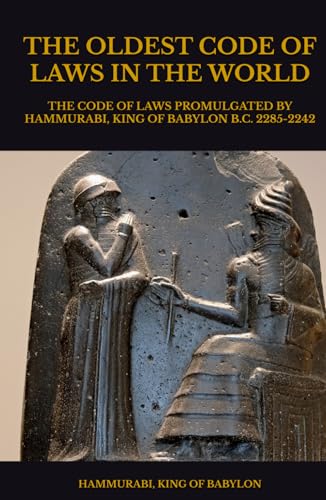
First, it’s important to know what Hammurabi’s Code is. The Code is most familiar as a stele: a long, rectangular stone monument. This stele a series of legal statements in the middle, sandwiched between a prologue and epilogue, which exalt the king’s justice. The stele isn’t just a legal text. It’s royal messaging in stone. By publicly carving laws, Hammurabi presented himself as the source of order and protector of the weak. He bound law to kingship and kingship to divine approval, as many scholars of Mesopotamian kingship have observed.
Second, keep in mind that a “law code” is not the same thing as a full legal system. A code is a collection of rulings and standards. But a court needs judges, witnesses, procedures, records, and enforcement mechanisms. Babylon had those institutions: scribes who wrote contracts, officials who handled disputes, and local courts. But the stele is not a handbook. It’s not a user’s manual that tells us every step of a trial. It tells us what the expected outcomes were in certain cases. That’s a useful subset of legal practice, but it’s not every rule of courtroom procedure.
The code’s style makes that clear. If we read the list, many entries follow the same if–then pattern: if a person does X, then the consequence is Y. That reads like a set of model judgments, rather than a comprehensive statute book. It’s also highly selective. The laws focus on property, labor, debt, and family issues that mattered for stability. They leave many areas untouched. That selectivity suggests the point was not to cover every human problem, but to highlight order.
This is why historians have long debated what the code was “for.” Was it propaganda, a public display of justice meant to impress subjects and rivals? Was it a reference tool or a training text, a way to standardize expectations across a kingdom and teach judges how cases should be resolved? The most balanced answer is probably that it could be several things at once. Political theater and practical guidance were both law. In early states, it was governance and performance. Hammurabi’s stele was designed for both.



The World Before the Code
Hammurabi did not make the law from scratch. Mesopotamia already had traditions of law based on custom, community practice, and local courts. Disputes over land, marriage, debt, injury, and all manner of other matters were heard by town elders, officials, and judges. There were systems of precedent and accepted norms, and as far back as scholars can see, earlier collections of written law. In particular, what scholars often refer to as the Code of Ur-Nammu and other Sumerian and Akkadian law collections make clear that law was being written down in selected, organized ways before Hammurabi.
What’s distinctive about Mesopotamian law is how connected it was to city life. City-states were dense worlds of canals, fields, workshops, and markets. That generated friction: boundary disputes, unpaid loans, broken contracts, stolen property, disagreements among neighbors, and much more. When you depend on irrigation and trade for your prosperity, these things are not rare issues that seldom arise. They are daily risks you must face because there are people all around you trying to get by and make a living. Procedures for settling grievances were a way of keeping production and exchange from devolving into endless cycles of retaliation.
Writing mattered because writing created consistency and authority. A spoken custom can be contested. A written ruling can be cited, copied, and used as a standard. In the complex city-states with diverse populations, written norms were a way to make the decisions of rulers and judges appear predictable rather than arbitrary. Maybe not everyone could read, but officials could, and officials enforced outcomes. Writing made law a visible part of state power.
This also relates to the more general process of bureaucratic recordkeeping. Mesopotamia was a world of tablets: contracts, receipts, land transfers, marriage agreements, and lists of labor or grain given and received. Scribes created paper trails in clay that enabled administration to work across both time and space. When agreements can be recorded, disputes can be judged against evidence, not just memory.
Hammurabi’s Code is part of a society already formed by documents. The stele was a public statement, but the daily work of law was done on tablets and before witnesses, in the growing habits of bureaucracy.
Key Legal Principles in the Code
The best-known principle in the Code of Hammurabi may be proportional justice, the “eye for an eye” idea. In context, this phrase is better understood as a limit on retaliation. It’s less about mercy and more about control. These laws were intended to end feuding and replace individual vengeance with judgments enforced by the state. Many of the laws have the flavor of “tit for tat”: calibrated and therefore predictable responses to certain kinds of harm.

A second important set of principles concerns social status. Hammurabi’s code begins with an assumption of rank, and penalties often differ depending on whether the participants in a case are free, dependent, or enslaved. This is one of the most direct ways the code tells us about the society in which it operated. Justice wasn’t supposed to be blind. Harms against a high-status person were treated differently from the same harms against a person of lower rank. Payments were often substituted for physical punishment when statuses were unequal. In other words, the code was designed to protect a social order, not to ensure social equality.
Intent, evidence, and responsibility are also emerging legal concerns. Some laws distinguish intentional actions from accidents, while others deem negligence culpable. When a builder’s construction collapses and causes a death, someone is held responsible, indicating an early interest in the concept of professional liability. Contracts and wages are mentioned throughout the code, suggesting an expectation of compliance and a legal approach to violations.
Finally, the code assumes that proof is relevant. Oaths, witnesses, and written agreements often feature in the circumstances surrounding the rulings. They are part of a wider Mesopotamian world of tablets and archives. The system was undeniably brutal. But it was also not arbitrary. The code sought to set standards for how different injuries, thefts, frauds, and forms of negligence were to be punished, so that judges’ decisions could appear consistent. That consistency—rather than any particular punishment—is the real legal principle at work in the code.
What Hammurabi’s Code Regulated
One prominent feature of Hammurabi’s Code is the number of laws governing property and commercial activity. Theft and fraud were sufficiently common, or at least sufficiently dangerous, that many of the laws deal with the recovery of stolen or lost goods, with disputed claims of ownership, and with reparation for damages. Contracts of all sorts and commercial agreements appear frequently, along with rules that seem to govern payments and wages. This might suggest an economic world in which individuals hired out their labor, or rented or leased property, or borrowed goods for their own use, all in a context where broken deals could expect the sanction of the state.
Rules about agriculture and labor are detailed, as Mesopotamia was an irrigation society. Canals and watercourses needed oversight, as did fields that could be inundated by negligence or misconduct. All of this shows up in the laws: failures of irrigation, crop damage, duties and responsibilities related to the rental of agricultural land or animal husbandry, disputes over herding practices, and loss of livestock. Here again, the law reflects the rhythms of rural labor as much as the practices of urban trade.
Yet another large section of the laws is family law. Marriage arrangements, divorce conditions, inheritance, and adoption all feature in the Code. Family might seem like a private matter, but in fact, families were important economic units, sources of labor and also of land and wealth that needed to be managed and transmitted to the future. Family breakdowns could destabilize wealth or status, and by laying down rules about who could inherit and under what conditions, the law sought to ensure that households remained as legible and orderly as possible.
Violence and injury are also regulated, but in a way that suggests attempts to contain disputes rather than merely to punish crime. Assault, physical damage, and reparations appear frequently in the code, and matters of social status often come into play. Professional responsibility, including cases that we might call medical malpractice, also features, as the law seems to show an interest in the skilled labor of various professions and the risks associated with them.
Behind all of this looms public order: private feuding resulting from injury or death, and the escalation of injury to wider circles of kin, would result in the state losing control. By making the penalties for violent injury expected, Hammurabi’s Code sought to suppress the desire for personal vengeance.


Courts and Enforcement in Babylon
Hammurabi’s Code comes into clearer focus if you picture a working courtroom rather than just a stone stele. Babylonian justice required judges and officials to listen to arguments, assess competing claims, and make decisions. Witnesses were important because many cases were based on testimony, and oaths could serve as evidence when documentary proof was hard to obtain. Documents were important, too. Mesopotamia was a world full of records, where clay contracts, receipts, agreements, and other record-keeping tools made it possible to provide documentary proof for any claim. Surviving legal tablets show that the practice was widespread.
The fairness of enforcement rested on the possibility of checking and verifying a decision. If there were a loan, it would likely have been recorded. If there was a sale, a witness or tablet could verify it. This did not produce an idyllic world of fairness, but a world where everyone expected procedures to be followed. The if–then format of the code aligns with this cultural environment: it provides model outcomes that a court could reference.
Punishments in Babylon were severe but varied. Most cases were probably settled through fines, restitution, or compensation, especially in property or contract disputes. Corporal punishment is most common in cases of serious injury, major theft, or public order offenses. The code also uses graded and status-based penalties, making punishment horrific in one case and pecuniary in another. This hybrid approach suggests an intent to deter certain crimes harshly while keeping routine problems manageable through fines.
The local community would have often enforced rulings, as the Babylonian state was a loose association of communities. Neighbors knew who owed whom; families knew their fields’ borders, and officials needed local knowledge to help interpret and enforce a decision. A court ruling could gain force through state authority, but only if it could be enforced through the community. The people had to show up in court or at the site of a judgment, pay fines, return property, or generally agree to a settlement. Babylonian law then operated through both the state and society.

Why the Code Was “Public”
Hammurabi’s Code was public because public law claims legitimacy. By placing judgments on a monumental stele, Hammurabi framed justice as a royal duty rather than a private bargain between powerful families. In Mesopotamian kingship, rulers often presented themselves as chosen by the gods to keep order, and the code fits that pattern. Public inscription turned the king’s authority into something visible and lasting, tying law to divine approval and making governance feel structured rather than arbitrary.
The prologue and epilogue are key to understanding this. They are not “extra” text; they are political messaging wrapped around the laws. They present the king as a just ruler who establishes right order and condemns the unjust. Scholars often emphasize that these sections read like a manifesto: Hammurabi is not merely listing rules; he is explaining why he deserves to rule. The code becomes a monument to kingship as much as a monument to law.
Public display also served deterrence. Even if most people could not read the inscription themselves, officials and scribes could, and the stele’s presence communicated that punishments and standards existed. The idea of written, known consequences can restrain behavior because it makes enforcement feel predictable. Deterrence works best when people believe authority is organized and watchful, and the stele was designed to project exactly that image.
Finally, the code framed the moral order. It presents the king as protector of the vulnerable, a common royal theme meant to win loyalty among ordinary subjects. The message is that the powerful will not be allowed to do anything they want, because the king stands above them as judge. Whether reality always matched the claim or not, the public code mattered because it set a standard. It turned justice into a public promise—one meant to be remembered, invoked, and feared.
Influence on Later Legal Traditions
Hammurabi’s Code sits inside a long Mesopotamian legal continuum. Later Near Eastern societies continued to use written contracts, witness procedures, oaths, and court judgments recorded on tablets, and they produced other collections of laws that resemble Hammurabi’s if–then style. This continuity suggests that the most important “influence” is structural: the idea that a state can standardize justice through written norms, and that law can be expressed as model cases for judges to apply.
People often compare Hammurabi’s Code to biblical law because both include rules about injury, property, and social obligation. There are real similarities in topics and in a shared concern for order, but similarity is not the same as direct copying. Biblical law is embedded in a covenantal religious framework and addresses community identity in ways Hammurabi’s royal stele does not. Hammurabi’s text is explicitly a king’s project, framed as royal justice; biblical collections are framed as divine command to a people.
Other ancient codes also highlight both overlap and difference. Many societies regulated theft, debt, marriage, and violence because those are universal points of conflict. What differs is how penalties are calibrated, who counts as fully protected, and what institutions enforce rulings. Hammurabi’s code is strongly status-sensitive, and its harshest penalties emphasize deterrence and hierarchy. Comparing codes helps readers see what is common across ancient law and what is culturally specific.
This is why “influence” needs careful definition. Sometimes influence is direct borrowing: one tradition copies clauses or legal formulas from another. But often, influence is shared through legal culture: similar problems produce similar solutions in societies that trade, fight, and exchange ideas. The ancient Near East was interconnected, so legal concepts could spread through scribes, diplomacy, and commerce even without a single clear line of transmission.
Hammurabi’s most durable legacy may be symbolic. Later ages remembered the stele as proof that early states could govern through written rules, even when those rules were unequal by modern standards. The code became an anchor point in the story of law’s origins: a reminder that legal systems begin not only with morality, but with administration, authority, and the desire to make order visible.
Hammurabi’s Code in the History of Legal Systems
Hammurabi’s Code is significant for the history of law because it exemplifies the effort of an early state to provide some regularity for justice. Writing makes expectations more fixed: someone can refer to a norm, a magistrate can quote an outcome, and administrators can insist they were even-handed. While not all subjects would read the stele, its written format still influences governance, because scribes and adjudicators would. In that regard, the Code is an important stage in the legal process: from purely local custom to standards supported by state enforcement.

The code also shows state-sanctioned enforcement as an ideal. It takes for granted that a ruling is not just advice, but a judgment with teeth. Fines, restitution, and corporal penalties are presented as means of maintaining order, deterring misbehavior, and preventing disputes from escalating into feuds. The king’s public claim is that the law takes precedence over private retribution and that the state has the authority to determine an appropriate level of response. That is an early form of what later legal systems would call a monopoly on legitimate punishment.
Yet the limitations are evident. The code is founded on class hierarchy, with punishments calibrated by status, and it intentionally makes people unequal before the law. Some penalties are harsh, reflecting a deterrence approach over rehabilitation. And the text is far from complete coverage: it does not describe all crimes, all procedures, or all types of disputes. It provides a curated selection of cases that foreground what the regime was most concerned about—property, labor obligations, family order, and public stability.
Despite these limitations, the code still has value because it preserves early legal thinking. It shows how the Babylonians conceptualized negligence, responsibility, evidence, and compensation. It also illuminates how governance worked: law as a public promise, a political statement, and a practical tool for managing complex societies. Hammurabi’s Code endures not because it is the “first” example of law but because it is one of the most accessible surviving windows into how early states sought to transform power into order via written judgment.
Myth vs Reality of Hammurabi’s Code
The most significant myth is that Hammurabi’s Code was the first law code in history. It is famous, but it was not the first. Mesopotamia had earlier collections of laws and legal traditions long before Hammurabi’s reign, and most scholars note this when comparing texts such as the Code of Ur-Nammu and other early law compilations. The distinctiveness of Hammurabi lies in its survival and scope: the stele preserved a long set of rulings in a unique and public form, making the object itself an icon of ancient law.
A second myth is that everybody in Babylon was judged day to day by the lines chiseled on that stele, like a modern statute book. Daily justice would have been a matter of courts and local custom, yes, but also negotiation and clay tablets recording written contracts. Judges and officials likely used the stele’s rulings as a standard or model, but specific disputes would have brought up details that the public-facing text simply did not specify. Law in practice is always more than a list: it is procedure, evidence, official discretion, enforcement, and the often messy compromises that keep a society from unraveling.
That is why the stele’s dual function is important. It is a matter of law, but it is also a public theater of the law. The prologue and epilogue set up Hammurabi as a virtuous king appointed by the gods to bring order, and it presents the king’s justice as a gift to the land. The political messaging there is clear: it is a legitimation strategy that uses the stele to portray royal power as moral power.
The reality is more interesting than the myth, then. Hammurabi did not invent law, and the stele was not a complete rulebook for every case in the land. It was a monumental statement that combined legal standards with royal propaganda, designed to make order visible. Its historical importance is partly in what it shows: how an early state wanted to be seen, and how written judgment became one of the tools used to manage complex societies.
Conclusion
Hammurabi’s Code shows how the earliest states put writing at the center of governance by turning expectations into public standards. This stele is not a modern courtroom user’s manual, but it is a monument to a ruler’s claim to make order, impose punishment, and resolve disputes by reference to common rules. In a world of canals and contracts, road builders and urban sprawl, that kind of calculability was a kind of stability. Writing the law down made authority visible, repeatable, and less easily ignored.
That is Hammurabi’s legacy, the sense of law as authority, order, and a source of public legitimacy. Hammurabi’s code presents justice as a royal responsibility and shows the king as society’s ultimate balancer. For that reason, the history of legal systems is the history of justice and power. Law can be a way to shield the weak, contain violence, and give citizens rights. It can also be a matter of hierarchy and the particular interests of the state that enforces it. That tension is why Hammurabi’s stone monument still stands at the very beginning of writing and governance.
Featured Image Attribution: Haider Adnan, CC BY-SA 2.0, via Wikimedia Commons