Inside the 1381 Peasants’ Revolt: Causes, Chaos, and Consequences That Reshaped Medieval England
 Reading Time: 27 minutes
 The Peasants’ Revolt of June 1381 was one of the most threatening popular revolts of the medieval period. People traveled from the counties of Kent, Essex, and many more towards the city of London. They broke into prisons, destroyed court rolls, burned down a magnate’s palace, and called for the betterment of their society. For a number of days, England was unable to control its own capital city.
Richard II was king during this rebellion, and he was only fourteen years old. Wat Tyler led the revolt from Kent and became its mysterious figurehead. Alongside him was a priest named John Ball, who spoke out against the prevailing ideas about society.
An increase in taxes was one of the prevailing catalysts that sparked the Peasants’ Revolt in 1381. People had many reasons to rise against their superiors. Over the past few decades, people had been suffering from changes in population, trying to control wage rates, living under servitude, the effects of war, and many more things. Including feuds between landlords and tenants.
It wasn’t just peasants who took part in this revolt. Skilled workers, craftsmen, wealthy men, village officials, and people who knew how to fight were involved. So the name peasants’ revolt can hide some facts about this event. Many sources on those arrested after the revolt continue to show how broad it was.
England Transformed by the Black Death
These rebellious sentiments can be traced back over thirty years.
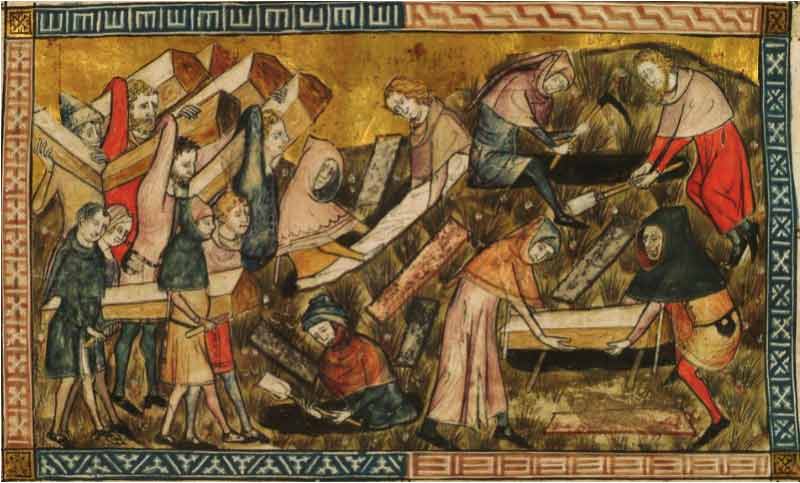
In 1348, the Black Plague struck England. It is thought that half or more of England’s population perished within the next two years. No one knows for sure, since we don’t have exact numbers, but whatever number died was enough to change how peasants viewed their superiors.
They still had to plow fields. Harvest crops. They took care of animals, built houses, and provided service to their lords and estates. After the plague, there were considerably fewer people to do the work.
This allowed the peasants who survived to try for things they may not have been able to in pre-plague times. They wanted higher wages; some traveled to find better jobs or left their current lease. The landlords who once had plenty of peasants to fill their roles were now fighting over workers.
Lords and rulers of England did what they could to try to limit these new ideals. With the Ordinance of Labourers in 1349 and the Statute of Laborers in 1351, they tried to limit how much money peasants could earn and prevent them from using their lack of workers against the lords. While there are many arguments about whether these laws were enforced, they set a precedent for the government trying to stop peasants from benefiting from the lack of workers after the Black Plague.
Which would become one of many issues the peasants would not like over the next few decades. The peasants knew that their labor was worth more than what their superiors were allowing them to make. By the time 1381 came, these issues had been brewing for about a generation.
Another issue that would lead to this was the prevailing institution of serfdom. Many of the peasants who worked the fields were not free men. They were bound to work for their lords. Some were required to work certain days of the week on their lords ‘ lands. Others paid money to their lords or were not allowed to leave their village. Some even paid their lords to marry or when their family members passed away. Every Manor had different rules for their serfs.
They knew they lived in a time when they could benefit from a society and economy with less available labor. However, many were forced to stay and follow their lord’s will.
War, Government, and the Burden of Taxation
As these social issues arose, England also faced political and military difficulties.
France had been at war with England since 1337. The wins at Crécy in 1346 and Poitiers in 1356 created an aura of English military prowess, but things had deteriorated towards the end of Edward III’s reign. England was losing land to France, and the French, along with their allies, were raiding English ships and coastal villages.
This was the situation Richard II found himself in after Edward’s death in June 1377. Richard II was only ten years old; much of the governing fell to councils, leading nobles, and royal ministers. Parliament wanted a council formed because a child was on the throne and couldn’t rule the country himself.
Taxation would become a common means of funding the war effort.
Poll taxes were levied in 1377, 1379, and 1380. Each one varied in its structure. The poll tax passed by Parliament in December 1380 caused the most controversy. It was to be paid by all laymen over the age of 15, excluding beggars. It was meant to collect an average of 12 pence, or 3 groats, per person.
This wasn’t as simple as each individual paying an additional shilling or two. Those with higher wealth in an area would be taxed more, so those with lower incomes could pay less. There was a minimum and maximum amount that could be collected from each person. Parliament wanted to collect 100,000 marks from this poll tax and expected the clergy to help as well.
Members of parliament also took issue with the levy. Although they knew the king’s financial position was dire, they would not grant him any more money. It was made clear that the levy should not set a precedent and that those who voted for it in parliament would not be involved in collecting it.
As expected, the collection was low. The government decided to try to collect the money owed. In Essex, far fewer people were taxed than during the poll tax of 1377. This could have been due to many factors, including demographics and administration, but evasion played a large role.
The resumption of collection during the spring and beginning of the summer of 1381 saw the King’s officials thrust upon many towns. The collectors now knew what they were up against. Many households had felt the effects of the previous years of collection. When new commissions were released in March, they were given wide-ranging powers to collect this missing income. If a person was found to be “contrariant or rebellious,” they could be imprisoned until they paid what they owed. As a result, the second round of collection became much more forceful than the first.
The chronicler Henry Knighton tells a tale of how extreme the collection was. He stated that when the commissioners were looking for people who declared they had underage girls, they stripped them to find out if they were old enough to be taxed at age 15. It is also said that some parents would pay for their daughters instead of letting them be examined.
We must take this story with caution. Since we know that Knighton did not witness this event, and other prominent chroniclers failed to mention this incident, we cannot conclude that this was done to many girls or even that it happened as described. What we can say is that people felt that the collection of taxes was becoming too invasive in the lives of the commoners.
“When Adam Delved and Eve Span”
This allows us to understand why there was rebellion at this time, but not entirely what some of the rebels wanted to gain.
John Ball is one of the key figures in understanding this wider problem. John Ball was a preacher who had been spreading messages that the clergy didn’t like for many years. He challenged certain inequalities in society and within the clergy and was imprisoned before the rebellion.
He came to be linked to this question:
“When Adam delved and Eve span, who was then the gentleman?”
Delve means to dig, and spinning was a common domestic task. This questioned the idea that God created mankind. As everyone came from Adam and Eve, what right did we have to call someone a gentleman and another a servant based on lineage?
Although this statement became well known, we must be careful with our sources. Most of what we know about John Ball comes from those who wrote against the rebellion. We can’t take these sources and say that this is what John Ball said word for word.
However, the requests made during the rebellion show a demand for freedom from their lords. Many wanted to end servile labor and instead have fixed rents. They also wanted to remove certain courts and laws that allowed their lords to rule them.
Not every area would have had these same manifestos. A peasant who was fighting against an Abbey for his manor would have wanted different things than a craft worker in London or a villager in Essex. All they knew was that those who ruled over them imposed too many burdens, and they wanted it to stop.

The Spark in Essex: The Peasants’ Revolt of 1381 Ignites
The first major confrontation took place in Essex towards the end of May 1381. John Bampton, a Royal Commissioner, came to Brentwood to investigate the shortfall in taxes paid. People from surrounding towns and villages were told to come before him. Resistance started to take hold.
What happened at Brentwood wasn’t isolated to a local tax grievance. Word traveled fast around the county. Messengers traveled from town to town; church bells rang to gather people, and networks were already in place.
Armed groups began traveling around Essex in early June. They attacked officials associated with taxation and the King’s government. Others attacked manors that belonged to certain lords and churches.
Many surviving accounts offer insight into what happened during the revolt. One Essex jury alleged that rebels had broken into the home of Sheriff John Sewale and burned his royal writs and rolls. They also claimed that rebels had taken manorial court rolls and destroyed them.
As you can see, these rebellions shared a common theme. They targeted documents.
Documents were central to medieval lordship. Court rolls held many different things that could be used against you. Whether it was your rent, debt you owed, who you were a tenant of, or your rights. All of which your lord could use to enforce obligations on you. So when these documents were destroyed, it symbolized this attack on their lordship.
Within the first week of June, the revolt had grown too large for the sheriffs to handle and had begun crossing over the Thames.
Kent Rises and Wat Tyler Emerges
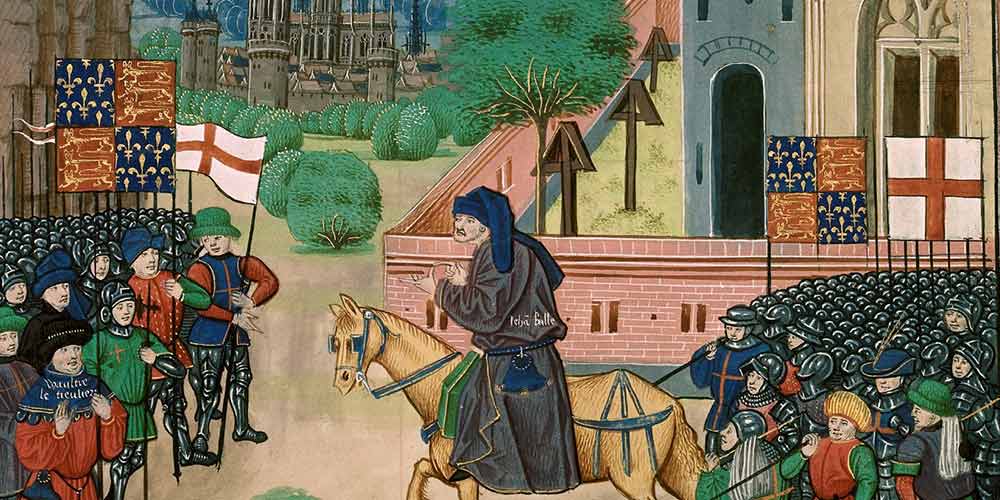
Kent also had its own grievances and a history of rebellion, so they quickly rose up. They raided prisons and freed prisoners. Many key towns were passed through. They took Rochester Castle, and Maidstone became another rebel stronghold. John Ball was freed from prison during the revolt.
It was from the Kentish rebels that we got our most famous leader in 1381.
Wat Tyler. He was clearly a significant figure during the revolt. Very little is known about him prior to this. Many legends have emerged over the years to explain how Tyler came to lead a rebellion. One legend states that he killed a tax collector who molested his daughter. This tale has become very popular, but no existing evidence supports it.
We don’t even know where Tyler came from. His last name could have indicated a job he did, but building a backstory from it would be speculation. All we know is that by June 1381, Wat Tyler had enough authority to represent many rebels and speak to the king.
The rebels traveled through Canterbury and continued towards London. They began to act more like a political movement than just a mob. Prisoners were freed, and officials were threatened. Communication was made between rebels.
On the 12th of June, large numbers of rebellious subjects gathered at Blackheath, southeast of London. The government had rebels on its doorstep.
London Waits for the Rebels
Richard II and his council fled to the Tower.
Although the tower may have seemed secure. England had no huge army to fight off the thousands of rebels. Armies were spread across the country, and if a battle took place near London, the city could be devastated.
Richard II tried to speak with the rebels but failed to reach an agreement when he first met with them.
June 13th saw the rebels from Kent arrive at Southwark just south of London Bridge. Allies within London allowed the rebels to pass through the city.
London was not united in its response to the rebels. Citizens supported the rebels; some helped them, while others feared what they might bring to the city. Many political factions within the city played a role in this rebellion.
After entering the city, rebels began to destroy certain targets. Repeating a common theme, they released prisoners and burned documents. Homes belonging to certain officials were raided. One of the biggest targets was the Savoy Palace.
The Destruction of the Savoy
John of Gaunt Duke of Lancaster owned the Savoy. He was the uncle to Richard II and was considered one of the wealthiest men in all of England and his house in London reflected this.
Many rebels despised Gaunt for political and economic reasons. In Edward III’s later years, Gaunt was heavily involved in government. Many people linked him to poor court decisions, including failed policies, taxes, and the ruling elite’s heavy-handedness.
On the 13th of June the rebels burned down the Savoy.

Many chroniclers focused on the extraordinary wealth within the Savoy, and this was destroyed. Some said the rebels did not want to take any wealth from the palace and enrich themselves because they wanted to show they were there for a political cause, not personal gain. This may have been true but as mentioned before the chroniclers were trying to portray morals in their writing so we should be careful.
We know for sure that it showed what the rebels were capable of. If one of England’s biggest houses could be destroyed, then anyone would be vulnerable if the government were overthrown.
The London rebellion also had some uglier aspects. Flemings were beaten and killed. They were a foreign group who had become established in England and played a big role in the cloth industry. So we see a call for liberty and change, but also attacks on foreigners and individuals they wanted to punish.
All of this helps explain what happened in the Peasants’ Revolt of 1381. The rioters were neither an unruly mob nor a well-organized democratic uprising. Many took part for different reasons, and at any time it could have become political or degenerated into chaos.
The Meeting at Mile End
It can be argued that the rebels did not view Richard as being the cause of their problems. He was only 14 years old, and most of their grievances were aimed at the ministers, officials, and landlords who ruled England in Richard’s name. Many of the rebels felt that the King’s ministers, landlords, officials, and counselors were either corrupt or working against the interests of the King. Some of the rebels actually stated that they were loyal to the King and were fighting against men who had deceived him.
This is why it was important for the rebels to reach Richard. Many rebels seem to have believed that if they could speak to their King, he would understand their problems and help resolve them. This idea of the King as someone who can grant you justice was common during medieval times. Because Richard was so young, it was easy for the rebels to believe that he didn’t know about or approve of these injustices.
On the 14th of June, Richard left the tower and traveled east to Mile End, where he met with Wat Tyler and a large number of rebels. So when Richard arrived at Mile End, it wasn’t just that he had no choice but to meet with the rebels. Many of the rebels who marched to London wanted to meet with the King. They had finally reached him and could tell him what they thought was wrong.
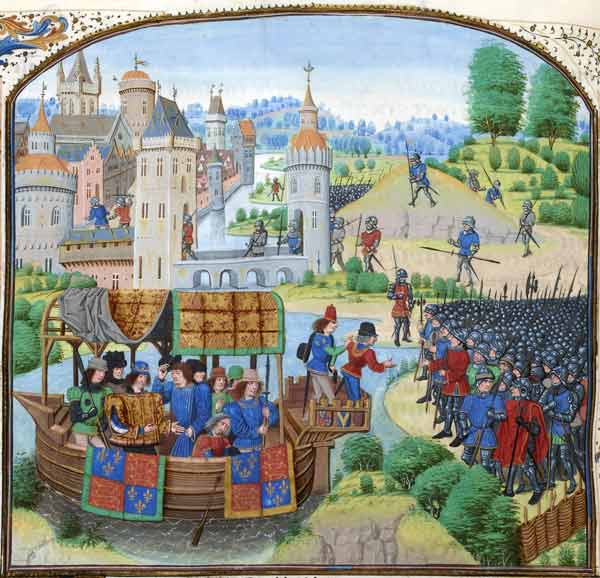
What they wanted from the King showed that the rebellion was about more than just the poll tax. They wanted to abolish serfdom and the compulsory obligations that went with it. They also wanted fixed rents for land and the ability to buy and sell goods at markets. The rebels also wanted to be pardoned for their crimes during the rebellion. Most of these demands struck deeply at the system of manorial lordship and would vastly affect the lords who owned the manors.
Richard made stunning concessions. He agreed to their demands, let the rebels go free, and ordered royal clerks to draw up charters that would confirm his promises. This was more than soothing words spoken to scatter a mob. Clerks were hard at work creating documents under royal authority that communities could take back to their villages as proof that their king had given them the freedoms they had requested.
His reply may have confirmed everything that the rebels wanted to hear. They had not blamed the king so much as they blamed the government that he allowed to persist; they had come to London to get justice from Richard in person; and now it seemed that Richard had heard them and ruled justly. Crowds began pouring out of London, happy to leave with what seemed like freedom from the obligations that generations of their families had owed to manors all over England.
But the great show of victory had revealed fault lines in the rebellion. Not everyone at Mile End was satisfied with what Richard had offered. Wat Tyler and a large contingent of rebels stayed behind in London, and several officials whom the peasants held responsible for their condition still huddled inside the Tower of London.
Among those men were Chancellor Simon Sudbury and Treasurer Robert Hales. Promises from the king were no longer enough for London’s more committed rebels, who wanted to know what would happen to the men they viewed as corrupters of his government.
Richard had bought himself a temporary peace at Mile End. But he had not quelled the Peasants’ Revolt. While royal clerks worked on charters that would promise freedom to the country, another band of rebels moved on the officials inside London’s Tower.


The Tower of London Falls Open
The Tower of London was one of England’s most formidable royal strongholds; thick walls and towers, secure gates, and a surrounding moat protected it. On June 14, however, the rebellion gained access without having to mount the sort of prolonged siege or bloody assault that those defenses were intended to resist. In fact, their penetration of the Tower seems to have owed less to brute force than to confusion and political chaos of the day.
Richard’s ride to Mile End created the opportunity for the rebels to enter the Tower. The king had departed from the Tower accompanied by part of his household to meet the larger body of rebels who had gathered outside. For Richard to leave, the Tower had to be opened and its gates secured behind him. Chronicler Jean Froissart later wrote that once the king had left, ‘more than four hundred men-at-arms entered by the gate left open’. Historic Royal Palaces concur, reporting that ‘The Tower’s drawbridges and portcullis had not been raised behind Richard’.
Perhaps more surprising was the response from within. The Tower had not been left undefended, yet the men-at-arms who were there offered no meaningful resistance to the rebels. One account, citing Froissart as its source, explains that the rebels greeted the guardsmen rather than fighting their way past them. It’s impossible to know whether every detail of this encounter is accurate, but no account mentions a serious fight for control of the Tower. Its defenses were irrelevant if its gates were unlocked and its defenders were unwilling to stand and fight.
The rebels then moved through the Tower complex looking for “traitors” who they believed had led the young king astray. They found what they were looking for. Despite the formidable defensive perimeter, senior members of the king’s government were unable to withstand Londoners who still considered themselves to be their king’s loyal subjects. Among those inside were Archbishop of Canterbury (and Lord Chancellor of England) Simon Sudbury and Treasurer of England (and prior of the English Knights Hospitaller) Robert Hales.
According to Froissart, they found Sudbury by searching “chamber after chamber”. Historic Royal Palaces pinpoints St John’s Chapel as the location where Sudbury was arrested praying. Both Sudbury and Hales were eventually found, arrested, and dragged out of the Tower to Tower Hill, where both would be killed.

The killing of Archbishop Simon Sudbury and Robert Hales.
Sudbury and Hales were both beheaded, along with John Legge, royal sergeant-at-arms for Kent, who had helped oversee the collection of the poll tax. Sudbury’s head was affixed to London Bridge. The beheading of senior government officials, who were perceived to have had a hand in devising unpopular royal policies, highlighted something unusual about the rebels’ attitude towards their king. While they were evidently prepared to override his writ and storm the Royal Palace if necessary, many of the rebels did not see what they were doing as overthrowing Richard II.
Instead, they protested their loyalty to the boy-king and sought to punish those who, in their eyes, were governing to his detriment. Sudbury and Hales were portrayed as “traitors”, whose executions were justified by their alleged efforts to frustrate the king and manipulate him for their own ends.
Although Richard had already agreed to many of their demands at Mile End, news of Sudbury and Hales’ executions would no doubt have further encouraged rebels to leave London. Still determined to exact more from the king, Wat Tyler would meet him again on June 15 at Smithfield.
Smithfield: The Death of Wat Tyler
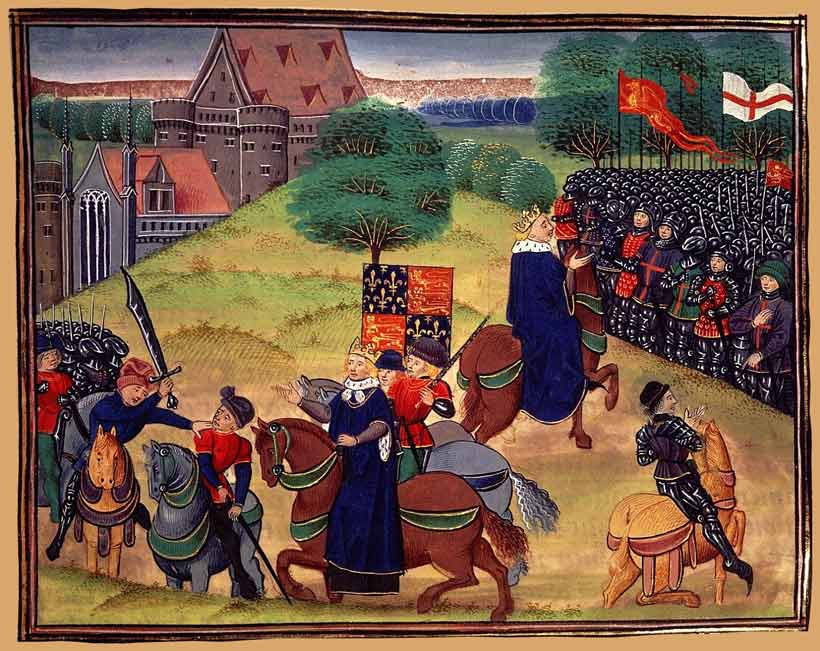
Richard met the remaining rebels at Smithfield, an open area northwest of the city walls. The confrontation between Tyler and Richard is one of the most famous incidents in medieval English history. However, it is hard to reconstruct. Different chroniclers provide different details, and none offers a neutral account of Tyler and Richard’s negotiations.
Tyler may have made demands that went further than those agreed at Mile End. Chroniclers report that demands relating to lordship, property of the Church, the law, and social hierarchy were put forward by the rebels. Historians debate how seriously to take these lists of demands because hostile chroniclers might have exaggerated the more extreme demands made to depict the revolt as against society as a whole. Negotiations then broke down.
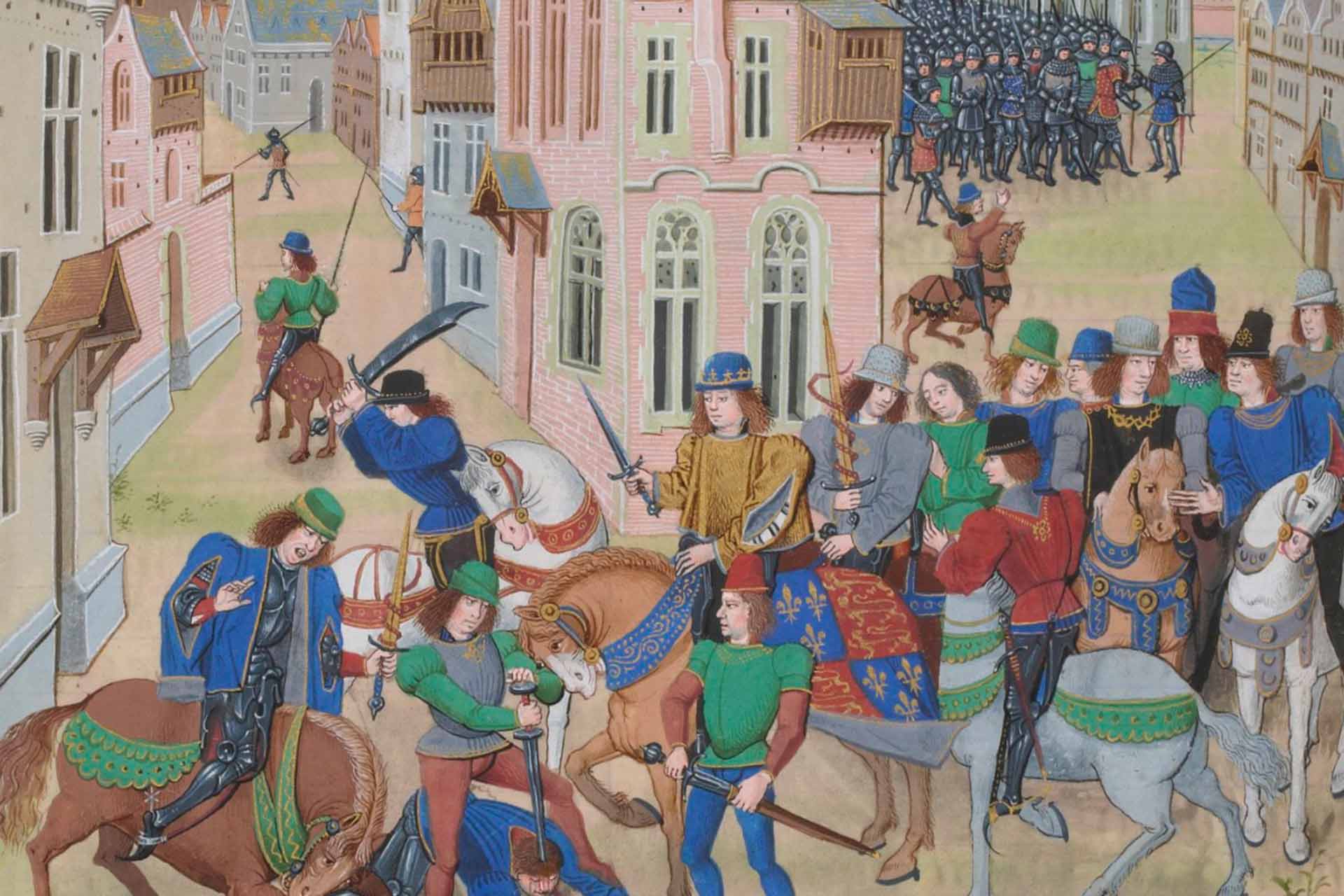
Tyler acted aggressively once he was in the king’s presence. According to the chroniclers who described his behavior, he spoke to Richard as if they were equals and asked for food and drink. Accounts record that Tyler then argued with men from the king’s retinue and was set upon. The mayor of London, William Walworth, struck Tyler with his sword. Another man from Richard’s retinue stabbed him.
Tyler rode away wounded but collapsed shortly afterward. The Anonimalle Chronicle says that Tyler was taken to a nearby hospital of St Bartholomew, but Walworth ordered that he be brought back to Smithfield, where he was beheaded. They then held up his head for the rebels to see. Tyler’s killing was exceptionally dangerous because he had been attacked while apparently in negotiation with the king, and there were thousands of his followers close at hand. Richard rode towards the rebels.
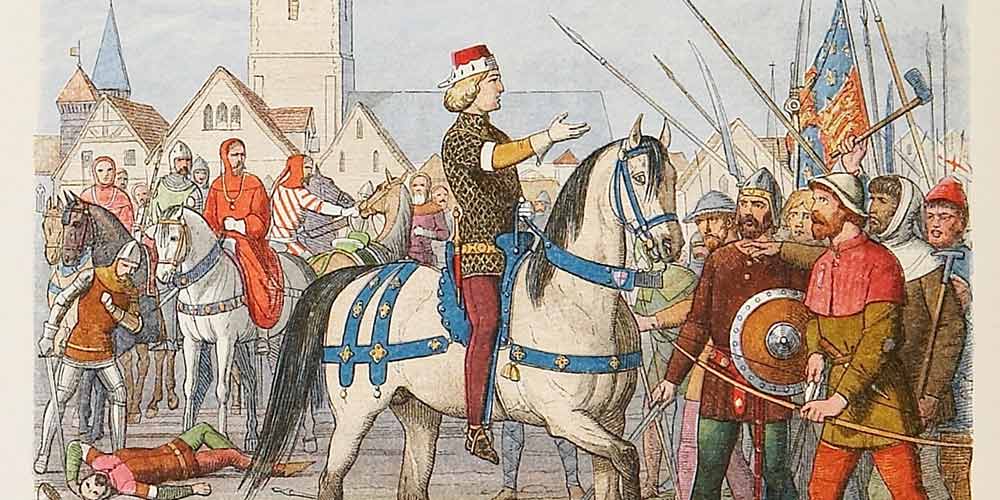
Later stories praised the courage shown by the fourteen-year-old king in the following minutes. Although accounts differ on his precise words, Richard appears to have convinced the rebels to disperse from the area of Smithfield and follow him. He led them away from the threat of violence and toward Clerkenwell.
This did not leave Richard in complete control. Events had begun to turn against the rebels for a number of reasons, and his intervention had been effective. The rebels were significantly smaller in number than they had been earlier in the day. Many of their members had dispersed after receiving concessions from the king at Mile End. Tyler was dead, removing a charismatic leader. Walworth marched back toward the city and gathered more armed men from the area. Forces loyal to the government were able to respond because the balance of power was changing hour by hour.
The rebels remaining in Smithfield were either surrounded or confronted by a royal and civic force that was much better equipped. Richard continued to placate the rebels, and large-scale fighting was avoided for now. Because the chances of winning any battle had dwindled significantly, most of the insurgents simply dispersed rather than fight.
Smithfield therefore brought an end to the most dangerous period of the London uprising, but not the revolt as a whole. Order had still not been restored to the country. Other rebellions were still active, and people were beginning to return from London under the impression that they had received royal charters confirming their liberties.
The government would have to choose whether to honor those promises or not.
The Revolt Beyond London
Our attention on Wat Tyler can leave the impression that the Peasants’ Revolt was just one march on London. In fact, 1381 was a series of related rebellions which were far wider-ranging than that.
The rising spread across Essex into Hertfordshire, Cambridgeshire and Suffolk. Norfolk saw serious disturbances, and unrest appeared elsewhere in England. The local risings communicated with one another, but weren’t all controlled by the same leadership.
Looking at the revolt region-by-region can help account for the diversity of rebel activity. Sometimes the primary targets were officials. Other times rebels attacked monasteries, landlords or courts; or they hit buildings associated with local grievances. The University of Cambridge was attacked because of long-running tensions between academics and townspeople.
In Suffolk, for example, one of the key leaders was John Wrawe. His followers targeted the property of wealthy individuals and also attacked Bury St Edmunds Abbey. In Norfolk, Geoffrey Litster was the figure at the heart of a significant local rising. That means the revolt in Suffolk could be driven by grievances which dated long before the poll tax. A disagreement over rents, an unpopular local official, resentment against an abbey or a legal privilege which affected everyone could become wrapped up in a national rebellion overnight.
Accounts from Essex also show that these attacks were often highly organized. Indictments record groups of up to 200 people traveling to abbeys and manors to take documents and burn them. The names of those accused also show that many of the rebels were craftsmen and tradesmen, including weavers, smiths, barbers, tailors, servants and more.
The diversity of trades amongst the names we have reflects an important point: 1381 wasn’t simply the poorest rural workers rebelling against wealthy landowners.
The revolt was against different – and often overlapping – centers of authority.
The Crown Reasserts Its Power
Wat Tyler’s death and the dispersal of the rebels at Smithfield allowed Richard II’s government some space to regroup. This did not mean they quashed rebellion. Resistance continued in Essex and East Anglia; meanwhile, many of the rebels who had returned home felt they still held genuine royal authority to account for the freedoms promised at Mile End.
Just days before Smithfield, Richard had agreed to demands for freedom from serfdom and an end to labor services. His clerks had drawn up charters documenting those promises. Thousands of rebels felt justified in leaving London once the king had granted their demands.
The government’s position after Smithfield was much stronger than it had been before. The immediate threat of thousands of armed rebels was over. The Crown could now begin organizing loyal forces and deal with the remaining pockets of resistance individually. Richard’s government began by revoking those charters, not wanting to allow promises made under duress to stand permanently.
That decision was about more than the whims of a fourteen-year-old king. Medieval government relied upon the support of landowners, courts, sheriffs, Parliament, and local officials whose livelihoods were invested in the existing structure of landholding. Ending serfdom and labor obligations on the promised scale would have drastically altered those relationships throughout England.
Rebels who had put their faith in Richard must have been particularly angry about that reversal. They had largely blamed Richard’s ministers for the kingdom’s problems rather than the king himself. They’d marched to London in the belief that Richard would listen to their concerns. At Mile End, he had given them reason to believe they were right. But now their military leverage was gone, and so were the king’’s promises.
While some resisted anywhere that they could, the Crown began to move away from negotiation and toward suppression.
In Essex, for example, rebel bands maintained a loose cohesion after Smithfield. One larger rebel force was defeated near Billericay, a defeat that likely dampened any hopes of more organized resistance. Royal commissions were dispatched to identify participants for later prosecution; furthermore, the property of suspected rebels could be confiscated.
One Essex rebel named John Preston experienced this change of tide firsthand. On June 25, Preston presented himself before royal commissioners at Chelmsford with a petition detailing his requests. Written on parchment, he requested limits on customary rents and a series of reforms related to local courts.
Asking questions directly of royal commissioners was obviously dangerous. Preston had some reason to hope for a sympathetic hearing, however. Richard II had told rebels to disperse back to their homes and put their demands in writing. Since that was exactly what Preston had done, perhaps the king would keep his word?
Instead, Preston was hanged, drawn, and quartered. The People of 1381 project notes the cruel irony that Preston was killed for presenting demands that Richard himself had consented to just days earlier.
Elsewhere, royal and regional forces crushed the last centers of rebellion. In Norfolk, a substantial uprising was led by Geoffrey Litster; that rebellion was ended after Henry Despenser, Bishop of Norwich, defeated Litster’s forces at North Walsham in late June. Litster himself was captured and executed. In Suffolk, rebel leader John Wrawe met a similar fate after also being captured.
Ball tried to flee London after the uprising was defeated. He was captured near Coventry before being taken to St Albans, where he was tried for treason and executed on July 15. Ball’s death served to remove the cleric most associated with the revolt’s rejection of inherited social order.
Richard arrived at Chelmsford on July 1 as royal authority was restored in Essex. The symbolism there was powerful. Only a few weeks earlier, Essex residents had marched to London in the hope that the boy king would hear their side of the story. Now Richard was bringing his army into Essex while those same officials sought out anyone who sided with the rebels.
By mid-July, the revolt was no longer a coherent threat to royal authority. Its leaders were dead, captured, or on the run. The charters had been revoked, and royal authority had been largely restored.
Revolution had failed, but the problems that caused it remained.
Did the Peasants’ Revolt Fail?
Measured against the rebels’ short-term aims, then, it was a disaster. Wat Tyler was dead. John Ball was executed. Other leaders were killed or punished. The royal government was still standing, and the charters promising freedom had been revoked.
The Peasants’ Revolt of 1381 did not end serfdom in England. Claiming the revolt was simply a failure would be a massive understatement and would suggest that life in England automatically returned to normal after June. It did not.
The structural issues that had undermined older, more personal forms of lordship did not suddenly evaporate after June 1381. Lords were still dealing with the same labor market that had been transformed by the Black Death. Workers were still demanding better pay and conditions. Labor services continued to be commuted into money payments across much of the country. Villeinage continued its long slide into oblivion.
All of these trends continued after the revolt, but they did not start because of it. Serfdom was already on the defensive prior to Wat Tyler’s rebellion in London, and most historians would explain its demise by reference to a complex web of causes: demographic change, market forces, local negotiation, legal developments, changing patterns of landholding, and so on.
We can say similar things about the revolt’s political legacy. There was no second poll tax of medieval kind subsequently imposed on the English, though again that doesn’t mean governments were unable to place heavy financial demands on their subjects after 1381. Taxes had certainly played a part in triggering the revolt, and the events of that year showed that powerful governments could still fall when fiscal pressure, unpopular local administration, and wider social grievances all coincided.
The other lesson the revolt taught England’s rulers was that ordinary communities were capable of acting collectively on a large scale. Sometimes rapidly, thanks to messengers. Markets. Roads. Religion. Local gatherings. Personal networks. Communities might be small, but rebellion could travel fast.
When Medieval England Nearly Lost Control
Piecing together what happened during the Peasants’ Revolt isn’t easy. Those who rose up left significantly fewer documents behind than those who opposed and fought against them. Much of what we know comes from hostile chroniclers like Thomas Walsingham, Jean Froissart, and the author of the Anonimalle Chronicle. Their accounts preserve important details, but need to be understood alongside court records, tax rolls, lists of pardons issued, property records, and anything else that survived.
Records themselves only get you so far. An indictment accusing someone of treason shows how the government wanted others to view that individual, rather than why he decided to rebel. Projects like The People of 13E1 have aggregated thousands of these government records and allowed researchers to see just how diverse the movement was, compared to traditional narratives focused only on Wat Tyler, John Ball, and Richard II.
The result is that the revolt was complex, and that complexity is critical to understanding what happened in 1381. There were leaders of the revolt, but no traditional chain of command among rebels. There were specific demands, but no singular political program that everyone supported. Rebels targeted documents and fees associated with manorial obligations, and called for an end to serfdom. But the revolt also turned murderous, involved intimidation and looting, and featured particularly brutal attacks against Flemish immigrants living in London. It wasn’t the first modern democratic revolution, and it certainly wasn’t mindless mob violence.
Instead, the Peasants’ Revolt grew out of the specific conditions present in 14th-century England. Starting in 1349, the Black Death killed large numbers of people and made the average laborer’s work more valuable. Landlords and the government both tried to regulate wages and maintain previous obligations. England was at war with France, which meant taxes rose again to pay for soldiers, and administration became even more unpopular than before. The poll tax brought it all together.
In response, what started as smaller protests exploded across England. Rebels marched on London, burned down the Savoy, destroyed age-old legal records, entered the Tower of London, killed the king’s senior ministers, and forced the frightened, heavily symbolic, fourteen-year-old King Richard to negotiate with armed peasants.
The Crown would eventually reassert control. The rebels were never organized enough to defeat England’s armies or governors. Richard’s promises alone were enough to convince many to go home; Wat Tyler’s death demoralized and weakened those who didn’t, and authorities violently suppressed organized rebellion in the regions.
But even that can’t erase the pressures and changes that helped create the revolt in the first place. England continued its slow drift away from many labor relations that had been prevalent earlier in the Middle Ages, though keep in mind that didn’t happen because of the revolt itself.
The poll tax and other incidents leading up to the revolt can’t be completely undone. What happened in those few weeks of June-July 1381 showed that the old order was vulnerable, and thousands of ordinary people took notice.


