

Boston’s Great Molasses Flood of 1919: A Deadly Wave Through the North End
 Reading Time: 9 minutes
The events of January 15, 1919 started like any other winter afternoon in Boston. Locals going about their day were suddenly sent fleeing for their lives when a 50-foot steel container ruptured and unleashed 2.3 million gallons of molasses into the city’North End streets. Waves of molasses climbed up buildings as the viscous liquid surged through town, wreaking havoc and pinning people and animals underneath its sticky depths. Before residents could take cover, the entire block was under siege by an unstoppable wave of molasses.
The Great Molasses Flood claimed 21 lives and caused around 150 injuries. Some were buried by the rubble of destroyed buildings; others were simply pinned down by the rushing torrents of molasses. First responders struggled to dig people out of the goop, which seemed to fight every movement they made. While this disaster is usually noted in history as a freak accident, tragedy struck because of overlooked dangers. In the aftermath of the explosion, a court case emerged, revealing schematics and witness testimony that showed how negligence cost lives that day.
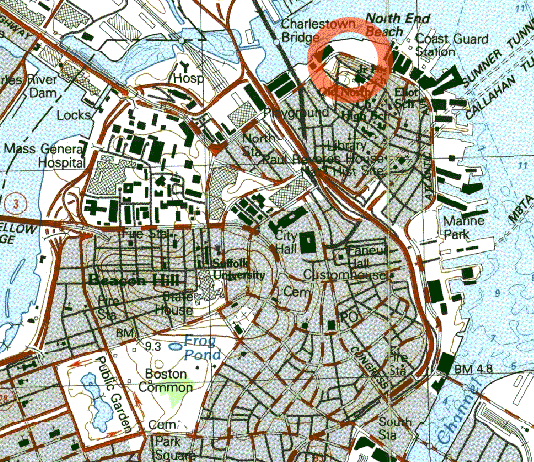
Boston’s North End Before the Great Molasses Flood
Boston’’s North End waterfront neighborhood was densely populated with apartment buildings, warehouses, factories, and transportation hubs. Residents included immigrant families moving into the United States-many from Italy-, dockworkers, laborers, and factory and warehouse employees who worked at businesses throughout Boston Harbor. Elevated train tracks ran over main roads, and railcars used on-level tracks to carry goods and materials from warehouses to freight ships in the harbor. Freight wagons pulled by horses routinely shared roads with cars and pedestrians. Factories sat next door to apartments, stores, and bars, creating an environment where housing was mixed amongst potentially dangerous industrial facilities.
At the time of the Great Molasses Flood, one such building was home to Purity Distilling Company, part of a larger conglomerate called United States Industrial Alcohol. The facility housed a massive molasses storage tank a few hundred yards north of Commercial Street, making it easy to receive new shipments piped into the tank from cargo ships docking in Boston Harbor.
Built in 1915, the tank was a vertical cylinder made of steel, approximately 50 feet high and 90 feet in diameter. The molasses was fermented into alcohol for industrial use. These products were often used in manufacturing and chemical production. During World War I, industrial alcohol was used for military purposes as well.
A Massive Tank Built With Dangerous Weaknesses
Leaks were reported soon after the tank began operation. People living and working near the tank noticed molasses leaking from the tank’s seams and riveted joints, occasionally pooling around its exterior. Neighbors later told newspapers that children living in the surrounding neighborhood collected the leaking syrup in jars. Rather than addressing these leaks as symptomatic of major flaws, the company kept the facility in operation. Sometime after the initial leaks became noticeable, the tank was painted brown, obscuring the leaked molasses on its side.
Workers ignored proper construction precautions to build the tank as quickly as possible. Some of the steel plates used in high-stress areas on the tank were too thin to hold the pressure of millions of gallons of liquid. Riveted joints were another weak point in Purity’s tank design. The company failed to run a full water test before putting the tank into operation, which could have alerted them to the tank’s hazardous conditions. People living near the tank claimed to hear rumbling and moaning noises coming from the tank when it was full of molasses.
In January 1919, a shipment of molasses arrived in Boston and was pumped into the tank. The incoming molasses was much warmer than the molasses that was already in the tank. Temperature differences within the tank may have contributed to the tragedy. Approximately 2.3 million gallons of molasses were held within the wall of what was revealed to be an extremely weak tank by January 15.

January 15, 1919: The Day the Tank Collapsed
January 15, 1919, Wednesday, was a relatively warm day in Boston. Winter weather had recently turned back to warmer temperatures. People were going about their business on Commercial Street. Laborers were heading to and from warehouses. People were strolling through the neighborhood. Local businesses were also open and operating. It was just after 12: 30 in the afternoon when the massive tank exploded. The sound was described as a clap of thunder or a fast-approaching train.
Steel bolts sheared, rivets popped, and pieces of the tank fell away as gallons of molasses spilled out. A wave of molasses engulfed the street and plowed through neighborhoods. Reports say the wave was anywhere from 15 to 25 feet high. Calculations would later show that parts of the wave may have reached upwards of 35 mph. The wave hit houses immediately with its force. Boards were splintered, and buses flipped over. Trees, Signs, and anything that could get caught in the molasses did.
As most people think of it, molasses is a thick, slow-moving syrup. However, the quantity that came gushing out of the tank did not move slowly by any means. When the wave of molasses came barreling through the streets, it pushed as if it were a brick wall. The firehouse across the street was damaged, and the elevated rail’s support beams were hit. People had no chance to move out of the way as the wave came through. Logs, scrap metal, and wood were flying through the air as the molasses blasted through.
The Victims of the Great Molasses Flood
Twenty-one people were killed, and around 150 were injured as a result of the Great Molasses Flood. Victims were laborers, nearby residents, and workers who were unlucky enough to be near the tank when it burst. Many were killed immediately either by the force of the wave itself or by debris from destroyed buildings. Some were crushed beneath collapsed buildings or killed by being submerged in the molasses. Many victims were working-class and immigrants who relied on jobs from industrial factories and businesses that operated around the neighborhood.
Among the victims of the Great Molasses Flood was Firefighter George Layhe, who was killed after becoming trapped inside the firehouse next to the tank when it collapsed. Rescue workers were unable to pull him out from under the rubble before he died. Some victims were crushed to death by debris or could not free themselves from the molasses. Horses were also killed, and many vehicles and nearby commercial buildings were damaged. For the families that lost friends and relatives, the tragedy was no historical anomaly; it was a life-changing event.



Rescue Efforts in a Sea of Molasses
Rescue efforts commenced quickly. Police officers, firefighters, workers from nearby industries, and citizens rushed to the disaster area to search for survivors and extricate people trapped beneath debris. Among the first groups to arrive were cadets from the Massachusetts Nautical School who had a training ship docked nearby. They ran into the flood-affected streets and began helping rescue victims as they battled molasses, splintered wood, buckled metal, and weakened buildings. There was some irony that the cadets, who studied nautical science, had been helpful in a disaster involving molasses.
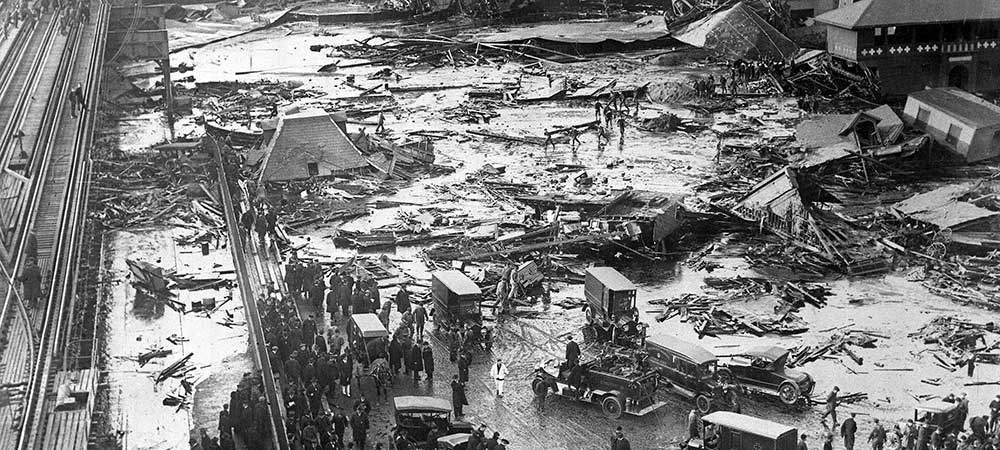
First responders to the Great Molasses Flood faced daunting tasks during rescue efforts. The molasses had stuck to clothing, rescue equipment, tools, and the skin of everyone it touched. As the temperature cooled overnight, the molasses thickened even further. Rescue teams reached some victims by using ropes, makeshift ladders, and equipment they could find or create. Paramedics tended to the injured and carried survivors to hospitals in the area. Search and rescue continued over the next few days as crews inspected damaged structures and rubble.
Cleaning Up Boston’s Sticky Catastrophe
With rescue operations complete, authorities had to contend with cleaning up molasses that had inundated the streets and buildings surrounding the wreck. Walls were soaked, basements filled, and every surface seemed touched by the gooey syrup. Regular soap was ineffective for cleaning up, especially when cold weather had thickened the molasses. Workers eventually flushed the syrup away with salt water drawn from Boston Harbor by pumping strong currents through the streets and pushing the runoff toward storm drains and the waterfront.
Cleanup efforts persisted for weeks as damaged buildings were removed, debris was cleared away, and transportation services were repaired. Molasses was also tracked well outside of the immediate disaster area as shoes carried the sticky residue onto streetcars, sidewalks, and other Boston buildings. Life in the neighborhood eventually returned to normal, but reminders of the physical and emotional damage took much longer to dissipate.
The Company’s Sabotage Theory
United States Industrial Alcohol rejected the claim of negligence and proposed a competing theory: sabotage. Witnesses from the company claimed that anarchists or other political radicals placed a bomb near the tank. This theory developed at a time of great social turmoil in the United States. Labor strife, anarchist bombings, and fears of revolutionary movements were common topics of conversation.
Investigators found no compelling evidence of sabotage. Investigators noted that the tank had leaked for years before it gave way. Stress corrosion cracking alone could have caused the collapse. According to the company’s theory, it deflected responsibility for the disaster onto an unknown assailant. However, neither the physical nor anecdotal evidence supported their theory.

The Legal Battle for Justice
Survivors of those killed and injured, as well as owners of damaged properties, filed lawsuits against United States Industrial Alcohol. The victims alleged the company failed to build and maintain the tank safely. Eventually, over one hundred claimants became involved in complex litigation that required testimony from engineers, witnesses, company executives, and others. Thousands of pages of evidence were submitted as attorneys argued over the cause of the collapse and the company’s culpability.
Witnesses testified about persistent leaks in the tank, strange noises, and defects in the tank’s structure. Engineers analyzed how the tank was built and what materials were used. Despite these findings, United States Industrial Alcohol continued to blame sabotage for the explosion. However, Hugh W. Ogden, an auditor who was appointed by the court, concluded that the company was to blame for the tank’s poor design and shoddy construction. The ruling in 1925 came as a major victory for the victims and their families who had spent years trying to prove the culpability of United States Industrial Alcohol.
United States Industrial Alcohol eventually paid close to $628,000 to victims of the Great Molasses Flood and other parties who sued it. While that money could not replace the lives lost or heal the injuries survivors suffered, it did force the company to take financial responsibility for the event. The legal case highlighted the need for trained engineers, proper structural analysis, and industrial regulation. The explosion remains a notable example of what can happen when known safety hazards are ignored.
The Lasting Legacy of Boston’s Great Molasses Flood
Over a hundred years later, the Great Molasses Flood is still one of Boston’s strangest historical events. It has been the subject of books, documentaries, and seemingly endless recountings, some of which downplay the tragedy of the victims’ deaths in favor of the ludicrous nature of the event.
Today, a historical marker stands where the tank once stood, remembering the lives lost in the tragedy. Popular tradition says that for years afterward, you could smell molasses in the North End air during warm weather. While there’s no way to confirm this tale, Bostonians have internalized it as fact. The event’s most important legacy is the reminder it provided about industrial accountability. Frequent leaks, shoddy construction, and poor testing had given plenty of warning that the tank was potentially dangerous.


