
Who Was the Outlaw Jesse James? The True Story Behind the Legend
 Reading Time: 24 minutes
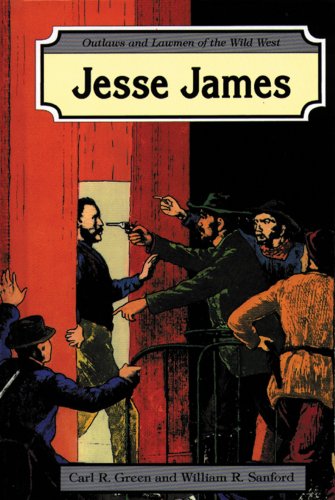
 The outlaw Jesse James became one of the most notorious figures in American history. To his admirers, he was a brave rebel who robbed powerful banks and railroads. To his victims, he was a thief and murderer whose gang terrorized communities throughout the Midwest. He was also a former Confederate guerrilla whose world was defined by the violence of Missouri’s civil war. By the time Robert Ford shot him in 1882, Jesse James had become something bigger than the man himself: a national legend.
That legend often obscures the world that created him. Jesse’s story begins with slavery, guerrilla warfare, and the bitter postwar divisions of the Civil War. Newspapers made him a Confederate folk hero, while later songs, dime novels, books, and films made the story more myth than man. Making sense of Jesse James, therefore, means separating fact from fiction. The real man was more complex—and a lot more violent—than the romantic outlaw remembered in popular culture.
Jesse James Before He Became an Outlaw
Jesse Woodson James was born on September 5, 1847, on his family’s farm in Clay County, Missouri, near present-day Kearney. His parents, Robert and Zerelda Cole James, had both been born in Kentucky and moved west with their families. Robert James was a Baptist minister and a farmer. Jesse grew up with his older brother, Frank, and his younger sister, Susan. The family had arrived at a level of comfort modest by the standards of frontier Missouri, but Jesse’s childhood took a sharp turn when his father left the family to head west to California in 1850.

Robert James was among the wave of emigrants who moved west to California’s gold fields. He left his family hoping to join a congregation of miners, as he intended to use his religious training to become a Baptist minister in California. Robert James became sick shortly after his arrival and died soon after. Zerelda James was left to care for her three children and later remarried. Her eventual marriage to Dr. Reuben Samuel brought some stability to the family, and Zerelda became one of the most important figures in Jesse’s life.
Zerelda James would remain loyal to Jesse and Frank even when the two were outlaws and after they became public enemies.
Missouri was also a slaveholding society, and the James family was not outside of it. Robert and Zerelda James operated a farm worked by enslaved people, and the family harbored strong sympathies for the South. These facts matter because popular stories about Jesse James later in his life often cast him as a poor farmer in conflict with the wealthy, powerful interests of the North. His upbringing was more complex. The James family was tied to the social and economic system that would lead the United States into civil war.
Clay County was part of a region of western Missouri sometimes referred to as “Little Dixie” because its population had strong ties to Kentucky, Virginia, and Tennessee to the south. Slavery was common in the region, and sympathies for the South ran deep in these areas. When national debates over slavery and secession became war in 1861, the conflict would not be far from Jesse’s home. Missouri itself became a battlefield, and the violence around the James family would soon disrupt Jesse’s life.
Missouri’s Civil War Within the Civil War
Missouri was a dangerous place to live at the start of the Civil War. It was a slave state that did not secede from the Union, and its citizens were sharply divided in their loyalties. Some Missourians wanted to join the Confederacy, others to stay with the United States, and a community could often have supporters of both sides. Regular armies would fight over control of the state, but another kind of war took place on farms, along roads, and in small towns.
Bushwhackers were pro-Confederate guerrillas who ambushed and attacked Union soldiers, militia units, and civilians suspected of supporting the Union. Unionist forces and Kansas fighters, often known as Jayhawkers, carried out their own raids. Homes were burned, property was stolen, prisoners were sometimes killed, and civilians were punished for aiding one side or the other. The fighting became highly personal. Old feuds overlapped with political loyalties, and cycles of revenge could continue for a long time after a military engagement was over.
Frank James was born a few months before Jesse. He first served with Confederate-aligned forces, then with the guerrillas. Frank was present at William Clarke Quantrill’s infamous 1863 raid on Lawrence, Kansas, in which guerrillas killed scores of male civilians. His activities soon brought Union militia to the James farm to question people there for information.
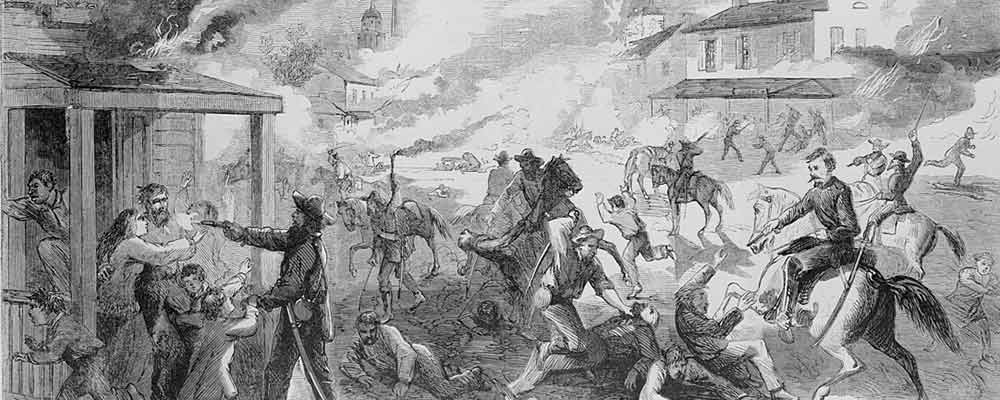
Union militiamen abused Jesse and tortured his stepfather, Reuben Samuel, by hanging him by the neck and trying to make him reveal the whereabouts of guerrilla fighters. Samuel did not die. The episode became part of the James family’s wartime memories of persecution and likely contributed to Jesse’s later animosity toward Union authorities. But it was not an isolated event. Families on both sides suffered violence in divided Missouri.
The Civil War, then, was not just a contest between Washington and Richmond in Jesse’s eyes. It came into his home and family. By 1864, he was sixteen years old and ready to join the guerrilla war for himself. The skills and attitudes he acquired there—raiding, ambush, secrecy, rapid escape, violent retaliation—would reappear in his outlaw career.
Jesse James the Confederate Guerrilla
Jesse James joined Confederate guerrillas in the spring of 1864. He soon found himself riding with one of Missouri’s most notorious bushwhacker leaders: William “Bloody Bill” Anderson. Bushwhackers were outside military control, and Anderson’s men became infamous for the murder of prisoners and the mutilation of enemies. Jesse was a teenager when he became part of this culture of violence.
Jesse and Frank are sometimes described as having been part of Quantrill’s Raiders. In fact, the lines were more blurred. Frank had ridden with Quantrill, while Jesse became closely associated with Anderson and with other guerrillas who were part of the same loose grouping. Bands split and reformed under new leadership and with different members when required. Later memoirs also embellished individual deeds, making it difficult to pin Jesse down for every attack attributed to him.
However, one episode is well documented. On September 27, 1864, Anderson’s guerrillas entered Centralia, Missouri. They stopped a train, and 22 unarmed Union soldiers were murdered in the train cars. Later the same day, the pursuing Union force that attacked the guerrillas was ambushed and nearly destroyed. The Union dead were mutilated. Jesse was involved in this fighting, and later sources credit him with shooting Union commander Major Andrew “Ave” Johnston. Again, claims about individual kills are treated with caution.
Centralia demonstrates how far Jesse James had come from his pre-war existence as a Missouri farm boy. Guerrilla warfare rewarded aggression, horsemanship, marksmanship, and the ability to vanish into the friendly countryside. It also conditioned men to killing at close range. These were precisely the skills that former guerrillas put to use when they later began robbing banks and trains.
Jesse was wounded at least twice during the war. In May 1865, with the Confederacy falling apart, he suffered a serious gunshot wound near Lexington, Missouri. Jesse’s family later claimed that he was attempting to surrender when he was shot, but the circumstances are disputed. He eventually recovered and took the required oath of allegiance to the United States. The war was formally over, but the habits and grievances of guerrilla warfare would be hard to shake.
From Guerrilla Fighter to the Outlaw Jesse James
Defeat meant that thousands of former Confederate soldiers had to make new lives for themselves. Most did just that. Many former Missouri guerrillas returned to life as farmers, tradesmen, or family men. Jesse and some of his wartime friends took a different direction. Their transformation into criminals occurred in an environment of bitter Reconstruction politics and enduring resentment against the victorious North.
Missouri’s postwar government limited the former Confederates’ ability to hold political power. Such measures could feel like punishment to men who had fought for the South. Jesse’s family had also felt persecuted by Union authorities during the war. Grievances like these later became central to how Jesse explained and justified his actions.
Guerrillas also had a de facto criminal network. They knew each other, trusted former comrades, and had skills with horses and weapons, as well as experience in raiding. The former bushwhackers also had relatives and sympathizers throughout Missouri who might sometimes offer shelter or information. The line between wartime raiding and postwar banditry could be very thin.
On February 13, 1866, armed men robbed the Clay County Savings Association in Liberty, Missouri. They made off with about $58,000. Former bushwhackers were suspected. This robbery is often presented as the start of Jesse James’s criminal career. However, there is no hard evidence that Jesse personally took part. He may have been recovering from his wounds then.
The Birth of the James-Younger Gang
The James-Younger Gang grew out of a network of friendships forged in the Civil War. Jesse and Frank James were its most celebrated pair. Cole Younger and his brothers Jim, John, and Bob were also connected to Missouri’s Confederate guerrilla world. Personal relationships from this time bound the gang together in ways typical criminal partnerships were not.
The phrase “James-Younger Gang” can be somewhat misleading if it conjures the image of a stable organization with a set membership roster. The James-Youngers were more like a loose network. Men joined different robberies, and some were only part-time members. Former guerrillas, relatives, friends, and associates cycled in and out. As a result, sorting out responsibility for individual crimes can be difficult.
Cole Younger was almost as well known as the James brothers. He too was a member of a pro-Confederate Missouri family that had suffered from wartime violence. The Youngers’ friendships with former guerrillas made working with Jesse and Frank a natural fit. Their guerrilla experience also meant they already knew how to live and work in small, fluid units.
In many ways, the gang’s modus operandi mirrored guerrilla strategy. Riders could hit fast and hard, control a business or town for a few minutes, then be long gone before any concerted resistance could organize. Horses remained critical, as did local knowledge and safe havens. A bank robbery might resemble a wartime raid divested of its military context.
Nonetheless, historians should approach the gang’s early history skeptically. Newspapers were only too eager to associate the James name with sensational robberies, often with little or no evidence. Jesse’s growing celebrity made him an easy target. By the early 1870s, though, far less doubt remained that Jesse, Frank, the Youngers, and their associates had become one of the most notorious outlaw networks in American history.
Banks, Trains, and Stagecoaches: The James Gang’s Crime Spree
The James-Younger Gang developed a reputation through a long series of robberies in several states. Banks were obvious early targets, since they stored large amounts of cash in small, often wooden buildings that were sometimes accessible on horseback. A robber could enter while accomplices blocked the street outside.
For example, the robbery of the Liberty in 1866 was long thought to have been the work of the James-Younger gang, but Jesse’s role in this attack is uncertain. In contrast, he and his brother likely carried out the Russellville, Kentucky, robbery in 1868. Several other attacks followed, including robberies with connections to Gallatin, Missouri, Corydon, Iowa, and Columbia, Kentucky. A number of crimes have traditionally been ascribed to the James-Younger gang but cannot be proven, and membership shifted from raid to raid.
In 1873, the outlaws greatly expanded their scope by turning to railroads. Near Adair, Iowa, they held up a Rock Island train after tampering with the track. Train robbery offered greater rewards and publicity, but it also carried risks, especially for passengers and railroad employees. In practice, the gang usually targeted only the express safe, rather than robbing every passenger.
Stagecoaches and other targets also fell victim to attacks. These crimes carried the gang far from its Missouri heartland. Jesse may have taken part in as many as 19 robberies from 1869 to 1881, historian Mark Lee Gardner writes, with the crimes resulting in the deaths of nearly 20 people. The exact totals are inexact because historians debate several of the attributions.
The pattern was clear, even if the details weren’t. Jesse James was no longer simply a former guerrilla trying to adjust to life after the war. He had become a professional outlaw, whose robberies crossed state lines and whose actions had national implications.
Jesse James and the Gallatin Bank Robbery
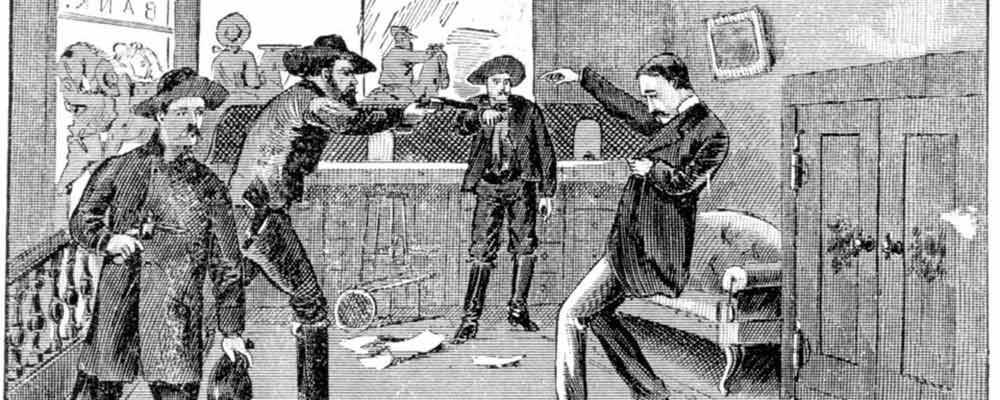
The robbery that first brought Jesse James into national public view occurred on December 7, 1869. Two men with guns entered the Daviess County Savings Association in Gallatin, Missouri. During the holdup, cashier John W. Sheets was shot and killed. The robbers made off with relatively little.
The killing also had an odd tie to Jesse’s guerrilla history. In the traditional version, Jesse thought Sheets was Major Samuel P. Cox, a Union officer whose men had killed Bloody Bill Anderson in 1864. In that case, Jesse may have gone into the bank looking for an opportunity to avenge Bloody Bill. Sheets, however, was not Cox.
The episode also shows how the Civil War continued to influence Jesse years after Appomattox. In the traditional version, the supposed motive wasn’t just money. It played on a personal memory of guerrilla war and loyalty to a dead commander. Yet for all that personal or political motive, the basic fact remained: an unarmed bank employee had been killed.
Gallatin also began to change Jesse’s public identity. Newspapers began naming Jesse and Frank James as suspects. Jesse’s name now had a story to it: a former Confederate guerrilla, a fugitive, a robber, and a killer. He also soon found that such publicity could be useful as well as dangerous.
From this point forward, Jesse did something outlaws rarely did. He tried to shape how the public saw him. He denied specific accusations, defended other former Confederates, and promoted a political understanding of his crimes. The man robbing banks was already helping create the legend that would outlive him.
John Newman Edwards: The Journalist Who Built the Jesse James Legend
John Newman Edwards knew the value of a compelling narrative. A former Confederate soldier and one-time aide to General Joseph O. Shelby, Edwards became a Missouri journalist after the Civil War. He founded the Kansas City Times in 1868 and used the newspaper to champion former Confederates and urge their return to political life.
Jesse James was an obvious figure to draw upon. He was a former guerrilla who thumbed his nose at authority by robbing banks, detectives, and railroads. Edwards presented Jesse and Frank not merely as outlaws but as men victimized by wartime persecution and postwar politics. His colorful prose further burnished their cause into something approaching heroism.

Jesse helped make the case. He wrote letters to newspapers to deny some charges and justify others. According to the State Historical Society of Missouri, Edwards published Jesse’s letters and cast him as a Robin Hood-like champion of the Confederate cause. Jesse knew that shaping the narrative would enhance public sympathy.
The result was an unusual type of 19th-century celebrity. Jesse was a wanted man, but his arguments could appear in newspapers that were read by the thousands. He could rail against his enemies, assert his own innocence, and recast himself as a victim, not an aggressor. Edwards offered the literary scaffolding for a more potent message.
Edwards’s goals were political and journalistic. He was glorifying Jesse as part of a broader project to restore pride and influence to Missouri’s former Confederates. By 1880, many former Confederates had regained political power in the state. The outlaw Jesse James legend was therefore part of the larger battle over how Missouri would remember the Civil War from its very beginning.
The Pinkertons Hunt Jesse James
As the robberies continued, banks and railroad companies sought results that local authorities had failed to deliver. The Pinkerton National Detective Agency stepped into the chase. Allan Pinkerton and his detectives had earned a national reputation for private investigation, and the James brothers had become high-profile fugitives.
The pursuit was perilous. Detectives made efforts to collect information and infiltrate the outlaws’ network, while gang members and their supporters reacted with violence. The James brothers had an advantage in family connections, loyal sympathizers, and local knowledge of the Missouri countryside. Tracking them down was one matter. Capturing them alive was another.
The conflict reached a disastrous stage on the night of January 25, 1875, when men associated with the Pinkerton pursuit attacked the James family home near Kearney. An incendiary device was thrown into the house. An explosion killed Jesse’s young half-brother Archie Samuel and badly injured his mother, Zerelda Samuel, who lost part of an arm.
The raid was a public relations disaster. Whatever authorities believed about Jesse and Frank, Archie was a child. The attack on his home allowed Jesse’s supporters to point to his family as victims of powerful outside forces. It strengthened the very image Pinkerton agents were determined to destroy.
The episode also shows how difficult it had become to separate Jesse’s criminal career from his public legend. Violence used against him could make him more popular among sympathizers. The gang remained active, but within a year it would attempt a robbery far from Missouri that ended very differently.
The Northfield Raid: The James-Younger Gang’s Greatest Disaster
On September 7, 1876, the James-Younger Gang entered the town of Northfield, Minnesota, to rob the First National Bank. The choice was significant, as it took the gang hundreds of miles from the territories they knew and where local sympathies might exist. Why they chose Northfield remains debated, but later accounts that ascribe political or financial motives to the robbery are difficult to substantiate.
Cashier Joseph Lee Heywood refused to cooperate with the robbers and was killed. Outside the bank, citizens quickly realized what was going on, and several men armed themselves. This was not the quiet bank town that the outlaws expected; instead of standing back, many people in the town fired on the gangsters from buildings and the streets.
The robbery was over within minutes. Two members of the gang were killed in Northfield, and others were badly wounded and fled. Pursuing posses trapped the Younger brothers in the field, and after another gunfight, they captured the Youngers. The original James-Younger Gang had been effectively destroyed.
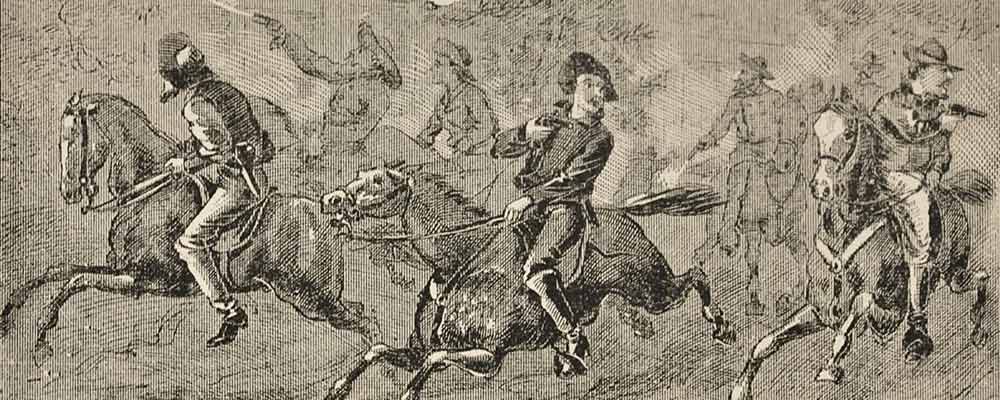
Jesse and Frank survived, but their ability to get away and travel back toward friendly territory only added another notch to the almost supernatural reputation for luck. But the Northfield raid had shown the limits of the gang’s strategies. So far from Missouri, with no safety of the familiar and no local sympathies to speak of, the gang’s survival in previous chases seemed a little less likely.
The consequences were enormous. The Youngers would both be imprisoned, and several of their associates were dead. The gang that had so effectively terrorized the banks and railroads of the Midwest no longer existed in the way it had. Jesse had survived one of the greatest disasters of his criminal career, but now he would have to disappear.
Jesse James Goes Into Hiding
Life after Northfield was not the same for Jesse or Frank. They both had to move and use aliases to avoid capture. Jesse James lived for a time in Tennessee under various assumed names, including Thomas Howard. The well-known desperado sought a quiet life as a husband and father, even as he recognized that discovery would mean arrest or death.
Jesse married first cousin Zerelda “Zee” Mimms in 1874. Zee had known Jesse for many years and had helped to care for him when he was badly wounded during the war. Their relationship was not solely that of outlaw and wife, as they had known one another before Jesse became a national figure. The couple had children, some of whom died as infants.
His personal life challenges the popular image of Jesse as a restless drifter always on horseback. At times, he lived as a family man and tried to pass without incident while maintaining a respectable veneer under an assumed identity. Neighbors may have known the unremarkable Thomas Howard without suspecting that one of the nation’s most wanted men lived next door.
However, hiding was also never completely safe. Jesse could not always trust strangers, could never share his past, and could not stay in one place long enough without fearing discovery. His children also had to grow up in a world of aliases and subterfuge. The outlaw had become, in some ways, imprisoned by his own fame.
Frank also appeared increasingly ready to put his past behind him. Jesse was less able or less willing to do so. The relatively quiet period ended by the end of the 1870s. Jesse began assembling a new group of associates. However, these men lacked the intense wartime loyalties of the original James-Younger Gang.
Jesse James Builds a New Gang
In 1879, Jesse began returning to active robbery. The new gang differed greatly from the earlier group. The Youngers were in prison, and many of the guerrilla comrades Jesse could trust were dead or missing. Jesse now had to recruit from a younger generation of criminals who knew Jesse not as another veteran of Missouri’s wartime struggle, but as a legendary old-time outlaw.
On October 8, 1879, Jesse’s new gang robbed a train at Glendale, Missouri. Additional robberies soon followed in the area. Old political rhetoric still surfaced, but times were different. Reconstruction was over, former Confederates were coming back into political life, and Jesse’s claim to be fighting an ongoing political battle became increasingly difficult to make.
The new organization also never had the close-knit quality of the James-Younger Gang. Personality differences and mutual suspicion became serious problems. Jesse had been hunted, betrayed, or feared betrayal for years. His growing caution hardened into paranoia as the pressure increased.
Frank was moving in the opposite direction. He had a family and less of the old zeal to continue the outlaw life. The brothers remained linked in the public imagination, but Jesse increasingly took center stage in the renewed robberies.
Missouri Governor Thomas T. Crittenden made destroying the James organization a priority in 1881. Large rewards offered a powerful incentive to anyone willing to betray the outlaws. Jesse had escaped the sheriffs, posses, detectives, and gun-toting townspeople. The threat that would finally reach him would come from within his own diminished circle.
The Ford Brothers and the $10,000 Reward
Bob and Charles Ford had joined Jesse’s circle by the early part of 1882. Bob was a young man captivated by the Jesse James myth, but celebrity does not always breed loyalty. Jesse’s empire was falling apart, and the danger associated with his name was now very high.

Governor Crittenden had increased the reward money to a significant sum. PBS lists the reward at $10,000 for each of the James brothers. For anyone close enough to Jesse James to contact him, the reward money changed the math. An associate who trusted Jesse had a greater incentive to turn on him than to rob with him.
The Ford brothers entered into secret discussions with the authorities. Bob Ford in particular realized that arresting Jesse was likely to be very risky. Jesse had made it very clear many times that he had no plans to go quietly. Assassination was a more certain alternative.
Jesse had good reason to be suspicious of almost all those around him. The newer members of his gang had died, vanished, or proven to be liabilities. He still required partners, though. The nature of Jesse’s life required him to place at least some measure of trust in those who had powerful reasons to betray him.
The pressure came to a climax in St. Joseph, Missouri. Jesse was living in town with Zee and the children, using the alias Thomas Howard. Bob and Charles Ford were also staying with him. On the morning of April 3, 1882, Bob Ford was presented with the opportunity he had been waiting for.
The Death of Jesse James
On the morning of April 3, 1882, Jesse James was inside his rented home in St. Joseph. Jesse was 34. He had lived through the Civil War, gunshot wounds, two disastrous robberies, detectives, posses, years as a fugitive, and many narrow escapes. But now he was about to be killed in his own home.
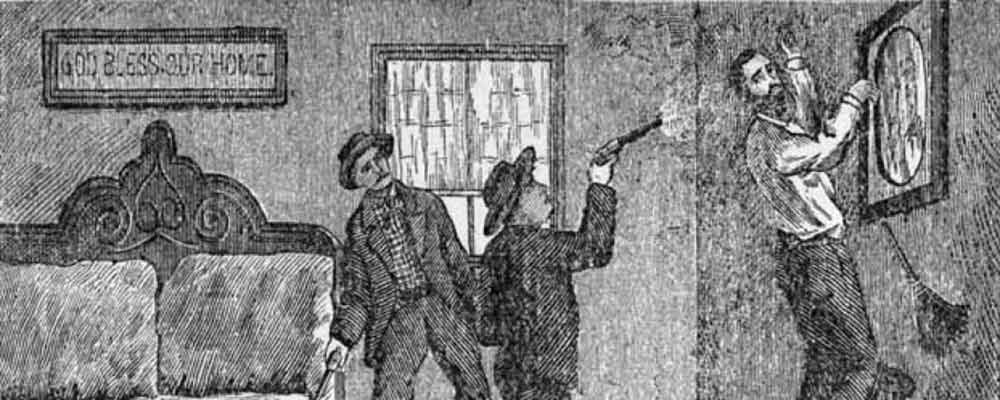
In the usual telling, Jesse took off his gun belt, perhaps because the day was warm and he didn’t want neighbors to see him carrying weapons. He then climbed onto a chair to reach a picture on the wall so he could straighten it or dust it. Some aspects of this scene were undoubtedly smoothed by generations of retelling, but the central event is clear: Jesse turned his back on the Ford brothers for a moment.
Bob Ford pulled his revolver and fired into the back of Jesse’s head. Jesse was killed by the shot. The famous outlaw, who had so often publicly proclaimed that he meant to avoid capture, had no chance to fight back. His wife and family were nearby.
Word spread fast. The killing of outlaw Jesse James was not treated as the common death of a criminal. Newspapers carried the story nationwide, and curiosity centered not only on the body but also on the man who had pulled the trigger. Jesse’s supposed identity as Thomas Howard vanished instantly.
His death also created an ideal final scene for the legend: the dreaded outlaw shot from behind by a man he had let into his home. Instead of quenching public interest in Jesse James, Bob Ford’s bullet dramatically enhanced it.
“The Coward Robert Ford”
Bob and Charles Ford did not go on the run after Jesse’s death. They turned themselves in to the authorities, where they were charged with murder. Both men pleaded guilty and were sentenced to death, but both were pardoned almost immediately by Governor Crittenden. The rapidity of the case convinced many that Jesse’s death had been a premeditated act.
The legal maneuvering might have saved the Ford brothers from death, but it did little to enhance their reputations. Many Americans who would not have condoned Jesse’s robberies had little use for a man who shot another in the back for the promise of reward money. Jesse could be both a violent criminal and, after his death, the victim of a dishonorable murder.
Popular culture quickly capitalized on this image. The folk song best known as “The Ballad of Jesse James” includes lines about “that dirty little coward” who shot Jesse. Stage productions depicted the murder, with Bob Ford sometimes even appearing as an actor in reenactments of the crime that made him famous.
The irony was palpable. Ford had shot Jesse in part because Jesse’s notoriety made the reward for his death valuable. But killing Jesse made Jesse even more famous and made Ford himself a hated villain. The assassin became enmeshed in his victim’s myth.
Ford eventually moved out west and owned a saloon in Creede, Colorado. On June 8, 1892, Edward O’Kelley shot and killed Ford. Ford was 30 years old. By that time, the story of the “coward Robert Ford” and the dead Jesse James had already become part of American folklore.
What Happened to Frank James?
Jesse’s death forced Frank James to make a hard decision. The old James-Younger Gang was no more; Jesse was dead, and Missouri officials still wanted to put an end to outlawry. Frank decided to give himself up.
On October 5, 1882, Frank surrendered to Missouri governor Thomas Crittenden in Jefferson City. Negotiations about the terms were assisted by John Newman Edwards. Edwards’s letters, which discuss public opinion, reward money, and negotiations related to Frank’s surrender, are archived by the State Historical Society of Missouri.

Frank now had to face trial for the crimes that had been committed by the gang. The most famous of Frank’s trials was for the 1881 Winston train robbery and murder. Prosecutors struggled to convince juries beyond a reasonable doubt that the evidence proved Frank’s guilt. Trials in Missouri resulted in acquittal. Subsequent prosecutions elsewhere also failed to result in incarceration.
The outcome was remarkable. Jesse had died with a reward on his head, but Frank had outlasted the outlaw era and lived a civilian life. He held several jobs and sometimes appeared in public, often profiting from the growing legend of the James name.
Frank died on February 18, 1915. His long life was a striking contrast to Jesse’s violent end at the age of 34. It also meant that Frank influenced how later generations remembered the brothers, even as the outlaw Jesse James’s mythic status grew beyond anyone’s control.
Did Jesse James Really Die in 1882?
Jesse’s sensational death provided almost immediate opportunities for conspiracy theories. Rumors surfaced that he had prearranged a substitution, faked his own death, and escaped. In later decades, several men claimed to be the supposedly living outlaw.
One of the best-known was J. Frank Dalton, who appeared as a public character in the twentieth century and who advanced the claim that Jesse had lived long after 1882. Such stories found an audience because they provided an exciting alternative to the well-known narrative. They were also supported more by personal testimony, resemblance, and disputed memories than by hard evidence from the period.

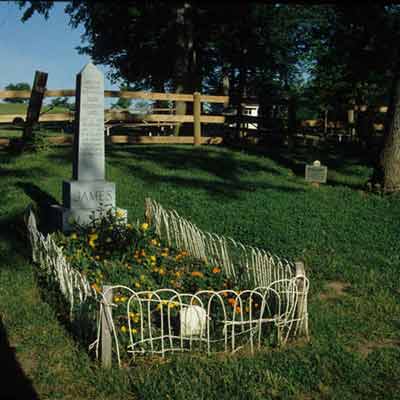
The survival story received a definitive scientific test in 1995. Forensic researchers exhumed the remains that had been buried as Jesse James at Mount Olivet Cemetery in Kearney, Missouri. The project involved examining physical evidence and collecting material for genetic testing.
In a peer-reviewed study published in the Journal of Forensic Sciences, researchers compared mitochondrial DNA recovered from teeth and hair to samples from two maternal relatives of Jesse James. The sequences matched. “The DNA evidence supports the historical identification of the remains,” the study concluded.
Science rarely overcomes a good legend. Claims that Jesse escaped live on in popular culture and local lore. But the historical documentation and forensic evidence strongly support the traditional story: Bob Ford killed Jesse James in St. Joseph on April 3, 1882.
How the Outlaw Jesse James Became an American Folk Hero
Jesse did not have to wait until his death to become a legend. Newspapers had already made him a national celebrity. John Newman Edwards gave him a heroic political gloss; Jesse’s letters to the press gave readers the unusual opportunity to hear a wanted outlaw make his case in public.
After Jesse’s death, storytellers no longer had to fear being contradicted by Jesse himself. Dime novels could pile on robberies, escapes, gunfights, and acts of generosity. The stories could grow more sensational the farther they got from the documentary record. Jesse gradually became a stock character of the romantic American outlaw tradition.
Songs furthered the transformation. The best-known ballad about Jesse focuses on his betrayal and death, not on the people injured during his criminal career. It casts Bob Ford as the coward and Jesse as the tragic hero. That clear moral tale was easier to remember than the messy history of Reconstruction-era Missouri.
Film and television retellings expanded and transformed the legend in the twentieth century. Jesse could be cast as an outlaw, rebel, antihero, tragic Confederate, or even a misunderstood champion of ordinary people. Each new generation could recast him according to its own preoccupations about authority and rebellion.
The legend’s flexibility is the secret behind Jesse’s enduring popularity. His story features the Civil War, family loyalty, crime, pursuit, betrayal, and violent death. The historical Jesse James was one specific person produced by a specific time and place. The legendary Jesse James became something more: a symbol onto which Americans could project their fascination with people who defy authority.

![[Video] Today in History: Harpers Ferry- Stonewall Jackson’s Greatest Capture - 9.15.1862](https://historychronicler.com/wp-content/uploads/2025/09/Screenshot-2025-09-15-at-4.11.22-PM.jpg.webp)
![[Video] Godfrey de Bouillon: First King of Jerusalem](https://historychronicler.com/wp-content/uploads/2025/06/Screenshot-2025-06-13-at-3.14.50)
![[Video] 𝐌𝐚𝐬𝐭𝐞𝐫𝐬 𝐨𝐟 𝐂𝐨𝐦𝐛𝐚𝐭: Union Iron Brigade](https://historychronicler.com/wp-content/uploads/2025/03/Screenshot-2025-03-24-at-4.32.06 PM.jpg)
![[Video] Sir Geoffroi de Charny: French Knight of the 100 Years War](https://historychronicler.com/wp-content/uploads/2025/06/Screenshot-2025-06-14-at-9.10.28)
![[VIDEO] North Carolina: Pirates, Planes, and Peculiar Laws](https://historychronicler.com/wp-content/uploads/2025/11/Screenshot-2025-11-07-at-2.12.18-PM-768x512.jpg)
