
Lady Jane Grey: How Wyatt’s Rebellion Sealed a Queen’s Fate
 Reading Time: 19 minutes
 Wyatt’s Rebellion changed Lady Jane Grey’s situation. She went from being a deposed claimant to a political threat the Tudor government could no longer allow. Jane had entered the Tower of London in July 1553, after Mary I had secured the crown. By November, she had been convicted of treason in a court of law and sentenced to death. But Mary was slow to carry out the death sentence on her young cousin. For months, Jane remained alive, in captivity but under merciful treatment. Jane’s supporters had been crushed, and she seemed to pose no immediate threat to the regime.
Sir Thomas Wyatt had been in charge of the most forceful section of a larger plot against Mary’s projected marriage with Philip of Spain. Wyatt’s followers from Kent advanced on London while fears of foreign dominance and Catholic oppression grew. Jane seems to have played no active role in the rebellion, but her father joined it. Her Protestant beliefs, her royal lineage, and her old title made her a potential rallying point for future rebellions. When Wyatt’s army reached the city, Mary could no longer see Jane as an innocuous prisoner.
The Nine-Day Queen and Mary’s Contested Accession
Lady Jane Grey’s claim to the throne was rooted in the dying king’s anxiety about England’s religion. Edward VI was a zealous Protestant, but his elder half-sister Mary was a Catholic. As the existing law of succession, sanctioned during Henry VIII’s reign, stood, Mary was next in line to the throne after Edward, with Elizabeth following her.
Edward VI , however, grew alarmed by the older woman’s position as his heir apparent and began to plot to prevent her accession. As his health declined in 1553, he composed a text known as “My Devise for the Succession,” which was designed to bypass both Mary and Elizabeth and reroute the line of succession through the descendants of his aunt Mary Tudor, Duchess of Suffolk. That move put the Grey family at the center of the succession crisis.
Edward’s initial draft gave precedence to future male heirs of Jane’s mother, Frances Grey, before calling for future male heirs of Jane and her sisters. That plan was rendered impossible by the wording when it became clear that Edward would die before the birth of any such heir. The text was modified to name “the Lady Jane and her heirs male” as next in line to the throne, thereby allowing Jane herself to inherit. On June 21, leading nobles, judges, and members of the council signed letters patent attesting to their agreement to that plan. Parliament was never assembled to confirm the change in succession, and so its legal force could be seriously challenged.

Historians are not in full agreement about who was responsible for this decision. The traditional account has John Dudley, Duke of Northumberland, as the chief architect of this scheme. Jane had married his son, Guildford Dudley, in May 1553, and so her accession would help to protect the family’s power and position. By contrast, other historians have emphasized Edward’s own beliefs and determination. The handwritten draft plan is Edward’s own work, so it is clear that the plan originated with him, even if Northumberland and the council were to shape and execute it. The available evidence can support the influence of several parties, not just a simple story of one scheming minister controlling a weak and vulnerable king.
Edward died at Greenwich on July 6, 1553, but the council kept his death a secret for several days. Jane was moved to Syon House, where councilors explained to her that she had become queen. Accounts from several decades later describe Jane as shocked and reluctant, but the details of those stories cannot be checked with certainty. On July 10, Jane entered the Tower of London and was formally proclaimed queen. The printed proclamation used to make the announcement to the realm justified her claim at length, since Mary was better known and had a claim grounded in statute and in her status as the daughter of Henry VIII.
Mary had already evaded the council and moved into East Anglia. In a letter to the Privy Council from Kenninghall, she asserted her right to the throne, and she then gathered supporters at Framlingham Castle in Suffolk. Nobles, local officials, and ordinary subjects all rallied to her cause, while Jane’s government found it hard to command loyalty. Northumberland marched out from London to confront Mary, but his forces were gradually depleted as her support increased. The crisis was resolved with far less fighting than many people had feared.
On July 19, the Privy Council in London abandoned Jane and proclaimed Mary as queen. Public rejoicing followed, and Northumberland then surrendered. Jane’s reign had lasted only nine days from the moment of her proclamation. She had not devised the succession plan that placed her on the throne, but she had agreed to take the royal title and signed documents as the queen. The fact of her accession made her more than just a private victim of powerful families. Jane was now a former monarch and a rival claimant to the throne. Wyatt’s Rebellion would later make that status deadly, but Mary’s government first had to decide how to judge a deposed queen.
Convicted of Treason but Left Alive
Lady Jane Grey’s deposition did not end her legal ordeal. After Mary I entered London in triumph, Jane was confined in the Tower with her husband, Guildford Dudley. Mary’s government had already executed Guildford’s father, John Dudley, Duke of Northumberland, for directing the attempt to thwart Mary’s accession. Jane and Guildford were young and much less powerful, but their actions still required judgment. Jane had acted with kingly authority, and Guildford had acted with the new government, sharing in its defeat. Nine days at the center of government could not simply be forgotten.
On November 13, 1553, guards escorted Jane and Guildford out of the Tower to the Guildhall in London. They stood trial before a special commission, along with Guildford’s brothers Ambrose and Henry Dudley and Thomas Cranmer, the former archbishop of Canterbury. The case was not a modern trial in which evidence would be long contested by lawyers. Mary’s government took the position that her accession was lawful the moment Edward VI died. From that position, Jane Grey’s seizure of royal authority and Guildford’s support of that seizure added up to high treason.
The court found Jane and Guildford guilty. Guildford faced the usual penalty for a nobleman convicted of treason: beheading. Jane’s legal situation was worse. She faced the legal penalties assigned to a woman convicted of treason. The contemporary Chronicle of Queen Jane records that she could be burned alive or beheaded “as the Queen pleases.” Mary therefore had final choice over the method and timing of Jane’s death. A sentence did not call for immediate execution. It placed the prisoners’ lives in the authority of the queen.
Mercy had several arguments in its favor. Jane was only about sixteen or seventeen, and powerful adults had drawn her into Edward’s disputed succession plan. She had surrendered without a fight when the Privy Council changed sides. She also wrote an explanation to Mary that accepted wrongdoing while presenting herself as misled rather than ambitious. The precise effect of that letter is unclear. Historic Royal Palaces says that Mary doubted Jane’s full guilt and thought that Jane’s conscience would not permit the execution of the young woman.
Mary’s actions after the trial are consistent with the view that death was not yet certain. Weeks passed, and then months, without an execution date. Jane and Guildford remained prisoners, but the government did not act as if their sentences were urgent. Mary may have intended to pardon them once her rule had become secure, or she may have meant to keep them confined for the rest of their lives. Historians cannot prove that a formal pardon had been settled. The delay shows that Mary still had a choice to make, and that the possibility of restraint remained.
That restraint carried a risk. Jane’s personal wishes counted for less than her royal blood, Protestant faith, and former title. Even from a cell, she could serve as a symbol for those who did not accept Mary’s religious or marriage policies. For the moment, the realm looked calm enough to allow mercy. The next crisis began with Mary’s plan to marry Philip of Spain. The anger around that match produced Wyatt’s Rebellion and turned Jane’s suspended sentence into an immediate political question.


The Marriage That Provoked Wyatt’s Rebellion
Lady Jane Grey’s death sentence was suspended. In the meantime, Mary took up the matter of marriage and succession. The queen was thirty-seven, and an heir was needed to continue her dynasty and Catholic settlement. English suitors were rejected and Philip, Prince of Spain, was chosen. The son of Emperor Charles V and heir to Habsburg lands in Europe, Asia, and the Americas, he offered a useful alliance against France. He was also a Catholic prince with far more wealth and international prestige than any English nobleman.
Subjects were deeply suspicious that Philip would govern England through his wife. Tudor law gave husbands broad authority within a marriage, and the country had never before experienced the problem of a reigning queen. Opponents imagined that Spaniards would take royal offices, command English soldiers, direct foreign trade and entangle the kingdom in Habsburg wars. Religion deepened the anxiety. Mary was already dismantling Edward VI’s Protestant legislation. A Spanish husband would be expected to support the return of papal authority and a more vigorous campaign against religious dissent.
The marriage treaty made efforts to address these anxieties. Philip would be styled king during Mary’s lifetime, but foreigners could not hold English offices. The realm would retain its laws, government and revenues. It was not intended to support Habsburg wars, and Philip could not remove Mary or their children from the country without their consent. These were meaningful safeguards. Historians therefore hesitate to take accounts of widespread popular hostility at face value. Despite this caution, legal reassurances could do little to mitigate fear of Spanish power.
By late 1553, several of the leading opponents had begun planning a broader conspiracy. Thomas Wyatt would lead a rising in Kent, Sir Peter Carew in Devon, and Sir James Croft in the West Midlands. Henry Grey, Duke of Suffolk and Jane’s father, was expected to take the lead in the Midlands. The most consistent demand these plans shared was to prevent the marriage to the Spanish. The participants may also have intended to remove Mary, place Elizabeth on the throne, and marry her to Edward Courtenay. This final scheme remains more disputed. What we now know as Wyatt’s Rebellion had begun.
The conspirators first proposed to organize several simultaneous uprisings, possibly in March 1554. Better coordination would have taxed the government’s resources and made each regional leader more difficult to isolate. The scheme was leaked, however, and reports of a plot came to Mary’s council. The leaders now had to choose between abandoning their plan and taking premature action. Wyatt chose the latter course. On 25 January, he raised his standard at Maidstone and called upon Kent to resist the Spanish marriage.
Henry Grey made the same dangerous choice. Mary had shown clemency toward Grey after Jane’s downfall, but he now put that pardon in jeopardy. On 26 January, Suffolk left London with his brothers and a small armed company. They moved toward his estates in Leicestershire and Warwickshire, where he hoped to find adherents. Jane remained imprisoned in the Tower, and no reliable evidence exists to show that she was aware of or approved her father’s intentions. Even so, Henry’s decision now associated the Grey name with a second challenge to Mary’s government.
Lady Jane Grey’s Father Returns to Rebellion
Henry Grey left for the Midlands, leaving his daughter at risk without power to influence events. Suffolk had submitted to Mary I after his daughter’s government fell in July 1553. The queen had then spared his life and allowed him to leave confinement. Joining the new plot broke that trust. It also renewed attention to his role in placing Jane on the throne. To Mary’s government, the Grey family now seemed to be involved with two plots to alter the succession in less than seven months.
Suffolk planned to recruit men from his estates in Leicestershire and Warwickshire. His rank, wealth, and local connections should have given him influence. However, many landowners had no interest in challenging the crown. Others might have disliked the Spanish marriage but feared the price of open rebellion. Mary had received wide support during the succession crisis of 1553. Suffolk’s earlier campaign for Jane had not won lasting support in the region. His name, therefore, had less authority than he had anticipated.
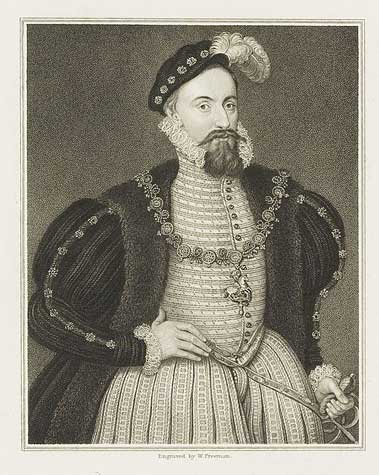
Suffolk’s religious position may also have influenced his choice. He had supported Protestant reform under Edward VI, while Mary had restored Catholic worship. The proposed marriage to Philip now seemed to entrench that policy. Even so, the conspirators did not pursue a single religious program. The threat of foreign influence had a broader appeal than Protestant language alone. Suffolk could thus oppose the marriage as a threat to the realm while also hoping to preserve religious changes favored by his family.
In practice, his attempt to raise a force met with little support. Royal officers moved against him before he could form a serious regional army. Suffolk abandoned his plans and tried to find a place of safety, but the government captured him in early February. Later accounts added colorful details to his flight and arrest, not all of which can be verified. The overall point is clear: his rising never became the Midlands movement that the conspirators had envisioned.
Jane remained in the Tower throughout her father’s rebellion. No surviving letter, confession, or official record indicates that she helped plan it. She could not direct supporters or communicate freely with political allies. Her lack of involvement, however, did not provide much protection in Tudor politics. Henry Grey had previously promoted Jane as queen and had now rebelled against Mary. His actions made it easier to imagine another revolt might use Jane’s name whether she agreed to it or not.
A Living Figurehead Becomes Too Dangerous
Failure in the Midlands was balanced by much greater danger in Kent. Thomas Wyatt made his stand at Rochester and attracted local Protestants, soldiers, and opponents of the Spanish marriage. Royal troops were sent against him under the Duke of Norfolk. The force was partly persuaded to change sides. Wyatt’s Rebellion was now armed and confident. His rising was no longer a local protest. It had become an armed movement that might reach the government itself.
Wyatt led his followers south to London. There he hoped to win support and force a change of royal policy. London Bridge was blocked by the government. The rebels turned west and crossed the Thames at Kingston. Mary would not abandon the capital city. On 1 February, she went in state to the Guildhall and appealed to the loyalty of London’s citizens. Presenting herself as their lawful queen, Mary’s public courage helped to deny Wyatt the popular support he required.
The rebels entered the western outskirts of London on February 7. Government forces divided and contained them. The city gates were kept closed. Wyatt continued as far as Ludgate but could not break through. Numbers were reduced by men who deserted or surrendered. Wyatt finally submitted near Temple Bar. The immediate military danger was over, but the rising had demonstrated how easily opposition to Mary’s marriage could turn into a direct challenge to her authority.
Jane’s name had not been mentioned in Wyatt’s public demands. In fact, some of the conspirators may have seen Elizabeth as an alternative monarch. They could even have looked to an alliance with Edward Courtenay. There is weak evidence for a settled plan, and Wyatt himself denied that Elizabeth had been part of it. Jane therefore still presented a separate danger. She had been proclaimed queen once, and her father had joined the conspiracy. Future rebels would not need to ask her permission to invoke her name or claim the authority to act on her behalf.
Mary now faced a painful political calculation. Keeping Jane alive preserved the chance that someone else might use her as a Protestant alternative. A pardon could look like weakness after armed rebels had reached the capital. Mary’s councilors therefore persuaded her to execute the existing death sentences against Jane and Guildford. Historic Royal Palaces describes Mary as reluctant, but the rebellion had altered the cost of mercy. A prisoner once thought manageable had become a potential focus for resistance.
Faith and Pressure in Jane’s Final Days
The decision to execute Lady Jane Grey did not bring Mary’s concern for her soul to an end. Jane was a confirmed Protestant, while the queen believed that only Catholic teaching could provide true salvation. Mary sent John Feckenham, a Catholic priest and former abbot, to talk to her. His mission had both a religious and a personal element. If Jane could be converted, then Mary would at least be able to see her last days as spiritually redeemed, even if the execution sentence had to stand.
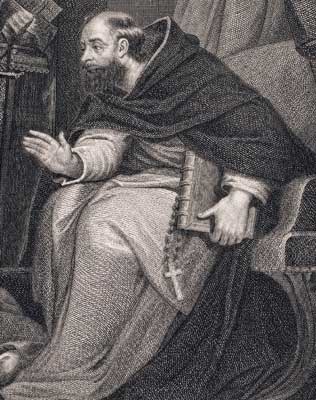
Jane and Feckenham argued about central issues of Christian faith. They disputed matters of ecclesiastical authority, the Eucharist, and the relative importance of faith and works for salvation. The record of their conversation survives in later printed accounts, sometimes subject to editorial influence from Protestant sides. The exact wording of this material must therefore be treated with some caution. The general outcome is not in doubt. Jane refused to abjure the teachings she had studied for years, and she rejected Catholic positions.
Feckenham requested an extension, and Jane’s execution was postponed from February 9th to February 12th. This short delay was not a sign that Mary had restored her earlier plan for clemency. It gave the priest a second opportunity to change Jane’s mind and allowed the young woman to prepare for her end.
Despite their differences, the surviving accounts present a picture of courteous interaction between Jane and Feckenham. He even walked with her on the path to the scaffold
Jane used her time to write. She left messages in books and addressed advice to members of her family. Her writings emphasized the Bible, personal faith, and the hope for eternal life. The British Library points out that the printed versions of her spiritual letters make Jane the first female author whose religious correspondence appeared in English print. These texts kept alive Jane’s own learned voice, even if editors also used them for Protestant purposes.
Jane’s refusal to convert had two meanings. To Mary, it was a final religious failing that left Jane’s soul in jeopardy. To Protestants, it demonstrated courage and steadfastness in the face of Catholic persecution. The disagreement began to shape Jane’s memory even before her death. Her execution was a consequence of treason and political threat, not a formal verdict of heresy. Her final defense of Protestant belief allowed later writers to present the condemned former queen as a martyr for the Reformation.
The Executions of Jane and Guildford
Guildford Dudley was taken from the Tower by guards on the morning of February 12, 1554, to the public scaffold on Tower Hill. As a noble, he was executed by beheading. The crowd outside the fortress gathered to witness his execution. The government made an example of him, a convicted traitor and member of the Dudley family who had engineered Jane’s accession. After his death, his corpse was carried back through the Tower grounds for burial.
The Chronicle of Queen Jane states that Jane watched Guildford leave and then return as a corpse. The writer stated that this “was no less than death.” The author witnessed events inside the Tower, so this account is important. At the same time, it does not provide an unfiltered look at Jane’s personal feelings. Later versions of the story romanticized the moment, but the surviving evidence provides no evidence of a final meeting between the two.
Jane was executed in private on Tower Green because of her high rank. She carried a prayer book to the scaffold and was accompanied by John Feckenham as well as Tower officials and attendants. The reduced space for the event limited the crowd but did not make it a secret. Witnesses were able to take note of her conduct, words, and clothing. Jane spoke to those assembled, knelt, and prepared herself for the axe.
In her scaffold speech, Jane accepted the law she had broken by accepting the crown but denied any desire or intention to gain it. She asked the witnesses to pray for her and declared that she died as a Christian woman. This careful statement accepted the court’s judgment without confirming the later image of an ambitious usurper. She also avoided any criticisms of Mary, whose legal status determined the sentence.

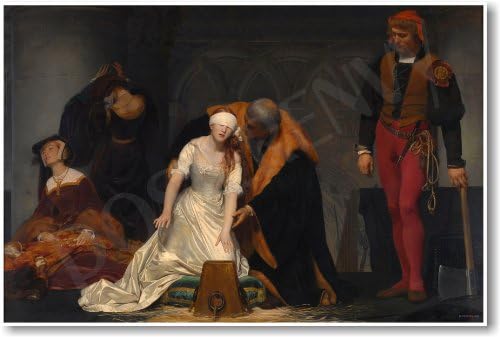
The Chronicle notes a moment of confusion when the blindfolded Jane reached for the block and could not find it. The executioner guided her hand into position. She repeated Christ’s words from the Gospel of Luke: “Lord, into thy hands I commend my spirit.” The executioner’s axe ended her life at around sixteen or seventeen years of age. Jane and Guildford were buried in the Chapel Royal of St Peter ad Vincula inside the Tower.
Punishment Spreads Through the Grey Family
Jane’s execution was not the end of Mary’s reaction to the Wyatt’s Rebellion. Henry Grey was taken to London after his capture and imprisonment in the Tower. He was tried for treason on February 17, 1554. His involvement had been more direct than Jane’s. He had violated the mercy Mary had offered after the 1553 succession crisis. He had fled the capital and tried to rally armed resistance in the Midlands. The court duly convicted him.
Suffolk was executed on Tower Hill on February 23, eleven days after his daughter. Protestant observers of the time praised the fortitude of Jane, Guildford, and Henry at the moment of death. Henry’s execution, by contrast, did not have the same air of innocence. He had chosen to join a conspiracy after receiving a pardon. His actions also made Jane’s continued life seem to be more unsafe. Henry’s fatal decision was not far from the background of his daughter’s death.
Thomas Wyatt remained alive long enough for further interrogation. The government wanted to find out if Princess Elizabeth, Edward Courtenay, or other prominent figures had backed the plot. Wyatt was executed on Tower Hill on April 11. Accounts of his last words vary, not least on whether he implicated or exonerated Elizabeth. London Museum records that he cleared her in his final speech. Such claims mattered because the government had no strong evidence that could convict the princess.
Elizabeth was moved to the Tower in March. She wrote to Mary on March 17, protesting that she had never agreed to any conspiracy. The document is known as the “Tide Letter” because the falling tide delayed her journey to the Tower, giving her time to complete it. Elizabeth crossed out a blank space so that no one could add false material above her signature. She was later moved from the Tower to house arrest rather than being tried for treason.
The wider reaction combined punishment with some selective mercy. Several leading rebels were executed, but many of the lesser participants were pardoned or given shorter penalties. Mary had to deter the risk of a second rising without becoming mired in endless bloodshed. The Grey family paid a particularly heavy price because its dynastic claim had already directly threatened the queen’s crown. Jane, Guildford, and Henry were dead, while Jane’s mother and sisters were allowed to live under close political restrictions. Wyatt’s Rebellion had narrowed England’s uncertain succession by removing one Protestant line’s most visible claimant.
Lady Jane Grey: Victim, Traitor, and Protestant Martyr
Did Wyatt’s Rebellion cause Lady Jane Grey’s death? That depends on what “cause” means. Jane had been convicted and sentenced before the rising began. Mary had the legal authority to execute her at any time. The months of delay, however, show that the queen did not initially treat death as required. The rebellion changed the political context in which that sentence lived. It made continued mercy look more dangerous than punishment.
Jane was legally guilty under Mary’s government because she had accepted the crown and acted as a queen. She was not, however, proven guilty of involvement in the 1554 conspiracy. This distinction matters. To call her wholly innocent erases the active role she played during her nine-day reign. To call her a willing rebel in Wyatt’s cause is to assign motives and actions for which no evidence exists. The story of Jane Grey falls between those two simple judgments.
Later Protestant writers raised a different question. They cared less about the law of succession than they did about Jane’s defense of reform. Her letters, theological writings, and reported behavior at the scaffold offered ideal material for a martyr’s life. John Foxe included her story in Actes and Monuments, first published in 1563. That influential work placed Jane within a larger story of Protestant suffering under Mary.
Art and fiction added further layers. Paul Delaroche’s 1833 painting, for example, shows a blindfolded Jane in a white dress reaching helplessly for the block. The setting, clothing, and emotional arrangement are inventions rather than a literal transcription. The painting turned Jane into an image of youth, purity, and female vulnerability. The National Gallery notes that Protestant supporters had already begun to present her as an innocent martyr within months of her death.
The historical Jane was more complex. She was a learned Protestant, a reluctant or uncertain claimant, a convicted traitor, and a teenager caught up in the dynastic politics of the Tudor era. Mary’s decision was also more than an act of personal cruelty. It grew out of law, fear, counsel, rebellion, and the perceived threat of rival bloodlines. Wyatt’s Rebellion did not create Jane’s sentence, but it eliminated the space for mercy. In that sense, the rising sealed a queen’s fate.