
30 Famous People That Fought in World War II
 Reading Time: 30 minutes
 War changes the lives of those who fight it. For many of the famous people who fought in World War II, before the speeches, movies, bestselling memoirs, and championships, they were ordinary service members. From 1941 to 1945, they wore uniforms, followed orders, and contended with the same fear, longing, and uncertainty as every other service member.
Wartime military service also forged leadership habits and hardened convictions that would later resurface in politics, art, public life, and popular culture. They might have carried their experience quietly or kept it private, and some spoke about it more than others, but nearly all of these people were changed by their war service. The war helped shape the character and choices of people who would later go on to shape the modern world, and the stories of their military service can reveal a lesser-known side of fame forged under pressure.
How This List Was Chosen
This is a list compiled by a simple criterion: each individual’s World War II service is recorded in reliable biographies, service records, or in well-established historical literature. The list is limited to individuals who are noteworthy in their own right for non-WWII reasons (typically politics, entertainment, literature, culture, or civic leadership). It is intended to be a sample of the full range of possibilities, not a long list dominated by a few categories. Choices are therefore drawn from a diversity of nations, services, and types of duty. Those listed include soldiers in ground combat, pilots, sailors, and civilians serving in espionage, resistance movements, and other high-risk situations.
Stories about World War II have also become the subject of myths, and this list does not include claims based on hearsay or inflated legend. War-time careers can also be oversimplified over time, and a number of well-known individuals have apocryphal stories that are repeated as if they have an evidentiary basis. Details of service that are disputed or difficult to confirm are noted and interpreted conservatively.
30 Famous People That Fought in World War II

John F. Kennedy
Rank: Lieutenant (junior grade), U.S. Navy Reserve
Role/Branch: Patrol Torpedo (PT) boat commander, U.S. Navy
Theater/Major Campaign: Pacific Theater (Solomon Islands)
Legacy: Led crew to safety after PT-109 was sunk; later became the 35th U.S. President
Birthplace: Brookline, Massachusetts, USA
John F. Kennedy commanded a patrol torpedo boat, PT-109, in the Pacific as a lieutenant in the U.S. Navy. PT boats were small, fast, agile, and well-armed, and Kennedy’s job was to locate and hunt enemy ships at night and during dangerous close-to-shore missions. PT-109 was just 78 feet long, and its space was crowded for a full crew. Kennedy had to make fast decisions under stress and pressure and lead the small crew under conditions where any mistake might be disastrous.
His most well-known wartime incident occurred in 1943 when the Japanese destroyer Amagiri rammed and sank PT-109. Kennedy’s leadership in guiding the remaining crew to safety, particularly towing an injured crew member to shore, became an iconic tale of his courage and heroism. He later transitioned to a political career, eventually becoming the 35th President of the United States, with the PT-109 story becoming a central part of his legacy.

Jimmy Stewart
Rank: Colonel, U.S. Army Air Forces
Role/Branch: B-24 bomber pilot and squadron/group commander, U.S. Army Air Forces
Theater/Major Campaign: European Theater (Eighth Air Force strategic bombing campaign)
Legacy: Flew combat missions over Nazi-occupied Europe; later became a major film star and enduring American icon
Birthplace: Indiana, Pennsylvania, USA
Jimmy Stewart joined the U.S. Army Air Forces and became a bomber pilot in the European Theater, flying B-24 Liberators in the Eighth Air Force. He was no celebrity mascot on a two-week flight to Paris. He trained, led crews, and flew combat missions over heavily defended targets where flak guns and enemy fighters could shred an aircraft in minutes. Stewart’s wartime job required technical expertise, discipline, and a capacity to maintain men’s focus in the most extreme conditions.
In addition to flying combat missions, Stewart also advanced into leadership, serving as a commander with responsibilities not only for flying but for planning and performance. That command experience is part of the reason he is remembered in that way: not simply as a famous face in uniform but as an officer with real responsibility in a high-casualty air war. He returned to Hollywood after the war, launching one of the most celebrated acting careers in American film, with his service adding heft to his public image.

Princess Elizabeth, a 2nd Subaltern in the ATS standing in front of an ambulance.
Queen Elizabeth II
Rank: Second Subaltern, Auxiliary Territorial Service (ATS)
Role/Branch: Driver-mechanic trainee, British Army’s ATS
Theater/Major Campaign: British home front (wartime training and service in the UK)
Legacy: Served in uniform during WWII; later became the longest-reigning British monarch
Birthplace: London, England
The future Queen Elizabeth II enrolled in Britain’s women’s branch of the British Army (Auxiliary Territorial Service), as a driver and mechanic. The war effort on the home front included training, maintenance, and transport: real jobs that kept the army on the move and sustained the British military throughout the war. In that light, it was a meaningful as well as symbolic step: an instruction and a life of work as a vehicle mechanic, and in the totality of Britain’s wartime social mobilization.
Wartime service was an element of public royal identity formed over time: of duty, of national survival. After the war, Elizabeth fulfilled royal obligations, taking the throne in 1952, and reigned for 70 years. The public memory of a young princess in uniform lived as a reminder that the war touched all corners of British society, even the royal family, and that service was expected and remembered.


George H. W. Bush
Rank: Lieutenant (junior grade), U.S. Navy Reserve
Role/Branch: Naval aviator, torpedo bomber pilot (TBM Avenger)
Theater/Major Campaign: Pacific Theater (Marianas–Bonin operations)
Legacy: Survived being shot down and rescued at sea; later became the 41st U.S. President
Birthplace: Milton, Massachusetts, USA
George H. W. Bush served in the United States Navy as a naval aviator in the Pacific, where he flew TBM Avenger missions from aircraft carriers. Carrier aviation was a perilous occupation: long hours aloft over the ocean, heavy anti-aircraft fire, and the constant risk of having to ditch at sea. Bush’s work involved a blend of technical and physical proficiency with nerve; a mechanical malfunction or navigational error meant almost certain death far from any shore.
His aircraft was shot down during a combat mission in 1944 near the Bonin Islands. Bush was ejected and was rescued by the submarine USS Finback; however, the other crewmen aboard were killed. After the war, he had a significant public career and eventually served as the 41st President of the United States. His war service was seen as having a formative effect on him.

David Niven
Rank: Lieutenant Colonel, British Army
Role/Branch: Infantry officer and staff/liaison duties, British Army
Theater/Major Campaign: European Theater (wartime staff and special liaison work)
Legacy: Left Hollywood to rejoin the Army in 1939; later became an Academy Award–winning actor and international film star
Birthplace: London, England
David Niven was already a known actor when the Second World War began, but he re-enlisted in the British Army and served as an officer rather than a civilian celebrity. Niven’s wartime work combined military discipline with the communication-heavy demands of modern war: liaison and coordination duties that helped keep things connected across fast-moving fronts. This was a kind of service that built upon trust, movement, and accuracy—putting the right people in touch with the right information at the right time.
Niven returned to film work after the war with a public identity formed by actual service and understated professionalism. He went on to be one of the era’s most distinctive leading men, winning an Academy Award and publishing memoirs that further established his reputation for wit and polish. His story is notable because he did not simply “support the war effort” from a distance—he once again took up the uniform and the responsibility of serving during a global crisis.

prince philip mountbatten
Rank: Lieutenant, Royal Navy (wartime)
Role/Branch: Naval officer, Royal Navy (destroyer and fleet service)
Theater/Major Campaign: Mediterranean Theater (convoy and fleet operations)
Legacy: Served at sea during WWII; later became Duke of Edinburgh and consort to Queen Elizabeth II
Birthplace: Corfu, Greece
Prince Philip served with the Royal Navy in World War II. He spent much of the war at sea in the Mediterranean. Naval war there entailed long hours on watch, sudden air raids, and the endless tension of escorting convoys and fleets in disputed seas. His job put him at the heart of modern naval warfare: speed, signaling, and well-trained crews were just as important as artillery.
His service also became part of his long public identity as a working royal with a professional military background. After the war, Philip’s life took a new course as he became the Duke of Edinburgh and husband of Queen Elizabeth II. His later fame is for public service and decades at the monarch’s side. But his record in WWII cemented his image in a generation for whom total war and national mobilization were lived experiences.

Mel Brooks
Rank: Private First Class, U.S. Army
Role/Branch: Combat engineer, U.S. Army
Theater/Major Campaign: European Theater of Operations (Western Europe)
Legacy: Served as a combat engineer in WWII; later became a legendary comedian, filmmaker, and EGOT-winning entertainment icon
Birthplace: Brooklyn, New York, USA
Mel Brooks served in the United States Army during World War II as a combat engineer. Combat engineers were not involved with glamorous work but with urgent and dangerous work. The job of the combat engineer was to clear mines, build bridges, open roads, and keep infantry and armor moving under fire. This meant that engineers often had to work on the very edge of battlefields to solve problems that threatened the survival of their fellow troops using tools, explosives, and fast action.
After the war, he became one of the most significant American comedic voices of the latter half of the 20th century, creating movies and TV shows that would become touchstones of American culture. His time in the war would give him an edge and depth to his humor—a sense of what fear, chaos, and life were truly about —which lent his satire a cutting quality. He would become more famous for his post-war career, which would go on to reshape comedy in the modern world.

The United States Navy Memorial
Yogi Berra
Rank: Seaman, U.S. Navy
Role/Branch: Amphibious forces crewman, U.S. Navy
Theater/Major Campaign: European Theater (Normandy landings/D-Day operations)
Legacy: Served in the Navy during WWII; later became a New York Yankees legend and one of baseball’s most famous personalities
Birthplace: St. Louis, Missouri, USA
Yogi Berra served in the U.S. Navy during World War II, taking part in amphibious operations in the European Theater. As a landing craft crewman, Berra was among those men in the dangerous business of bringing men and material into contested beaches under fire. Amphibious warfare called for discipline and poise, as surf, timing, and enemy ordnance could quickly turn a well-planned mission into chaos.
The landing operations for which Berra is best known in the military were D-Day-era efforts, part of the Normandy invasion and its brutal and exacting process of getting men ashore. He went on to become a baseball legend back home, winning many championships and Hall of Fame inductions, and also becoming something of a celebrity in a second way through his folksy humor and public life.

Ian Fleming
Rank: Lieutenant Commander, Royal Navy Volunteer Reserve
Role/Branch: British Naval Intelligence officer (operations planning and special projects)
Theater/Major Campaign: European Theater (wartime intelligence and planning)
Legacy: Helped plan deception and special operations concepts; later created James Bond
Birthplace: London, England
Ian Fleming was a naval officer on the British Naval Intelligence’s operations planning staff during the Second World War, where “ideas were as deadly as bullets”. Working in operations required creativity and innovation, planning, coordination, and the specialized intelligence work that involved outthinking enemy defenses and counterintelligence measures. Detail and accuracy were key: often it was the tiniest details that would either sink or save the operation, while the ever-present secrecy was the regular pressure that accompanied the job.
The world Fleming saw and worked in during the war became the inspiration for his postwar career as a public figure. After 1945, Fleming used his knowledge and experience of espionage, its culture, tradecraft, and bureaucracy to create James Bond, and thus the entire franchise: a body of work capitalizing on the wartime realities of codes, covert operations, and a glamour shadowed by danger that was recast for the modern era as some of the most successful spy stories ever told.
![The James Bond Collection 25 Film [Blu-ray] + No Time to Die [Blu...](https://m.media-amazon.com/images/I/41XmByvLVxL.jpg)



Ronald Reagan
Rank: Captain, U.S. Army Air Forces
Role/Branch: Public Relations and training films, First Motion Picture Unit (USAAF)
Theater/Major Campaign: U.S. home front (wartime film and communications work)
Legacy: Helped produce training and morale films for the air war; later became the 40th U.S. President
Birthplace: Tampico, Illinois, USA
Ronald Reagan was a member of the United States Army Air Forces during World War II, and was posted to the First Motion Picture Unit, working on film and communications. The unit was responsible for producing training films, instructional and information material, and propaganda films which provided aircrew training and messaging for the war effort. In a conflict that relied on rapid, standardized training and massive mobilization, it was a useful means to create an effective fighting force at scale.
Reagan’s service in WWII was limited to the continental US, but in a total war that required coordination of all available resources, messaging, and morale played a large part. After 1945, he returned to acting and the public sphere and entered politics as the 40th President of the United States. His role in the Second World War became part of a larger story: service in a time of national crisis, and a long career in public-facing and communicative roles.

J. D. Salinger
Rank: Sergeant, U.S. Army
Role/Branch: Infantry service and Counterintelligence Corps duties, U.S. Army
Theater/Major Campaign: European Theater (Normandy and later campaigns)
Legacy: Carried frontline experience into postwar literature; later became the author of The Catcher in the Rye
Birthplace: New York City, New York, USA
J. D. Salinger served with the United States Army in the European Theater and was present at several key campaigns as the war ground its way across Western Europe. Combat brought him right up against the front lines of the fighting, where war was tiring, terrifying, and always took him to the next station. He didn’t know what to expect. He saw the cost of modern warfare from the front lines, and this experience would shape the careful emotional realism and wary tone of his work.
In the post-war years, Salinger became one of America’s most important literary voices, thanks to his most famous novel, The Catcher in the Rye. The experience of war did not, however, turn into chest-thumping or heroism. It lurked behind his work like a specter, informing his preoccupations with trauma, disillusionment, and post-violence attempts to just be normal.

Clark Gable
Rank: Major, U.S. Army Air Forces
Role/Branch: Aerial gunner-observer and unit film project work, U.S. Army Air Forces
Theater/Major Campaign: European Theater (Eighth Air Force bombing campaign)
Legacy: Flew combat missions to document air war; returned to become a defining Hollywood leading man
Birthplace: Cadiz, Ohio, USA
Clark Gable served in the United States Air Force during World War II, combining combat exposure with film work. He flew over Europe as an aerial gunner-observer on several missions, from start to finish, in the midst of anti-aircraft artillery (flak) and fighter attacks and the high pressures within bomber formations. The purpose was to produce imagery of the air war in a training, informational, and motivational mode, but it was flying into actively contested skies where nothing was certain.
Gable’s film work produced footage to depict what the bomber crews were doing; it was an effort to put cinema in the war-making service. He was back home with the gravitas of having flown missions, as opposed to being a detached Hollywood star. Post-war, he returned to his work and remained one of Hollywood’s most immediately recognizable figures, with a touch of seriousness added by his war service.

Richard Nixon
Rank: Lieutenant Commander, U.S. Navy Reserve
Role/Branch: Supply and logistics officer, U.S. Navy
Theater/Major Campaign: Pacific Theater (South Pacific service)
Legacy: Wartime logistics work supporting combat operations; later became the 37th U.S. President
Birthplace: Yorba Linda, California, USA
Richard Nixon served in the US Navy in the Pacific in World War II. He was in supply and logistics, the sort of work that rarely makes headlines, but soldiers die without. In the island war, fuel, parts, food, and transport were as decisive as ordnance. Nixon’s work managed equipment and movement in the crucible of distance, weather, and the ceaseless demand of operations; it helped keep fighting units in action in a theater built on extended supply lines.
He later went into politics and rose rapidly, becoming the 37th President of the United States. His war service had no signature combat story to return to, but was built around responsibility and organization within a massive war machine. It reflected a larger truth of the Second World War: victory owed as much to those who managed to get the right stuff to the right place at the right time as to those who pulled triggers.
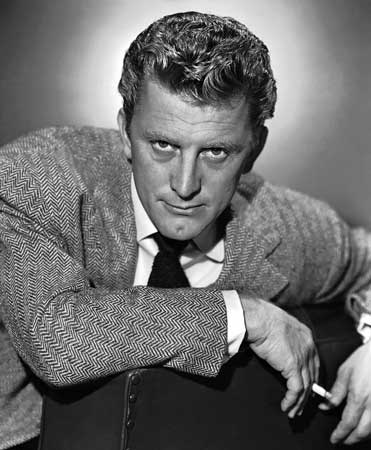
Kirk Douglas
Rank: Lieutenant (junior grade), U.S. Navy
Role/Branch: Communications and gunnery officer in anti-submarine warfare
Theater/Major Campaign: Pacific Theater (submarine chaser duty)
Legacy: Served aboard USS PC-1139 hunting submarines; later became a major Hollywood star and producer
Birthplace: Amsterdam, New York, USA
Douglas enlisted in the United States Navy in 1941 and served as a communications officer in anti-submarine warfare on the submarine chaser USS PC-1139. As an escort/patrol boat crew member, he was involved in the tense, repetitive daily perils of hunting enemy subs and responding quickly to sonar/marine acoustic contacts on the open seas. It was a type of warfare that rarely made headlines, but one requiring nerves of steel.
Douglas was discharged after being injured in a depth charge explosion in 1944. He returned to civilian life and achieved iconic status as an American film actor in classics such as Spartacus. He was known for his tough, intense, and driven performances. His experiences in the Navy formed a component of the hard-edged discipline of his public persona for many decades.

Stan Lee
Rank: Sergeant, U.S. Army
Role/Branch: Signal Corps; Training Film Division writer and illustrator
Theater/Major Campaign: U.S. home front (wartime training and communications)
Legacy: Helped train troops through manuals, films, slogans, and cartoons; later co-created Marvel’s most iconic heroes
Birthplace: New York City, New York, USA
Stan Lee served in the U.S. Army during World War II. Assigned to the Signal Corps, he was initially trained for communications work. The Army reassigned Lee to the Training Film Division, which used his skills as a writer and creator to produce useful information, such as manuals, training films, and publications. His job, in short, was to help train soldiers on what to do when they were put under pressure. He wasn’t seeing action, but it was an active war, and his war work fed into combat: clear information, delivered quickly, could save a life.
What’s interesting in this story is how directly his talent led to his assignment. Lee later said he was given a rare creative classification for the work he was doing, writing scripts and other training materials to support the military’s enormous learning project. He returned to comics after 1945 and became one of the major figures of contemporary pop culture, becoming Marvel’s voice and helping to create Spider-Man, the X-Men, and other characters whose fame he built long after his military service was complete.

Lee Marvin
Rank: Private First Class, U.S. Marine Corps
Role/Branch: Rifleman, U.S. Marine Corps
Theater/Major Campaign: Pacific Theater (Marianas campaign; Battle of Saipan)
Legacy: Wounded in combat in 1944; later became an Oscar-winning film star known for tough, war-scarred roles
Birthplace: New York City, New York, USA
Lee Marvin served in the U.S. Marine Corps in the Pacific Theater, where the war was a series of battles fought island by island at close range. As a Marine rifleman, his role was straightforward and perilous. He went on assaults, patrols, and into the line of fire, holding ground in punishing heat and harsh terrain. The fighting in the Pacific exacted a physical toll and required calm nerves. Marvin would experience the war in the theater and in the manner in which it was least forgiving, at the pointy end, under fire.
In 1944, Marvin was injured in the Battle of Saipan, a wound that brought an end to his combat service on the front line. After the war, he would go on to act, earning his fame in later life through a series of roles that projected an edge, often playing soldiers, misfits, and men forged by violence. Marvin became a well-known film actor, but the physical reality of his wartime experience imbued him with an authority that made his toughness his hallmark.

Alec Guinness
Rank: Lieutenant, Royal Navy Volunteer Reserve
Role/Branch: Landing craft officer, Royal Navy (amphibious operations)
Theater/Major Campaign: Mediterranean Theater (Allied amphibious landings)
Legacy: Commanded landing craft in wartime operations; later became an acclaimed actor, including his famous role as Obi-Wan Kenobi
Birthplace: London, England
Guinness served for the Royal Navy as a landing craft officer during the Second World War. Landing craft was a dangerous job close to the line of amphibious attack: crews had to land troops and equipment at enemy coasts under air attack or artillery fire. The work was monotonous, tiring, and perilous, as even a single error in timing or navigation could cost soldiers their lives and compromise an entire landing.
His war experience provided practical insight into the mechanics of modern warfare: planning and coordination, as well as sudden chaos at sea. Guinness returned to the stage and film after 1945 and became one of Britain’s best-loved actors. He became well-known both for dramatic classics and global pop culture, but his wartime service is a reminder that, for years, he was not performing on film sets, but serving in military operations where real lives depended on accurate execution.

Bob Dole
Rank: Second Lieutenant, U.S. Army
Role/Branch: Infantry officer, U.S. Army (10th Mountain Division)
Theater/Major Campaign: European Theater (Italian Campaign)
Legacy: Severely wounded in combat in 1945; later became longtime U.S. Senator and major national political figure
Birthplace: Russell, Kansas, USA
Bob Dole served in the U.S. Army during World War II. He fought in the Italian Campaign as an infantry officer in the 10th Mountain Division. The 10th was a highly specialized unit whose personnel were rigorously trained to fight in demanding terrain. During late-war operations in Italy, the division’s infantry regiments would engage in hard, close combat in the hills and villages of northern Italy, where “every bush, every pile of rocks, every rise of ground” might conceal an enemy machine gun. Dole served in those regiments with front-line troops who saw combat of a physically punishing and tactically meticulous nature.
In April 1945, Dole was severely wounded in action. The injuries he sustained would stay with him for the remainder of his life, and he spent many months recuperating. In the years after the war, Dole would build a long career of persistence and public service that would take him to positions of prominence as a U.S. Senator and national political leader.

Ted Williams
Rank: Second Lieutenant, U.S. Marine Corps Reserve
Role/Branch: Naval aviator in training, U.S. Marine Corps
Theater/Major Campaign: U.S. home front (wartime flight training and preparation)
Legacy: Put baseball career on hold for military aviation; later became a Boston Red Sox legend and one of the greatest hitters in MLB history
Birthplace: San Diego, California, USA
Ted Williams was in the U.S. Marine Corps in World War II. He was a pilot, learning to fly in a plane and officially trading in baseball at Fenway Park. That took up a lot of time and energy, as the military aviation pipeline of ground schooling, flight hours, and incessant testing was grueling. It was also perilous even in peacetime, and it reflected how the war was fought in large-scale production of airmen.
It’s not that Williams wore a uniform to become famous, but the uniform he came back to is why we know him. He returned to baseball after the war and re-entered the public eye as a once-in-a-generation hitter, building the legend that he did. His service is one to remember, because it was a voluntary departure from the nation’s brightest star during an emergency, and it was for a position where the stakes were real.

Joseph Heller
Rank: Staff Sergeant, U.S. Army Air Forces
Role/Branch: B-25 bombardier, U.S. Army Air Forces
Theater/Major Campaign: Mediterranean Theater (Italian Campaign; 12th Air Force)
Legacy: Flew combat missions over Italy; later wrote Catch-22, one of the most influential war novels of the 20th century
Birthplace: Brooklyn, New York, USA
Joseph Heller was a bombardier in the U.S. Air Force during World War II. He flew 60 combat missions in B-25 Mitchell medium bombers in the Mediterranean, launching attacks from bases in Italy. His war experience involved hours of briefing before missions, runs over targets, flak attacks, and knowledge that any mission might be the last. Heller had to be accurate under great pressure as a bombardier, as a crew depended on his timing and judgment for success and survival.
Heller became a writer and drew on military bureaucracy, fear, and absurdity to create his most famous work. Catch-22 defined the paradoxical traps of military logic with incisive satire and macabre wit, turning the author’s wartime experiences into a cultural catchphrase. Heller’s postwar success was not due to a war hero status, but to his ability to convey the realities of combat in a narrative still used to discuss war and bureaucracy.

Lyndon B. Johnson
Rank: Lieutenant Commander, U.S. Naval Reserve
Role/Branch: Naval officer on wartime fact-finding/observer duty
Theater/Major Campaign: Pacific Theater (Southwest Pacific, 1942)
Legacy: Wartime service included a combat mission as an observer; later became the 36th U.S. President
Birthplace: Stonewall, Texas, USA
Lyndon B. Johnson served in the U.S. Naval Reserve during World War II and spent time in the Pacific on an observe-and-report assignment. The job was to gather information about conditions, readiness, and the nuts and bolts of fighting in the Southwest Pacific. In a war fought over vast distances, that kind of mission was important because it connected front-line realities to decisions made far from the battlefield.
Johnson is often linked to a 1942 flight over a combat zone during his Pacific tour. That episode was incorporated into his public biography after he returned to the United States and resumed his political career, which rapidly propelled him through Congress to his position as the 36th President of the United States. His wartime service was often invoked as one of the early chapters in a life of national leadership.

Charles Bronson
Rank: Corporal, U.S. Army Air Forces
Role/Branch: Aerial gunner (B-29 Superfortress crewman), U.S. Army Air Forces
Theater/Major Campaign: Pacific Theater (missions from Guam over Japan)
Legacy: Flew 25 combat missions and earned a Purple Heart; later became a major Hollywood action star
Birthplace: Ehrenfeld, Pennsylvania, USA
Charles Bronson (born Charles Dennis Buchinsky) joined the military in 1943 during World War II and trained as an aerial gunner. Their job was “long hours, close discipline, and sudden periods of sheer terror when you were hit with flak or fighters from out of nowhere while patrolling the bomber stream. In 1945, Bronson was a B-29 Superfortress crewman based on Guam, flying combat missions over Japan.
Bronson flew 25 missions and received a Purple Heart after being wounded, a stark reminder that even “support” jobs in the air war were perilous life-or-death jobs. After the war, Bronson reinvented himself on the screen, taking on hard-edged roles and a steely, unshakeable screen presence that came to define an era of action cinema.


Norman Lear
Rank: Technical Sergeant, U.S. Army Air Forces
Role/Branch: B-17 radio operator and gunner, U.S. Army Air Forces
Theater/Major Campaign: Mediterranean Theater (15th Air Force strategic bombing from Italy)
Legacy: Flew dozens of combat missions over occupied Europe; later created landmark TV series that reshaped American culture
Birthplace: New Haven, Connecticut, USA
Norman Lear served in the U.S. Army Air Forces, stationed in Italy with the 15th Air Force. He flew combat missions as a B-17 radio operator and gunner. The position had a two-fold stressor: Maintain communications, and shoot at enemy aircraft or flak after it closed in. He later reflected on the indelicate nature of the air war, describing it in such blunt terms as: “They don’t all hit the targets.
Lear was not a household name because of his time in the military. He later gained fame as one of television’s most powerful producers, redefining the modern sitcom and social commentary through shows that broadened the spectrum of what prime-time TV could address. His military experience certainly contributed to the gravity behind his comedy – the knowledge of how much larger events could dwarf individual lives, and how art can open people’s eyes to one another.

Roald Dahl
Rank: Pilot Officer, Royal Air Force
Role/Branch: Fighter pilot, RAF
Theater/Major Campaign: North Africa (Western Desert air war)
Legacy: Flew combat as a young fighter pilot; later became one of the world’s most famous children’s authors
Birthplace: Llandaff, Wales
Roald Dahl became an RAF fighter pilot and was deployed to North Africa in the first chaotic months of the war in the Western Desert. The featureless expanse of the desert, with little to guide you when flying hundreds of miles, provided a daily challenge. RAF pilots encountered aircraft breakdowns and other navigational hazards. One minute, you were airborne; the next, you were in a dogfight. The job required swift decision-making and a cool head: one misjudgment in the air or a hard landing in the desert could be your last.
One such near-death experience was a crash in Libya that left Dahl with severe injuries that would follow him for the rest of his life. He would later recount his experiences in autobiographical works, writing of the matter-of-fact fear and confusion of war with the phrase, “I began to sweat with fear.” Post-WWII, he became a storyteller and went on to achieve international success with works such as Charlie and the Chocolate Factory, Matilda, and The BFG. The experience of those war years left a mark of dark creativity on Dahl.

William Holden
Rank: First Lieutenant, U.S. Army Air Forces
Role/Branch: First Motion Picture Unit (training films), U.S. Army Air Forces
Theater/Major Campaign: U.S. home front (wartime training and communications)
Legacy: Helped produce USAAF training films during WWII; later became an Oscar-winning Hollywood star
Birthplace: O’Fallon, Illinois, USA
Holden was a second lieutenant in the U.S. Air Force who was later promoted to first lieutenant. Rather than serving overseas, he was assigned to the First Motion Picture Unit, where he appeared in and helped produce training films used to train airmen and standardize practices and procedures. These training films were part of a system that transformed civilians into competent air force personnel during a war that required skilled airmen and ground crews to be produced at a breakneck pace.
Holden resumed his acting career after the war with greater maturity and seriousness that was apparent to the public. He became one of the most popular film stars of the 1950s, winning the Academy Award for Stalag 17, then starring in films like Sunset Boulevard and The Bridge on the River Kwai. His service in WWII is one small piece of evidence that “fighting” total war required men to work in building the training and supporting systems for the people doing the fighting at the front.

Kurt Vonnegut
Rank: Private First Class, U.S. Army
Role/Branch: Infantry soldier, U.S. Army (106th Infantry Division)
Theater/Major Campaign: European Theater (Battle of the Bulge; POW in Germany)
Legacy: Captured in 1944 and survived the Dresden bombing as a POW; later wrote Slaughterhouse-Five
Birthplace: Indianapolis, Indiana, USA
Kurt Vonnegut served in the U.S. Army in Europe during World War II as an infantryman in the 106th Infantry Division. He was captured by German forces in late 1944 when the German army made a counter-attack, the Battle of the Bulge, and Vonnegut and others were caught in the chaos as units fell apart under fire. Vonnegut was soon caught and sorted into the German prison system, another disorderly process, but inside the enemy’s lines, where he waited out the end of the war as a prisoner of war. The fall from combat to captivity helped to form Vonnegut’s memory of the war.
In his POW camp in Dresden, he survived the city’s fire-bombing in an underground slaughterhouse, which would be the basis of his most popular book, Slaughterhouse-Five. After the war, he was able to channel the shock into anti-war satire, employing a direct style and a deadly gallows humor to make clear the degree to which war can scramble meaning. He is best known for that novel and for a postwar literary voice that rendered suffering legible without elevating it into a noble sense.

Gerald Ford
Rank: Lieutenant Commander, U.S. Naval Reserve
Role/Branch: Assistant navigator and gunnery officer, U.S. Navy (USS Monterey, light aircraft carrier)
Theater/Major Campaign: Pacific Theater (carrier operations in 1943–1945)
Legacy: Served on a Pacific aircraft carrier during major combat operations; later became the 38th U.S. President
Birthplace: Omaha, Nebraska, USA
Ford served in the Pacific with the United States Navy aboard the light aircraft carrier USS Monterey. Life for a carrier war group involved flight operations, air alerts, and weeks or months at sea with navigation, discipline, and stamina keeping the ship alive. Ford worked in navigation and performed other shipboard jobs to keep the carrier operational during high-tempo flight operations.
He lived through the perils of naval war, from severe weather to the daily stress of operating in contested areas. Following the end of World War II, Ford returned home to politics and advanced through the ranks of Congress. He would eventually become the 38th President of the United States, and his service in WWII would be a prominent feature of his public identity as a calm, steady leader shaped by wartime duty.

Jack Lemmon
Rank: Ensign, U.S. Navy
Role/Branch: Communications officer, U.S. Navy
Theater/Major Campaign: World War II service (aircraft carrier duty)
Legacy: Wartime naval service before becoming an Oscar-winning actor
Birthplace: Newton, Massachusetts, USA
Jack Lemmon was an officer in the United States Navy during World War II. He received a commission as an ensign and served as a communications officer attached to an aircraft carrier. In that capacity, Lemmon was part of the Navy’s essential communications and command center. It was his job, along with others’, to relay and receive messages that were key to the operations of naval vessels and their crews.
He was not an infantryman on the front lines, but a career in the Navy is not without its own discipline and demands, even outside of combat. Long days, a rigorous routine, and the unspoken knowledge that a misstep or a miscommunication in the flow of information and operations could have serious consequences.
Jack Lemmon was a successful, award-winning actor. After his years of service, he returned to civilian life and, over the next several decades, became one of the most popular actors of his generation. Lemmon was well known for both comedic and dramatic roles, and he was one of the primary names associated with The Apartment, receiving a Best Actor Oscar for his role in the film.

Ernest Borgnine
Rank: Gunner’s Mate First Class, U.S. Navy
Role/Branch: Anti-submarine warfare crewman (gunnery), U.S. Navy
Theater/Major Campaign: Battle of the Atlantic (U.S. coastal patrols)
Legacy: Served nearly a decade in the Navy through WWII; later became an Academy Award–winning actor
Birthplace: Hamden, Connecticut, USA
Ernest Borgnine served in the U.S. Navy for about ten years, including during World War II, and advanced from seaman to gunner’s mate first class. He did mostly anti-submarine patrol duty during the war, the tense, repetitive work of watching for underwater threats and quickly responding to a radar or sonar contact that might suddenly become a deadly attack. It was not exactly glamorous service, but it was important: safeguarding the shipping lanes and coastal waters that kept the Allied war machine supplied.
After the war, Borgnine became known for his tough demeanor in a string of popular movies and won an Academy Award for his performance in Marty. His service was always a point of pride, and his later celebrity was often seen as having the authenticity of someone who had been in the front lines of a high-tension, high-alert wartime Navy

Tony Curtis
Rank: Signalman Third Class, U.S. Navy
Role/Branch: Signalman aboard USS Proteus (AS-19), U.S. Navy
Theater/Major Campaign: Pacific Theater (submarine force support)
Legacy: Served through WWII in the Pacific; later became a major Hollywood star
Birthplace: New York City, New York, USA
Tony Curtis (Bernard Schwartz) enlisted in the U.S. Navy in 1943 and trained as a signalman, a highly skilled job that coordinated ships via flags, lights, and communications. Curtis was sent to the Pacific, where he was stationed aboard the submarine tender USS Proteus, which supported submarines and other operations in the naval war against Japan.
Curtis later said that he watched the Japanese surrender in Tokyo Bay from the signal bridge of his ship, and it was this vantage point from the deck of a working ship, rather than on land, that represented the end of the war to him. Curtis returned to civilian life after 1945 and became one of the iconic movie stars of the 1950s and 1960s, starring in such classics as Some Like It Hot and The Defiant Ones.
Why These Stories Matter Today
Famous people that fought in World War II matter because their service often shaped the way they later led, created, or influenced society. War hardens instincts, sharpens judgment, and can leave deep psychic scars that manifest in politics, art, and public life. Military experience informed some leaders’ decisions about alliances and conflict, while others drew on it in novels, films, and performances that helped later generations understand fear, sacrifice, and survival. The wartime chapter of their stories makes the “famous” chapter more human and easier to understand.
These stories also matter because “fought” meant many different things. Infantry endured close combat and exhaustion; aircrew faced flak and long odds; sailors lived on steel decks in the path of death; intelligence and communications personnel fought with information and planning. Famous people who fought in World War II reflect that range and show how victory required many kinds of courage, not just one.
Finally, treat these profiles as jumping-off points. Look up service records, unit histories, citations, letters, and wartime interviews to verify details and add texture. Primary sources separate legend from fact and reveal what a simple headline cannot: where someone served, what they faced, and how the war changed them. That kind of digging turns a list into real history.

![[Video] Female Resistance Fighters of WW2 Part 1](https://historychronicler.com/wp-content/uploads/2025/04/Screenshot-2025-04-05-at-12.11.15)