13 Legendary Beast Sightings That Terrified Our Ancestors
 Reading Time: 21 minutes
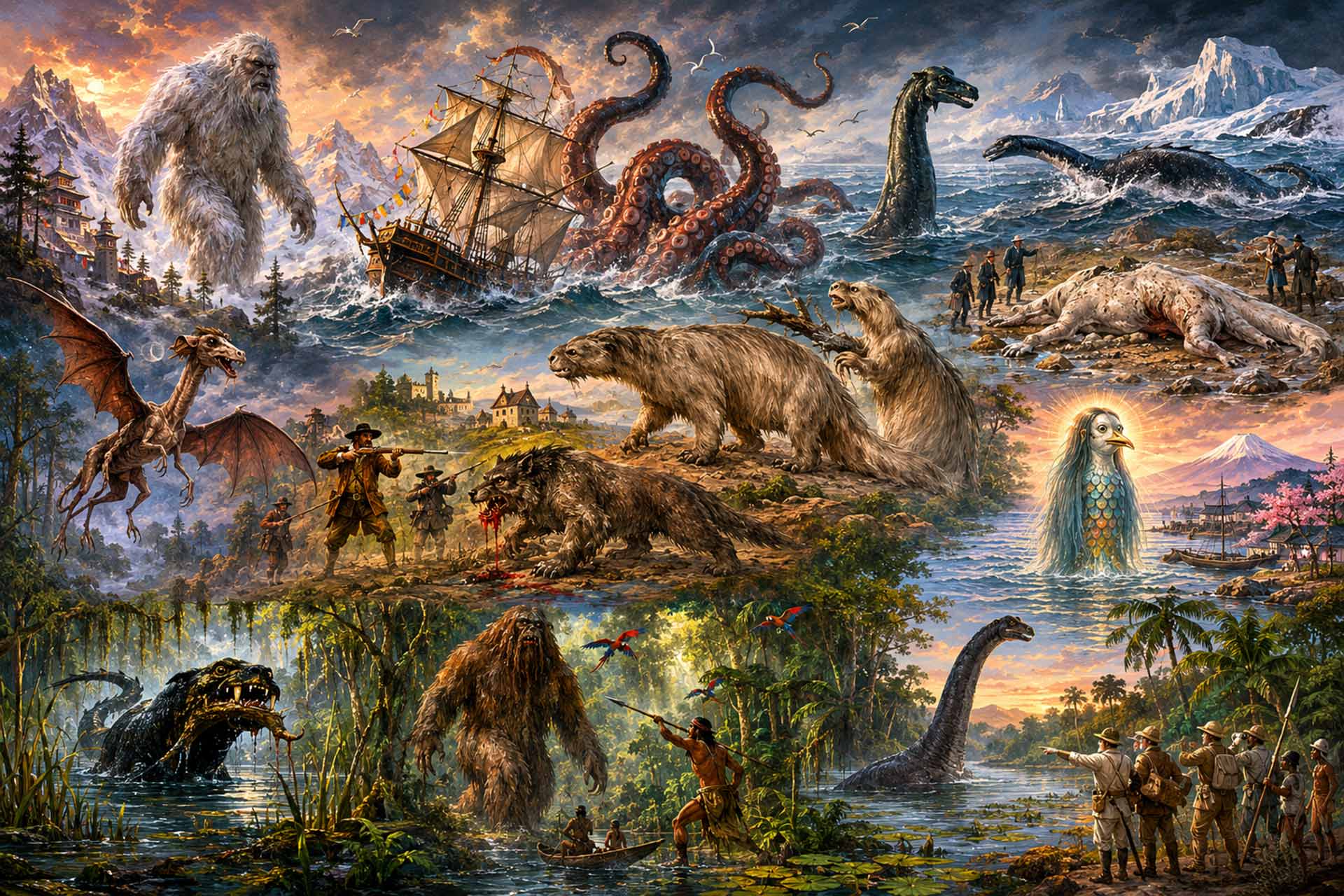
 Legendary beasts were not always the subject of folklore, fantasy, or fireside ghost stories. Reports of strange animals in forests, lakes, mountains, and seas were documented for centuries and sometimes believed strongly enough to warrant organized hunts, official investigations, and newspaper coverage. From the murderous Beast of Gévaudan of eighteenth-century France to enormous sea serpents reported by mariners, a great grey area of uncertainty lay between the fields of natural history and the fancy of myth. Some reports involved actual attacks, or left a trail of verifiable eyewitness testimony. Others became more outlandish with each repetition.
The 13 cases covered here all have a provenance for their sightings or legends dating back to before 1900. Their inclusion does not necessarily mean the beasts existed exactly as witnesses described. Wolves, sharks, giant squid, unknown animals, mistaken identity, exaggeration, fear, and folklore can account for many such claims. But the historical reports themselves are often very real. Examining the original reports and trying to separate later legend from surviving evidence can reveal what our ancestors believed might lurk just outside the known world.
13 Legendary Beast Sightings Prior to the 20th Century
The Beast of Gévaudan — France, 1764–1767
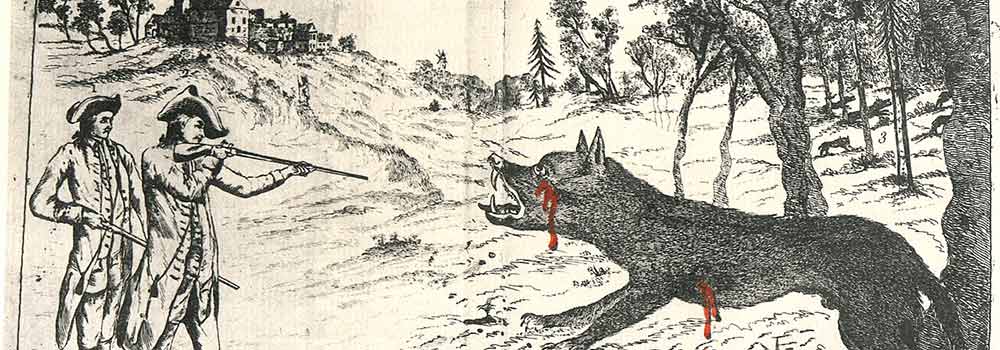
The Report: Terrifying rumors surfaced in the summer of 1764 in Gévaudan, a pastoral part of south-central France. A great beast was killing people, usually women and children who were tending livestock in remote rural areas. The attacks persisted for about three years and became so infamous that they drew the attention of King Louis XV. The Beast of Gévaudan differed from many other mythical creatures because it emerged from a real series of fatal animal attacks.
What Witnesses Claimed: Witnesses often called the creature much larger and more powerful than a normal wolf. It had been described as reddish, tawny, or gray with a dark stripe down the back, a broad chest, and an especially long tail. Descriptions were understandably inconsistent from witness to witness, given their frightened state while viewing a swiftly moving animal. Testimony about the animal’s supposed cunning and preference for human prey helped make an unidentified predator seem sinister, like a legendary beast of antiquity.
The Hunt/Reaction: Local hunters initially chased the beast, but a series of failures turned the whole affair into a national scandal. Soldiers and professional hunters were called in. François Antoine, the king’s gun-bearer, killed a large wolf in September 1765, and officials were sure the crisis was over. Attacks later continued. In June 1767, local hunter Jean Chastel killed another large animal, after which the famous attacks virtually ended.
Possible Explanation: Wolves remain the most traditional explanation, even though historians debate whether one wolf acted more aggressively than usual, multiple wolves were involved, wolf-dog hybrids were responsible, or some other animal was involved. The ideas about hyenas, trained attack animals, serial killers, and complex conspiracies are much more difficult to justify. The story also collected embellishments long after the attacks had stopped.
What We Actually Know: Predators really did attack and kill people in Gévaudan, and real hunts really were mounted by the authorities to hunt them down. The mystery is in who or what the predator or predators were. The contemporary accounts leave an unusually detailed paper trail, but they do not prove the existence of a supernatural monster. Gévaudan demonstrates how a real predator, repeated tragedy, public hysteria, and sensational reporting could interact to produce a Legendary Beast
The Wolf of Ansbach — Germany, 1685
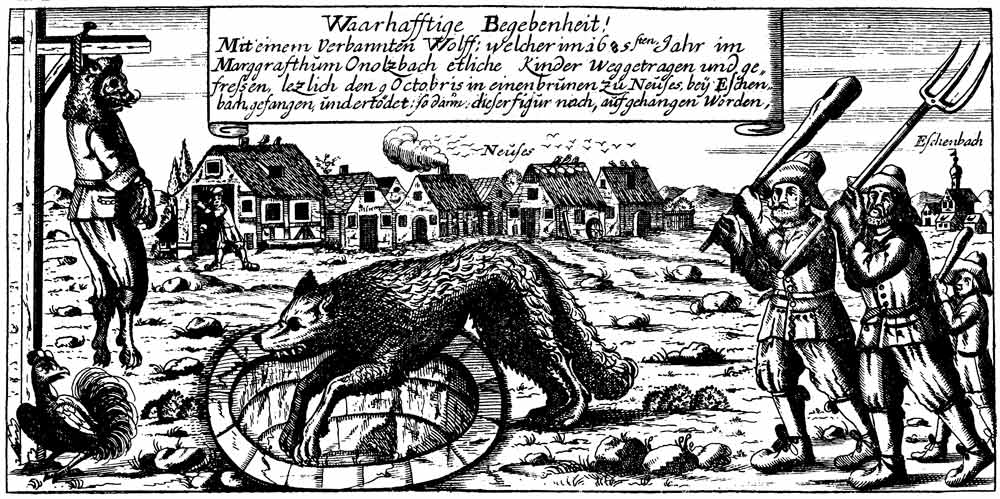
The Report: In the summer of 1685, a man-eating wolf was supposedly attacking people and livestock in and around the city of Ansbach, in the Holy Roman Empire. According to a nineteenth-century embellishment by German folklorist Ludwig Bechstein, the wolf killed adults and children. Fear became so intense that rural folk were afraid to venture into the fields. The animal soon took on an identity much stranger than that of a mere wolf.
What Witnesses Claimed: Witnesses popularly identified the wolf with the spirit of the recently deceased mayor and official of Ansbach, Michael Leicht. The unpopular Leicht was apparently rumored to have returned from the dead as an animal, and the wolf was interpreted in a world where supernatural punishment, werewolves, restless spirits, and corporeal animals could all be relevant.
The Hunt/Reaction: It was declared that the beast should be hunted down. On October 10, Bechstein’s story continues: the wolf pursued game near Neuses, fell into a covered well, and was killed. Its subsequent treatment was remarkable. The carcass was dressed as a human and displayed from a gallows. The wolf was stuffed, given a humanlike face, clothed, and given a wig. It was symbolically punished as both a wolf and an evil official.
Possible Explanation: A real wolf needs no other explanation. Wolves were common in seventeenth-century Germany and did sometimes attack humans. When a particular wolf became infamous, local resentment toward the deceased official may have turned it into something more. The wolf became a receptacle of fears largely unrelated to zoology.
What We Actually Know: The Ansbach example shows that a real animal can become a legendary beast without anyone attributing it to an unknown species. The monster was in the interpretation imposed on it. What the surviving tradition tells us less about werewolves than about how early modern Europeans could fuse animal attack, political grievance, death, and the supernatural.
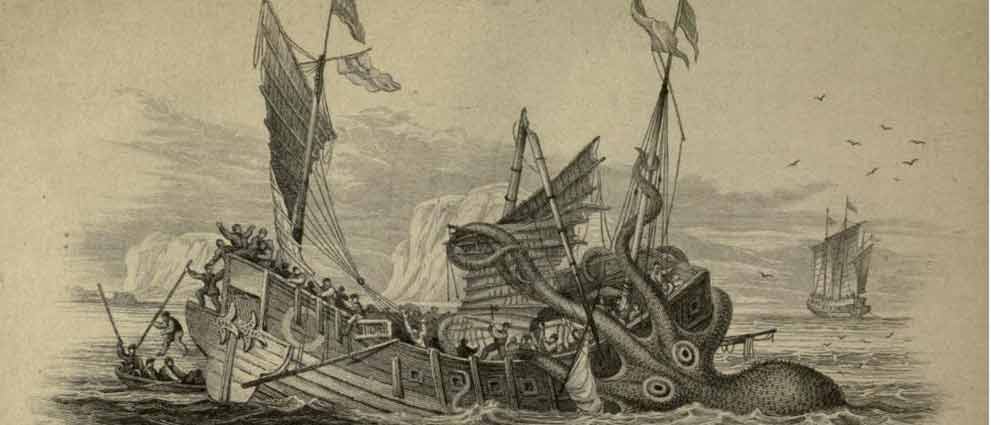
The Kraken — Norway and the North Atlantic
The Report: Eighteenth-century readers learned about the Kraken in works that purported to be natural history. Erik Pontoppidan, Bishop of Bergen, discussed the sea’s extraordinary creatures in his Natural History of Norway. An English translation was published in 1755 and is available in the Smithsonian Libraries and Archives through the Biodiversity Heritage Library.
What Witnesses Claimed: Kraken tales spoke of a sea animal of incredible magnitude. Parts of its body could be confused with small islands. Fishermen linked its presence to huge schools of fish. Some stories said that when the creature dove, it created currents or whirlpools hazardous to ships. The size ascribed to it greatly surpassed that of any animal known to modern zoology.
The Hunt/Reaction: There was no single Kraken hunt like the hunt for the Beast of Gévaudan. The legend developed over generations of North Atlantic seafaring experience. Fishermen worked in waters that teemed with whales, large sharks, squid, bizarre carcasses, and animals that might be glimpsed for only a moment. Pontoppidan’s decision to include such reports in a book on natural history helped push the Kraken from sailors’ lore into Europe’s debate over what might really inhabit the deep.
Possible Explanation: The giant squid is a transparent basis in reality for at least some Kraken lore. These huge-eyed cephalopods have long tentacles and can grow very large. Whales, floating corpses, floating heaps of sea creatures, and strange ocean phenomena may have played a part too. Giant squid do not confirm the enormous Kraken of myth, but they do show that mariners were not hallucinating every leviathan they saw.
What We Actually Know: There is no evidence for a fleet-swallowing island-sized cephalopod. But don’t count the Kraken as complete fiction. It arose in a seafaring milieu full of animals about which Europeans knew little. Legends like this can remind us that sometimes a monster yarn can save a warped view of something truly awesome in nature.
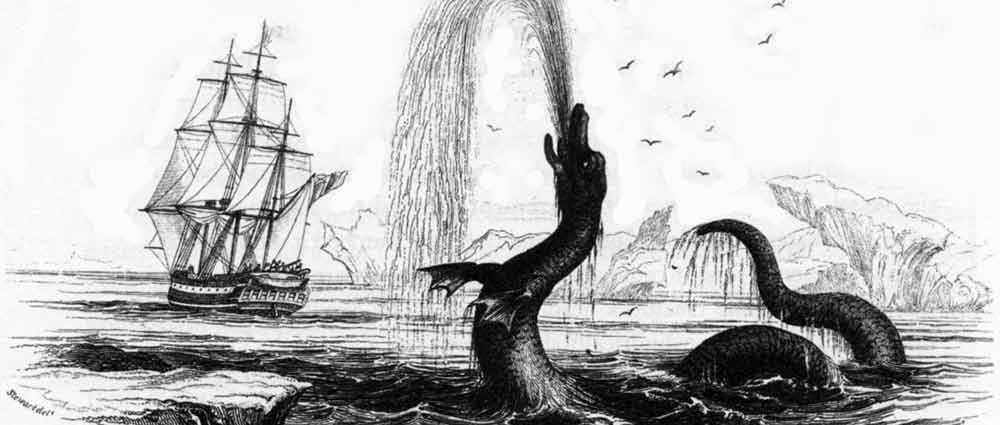
Hans Egede’s Sea Monster — Greenland, 1734
The Report: One of the best known of all alleged sea serpent sightings took place off Greenland on July 6, 1734. It became linked to missionary Hans Egede, whose later-published account described a massive marine creature. Further study of the early accounts has clarified one point: Hans himself did not actually see the animal. His report was secondhand, while his son, Poul Egede, and others on board the ship provided the eyewitness account.
What Witnesses Claimed: It was said to be enormous, very high out of the water, and long-bodied or tailed. The descriptions of the sea creature noted its extreme proportions and unusual appearance. Hans Egede would later refer to it as a “most dreadful monster.” Not every large marine animal was an enigma to the Egedes, as the family was familiar with Greenland’s whales.
The Hunt/Reaction: No one tried to capture the creature. Publication gave it a second life. Egede’s description and subsequent illustrations circulated among an enraptured European reading public, eager for all things Arctic and its exotic wildlife. A short encounter thus entered the much broader eighteenth- and nineteenth-century discussion of sea serpents and other unknown ocean creatures.
Possible Explanation: A careful modern review of the surviving accounts concluded that the witnesses most likely saw a whale. They suggested a humpback, North Atlantic right whale, or gray whale. The authors did not rule out that part of a whale’s anatomy, seen from a distorted angle, created the bizarre description.
What We Actually Know: Something big was seen off Greenland, but we cannot reconstruct the encounter with sufficient confidence to be able to say what it was. In any case, the surviving accounts show how easily a sighting of a large animal could turn into a monster story. Egede’s beast is interesting precisely because several early versions survive and show how eyewitness experience became legend.

The Stronsay Beast — Scotland, 1808
The Report: On September 25, 1808, a vast decaying corpse was discovered on Stronsay, one of the Orkney Islands of Scotland. This was not an indistinct form vanishing beneath the waves. Witnesses could approach the remains, study them, and take measurements. But the state of decomposition had distorted the body so much that even naturalists could not agree on what they were looking at.
What Witnesses Claimed: It seemed to have a very long neck, extremities, hair or mane, and an unusual body compared to known sea creatures. Measurements indicated an amazing length. The remains, to those already in the know about sea-serpent lore, appeared to finally settle the issue conclusively.
The Hunt/Reaction: The evidence reached the Wernerian Natural History Society in Edinburgh. Anatomist John Barclay argued that the Stronsay remains offered solid evidence for the great sea snake. Specialists in Edinburgh and London examined witness testimony and preserved body parts. The debate was therefore a serious scientific dispute, not simply village gossip.
Possible Explanation: Surgeon and anatomist Sir Everard Home had another idea. He determined that the carcass was a rotting basking shark. That remains the best explanation. A rotting shark of that size may lose its jaws, gills, and parts of the head first, leaving a remarkably small head on what appears to be a long neck.
What We Actually Know: A massive carcass really did wash up on shore, and respected naturalists really did disagree over its identity. That makes the Stronsay Beast one of the best entries in this list. It proves that a completely real object can become a monster when decomposition takes away the familiar features people normally use to identify an animal.
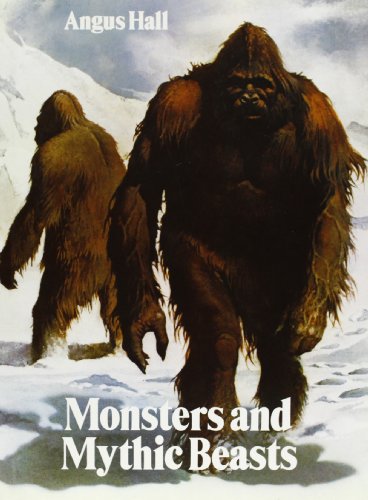



The Bunyip — Australia, 19th Century
The Report: The Bunyip entered the nineteenth-century colonial debate through European contact with Aboriginal stories of dangerous creatures in rivers, swamps, or deep waterholes. Colonists increasingly interpreted these traditions as sightings of an as-yet-unknown animal. By the 1840s, newspapers and naturalists were explicitly discussing the possibility of some as-yet-unknown Australian creature behind the stories.
What Witnesses Claimed: There was no single Aboriginal account of “the” Bunyip. Descriptions differed across peoples and places, and colonial writers often conflated them by giving different beings a single English name. European observers also added their own reports, including seal-like or dog-like animals and creatures with odd heads, necks, or bodies.
The Hunt/Reaction: In 1847, a purported Bunyip skull was making headlines. The object was exhibited at the Australian Museum in Sydney, with the public being invited to examine the “cranium of the supposed Bunyip”. Australian Museum archival research notes that “few other nineteenth-century natural-history specimens were so exhaustively covered in the newspapers and journals.”
Possible Explanation: The famous skull was not evidence of an unknown monster. The Bunyip tradition may have incorporated sightings of seals well inland, rare native animals, rotten carcasses, and misinterpreted Aboriginal accounts. Some later writers even saw the Bunyip as a cultural memory of extinct Australian megafauna, but the evidence for that idea is lacking.
What We Actually Know: The Bunyip is particularly significant because it highlights the perils of interpreting Indigenous traditions as straightforward cryptozoological accounts. Aboriginal narratives were part of cultural and spiritual frameworks that European settlers often misinterpreted. What is securely documented is that nineteenth-century colonists were convinced enough by these traditions to actively search for a zoological creature and even to display a supposed Bunyip skull in public.
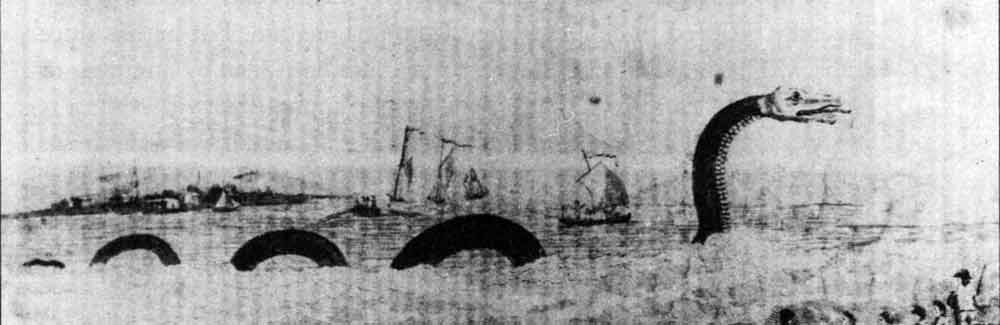
The Gloucester Sea Serpent — Massachusetts, 1817
The Report: In August 1817, there were reports circulating in Gloucester, Massachusetts, that a monstrous serpent was swimming about Cape Ann. People said it had been seen several times, not just in a single brief encounter. The Linnaean Society of New England reacted by appointing a committee on August 18 to collect evidence. A report was published in December.
What Witnesses Claimed: Descriptions varied, but most witnesses described an exceedingly long animal, moving quickly in the water. John Johnston Jr. believed the animal he saw was at least 50 feet long. Merchant William B. Pearson believed another observer saw an animal no less than seventy feet long. Others mentioned apparent humps or sections that seemed like a row of barrels or buoys.
The Hunt/Reaction: The inquiry itself sets Gloucester apart. The committee called for people who had seen the animal themselves. They took statements separately, read them back, and had witnesses sign and swear before a magistrate. By the standards of the time, investigators sought to avoid witnesses contaminating each other.
Possible Explanation: Whales, big fish, seals, swimming snakes, packs of animals, and optical effects have all been suggested. The committee added confusion by considering a small land snake killed nearby as possibly linked to the alleged monster and giving it a new scientific name. That determination was incorrect, showing that earnest inquiry does not ensure a correct verdict.
What We Actually Know: Gloucester offers us unusually powerful evidence that many people thought they saw something remarkable. It offers much weaker evidence that what they saw was an unknown giant reptile. The difference is important. The 1817 account reports an authentic historical phenomenon of sightings, replete with sworn testimony, while leaving the nature of the objects or animals as an open question.
Amabie — Japan, 1846
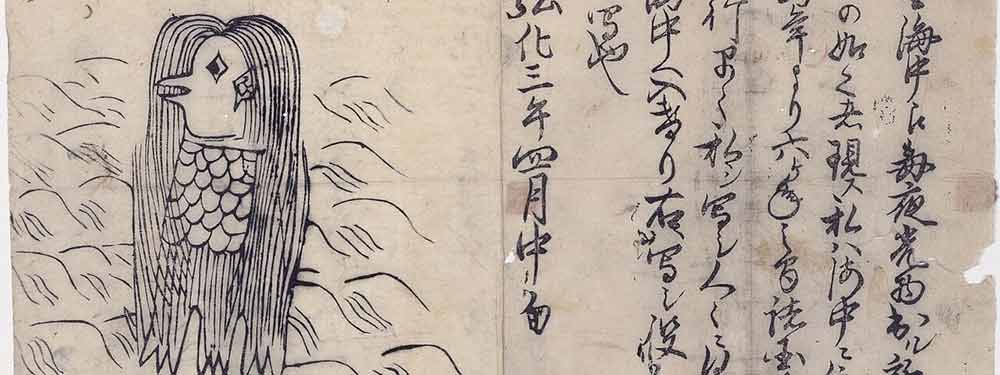
The Report: In 1846, in Japan’s late Edo period, a broadsheet was printed about a strange shining creature in the sea off Higo Province (present-day Kumamoto Prefecture). The only surviving kawaraban, in the Kyoto University Library collection, is the only known contemporaneous source that specifically mentions Amabie.
What Witnesses Claimed: According to the sheet, an official investigated a mysterious light that had appeared offshore night after night. The creature identified itself as Amabie. It predicted years of good harvests but also warned that disease would spread. The accompanying illustration showed a being with long hair, a beak-like mouth, scales, and three leg- or fin-like appendages.
The Hunt/Reaction: Nobody hunted Amabie. Instead, the creature supposedly gave an instruction: reproduce its image and show it to people. That detail makes this case very different from European monster hunts. The story was about prophecy and communication rather than destroying a dangerous animal. The original print itself became the means by which the encounter survived.
Possible Explanation: There is no evidence that a zoologically unknown creature emerged from the sea. Scholars have connected Amabie with a wider group of Japanese prophetic beings, especially Amabiko. It is even possible that “Amabie” arose through a copying or writing variation of that older name, although this remains an interpretation.
What We Actually Know: We possess a genuine 1846 artifact recording the story, but only one known contemporary source. That is an important limitation. We cannot establish that the reported official actually encountered anything. What we can establish is that nineteenth-century Japanese readers encountered a printed story about a mysterious sea being that linked supernatural appearance, disease, harvests, and the power of reproducing an image.
The HMS Daedalus Sea Serpent — Atlantic, 1848
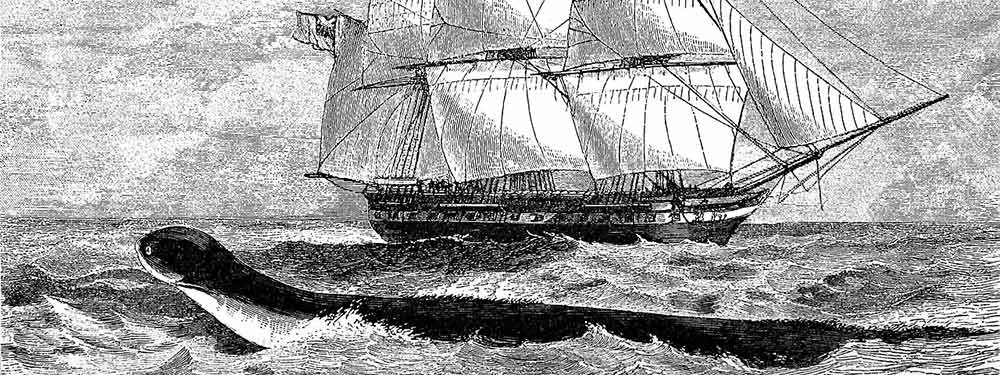
The Report: Approximately at 5 p.m. on August 6, 1848, HMS Daedalus was passing through the South Atlantic when the captain, Peter M’Quhae, along with a number of other officers and men, reported seeing an immense serpent-like object. After The Times carried a story of the sighting, the Admiralty asked for details. M’Quhae replied with a sworn statement that included the ship’s position and the weather conditions at the time.
What Witnesses Claimed: M’Quhae was of the opinion that there must have been sixty feet of the animal above water, or represented by its length, with its head lifted above the sea. He thought it was of a dark brown color, with a lighter shade round the throat. He spoke with much assurance. The creature, he declared, had passed so close that a man he knew would have been recognized at such a distance.
The Hunt/Reaction: The ship failed to capture the animal, but the report created a Victorian media and scientific debate. Drawings were published, and respected naturalists proposed alternatives. Richard Owen, one of Britain’s most accomplished anatomists, rejected the sea-serpent explanation. Captain M’Quhae stood by what he and his men had seen.
Possible Explanation: Contemporary proposals for the creature in the image depict a whale or other large marine vertebrate under deceptive conditions or from a misleading perspective. A recent study argues for a sei whale specifically and suggests that modern drawings provide information unavailable to many past commentators. Sei whale identification is still a hypothesis, not an established fact.
What We Actually Know: The Daedalus case is not an anonymous barroom yarn. It contains named witnesses, a formal report, a fixed date and place, and period drawings. However, even experienced mariners can misperceive size, distance, and unfamiliar wildlife at sea. The evidence does not prove that a sea serpent existed. It confirms the report’s occurrence with unusual reliability.
The Mapinguari — Amazon Basin
The Report: The Mapinguari is at an interesting crossroads of Amazonian folklore, Indigenous traditions, rubber-tapper lore, and modern cryptozoology. Described as a gigantic, stinking forest beast with prodigious strength, unlike Gloucester or HMS Daedalus, however, there is no single securely documented nineteenth-century “Mapinguari sighting” to anchor the legend to one date.
What Witnesses Claimed: Traditions also differ radically. Some report a giant hairy creature. Others give it backward feet, great claws, one eye, or even a mouth in its belly. Some Amazonian traditions associate such creatures with transformed people or powerful forest spirits. Such differences caution against conflating every tale into a single supposed biological species. Modern scholars have also noted that Mapinguari traditions seem composite in themselves.
The Hunt/Reaction: Hunters, rubber workers, and Indigenous peoples shared stories of sightings in remote forested areas. It was feared for its reputed strength, smell, and howls. However, organized scientific searches and much of the Mapinguari lore developed much later. Twentieth-century explorers and cryptozoologists formalized the folklore as a question of whether an as-yet-undiscovered giant mammal could possibly persist in Amazonia.
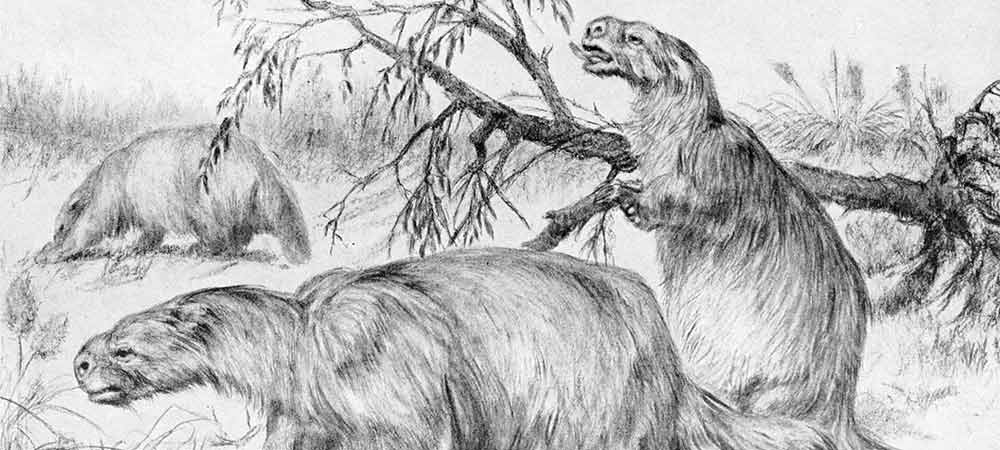
Possible Explanation: One interesting theory links the Mapinguari to extinct ground sloths. Ornithologist David Oren has proposed that certain described features belonged to a surviving mylodontid sloth. This idea is conjectural and has not produced any material evidence of a living ground sloth. Jaguars, bears in surrounding countries, monkeys, distorted folklore, and entirely supernatural tales have less sensational explanations.
What We Actually Know: A little more caution is needed here than in Gévaudan or Gloucester. Mapinguari traditions are genuine, but the notion that they preserve eyewitness memories of prehistoric ground sloths remains unsubstantiated. The case is interesting because it shows how modern outsiders can reinterpret an eclectic body of Indigenous and regional folklore as a single “cryptid.” The legend’s history is better than the evidence for the beast.
The Yeti / Himalayan Wild Man — Himalayas
The Report: Long before Westerners began referring to the “Abominable Snowman,” cultures in the Himalayas had traditions about wild, hairy, or supernatural beings of the mountains. One significant Western account came in 1832, when British naturalist Brian Houghton Hodgson wrote of an encounter reported by local hunters in Nepal. Hodgson did not see the creature himself.
What Witnesses Claimed: Hodgson wrote that his shooters were scared by an apparition of a “wild man.” It “moved…erectly” and was covered in long, dark hair but had no tail. The scared men thought it was supernatural and ran away instead of shooting. Hodgson was skeptical and considered the possibility that they had seen an orangutan-like animal.
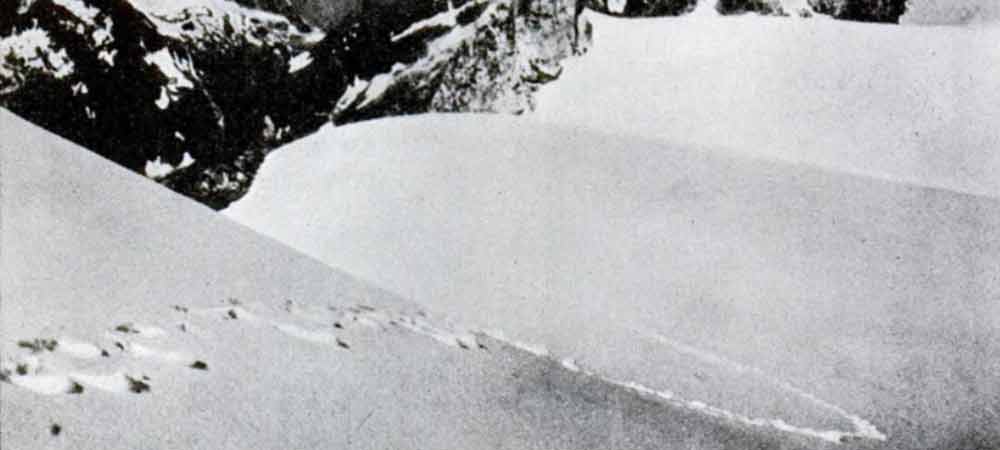
The Hunt/Reaction: Western interest was minimal for most of the nineteenth century. In 1889, British officer Laurence Waddell observed large tracks in the Himalayan snow that locals attributed to a wild animal. Waddell preferred the bear explanation. The great international search for the Yeti is mostly a twentieth-century phenomenon and is outside the scope of this article.
Possible Explanation: Himalayan brown bears and Asian black bears are considered the prime suspects for many reported Yeti tracks and sightings. Bears can stand or walk on two legs for short periods, and overlapping footprints can create misleadingly humanlike impressions. Genetic testing of purported Yeti specimens in recent decades has repeatedly identified known Himalayan animals, rather than an unknown ape.
What We Actually Know: The pre-1900 record does not confirm the existence of the modern pop-culture Yeti. It does prove something more historically interesting: Himalayan traditions of wild beings predated Western cryptozoology, and nineteenth-century outsiders recorded reports and footprints. The later “Abominable Snowman” built on older cultural traditions rather than being invented from nothing.

The Leeds Devil — New Jersey, 18th–19th Centuries
The Report: The Jersey Devil is a creature best known as being native to New Jersey’s Pine Barrens and associated with the Leeds family. The most familiar tale says it was born in 1735, when “Mother Leeds,” fed up with yet another pregnancy, cursed her 13th child. The infant transformed into a winged monster and flew away. An official history of New Jersey notes that many versions of the legend conflict.
What Witnesses Claimed: Later accounts described the Leeds Devil as a fantastical chimera of animal parts: a horse-like head, wings, hooves, long legs, a tail, and a dreadful roar. Such details should not be automatically read back into 1735. Legends develop and grow over time. The creature’s familiar appearance results from generations of development.
The Hunt/Reaction: Before 1900, the Leeds Devil was more a local tradition than the subject of the mass hysteria it would later become in the Jersey Devil case. Rumors spread in the sequestered Pine Barrens, where thick woods, bogs, deserted settlements, and folklore combined to provide a ready home for a local mystery. The dramatic series of purported sightings that made the monster nationally notorious occurred in January 1909 and is therefore outside our period.
Possible Explanation: There is no record of a supernatural child turning into a flying animal. Historians have instead speculated that the real Leeds family’s scandalous reputation may have fueled the myth. Folklore then spread by repeated retelling. Known animals, especially large birds like sandhill cranes, have been offered to explain later sightings, but no single explanation fits the entire tradition.
What We Actually Know: The Leeds family were real, the Pine Barrens lore goes back before the twentieth century, and stories eventually coalesced into the Jersey Devil myth. The famous 1909 sightings should not be considered evidence of an eighteenth-century monster. This is a case where folklore coalesced around historical names and places until the legend became more famous than the history beneath it.
The Congo “Monster” Later Linked to Mokele-mbembe — Central Africa, 1776
The Report: In 1776, the French cleric Liévin-Bonaventure Proyart wrote Histoire de Loango, Kakongo et autres royaumes d’Afrique. Proyart drew on missionary reports from west-central Africa and included a short but fascinating account. Missionaries passed through a forest when they came across the footprints of an animal they had not seen before.
What Witnesses Claimed: Missionaries allegedly found huge footprints with claw marks. Proyart said the beast “must be monstrous.” The prints were said to be about 3 feet across, with a stride of seven or eight feet. Most importantly, no one mentioned a long neck, great tail, reptilian hide, or dinosaurian body, since no one claimed to have actually seen the creature.
The Hunt/Reaction: There never was a great eighteenth-century hunt. The missionaries noted the spoor and moved on. The short paragraph survived because Proyart transcribed it into the published history of the kingdoms and the region’s natural environment. Only much later did writers seeking early testimony about mysterious Congo animals notice it.
Possible Explanation: The probable answer most likely lies among the continent’s larger mammals. An elephant, hippopotamus, rhinoceros, two sets of overlapping tracks, a disturbed surface, or simply a mismeasurement might leave a mighty mark. In the absence of sketches, controlled measurements, preserved casts, or an eyewitness to the animal, the track-maker cannot be confirmed.
What We Actually Know: This account must not be presented as an eighteenth-century sighting of Mokele-mbembe. Proyart never used that name, and his missionaries never described a dinosaur. The modern connection was made retrospectively. What we genuinely possess is a fascinating 1776 account of European missionaries encountering enormous unexplained tracks in Central Africa and concluding that an unusually large animal had made them. These tracks were large enough to let imagination fill in everything the witnesses never saw.
What History Tells Us About Legendary Beasts
Legendary beasts teach us as much about the people who reported them as they do the beasts themselves. Some cases begin with events that are hard to argue with: people were killed in Gévaudan, a mysterious carcass washed up on Stronsay, and officers in the Royal Navy reported an unknown animal while on board HMS Daedalus. Others are known only from folklore, Indigenous oral tradition, printed broadsheets, or stories of unexplained tracks. Evidence supporting these stories varies in strength, but they all began in a world where much of the natural world remained unknown or poorly understood.
Possible natural explanations are often less mysterious than the legends that built up around them. Packs of wolves can grow monstrous with enough attacks. Whales and sharks can look like serpents from a distance, and giant squid may have inspired the Kraken stories, while brown bears could explain some Himalayan wild-man reports. Decomposition could make a familiar animal seem impossible. Other stories, such as Amabie or the Mapinguari, show how treating culturally complex supernatural traditions as mere reports of unknown animals can lead to misunderstanding the original traditions.
Explaining a sighting, though, does not make the history behind it any less interesting. When people encountered an unknown or seemingly impossible creature, they lacked modern wildlife photography, instant communication, genetic testing, or a guide to all known zoological species. A sailor facing an unknown shape on the ocean, a farmer finding enormous, unexplained tracks, or a community trying to understand a mutilated animal had to make sense of what they found with the resources they had available. Newspapers, naturalists, missionaries, travelers, and storytellers could carry an account far from where it began.
Stories of legendary beasts also show how malleable a report can become with repeated retelling. A strange animal grows enormous. Unexplained tracks find a creature to match them. An Indigenous tradition becomes a Western monster hunt. Later authors add exciting details until it becomes difficult to separate the original report from the legend built on it. Cases such as the Leeds Devil and the Congo “monster” are especially useful reminders that the version most people know today can differ greatly from what the earliest sources described.
The continuing appeal of legendary beasts therefore lies somewhere between history, nature, and the imagination. We may never know what every frightened witness saw, and in many cases there may have been no mysterious animal at all. What survives are records of humanity confronting the unknown and trying to name it. Before satellites mapped the wilderness and cameras followed us almost everywhere, forests, mountains, lakes, and oceans still held vast spaces where almost anything could seem possible, and a glimpse, footprint, carcass, or terrifying cry could become a legend for centuries.