
30 Phrases Rooted in Real Historical Events
 Reading Time: 15 minutes
 Phrases like “crossing the Rubicon,” “meeting Waterloo,” or “biting the bullet” contain historical stories in a nutshell. Battles, military leaders, wars, and political events like these were captured in words and passed on from generation to generation. Wordsmiths from all eras created these turns of phrase by distilling pivotal moments and hard truths into vivid images that were easy to grasp and visualize. A river crossing becomes an irreversible decision. A battle site becomes a place of utter defeat. A traumatic medical procedure becomes a metaphor for bravery in the face of pain.
This article presents 30 expressions that stem from historical events, military customs and traditions, political scandals, fables, and anecdotes. Some derive from Roman and Greek history and the Bible. Others developed from events of the American Civil War and World Wars I and II, and the Cold War. Some of the allusions are not well known, and the events may not be precisely what they are sometimes made out to be. A few were embellished and reworked over time. All, however, illustrate how history is not locked away in our history books; rather, it is part of the language we use every day.
30 Phrases Rooted in Real Historical Events
- Crossing the Rubicon
Meaning: Passing a point of no return.
Sample usage: “Once the company signed the lease on the new factory, it had crossed the Rubicon.”
The expression derives from Julius Caesar’s decision to cross the Rubicon River with his army in 49 BCE. Roman law did not allow a general to enter Italy with his soldiers without authorization. Caesar committed the irreversible act of provoking the Senate. Civil war now became inevitable.
The expression is now used to mean any act that cannot be undone. It does not necessarily have to involve bloodshed or politics. It can be a choice of a business venture, a personal decision, or any daring act that commits a person to a new course.

- Meet your Waterloo
Meaning: Suffer a final, crushing defeat.
Sample usage: “The undefeated team finally met its Waterloo in the championship game.”
The phrase dates from the Battle of Waterloo in 1815, in which Napoleon Bonaparte was defeated by a coalition led by the Duke of Wellington and Gebhard Leberecht von Blücher. It was the decisive battle in Napoleon’s Hundred Days return from exile and the end of his rule as Emperor of the French.
Waterloo became synonymous with ultimate defeat because it marked the end of Napoleon’s storied military and political life. In modern usage, the phrase is applied to any time that a person, team, company, or movement, especially a powerful or successful one, suffers a defeat that ends its rise.
- Pyrrhic victory
Meaning: A victory that costs so much it feels like defeat.
Sample usage: “Winning the lawsuit was a Pyrrhic victory because the legal fees ruined the company.”
This phrase comes from King Pyrrhus of Epirus, who fought Rome in the third century BCE. He won battles against the Romans, including at Heraclea and Asculum, but lost so many soldiers that his victories weakened him.
According to later tradition, Pyrrhus said that one more such victory would ruin him. The phrase now describes any success that carries such a heavy price that it barely seems worth winning.
- Bite the bullet
Meaning: Endure pain, fear, or hardship with courage.
Sample usage: “I don’t want to make the phone call, but I need to bite the bullet and handle it today.”
It’s often said that the phrase originated in battlefield medicine before the advent of modern anesthesia. Wounded soldiers who had to undergo agonizing surgery would bite down on a bullet, leather strap, or piece of wood to endure the pain.
The exact source is disputed, but the military connection influenced the phrase’s figurative meaning, and putting it off became common.

- Fiddle while Rome burns
Meaning: Ignore a crisis while behaving carelessly or selfishly.
Sample usage: “The board was fiddling while Rome burned as the company lost its biggest clients.”
This expression is based on the legend that the Roman Emperor Nero played his lyre during the Great Fire of Rome in 64 CE, which destroyed much of the city. The story is almost certainly apocryphal, and the fiddle had not yet been invented during Nero’s time.
The image is powerful even if it is not literally true, because it vividly illustrates a leader’s dereliction in a time of crisis. It is now used for anyone who behaves unfocused, indifferent, or selfish during a major crisis.
- Bread and circuses
Meaning: Food and entertainment used to distract the masses from serious problems.
Sample usage: “The mayor’s critics accused him of offering bread and circuses instead of real reform.”
The term is attributed to the Roman poet Juvenal, who complained that the people were willing to sacrifice their responsibility in government in exchange for grain distributions and public games. He contrasted the simple joys of comfort and spectacle with a past time when people were concerned with the good of civic life.
Nowadays, “bread and circuses” refers to any attempt to placate a population with entertainment, handouts, or empty pleasures, while serious issues are ignored.
- Cut the Gordian knot
Meaning: Solve a difficult problem with bold, direct action.
Sample usage: “Instead of debating the old policy for months, the new director cut the Gordian knot and replaced it completely.”
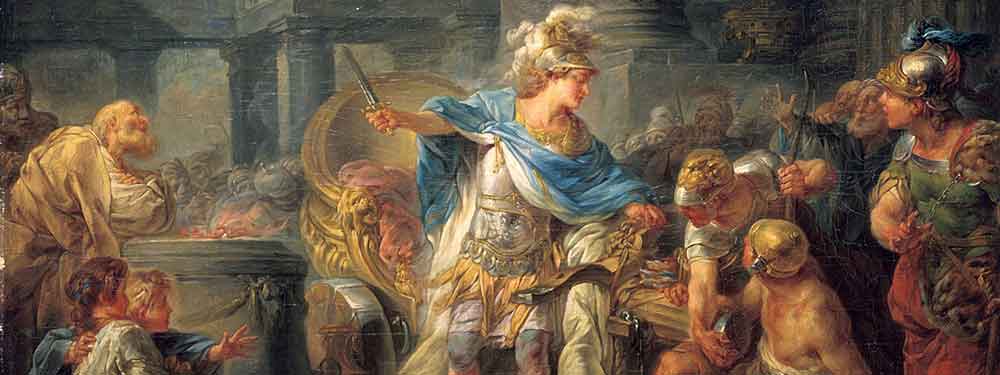
The phrase is from a legend about Alexander the Great. In Gordium, there was an intricately knotted cord with a prophecy attached: whoever undid the knot would be ruler of Asia. Rather than attempt to untie it, Alexander is said to have sliced it with his sword.
Whether literally or metaphorically true, the phrase has become a maxim for bold action. In current usage, it means solving a problem by altering its conditions, rather than laboriously struggling with the problem itself.
- Achilles’ heel
Meaning: A hidden or fatal weakness.
Sample usage: “The candidate was popular, but his lack of foreign policy experience was his Achilles’ heel.”
The expression is from Greek mythology. Achilles was the mightiest of Greek warriors in the Trojan War tradition. Later tradition said he had one vulnerable spot: his heel. Death to Achilles would come by an arrow to his heel.
The phrase is used today to refer to any weakness that can undo an otherwise strong or powerful person, plan, system, or organization. It often suggests that a single chink is enough to destroy great strength.
- Trojan horse
Meaning: A hidden danger disguised as a gift or harmless object.
Sample usage: “The free software looked useful, but it turned out to be a Trojan horse for malware.”
The phrase comes from the Trojan War legend. After failing to take Troy by siege, the Greeks built a giant wooden horse and left it as a supposed offering. Trojan soldiers brought it into the city, unaware that Greek warriors were hidden inside.
That night, the hidden soldiers opened the gates, allowing Troy to fall. Today, a “Trojan horse” is anything that appears helpful or harmless but conceals a threat.
- Draconian law
Meaning: An extremely harsh law or punishment.
Sample usage: “The school’s punishment for being five minutes late seemed draconian.”
This expression comes from Draco, a 7th century BCE Athenian lawgiver. His laws were later remembered by the Greeks as being very harsh, with overly severe punishments even for minor crimes.
The expression does not always refer to the ancient Athenians. In modern times, it can refer to any rule, policy, or punishment perceived as needlessly strict or severe.
- The writing on the wall
Meaning: A clear warning that disaster or failure is coming.
Sample usage: “When the company lost three major accounts in one month, the writing was on the wall.”
The expression is derived from the Book of Daniel in the Bible. At a feast, writing appeared on the wall in a script no one could read, and it was interpreted as a warning that the kingdom of Babylon would fall.
It is now used when signs of danger are apparent, even when people deny it, and often when the outcome is already manifesting.
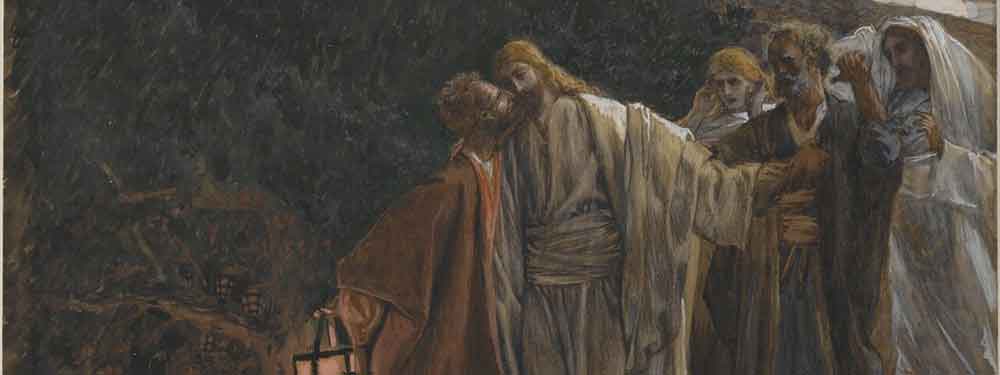
- Judas kiss
Meaning: Betrayal disguised as friendship or affection.
Sample usage: “His public praise before the vote felt like a Judas kiss.”
The expression is from the New Testament story of Judas Iscariot, who betrayed Jesus. Judas revealed Jesus to the arresting soldiers by kissing him, thus inverting a gesture of affection into one of betrayal.
The expression is used when someone who is being friendly is secretly facilitating harm. The strength of the phrase comes from the betrayal being masked as warmth or loyalty.
- Thirty pieces of silver
Meaning: Payment received for betrayal.
Sample usage: “Critics said the official had traded public trust for thirty pieces of silver.”
In the Gospel of Matthew, Judas was paid thirty pieces of silver for betraying Jesus. The amount has become one of history’s best-known symbols of treachery.
Nowadays, the phrase doesn’t normally refer to an actual payment of silver. It means to sell out a person, a cause, or a principle for money or personal advantage.
- Road to Damascus
Meaning: A sudden, life-changing conversion or realization.
Sample usage: “After years of opposing the policy, she had a road-to-Damascus moment and became its strongest supporter.”
It originally described the conversion of Saul of Tarsus (later called Paul), a Pharisee who persecuted early Christians until one day, on the road to Damascus, he had an experience that made him see the light and change his ways, and he became one of the most powerful proponents of Christianity.
It is now also used to mean any 180-degree change of opinion. It may be of a religious, political, personal or professional nature.
- Burn your bridges
Meaning: Destroy your chance of going back.
Sample usage: “He burned his bridges when he insulted his old boss on the way out.”
The idiom refers to the literal burning of a bridge, something common in war or travel. You could prevent an enemy from crossing, but it also hindered your own retreat. In the military, it meant you had to commit to a plan of action.
In modern usage, it typically refers to a social or professional context. Someone burns bridges when they damage a relationship or option they may need in the future.
- Burn your boats
Meaning: Remove all options except moving forward.
Sample usage: “By quitting his job and investing everything in the new business, he burned his boats.”
It is often associated with anecdotes about generals scuttling their ships after disembarking, leaving their armies with no option but to fight or conquer. It is particularly associated with Hernán Cortés in Mexico, but similar tales are found in many military histories.
The phrase now means deliberately removing any option for retreat. Unlike “burn your bridges”, it can have a positive connotation of being committed and brave.
- Turn a blind eye
Meaning: Pretend not to see something.
Sample usage: “Management turned a blind eye to the problem until it became public.”
It is often associated with Admiral Horatio Nelson at the Battle of Copenhagen in 1801. Nelson was blind in one eye, and allegedly held a telescope up to it in order to look the other way when told to retreat.
The tale has likely been embroidered, but it invested the phrase with enduring power. Now it means to choose not to be aware of something inconvenient or improper.
- A bridge too far
Meaning: An overambitious plan that fails because it goes beyond what is realistic.
Sample usage: “Expanding into five new markets at once proved to be a bridge too far.”
The phrase originates from Operation Market Garden in World War II. In 1944, Allied forces tried to capture a series of bridges in the Netherlands, including one at Arnhem. The operation failed to reach its ultimate objective.
The phrase is best known from the book and movie A Bridge Too Far. It now refers to any plan that would probably have worked if it had been less ambitious.

- Loose lips sink ships
Meaning: Careless talk can cause serious harm.
Sample usage: “Don’t share the product launch details yet. Loose lips sink ships.”
This phrase comes from World War II propaganda campaigns. Governments warned civilians and service members not to discuss ship movements, military plans, or sensitive information because spies might hear them.
The phrase remains common in business, politics, and personal life. It is a reminder that casual conversation can have real consequences.
- Quisling
Meaning: A traitor who collaborates with an enemy occupier.
Sample usage: “After the invasion, the puppet leader was denounced as a quisling.”
The word is eponymous of Vidkun Quisling, a Norwegian politician who allied himself with Nazi Germany in World War II, to the point where his name became a synonym for “traitor” and entered English as a common noun.
“Quisling” is more severe than calling someone disloyal. It implies a form of collaboration with an enemy power against one’s own country or people.
- Big Brother is watching
Meaning: A warning about surveillance, control, or loss of privacy.
Sample usage: “With cameras in every hallway and tracking on every device, employees joked that Big Brother was watching.”
The phrase is from George Orwell‘s 1949 novel 1984. In the novel, Big Brother represents a totalitarian state that monitors and controls its citizens’ thoughts, speech, and behavior.
The phrase has literary origins, but draws on twentieth-century fears of dictatorships, propaganda, secret police, and mass surveillance. It is used to describe any situation in which people feel watched or controlled by powerful institutions.
- McCarthyism
Meaning: Reckless accusation, especially of disloyalty, subversion, or hidden political extremism.
Sample usage: “The professor called the investigation a new form of McCarthyism.”
The term derives from Senator Joseph McCarthy, who, in the early 1950s, gained notoriety by publicly accusing communists of subverting and infiltrating the U.S. government and other institutions. McCarthy’s efforts contributed to the fearmongering of the Cold War.
McCarthyism today is often associated with smear campaigns, guilt by association, and public, unfair accusations. It is commonly used to describe situations in which fear is used to silence opposition.

- Gerrymander
Meaning: Manipulate voting district boundaries for political advantage.
Sample usage: “The oddly shaped district was criticized as a clear gerrymander.”
It first emerged in 1812, when Massachusetts governor Elbridge Gerry signed a new district map into law that many considered political overreach. One district in particular was said to look like a salamander, so critics decried the act as a “Gerry-mander.”
The term is still at the center of today’s political landscape. Gerrymandering is the act of drawing electoral maps to favor a party, group, or candidate, allowing them to win more seats than would be possible under a more even distribution.
- Red tape
Meaning: Excessive bureaucracy, paperwork, or official delay.
Sample usage: “The project was delayed for months because of government red tape.”
The term originates from the tradition of binding official documents with red tape or ribbon. It is especially associated with British government offices. The tape gradually became a metaphor for slow, formal administration.
In modern usage, “red tape” can describe rules, forms, permits, and other procedures. The connotation is that they seem unnecessary or frustrating. The term does not always mean that the rules are completely useless. It often implies that the process has become needlessly slow and burdensome.
- Deadline
Meaning: A final time or limit.
Sample usage: “The deadline for the article is Friday afternoon.”
The term “deadline” has a dark origin in the Civil War. In some prison camps, it originally referred to a physical line surrounding the camp. Crossing it could lead to being shot by the guards. This was particularly true in the infamous Andersonville.
The term lost most of its lethal connotations over the years. It became a common term for a time limit. Its current use in journalism, business, school, and publishing still has the flavor of a firm boundary.
- No man’s land
Meaning: A dangerous, disputed, or empty area between opposing sides.
Sample usage: “The abandoned factory became a no man’s land between rival gangs.”
The expression became popular during World War I. It was the deadly area between two opposing trench lines. No man’s land contained barbed wire, shell holes, machine gun posts, and artillery fire.
Now it can refer to an actual piece of disputed land or a more figurative area with no clear ownership. It often has negative connotations, such as being dangerous, uncertain, or abandoned.
- Over the top
Meaning: Excessive or extreme; originally, to launch an attack.
Sample usage: “The decorations were so bright and expensive that the whole party felt over the top.”
During World War I, “going over the top” referred to soldiers climbing out of their trenches and charging across no man’s land toward the enemy. It was a perilous time for the soldiers, as they were often under heavy enemy fire.
Over time, the phrase took on a more figurative meaning. Something over the top now means excessive, too dramatic, or outside the bounds of normalcy. Oddly enough, the phrase has an origin in the literal battlefield.
- Shell shock
Meaning: Psychological trauma caused by extreme stress, especially war.
Sample usage: “After the layoffs, the remaining staff seemed shell-shocked.”
The phrase became popular in World War I to refer to soldiers traumatized by long periods of artillery bombardment and trench warfare. Symptoms might involve trembling, nightmares, paralysis, panic, silence, and collapse.
In the beginning, many thought shell shock was physical injury from shells exploding or a sign of weakness. However, many historians now write about it as part of a much longer history of combat trauma and what we now call PTSD.
- Fifth column
Meaning: Hidden supporters of an enemy inside a country, city, or organization.
Sample usage: “Officials feared a fifth column might sabotage the defense from within.”
The phrase now describes secret collaborators or internal threats. It is often used in wartime, politics, and espionage. The phrase was popularized during the Spanish Civil War. It is frequently associated with the Nationalist general Emilio Mola, who is said to have stated that while four columns were marching on Madrid, a “fifth column” of supporters inside the city would ensure the success of the advance.
The phrase is now used to refer to secret collaborators or internal threats. It is frequently used in wartime, politics, and espionage, but has also been misused to foment suspicion.
- Iron curtain
Meaning: A barrier of political, military, or ideological separation.
Sample usage: “After the crackdown, an iron curtain seemed to fall between the country and the outside world.”
The phrase was popularized in Winston Churchill’s 1946 speech in Fulton, Missouri. In it, Churchill stated that an “iron curtain” had “descended across the continent” of Europe. He was referring to the post-war division between Soviet-dominated Eastern Europe and the Western democracies.
The phrase came to symbolize the Cold War divide. It implied not just a boundary, but a rigid separation of governments, economies, militaries, and ideologies.
The Past Still Speaks Through Everyday Phrases
Phrases we use every day often have more history than we realize. A simple saying can hold the memory of a battlefield, a political scandal, a prison camp, a military disaster, or a moment of betrayal. Expressions like “meet your Waterloo,” “loose lips sink ships,” and “the writing on the wall” survived because they turn complex events into clear warnings. They give us ways to explain defeat, danger, courage, and consequence in only a few words.
That is why these phrases still matter. They remind us that history is not only in dates, monuments, and old documents. It also lives in speech, passed down from generation to generation. Some of these origins are debated, and others were clearly shaped by legend or later retellings, but each phrase shows how the past continues to influence how we describe the present. Language becomes a kind of living archive, preserving history in plain sight.


