
The Night Witches Who Haunted German Troops on the Eastern Front
 Reading Time: 15 minutes
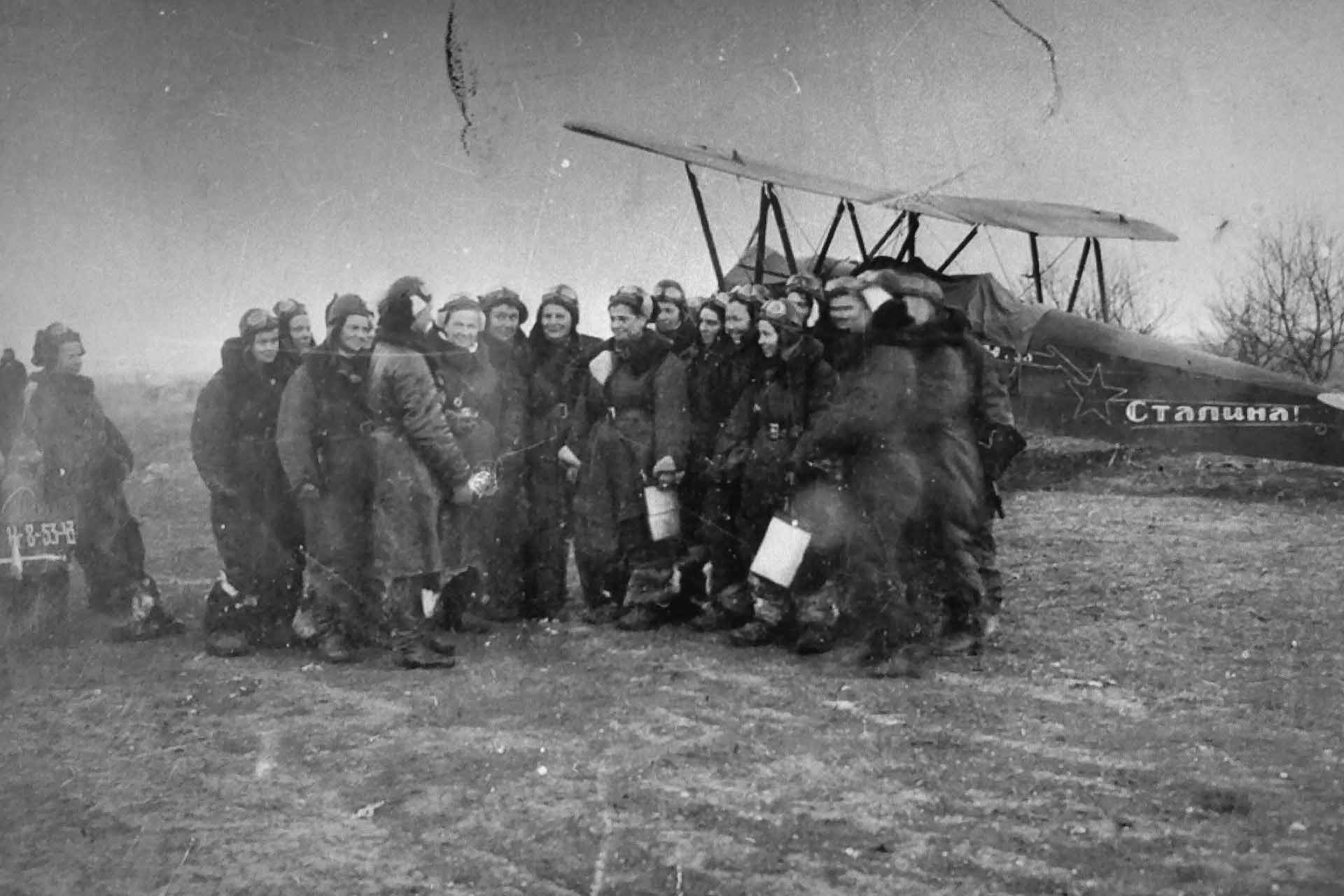
 Few missions during World War II were stranger than those flown by the Russian Night Witches. Night after night, young Soviet women flew German lines in fragile, open-cockpit biplanes made primarily of wood and cloth. Their planes were slow and obsolete, could carry only a small payload, and provided almost no defense against attack. But Soviet pilots in the 588th Night Bomber Aviation Regiment exploited those disadvantages, attacking at night and returning until enemy soldiers were too exhausted to sleep.
The story of the Night Witches has taken on something of mythic proportions. Accounts abound of Germans afraid to sleep after listening to their enemy swoop down on them seemingly out of nowhere. The planes’ high-pitched buzz earned them the nickname Nachthexen, or “Night Witches,” from the Germans. While that nickname was accurate, some of the tales that have grown up around it are less so. The unit’s true history is impressive enough. During its service from the Caucasus to Germany, its pilots flew tens of thousands of missions, and many of its flyers became among the Soviet Union’s most decorated women.
Marina Raskova and the Creation of the Women’s Regiments
Germany invaded the Soviet Union on June 22, 1941. The war that followed would be unprecedented in scale and violence. Millions of Soviet citizens joined the military, but the Red Army had trouble keeping up with Germany’s onslaught. Women were already serving in many auxiliary roles, but more wanted the chance to fight as well.
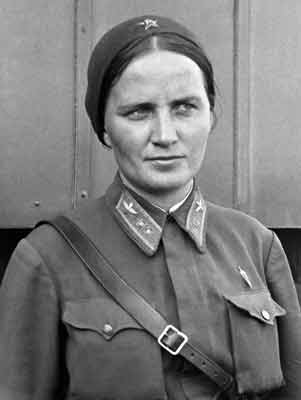
Among those women’s greatest champions was Marina Raskova. Celebrated across Soviet Russia for her long-distance flying achievements, Raskova became something of a celebrity before the war. During the war, she worked her fame and contacts into permission to allow women into military flight service. Thousands of women reportedly tried to enlist in combat after hearing the news.
Women’s aviation units were authorized by Soviet decree on October 8, 1941. Pilots, navigators, mechanics, armorers, and other experts trained at Engels, close to the Volga River. From there, three regiments would graduate: The 586th Fighter Aviation Regiment, the 587th Bomber Aviation Regiment, and the 588th Night Bomber Aviation Regiment.
Yevdokiya Bershanskaya, an experienced female pilot, led the 588th. Bershanskaya would command the regiment for the entirety of its combat service. While some mixed-gender units would eventually emerge from the Raskova program, the 588th remained majority female. From pilots to bomb loaders, the 588th was filled with women.
Flying an Airplane From Another Era
At first glance, the regiment’s aircraft didn’t look like they could seriously threaten the German army. First flown in the 1920s, the Polikarpov U-2 (it became Po-2 after its designer, Nikolai Polikarpov, died in 1944) was designed primarily as a trainer/utility aircraft, not as a modern fighter plane.
It was built largely of wood and fabric. By the time of World War II, it was both slow and under-armed compared to frontline fighter aircraft. Crews of two, usually a pilot and navigator, sat in open cockpits. It could carry only a small bomb load, forcing repeated passes over larger targets.
There wasn’t much protection if something went wrong, either. Its construction left the aircraft extremely vulnerable to fire. As one veteran recalled, “If you were hit, it would burn like a match.” Operating at low altitudes was common, and pilots were always conscious of weight.
However, it had characteristics that made it good at nighttime harassment. Po-2s could take off from and land at unimproved airfields. They could fly slowly, allowing crews to hug the ground and approach targets under the cover of darkness in ways that faster planes could not easily replicate.
An aircraft that looked hopelessly obsolete in the daylight suddenly became more difficult to target at night.

![[Night Witches: Untold Story of Soviet Women in Combat] [Author: ...](https://m.media-amazon.com/images/I/41hBS-xVX6L.jpg)
How the Night Witches Attacked
Unlike the massive bombing raids leveled against enemy cities by scores of heavy bombers, the missions flown by this regiment were often far more mundane. Their goal was frequently to harass. Russian Po-2s attacked German positions, supply dumps, headquarters, transportation nodes, and any number of other targets situated directly on the front or behind it.
Operating at night gave the crews their best chance of survival. Their light aircraft were vulnerable, and any protection offered by darkness was exploited as much as possible. Tactics often involved several aircraft flying in sequence. Some would draw enemy attention while another slipped in behind to attack the target. As the aircraft neared its target, pilots could even cut power and glide towards their bombing point, releasing their load and continuing on their flight path.
The resulting silence became characteristic of the Night Witches. German soldiers straining to hear an attacking aircraft might hear an engine overhead, only to watch it vanish. The Po-2 could glide silently in the darkness, its bombs approaching perilously close before screaming down towards the target.
Some popular histories go further, suggesting that the Night Witches flew every mission with their engines completely shut off. This wasn’t necessarily the case. Idling the engine during the final stages of the attack was likely common, but it was just one tactic these crews could employ. Cloud cover, geography, anti-aircraft defenses, and the nature of their target all played a part in how they attacked.
Limited bomb load also affected how these women flew their missions. The Po-2 could fly several sorties in one night instead of bombing once with a full load and returning home. Ground crews worked quickly between missions, refueling planes, packing them with bombs, and readying the crew to fly again.
This cadence in bombing and repetition mattered. These attacks could happen, over and over, night after night. If individual missions didn’t inflict a great deal of physical damage, worrying about another low-flying attacker parachuting down with bombs kept German soldiers up at night and vigilant. In addition to sinking supplies and destroying material, harassment bombing was intended to wear you down mentally.
The Women Behind the Aircraft
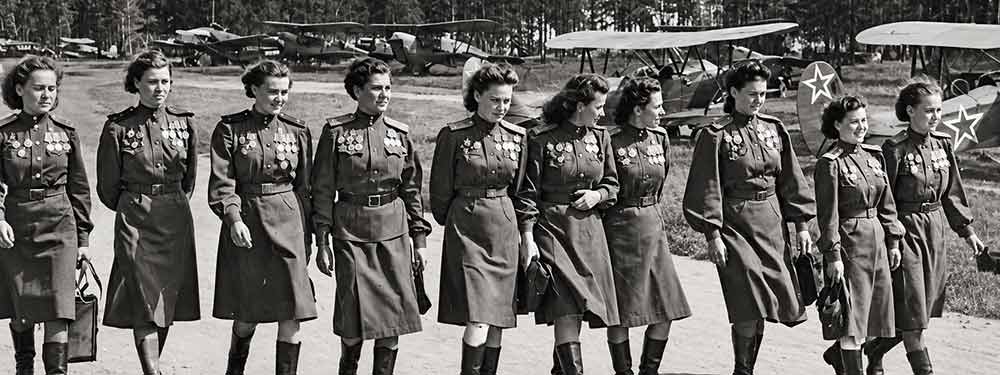
The image of glamorous, confident women wafting silently over helpless German lines at night obscures one truth. Many of the women flying these missions were incredibly young. Some joined the regiment after flying in Soviet flying clubs. Soviet aviators pushed aviation before the war, creating clubs that civilians could join. Others had learned to fly upon entering the military. Life during the war wasn’t just thrilling attacks against enemy targets, however. Night flights dealt with tiredness, rough airfields, cold weather, maintenance issues, darkness itself, and the chance they’d get shot down.
Ground crew also suffered from grueling labor. Mechanics worked tirelessly to make overworked yet simple planes fly mission after mission. Armorers spent their nights loading bombs. The regiment’s pace was sometimes so great that a plane might be ready for takeoff moments after returning from a mission.
The unit even developed unique camaraderie and identity. It wasn’t viewed as just women pilots with airplanes. They lived, trained, worked, experienced losses, and enjoyed victories as a group. That camaraderie would prove vital when the regiment began to earn respect within the Soviet military.
Popular pilots included Nadezhda Popova, Yevgeniya Rudneva, Irina Sebrova, Rufina Gasheva, and Yevgeniya Zhigulenko. Some of these women survived the war and recounted their stories. Others perished in combat.
From the 588th to the 46th Guards
The regiment saw combat beginning in 1942. It served on the southern sector of the Eastern Front. Its assignments tracked the advance of the Red Army as the momentum of the war turned against Germany.
In February 1943 it was awarded Guards status, recognizing its battlefield accomplishments. This honor was bestowed on select Soviet military squads that were recognized for distinguishing themselves in combat. With this promotion, the former 588th became known as the 46th Guards Night Bomber Aviation Regiment. Later, it would earn the honorific “Taman” as a result of its service in battles over the Taman Peninsula.
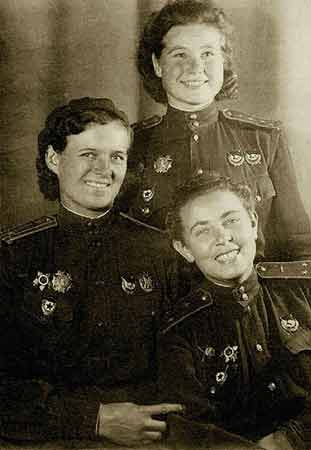
Its new title was a testament to how far the regiment had traveled. What started as an experiment with women’s combat aviation had evolved into a battle-hardened operational unit.
Campaigns would carry the women pilots ever westward as Soviet forces liberated territory from German occupation. They fought in battles across the Caucasus, Crimea, Belarus, Poland, and finally in the push into Germany itself. Meanwhile, its crews continued to fly the same slow-moving biplane while the Red Army began deploying ever more capable tanks, artillery pieces, and aircraft.
The disparity was hard to miss. One of the Soviet Union’s most celebrated flying units was still conducting combat operations with an aircraft whose design was practically obsolete in a wartime setting.
Where Did the Name “Night Witches” Come From?
The regiment never officially referred to itself as the Night Witches. Soviet Air Force veterans and subsequent historians agree that German soldiers coined the name for the Soviet women who carried out nocturnal bombing raids.
The actual origins of the nickname are murkier.
The best-known story associates it with the sound of the Po-2 silently creeping in to attack. Years later, witnesses likened the rush of air over the plane’s wings to a witch’s swish on her broomstick. The Smithsonian National Air and Space Museum dismisses this explanation as folklore. We have no recording of what Night Witches sounded like to someone on the ground.
Alternately, the name has been interpreted as referring to the spectral quality of women parachuting into combat zones under the cover of darkness. Historian Adrienne Harris discusses how the “Night Witches” came to appropriate the term. The name they acquired from their enemies took on a life of its own after the war as part of the regiment’s collective memory.
We do know the nickname was in use during World War II. An article that ran in a Soviet newspaper on March 19, 1945, cited navigator Rufina Gasheva, saying German soldiers were referring to Po-2 pilots as “night witches.” While this doesn’t tell us who created the nickname or when, we can be sure it wasn’t just fabricated after the war.
Did the Night Witches Really Terrify the Germans?
This is where the history gets a bit iffy. It’s fair to say that repeated night harassment missions were no fun for German soldiers. Aircraft did not have to destroy a position to negatively impact the morale of troops underneath them. Losing sleep due to unexpected explosions and having no idea when the next bomber might come could mentally wear down troops.
Statements that the Night Witches single-handedly “terrified” the entire German army are harder to back up with the evidence we have. The Germans dealt with Soviet night harassment aircraft units en masse, and the women of the 588th were not the only crews flying Po-2s. Legends of the regiment sometimes portray them as ethereal creatures who simply wowed every German soldier with their gender alone.
Other well-known claims deserve skepticism as well. Legends will often claim that any German pilot who shot down a Night Witch was immediately awarded the Iron Cross. No contemporary evidence exists that Germans instituted such a policy across the board. Omitting that statement is preferable to inventing evidence to support it.
The story we have documented is still pretty incredible. German soldiers knew about the women flying bombing missions at night; they gave them the nickname ” Night Witches, ” which we still remember, and they had to deal with them attacking night after night. That’s more helpful to history than attempting to quantify fear through exaggeration.
The Cost of Flying Low and Slow
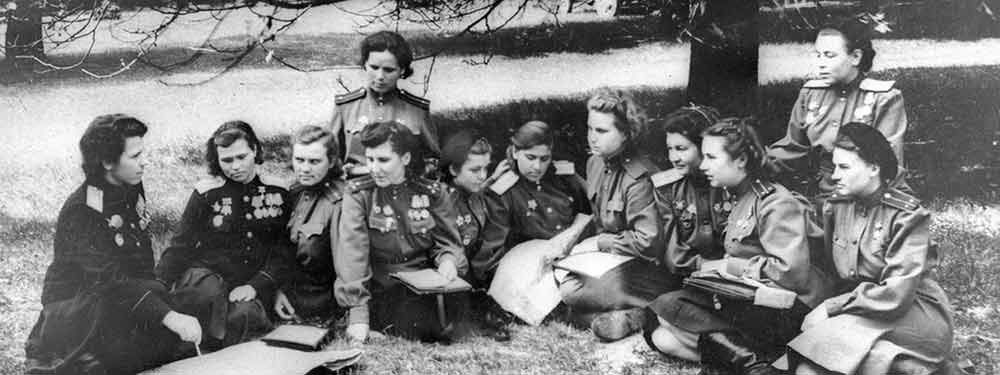
The Po-2’s slow speed may have aided night missions, but did little to make it safe. Searchlights, antiaircraft artillery, enemy fighters, mechanical problems, poor weather, and navigational mistakes could all kill.
The regiment experienced one of its darkest nights on August 1, 1943, when German night fighters intercepted their aircraft. Several crews did not return from this mission. Incidents like this showed just how vulnerable the Po-2 really was once an enemy fighter found it.
There was another hazard that faced the women should they be attacked. Wood and fabric-covered airframes could catch fire easily, and operating at low altitudes gave crews little time to respond. In many ways, survivability relied on not being detected at all, rather than countering attack with armor or evasion.
In total, the regiment suffered scores of deaths over the course of the war. Exact numbers vary by source and whether they list only combat deaths or all losses incurred during the war. What we can say is that the Night Witches paid the price of fearlessness.
Losses also illustrate why the popular image of youthful women whizzing through the skies in basic aircraft can be deceiving. These women flew missions over an active battlefield. Sure, the airplanes themselves were rudimentary by most standards, but the bullets and bombs shooting at them weren’t.



Thousands of Missions Over the Eastern Front
One indication of the regiment’s success is the extent of its activity. By the time of the war’s conclusion, the unit had completed over 20,000 combat sorties. Mission counts are sometimes given as higher than that, topping 23,000. Keep in mind that sources vary slightly in how they count missions vs. sorties. The Smithsonian calls it one of the best-known Soviet women’s flying units. Other historians tend to focus on how relentlessly the regiment flew.
This sort of volume was achievable because sorties didn’t necessarily involve many hours in the air. Crews frequently made several passes in a single night. Nor should the total be compared directly to the mission totals of, say, a heavy bomber regiment. The Po-2’s maximum bomb load was far lighter than that of any conventional combat aircraft and played a far different tactical role than other units.
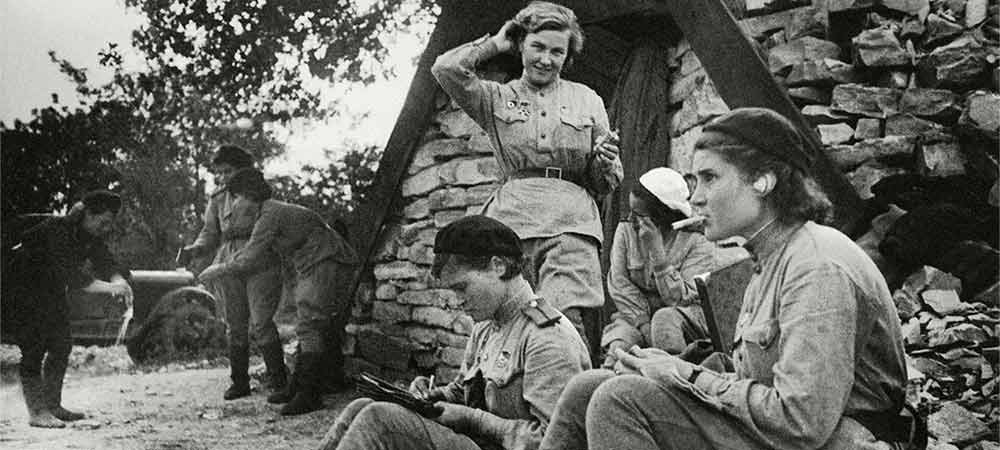
Nevertheless, the workload was immense. Several dozen veteran crew members logged hundreds of combat sorties. Each flight involved another takeoff in the dark, another trip across the front lines, another series of potentially fatal encounters with enemy positions, and another landing so the process could repeat.
Eventually, the accomplishments of these women were recognized. Of the more than 30 women associated with the regiment, over 20 would become Heroes of the Soviet Union, the highest honor the country could bestow. The regiment itself was decorated numerous times as the Red Army rolled towards Nazi Germany’s capital.
The Night Witches and the End of the War
By 1944, the picture was very different from the dark days when the women’ s aviation regiments had first been formed. Soviet armies were rolling westward across a broad front. German forces had been pushed back from huge areas of Soviet territory that they had previously occupied.
The Night Witches rode the tide of that advance. Their missions took them through Eastern Europe as German armies retreated westward back towards the Reich. The landscape changed, but their basic approach remained familiar: lightweight aircraft, nighttime raids, low-level flight paths, repetitive attacks on enemy targets, and speedy ground crews hustling repaired aircraft back to base.
Germany surrendered in May 1945, and the regiment’s wartime raison d’etre came to an end.
Victory, however, did not mean that Soviet women secured an enduring role in combat aviation. Born of the extraordinary demands of a total war emergency, the women’ s regiments could not survive the peace. As the Soviet armed forces largely reverted to more traditional gender-based military structures in peacetime, many of these veterans returned to civilian existence.
Still, their accomplishments during the war altered perceptions of what women could contribute to modern combat. These women had not served merely as symbolic passengers riding on the military effort, nor had they been occasional volunteers from civilian life. They were pilots, navigators, mechanics, commanders, and combat veterans.
The Reality Behind the Legend
The stories of the Night Witches have grown in popularity over time. Books and documentaries have been produced about them. Museums have displays dedicated to them. Popular media has latched onto their nicknames. What started as a slang term for a fearsome regiment became one of the most widely known stories about Soviet women in World War II. The Smithsonian, for example, holds archival collections that include photographs of women who served in the 588th and other Soviet female aviation regiments.
But that familiarity has bred some inaccuracies as well. The aircraft have been called “crop dusters,” though they were technically quite flexible; the Po-2 was designed as a trainer aircraft but was used as a utility aircraft in a number of roles. The attacks were true glide bombs in some cases, but some sources take that further and claim the engines were always completely turned off. The origin of the German nickname has been romanticized beyond what can be provably true.
Sorting out these facts from fiction does not take away from the women of these regiments. It highlights their achievements all the more.
They did not need to possess magical skills to be effective. They flew an aircraft limited in almost every way and mastered using those limits to their advantage. They attacked at night because it helped hide them from enemy defenses. They made so many sorties because their plane could only carry so many bombs. They harassed their enemies because the act itself was its own strategy.
Even their nickname reflects some element of truth, if the folklore that sprang up around it doesn’t. To the soldiers on the ground, those planes could come in under the cover of night, become hard to hear as they made their final approach, and vanish again with their bombs.
Night Witches: The Women Who Owned the Night
In the end, the Night Witches’ story is less about outdated planes taking down modern technology. Nor is it about women finally demonstrating they can fight just as well as men. Their story is one of adaptation in some of WWII’s worst conditions.
Taking an aircraft never meant to compete with the war’s most advanced planes, the women of the 588th Night Bomber Aviation Regiment found a way to make its limitations matter less. Darkness covered its fragility. Slow speed facilitated low-altitude travel. Light payloads were compensated for with frequent missions. Capable crews transformed a rudimentary aircraft into a formidable menace.
They also served as part of a vastly greater Soviet war machine that exacted an almost unthinkable human toll. The Night Witches did not alone turn the tide on the Eastern Front. Neither should their story be divorced from the millions of soldiers and civilians who contributed to the downfall of Nazi Germany.
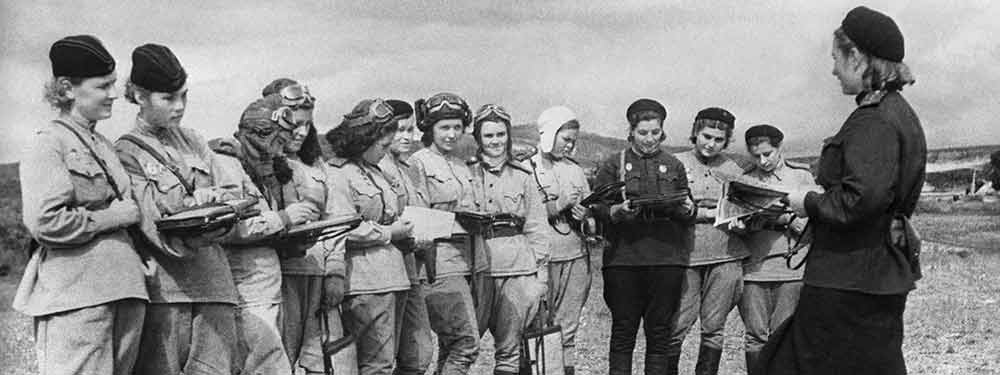
In fact, the reality is far more impressive than any myth we’ve attached to it. Over and over, these young pilots and navigators climbed into open-cockpit biplanes to fly over enemy lines at night. Ground crews kept those planes in the air, often under grueling conditions. Hundreds of missions were flown by many of these crews.
German soldiers gave them the nickname history would not forget. The women took freedom with it. Eighty years later, the legend of the “Night Witches” still reminds us how training, bravery, improvisation, and sheer tenacity could make one of WWII’s simplest aircraft into a menace German soldiers feared hearing during the night.


