The Trojan War, Explained: From Homer’s Epic to Hisarlik’s Ruins
 Reading Time: 19 minutes
 The Trojan War is the most famous war story- but was it myth, memory, or history? Homer’s epic poems have given the battle speeches, characters, and emotions with which many people still picture ancient warfare. For nearly three thousand years, poets and painters, artists and authors, have looked to Homer for the details of a legendary conflict. But epic poetry is not a battlefield dispatch. Heroic deeds are blended with divine intervention, with metaphor and simile, with the artful choices of storytelling.
This tension between sources is the crux of the issue: Homer provides a rich, powerful story, while archaeology provides a broken wall here, a layer of ash there, with interpretations that may overlap or be in competition with one another. The best way to understand the Trojan War is as a composite epic tradition arising from a probable Bronze Age conflict and anchored, to some degree, in historical reality, with the most likely anchor point at Hisarlik/Troy, even though Homer’s details may not be historical fact.
Homer’s Trojan War: What the Iliad Actually Tells Us
The Iliad covers only part of the Trojan War. When the poem begins, years of fighting have already passed. It does not narrate a comprehensive timeline of events (arrival, siege, victory) but rather a sudden flare of conflict: a crisis in the Greek camp brought on by Achilles’ rage. If you approach the poem looking for the beginning and end of the war, you will be disappointed. Homer cares less for the origins or outcome of the war and more for what the war does to pride, loyalty, and the bonds between commanders and their soldiers.
Central to the Iliad’s storyline is rage. The poem approaches wrath like a natural phenomenon. Achilles’ withdrawal demonstrates the extent to which one man’s sense of honor outweighs the needs of the larger army. Honor is not a personal emotion in the Iliad. It is a matter of public status, reputation, and rank. Lose your honor, and you lose your place in the world. That is why prizes and insults matter so much in the story, even when human lives are at stake.
The characters are under a canopy of fate. They are free to act, but they do so with the sense that their actions have already been written into some larger design. This does not render choices meaningless. It renders them tragic. The heroes know what they are walking toward, and they walk toward it anyway because it would be shameful to refuse. The poem’s power lies in that tension: of human will straining against a fate it cannot ultimately avoid.
Divine intervention is not an adornment in Homer; it is a critical element of his narrative engine. Gods take sides, quarrel with one another, trick mortals, rescue and destroy heroes, and turn a battle for a piece of land into a cosmic drama. This is one reason the Iliad cannot be read as straightforward history. But the gods also work on a metaphorical level, as a language to describe reality: the world’s luck, its sudden reversals, and the feeling that war outstrips any individual’s plans. The poem’s supernatural layer provides language for chaos.
Because the Iliad breaks off before the fall of Troy, the events that readers commonly think of as “the Trojan War” are filled out by later stories. The Trojan Horse, the sack of Troy, and the destinies of the surviving heroes are primarily matters for other sources: later epic poems now lost, the tragedians, and mythographers. In popular imagination, these episodes cohere into a single narrative, but Homer’s Iliad is narrower and more psychological than that amalgamated version.
The Odyssey casts a wider shadow of the war in another direction. It describes what happens after fighting has ended, when victory fails to restore peace of mind, or in a person’s home. The war becomes a wound transported over the sea. Together, the Iliad and the Odyssey demonstrate why Troy was such a powerful fixture in Greek cultural memory: not simply as a city to be taken, but as a setting for larger questions about violence, loyalty, and the price of glory.

Mythmaking and Oral Tradition
Before the story of the Trojan War was written down, it was performed. Oral poets used repeated patterns-stock phrases, well-known scenes, shared themes and ideas- to build a framework in which long stories could be memorized and recited. The system is capable of preserving real information across generations, but it is also a system of transformation. Each individual performance is both a preservation and an adaptation, because each poet, in each moment, will shift tone, emphasis, and detail to fit the needs of the crowd before them.
This change occurs in large part for practical reasons. A singer wants to hold the attention of the crowd, and will sharpen scenes, harden speeches, and exaggerate characters to hold the attention of the crowd. The poet also shifts the story in response to audience expectations. If the crowd values boldness, the poet emphasizes bold choices; if they fear hubris, the poet works more cautiously. Over time, repeated choices create tradition, and tradition can start to seem like fact.
Political and local pressures also tug at the story. Greek communities could lay claim to heroes as ancestors, and cities could increase their own standing by claiming famous warriors as locals. That creates incentives to add or modify details such as who fought on which side, who was most noble, and which side was favored by the gods. When a myth becomes a badge of community identity, it stops being a neutral memory and becomes cultural property.
Which suggests the question: what would be “historical kernels?” A real city at a key strategic point on a trade route, conflict over the control of that trade, raiding and counter-raiding in the late Bronze Age, and a major event of burning and destruction that was remembered for generations and generations. Those are plausible points for an oral tradition to hold on to, particularly if it was a dramatic event with widespread consequences. The much more poetic inventions are the clean moral arcs, the perfectly symmetrical duels, and the detailed divine machinery, which is brought out to explain every plot turn as the will of fate.
The challenge is not to try to pick apart the story to ask whether it is “true” or “false” as a whole. Oral tradition often works more like sediment: a core memory overlaid by many different layers of meaning. The Iliad and the Odyssey preserve echoes of Bronze Age warfare while also reflecting the values of later audiences who kept the story alive. That is how an event, real or imagined, or a bit of both, can become a timeless myth without ever being a simple lie.
Where Was Troy? Hisarlik and the Search
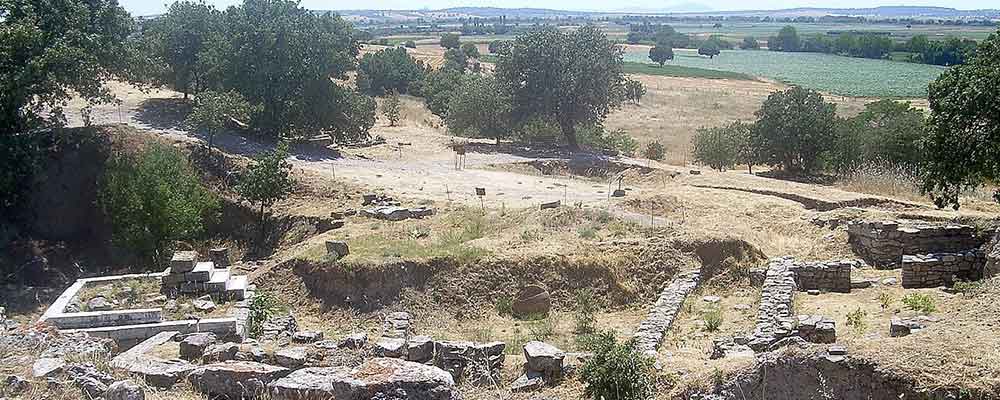
Most scholars today identify Troy with the site of Hisarlik in northwestern Turkey, overlooking the Dardanelles. It’s a sensible location for many of the story’s logistical requirements. Troy is close to major sea lanes, near some of the world’s most productive plains, and at a natural bottleneck between the Aegean and Anatolia. A Bronze Age city with designs on trading profit and controlling movement will build on the same bluff, more or less, for the same strategic reasons. That geography also suggests that a fight there will not be just one city feuding with a neighbor.
The modern hunt for Troy begins in the 19th century, with Heinrich Schliemann’s quest to find Homer’s city. Schliemann helped put Hisarlik on the map, but he also developed a talent for stirring up controversy. He dug rapidly, occasionally slicing through layers with heavy equipment and taking a sledgehammer to evidence that subsequent archaeologists might have wished to examine more slowly. His success produced splashy headlines and also left behind hard questions about what information might have been lost.
Subsequent archaeologists refined and corrected the picture. They showed, first of all, that “Troy” is not a single city frozen in time. The Trojan “mound” is multiple cities built atop each other, with different walls, streets, and episodes of destruction. “Which Troy is Homer’s?”, then, is not just “Is Hisarlik Troy?”, but “Which Troy—at which date—best matches the era in the background of the legend?”
Scholars label these layers Troy I through Troy IX. The count does not imply nine separate towns, in nine neat chapters of history; it is a practical way of cataloging the site’s complexity. Some layers are small and show early settlements, others are larger fortified phases, and still later layers show Greek and Roman occupation long after the Bronze Age. “Troy”, archaeologically speaking, is a sequence of cities on the same strategic hill.
The layered reality, in turn, shifts the nature of the debate. Homer’s poem describes a grand war, but the ground of Hisarlik is marked by multiple buildings and destruction over centuries. A war story could latch onto one great destruction and then gradually pick up details and heroes as oral tradition accumulated. In other words, the ruins are compatible with a real place at the back of the legend—but also a reminder that legend is rarely attached to a single, simple event.
Which Troy Was Homer’s Troy?
Archaeologists do not question that Hisarlik was the site of a city; they discuss which level best represents the kind of Troy that might have passed into memory and inspired the later epic tradition. The two levels most often proposed are Troy VI and Troy VII, both of which date to the Late Bronze Age. Troy VI–VII shows signs of being a sizable and defended settlement—a city large enough to be fought over and defended. The challenge is that “Homer’s Troy” is a poetic target, while “archaeological Troy” is a pile of real cities built, damaged, and rebuilt over centuries.
Troy VI has often been a leading candidate because it was large and appears well fortified. It hints at prosperity and power, suggesting that it would take considerable effort to bring Troy down. But its destruction is also one that some have argued looks more like earthquake damage than a clean military sack. That does not disprove the idea of conflict—earthquakes can damage walls and create conditions for opportunistic raids—but it challenges any simple “Greek army burns Troy” narrative.
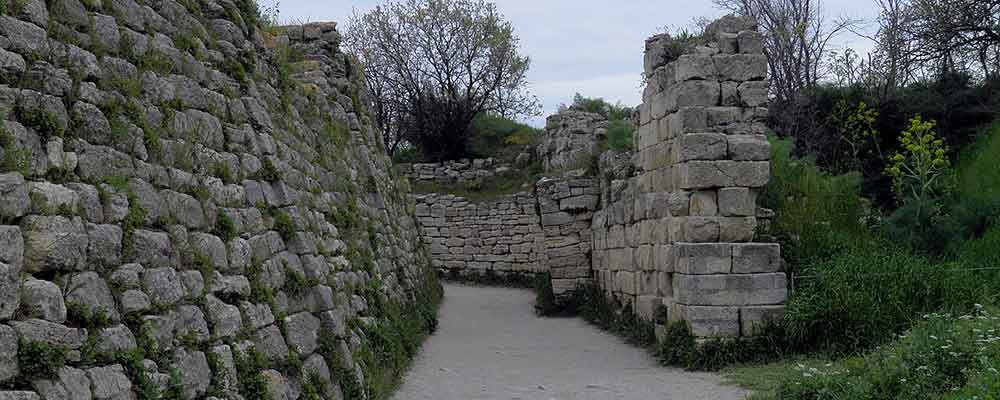
Troy VII is a major candidate, in part because evidence from this level sometimes appears more like crisis living. Archaeologists have noted evidence of crowding, hurried rebuilding, and storage practices that could signal insecurity and preparation for siege. They have also discussed destruction layers involving fire and damage. If you imagine a long siege or repeated attacks, Troy VII may be a closer match to a city that was under stress for a while.
But the evidence is not a movie scene preserved in the soil. Fire is one of those ambiguous things. It could come from warfare, but it could also come from an accident in a chaotic situation. Damage could reflect an attack, but it could also result from a later disturbance. Archaeologists must work with incomplete traces, from collapsed walls to burned debris to scattered objects, and the same traces can support multiple interpretations.
Dating is a further challenge. Archaeologists use pottery styles and stratigraphy to build relative chronologies, and scientific dating methods to calibrate parts of the sequence. But these methods do not align neatly to the traditional “Trojan War date” because the epic timeline is not a reliable calendar. Homer composed centuries after the Bronze Age, and his poem reflects later values and memories mixed together. Archaeology can provide a plausible window of time for conflict, but it cannot “prove Achilles.”
The safest conclusion is the cautious one: that Hisarlik experienced Late Bronze Age destruction events that could have plausibly anchored a remembered war story, and that Troy VI–VII are the best candidates for that anchor. Archaeology can show a real city, with real trauma and rebuilding. Archaeology cannot prove the exact cast, the exact cause, or a single, decisive moment that can be exactly matched to epic tradition.
The Bronze Age World Around Troy
Troy’s world in the Late Bronze Age was already international. Mycenaean Greece was not a simple village society but a palace-based system with economic power centers that controlled land and labor and facilitated trade. The palaces underpinned a warrior elite, craft production, and long-distance exchange. Ships were important because prestige goods and raw materials traveled by sea, and raiding could be indistinguishable from “trade” when power permitted. In this context, an Aegean-spanning conflict was possible because Mycenaean leaders had the organization and the reason to export force.
Equally, Mycenaean warfare was likely more sophisticated than Homer’s duels. Bronze Age war was big on chariots, spears, archery, and heavily armed retinues if the wider record is any guide. And though battles have a legendary heroic sheen, warfare was often about alliances, logistics, and the overall clash of forces more than epic single combat. A coastal raid could have targeted cities as prizes or bargaining chips—to secure tribute, control of routes, or leverage in a shifting political landscape. If Troy was wealthy and well-sited, it is easy to imagine it as a node for a coalition that might be seeking a source of leverage against its neighbors.
Anatolia across the water was also being shaped by a larger world—the Hittite world of treaties, kingship, and the habit of international diplomacy backed by force. Hittite influence extended to western Anatolia through a network of vassal relationships and local politics, a structure in which small states played competing patrons off one another. This matters for Troy because it places the city in a landscape where small-state interests were already intersecting with the concerns of large, interacting empires. Diplomatic failures, territorial encroachments, and the conduct of trade were all matters that could cause small states to escalate when larger empires were drawn in.
Diplomacy was real and formal in this period. Great powers exchanged envoys, gifts, and formal agreements, and they policed loyalty through oaths and obligations. That means a “Trojan War” need not be dismissed as imaginary and irrational. Instead, a war “about” Troy could just as well have been the last stage of a long chain of repeated disputes—trade disruptions, raids, and local authority challenged—until the balance of risk and reward shifted for one side and a decisive strike seemed worth it.
The Dardanelles made the location significant. A natural maritime corridor between the Aegean and the Sea of Marmara and beyond, traffic through the Dardanelles linked different economic worlds. Control of the approaches, customs, or even the ability to threaten shipping in the strait could be lucratively parlayed into wealth and political advantage. A fortified and occupied city near this corridor could feed on the traffic—and also become a choke point that anyone with an interest in freer access or more control might seek to remove.
Seen in this way, Troy’s significance has less to do with one particular love story and more with geography and power. Mycenaean palaces had reason and the means to look outward. Anatolia had a strong system of international diplomacy with interests that might conflict. And Hisarlik sat near a maritime corridor that could turn local dominance into a matter of international significance. In such a world, a major conflict over Troy is not only possible but also how Bronze Age politics often worked.
Ancient Texts Beyond Homer
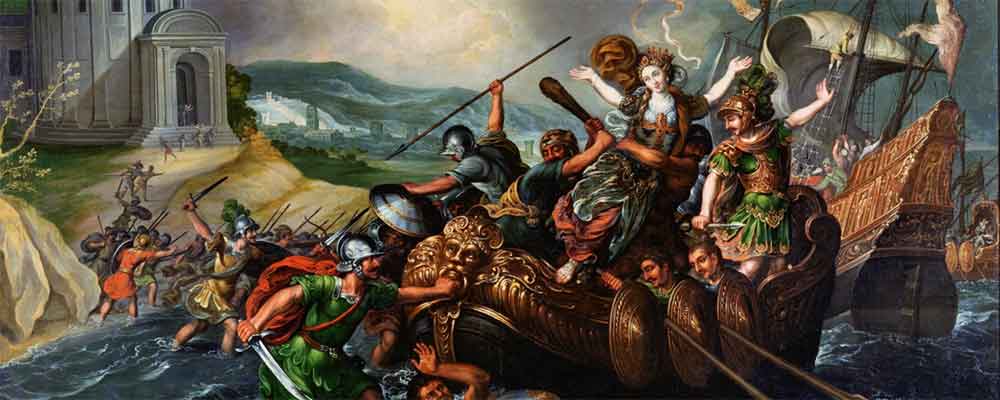
Greek literature after Homer fleshed out the Trojan War into a more complete “cycle” of events, which the Iliad only sketches. The tragedians Aeschylus, Sophocles, and Euripides put Trojan characters on stage to explore themes of guilt and survival, the costs of victory, and the feelings of women, captives, and political losers. Later mythographers and poets wove together episodes like the Horse, the sack of the city, and the long and ill-starred homecomings of the survivors. These sources, like Homer, show how the story changed over time and how Greeks used Troy to think about their own wars and moral anxieties, not just ancient heroism.
Because most of these later sources were written centuries after any putative Bronze Age conflict, it is best to read them as evidence of reception rather than of events. They preserve alternative versions of characters and motives, but they also show us what different authors and periods wanted Troy to mean. Even if a detail is old, it may have been adapted to a new audience. The result is a richly layered tradition: not one “true” narrative, but a family of narratives that compete and overlap.
Outside of Greek literature, the most-discussed non-Homeric evidence for Troy and the Trojan War comes from Hittite texts. Late Bronze Age documents from Anatolia mention places and peoples that various scholars have identified with Troy and the Greeks. The main debate is over whether “Wilusa” in the Hittite sources can be identified with (W)Ilios/Troy, and whether the word “Ahhiyawa” refers to Achaean Greeks. If these identifications are correct, then the area of western Anatolia was a real diplomatic and military stage in the Late Bronze Age, with people there contesting access, signing treaties, and local rulers caught between the great powers of the time.
Interpretation is disputed because the texts do not say “Troy” and “Agamemnon” in the straightforward way we expect. Names change across languages, and the geography can be argued in multiple directions. Scholars also dispute whether the Hittite evidence points to a single, large war, to several smaller conflicts, or mostly to diplomatic quarrels. The evidence supports plausibility (regional tension, contested strategic cities, great power political rivalries) but not Homer’s cast or a single, epic 10-year siege.
Taken together, these sources suggest that the story’s Bronze Age setting was one in which conflict in and around the region of Hisarlik would not be at all surprising. Greek post-Homeric traditions show the war story as it developed into a full saga, while Hittite texts (see modern scholarship on Wilusa/Ahhiyawa) hint at real geopolitics behind the legend. The safest conclusion, then, is a modest one: texts beyond Homer do not prove the Iliad, but they do strengthen the case that Troy’s world was historically “busy enough” to generate a remembered conflict.
Warfare Then vs Homer’s Warfare
Homer’s fighting can often seem like a sequence of personal duels, speeches, and stylized charges. But Late Bronze Age warfare was frequently less Homeric than this. It was a world of spears and shields and fighting at close quarters. It was a world of massed retinues with carefully organized squadrons. It was a world where personal armor and weapons were a significant investment that not everyone could afford. Archaeology and later practice show real diversity: bronze weapons, multilayered defenses, and fighters trained for close-order combat as much as heroic one-on-ones. Homer preserves a warrior ethos, but stages it in a poetic world with a different sense of realism.
Some details in the epics can be matched to Bronze Age material culture. Boar’s tusk helmets, for instance, are a historical type known from archaeology and (most famously) from Homer’s tradition. Chariots are also a Bronze Age phenomenon, but their use is another debated issue.
In Homer, chariots are used in ways that look like a sort of fast taxi service- dropping heroes at the fighting and picking them up afterward- while in earlier times they may have had a more central role as a platform for elite display and status, skirmishing, or command. When a literary form incorporates details from older material practices that don’t make sense anymore, it can be a clue that the poem is stitching together earlier memories with later habits of storytelling.
Siege warfare also looks different in practice than the clean image of a “ten-year siege” suggests. Bronze Age warfare often took the form of raids, burnings, and seizure of goods and people, with blockades and negotiated surrender at the center of the activity. Local alliances could turn in a single battle, and war could be more about leverage than annihilation. A city could be starved into submission through tactics such as surrounding the farmland, cutting off routes, or punishing allies, rather than endless battering at the walls. That sort of slow coercion is not very good for a song.
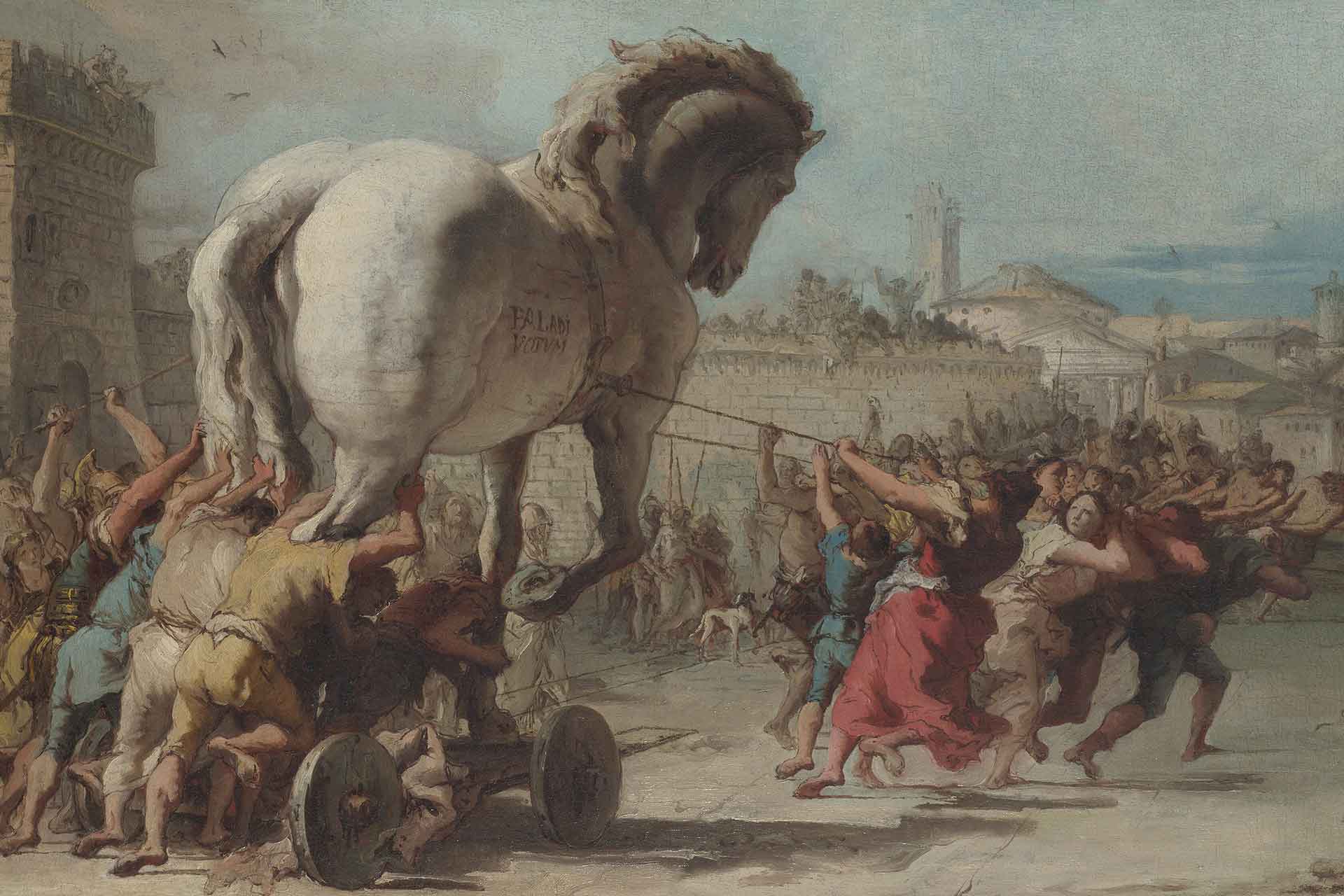
Which may be why the Trojan Horse story seems more like a stratagem or symbol than a literal wooden automaton. The story has an obvious fact about siegecraft at its heart: a wall is vulnerable to trickery as well as force. The “horse” may preserve a memory of infiltration, a ruse, a disguised entry, a rolling shield, or even a metaphor for a siege engine or ship. Ancient stories often turn real tactics into memorable, repeatable images. The Horse is unforgettable because it turns a complex, drawn-out military problem into a single, clear narrative gesture.
Homer’s warfare is not useless for history, but it must be used with caution. The poems preserve values (honor, fear, loyalty) and they can contain details of older gear and practices. But they also reconstruct conflict into a poetic world with certain expectations. Gods intervene, and heroes philosophize. If there was a war behind Troy, it was probably a series of raids and pressure on a strategic city —combined with diplomacy and status competition—later reworked into epic combat because epics are a form that teaches and entertains.
Myth vs Reality: What We Can Say Confidently
So how do we know about the Trojan War? Let’s start with the safest bit. Troy was a real place. Hisarlik in modern Turkey is the site of a fortified city of Late Bronze Age importance, with multiple periods of construction and destruction. That doesn’t “prove” Homer, but it eliminates “Troy was made up from nothing.”
It also seems likely that the area saw actual fighting. Aegean and western Anatolian Late Bronze Age politics included raiding, alliance-building, and struggles over routes and resources. Mycenaean contact with Anatolia is accepted in broad strokes, even if disputed in detail. If a major war had happened, it might have looked more like repeated pressure campaigns than a single movie-style siege.
Unclearer becomes the cast and the script. Specific heroes may preserve echoes of older warrior values, but we can’t connect them to named historical individuals. Dates are slippery because Homer’s poems were composed centuries after possible events, and oral tradition preserves calendars imperfectly. Archaeology can make windows shorter but cannot fix a “Trojan War year” with certainty.
Even harder: the Trojan Horse. It is a brilliant storytelling device and a powerful symbol of intelligence and trickery, but we have no evidence that a wooden horse was actually used to breach Troy. The story could be a real trick, an infiltration, a misdirection, or a metaphor that later took literal form. A clear and powerful image is often the endpoint of mythmaking, because it’s easier to remember and transmit than messy tactics.
This is why “myth or reality” is the wrong binary question. The Trojan War tradition probably has layers of truth: a real city, a plausible conflict, and a long memory preserved by poetry—combined with invention that makes the story powerful. Homer gives it emotional and moral contours; archaeology gives it place and context. We probably cannot know it happened “in this way,” but we can draw conclusions about legend as often growing from history, the way a tree grows from a root: recognizable in the base but transformed in the branches.
Legacy of the Trojan War Story
The Trojan War survived the Bronze Age because it became useful. To the Greeks, it offered a shared history populated with heroes, warnings, and glory. For later powers, it became a toolkit of origins: an old story that could be rewritten and co-opted to confer political legitimacy. When a community claimed descent from the Trojans, it was not just storytelling; it was a claim to a noble heritage and a place among the mighty.
No one borrowed from Troy more than Rome. Roman tradition traced the city’s founders to Trojan heritage through the character of Aeneas; most famously, Virgil reimagined the journey in the Aeneid. The point was not proof of history. The point was proving identity. Troy offered Rome a way to bridge mythic pasts (all the prestige of the Greek epic tradition) with imperial futures (suggesting that what Rome was conquering had already been inherited, rather than stolen).
Other empires and kingdoms copied the move. Medieval and early modern authors across Europe were fond of Trojan origin myths because they offered instant gravitas. If your dynasty could connect back to Troy, you gained age, dignity, and a heroic backstory without having to earn it on the battlefield. These arguments were also frequently less about the Bronze Age than about competition in the present.
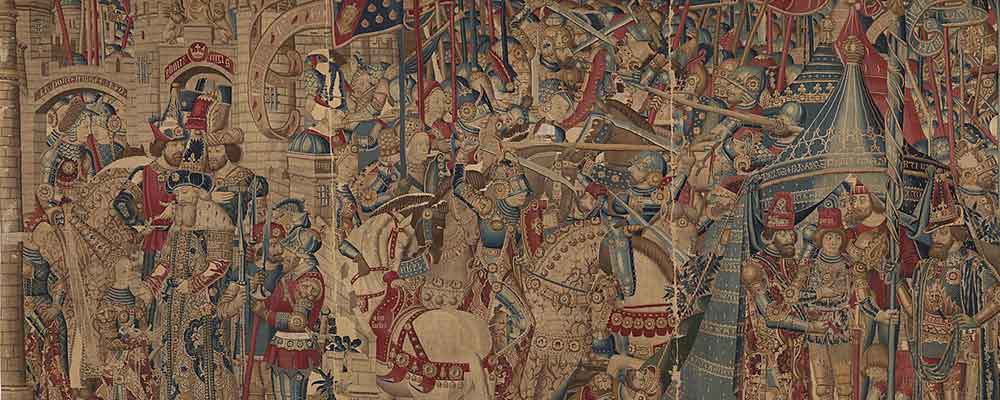
Retellings changed the story’s tenor. Medieval romance traditions downplayed some of the brutality and highlighted courtly values, while Renaissance and modern reworkings leaned into tragedy, psychology, and spectacle. In the modern era, film and novels transformed Troy into a pop-culture brand: epic battles, doomed romance, and instantly recognizable icons (the Horse, for example). Each retelling selects what it wants (heroism, or betrayal, or grief) and discards the rest.
The story survives because it is built out of emotions that never go out of style. Love and pride spark the war; loss and regret close it. The characters embody decisions that audiences can still recognize: the lure of reputation, the cost of anger, the temptation of revenge. Even if the details get remixed, the moral choices stay pointed.
Troy also endures because it occupies a liminal space between myth and evidence. Hisarlik gives the legend a physical anchor; Homer gives it meaning. That combination makes it endlessly recursive: archaeologists retest the ground, artists retell the drama, and audiences continue to ask the same question—what part of this is true, and why does it feel true even when it may not be?


