
The Great Emu War and the Unlikely Victory of Australia’s Flightless Birds
 Reading Time: 16 minutes
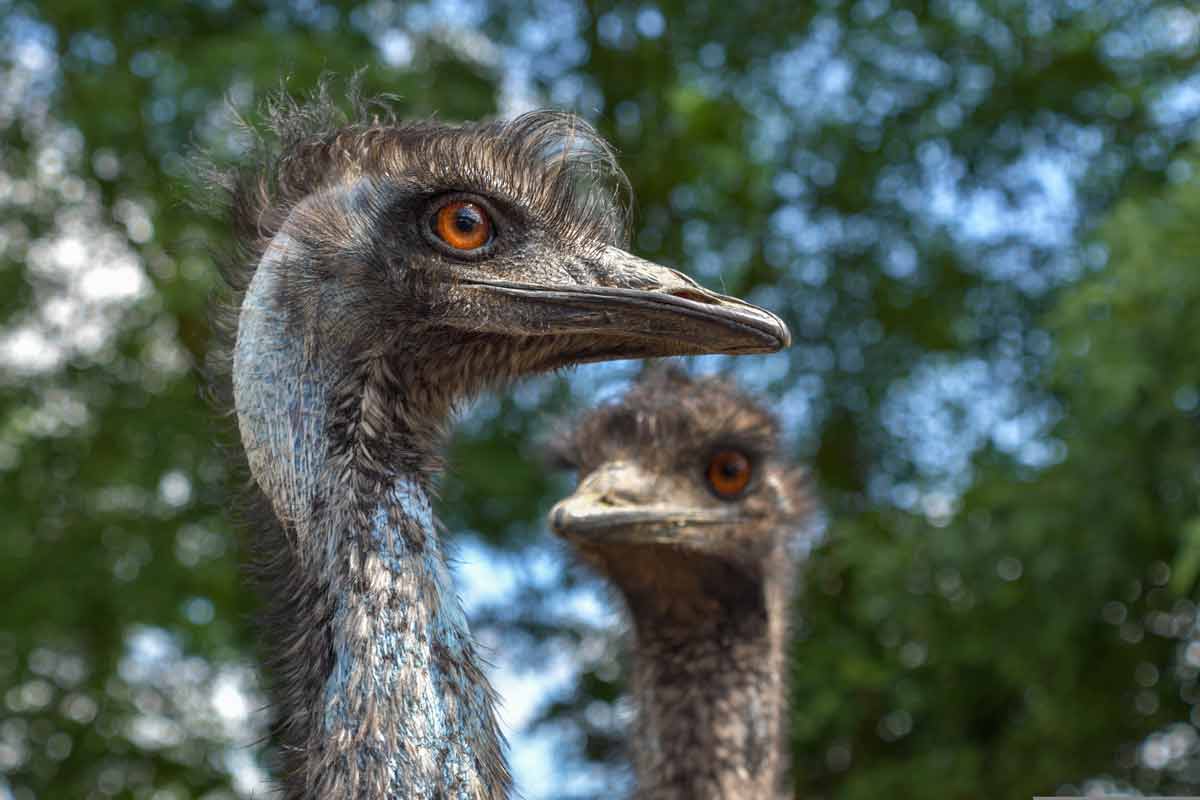
 The Great Emu War of 1932 is among Australia’s strangest military campaigns. Desperate farmers hired soldiers armed with machine guns to attack thousands of huge flightless birds that were eating them out of their homes in Western Australia’s wheatbelt. But instead of an easy hunt, legionaries found themselves stymied by an enemy that outran them, scattered at will across hundreds of acres, and couldn’t be killed very easily.
The Emus had no idea they were supposed to be at war. However, their superior speed, erratic travel patterns, and long migrations made them cunning opponents. Guns jammed. Bullets flew with little result. Trying to chase the birds down in a truck failed miserably.
Journalists recognized the absurdity of it all. Public mockery and inquiry followed, and eventually gave rise to the persistent myth that Australia formally declared war on emus and lost. The reality was less funny: desperate farmers, angry voters, and a looming agricultural disaster during the Great Depression.
Australia’s Wheat Farmers Were Already Fighting for Survival
World War I left Australia facing enormous challenges. Thousands of veterans were enticed into remote farmland using soldier settlement programs backed by government incentives. Promises of starting anew appealed to many veterans. They hoped to become wheat farmers together in Western Australia’s vast interior, where native bushland was being cleared at a frantic pace to make way for agricultural communities.
But life as a farmer was never easy. Weather was hot and dry, rainfall sporadic, and much of the soil required significant development before it would yield consistent crops. To buy equipment, fence, harvest their crop, and build houses, many farmers took on large loans that would take years to pay off. Those debts became unsustainable when prices for farm goods collapsed.
Prices for farm goods around the world plummeted after the Wall Street crash of 1929. Western Australian farmers quickly found themselves selling wheat for less than it cost to produce. To make matters worse, the Australian government had previously been promoting increased wheat yields, making farmers angrier that they could not reap the financial benefits of their labor.
By 1932, wheat farmers in Western Australia’s Wheatbelt region were finding it harder than ever to make ends meet. If they had a good season, they might pay their bills and keep their farms. When large flocks of emus started marching across farmers’ lands, devouring what was left of their crops, the farmers had had enough.
Why Thousands of Emus Entered the Wheatbelt
Emus are one of Australia’s many iconic native animals. They can grow up to 6 feet tall, making them the largest bird native to Australia. They are also the 2nd largest bird alive today, second only to the Ostrich. While they are unable to fly, they can run close to 30mph and will cover long distances to find food and water.
Emus will roam vast amounts of land depending on the seasons. This has been going on for years before settlers started creating farms throughout Western Australia. Once these farms were made, they began to provide more food along the paths the emus would travel.
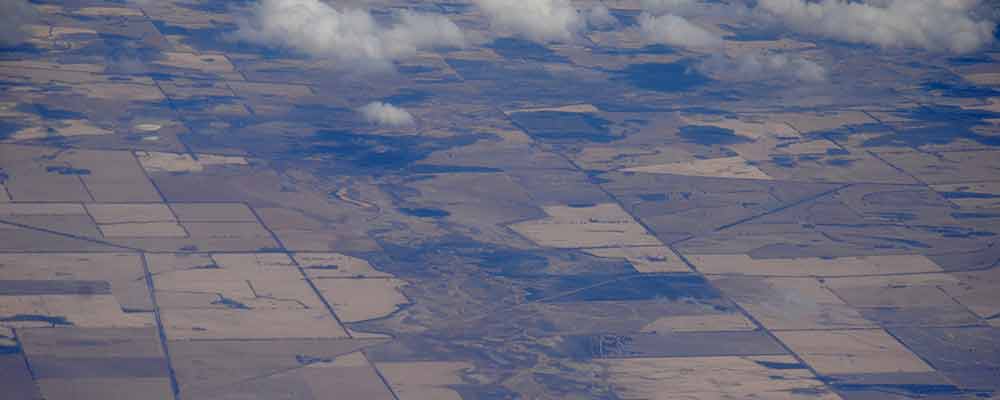
In 1932, much of the bushland was cleared, and wheat fields replaced it. When the time came for the emus to migrate, they found plenty of food in the newly established farmland. It is estimated that around 20,000 emus migrated to the area surrounding Campion, Walgoolan, and other settlements.
They ate the wheat, trampled the crops, and broke fences while migrating from field to field. Breaking the fences also let rabbits into the farmland. Rabbits have always been a nuisance in Australia, so this caused even more problems for the farmers.
These emus weren’t purposely invading unfamiliar territory. They were simply migrating as they always had across land that had now been turned into farmland. But to the farmers watching their efforts and future being consumed, this distinction did not offer any comfort. They needed a solution quickly.
Desperate Farmers Turn to the Australian Government
A lot of these farmers were veterans of World War I who had witnessed how destructive machine guns could be. Once normal methods of countering the birds proved inadequate, several farmers approached federal officials asking for military aid.
Sir George Pearce, the Minister for Defense in Australia at the time, listened to their concerns about the birds and agreed to dispatch a small force of soldiers with machine guns to reduce the emu population. Pearce believed the gesture would give farmers a much-needed boost. So the government authorized the military expedition.
They weren’t declaring war on Australian wildlife or mounting a traditional military operation, but they were indeed sending in troops to provide aid in a pest extermination effort. Soldiers would be expected to fight a wildlife control battle using weapons of war typically reserved for a military campaign.
Funding the plan wasn’t as simple as pulling a few soldiers off the street and letting them loose with machine guns. Australia’s Department of Defense struck a deal with farmers: they provided transportation and other logistical support, and the government provided troops and weapons. The expectation was that the modern weapons would make quick work of the pests.
It failed to account for one factor, though. The birds were not fixed targets, nor would they stay together if threatened. The men were about to learn their rifles were ill-designed to kill what they were deployed against.
Major Meredith and the Soldiers Sent to Fight Emus
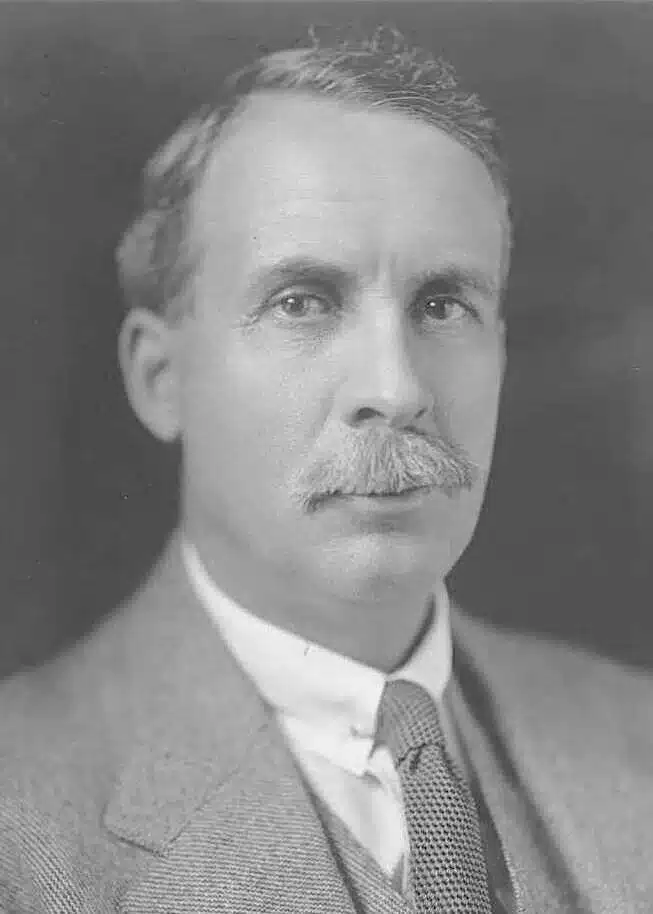
The military detail tasked with eliminating the emus was led by Major G. P. W. Meredith of the Royal Australian Artillery. Meredith had an unusually small detachment at his disposal. Along with two soldiers, he was issued two Lewis machine guns and around 10,000 rounds of ammunition.
The Lewis gun was standard issue for the British Expeditionary Force during World War I. The lightweight machine gun could fire several hundred rounds per minute, suppressing enemy soldiers and other targets. Officials believed the Lewis gun would be devastating against large groups of flightless birds.
A cinematographer accompanied the detachment and documented the soldiers’ arrival in emu territory. By this point, considerable interest had been generated by the government’s pledge to resolve the conflict. The military was expected to deliver results the public could see, and this footage would add to the operation’s historical record.
October 1932 was to be the start of the military’s campaign against the emus. Persistent rains pushed back the soldiers’ arrival in the field. The heavy downpour dispersed the birds across a larger area, which made finding groups of them more difficult. The soldiers were ready for action by early November. They set out to accomplish their mission in the farmlands around Campion.
As they entered the countryside, the soldiers were confident they could easily complete their task. They had powerful weapons and substantial ammunition. However, it didn’t take long for the flaws in their plan to become clear.
The First Encounters Prove More Difficult Than Expected
On November 2, 1932, the Great Emu War began in earnest. Major Meredith and his troops began actively stalking emus west of Campion. In the first few days, they encountered small bands moving through farmland. The soldiers tried closing in on the birds and firing, but the groups were not large enough to eliminate any substantial number of the flightless emus.
As soon as they detected danger, the birds took off and scattered. They moved quickly enough to be hard to track, and they spread out in all directions, minimizing the impact of automatic fire. Instead of presenting one large concentrated target, they broke up into smaller clusters and moved in all directions.
Essentially, the soldiers found that a flock of emus did not react like a platoon of infantry. The machine guns were designed to concentrate fire on a large number of the enemy. The spooked emus did not flee as a group and would consistently disperse in any direction, and the vast terrain supplied ample ground for them to do so.
The early returns were less than stellar. Sure, Meredith’s men killed birds, but they never put together a day that produced the kind of culling officials hoped for. The issue wasn’t weaponry or marksmanship; the emus were adept at detecting danger and scattering repeatedly.
What Meredith needed was a chance to engage at a significant grouping of emus. If enough were together, perhaps the troops could use their hardware as intended and produce the turnaround the government wanted to see. On the third day of the Great Emu War, he finally got his chance.
The Machine-Gun Disaster Near the Dam
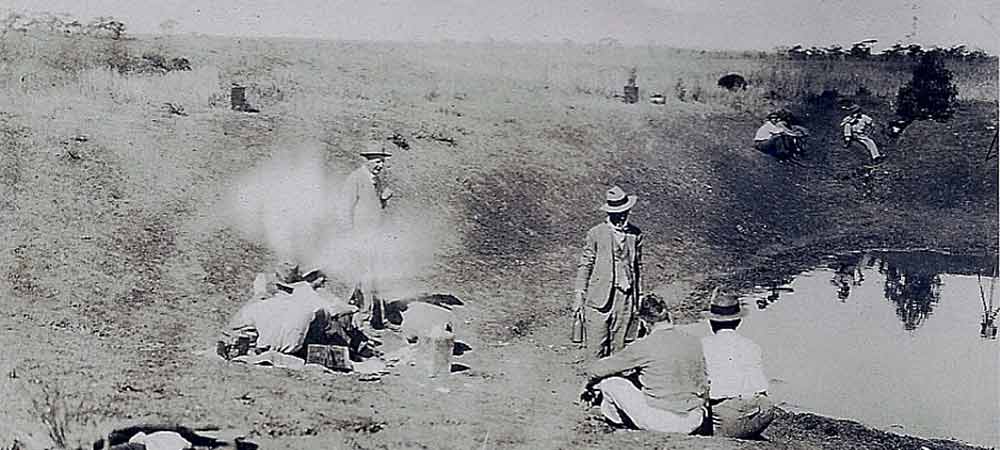
The soldiers first came into contact with a sizeable emu population on November 4, 1932, near a dam. Witnesses reported about 1,000 birds in the area. Instead of pursuing small groups throughout farmland, soldiers could place a machine gun in position to shoot where the birds attempted to cross.
The strategy seemed simple enough. Provided the birds approached in large enough groups, sustained bursts of automatic fire could kill hundreds before they had a chance to flee. They loaded the weapon and waited for the animals to draw within range.
Perhaps this encounter would change the grim statistics of the opening few days. Unfortunately for the soldiers, it did not. As soon as the gun started firing, the emus scattered. Limited concentrations of fire became harder, and the situation became worse when the gun jammed. Most birds had fled by the time the jam could be cleared.
Few emus were killed that day. What would become one of the most infamous moments of the Great Emu War was so because it perfectly illustrated how a near-guaranteed success failed to pan out. A modern machine gun was set up against hundreds of flightless birds, and yet the results were still not very encouraging.
The birds had not outsmarted the soldiers with any deliberate intent. When faced with danger, they reacted in a way that they always had, and when compounded with the jammed machine gun, the events of the day rendered the operation ineffective. Meredith continued to search for solutions to increase effectiveness. One of these involved an experiment that would become nearly as well-known as the incident near the dam.
Why the Emus Were So Difficult to Defeat
Soldiers encountered several unforeseen problems. The operation’s rapid approval left little time to consider factors like emus’ quick pace, which let them outrun the effective firing range. Their powerful legs enabled them to cross open and broken ground faster than soldiers hampered by packs and rifles could follow them.
The sheer size of the Wheatbelt was another factor. Soldiers needed to travel between farms and scout vast areas of land for concentrations of emus. Locating birds was difficult enough, but approaching them without flushing them was even harder.
Meredith tried various tactics to counteract these difficulties, such as mounting a machine gun on a truck. With it, they hoped to chase down birds and fire from the vehicle rather than from stationary positions. However, because the truck could hardly manage the rough terrain, it proved nearly futile, as firing accurately from the vehicle was extremely difficult.
Newspaper reports at the time also noted the birds’ propensity to keep running after being shot. While later stories have inflated these accounts to levels where emus could seemingly shrug off bullets, they were noted to be resilient targets, with Meredith likening them to tanks. While the Lewis gun was still formidable, shots still needed to connect with live targets.

Newspapers Turn the Great Emu War Into a National Joke
Australian newspapers quickly took notice of the unconventional campaign. Articles detailed how soldiers armed with military machine guns were firing away at thousands of large flightless birds, only to find that the birds were far more difficult to kill than expected. Journalists leaped on the dichotomy between the government’s expectations and the reality of what their soldiers were experiencing in the field.
Some questioned whether the military should be tasked with wildlife management at all. Others were critical that soldiers were using ammunition at a time when many Australians were suffering from an economic depression. Still more news articles made life difficult for Pearce. As Defense Minister, Pearce originally sanctioned the use of troops, and he now found his decision had attracted media attention.
Print journalists began reporting on the emu conflict as if it were a battle between whizzing bullets and demonic emus who could not be killed. In reality, the emus were simply fleeing for their lives, but by attributing cunning behavior to the birds, reporters began to create the legend of the emu as a wartime enemy. What remained hidden behind jokes was a fierce debate about the responsibility of government. Farmers were insisting that the emus were driving their families into bankruptcy. Their opponents maintained that neither soldiers nor machine guns could be considered a proper response.
Caught in the middle were politicians like Pearce, who were under pressure from their agricultural constituents, but who also had to answer to the electorate that was starting to laugh at the futility of the campaign. The pressure soon became too much for the politicians behind the scenes. Intended to provide support to poor rural communities, the military campaign was becoming a national laughing stock. Pearce announced that further military action would be halted.
The Government Orders the Soldiers to Withdraw
The Australian government called the detachment back on November 8, 1932. The first round of the Great Emu War had lasted just over a week, and had been deemed a failure. Soldiers had burned through a lot of ammo but failed to cause the massive slaughter state officials wanted to see.
Reports from the time disagree on how many birds were killed. What can be agreed upon, however, is that the military had killed only a small percentage of the thousands of emus inhabiting the area. Additionally, they had attracted negative press. The mission, which was meant to provide relief to farmers, had turned into fodder for political rivals.
Thankfully for the government, pulling out would allow them to dissolve the operation. Unfortunately for farmers, it left them right back where they started. The emus were still destroying their crops. Farmers pleaded for the government to send help. They tried to reason with local officials that the mission had been called off too soon and that their problem still hadn’t been addressed. Considering how important wheat was to the Australian economy, and how many farmers were spiraling into debt, their arguments were hard for officials to argue with.
The government caved and allowed another expedition. Meredith and his men would head back out to the Wheatbelt and regroup. Perhaps with some practice under their belt, they could succeed this time.

The Soldiers Return for Another Campaign
Later in November 1932, Major Meredith and his troops returned to emu elimination duty. The second attempt proved more successful than the first for several reasons. Most importantly, the soldiers learned how to hunt down the emus before opening fire. They no longer expected a single encounter to solve the problem. Several shooting expeditions were spread throughout the districts affected by the problem.
The casualty count slowly climbed as the attack stretched into December. Meredith’s final tally stood at 986 birds killed as a result of the military campaign. The Major also guessed that another 2,500 birds may have been wounded. Although he suspected these creatures would eventually perish as well, their deaths could not be confirmed.
All told, the operation had made significant improvements. However, despite their efforts, many birds were still wandering Australia’s farmland in search of food. This was still a problem. Although large numbers had been killed, the appetites of the countless emus that remained were still ruining crops.
Another issue was the amount of resources it took to keep dispatching troops. The government had wanted a quick engagement that would only last a few days. Instead, they were forced to sit back and watch as men spent ammunition attacking birds in the field. It became obvious that controlling wildlife on such a massive scale was more difficult than sending out a few big guns.
In December of 1932, the operation officially came to an end. The Australian government allowed the soldiers to return to their regular duties and let the farmers continue managing the emu issue through their own means. While the second campaign was far more effective than the first, the outcomes were still underwhelming.
Did Australia Really Lose the Great Emu War?
“The Great Emu War,” as popularly told, alleges that Australia declared war on emus and was ignominiously defeated. It’s a fun story, but certain details about how the conflict was conducted need qualification. Australia didn’t officially declare war; only a few dozen soldiers were deployed, not the entire Australian Army.
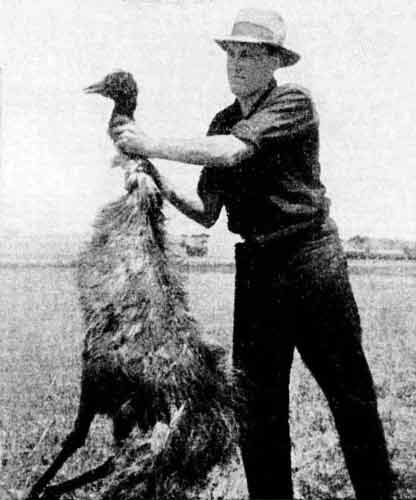
They also weren’t completely unable to kill emus. In fact, during the second operation, Meredith’s squad claimed hundreds of bird kills. Their problem wasn’t killing the birds; it was proving that their efforts helped impose long-term wildlife control.
The Australian government believed military equipment would provide a quick solution to an agricultural issue. The result was an operation that took longer and cost more ammo than expected, was mocked in the press, and didn’t stop emus from continuing to damage crops in the Wheatbelt region.
In that way, the emus “won.” They did not defeat an army. The emus emerged as unlikely winners because of their inherent cautious nature and speed. They simply survived an attempt to reduce their numbers, and the problem was left mostly untouched. That is what makes the Great Emu War worth talking about. There was no military loss, just a famous instance of a government initiative stumbling before completely normal animal behavior.
What Happened After the Great Emu War?
The soldiers’ mission ultimately ended, but the conflict between farmers and emus remained unresolved. There were further issues with crop destruction reported in Western Australian farming areas in later years, especially when movements of birds came into contact with agricultural zones. More reliance shifted to strategies other than mobilizing machine gun-equipped soldiers to address the problem.
Farmers and hunters were paid bounties when they killed emus. This allowed local populations to be culled without having to commit military resources, but it did little to solve the widespread issue since emus travel over vast distances across the Australian outback.
Farmers put up fences in many areas to try to limit the range of the emus when they moved towards farm areas. It still was not a perfect solution since fencing can be destroyed, but it was more feasible than using the army to hunt the birds down by plane.
This was part of the larger issue. Emus were simply going about their natural business, traveling around the Australian countryside. They moved with the seasons to find food and water. Farmers were trying to keep their crops free of pests in areas that were part of the emus’ natural range.
The Great Emu War symbolized the issue at large. As more land was cleared for agriculture, humans created the conflict by entering the emus’ territory. Military force proved ineffective because too many emus were spread across too large an area to reasonably stop their movement and natural migration.
The Unlikely Victory of Australia’s Flightless Birds
The Great Emu War started with an actual emergency as desperate farmers struggled during one of the worst financial downturns in Australian history. Thousands of emus were threatening crops that many Western Australian farmers relied on for income. The government tried to help with military hardware that seemed more than capable of quickly ridding the area of the problem.
What followed proved that gun-powered technology was no match for fast-moving targets spreading out over wide-open, rough terrain. Emus can run surprisingly fast, and they don’t wait around for troops to concentrate their fire. Hundreds were killed during the operation, but it was short-lived relief for the farmers.
It wasn’t really a laughing matter for the families who had to deal with the inevitable. Their financial hardship was real, and the birds remained a persistent nuisance. Today, the Great Emu War has become one of history’s greatest lessons in futility.


