
Drowned for Profit: How the Zong Massacre Exposed the Business of the British Slave Trade
 Reading Time: 16 minutes
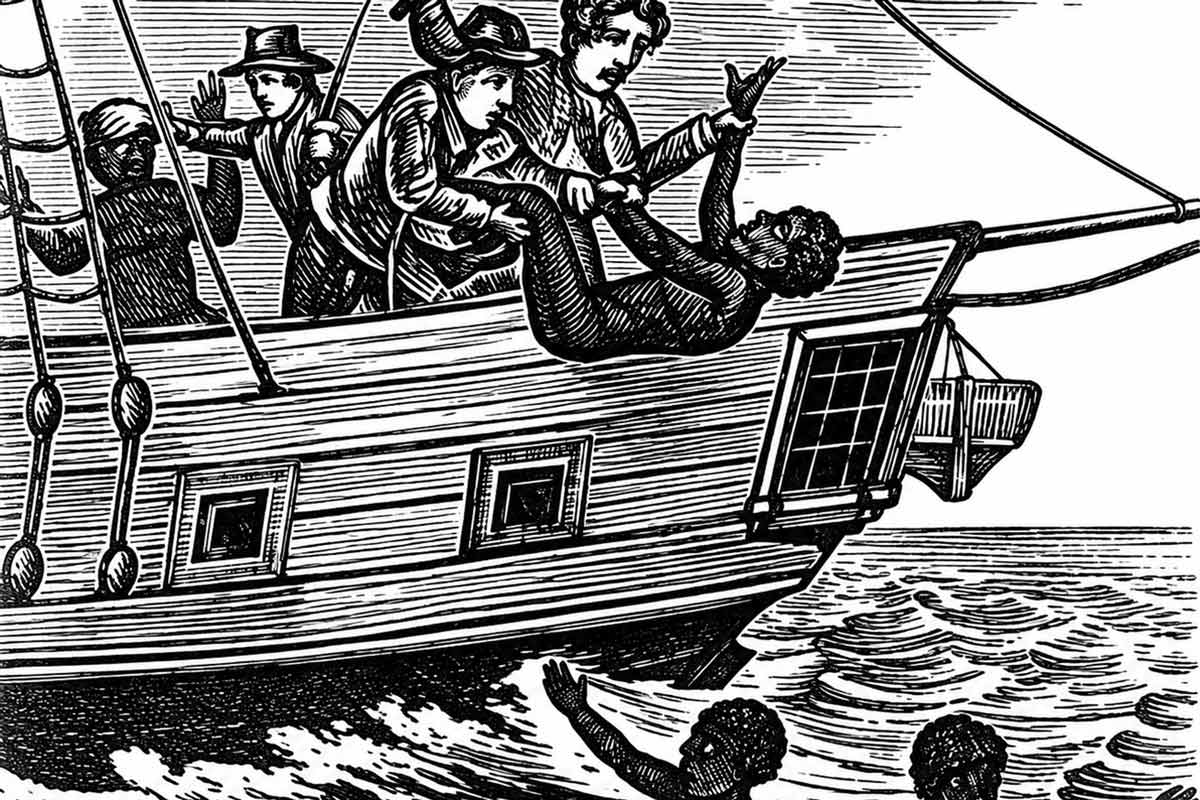
 The Zong Massacre of 1781 is one of history’s worst atrocities committed during the already hideous transatlantic slave trade. On a voyage from West Africa to Jamaica, the crew of the British slave ship Zong tossed more than 130 enslaved Africans into the Atlantic Ocean. They weren’t killed in battle or during an uprising. The victims were thrown overboard because, under financial pressure, the ship’s owners calculated that it would be cheaper to dispose of them than to continue caring for them during the journey.
The atrocity might never have come to light if the owners hadn’t filed a claim with their insurers for compensation for their loss. Their lawyers successfully argued that since the slaves who had been thrown overboard were “cargo”, their deaths should be covered by insurance.
The case that followed put a spotlight on a system that allowed companies to buy, sell, and insure human beings, assigning them monetary values. Rather than prosecuting the crew who did the killing, the British judiciary found itself trying to decide whether the shipowners should receive payment.
In time, the story of the Zong became one of the rallying cries of the British abolitionist movement. But at every turn, the victims were left out of the historical record – remembered only by the property value placed upon them.
The Transatlantic Slave Trade and the Economics of Human Captivity
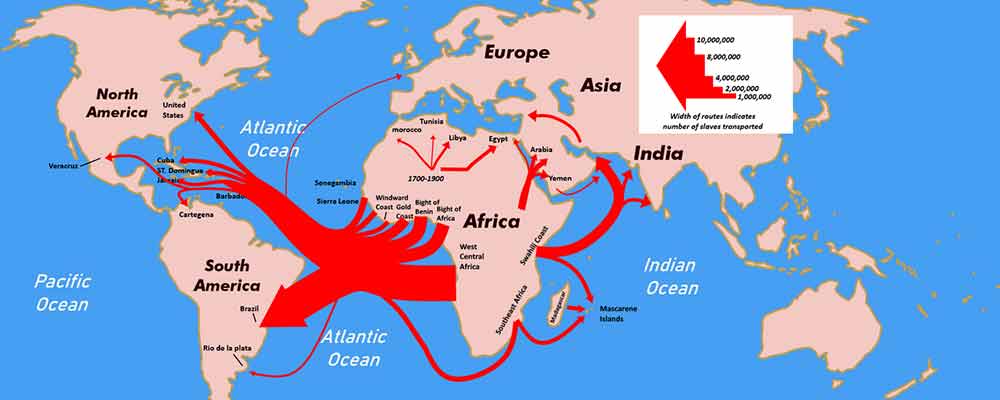
By the 1700s, the slave trade had become a multi-continental commercial venture. Investors in Europe sent ships with goods to buy enslaved Africans on the West Coast of Africa. There, they traded for people from numerous African societies. Warfare, enslavement by raiding groups, and many other factors contributed to the existence of slavery networks on the African coast.
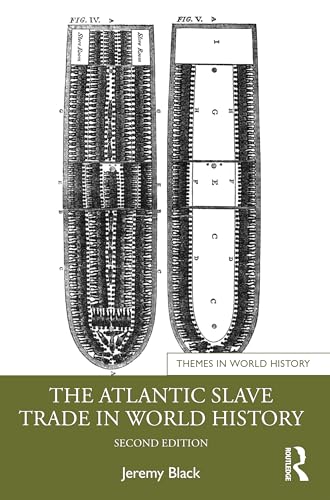
Survivors of this transaction embarked on the perilous journey to plantation colonies in the Americas aboard slave ships. Here, people were packed below decks with little ventilation or sanitation. Food was scarce and water rationed. Prisoners were provided minimal space and rarely came on deck to see the sun. Disease spread quickly below decks. To prevent revolt or escape, ship crews often resorted to physical abuse and punishments.
To merchants, captives were investments purchased at a price and capable of increasing their investors’ profit margin. Ships, supplies, crew, and slaves all needed to make it across the Atlantic for owners and investors to earn back their expenditures. On a successful voyage with a large haul of captives, slave traders could expect significant returns when they sold their human merchandise in the Americas.
By the eighteenth century, Liverpool was the major slave-trading port of Britain. Merchants in the city invested in hundreds of slaving voyages transporting tens of thousands of enslaved Africans. Liverpool businesses outside of shipping profited from the slave trade as well. Workers who built ships or produced goods needed by slavers or enslaved Africans could demand higher prices for their labor. Additionally, merchants and ship owners mitigated some of their risk through marine insurance policies.
The result was that when a captive died, they could submit a claim to his insurance company to recover his financial loss. Because Africans had been deemed property, they became insurable. If they were denied their freedom, it was possible to assign them monetary value. If they died en masse, they could litigate it as a business loss.
The Zong Begins Its Final Voyage
The Zong was originally a Dutch ship captured by British sailors in 1781. It then became owned by a syndicate of Liverpool merchants, including Mr. William Gregson, who trafficked slaves between Africa and the Americas.
In late August 1781, it set sail from the African coast with around 440 enslaved Africans aboard. Sources differ on the exact numbers, but it carried far more people than the ship was meant to hold. The overcrowding meant conditions were even more dangerous before the ship completed its transatlantic voyage.
Captain Luke Collingwood captained the Zong. Like other slave ship captains, he navigated his ship, oversaw its crew, and transported surviving captives to market. The venture’s financial success depended on the number of enslaved people who survived the voyage to Jamaica.
Enslaved Africans aboard the Zong had already experienced captivity and transportation prior to embarking on the Zong. Onboard the ship, they faced captivity, disease, starvation, and the ever-present possibility of extreme violence. The stories of these passengers do not often show up in shipping ledgers or cargo receipts.
The Zong was sailing to Jamaica, one of Britain’s wealthiest Caribbean plantation colonies. Sugar plantations fueled Britain’s desire for captives sent from Africa. Problems on the voyage began long before the ship set sail for Jamaica.
Disease, Death, and a Dangerous Navigation Error
The crossing was a catastrophe. The enslaved Africans and crew members suffered from disease. There were insufficient provisions aboard the ship to comfortably accommodate everyone on board, exacerbated even more so by the overcrowding. Some died during the voyage, reflecting the dangers of transporting hundreds of people across an =ocean under deplorable conditions.
Fresh water was crucial on slave ships. Captains needed to know how much would be required for sailors and captives on voyages that might last many weeks. Delays, mistakes, and unforeseen circumstances could easily tax those provisions.
Late in November 1781, the Zong made its approach to Jamaica but did not arrive. The ship sailed past the island, further lengthening a voyage that had been plagued by difficulties. This navigational error would play a key role in later justification for the massacre.
Officers later claimed the Zong didn’t have enough water. It was argued that the remaining sailors and captives would die if more water wasn’t obtained. Details of just how low the water supplies became would become contested when insurance claims were filed.
Did the ship really run out of water? Or did faulty navigation and improper management create conditions that were later cited to permit murder?
We do know, however, that the ship’s officers chose to toss enslaved Africans into the sea, and that their deaths were filed as insurance claims.
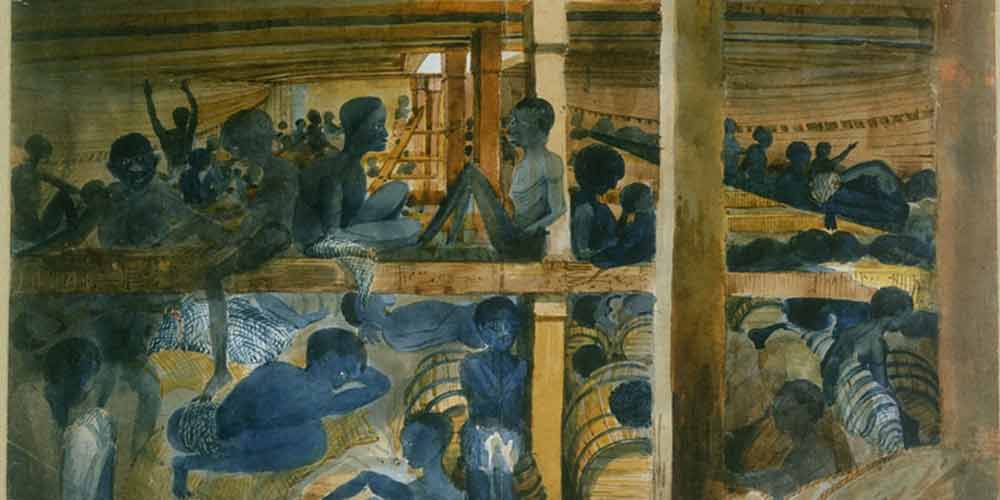
This image is from a sketchbook of watercolors depicting places visited by Francis Meynell while on a Royal Navy anti-slavery patrol off the west coast of Africa and includes several ship portraits. This is one of two watercolors; the other is MEY/2.1, which shows slaves above and below deck. They were painted on board the ‘Albanoz’, a captured Spanish slave ship in 1846, so the people shown had in fact been liberated though not yet landed and released. They nevertheless provide a rare eyewitness view of conditions in the hold of a slave ship. Those shown are not chained – and there are no signs of chains- but rather imprisoned in a confined space. During the Middle Passage, the enslaved were usually not kept constantly below deck, unless the weather was particularly bad or there was a serious threat of revolt on board. In order that as many Africans should reach the Americas with some of their health intact, they were allowed out of the fetid holds and to exercise on deck. – Lieutenant Francis Maynell (1821-1870), CC BY-SA 4.0, via Wikimedia Commons
The Decision to Throw Enslaved Africans Overboard
One reason given for killing the enslaved Africans on the Zong during the later court case was that there was supposedly not enough drinking water. As per the account provided by the shipowners, the ship’s officers decided that they needed to kill some captives in order to save others.
The economics of mortality on board a slave ship gave insurers another, even more perverse, incentive. Death by illness or “natural” causes was something that usually just cost the shipowners money. If deaths on board were caused in order to save the rest of a ship’s human cargo in an actual emergency, under some interpretations of maritime insurance law, those losses might be claimable.
This distinction was central to the subsequent legal proceedings. If the slaves had simply died due to disease or negligence, the owners could hardly claim compensation. If they could be defined as having been sacrificed for the greater good of completing the voyage, then maybe the insurers should pay up.
The insurance principle in question was known as general average. This referred to any special sacrifices of property that were made for the common safety of any maritime venture. The money lost as a result was supposed to be shared proportionately by everyone with a stake in the voyage.
The sacrifices of entire humans just to test the limits of maritime insurance law highlight how thoroughly these victims were commodified. To the legal and financial architecture of the trade, they were worth investing in, damaging and destroying – but not actually protecting as people.
We may never know if the desire to claim insurance actually drove the initial decision to throw enslaved Africans overboard on the Zong. A lot of our source material comes from the legal hearings, where the owners stood to gain from claiming the killings were necessary.
What we can say is that they tried to. The calculus of commerce allowed them to consider that decision.


The Zong Massacre Begins
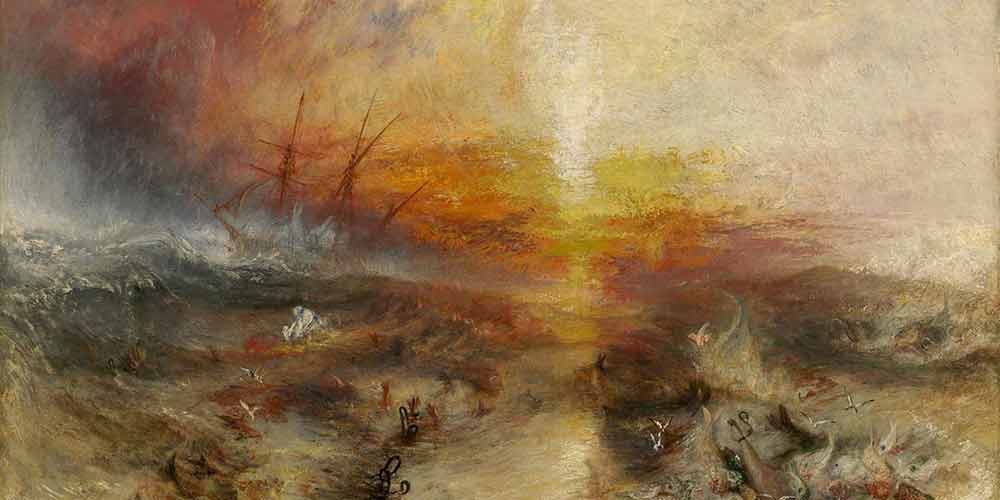
The deliberate killings took place toward the end of November 1781. The best available account of the massacre estimates that some 54 enslaved women and children were tossed into the Atlantic Ocean during the first phase.
The victims had no true opportunity to resist and could do no more than object when the ship’s officers and crew began to assert their will over the captives. After all, the men aboard had already imprisoned the Africans on a ship, showing that they considered the human cargo fair game. Once enslaved, the captives lacked autonomy over even the most personal decisions about life and death.
More Africans were killed after the first batch. Additional victims were tossed over the side in the days and weeks that followed, turning what had supposedly been a necessary evil to prevent further death into a prolonged atrocity.
Details of what happened are hard to reconstruct because the available accounts rely more on lawyers and legal proceedings than on eyewitnesses. The documents contain facts, figures, dates, and testimony. But they tell us little about the people being killed.
It was particularly horrifying because the captives had already been subjected to misery aboard the ship. They suffered from being held captive and being sick, without their homeland and family. The survivors now faced the fear that they, too, could be chosen next.
The Atlantic served as the burial ground for those whose names and backgrounds were omitted from records of their deaths.
More Than 130 Lives Lost at Sea
Most historical sources place the number of enslaved Africans killed or perishing directly from events related to the tossing-overboard incidents at just over 132 or 133. There are discrepancies in the various accounts of how many were killed, and later historians have attempted to recreate the timeline using incomplete records.
Popular retellings of the story place another group of about 42 captives killed after the initial group. Another episode killed another 36 people, though it is unclear how many people were lost during each incident.
There are reports of one enslaved African choosing to throw himself into the sea rather than await his fate at the hands of the crew. While this speaks to the horrors those trapped aboard must have faced, no historical record lets us examine the individual’s experience in detail.
The number of people killed was shocking, especially since scores of enslaved Africans had already been loaded into the ship’s cramped quarters. However, the mass killing was not the only horrific part of what happened on the Zong.
After the murders took place, the ship’s owners filed an insurance claim. They would come to argue that the deaths amounted to an insured loss, putting the worth of human life in terms of monetary liability.
The lives lost were little more than numbers in that argument. The individuals who died had been dehumanized and assigned a number that was used to calculate insurance payouts.
The Zong Reaches Jamaica
The Zong arrived at Jamaica on December 17, 1781. There, the enslaved Africans who survived the Middle Passage were sold into another society whose economy depended on plantation slavery. Many would be forced to work for decades in brutal conditions.
The ship’s arrival at port did not lead directly to a criminal trial for the killings that had taken place. Despite how shocking they were, the laws and business practices of the slave trade allowed the ship’s owners to file a claim for financial restitution before any criminal charges were filed.
Captain Luke Collingwood also died within weeks of making port. Collingwood’s death spared him from having to answer questions about his role in the ship’s decisions during the later trial.
The ship’s crew and merchants would have their lives tied to the incident through the insurance claim. A British court would examine whether or not the deaths fell under the ship’s insurance policy, not whether someone on the ship should be held accountable for murder.
This would become one of the most horrific elements of the Zong Massacre. Because the owners wanted to be paid for the loss of the enslaved Africans thrown overboard, the killings became part of the British legal record.
The Insurance Claim That Exposed the Massacre
Once the ship had returned, Liverpool merchants involved with the Zong tried to claim back the value of the cargo that had been murdered. The insurance claim asserted that the victims were cargo thrown overboard during an emergency.
The owners claimed that the deaths were necessary to save the ship and crew. They claimed that under maritime insurance law, jettisoning some of the cargo could be insured against if it was done to avoid greater losses.
The insurers rejected the claim. They argued about whether the situation merited throwing people overboard, and whether the owners had taken adequate steps to prove that shortage of water made such an action necessary. Reported values put the insurance on each enslaved person at around £30. It was just the perceived commercial value of a cargo, rather than any recognisable valuation of a life. Still, £30 per victim became the basis for the legal claim.
Gregson v. Gilbert was the name given to the legal case between the two sides. Documents relating to the case show how little the judicial system cared about the mass killing of enslaved Africans beyond treating them as cargo. Even the question of who was financially responsible for the murders was ambiguous.
Thankfully, the Zongs’ owners were willing to press their claim. As a result, details of the Zong massacre are well known because otherwise, very little might be known about it at all.
The Court Case That Put a Price on Human Life
The insurance dispute landed in Britain’s court in 1783. There was a trial which ruled in favor of the shipowners. However the insurers appealed to the Court of King’’s Bench.
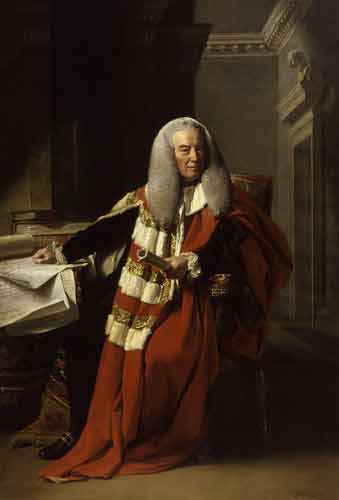
Lord Mansfield, one of the most influential British judges of the time, heard the legal arguments in the case. The judges needed to decide if the shortage of water was a reason to destroy the lives considered cargo by the insurance policy.
Testimony during the trial called into question the entire voyage. Storms that may have replenished the casks provided evidence that undermined claims that the killings were necessary.
Shipboard navigation was brought into question, along with the rationing of supplies. Logs presented in court pointed to problems from the beginning of the journey. Judges were forced to confront the assumption that subjected Africans to captivity and sale. Shipowners wanted the court to recognize that the killings could be financially compensated.
Insurers insisted that the events on the ship did not allow for restitution.
Lord Mansfield directed a retrial instead of rendering a final judgment. There is no surviving record that reports the conclusion of any new trial. Historians cannot accurately say the court ruled in support of killing enslaved people.
What we do know is that the trial puts the handling of enslaved Africans into the framework of property. Consideration by British courts focused on the exchange of currency as opposed to people’s rights. The legal debate revolved around dollars and cents, not the victims’ civil rights. Not one person was convicted of murder as a result of the Zong Massacre.
The victims became pawns in a system where the taking of human life could spiral into a dispute over whether or not an insurance company had to pony up.
Granville Sharp Demands Justice after the Zong Massacre
News of the Zong massacre eventually reached Granville Sharp, a British abolitionist who had already dedicated years of his life to trying to find legal loopholes in the institution of slavery.
Sharp learned what had happened from Olaudah Equiano, a formerly enslaved African who worked as a writer and anti-slavery campaigner. Equiano brought the matter to the attention of people who were prepared to listen to accounts of the abuses inflicted on enslaved Africans.
Granville Sharp was disgusted by what he heard and sought to bring about criminal charges. He felt that there was enough evidence to show that the murders were premeditated and that the legal system had failed to recognize them as such.
These attempts were fruitless. No one prosecuted the crew or the Zong’s owners. Those involved with the incident were never criminally charged for the deaths of their passengers, with the insurance claim remaining the main publicly viewed trial.
To Sharp, this highlighted the danger of viewing slaves as property. The financial benefits for the ship owners and the insurers were considered before deciding whether it was actually acceptable to murder human beings.
Sharp kept records of the details and allowed information about the case to spread to other members of the abolitionist movement. This solidified the mass murder’s place in history and prevented the case from slipping into history as just another maritime dispute.
How the Zong Massacre Influenced the Abolitionist Movement
Resistance to slavery and Britain’s transatlantic slave trade was not new when the Zong set sail in 1781. Religious organizations, formerly enslaved people, writers, and activists had already spoken out against human trafficking and coerced labor.
But the slayings on the Zong gave abolitionists a powerful illustration of the horrors they were fighting against. They showed that merchants would think nothing of committing atrocities if Africans kidnapped and sold into slavery were treated as commodities instead of people.
Furthermore, because the crew of the Zong tried to claim insurance for the victims’ lives, it highlighted how ingrained the trade had become in Britain’s legal and financial systems. During the insurance hearings, rather than trying to cover up the murders, the owners justified their decision by citing accepted trading practices.
In 1787, abolitionists formed the Society for Effecting the Abolition of the Slave Trade. Thomas Clarkson and others collected information on slave ships’ conditions, and William Wilberforce became the movement’s voice in Parliament.
Activists used testimony, petitions, books, and articles, as well as street campaigns, to raise awareness of the slave trade’s brutality. Former enslaved Africans also played a crucial role in the abolition movement. They helped the public understand what it was like to be sold into bondage by debunking pro-slavery propaganda.
From the Zong Massacre to the Abolition of the Slave Trade
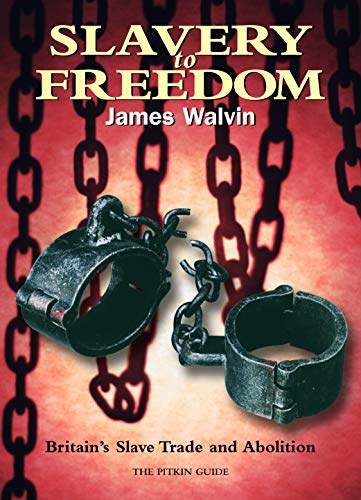
Campaigning continued against Britain’s participation in the slave trade for decades after the massacre. Abolitionists put forward petitions, issued pamphlets, collected testimony, and lobbied Parliament to stop Britain from transporting enslaved Africans to enslavers across the Atlantic Ocean.
Slavery proponents, including merchants, plantation owners, and political leaders who profited from slavery, fiercely resisted efforts to abolish Britain’s global slave trade. Powerful economic interests were invested in the transatlantic slave trade, and abolition became a major political battleground in Britain.
Resistance from enslaved Africans also helped end slavery. Not only did rebellions and escapes demonstrate organized resistance to enslavement, but revolts like the Haitian Revolution proved that colonial governments could be overthrown by populations of enslaved people.
In 18O7, Parliament passed the Slave Trade Act. This act banned British involvement in the transatlantic slave trade. Abolitionists celebrated the passage of this law as a major victory. However, enslaved people in British colonies were not freed. Instead, the Slavery Abolition Act of 1833 ended slavery throughout most of the British Empire, with exceptions. Apprenticeship laws would continue to force Africans to work for their former owners. Emancipation, it turned out, would not be immediate.
The horrors of the Zong Massacre remained fixed in the historical narrative of slavery. The story mattered because it revealed how far allowing finances to factor into decisions about human lives could go.
Remembering the Victims of the Zong Massacre
Historians have struggled to understand the full impact of the Zong Massacre, as primary evidence on both sides comes from documents generated by those involved in the insurance dispute financially, legally, or politically. Merchants, insurers, lawyers, and abolitionists documented aspects of the case, while the Africans who died had no such opportunity to create a historical record.
Numbers and rhetoric dominate their story. Most died nameless; their families of origin and enslaved lives remain unknown. What is clear from the archive is how much their lives were worth on the open market. By placing the massacre into a wider context, historians have since brought the killings into discussions about the history of the Middle Passage.
Contemporary historians have attempted to interpret the massacre outside the limited context of the insurance hearings. Their analyses focus on connecting the deaths to the larger history of the Middle Passage and forced migrations during which many Africans perished.
Literary and artistic responses to the massacre have similarly worked to “reascribe the dead their due neglect” by remembering that the victims of the massacre were people. This viewpoint encourages people to remember that the enslaved had lives, families, and pasts outside of what is documented about them.
Remembering the Zong thus involves more than understanding a legal controversy. It means remembering the lives of the Africans who died and understanding the limitations of the historical records left by those who profited from their captivity.


