Rani Lakshmibai: The Warrior Queen of Jhansi and the 1857 Uprising
 Reading Time: 21 minutes
Barely a week after British guns had begun bombarding her city, Lakshmibai, the Rani of Jhansi, was poised to make history. Within the secure walls of Jhansi, soldiers worked desperately to fortify positions while massing for a fierce defense against the troops seeking to extinguish all opposition in central India. Leading them was a woman who, despite her youth, had already seen her world turned upside down by the policies and politics of British expansion in India. Popularly remembered today as the Warrior Queen of Jhansi, Lakshmibai was born named Manikarnika Tambe.
In February of 1858, British forces began their assault on the city of Jhansi. Only three years prior, Lakshmibai, the Rani of Jhansi, held a very different rank in life. She was the wife of the Raja of Jhansi and part of a royal court whose very position was based on maintaining a careful relationship with the East India Company. After the death of her husband, a subsequent battle over the throne, and the British seizure of her kingdom, her world was changed forever. Fighting to maintain the inheritance of her adopted son, her plight soon became an armed rebellion against British control.
The outbreak of the Indian rebellion of 1857 found Lakshmibai in the middle of a power struggle between the British, rebel Indians, and regional political enemies. Less than a year later, she would become one of the rebellion’s most well-known figures. Lakshmibai’s journey from a girl in a Maratha Brahmin family to Rani of Jhansi was marked by tragedy, resilience, and the coming Indian Rebellion.
Lakshmibai’s Early Life: The Childhood of Manikarnika Tambe
Lakshmibai was born Manikarnika Tambe in Varanasi, an ancient city located on the banks of the Ganges River. She is traditionally believed to have been born on November 19, 1828, but historians have disputed her birth year. Some sources list her birth year as late as 1835. Her father, Moropant Tambe, came from a Marathi Brahmin family with ties to the old political class of the Maratha Empire. Lakshmibai’s mother was Bhagirathi Sapre, who died when Manikarnika was still a child. Manikarnika spent much of her early life under her father’s guidance.
Manikarnika Tambe was affectionately nicknamed Manu. For several years of her childhood, she lived in Bithoor near Kanpur, where her father worked for Baji Rao II, the last Peshwa of the Maratha Confederacy. At its height, the Marathas ruled large swaths of the Indian subcontinent. However, wars with the British East India Company over three decades reduced Maratha influence. After the Third Anglo-Maratha War in 1817–1818, Baji Rao II was pensioned off and placed under house arrest in Bithoor.
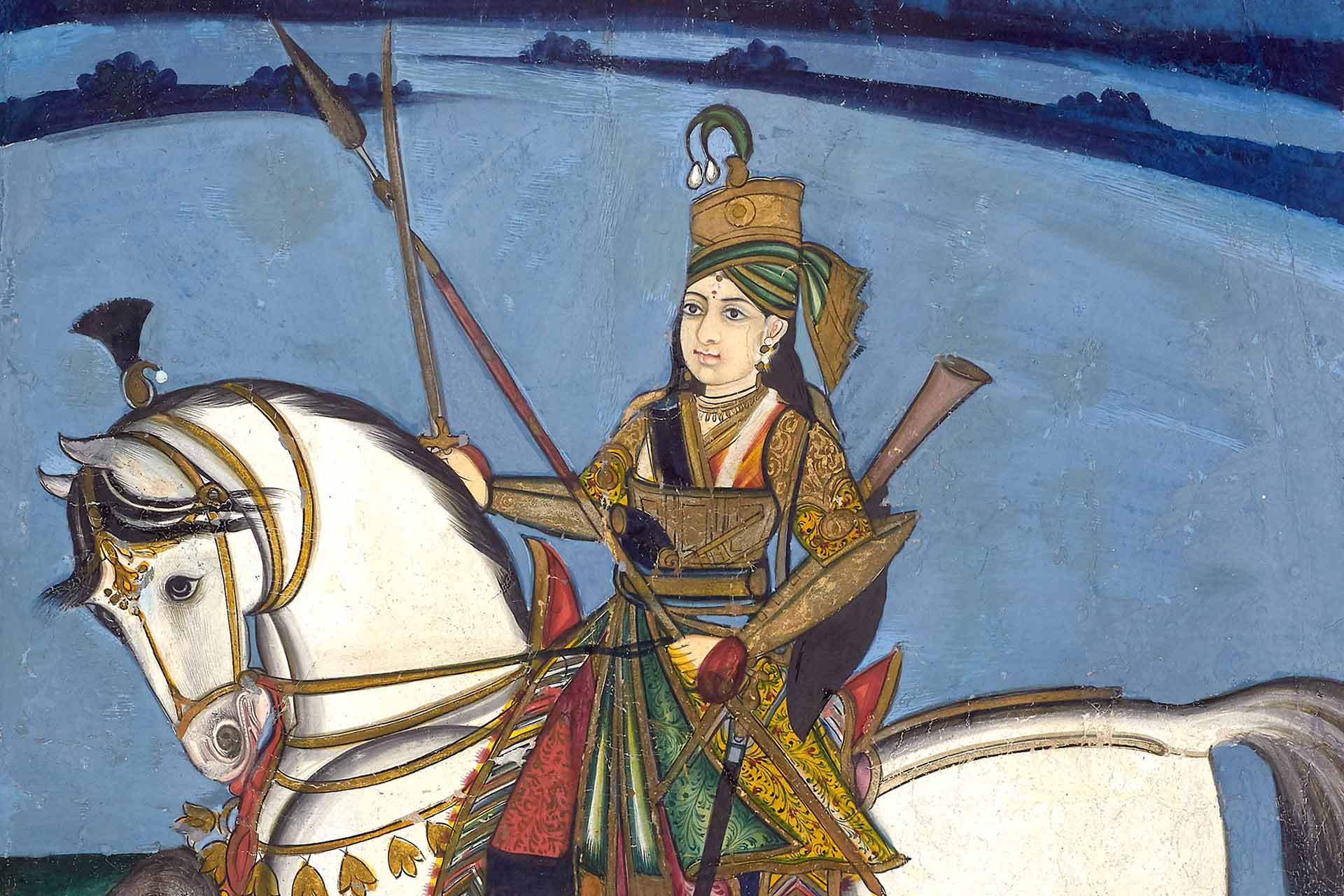
Bithoor was a town on the banks of the Ganges near Kanpur. While the Peshwa was no longer in power, his household mirrored those of other Maratha rulers. Many aspects of court life remained at Bithoor. It was in this atmosphere that the future Lakshmibai was raised. Accounts written after her death paint her as a spirited child, largely ambivalent to the restrictions of elite female behavior. Rather than gravitating toward activities expected of a young girl in an elite household, she engaged in horseback riding, exercise, and military activities. According to tradition, Manu was trained in riding, sword fighting, and the use of military weapons.
Some also link her childhood with that of Nana Sahib, the adopted son of the former Peshwa Baji Rao II and leader of the revolt in the Kanpur area during the Indian Rebellion of 1857. All such stories have contributed to the popular notion of Lakshmibai’s early-life warrior-like qualities. But most of these small stories were written long after her death and cannot be independently verified.
What can be said is that her early life put her in proximity to a political network that had recently lost its sovereignty. The British takeover of territories once controlled by the Marathas was not a distant concept. For those with loyalties to the ex-Peshwa’s court, it was recent history. Prominent political families had seen their prestige ebb away. Familial rulers had been replaced by British governance. Lakshmibai’s early life was lived under the shadow of lost Indian political autonomy.

From Manikarnika Tambe to Lakshmibai: Marriage and Life in Jhansi
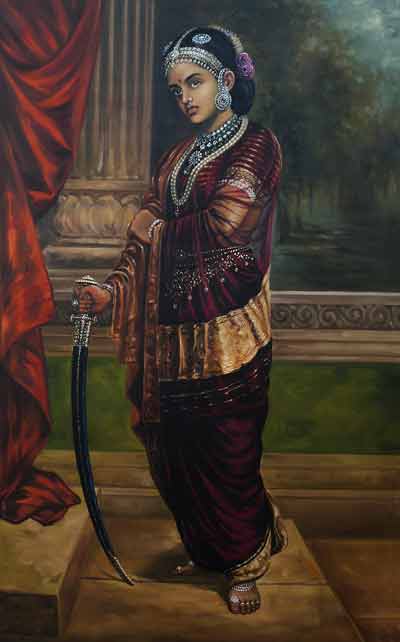
In 1842, Manikarnika Tambe wed Gangadhar Rao Newalkar, the Maharaja, or ruler, of the princely state of Jhansi. Jhansi, in Bundelkhand in central India, was a notable kingdom, and Manikarnika’s husband made her Maharani. She became popularly known as Lakshmibai after Lakshmi, the Hindu goddess of wealth and fortune. Her marriage elevated her social status from a teenage maid in the Maratha court to a member of the royal family ruling Jhansi.
Between northern and central India, Jhansi sat at a crossroads, connecting the two regions. Atop a hill, its formidable fort gave it natural defenses and oversaw the adjacent town. Geographically, the state played an important role in trade, communication, and military movement through central India. Like many other princely states in India, it was a semicolonial vassal of the British East India Company. Jhansi’s maharaja maintained internal control over the state, but the East India Company controlled matters of diplomacy, legitimacy, and succession.
Lakshmibai’s marriage into the royal family brought with it ceremony and pageantry, as well as responsibility. Along with royal expectations and managing court politics, Lakshmibai and Gangadhar Rao also faced dynastic concerns. Like many royal houses in India at the time, their family’s legitimacy and continuation relied on producing or designating an heir to the throne. A son was born to Lakshmibai in 1851, but tragically he passed away shortly after birth. This threw the line of succession into question. Without a living heir, it was uncertain how… or if the family’s dynastic power would continue.
Maharaja Gangadhar Rao’s health declined soon after, further exacerbating the problem of succession. Under Hindu custom, couples could ensure the continuation of their family names by adopting children. The British had different standards for Indian royal houses, however. They allowed a royal house to adopt and inherit property as they pleased, but reserved the right to determine political succession. This nuanced stance would soon affect Lakshmibai.
On November 21, 1853, shortly before he died, Gangadhar Rao adopted a boy named Anand Rao. The infant was renamed Damodar Rao and recognized by Lakshmibai as her son and successor. Less than a month later, Gangadhar Rao died, leaving his wife as regent for their adopted son. The British East India Company refused to acknowledge this arrangement.
The Doctrine of Lapse: How the British Took Jhansi from Lakshmibai
After Gangadhar Rao’s death in November 1853, Lakshmibai was a young widow whose political status was now uncertain. Their adopted child, Damodar Rao, would have normally succeeded Gangadhar Rao as raja of Jhansi. British recognition of Damodar Rao as his successor was crucial, because the British East India Company had long claimed the right to decide issues of succession and ownership regarding dependent Indian states. James Broun-Ramsay, Marquess of Dalhousie, was Governor-General of India between 1848 and 1856, during which time he aggressively expanded Company territories through annexation in order to centralize authority.
Dalhousie was a strong proponent of a policy called the Doctrine of Lapse. The Company had often taken advantage of disputed claims to rule in order to expand its territories. The Doctrine of Lapse allowed Company authorities to refuse to recognize an adopted child as an Indian ruler’s political heir. British officials would then declare that sovereignty over the state had “lapsed” and annex the territory. Adoption was not necessarily contested for private inheritance purposes or religious laws; instead, it was contested in terms of political rule.
British refusal to recognize Indian adoptions strained relations with several states. Satara and Nagpur had already been annexed during Dalhousie’s tenure. Indian princes feared that no amount of loyalty or past benevolent governance would protect their families from future annexation. British refusal to recognize Damodar Rao as Gangadhar Rao’s successor put Jhansi in danger of annexation as well. Dalhousie did not believe the adoption was legitimate and began planning Jhansi’s annexation.
On October 7, 1854, the Company officially annexed Jhansi. Although Lakshmibai would receive a pension of 60,000 rupees per year, she would no longer have power over the state. The British promised to oversee its administration themselves, altering the royal family’s position from rulers to subjects. She would also have to move out of Jhansi Fort itself and into the Rani Mahal palace elsewhere in the city.
The British had refused to recognize her as queen, stolen her husband’s kingdom, and left her son without an inheritance. While she would later lead a violent rebellion against the British, Lakshmibai did not initially pick up arms.
Lakshmibai attempted negotiation and legal action before rebelling against the Company. She petitioned the East India Company, trying to reverse the annexation and recognize her son as raja. Her claims invoked Hindu traditions of adoption, the terms of Jhansi’s relationship with the Company, and even Gangadhar Rao’s dying moment. She also enlisted John Lang, a British lawyer who made a career of defying the East India Company in court. None of her legal tactics worked, however. Not only did the British keep control of Jhansi, but Lakshmibai’s relationship with the Company was irreparably changed.
Popularly (but perhaps apocryphally) associated with her interactions with John Lang, Lakshmibai supposedly said: “Main apni Jhansi nahi doongi” – “I shall not give up my Jhansi”. Though the exact wording of her statement is not concretely recorded, it became something of a slogan for later audiences who viewed her as a heroine.
Initially, however, her stance against the British was not an outright call for India’s independence from foreign rule. Instead, Lakshmibai sought to secure her son’s rights as the adopted ruler of Jhansi. But her struggle against the British had aligned her with the many Indian kings and aristocrats who had been disenfranchised by Company policies. Within three years, she would join a much larger rebellion as a military leader.
India on the Brink: The Causes of the 1857 Uprising
By the mid-19th century, British control had spread over large areas of the Indian subcontinent. The East India Company had gone from being a purely commercial entity to one exercising control over territory and people, collecting revenue and taxes, commanding large armies, and interfering in the politics of Indian states. Naturally, as the Company expanded, it aroused anger from those whose lands it usurped and whose power was broken by its expansion. Displaced rulers resented annexation, landlords grumbled about property rights and changes to revenue rates, and soldiers who fought in the Company’s army became disgruntled by pay and conditions of service.
In addition to discontent over political and economic grievances, British officials were viewed with suspicion by many Indians who believed they were attempting to undermine Indian religions and interfere with social customs. While beliefs about these goals differed regionally and among groups, the resulting paranoia helped spark mutiny in the Bengal Army.
The crisis first hit in May 1857 over cartridges used with the newly issued Pattern 1853 Enfield rifle. Soldiers used these rifles and were required to bite off the ends of paper cartridges to load them. There was a rumor among Indian soldiers that the cartridges were greased with pork and beef fat, which was against Muslim and Hindu religious practices, respectively. Attempts by the British to quell the growing anger and rumor mill did not succeed, and Indian soldiers mutinied at Meerut on May 10, 1857. They soon reached Delhi, where the aging Mughal Emperor Bahadur Shah Zafar was declared the rebellion’s symbolic sovereign.
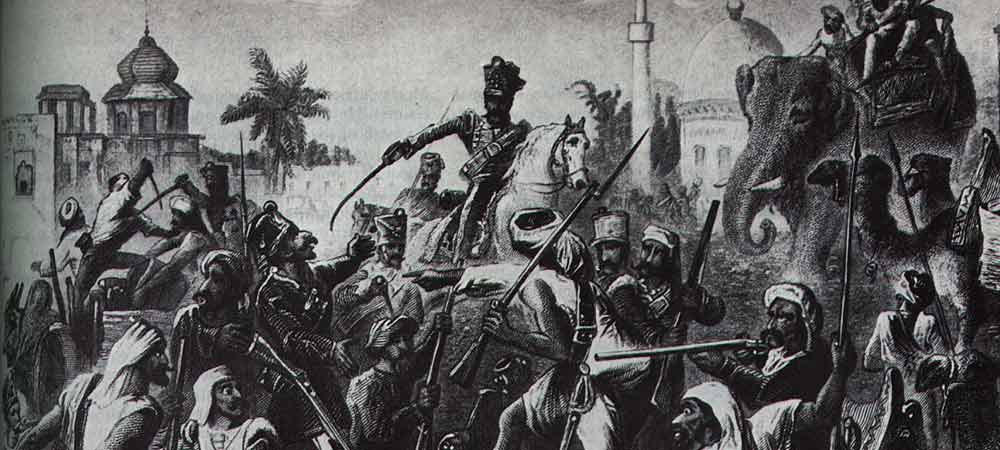
The revolt soon engulfed large areas of north and central India, but it was not a national uprising led by a cohesive group or league with a centralized political program. Different factions joined the fight for their own reasons, ranging from hope of restoration of their deposed rulers to anti-British economic policies, to defense of their religions, to simply rebellion against the foreign military presence. Some sects of India did not participate at all in the rebellion and, in fact, sided with the British, and some rulers and soldiers of India actively aided the British forces during the rebellion.
For Lakshmibai, this rebellion posed risks and promise. On one hand, the British had taken over Jhansi, which was embroiled in a military conflict unlike any seen before. On the other hand, rebelling against them posed great risk, especially for a widowed queen with a vulnerable state to protect. Her activities during the initial stages of the rebellion remain contested aspects of her life.
The Jhansi Massacre of 1857: Lakshmibai Under Suspicion
News of the rebellion reached Jhansi in early June 1857. On June 5, Indian soldiers stationed in the city rebelled against their superiors, causing the collapse of the city’s British authority. The situation quickly worsened until British officers, civilians, and families took refuge in Jhansi Fort while rebel soldiers took control of military buildings around the city.
These events would lead to one of Lakshmibai’s most controversial legacies. On June 8, several British prisoners who had surrendered to rebel forces were killed in what is traditionally known as the Jokhan Bagh massacre. Among those killed were British men, women, and children. News of the massacre would shock many British readers at home and serve as a rallying point for suppression of the rebellion. Questions regarding Lakshmibai’s involvement would arise almost immediately.
Certain British accounts of the massacre would claim that the queen egged the mutineers on to kill, supported the killings after the fact, or had an opportunity to stop them but chose not to while she still had the resources to act. The Rani strongly denied these charges. In letters written to British officials following the massacre, Lakshmibai would place blame firmly on the mutineers and claim that she did not have adequate military forces to counter them. She also said the mutineers pressured her for money and assistance.
Evidence that remains available does not conclusively establish that Lakshmibai ordered, sanctioned, or willfully allowed the massacre to occur. Eyewitness accounts were shaped by chaos, limited knowledge of the full picture, and the violent emotions of the uprising itself. Some claims were based on evidence collected under conditions that call into question the credibility of such accounts. On the other hand, Lakshmibai’s own claims should be seen as statements made by a politician seeking to save her own reputation in extraordinary times. For these reasons, historians differ on the exact role she played.
With the city administration in rebellion, control of Jhansi fell to Lakshmibai, who would govern the state in the absence of British rule. Remarkably, her rule was officially recognized at first by Major Walter Erskine, British commissioner at Jabalpur, who gave her the authority to rule Jhansi until British control could be reestablished. The revolt had upended normalcy, and this was as much an acceptance of the changes as the British were willing to give at the time. Other British officials were not as trusting of Lakshmibai because of her alleged role in the massacre.
Lakshmibai now had to maintain order in her capital and collect revenue to administer Jhansi. She moved to restore order to the city and keep the rebels at bay. In spite of these efforts, Lakshmibai could not have been certain of the British reaction once order was restored in India; several adjacent rulers were openly hostile to her, and it was possible for another party to invade and take control of Jhansi. This illustrates the extraordinary circumstances the rebellion created and not a British reversal of annexation.
Lakshmibai would continue to appeal to the British for assistance during this time period, but the political realities of the rebellion would ultimately prevent any sort of cooperation from either side. British suspicion over her role in the massacre did not abate, and threats from nearby monarchs encouraged her to militarize.
The woman who once petitioned to keep her homeland through letters and British law was now ruler of a state completely surrounded by armed enemies eyeing Jhansi.
Lakshmibai Becomes Jhansi’s Warrior Queen: Preparing for War
The survival of Jhansi became Lakshmibai’s central concern during the second half of 1857. The sudden collapse of British power did not restore order. On the contrary, power became something that had to be competed for. Rebel soldiers sought to control territory, while political actors in neighboring princely states and within Jhansi itself also sought to influence events. Pressure on Jhansi came from forces associated with Orchha and Datia, both of which threatened to attack the town.
Lakshmibai oversaw measures to prepare the city’s defenses. Troops were levied, artillery stocked, and military positions improved as open conflict loomed. Central to these preparations was the Jhansi Fort. Perched atop a large rock face that dominated the city, it offered a strong defensive position. Constructed with thick walls and bastions, and providing a wide view of the surrounding area, Jhansi Fort’s elevated position meant that an attacking army would struggle to make any headway. It could still be breached by artillery, however, which had grown more powerful in recent years.
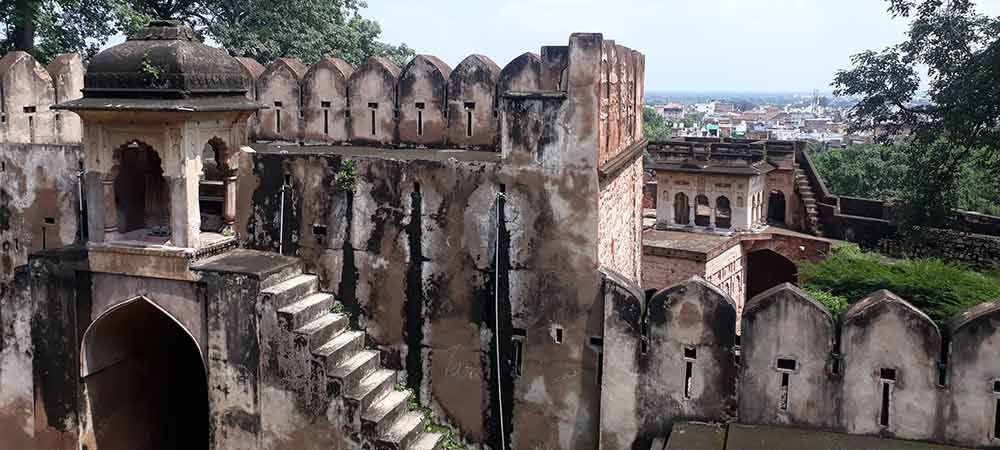
Lakshmibai tasked her commanders, artillerymen, and other officials with leading defense preparations. Men drawn from both her personal guard and military units, with varying military backgrounds reflecting the composition of armies operating within the rebellion, helped defend Jhansi. Lakshmibai also drew upon soldiers who had previous experience serving with the British.
Women are also remembered as having actively participated in the defense of Jhansi. Jhalkari Bai is one of the best-known female figures from this period. Popular retellings remember her as a woman who was both loyal to Lakshmibai and courageous in battle. Traditions relate that Jhalkari Bai bore a strong resemblance to the queen, which allowed her to disguise herself and sow confusion among British troops laying siege to the fort. While such stories remain difficult to conclusively confirm through contemporary evidence, they illustrate how memories of the conflict in Jhansi became intertwined with larger traditions of women’s bravery and resistance.
By early 1858, Lakshmibai found herself in an entirely different position. The British had embarked upon major military offensives designed to recapture territory they had lost earlier in the rebellion, and their commanders began focusing considerable attention on Jhansi. They considered Jhansi a stronghold that was imperative to subdue.
Appeals to colonial officials were unlikely to help Lakshmibai maintain control over Jhansi. If she and those who had supported her rise were to survive, it would be through force of arms alone. Manikarnika Tambe had become the Warrior Queen of Jhansi.
The Siege of Jhansi: Lakshmibai’s Greatest Battle
In March 1858, British troops under Major General Sir Hugh Rose approached Jhansi. Major General Rose commanded the Central India Field Force, which was clearing central India of rebel armies and hostile people. Jhansi was one of the principal targets for Rose because the city held a large fortress from which rebel forces could dominate the area. The British desired to capture Jhansi both to remove the rebellious city from power and to reinforce their own lines of communication and restore military dominance of the region.
The siege of Jhansi began on March 24, 1858, as British cannons bombarded the city’s defenses. They hoped to weaken the walls under continual barrage while also suppressing the guns on the fortifications. Defenders in the city fired back as artillerymen manned cannons on the walls and soldiers prepped for an invasion. The bombardment put a heavy strain on the city’s residents as structures were destroyed under shelling that threatened both military defenses and civilian homes.
Rani Lakshmibai remained at the center of the city’s defense. While many later writings credit her with managing artillery batteries and fighting on the front lines during the war, it isn’t always possible to tell specifically what role she played in each battle. What is known is that she commanded the resistance from within Jhansi. The British were met with stiff resistance as Rose’s troops worked to breach the defenses.
Tatya Tope Attempts to Save Jhansi
Continuing the siege, rebel leader Tatya Tope marched up with a large army, hoping to relieve the city. Tatya Tope was quickly becoming a significant force during the rebellion and was linked to Nana Sahib and the resistance in Kanpur. His presence raised the hopes of those inside Jhansi that the British siege would be broken, but Rose prepared to fight the incoming army as well.
On April 1, 1858, British forces defeated Tatya Tope’s army at the Battle of the Betwa. The loss crippled any hope of relief for Jhansi. The rebels were forced to retreat, leaving Jhansi without relief and unable to match the power of the besieging army. Rose could now focus on the city itself and those inside.
The British Storm Jhansi
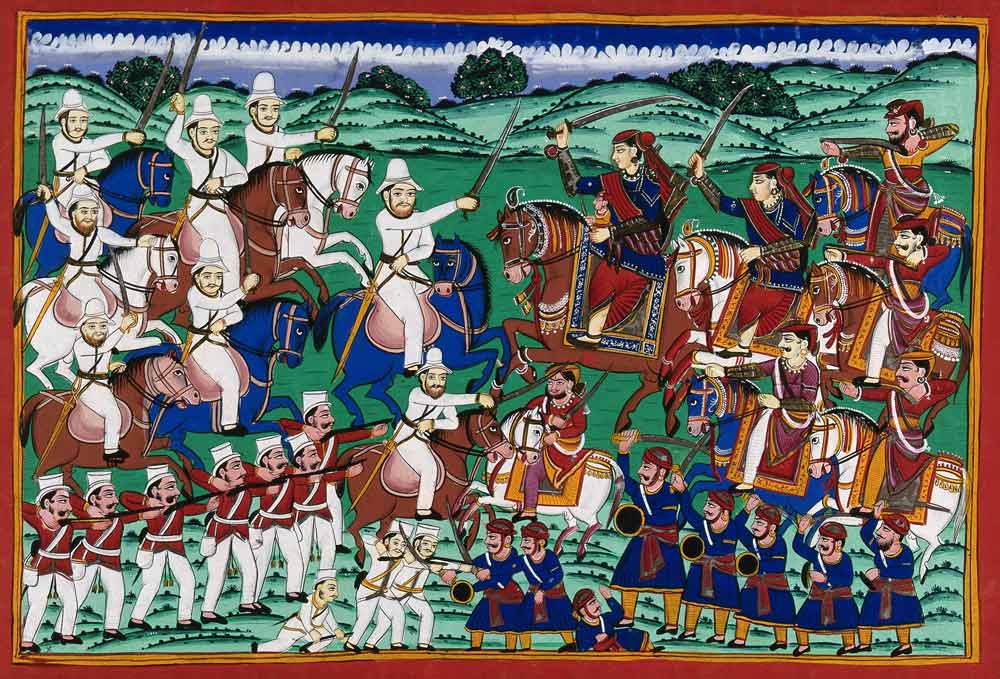
The final British assault began on April 3, 1858. Infantry swarmed over walls weakened by artillery fire and entered the city. Troops then met defenders from Jhansi in street-to-street fighting. Skirmishes broke out within homes and throughout defensive positions. British records detail prolonged resistance from the defending army. Later accounts describe the queen’s troops fighting valiantly to defend their home.
With the capture of Jhansi came mass killing and destruction. Hundreds of defenders were killed in battle, and scores of civilians were killed during and after the siege. The National Army Museum places the death toll of the defending army at over 5,000 men. Exact figures are impossible to know, as is whether those killed were combatants or noncombatants. As British troops poured into the captured city, the Queen was left with capture looming. Lakshmibai chose not to be taken prisoner and instead fled the besieged palace. This moment in her escape from Jhansi would become legendary.
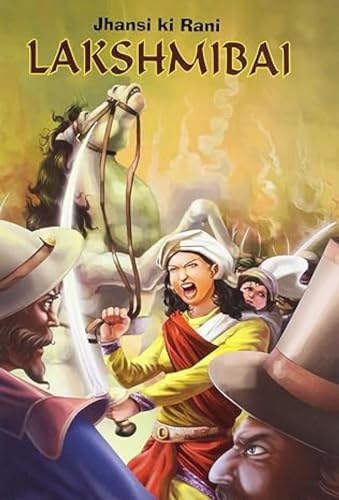
Popular history recounts her riding her horse out of the Jhansi gates, sometimes depicted with her adopted son securely fastened to her back. Another common story is that she jumped from the fortress walls, while another is that she slipped through the outer defenses. The truth may be lost in both of these accounts. They also paint the most dramatic picture, which history attributes to many stories told years later. What is known is that Rani Lakshmibai escaped from Jhansi and continued to resist British Forces.
Kalpi and Gwalior: Lakshmibai’s Final Campaign
After escaping from Jhansi, Lakshmibai joined rebel forces further north and west. She eventually reached the rebel stronghold at Kalpi, where leaders like Tatya Tope made another stand against the British advance. Despite losing Jhansi, the revolt in central India still continued. Rebel leaders would attempt to consolidate their forces, reorganize, and take advantage of opportunities as they presented themselves.
The British still retained their strategic initiative. In late May 1858, Rose’ army would continue its advance on rebel strongholds, winning battles near Kunch and Kalpi. These losses further demoralized the ragtag rebel armies, and British forces would capture Kalpi later that month, forcing Lakshmibai and the other leaders to retreat once more. Although beaten back, the surviving rebel leaders would stage one final daring maneuver, driving their troops toward Gwalior.
The Capture of Gwalior
Gwalior was ruled by Maharaja Jayajirao Scindia. His administration did not rebel against the British. The soldiers, however, were less than loyal to their ruler. When rebel armies advanced towards Gwalior, sections of Gwalior’s army mutinied against their ruler and did not provide protection. The Maharaja fled the city, which fell into rebel hands by the beginning of June 1858.
Gwalior was seen as a major prize. Its defenses and military equipment, along with its symbolic importance, would help the rebels regroup. In particular, it provided someone like Lakshmibai, who had only just lost Jhansi, with another base from which to continue fighting. However, the British were quick to respond.
The Death of Lakshmibai
Lakshmibai died fighting near Kotah-ki-Serai, outside Gwalior, on June 17 or June 18, 1858. June 18 has become the day commemorated in India; however, several works, including the military history found in the National Army Museum, have the fight and subsequent death occurring on June 17.
The details of her death are also somewhat unclear. Some sources state that she died while fighting on horseback against British cavalry. Others disagree on how she was wounded or what happened shortly thereafter. Lakshmibai tradition maintains that she was eventually removed from the battlefield and cremated by her supporters, who wanted to keep her body from falling into British hands. Whether these details are true, they are not confirmed by the accounts that do survive.
The loss of Lakshmibai was a severe one for the rebels. Gwalior fell back under British rule soon afterward, and centralized resistance in India was dealt another heavy blow. Lakshmibai’s reputation as a courageous leader did not go unrecognized by her adversaries, however.
Dispatches from Hugh Rose reflected his esteem for her abilities, noting her remarkable skill as a military leader and her status as one of the fiercest leaders the British had faced during the campaign. This was especially remarkable considering the Victorian ideals of British soldiers. Women were not supposed to be leading troops into battle. For Rose and his army, Lakshmibai had simply been an enemy soldier. To many Indians after1857, she would become much more than that.
The Legacy of Lakshmibai: From Rebel Queen to National Hero
The death of Lakshmibai did not immediately signal the end of the Indian Rebellion of 1857, and the remaining sites of organized rebellion were gradually overcome by British successes. British rule was also changed by the rebellion. In 1858, the British Crown took direct control of India from the East India Company.
Indian rulers, soldiers, and communities had been alienated by certain Company policies, as was made apparent during the rebellion. Colonial authorities from this point on would often place greater importance on retaining the loyalty of princely states and steer clear of some of the more controversial annexationist policies pursued by Dalhousie and his predecessors.
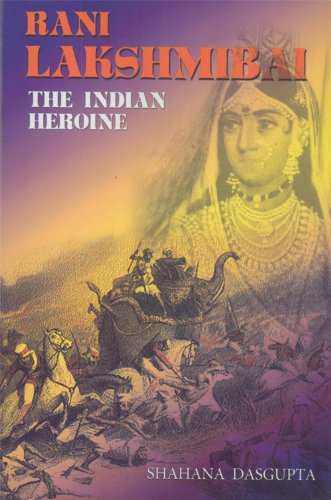
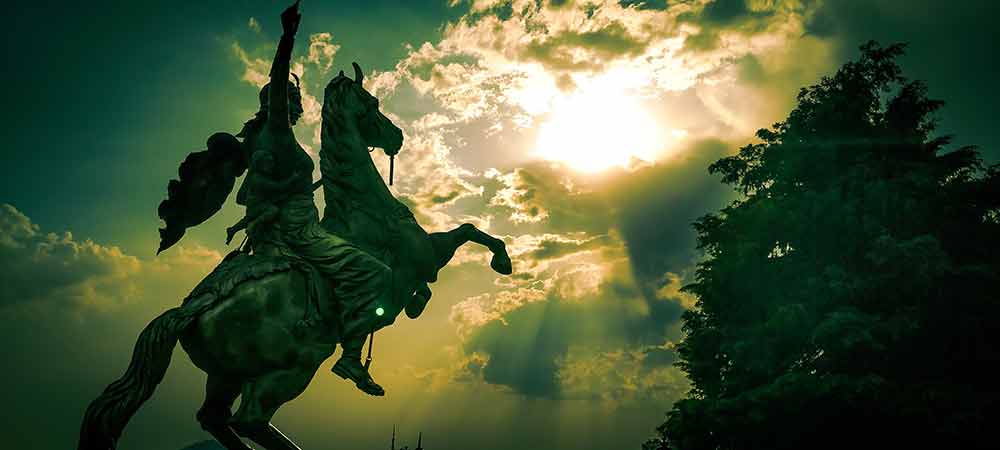
During this time, Lakshmibai’s legacy continued to develop. As Indian nationalism emerged in the late nineteenth century, Lakshmibai’s fight against the British became an increasingly potent symbol of resistance to colonial rule. Poets, writers, and political agitators sang her praises; Subhadra Kumari Chauhan’s iconic Hindi poem Jhansi Ki Rani solidified her reputation in the twentieth century as a brave queen who rode fearlessly into battle against the British. Novels were written about her life, movies were released, statues were erected, and streets and parks were named in her honor.
The creation of Lakshmibai’s legend as a national heroine was a gradual process. In the late 1800s and early 1900s, Indian writers began increasingly to frame Lakshmibai’s rebellion as part of a wider conflict against British rule. Various regional interpretations of her life placed greater focus on different aspects of her story, while those favoring a nationalist narrative turned her into a symbol of valor, martyrdom, and patriotic obligation. Lakshmibai would eventually go on to lend her name to the Rani of Jhansi Regiment, a women’s army Corps formed under the Indian National Army in the Second World War.
However, the real Lakshmibai was far more nuanced than the nationalist myth. Her primary grievance with the British had originally been over the rights of succession to the throne of Jhansi. It was only due to the unusual conditions of 1857 that Lakshmibai came to assume leadership of the rebels in armed conflict with the East India Company. This does not lessen her accomplishments. On the contrary, it helps to explain how someone who became known as the Rani of Jhansi came to exist in the first place.
Lakshmibai and the Making of Jhansi’s Warrior Queen
Lakshmibai wasn’t born into rebellion. Manikarnika Tambe was born into a family affiliated with the dying Maratha political class. As Maharani of Jhansi she first tried to fight for her family’rights using political means. When the British took Jhansi, she found herself thrust into rebellion when mutiny erupted across India in 1857. Lakshmibai faced choices that no royal widow should ever have to make.
She led a kingdom under siege, raised an army, resisted a British siege, and kept fighting after her kingdom fell. While she died near Gwalior, her fight did not die with her. No history of British Colonialism in India can be told without mentioning Lakshmibai.
Yes, the British won Jhansi. But when Lakshmibai took to the warrior ways as the Rani of Jhansi, she began to build a legacy that would outlast the Empire she defied.
Sources:
• National Army Museum — Decisive Events of the Indian Rebellion
• National Army Museum — The Tower at Jhansi, 1857 – National Army Museum, London, Online Collection.
• Harleen Singh — The Rani of Jhansi: Gender, History, and Fable in India – Cambridge University Press, 2014.
• Prachi Deshpande — “The Making of an Indian Nationalist Archive: Lakshmibai, Jhansi, and 1857” – The Journal of Asian Studies, Volume 67, Issue 3, 2008.
• R. Burn and Patrick Cadell — “Rani Lakshmi Bai of Jhansi” – Journal of the Royal Asiatic Society, Volume 76, Issues 1–2, 1944.
• National Geographic — “Lakshmi Bai, India’s Warrior Queen Who Fought the British”
• Agnieszka Tomczyk — “How Is the Rani of Jhansi Memorised in the History of Nineteenth-Century India? Selection of Historical Accounts”