

John Law and the Mississippi Bubble That Shook France
 Reading Time: 14 minutes
 John Law is forever associated with the Mississippi Bubble, one of the most spectacular financial crises of French history. At the end of the War of the Spanish Succession, France was burdened with insurmountable debt, an empty treasury, and an economy on the verge of collapse. Paper money, gold and silver were rare, and confidence in the government’s ability to pay its debts was quickly fading. Into this powder keg financial world came John Law and his radical new theories on money and credit.
Law was a Scottish gambler and financier who believed that the use of paper money and credit could lead to a return of prosperity. His Mississippi scheme, based on promises of extraordinary riches from the French Louisiana territory, fueled a speculative fever. But the Mississippi Bubble, which started as a financial miracle, quickly turned into one of the greatest economic disasters of all time.
John Law’s Early Life and Ideas
John Law was born into a family of modest Scottish nobility in 1671. Law’s father was a successful banker and goldsmith in Edinburgh, but the younger Law would acquire a different reputation for venturesome speculation. He once gambled away the fortune he had inherited from his father, yet at the gaming table he was a formidable mathematician with numbers. In 1694, after killing a man in a duel, he was forced to leave Britain for the Continent to avoid prosecution.

In the years of exile that followed, Law drifted from country to country, taking in Europe’s financial communities with an avid interest. He had first stopped in the Netherlands to observe the bustling commercial metropolis of Amsterdam. The Dutch banking system was the most advanced in Europe, using a system of paper instruments and interlocking networks of credit to drive trade on an industrial scale. Law had noted that in the Netherlands, money was decoupled from the metal in the bank’s vaults. A similar paper and credit system might work in Britain or France, he realized, if only it were given a chance. To him, credit was not merely a convenience but the key to the wealth of nations.
As he wandered through Europe, Law began to articulate the ideas that would make his name in finance. He believed a narrow gold and silver currency should not constrain money, but rather be represented on paper as fiat money. Money was a medium of exchange, he thought, and if that medium could be expanded, then commerce would be released from its bonds. Employment would rise, and idle economies would be revitalized. The public’s conservatism and the greed of those in power had made his ideas dangerous. He was not the first economist to formulate this principle, but his predecessors had been dismissed by those in power who still saw wealth as synonymous with gold and silver.
In his writings and proposals, his gambler’s spirit is evident. Risk-taking, daring, speculative—all these were in his nature. Credit was a bet on a nation’s productivity, one that could be won if carefully managed. He began work on plans for a national bank and proposed the issuance of paper money to help finance industry and trade. His ideas were initially rejected by the governments of Scotland and England, but eventually, France would take notice, driven by a kind of financial madness that made an unorthodox economic gamble sound more like a last-ditch solution.
In Paris, Law was known and intriguing by the time of his arrival: a reckless gambler with a scandalous past. But to those in government desperate to recover their country’s lost wealth, the shadowy economist with his far-reaching plans and progressive theories might be the answer.
France’s Economic Crisis
n the early 18th century, France was a country on the brink of bankruptcy. Years of costly wars under Louis XIV, especially the War of the Spanish Succession, had drained the treasury and left the kingdom deeply in debt. The opulence of Versailles and the extravagance of the royal court added to the problem. By the time of the Sun King’s death in 1715, the nation was both militarily exhausted and financially crippled.

The monarchy’s debt was enormous, and repayment seemed unlikely under the existing system. The currency was based on gold and silver, but both were in short supply. Much of it had been sent abroad to pay for imports or squirreled away by private citizens unwilling to risk lending it to a state with a history of default. The crown’s inability to make payments had generated an atmosphere of fear and mistrust.
The lack of hard currency had frozen commerce. Merchants had no liquidity, trade slowed, and the economy stagnated. Taxes were increased to cover deficits, but these fell mainly on peasants and townspeople, fueling resentment against the crown. The wealthy classes were reluctant to lend money, further exacerbating the problem. France’s credit system was on the verge of collapse, threatening the very stability of the realm.
Into this miasma of gloom came a series of proposals for radical and untested reforms. John Law posited that the reliance on precious metals was the cause of this chronic stagnation. He believed that paper money, underpinned by the authority of the state, could facilitate circulation, encourage trade, and restore confidence. Law’s vision was radical for its time, promising to expand credit and stimulate growth in a way that traditional finance could not.
A government facing the prospect of bankruptcy was willing to try almost anything, and Law’s ideas seemed like a possible lifeline. With the old system hopelessly inadequate to the task of managing the crisis, his theories were not just welcomed but seen as the only way forward. France was on the verge of economic collapse, and Law’s vision seemed to provide a way back from the abyss.
The Creation of the Banque Générale and the Mississippi Company
In 1716, John Law secured approval to establish the Banque Générale in Paris, a private institution that soon operated with royal backing. The bank issued paper notes redeemable in coin, a bold departure from the traditional reliance on gold and silver. These notes quickly gained circulation, easing the shortage of hard currency that had crippled trade. For the first time, France experienced a more fluid monetary system, and confidence began to return as trade resumed.
Encouraged by this success, Law turned to his grander vision of marrying finance to colonial expansion. In 1717, he founded the Mississippi Company, which was granted exclusive rights to develop trade in French Louisiana. The territory, vast and largely unknown, was promoted as a land rich in resources and opportunities. Investors were promised immense returns from trade in tobacco, furs, and other commodities, fueling optimism that the colonies could provide the wealth needed to rebuild France’s finances.
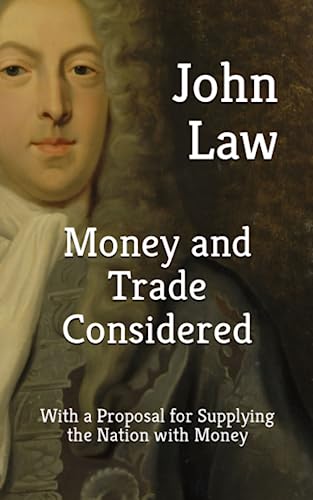


The scope of Law’s venture expanded rapidly. By 1719, the Mississippi Company absorbed other French trading enterprises, including those dealing in Africa, China, and the East Indies. This consolidation led to the creation of the Compagnie d’Occident, later reorganized as the Compagnie des Indes, which held a sweeping monopoly over nearly all of France’s overseas commerce. Law’s system linked the state’s debt, colonial ambitions, and banking reforms into a single financial engine.
The integration of the bank with the company marked a turning point in French economic policy. Share sales provided a way to consolidate government debt, while the bank’s paper currency financed trade and investment. Law believed this structure would strengthen both the monarchy and the nation, creating prosperity through credit and overseas expansion. It was an ambitious experiment that blended modern financial principles with imperial ambitions.
By concentrating so much economic activity under one institution, Law had effectively created a financial empire. The Mississippi Company was not simply a trading firm; it became central to France’s fiscal system. The boldness of the project captured the imagination of policymakers and the public alike, laying the groundwork for both spectacular success and, ultimately, collapse.
The Frenzy of Speculation
By 1719, the Mississippi Company had become the object of financial fervor in Paris. People from all social classes rushed to buy shares, seduced by the prospect of a new age of prosperity. Aristocrats and traders, along with craftsmen and shopkeepers, thronged the Rue Quincampoix, the narrow street where the Mississippi Company’s shares were traded. Scenes of chaos and wild speculation became the norm as demand for shares outpaced the company’s actual commercial prospects.
Amid the frenzy, the price of Mississippi Company stock began to skyrocket. A share that had once been worth 500 livres now fetched over 10,000 livres within a few months. Tales abounded of clerks, shopkeepers, and widows who had turned their modest savings into enormous fortunes overnight. The promise of wealth seemed infinite, and speculation became an obsession.

The mania permeated all levels of society. Nobles mortgaged their estates, professionals abandoned their trades, and even servants invested their meager wages in the hope of striking it rich. The frenzied trading blurred the lines between social classes as Paris became a city intoxicated by the dream of sudden wealth. Chroniclers of the time noted that people chose to speculate on shares rather than pursue any other occupation, viewing it as the most certain means of advancement.
Foreign investors also rushed to buy shares in France, drawn by the apparent miracle of Law’s financial system. Paris began to rival Amsterdam and London as an economic center, as the city’s stock market activity drew attention from across Europe. For a brief time, the French capital stood at the center of global finance, its prosperity seemingly tied to the meteoric rise of Mississippi shares.
The speculative frenzy became both a symbol of the power and the peril of Law’s system. For many, it appeared as though France had stumbled upon a formula for limitless wealth. However, the speed and intensity of the stock’s ascent also foreshadowed the fragility of a market fueled more by optimism than by substance.

The Reality of the Mississippi Territory
The image created of the Mississippi Territory, or Louisiana as it was more commonly known at the time, was one of great wealth and opportunity. Pamphlets and other advertisements touted the supposed riches of the colony, filled with imagery of gold, silver, bountiful harvests, and prosperous trade. Investors were lured by the prospect of untapped potential that seemed to promise fortunes for those who were daring enough to partake in this venture.
To live in the Mississippi Valley at this time, however, was a more difficult endeavor. The subtropical climate, with its dense forests, marshes, and formidable weather, made agriculture and settlement a challenging pursuit. Disease, inadequate supplies, and a lack of infrastructure added to the daily struggles of life in Louisiana. While tales of easy wealth were circulated, many who ventured to the Mississippi did not find the prosperity they had envisioned. In many cases, life there was marked by isolation, disappointment, and a struggle to survive.
The European population in the Mississippi Territory during this period was also quite limited. Reluctance to cross the Atlantic, especially in light of reports of illness and death, was not uncommon. Indigenous people were the majority inhabitants of the region. While trade was present, it was nowhere near the level that would have sustained the inflated value of Mississippi Company shares. The territory itself did not possess the manpower, resources, or economic base to fulfill the grand promises that had been portrayed back in Paris.
The returns on investments were minimal at best. Word of the actual conditions in Louisiana was starting to reach the investor pool, who had been told of an endless frontier of wealth and natural abundance. There was a growing discrepancy between what the wealth of the Mississippi Territory could actually produce and what Law’s machine was promising to offer. It had always been a fragile situation.
The Collapse of the Mississippi Bubble
By early 1720, cracks began to show in Law’s system. The Banque Royale had issued a large amount of paper money to support the rapidly increasing price of Mississippi Company shares. As more and more notes entered circulation, the prices of food and goods began to climb. Inflation eroded the purchasing power of the general public, and the very notes that had once symbolized France’s economic recovery were now losing their value.
Investors began to panic and rushed to the bank to convert their paper notes into gold and silver. The bank, however, did not have enough reserves to fulfill these demands. Confidence in the system evaporated in a matter of days. Mississippi Company shares, which had once reached astronomical levels, started to plummet. A mass sell-off quickly replaced the buying frenzy, with many investors left holding worthless paper.
The collapse of the Mississippi Bubble sent shockwaves through Paris. Crowds of disgruntled investors filled the streets, and riots erupted as people clamored for redress. The once-bustling Rue Quincampoix was now a scene of chaos and violence. Witnesses reported scenes of once-prosperous men, reduced to destitution and madness, cursing the man who had promised so much.

John Law, the man once hailed as France’s financial savior, became the target of public anger and resentment. From being a hero, he was now seen as a villain who had swindled the entire kingdom. His house was attacked, and death threats against him were reported daily. Realizing that he was no longer safe in Paris, Law fled the city under the cover of night, disguised as a maid.
By the end of 1720, John Law had left France, now a wanted criminal and fugitive. His meteoric rise had been met with an equally rapid downfall, and his financial experiment had come to an abrupt and catastrophic end. The Mississippi Bubble had burst, leaving him a broken man, wandering Europe in obscurity.
Aftermath and Legacy
The collapse of the Mississippi Bubble left devastation across French society. Investors from every class—nobles, merchants, and artisans—watched their fortunes vanish in the crash. Estates were sold, families bankrupted, and Paris, once electrified by the prospect of easy wealth, was filled with bitterness and resentment. The broader economy also suffered, as trade slowed and confidence in the monarchy’s ability to manage finances sank to new lows.
One of the most lasting consequences was the deep distrust of paper money. The failure of John Law’s system convinced many in France that currency unbacked by gold or silver was inherently unstable. For decades, the French rejected experiments in credit and financial reform, leaving the country less adaptive to modern banking practices compared to England and the Netherlands.

The Mississippi Bubble also resonated beyond France. Its collapse occurred almost simultaneously with Britain’s South Sea Bubble, and together they became cautionary tales about speculation detached from real economic productivity. Economists and historians of later centuries repeatedly returned to these episodes when analyzing the dangers of financial manias. The 19th-century writer Charles Mackay, in his Extraordinary Popular Delusions and the Madness of Crowds, famously highlighted Law’s scheme as a prime example of mass speculation gone wrong.
John Law’s personal legacy remains deeply contested. Some view him as a reckless adventurer who duped a nation with illusions of wealth. In contrast, others view him as a visionary who anticipated the development of central banking and the modern use of credit. His theories on money and trade contained truths that would later underpin global finance; yet, his execution was flawed, and his ambitions were outsized.
Ultimately, Law’s experiment reshaped both France and financial history. The Mississippi Bubble served as a warning about the volatility of speculative markets, while also leaving a paradoxical legacy: the recognition that credit and paper money could indeed transform economies, but only if grounded in stability and trust.

Conclusion
John Law’s bold ambition to modernize France’s finances ended in ruin, transforming initial optimism into widespread devastation. His experiment with paper money and colonial speculation briefly promised prosperity but ultimately exposed the dangers of unchecked credit and irrational exuberance. The Mississippi Bubble became a national tragedy, turning Law from celebrated reformer into a fugitive reviled by those he had once inspired.
Yet the episode also marked a milestone in the history of economic speculation. It demonstrated both the power of financial innovation and the peril of separating markets from reality. The lasting lesson remains clear: when speculation soars beyond what an economy can support, collapse is inevitable. The Mississippi Bubble endures as a cautionary tale of ambition, risk, and human folly.


