William Penn’s Witchcraft Trials: Why Pennsylvania Never Became Another Salem
 Reading Time: 21 minutes
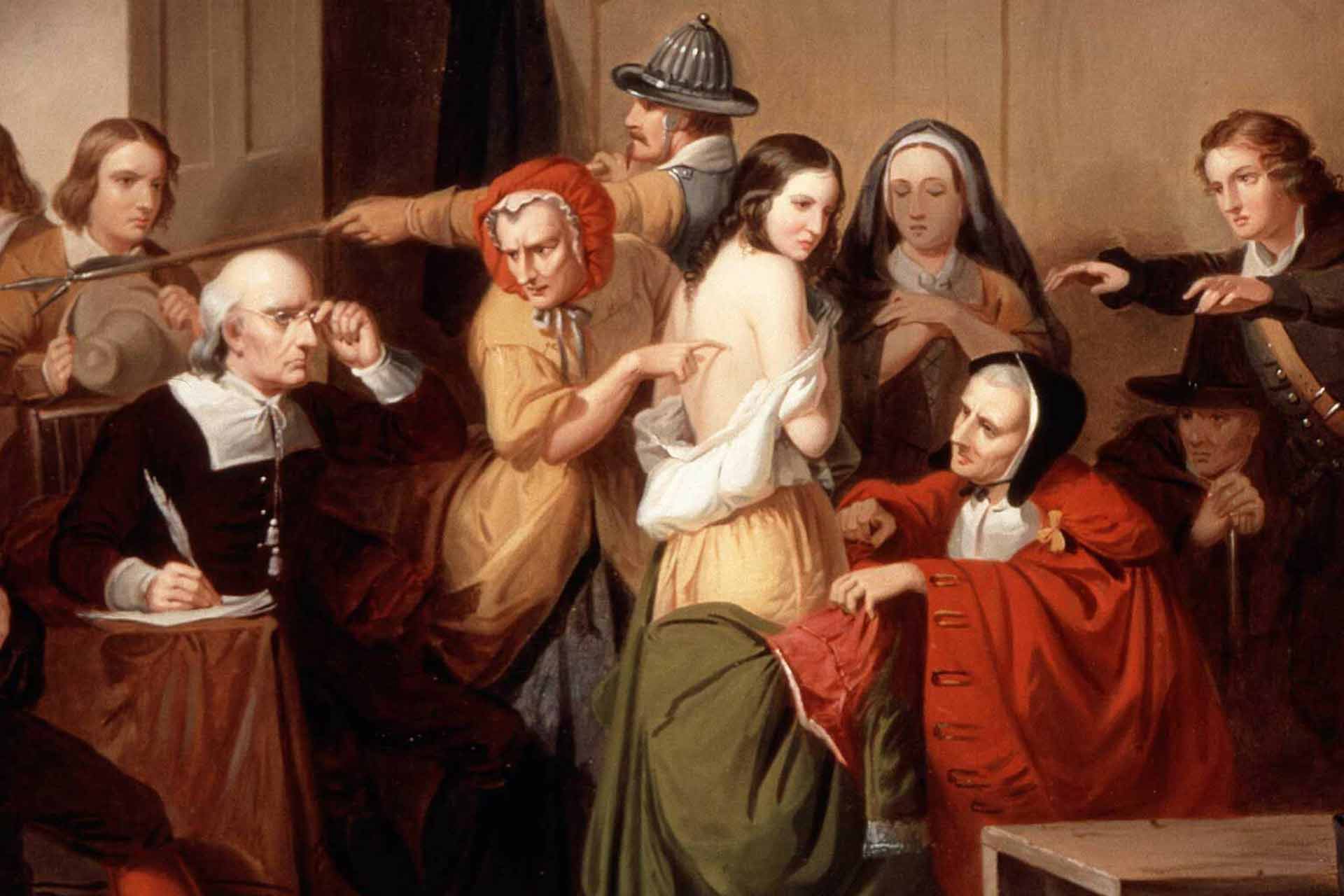
In 1684, William Penn sat in judgment over Pennsylvania’s first witchcraft trial. The case involved two women accused of using their supernatural powers to inflict damage on their neighbors and their farm animals. Witnesses came forward with tales of odd behavior, mysterious illnesses in farm animals, and suspicious occurrences. At that time in America, witchcraft was a crime that carried with it the possibility of prison time, torture, and death.
However, that is not how things played out in Pennsylvania. Unlike the witchcraft hysteria that would erupt in Salem, Massachusetts, eight years later, the actions against the accused women in Penn’s colony resulted in a surprisingly benign outcome. One woman was basically allowed to go home rather than being executed for witchcraft. Far from Salem, the Pennsylvania colony had its own witch scare, but colonial authorities there did not approve sweeping arrests and prosecutions.
So why didn’t William Penn order these colonists executed for witchcraft? What was so different about the witch trials in colonial Pennsylvania that prevented colonial authorities from allowing a rapidly escalating series of prosecutions? The answer starts with Penn’s own spiritual views, his colony’s legal tradition, and Penn’s commitment to building a “Holy Experiment” founded on the principle of religious toleration. Penn’s style of government provides an alternate example of early American colonial government that valued conscience, legal tradition, and restraint.
But it’s not quite that simple. Fear of witchcraft was just as strong in the Pennsylvania colony as it was in Salem Village. And Penn’s government was by no means willing to dismiss the reality of supernatural evil. Where Pennsylvania’s approach differed was in how officials dealt with witchcraft accusations. Placing Pennsylvania’s ignored witchcraft trial alongside Salem’s will help us understand how religious ideology, political institutions, and colonial officials reacted to and controlled suspicions of witchcraft.
Witchcraft in Colonial America: A Fear That Crossed Religious Boundaries
Examining Pennsylvania’s witchcraft cases requires that we first understand European and American beliefs about the supernatural. The concept of witchcraft in the seventeenth century was not mere folklore or tales told to scare children. In much of early modern Europe, witchcraft was considered a criminal act and was associated with magic, Satanism, and a threat to Christian society.
Tens of thousands of people were tried and executed for witchcraft between the fifteenth and eighteenth centuries. Persecution varied greatly by region, but Europeans shared a common conception that some individuals could use magic to harm their neighbors. Priests, judges, doctors, and villagers could describe mysterious misfortune in terms of witchcraft.
European colonists brought these beliefs with them to North America. Neighbors might accuse each other of witchcraft after disputes over property rights, cattle, children, inheritance, and any number of neighborly conflicts. If a cow stopped producing milk, if a child inexplicably fell ill, or if a family suffered a series of unexpected deaths, neighbors might suspect intentional supernatural harm.
Suspicion often fell upon women. Women who lived independently, defied social conventions, or were embroiled in long-term disputes with their neighbors were easy targets. That said, these gender assumptions would not determine every witchcraft case. Accusers might target other community members depending on the circumstances.
English colonists also shared a legal tradition that recognized witchcraft as a crime. England’s Witchcraft Act of 1604 criminalized certain kinds of witchcraft and allowed some witches to be sentenced to death. Colonial governments created their own laws and adopted procedures to deal with witchcraft.
Colonists in Massachusetts, Connecticut, and throughout colonial America grappled with witchcraft long before the cases in Salem Village. The first person executed for witchcraft in New England was Alse Young. She was hanged in Hartford, Connecticut, in 1647. Young’s execution was not an anomaly, and later seventeenth-century cases would reveal that Salem was not an isolated outbreak of witch hunting.
Pennsylvania’s settlers held many of the same beliefs about the supernatural that other Europeans did. Swedish, Dutch, German, and English-speaking immigrants brought their own religious and cultural traditions to Pennsylvania. Though Penn envisioned Pennsylvania as a colony characterized by religious tolerance, the beliefs of his settlers were not so easy to dismiss outright.
Pennsylvania’s witchcraft trial was unusual not because colonists accused each other of witchcraft. What made the case unusual was Pennsylvania’s colonial government and William Penn’s reaction to the accusations.
William Penn and the Creation of Pennsylvania’s Holy Experiment
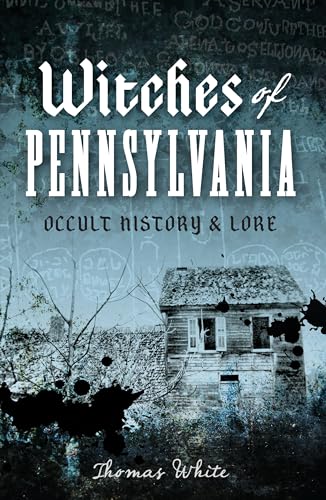
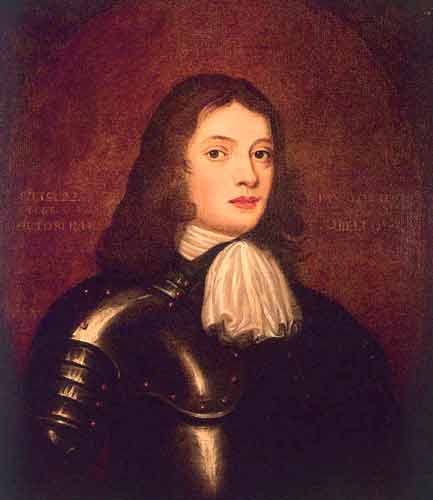
William Penn was born to an established English family in London in 1644. His father, Admiral Sir William Penn, was an important figure in English politics, and Penn’s younger life seemed poised to follow a similar trajectory within English society. Instead, Penn’s increasing religious convictions brought him into contact with the Religious Society of Friends, commonly referred to as the Quakers.
The Religious Society of Friends began in England during the seventeenth century. Theologically, Quakers promoted the idea that believers could access God without the intercession of churches or priests. Some were also accused of repudiating social order, declining to take religious oaths, and resisting coercion of conscience.
These ideals led Quakers into political conflict with English authorities who were unwilling to permit challenges to religious or political authority. Members of the Religious Society were fined, imprisoned, and harassed throughout Penn’s life. Penn was imprisoned and later became an outspoken proponent of liberty of conscience.
In 1681, King Charles II awarded Penn a massive tract of land in North America, in part to compensate for a debt owed to Penn’father. Penn now had the chance to put into practice the ideals that had been difficult for him to freely exercise in England. Pennsylvania, or Penn’s Woods, would be the place of Penn’s grand Holy Experiment. Penn hoped to create a land where individuals of varying Christian faiths could live together without fear of persecution. Penn’s plans for the colony also promoted representative government, rights under the law, and a somewhat extensive degree of religious toleration.
Penn’s Frame of Government, which he provided to the colony in 1682, outlined several institutions meant to decentralize political authority and uphold certain rights. Belief in the importance of conscience informed these institutions as well.
The ideal had its blind spots. Pennsylvania was hardly a secular democracy, and religious and political liberties were not extended to everyone who lived there. Pennsylvania was also part of a larger project of European colonization that displaced Indigenous people and came to depend on enslaved workers.
But Pennsylvania differed from other colonies in which church institutions held more sway over public life.
At the heart of Quaker belief was the idea that conscience and accountability to a higher power was religious authority itself. Such ideas didn’t mean witchcraft didn’t exist, but they fostered a kind of political culture that might be less inclined to use governmental authority to mandate religious conformity.
Penn’s principles were put to the test when cases of witchcraft came before Pennsylvania’s legislature in the early 1680s. Could a colony founded on the principles of religious freedom prosecute witchcraft without recreating the abuses its founder had suffered back in England?
Pennsylvania Before Penn: Swedish Settlers and Old-World Beliefs
The women who were accused of witchcraft in Pennsylvania were part of a community that predated William Penn’s arrival. During the seventeenth century, Swedes had created settlements along the Delaware River. They were part of a colony called New Sweden, which was established in 1638. At various times, New Sweden included parts of Pennsylvania, Delaware, and New Jersey.
Dutch colonists captured New Sweden in 1655, but Swedish and Finnish settlers stayed in the area. Their descendants farmed and traded, and some continued the religious and cultural practices of their ancestors even as the colony changed hands from Dutch to English
By the time William Penn arrived to establish his own colony, these settlers had long-established friendships and quarrels. They lived in farms spread throughout the Delaware Valley, and their livelihoods depended on agriculture. Animals were also important, as sources of both food and income. Cattle was one of the most valuable forms of property a farmer could own.
If cows mysteriously became ill, failed to produce milk, or died without explanation, it could have serious financial consequences for a farming family. In communities where ideas about supernatural causation were still common, misfortune could elicit charges of witchcraft. Swedes and Finns believed in harmful magic, as well as healing techniques and malevolent spirits. But this belief system was not unique to settlers from Scandinavia.
The Pennsylvania trials unfolded against this contentious backdrop. Accusations were made against women connected to the earlier Swedish settlement by neighbors who spoke English. Cultural distinctions defined the case, including language as well as familial and community ties. That context was significant because allegations of witchcraft were almost never made in a vacuum. They typically involved quotidian disputes that took on supernatural overtones when one disputant suspected another of magical abilities.
The charges against Margaret Mattson and Yeshro Hendrickson illustrate how rapidly local suspicions could escalate to a matter for colonial officials, even in a colony founded by a man who hoped to create a more tolerant government.

Margaret Mattson and Yeshro Hendrickson: Pennsylvania’s Accused Witches
In 1683, charges of witchcraft were brought before Pennsylvania’s provincial government. The complainants accused two women of witchcraft. They were Margaret Mattson and Yeshro Hendrickson. (Note: The spelling of Yeshro’s last name varies among the surviving records.)
Mattson and Hendrickson were members of the Swedish families living in the Delaware Valley.
Margaret Mattson was domiciled with her husband, Neels Mattson, in what became known as Delaware County, Pennsylvania. Both were members of the first generation of European colonists who lived along the Delaware River valley before Penn’s colony was established.
The complainants alleged that Mattson had vexed livestock; caused milk to vanish; appeared in unusual places; and engaged in suspicious activities suggestive of witchcraft. In particular, witnesses said that Mattson caused a cow to refuse to give milk. Another witness said Mattson boiled the heart of a calf.
Little information about accusations against Yeshro Hendrickson appears in the surviving court record. Though she was named in the same record as Mattson, the testimony printed below and the unusual verdict pertain to Margaret Mattson.
Accordingly, we know more about the case against Mattson than about the case against Hendrickson. To assume that Hendrickson faced the same evidence or received the same verdict as Mattson would be to presume more than the record shows.
Whether taken together or individually, these were serious charges. In other English colonies, they could have led to conviction and execution. But Pennsylvania officials were unwilling to treat rumors from neighbors as proof that either woman had committed a crime punishable by death.
The issue was referred through the colony’s governmental channels, eventually bringing the accused to a witchcraft trial in Philadelphia.
The Witchcraft Trials of 1684: William Penn Takes the Bench
The most complete extant account of Pennsylvania’s witchcraft trial was documented on February 27, 1683. At the time, English colonies in America observed the Julian or Old Style calendar. England’s judicial year also began on March 25; under those conventions, the trial actually took place on February 27, 1684. This explains why you will find references to both 1683 and 1684 in relation to this witch trial. Depending on the calendar being used, both can accurately refer to the same event.
Pennsylvania provincial governor William Penn oversaw the trial held by the colony’s Provincial Council in Philadelphia. Penn’s direct involvement made the case notable, as it thrust the founder of Pennsylvania into a legal matter involving religion, local politics, and criminal sanctions. The trial followed English legal custom, as adapted for use in the Pennsylvania colony. Accusers gave testimony, and then those accused of witchcraft were able to offer a rebuttal.
One unusual wrinkle was the fact that the defendants were part of a Swedish-speaking community. Translation was necessary to ensure that the trial could consider testimony regarding events that may have occurred between English speakers and those who spoke only Swedish. This small detail highlights an interesting reality of life in colonial Pennsylvania. William Penn’s administration governed over people who had settled the region long before him and who did not always speak English or practice the same religion.
The case consisted of testimony about purportedly harmed animals and strange behavior. Witnesses recounted various misfortunes that they believed to be caused by witchcraft. The accusations were based on the shaky ground of personal perception, local relationships, and superstition.
There was no concrete evidence that Mattson had supernatural abilities or had harmed others through witchcraft. Thus, the trial seemed to center on a key question of reputation: suspicion versus legal guilt.
Should a woman be condemned as a witch in the eyes of her neighbors, or must she be proven to have committed an illegal act?
This question was answered in one of the most bizarre verdicts in colonial America.

Guilty of Being Called a Witch: Pennsylvania’s Remarkable Verdict
Upon hearing the evidence, the jury delivered its verdict regarding Margaret Mattson. It has intrigued historians ever since. Instead of simply finding Mattson guilty of witchcraft, the jury made a subtle but important distinction between rumors about Mattson and the behavior that those rumors were intended to suggest.
The Jury found Margaret Mattson guilty of the “common fame of a witch” but not guilty of “being a witch in the manner and form alleged.” In effect, the jury agreed that Mattson had earned a reputation of being a witch but refused to find her guilty of committing witchcraft as she had been accused.
The jury’s verdict did not mean that the court didn’t believe in witchcraft. Nor did it indicate that the jurors recognized some contemporary concept of the presumption of innocence. It did mean, however, that the jury was not willing to allow an unfortunate reputation to stand as evidence of a criminal act.
That distinction was momentous. Accusations of witchcraft were notoriously self-perpetuating. If a person developed a reputation as a witch, any subsequent ill fortune could be seen as evidence of guilt. Suspicion bred more accusations, which, in turn, bolstered the original suspicions.
In separating Mattson’s reputation from what could be established in legal proceedings, the jury drew a line between gossip and evidence.
The minutes state only that Mattson was neither committed to prison nor sentenced to death. The affair ended with bonds taken for good behavior and the keeping of the peace.
Reports of the trial further note that the husbands of the women were required to post bonds of fifty pounds. This solution placed the financial burden on the families while avoiding the death penalty that often accompanied witchcraft convictions.
The legal meaning of the verdict may be debated, but the result is not. Pennsylvania would not hang Margaret Mattson or Yeshro Hendrickson, nor would it launch a broad persecution against witches.
Still new under William Penn’s governance, the colony had benefited perhaps from a first lesson in restraining supernatural panic with reasonable law.
Did William Penn Really Joke About Riding a Broomstick?
Probably the most famous anecdote about Pennsylvania’s witchcraft trial features Governor William Penn asking Margaret Mattson if she had ever “ridden upon a broomstick through the air.” Penn supposedly concluded the trial by responding that he knew of no law against flying on broomsticks when Mattson herself confessed to the act.
Penn’s broomstick exchange with Mattson is memorable because it captures his legacy of tolerance and good sense. It paints the founder of Pennsylvania as a governor who would not convict people of mere hobbies that some perceived as supernatural.
The conversation never happened, at least not according to the trial transcripts. It was an invention of later historians and folk memory. We do not have enough contemporary accounts to verify that Penn and Mattson had this discussion.
This matters because the joke obscures what actually occurred at Margaret Mattson’s trial. Penn did not declare the charges nonsense and send his officers home. Colonial authorities heard witness testimony and allowed a jury to issue a verdict.
Mattson’s broomstick incident speaks to how later Americans wanted to remember William Penn. They saw him as a tolerant, logical governor who defused superstition with practicality. Penn may have said the statement, but Pennsylvania’s legal outcome better illustrates how he treated accused witches.
What makes Pennsylvania unique is not that its governor cracked a witty legal joke. What sets the colony apart is that accusations did not lead to executions.

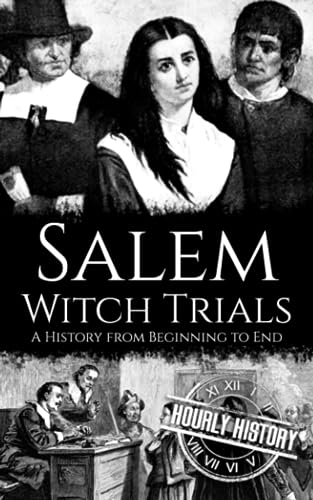

Eight Years Before Salem: A Different Kind of Witchcraft Crisis
Pennsylvania’s witchcraft trial experience took place eight years prior to the infamous Salem witch trials of 1692.
Beginning in Salem Village, Massachusetts, strange actions by several young girls led to accusations that they had bewitched others. These initial accusations blossomed into a large crisis that spawned hundreds more accusations and ended with several defendants being executed.
Sarah Good, Sarah Osborne, and Tituba, an enslaved woman in Reverend Samuel Parris’s household. Over time, the accusations reached defendants beyond the original three. It spread to members of various social classes.
By the time the crisis had settled, over one hundred fifty people had been accused and nineteen hanged at Gallows Hill. One man named Giles Corey died from being pressed by stones after refusing to plead. Others died in jail.
The scale of the Salem prosecutions was extraordinary even for witchcraft prosecutions of seventeenth-century colonial America.
Both Pennsylvania and Massachusetts were communities where witchcraft was commonly believed. Each colony had received legal systems from Europe that had criminalized forms of witchcraft. Each had communities where illnesses, cattle deaths, and other difficulties could breed supernatural suspicion.
But their experiences were vastly different.
Pennsylvania’s trials involved only a few defendants and did not spread into a round of accusations. Salem experienced a snowball effect as new accusations created more suspects, which led to more investigations.
This difference didn’t occur because one colony was Protestant and the other was Catholic. Judicial systems, political situations, and officials’ choices shaped how events unfolded.

Quaker Pennsylvania vs. Puritan Massachusetts: Two Religious Cultures
Key religious differences existed between Pennsylvania and Massachusetts.
Established under different theological legacies, Massachusetts was settled by English Puritans looking to create a “godly society” grounded in their interpretation of the Christian Bible. While Puritans had faced their own religious persecution in England, the expectation in colonial New England was typically one of public adherence to religious norms.
Church and state were intertwined. Public officials were tasked with maintaining civic order and protecting a society whose religious heritage informed its laws and public institutions. New England Puritans took a belief in Satan seriously. For them, the devil was real, and the threat of witchcraft was pervasive. Witchcraft was more than just a personal transgression. They saw it as an attack on an entire community.
This does not mean that all Puritans were witches waiting to pounce. Ministers and magistrates had qualms about spectral evidence, and debates over admissible testimony occurred both before and during the Salem witch trials.
Pennsylvania was founded under Quaker leadership, which viewed religious authority differently. Quakers believed in the spiritual authority of the individual conscience and were less inclined to govern through religious coercion.
Penn’s “Holy Experiment” allowed the colony to be founded in part to give Christians of “various denominations” freedom to live without constant government intervention.
This did not mean that there were no religious limitations in Pennsylvania or that Quakers were immune to fears of the supernatural. But the philosophy that guided Pennsylvania government placed less emphasis on rooting out heresy for the sake of religious conformity.
The difference in religious philosophy may have affected how officials reacted to witchcraft accusations. When a colony’s government does not take religious uniformity for granted, it may be less likely to view spiritual deviation as an existential threat.
That being said, Quaker theology does not explain Pennsylvania’s relatively muted reaction on its own. Pennsylvania’s legal processes, the nature of the testimony, and other factors related to the alleged witches also influenced its response.
The Importance of Evidence: Why Pennsylvania’s Witchcraft Trial Did Not Escalate
One notable difference between the Pennsylvania case and the Salem trials involved how evidence was treated.
In Salem, judges accepted witnesses’ testimony about alleged supernatural occurrences. For example, complainants stated that the specters of the accused – invisible spirits – had visited them and caused harm.
The witnesses’ testimony about supernatural events was called spectral evidence. An accuser might allege that someone’s spirit appeared to attack them, even if the accused person was in another location at the time.
Spectral evidence raised troubling issues of proof. Because the incidents were supposed to have been invisible to others, the accused might have had no practical way to dispute the allegations. Spectral evidence was not the only type of testimony accepted at Salem. But its acceptance fed a climate of near hysteria where accusations snowballed.
As more people were accused, they, too, could be “proved” to have appeared to others in spirit. It became increasingly difficult to tell real wickedness from fear, imagination, hearsay, or malice.
Pennsylvania’s case record does not indicate that its judicial officials had adopted a formal legal rule prohibiting spectral evidence. And witnesses who testified at Mattson’s trial did describe unusual observations and experiences that were influenced by similar beliefs about supernatural activity.
What was different was that the verdict was reached without letting the accusations and Mattson’s poor reputation serve as proof of her guilt. This stance recognized that suspicions existed, but would not convict her of a crime on that basis.
At Salem, in contrast, the special Court of Oyer and Terminer was sitting during a time of mass hysteria. It accepted evidence that would later be called into question.
Opposition grew to the Salem court’s methods, and some of the era’s most powerful leaders spoke out against spectral evidence. By October 1692, Massachusetts Governor William Phips had abolished the Court of Oyer and Terminer. Trials for witchcraft in Salem would continue for several more months, but the new court was more skeptical of such evidence.
The two cases show how the course of collective panic can be shaped by the decisions of judges and jurors. When courts accept dubious evidence, they open the door for more accusations. When jurors require more proof, they help keep suspicion from becoming a self-fulfilling cycle.
Why Salem’s Witch Trials Became Deadly
Religious belief and courtroom procedure alone cannot account for the Salem tragedy.
Social stress is one key factor. Massachusetts was a politically uncertain place in 1692. The colony had just experienced upheaval in its charter and government, leading many to question authority and the validity of colonial institutions.
Trouble on the northern frontier was another source of anxiety. Warfare between English settlers, Indians, and French troops was frequent enough that refugee families were pouring into the colony with tales of massacre and destruction.
Introducing this additional fear into communities already struggling with economic hardships, local squabbles, and spiritual grievances, these stories stoked the flames of communal panic.

Adding to this local paranoia were divisions within Salem Village itself. Contentions over ministers, property rights, and civic duties created factions within the community. The accusations began within these fault lines, but they didn’t stop there.
One aspect of the prosecutions became increasingly powerful as the crisis unfolded: confession. Several of the accused admitted to practicing witchcraft, sometimes under duress, and identified still other persons who were participating.
Assuming these confessions were true, it seemed there was a larger supernatural conspiracy afoot. The authorities were therefore encouraged to investigate additional suspects. These new prosecutions spawned still more accusations that became increasingly difficult to stop.
Pennsylvania’’s witchcraft hysteria did not develop in precisely the same context. First, its provincial government was much newer. Nor does the historical record preserve the same toxic mix of political crisis, generalized accusations, and proliferating confessions. Nor did the colony experience a self-perpetuating round of prosecutions where each fresh accusation unearthed more suspects.
These contrasts are significant because they warn against blaming all of Salem’s suffering on Puritan fanaticism or all of Pennsylvania’s tolerance on Quaker benevolence.
Religion mattered in each colony. But how events unfolded also hinged on local conditions and personalities.
Did William Penn’s Holy Experiment Prevent Witch Trial Hysteria?
It’s tempting to say that William Penn’ religion-based Holy Experiment stopped Pennsylvania from having its own Salem-style witch hunt. But let’s not let history become just too much fuzzy revisionism.
Pennsylvania’s government was founded on ideals promoting freedom of conscience, religious toleration, and some basic rights under the law. So, compared to other English colonies at the time, religious fanaticism might not have found as receptive a political audience.
Penn himself had been imprisoned in England after accusations against him became political tools of religious persecution. That background certainly informed how he ran his colony. Religious freedom was taken more seriously than it might have been elsewhere.
So it’s plausible that government authorities felt constrained from jailing someone based on superstition.
But we can’t conclude from the 1684 trial that Penn would have overruled religious zealots just in time to stop a Salem-like frenzy. There’s no evidence Pennsylvania was teetering on the edge of a mass witch hunt.
We also can’t say from this one case that Penn and other Quakers were inherently doubting witchcraft in that era.
They lived in a community where fear of the supernatural was taken seriously enough to initiate court action. Penn didn’t intervene and squash the charge before trial. The witchcraft trial took place, witnesses were heard, and a judgment was rendered that did not find the supposed crime to have been committed.
Pennsylvania seems to have had enough social and legal safeguards to prevent the accusation from spiraling into broader witch persecution. That arguably aligns with Penn and the Holy Experiment’s ideals, but we can’t say it was strictly because of their Quaker beliefs.
History suggests that Pennsylvania had a different political culture, laws, and set of circumstances that led to a very different outcome than Salem.
What Happened to Margaret Mattson and Yeshro Hendrickson?
Margaret Mattson and Yeshro Hendrickson were fortunate compared to some of the victims in Salem. Instead of being executed for witchcraft, Mattson and Hendrickson were allowed to return to their lives after their hearings.
Our primary sources, unfortunately, leave much of their lives after the proceedings a mystery. While the Salem witchcraft trials generated hundreds of pages of examinations, confessions, court transcripts, and later reminiscences that documented the lives of countless accused witches, Mattson and Hendrickson’s story is not as well documented.
Absent from the historical record are details about Mattson and Hendrickson’s lives after accusations. We can’t point to documentation that outlines how the two were treated by neighbors or whether the hearing impacted their social standing within their community. A guilty verdict wasn’t required for neighbors to ostracize someone: rumors were often enough to ruin a person’s reputation in colonial America.
The court concluded that Mattson had a common reputation as a witch. But how did that reputation affect her after the hearing? Did it go away? We don’t know.
Margaret Mattson and Yeshro Hendrickson’s story also highlights some of what we don’t know about the colonial record. While we know the facts of the accusation, hearing, and verdict, we have few ways to understand how this event affected Mattson and Hendrickson privately.
In addition to highlighting what we know about Mattson and Hendrickson, the case also illuminates what historians can’t know about them. We can study the accusations, the hearing, and the jury’s subsequent verdict. We cannot know exactly how the accusations affected Mattson and Hendrickson privately. Today, their story is known because colonial officials documented the accusations against them, not because Mattson and Hendrickson wrote about their lives in detail.
At the very least, Mattson and Hendrickson can thank their lucky stars that Pennsylvania’s colonial officials stopped short of sentencing them to death like those in neighboring territories.
Conclusion on the Pennsylvania Witchcraft Trials
Pennsylvania’s seventeenth-century witchcraft trials stand in dramatic contrast to what would happen in Salem just eight years later. Colonists in Salem and Pennsylvania brought European notions of witchcraft with them to the New World.
Unexplainable tragedy had the potential to breed fear and accusations in both communities. What prevented Philadelphia’s leaders from pouring fuel on the flames? Pennsylvania’s judiciary did not allow the suspicion around Margaret Mattson and Yeshro Hendrickson to turn into a witch hunt.
Religious tolerance was one factor, but Penn’s foundation of Quaker ideals cannot solely be credited for how authorities handled Mattson and Hendrickson’s case. Procedural safeguards, the narrow focus of the accusations, and the lack of Salem-like external pressures were also influential.
What is clear is that restraint was in line with Penn’s original vision for the colony. Under Penn’s Holy Experiment, conscience and due process were intended to matter more than religious persecution.
Perhaps the greatest lesson we should take from Pennsylvania’s lost witchcraft trial is not that colonists were above superstitious fears. They most certainly were not free of them. Instead, we should remember that witchcraft accusations did not always need to end in death sentences. Even in colonial America, where the punishment was legal and culturally acceptable, suspicion could be quelled without bloodshed.


