
Bronze Age Collapse Explained: 10 Leading Causes
 Reading Time: 17 minutes
 The Bronze Age collapse is one of history’s biggest “it looked stable—until it didn’t” moments. Between 1200 and 1100 BCE, powerful kingdoms and palace-based societies from Anatolia to the Levant, through the Aegean and Egypt, began to fail in quick succession. Cities were burned, trade routes collapsed, and political systems that had for centuries efficiently managed diplomacy, finances, and security across wide areas suddenly could not function. The shock is not just that such a collapse occurred but that it afflicted multiple, long-connected societies that, from the outside, appeared to be thriving.
“Collapse” in this case does not refer to the entire ancient world ending all at once. It was a regional and uneven process: some places fell hard, others adapted and thrived, and a few limped on in a more limited state. What connects the breakdowns is a system-wide crisis sparked by overlapping shocks to political, economic, and ecological systems, including climate stress, warfare, migration, rebellion, and the breakdown of long-distance supply chains. This article lists the ten leading causes and describes how they worked together to transform the once connected Bronze Age world into a fractured and different one.
The Late Bronze Age System That Failed
Late Bronze Age civilization developed around “palace economies.” Royal palaces collected taxes, stored grain, organized labor, and redistributed finished products. They were both administrative and residential complexes. Royal scribes, officials, and provincial governors monitored land, harvests, and taxation records. In times of plenty, the palace could supply armies and building projects, reward loyalty, and support elite families with food and status.
Palaces also operated within networks of tribute and diplomacy. Local states paid upwards in goods, labor, or loyalty. Regional powers protected and enhanced the prestige of their dependents in return. Gift exchanges, dynastic marriages, and trade treaties bound courts across the Aegean and the Near East. Long-distance commerce provided copper, tin, luxury goods, and raw materials for workshops. Ports and caravan routes redistributed imports through the system. This gave the appearance of an enduring international order. But it also meant that most kingdoms relied on external connections, which they could not control.
The system itself relied on specialists. Scribes recorded transactions and legal documents; shipbuilders and crews transported cargo; metalworkers relied on long-distance bronze supply chains; and chariot forces needed trained horses, craftsmen, and continuous upkeep. These were not easily interchangeable professions. The loss of scribes or metal supplies might not just lower living standards—it could compromise a palace’s ability to rule and wage war. Complex societies can be very resilient to disruption. But they can also be more fragile.
The availability of bronze itself is an example of vulnerability. Bronze requires both copper and tin, and tin is often imported from great distances. Disruption of trade routes or increased piracy meant a palace was less able to supply its soldiers and laborers with weapons and tools. Agriculture itself was enmeshed in this network because of tools, transport, and storage logistics. Loss of a single component put stress on the next in line: decreased supplies meant weaker defense, which meant more raids, which meant less tax revenue, which meant fewer repairs.
Interconnectedness meant fragility because local shocks became regional cascades. A drought, an internal revolt, or a coastal attack might be survivable on its own. But multiple stresses interacting could overwhelm the system. Palaces had evolved to manage predictable resource flows- tribute would arrive, ships would sail, scribes would keep records. The disappearance of predictability meant the same complexity that once generated power and prosperity now caused collapse to come faster, because so many things had to function for the whole to survive.
The 10 Leading Causes of the Bronze Age Collapse
1. Climate stress and drought
Climate stress, particularly episodes of increased aridity, is a frequently cited factor behind the Bronze Age collapse. In the absence of rain gauges from the period, these are inferred from proxy evidence. Pollen samples can reflect shifts in plant cover. Lake and marsh records can show long-term drying trends. The combination of these lines of evidence suggests that at the end of the Late Bronze Age, at least parts of the eastern Mediterranean were getting less predictable about their moisture than they had been before. This increased the baseline operating risk for already-stressed states.
The reason drought is so politically consequential is that power in the Late Bronze Age was built on the expectation of a predictable harvest. Palace systems relied on consistent returns to feed their administrative apparatus, fund prestige projects, and support and reward their armies. If rainfall and the riverine agriculture it fed were erratic, this undercut the legitimacy of rulers who claimed to be at the center of a divinely-ordained order: if a king was favored by the gods, environmental failure might reasonably be seen as a sign that he had been unfavorably replaced. In this way, drought is not only a crisis but a stress test for authority.

2. Famine and food insecurity
Food insecurity transformed a brittle Late Bronze Age system into a crisis situation. When grain supplies were tight, palace centers had fewer options than they might have seemed to have. These were extractive economies, predicated on the collection, storage, and redistribution of staples. Food shortages were literally at the center of administration, as rationing both solved the problem of survival and created new challenges of inequality. Elites, as well as garrisons, were typically fed first, which in crowded urban centers could quickly turn a shortfall into fury, rumor, and a breakdown of trust in the state’s ability to manage everyday life.
Grain shortages also destabilized the political map. If a palace could not meet its obligations, feeding workers or paying troops or supporting allied cities, its authority appeared weak. That weakness prompted flight from stressed regions, which created migration pressures that reshaped borderlands and coastlines as people fled. As people moved, they carried labor and skills, as well as conflict, with them, placing additional strain on neighboring states already coping with their own crises. In this way, famine was not simply a humanitarian disaster; it was a strategic shock that accelerated the wider Bronze Age collapse.
3. Sea Peoples and Coastal Raids
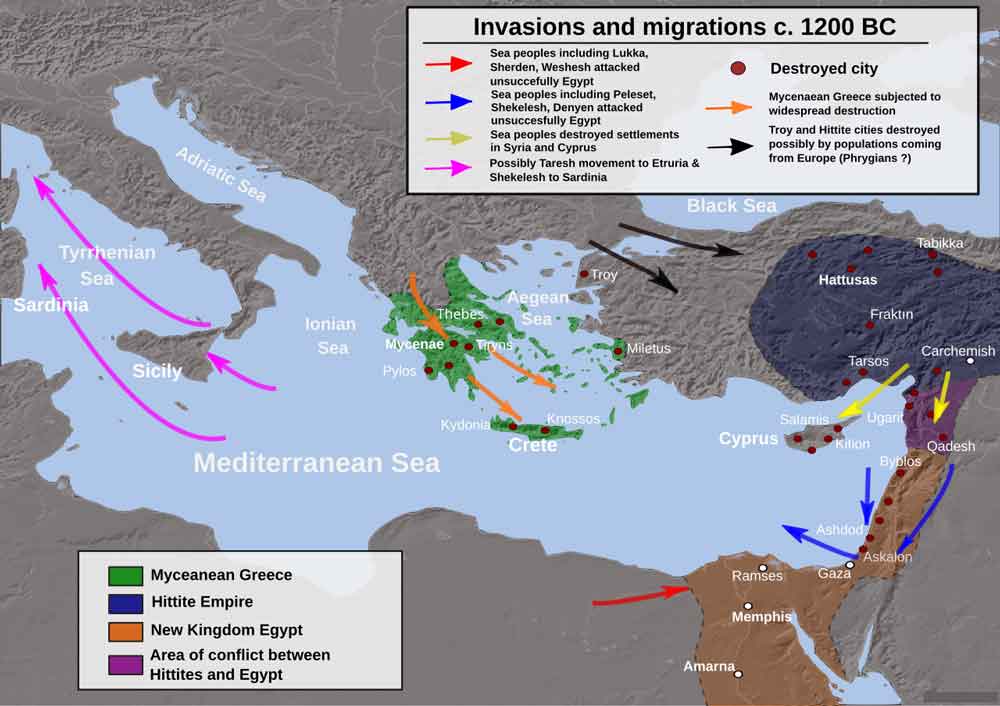
Coastal raiding is one of the most tangible shocks associated with the Bronze Age collapse. “Sea Peoples” is the term modern historians use for the groups in Egyptian sources that were said to raid both by sea and by land. Whatever they were in reality, the impact was significant: coastlines became insecure, and piracy prevented or delayed the maritime trade that connected palace economies. Ships not arriving on time meant ports with less revenue, states with fewer supplies, and leaders with a reduced capacity to mobilize over distance. In an interconnected world, a disruption to sea routes affected diplomacy, taxation, and military readiness.
The question then becomes who the Sea Peoples were. There are many possibilities: invaders in search of new lands, refugees of other crises, mercenaries in search of wages, or shifting coalitions of groups that changed over time – or all three at once. The ancient sources name certain groups, but these do not add up to a clear map. This is significant because it indicates the “Sea Peoples” were not a single nation with a single agenda, but an expression of broader instability. Coastal raids did not directly cause every collapse, but they hastened the process of failure by striking at the very lifelines – shipping and trade – upon which Late Bronze Age states relied.
4. Internal rebellions and civil conflict
Internal rebellions were the usual modus operandi by which palace systems disintegrated during the Bronze Age collapse. A perception of weakness among the elites allowed for rapid developments and fluid loyalties: coups could be launched, allegiances shifted, and factions at court could degenerate into open violence. Palace revolts, it should be noted, did not always take the form of popular uprisings. There were also palace revolts “from the top,” in the sense that rivalries among the ruling class (over succession rights, offices, or access to stored wealth) could lead to a breakdown of the palace’s internal discipline. At that point, the palace ceased to work as an administrative system and was rather seen as a prize to be fought over.
Factional breakdown, of course, had a direct economic impact as well, because it interrupted the flow of taxation and disorganized the command structure. If local authorities failed to remit revenue, the center could not pay its troops or its garrisons. If military commanders supported different claimants, manpower became unpredictable, and armies could be pulled apart. In a system that relied so heavily on regularized obligations, civil conflict was akin to slicing all the wires inside the machine. Even when the ruler survived, the damage had long-term consequences because the state’s authority had been publicly contested and the patterns of obedience were now more difficult to re-establish.
5. Earthquakes and disaster clustering
Earthquakes are another leading candidate as an accelerant of the Bronze Age collapse because the eastern Mediterranean is a very active seismic zone. A strong quake can damage the walls and buildings that a palace state depends on to project an aura of control. It’s not necessary for a city to be leveled; repairing walls and buildings takes labor, timber, stone, and time. That expenditure is significant because states were already juggling military, administrative, and prestige demands, and a rebuilding effort could rapidly deplete their capacity to respond.
The important factor is “clustering.” A single earthquake is manageable; a series of disasters can be destabilizing. A quake in the middle of an already bad year, or during an ongoing political crisis, can push the system into freefall. That’s the primary reason most historians see earthquakes as accelerants and not primary causes. Disaster also opens up opportunities for raids and other aggressive actions, provokes leadership panic, and forces hard choices about where to direct the flow of limited resources. In an interdependent system like the Late Bronze Age, the shockwaves from an earthquake would reverberate well beyond the cracked stones.
6. Trade network collapse
Shipping lanes and overland routes connected these Late Bronze Age states. Commercial networks were thus highly integrated, and the contraction of trade disturbed the system as a whole. Fewer ships made fewer deliveries of raw materials, luxury goods, diplomatic gifts, and specialists who traveled between courts. Blocked or broken routes also meant the absence of certain luxury goods that were used not just as “nice to have” items but as means of rewarding elites, forging alliances, and displaying status. When palace treasuries could not distribute prestige goods at regular intervals, loyalty became more difficult to buy and easier to lose.
The collapse of trade also frayed credit and diplomacy. Long-distance exchange involved credit, promises, and personal relationships between courts, merchants, and officials. When routes became unsafe or unreliable, agreements were broken, and debts became unpayable. Diplomatic exchange suffered for similar reasons, as gifts, envoys, and supply commitments were part of the same interlocking network. Once trade ceased to be predictable, the Late Bronze Age international system lost much of the glue that held it together, making every local crisis seem more important and every recovery more difficult.
7. Overextension and military overstretch
Late Bronze Age kingdoms often became over-extended, attacking and defending on too many fronts at the same time. The long frontiers had to be patrolled, allies had to be supported, and rebellious provinces had to be garrisoned. All of that became very costly. Large garrison costs emptied treasuries and tied down soldiers who might have been used on decisive campaigns. Even powerful states can find their control sapped if they have to constantly garrison chokepoints, coastlines, and inland trade routes simultaneously.
Overstretch also created a speed issue. Armies were slow, and especially so when they were dependent on supply trains, chariots, and regional levies. If there were challenges on multiple fronts–raids along the coast, instability in a province, pressure from a rival–leaders would be unable to respond in all places quickly enough. The result was triage: some areas would be left exposed, inviting further raids and rebellion. In an interlinked system, every weak point became an advertisement that the state was losing control.
8. Technological and tactical shifts in warfare
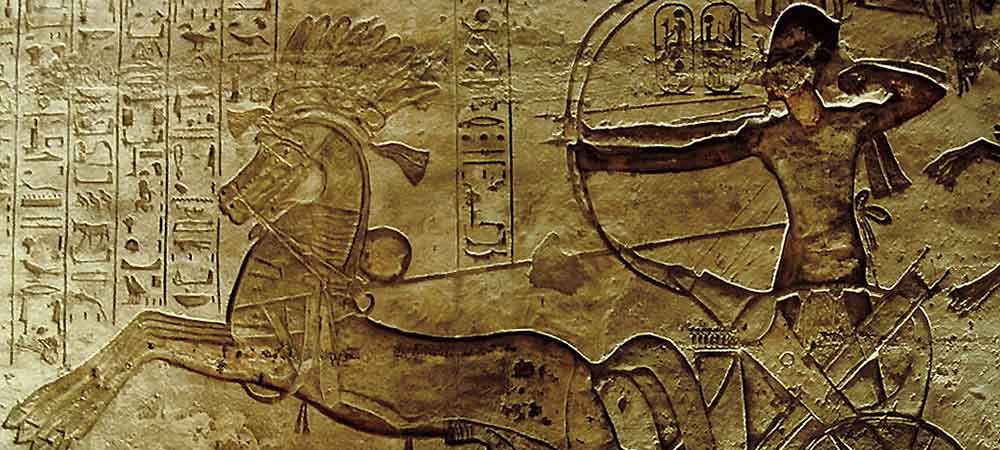
Late Bronze Age armies were based on elite systems, particularly chariot warfare, but chariots, in turn, required trained horses, craftsmen, and sustained capital. This made chariotry both effective and brittle. In crisis situations, cheaper and more flexible forms of warfare may have been more useful. Massed infantry and lighter, more mobile tactics may have outmatched expensive chariot forces on open ground. If a state could not support the entire chariot ecosystem, its military edge was quickly eroded, and those who fielded simpler forces could continue to fight.
Fortification and siege technology also changed in ways that increased the cost of defense. Solid walls and gates could defend cities, but maintenance and garrisons were always necessary. Attackers could also adapt, finding new methods to exploit weak points—prolonged blockades, coordinated mass attacks, or repeated raids that wore down defenders. The key shift is not one “new weapon,” but a change in the balance of power: warfare began to favor pressure and attrition, and palace states, optimized for elite warfare, struggled to adapt when conflict required broader, cheaper, and more rapid means of response.
9. Loss of bronze supply and resource bottlenecks
Bronze Age states are built on bronze, and bronze is built on a fragile supply chain. Copper can be mined in many places, but tin is much less common, and it often traveled great distances from where it was mined. Raiding, war, or political collapse could disrupt those routes, making tin a real bottleneck in the system. Workshops could not produce the quantity of weapons, armor, and tools that palace economies required if tin supplies ran short. In theory, a kingdom with a large pool of skilled smiths could survive with less metal, but skill cannot substitute for missing tin.
The effects of this would radiate throughout society. Armies need a constant supply of spearheads, arrow tips, and body armor, especially when repeated campaigning has exhausted and destroyed equipment. Agriculture and construction also required metal tools to clear land, maintain irrigation systems, and repair buildings. Shortages make tool replacement harder, efficiency would decline, and a backlog of needed repairs would mount. In a system already strained by warfare and resource demands, a shortage of metal did not merely sap one part of the state but crippled the ability to fight, build, and manage the everyday work at the same time.
10. Leadership failure and institutional rigidity
As noted earlier, the states of the Late Bronze Age were quite well organized. But there is a danger in having a rigid structure if you are hit with successive crises without time to adjust. The palace systems of the time tended to be relatively slow and layered. An envoy has to deliver a message; orders are passed down the hierarchy of officials; and resources are distributed through pre-set channels.
There are no shortcuts. Under repeated shock, there is a danger of miscalculation (misreading a threat), delayed reaction, or decision-making based on outdated information. This can be exacerbated by poor succession planning. A contested heir, or a weak ruler, could open the door to court factions competing against one another, turning crisis management into political games.
This inertia could be applied to bureaucracy in general, which could also become brittle under crisis conditions. As mentioned above, bureaucratic systems are optimized for the status quo. When the normal inputs (taxes, labor, trade) became irregular, the bureaucracy could not shift gears fast enough. Rigid record-keeping, cost accounting, or planning measures that made the kingdom work in good times would lead officials to double down on procedures, hoard resources, or expend energy on prestige goods instead of on adaptation. In this respect, the collapse could have been the result not only of external enemies and natural disasters, but also of a failure of institutions to adapt to abnormal conditions.

Case Studies to Show It Was Regional
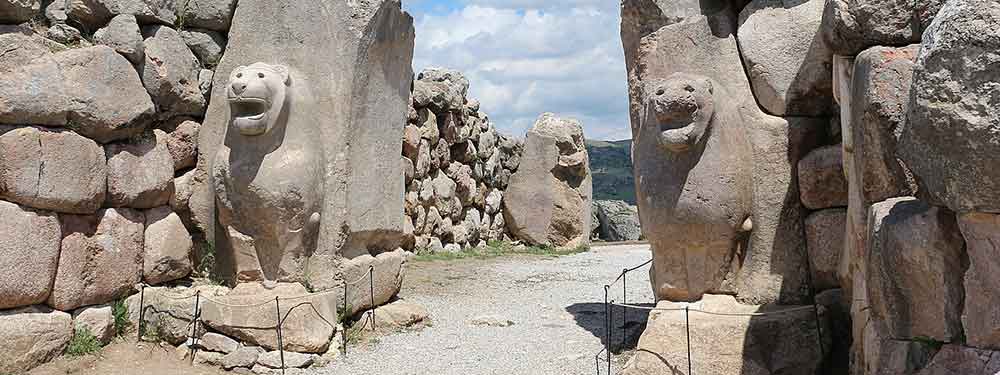
The Bronze Age collapse did not hit every kingdom the same way. The Hittite Empire, for example, appears to have broken down rapidly at its center, with its capital abandoned and its imperial structure splintering. Egypt, by contrast, survived as a state even while facing external attacks and internal strain. Egyptian royal inscriptions (often cited in modern scholarship) emphasize victories and restoration, but even allowing for propaganda, the key point remains: Egypt absorbed shocks without disappearing as a centralized polity.
Mycenaean Greece shows a different pattern. Many palace centers collapsed, and the administrative system that relied on scribes and centralized storage ceased to function as before. The palatial world did not simply shrink; it fractured. In contrast, some Levantine city-states were already used to balancing between stronger neighbors and may have had more flexible political habits. Yet places like Ugarit still fell hard. Letters from the region (often cited by historians) document crises and urgent pleas, showing how quickly coastal nodes could become exposed when sea routes turned hostile.
Outcomes differed because geography and resilience differed. Egypt’s natural barriers, river-based internal transport, and deep administrative experience helped it hold together longer. The Hittite heartland faced different vulnerabilities, including long overland lines and a wider imperial perimeter to defend. Mycenaean palaces were highly centralized and therefore brittle: once the palace failed, the system beneath it had little room to improvise.
These case studies are a reminder that “collapse” was not a single event on a single timeline. It was a regional breakdown of an interconnected world, where some states fell, some survived in reduced form, and some transformed into smaller successor societies. The pattern looks less like a universal apocalypse and more like a chain reaction whose impact depended on local buffers, leadership, and the ability to adapt.
Timeline of Bronze Age Collapse
The Late Bronze Age did not collapse everywhere on the same day. Imagine instead a prolonged phase of mounting stress that finally reached a point of no return around 1200 BCE. In the first phase, the international system still held together: palaces exchanged gifts, ships brought metals and luxury goods, and kings solved their problems through diplomacy. But the signs were there of increasing insecurity, heavier military demands, and higher stress along the corridors that kept the courts provisioned.
In the second phase of cascading failure, multiple shocks struck in rapid succession. Ports were hit by coastal raiders, internal factions eroded central authority, and trade networks became unreliable. Cities were damaged and rebuilt, then damaged again. When rebuilding became a permanent state of affairs, treasuries and labor pools were depleted. A kingdom could weather a bad year, but with repeated disruptions, leaders were forced to do triage: defend the capital, abandon the margins, and hope the system held.
The rapid breakdown phase then hit many regions: major centers collapsed, some palaces were destroyed or abandoned, and administrative record keeping came to an end in places that had used it most intensively. When the palaces failed, their networks failed with them. Local communities did not disappear, but the “top layer” of governance—tribute, specialist production, long-distance coordination—shrank abruptly. The world became more regional, more fragmented, and less able to mount quick, large-scale responses.
In the final phase, the aftermath was uneven. A few states adapted and survived in attenuated form, while others fragmented into smaller successor polities. Trade did not cease, but it took different routes, involved different players, and was lower in intensity for a time. The important point to draw from this is timing: collapse was most rapid when shocks compounded, and confidence was lost. Once people no longer trusted the palace to protect them, pay them, or supply them, the system’s glue dissolved—and it took generations to rebuild.
What Came Next
The palace-centered world of the Bronze Age did not “end” in the Bronze Age collapse, but reorganized. In many places, large kingdoms shattered into smaller Iron Age polities that were more local, more flexible, and less reliant on long-distance palace supply networks. New ruling houses and city networks often took root on the ruins of older centers. Recovery was patchy and uneven: a few places recovered complexity relatively soon, while others languished in low-intensity urban life for generations before states rebuilt.
Iron became more common over time, but the bigger change was in patterns of political organization. Rather than a few massively centralized palaces controlling production and diplomacy, power often shifted to smaller kingdoms, city-states, and regional strongmen. These new systems were more resilient in a fragmented landscape because they required fewer specialized inputs to function. They also developed different military patterns, with broader infantry forces rather than elite chariot-centered war.
Trade did not disappear; it followed new routes and took on different rhythms. Long-distance exchange became less predictable for a time, and the “international club” of great courts exchanging gifts and letters faded away. In its place, new networks, new ports, and new intermediaries grew. Over generations, the Mediterranean economy reemerged in new forms, and the Iron Age world developed its own patterns of politics and culture—patterns distinct from the older Bronze Age system that had once seemed destined to last forever.
Bronze Age Collapse Conclusion
The Bronze Age collapse was a perfect storm striking a system optimized for permanence rather than contingency. Palace economies, long-distance trade, and specialist-dependent warfare had been dazzlingly effective in generating power. But they were brittle. Drought, raids, civil conflict, supply bottlenecks, and diplomatic disintegration, occurring in close temporal proximity, meant that the very interdependence that had been a recipe for prosperity was now a fast track to disaster. Collapse, in short, had no single villain. It was the compounding of shocks landing on a brittle structure.
The Bronze Age collapse still matters because it is a vivid reminder that complex systems can fail without a decisive “kill shot”. When supply chains break, legitimacy wavers, and institutions cannot adapt quickly enough, collapse can appear to happen overnight, even if stress has been building over years. There’s a delicious irony here: many of the same themes—overstretch, fiscal strain, internal conflict, border pressure, and glacial institutional response—also crop up as leading causes when people discuss the fall of Rome. Different eras, different technologies, but the same uncomfortable lesson: when multiple stresses synchronize, even great states can find that their greatest strength—complexity—can become their greatest liability.


