
Justinian and Theodora: The Ambition, Riots, and Wars That Shaped Byzantium
 Reading Time: 21 minutes
Justinian and Theodora began life in very humble circumstances. The former was the offspring of a backwater provincial Balkan family, and the latter came from the entertainment districts of Constantinople, where actresses occupied some of the lowliest positions in Roman society. They went on to rule over a vast swath of the Eastern Mediterranean with dreams of reviving the Empire.
There were many triumphs and tragedies under their watch. After Constantinople almost fell into ruin during the Nika riots, Roman legions retook the provinces of North Africa and Italy, and the great church of Hagia Sophia was built. Justinian also undertook a massive reform of the Roman legal code, whilst his wife wielded significant power and saw some progressive laws passed for the benefit of women.
However, this drive left its mark on the world around them, including prolonged periods of conflict that ravaged many areas, schisms within Christianity, and a deadly Plague that would traverse much of the Mediterranean. As such, the story of Justinian and Theodora is about their will to survive and rule, and how far they sought to recreate the old Roman Empire.
The Byzantine Empire Before Justinian and Theodora
With the abdication of Romulus Augustulus in 476, there was no longer a separate Western Imperial power. Of course, the Empire persisted in the East, based at Constantinople. While later scholars refer to it as the ‘Byzantine’ Empire, the people within it still considered themselves Roman and their Emperor the rightful heir of Augustus and Constantine.
The city of Constantinople was well-situated between the two continents, commanding key trade links across the Mediterranean and Black Sea. It was encircled by impressive fortifications and contained many magnificent structures, including churches, imperial residences, commercial districts, bathhouses, and grand monumental buildings. Furthermore, large and fertile provinces such as Egypt, Syria, Asia Minor, southern and eastern Europe continued to yield significant wealth and taxation to the Imperial treasury.
However, there were obvious difficulties ahead for this State. A powerful rival lay to the east in the form of Persia; Christianity was riven with controversy, and much of what had once been the West now fell under the control of various Germanic ‘barbarian’ peoples. Justinian would inherit a rich and formidable empire, with the means to achieve far-reaching goals, though at the possible cost of exhausting its strength from its numerous vulnerabilities.

Justinian’s Rise From Humble Origins
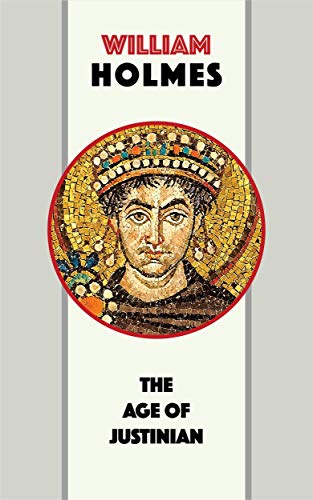
Justinian was born c. 483 at Tauresium, most likely in modern-day Macedonia. There was nothing outstanding about his birth or early life, and he came from a fairly humble stock. All this would change with his uncle Justin, a soldier who had risen through the Byzantine ranks and reached a position of authority and importance under the imperial establishment.
It was natural, therefore, that on reaching Constantinople Justin should take his nephew with him, who was well educated in theological as well as legal and political matters. Upon the death of Anastasius in 518, there did not appear to be any clear claimant to succeed, and Justin became Emperor. He was uneducated, but had much practical knowledge of military affairs and statecraft; his nephew also came to occupy a position of great influence.
During this time, Justinian received many high offices and distinctions, and came into contact with many of the leading generals, civil servants, and churchmen, on many of whom he was later to rely. He was made co-Emperor in April 527 and followed his uncle on to become the sole ruler a few months later upon Justin’s death.
As a commoner, Justinian must have been aware of the scope for upward social mobility under the Empire. He would later marry Theodora, an even greater breach of Byzantine social conventions.

Theodora: From Actress to Empress of Byzantium
Little is known about Theodora’s childhood and early life, which has fueled much speculation. She was probably born c. 500 into a family of low standing, with some connection to the Hippodrome. Her father, Acacius, was said to have kept bears for shows, in the service of one of the four chariot racing factions. He died when Theodora was young, leaving his family very poor.
She is thought to have supported herself as an actress, and possibly as a prostitute, which was a common association amongst the females in the entertainment professions. Actresses had an extremely bad reputation, at least in the eyes of much of the upper classes and the clergy. It is little wonder that Procopius took great pains, in the highly tendentious Secret History, to dwell upon all aspects of her alleged promiscuity and to depict her as extremely disreputable.
Most modern historians would regard at least some of these stories with great skepticism, given Procopius’ obvious desire to denigrate the Emperors’ characters. There is probably some truth to the claim that she became an actress, but there is no way to confirm many of the other stories about her.
She apparently traveled to various places, including Libya and Egypt, staying for several years in Alexandria and coming into contact with prominent Christian figures associated with the Miaphysite tradition. Presumably, she derived much of her strong religious belief and feeling from her contacts there. So she must have seen much of the world, and conditions very different from those she would find at the Court, before she came to the attention of Justinian.
A Marriage That Defied Byzantine Society
It would have been unusual for any senior Roman official to wish to marry an actress, and there was specific legislation prohibiting such unions. Justinian, by now an important official, was therefore taking a very bold step in wishing to marry a woman such as Theodora.
Under Emperor Justin I, an act was passed permitting an actress, if she had given up acting, to apply for leave to marry a man of noble birth. There was therefore no bar to marriage, and Justinian and Theodora probably married around 525.
On Justinian’s accession in 527, Theodora was styled Augusta and took a prominent part in government. She seems to have become a very considerable partner in the running of the Empire: she kept a considerable household of her own, formed friendships with powerful men at court and abroad, received and wrote to many important persons, and interfered widely in theological and other matters of state.
He was, of course, the sovereign, but she was much more than merely the Empress-consort, as events would soon show when a dangerous rebellion put everything they had built in the greatest danger.
The Nika Riots: When Constantinople Turned Against Its Emperor
By early January 532, an apparently small disturbance had grown to such proportions as to threaten not only the city of Constantinople but also the Emperor and Empress. The disturbance originated with one of the several ‘parties’ of chariot-race fans and resulted in widespread destruction over a considerable area of the city.

Races at the Hippodrome drew very large audiences, and there was great enthusiasm and fervor for the various parties, in particular the Blues and Greens. They were therefore not confined merely to following events at the Hippodrome, but were readily able to act collectively and voice discontent at the actions or conduct of various officials.
Many measures of the Government were deeply unpopular, particularly in relation to taxes and tax collection, the course of justice, and the behavior of certain very powerful men. Foremost in provoking dislike and resentment were John the Cappadocian, Praetorian Prefect, with wide financial and other responsibilities, and the jurist Tribonian, who featured largely in the legislation.
The present trouble was precipitated by the failure to kill two men sentenced to death as ringleaders and offenders at the races. Both men escaped to sanctuary, and their ‘partisans’ demanded that they be spared. The Emperor’s unwillingness to accede to these demands led to the remarkable coincidence of interests and action between Blues and Greens, normally bitter rivals.
The rioters adopted the rallying cry of Nika, meaning “Conquer” or “Victory.”
The disturbances and general rioting spread far and wide throughout the city, and much valuable property was destroyed by fire, including the old basilica of St. Sophia. Many officials, widely disliked, were demanded to be removed from office. Concessions were made by Justinian, but to no avail, and the rioting continued on a great scale.
Eventually, Hypatius, nephew of the late Emperor Anastasius, was set up as Emperor in opposition to Justinian. The revolt thus took on a far greater significance, and many leading notables and others would doubtless welcome the deposition of the Emperor and his Government, and the consequent opportunity for greater power and privilege for themselves.
Seeing the violence spreading throughout the city and the success of the rebels, Justinian was strongly inclined to desert Constantinople and save himself, although the Government could still command very substantial forces. It seemed quite possible that he might be deposed.
It was then, according to tradition, that Theodora spoke her famous words.
Theodora’s Refusal to Flee & The Crushing of the Nika Riots
Procopius, in the History of the Wars, relates that Theodora was strongly against fleeing the city and the Empire. In her opinion, death would be preferable to giving up her position as Empress, and she considered it right to stand firm for the dignity of the Empire.
She ended by saying that it was a great honor to be covered with the imperial purple, even in death:
“Royal purple is the noblest shroud.”
There is no way to judge how genuine this record of her words is. It was common practice among the writers of antiquity to put suitable speeches into the mouths of various protagonists, and there is every reason to suppose that Procopius did so here. In general, however, he gives the impression of a woman of very strong will and purpose who went to great lengths to restore imperial leadership in the eyes of the rioters.
In some shape or form, then, such an utterance would come naturally to her, and well suited to the occasion. Above all, it fixed in men’s minds the picture of an Empress prepared to die rather than relinquish her position, while many of the leading men of the Empire were ready to fly. In this respect, it was a most effective claim to authority and power.
The rioters were finally overcome by superior arms. Belisarius, Mundus, and others distinguished themselves in the fighting on behalf of the Emperor, and Narses did much to sow dissension among the various leaders. At length there was a great slaughter of the insurgents in and about the Hippodrome, said by Procopius to extend to 30,000 men; the truth of which may well be doubted. Hypatius and others were put to death, and Justinian was master of the city.
Thus, the Emperor had escaped the danger of deposition or death, which must have hung over him for much of the time. The cost in loss of life was enormous, and the damage to the city considerable. On the other hand, this afforded the opportunity of rebuilding much of Constantinople and of magnificently celebrating the stability and greatness of the Emperor’s rule.
Hagia Sophia: Rebuilding Constantinople in Imperial Splendor
One of the buildings damaged or destroyed during the riots was the old Hagia Sophia. It seemed fitting for Justinian to commission a grand replacement intended to be greater in every way.
Accordingly, he appointed Anthemius of Tralles and Isidore of Miletus to design and construct the new church. Both were highly knowledgeable in a variety of areas of mathematics and geometry, and in building technique. The result was a very large domed building, with half-domes and arches, lavishly decorated. An abundance of marbles from all over the Empire, other precious materials, extensive mosaic work, and an ingenious disposition of windows all served to evoke divine magnificence.
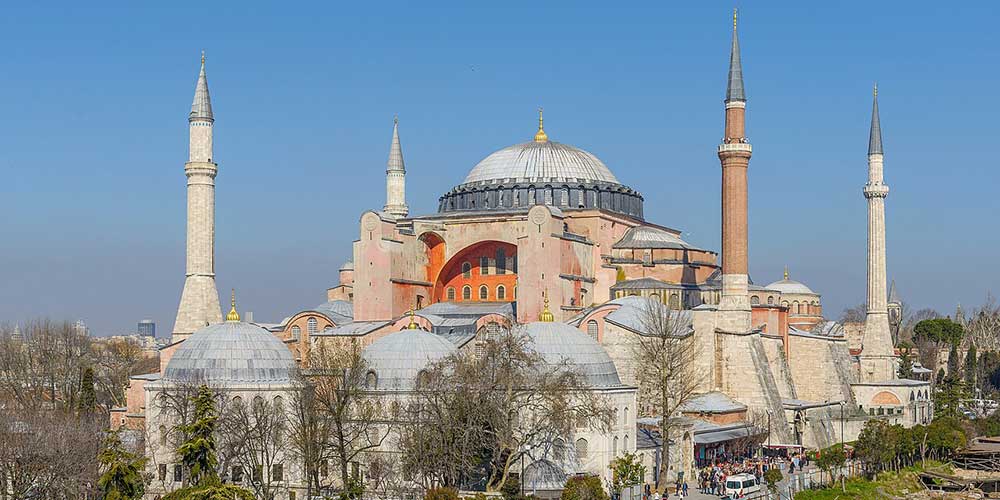
In 537 the new Hagia Sophia was completed, dominating the city. The dome seemed almost impossibly suspended over the whole interior and was much marveled at by contemporaries. Subsequent damage from earthquakes necessitated considerable rebuilding, but the basic design and structure were a significant engineering achievement.
Justinian was reputed, on entering the church upon its completion, to have exulted that he had outdone Solomon. Whatever the truth of this, it would have been natural for him to regard his great new church as superior to the Temple of Jerusalem. As well as being a place of Christian worship, the building was a boast of the power and glory of the Emperor and of Rome.
Justinian’s Dream of Restoring the Roman Empire
Now that his position was secure, Justinian set out to reconquer previously Roman provinces around the western and central Mediterranean. Targets included the Vandals in North Africa, the Ostrogoths in Italy, and the Visigoths in most of Spain and southern France. They were all, naturally, products of the break-up of the Western Empire.
As the rightful Emperor of Rome, it was clear that at least some of these areas ought to be brought back under his rule; this would also extend his area of dominion, increase his prestige, and give him control of rich and profitable areas. For this reason the policy has often been referred to as a Renovatio Imperii. How far it was originally intended by Justinian to extend, if indeed there was any carefully worked-out scheme of action, is hard to know.
The success of these enterprises lay to a great extent in the skillful generals available to him, foremost among them Belisarius. The results at first were astonishing, and large areas were quickly brought back into the Empire. To hold on to these provinces, and retain control of them, was a much more difficult problem.
Belisarius and the Reconquest of North Africa
In 533, Justinian sent an army to attack the Vandal Kingdom in North Africa. This would have been a very valuable area to Rome for its agricultural wealth and other riches, and its location was extremely advantageous for controlling at least part of the Mediterranean trade routes.
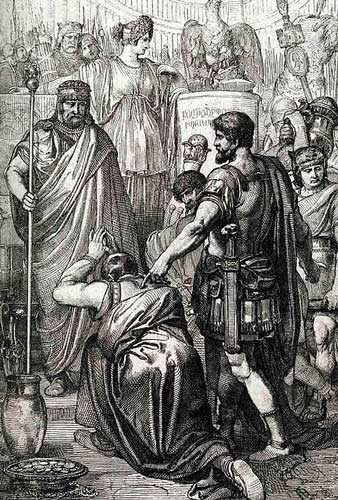
This expedition was placed in the hands of the tried and able general Belisarius, long active on the Persian frontier. Signs of disunity in the Vandal Kingdom emerged, especially after Hilderic was deposed and replaced by his relative Gelimer, so Justinian’s timing coincided with a fractured kingdom.
After victories over the Vandals at Ad Decimum and Tricamarum, Belisarius occupied Carthage and weakened their military. In 534, Gelimer sued for terms, and so the Vandal Kingdom ceased to exist as an independent state. Belisarius then returned to Constantinople and was honored with a triumph.
Much of North Africa was therefore regained for the Emperor, together with a number of islands in the Western Mediterranean. Considerable opposition from many localities and military revolts and uprisings made the firm establishment of imperial rule slow and difficult. Thus, this success demonstrated Justinian’s ability to recover formerly Roman land but also indicated some of the problems likely to arise from re-establishing Roman rule in these areas.
The Gothic War: Justinian’s Struggle to Reclaim Rome
Success in North Africa seemed to invite further extension of imperial control to Italy. For the most part, Roman institutions and forms had been preserved by the Ostrogothic kings, and notably by Theodoric. After his death in 526, however, there was considerable rivalry over the throne. This would have offered an excuse for imperial interference.
In 535, Amalasuntha, daughter of Theodoric, who had exercised considerable power, was assassinated. This gave Justinian a pretext to act against the Ostrogoths. Belisarius led an army into Italy, and war ensued, which lasted almost 20 years, with great destruction and devastation.
After the initial successes, Sicily, Naples, and Rome all fell to the imperial troops. The reconquest of Rome was bound to be highly significant, since although the Emperor resided and ruled from Constantinople, Rome was difficult to separate from the history and constitution of the Roman State.
The Siege of Rome and the Fall of Ravenna
The Ostrogoths continued to oppose the advance of Imperial forces on Rome, which was besieged for most of 537 and 538. There was considerable destruction of buildings and other property, loss of food supplies, and a reduction in the population. Aqueducts were damaged, further contributing to the breakdown of many essential services.
Belisarius was thus able to hold Rome for the Emperor and carry on operations in other areas. Ravenna, seat of the Ostrogothic kings, was taken in 540, and King Witiges himself was made prisoner. It seemed that little might remain to be achieved against the Ostrogoths.
Procopius records that the Goths would have been willing to accept Belisarius as Western Emperor. On this occasion, at least, he was content to take Ravenna as a conqueror on behalf of Justinian. There were obvious dangers and difficulties in the relations between the Emperor and a general so popular and pre-eminent.
Totila and the Devastation of Italy
This success was short-lived, and when King Totila became king in 541, large areas of Italy were reconquered by the Goths. Many places, including Rome, passed from one side to the other several times, and large areas of the country and its inhabitants suffered badly as a result of continued fighting.
There was a significant reduction in food production, widespread dispersal of populations, starvation, and devastation of towns and cities. The Justinian Wars did much to bring about the final decline of a great variety of towns and other ancient institutions.
Belisarius was able to achieve little success against the Goths with the forces at his disposal, and at length Justinian turned to Narses, another of his prominent Generals. In 552, Totila was defeated and killed at Taginae, and the remaining Goths were gradually defeated.
In 554, Italy was reorganized as an imperial province. It was thus brought under Imperial control for the first time for over 50 years, but large parts of the country were ravaged and depopulated.

Theodora’s Influence on Women’s Rights and Imperial Law
As well as political and theological problems, a number of changes were made to the law relating to marriage, prostitution, and the abuse of women, among other matters. In view of her own past, it is hardly surprising that Theodora has been thought to be the instigator, or at least a supporter, of many such measures.
Several laws were passed against those who compelled others to become prostitutes, and others increased the punishment of offenders against women generally. There were also laws on various aspects of marriage, property, and succession, and protection for various categories of persons. They were by no means sufficiently wide-ranging to give complete equality of sexes, but would have been beneficial to many in late Roman society.
Theodora also seems to have been responsible for the foundation of a religious institution called the Metanoia, where ex-prostitutes could be housed when leaving their employers for a different way of life. It is eulogized as a most laudable work of mercy in Buildings, but in Secret History, some women are said to have been forcibly confined there and ill-treated. This is another piece of evidence of Procopius’ conflicting portrayals of the empress.
There is no certain way of knowing how many measures she may have instigated. But in view of her great influence at Court, and the number of reforms calculated to benefit prostitutes and similar victims of exploitation, it seems very probable that she was largely responsible for bringing them to the Emperor’s notice. Her origins would make her an unusual and exceptional sponsor for such measures.


Justinian’s Legal Reforms: Preserving Roman Law
Much more attention has been paid to Justinian’s conquests, but he probably did more for posterity by bringing order to the mass of legislation and other sources of Roman law. Over many centuries, there had been an accumulation of statutes, decrees, juristic responses, and so on, much of it conflicting or obsolete.
Accordingly, from 528 he instructed certain jurists to bring together and rationalize all this material. One, Tribonian, played an outstanding part, and the results appeared between 529 and 534. They comprised the Code, that is, an assembly of Imperial legislation of various dates, the Digest, extracts from many eminent jurists, and the Institutes, a book for those studying the law. Further legislation was issued subsequently, all classed as the Novels, or Novellae Constitutiones.
All of these came to be included under the title Corpus Juris Civilis. They exerted a wide and lasting influence on other countries and times, particularly through the study of Roman law, which became popular in the later Medieval Era, and on the law of most countries of continental Europe, as well as many modern systems of justice.
It is significant that, in this respect, Justinian’s influence long outlasted the Roman Empire itself.
Religious Divisions Between Justinian and Theodora
Religion was paramount in the government and affairs of the Byzantine Empire. It was the duty of all Emperors to uphold the Christian faith and ensure its uniformity. Considerable periods of discord and conflict arose over many points of doctrine.
Christ’s divine and human nature was one such issue, and it was defined by the Council of Chalcedon in 451. A large number of Christians would not accept these decisions and continued to follow various forms of doctrine, broadly grouped together as Miaphysitism.
Justinian was, on the whole, loyal to the decisions of Chalcedon and spent much effort trying to achieve unity between the different groupings. Theodora was a great patron of many bishops and others holding religious appointments, most of whom were Miaphysites and many of whom were deposed.
She was therefore instrumental in allowing at least some Miaphysite churches and organizations to continue, and it is probable that she helped Jacob Baradaeus in his work setting up Syriac churches, which have survived to modern times.
It has often been suggested that the Emperor and Empress deliberately adopted these opposite attitudes so as to gain support from both sides. To what extent this may have been consciously planned is difficult to determine. In any case, they were apparently able to live harmoniously in spite of such wide differences of opinion on religious matters.
War With Persia and the Limits of Imperial Ambition
As long as Justinian continued to devote much of his effort and attention to the West, Persia under the Sasanian dynasty was an obvious and dangerous threat. So in 532, a peace was arranged with Khosrow I, the so-called Eternal Peace, freeing up men and funds for other operations.
This agreement was anything but “eternal”. In 540, Khosrow led a successful campaign into Roman territory and took the important city of Antioch, sacking it and carrying off large numbers of the population. This was a serious blow to the prestige of the Emperor and his court.
There was further fighting with Persia over various areas of the Caucasus, most importantly over control of the kingdom of Lazica. All of these operations would demand considerable numbers of troops, finance, and administrative attention, away from operations in Italy.
At last, in 562, full terms of peace were agreed on very generous terms to the Persians. On balance, then, the wars with Persia served as a useful reminder to Justinian of the limits of his available resources, if he also wished to reconquer parts of the former Empire in the West. There would always be a significant frontier to defend and maintain in the East.
The Plague of Justinian: An Empire Struck by Catastrophe
A plague broke out somewhere in the eastern Mediterranean in 541 and spread to Constantinople in 542. It has now been established, from studies of the DNA of victims, that this bacterium, Yersinia pestis, was the cause of bubonic plague and the subsequent Black Death.
There was much distress, more corpses than means of interment, serious effects on trade and other economic activity, and very heavy loss of life, according to several writers. It is not possible to verify the enormous number of daily victims in Constantinople that Procopius gives.
The Emperor Justinian was one of the many victims of the disease, but he recovered. Towns and villages all over the Empire would be afflicted for a time or more, with corresponding interruptions to normal economic life, payment of taxes, and so on, and with further difficulties in recruiting troops. It would recur at varying intervals for many generations, and together with related outbreaks, form the First Plague Pandemic.
Previous estimates placed the total number of deaths in the tens of millions, and there is considerable disagreement among modern authorities as to the total effect on populations. For wide areas of the Mediterranean, it may well have been devastating, but it has been argued that there is not sufficient evidence to justify very high figures.
In any event, the time at which this plague occurred was most unfortunate. The Emperor was at war with Persia, had great difficulty in holding his conquests in Italy, and was undertaking extensive and costly buildings and works of all kinds. It was plainly a serious addition to the burdens imposed on the Empire.

The Death of Empress Theodora & Justinian’s Final Years and the Price of His Achievements
Theodora died on June 28, 548, some 21 years after her elevation to the purple. She would appear to have been about 50, or perhaps a little older, and is generally thought to have suffered from some form of cancer, but there is insufficient information to offer any more precise diagnosis.
Losing her advice and assistance in many areas of government was a major blow to Justinian. Theodora also played a key part in the successful resolution of the Nika riots, showed great sympathy and generosity toward various sects, formed useful friendships, and advised on a wide range of matters of state.
Many, though not all, of these would continue to benefit from Imperial favor after her death; Justinian maintained friendly relations with many of the clergy favored by Theodora, and a number of others whom she had assisted and allied with her remained prominent.
Justinian did not take another wife after Theodora’s death, and apparently no child survived them. It is therefore not surprising that another member of the family succeeded to the Empire, but the closeness of their relationship and joint rule over the Empire is well illustrated by other contemporary sources and by the famous mosaics at Ravenna.
Justinian ruled as Emperor for another 17 years and oversaw the conquest of most of the rest of Italy and part of Southern Spain. Thus, for some years he ruled the whole of the Mediterranean coastlands virtually, restoring more of the old Roman provinces than any of his predecessors.
Yet there were many signs of weakness and strain. Long years of war had inflicted great damage on much of Italy; disease and plague were frequently visited on various parts of the Empire, and large areas required garrisons, at heavy drain on the Treasury. The Balkan provinces were constantly threatened, and Persia would remain a serious problem in the east for many years to come.
Justinian died on November 14, 565, probably in his 83rd year. Justin II, his nephew, succeeded him and thus came into possession of an extensive empire with enormous military commitments and expenditures.
Within 3 years of Justinian’s death, the Lombards poured into northern Italy, and much of the rest of Italy would gradually fall away. Many other areas reconquered under Justinian would likewise be lost in later years. It was beyond the means and resources of his successors to hold all that he had conquered.
The Lasting Legacy of Justinian and Theodora
Under the rule of Justinian and Theodora, the Eastern Roman Empire flourished and developed in many ways. They therefore stand at the junction between ancient and medieval history and bequeathed to posterity great achievements in building, theology, jurisprudence, and political theory.
The church of Hagia Sophia was one of the many magnificent buildings constructed under Justinian’s direction, and his body of legislation formed the basis of much later law. He and Theodora are prominently depicted in the mosaics at San Vitale in Ravenna, probably the best-known images of either of them, in all their imperial magnificence, as befits rulers of a Christian state.
It was unusual for a member of the established great families of the Byzantine court to accept a woman of humble origins as an Empress. Nevertheless, she was able to wield considerable power and authority, at least to some extent, directing the affairs of the Empire.
The military legacy is less straightforward. Vast areas were reconquered under Justinian’s rule, at great cost to the economy and with resultant political upheaval. So these successes are impressive, but they also serve as a warning about attempting to acquire and hold so much territory.


