From Atrocity to Accountability: How the Nuremberg Trials Changed the World
 Reading Time: 21 minutes
 The Nuremberg Trial was the first time in the world that the community sought to prosecute mass atrocity on an international scale without allowing justice to degenerate into a bloodlust for revenge. The enormity of Nazi crimes called for more than condemnation. But the idea of prosecuting the defeated leaders of a nation was still a radical one in international affairs. Nuremberg was the test case, an effort to answer horror with law, and to build a public record that could not be dismissed as rumor.
Running from 1945 to 1946 in the devastated city of Nuremberg, Germany, the Trials were conducted by the Allied powers through an international military tribunal. They were more than a set of verdicts. The Nuremberg trials reshaped international law, defining major categories of crime, insisting on individual responsibility, and establishing that even heads of state and top officials could be judged. Nuremberg’s legacy is that it made accountability a thinkable proposition on a world stage.
The Road to Nuremberg
In 1944–1945, as Allied forces advanced, they discovered evidence that made “normal” postwar justice insufficient. Concentration camps, mass graves, and captured files showed that Nazi violence during and prior to World War 2 had not been casual, but systematic… a state policy. The enormity of the crimes demanded a new priority: not merely punishment, but accounting. Leaders feared that if the record was not built carefully and publicly, then denial and myth would follow.
The Allies, however, did not have an immediate consensus on how to do so. Some officials advocated summary punishment, swift execution for top leaders, because the crimes seemed above discussion. Others argued that the Nuremberg trials were the only option because legality was important not only for moral legitimacy but also for the future political order. The underlying debate was one of precedent: would the postwar world be based on law, or on the raw authority of the victorious powers?
Trials won out, but they demanded legal invention. The Allies needed to define, exactly, what they were prosecuting, and under what rules. That is where planning began to matter as much as outrage. Lawyers and policymakers worked to craft a framework that could survive scrutiny, with agreed procedures for judges, prosecutors, defense counsel, and evidence.
That framework took formal shape in the London Charter of 1945, which created the International Military Tribunal and defined its core categories of crimes. The Charter’s language drew lines around aggressive war, war crimes, and crimes against humanity, and it also asserted that individuals—not just states—could be held responsible. This was a radical innovation: it treated leaders and officials as actors accountable for their decisions, not as untouchable instruments of the state.
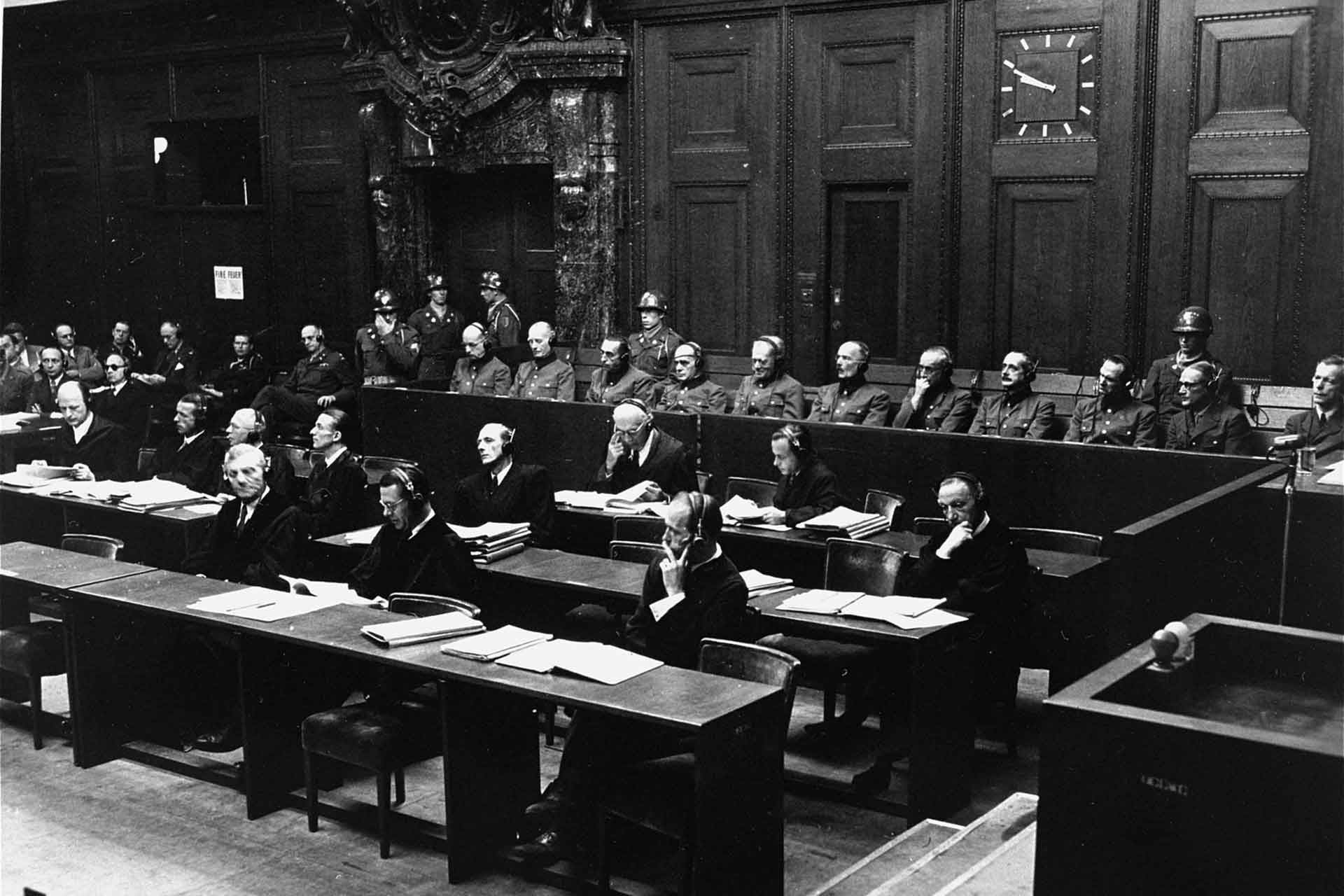
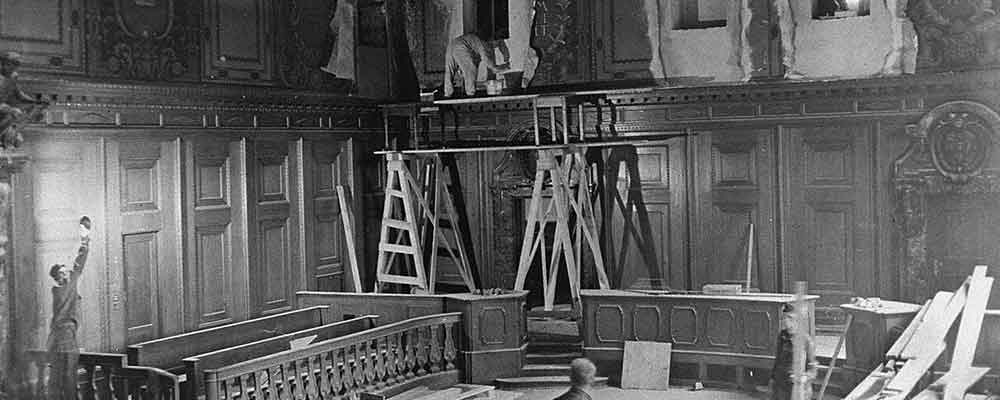
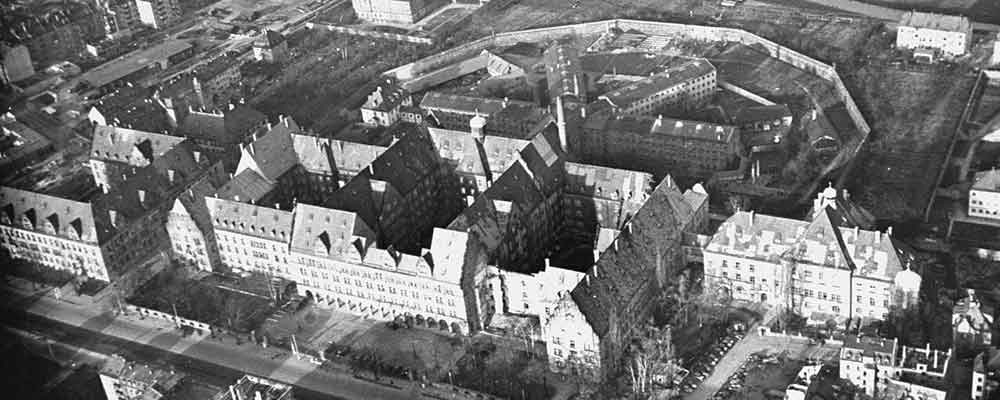
Nuremberg was selected for the trials for several practical and symbolic reasons. Nuremberg’s Palace of Justice still had a large courtroom that had not been damaged by the war, and there was an adjacent prison, making it logistically easier to securely detain and transport the defendants. The city also fell in the American occupation zone, which simplified administration of the multinational tribunal. Symbolically, Nuremberg had been a center of Nazi party rallies and so was made a fitting venue to stand trial, converting a place of propaganda to a place of judgement.
By the time the courtroom doors opened at Nuremberg, the trial already had a dual task. It had to punish guilt, but also prove it in a way the world could accept. That is why the road to Nuremberg was as important as its verdicts: it was the point at which the Allies decided to answer atrocity with a legal record, even while knowing that law would never match the scale of the crimes.

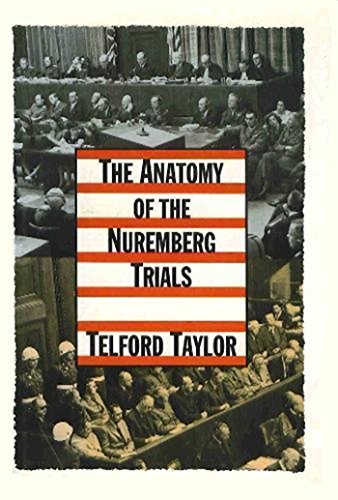
The Defendants and the Courtroom
The Nuremberg Trials prosecuted Nazi Germany’s top leaders because the Allies wanted to show that mass atrocity was organized, ordered, and administered at the top. The goal was not to punish “Germany” collectively, but to show that individual human beings made decisions- signing orders, directing institutions, building the machinery of conquest and terror. By prosecuting senior leaders, the tribunal tried to link policy decisions in Berlin with consequences throughout occupied Europe.
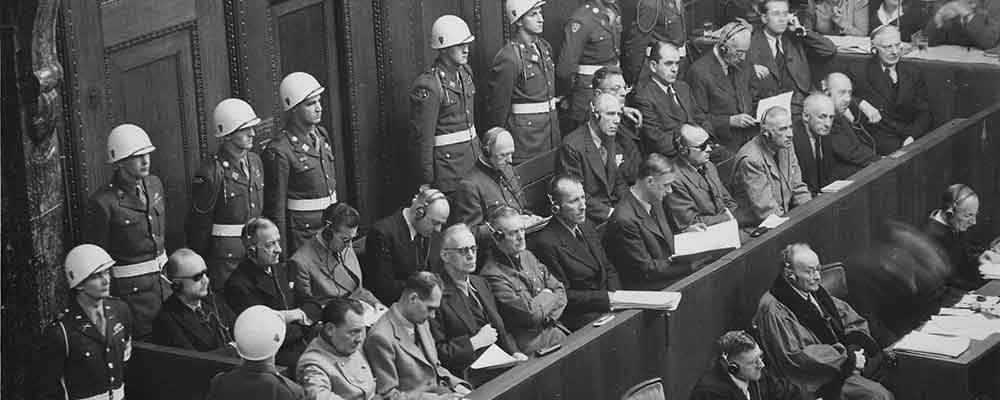
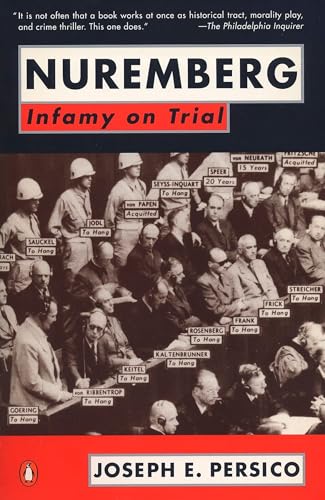
Among those tried in the main International Military Tribunal were (with their roles in Nazi Germany):
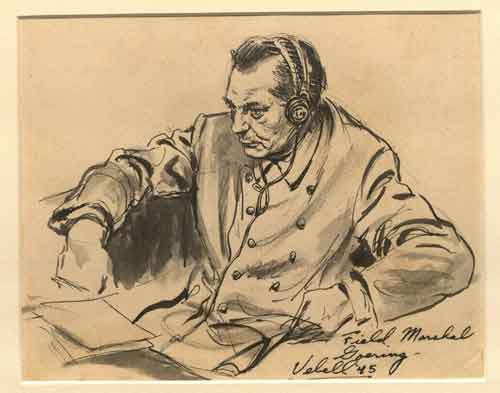
- Hermann Göring — Reichsmarschall; head of the Luftwaffe; senior Nazi leader
- Rudolf Hess — Deputy Führer (Hitler’s deputy) until 1941
- Joachim von Ribbentrop — Foreign Minister
- Wilhelm Keitel — Field Marshal; Chief of the Armed Forces High Command (OKW)
- Ernst Kaltenbrunner — SS-Obergruppenführer; head of the Reich Main Security Office (RSHA) after Heydrich
- Alfred Rosenberg — chief Nazi ideologue; Minister for the Occupied Eastern Territories
- Hans Frank — Governor-General of occupied Poland
- Wilhelm Frick — Interior Minister; later Reich Protector of Bohemia and Moravia
- Julius Streicher — propaganda publisher; editor of Der Stürmer
- Walther Funk — Economics Minister; President of the Reichsbank
- Hjalmar Schacht — former Economics Minister; former President of the Reichsbank
- Karl Dönitz — Grand Admiral; commander of U-boat arm; Hitler’s successor as head of state (briefly)
- Erich Raeder — Grand Admiral; Commander-in-Chief of the Kriegsmarine (Navy) until 1943
- Baldur von Schirach — Hitler Youth leader; Gauleiter of Vienna
- Fritz Sauckel — Plenipotentiary for Labor Deployment (forced labor recruitment)
- Alfred Jodl — General; Chief of Operations Staff (OKW)
- Franz von Papen — conservative politician/diplomat; Vice-Chancellor (1933); later ambassador (Austria, Turkey)
- Arthur Seyss-Inquart — Austrian Nazi leader; Reich Commissioner for the occupied Netherlands
- Albert Speer — Armaments and War Production Minister
- Konstantin von Neurath — former Foreign Minister; Reich Protector of Bohemia and Moravia (early period)
- Hans Fritzsche — senior radio/news official; propaganda commentator in the Nazi information apparatus
- Martin Bormann — head of the Nazi Party Chancellery; Hitler’s private secretary (tried in absentia)
The tribunal was multinational by design. Judges and prosecutors came from the Allied powers. It was necessary to navigate legal traditions while still appearing coherent and fair. Defense lawyers were allowed. Evidence was challenged. Cross-examination took place. That mattered because this was supposed to be more than a victory ceremony. It was supposed to look like law—structured, public, and proof-based.
That created a procedural challenge no one had fully faced before. The Allies had to define new categories of criminal responsibility at the international level. They had to decide how to handle mountains of documentary evidence. They had to keep the courtroom from turning into propaganda theater. They had to show that “state power” did not eliminate personal accountability—that signing, ordering, organizing, and enabling could be criminal acts when linked to aggressive war and systematic atrocity.
In practice, the courtroom became a contest between narrative and documentation. Prosecutors built cases around captured records and chains of command to show intent and coordination. Defendants often tried to minimize their role, blame rivals, or claim that they were just following orders. Nuremberg’s lasting impact came from forcing those claims into a rules-based setting where power had to answer questions rather than just issue commands.
The Charges That Changed Law
The Nuremberg trials were important because they defined categories of criminality that extended beyond regular battlefield infractions. The first major charge was crimes against peace: the planning and waging of aggressive war. This was a legal innovation: it cast war itself- when conducted as an unlawful act of aggression- as a crime, not just a political fact. In effect, leaders were made accountable not just for what soldiers did, but for the decision to unleash war itself.
War crimes were the second leg. These addressed violations of the laws and customs of war: ill-treatment of prisoners, attacks on civilians, hostage taking, and destruction not warranted by military necessity. War crimes had older legal foundations in existing rules and conventions, and the prosecution was able to argue continuity rather than invention. Nuremberg’s distinctive contribution was a matter of scale and clarity: showing how broad policies of direction and command could turn individual battlefield violations into a systematic program.
Crimes against humanity were the most novel in moral terms. This charge related to mass murder, persecution, deportation, enslavement, and other widespread or systematic attacks on civilians, even those actions undertaken against a state’s own population. The language reflected the reality that the Nazi project was not only one of conquest; it was a project of organized persecution. It also nudged international law in a principle that still echoes today: a government’s sovereignty does not give it a free hand to commit mass atrocity.
“Conspiracy” helped cohere all of these different crimes. The tribunal used conspiracy to establish that the Nazi leadership did not become embroiled in catastrophe by chance or accident; instead, policy was coordinated across a system of shared planning and mutual participation. Conspiracy allowed prosecutors to weave together meetings, orders, and bureaucratic coordination into a single picture of intent. It was a way of showing that the system itself, including leadership networks, party structures, and command chains, was part of the criminal picture.
Taken together, these charges made possible a new meaning of accountability. They created a legal space in which leaders could no longer hide behind the state, the uniform, or the idea that “war is war.” Nuremberg’s most lasting legal message was that power does not erase responsibility. If anything, it magnifies it.
Evidence and the Power of Documentation
One reason Nuremberg is significant is that the prosecution did not depend chiefly on rumor or confession. It depended on bureaucracy. Nazi Germany produced reams of paper, including orders, memos, transport lists, meeting minutes, and reports, that linked decisions to outcomes. The regime’s “compulsion to classify and record” became an Achilles heel, because the files needed to conduct a system of conquest and persecution could later be used to establish intent and coordination. In a trial about responsibility, signatures and stamped forms mattered a lot.
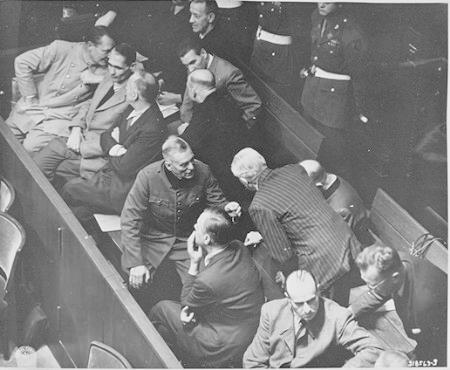
Date: Nov 21, 1945
Documents also helped the prosecution present a coherent story. Paper trails showed chains of command, who signed off on actions, and that crimes were a policy, not a breakdown. Even when defendants tried to hide behind remoteness and claiming they “didn’t know” the paper trails made feigned ignorance less plausible. Documentation also helped avoid the Nuremberg trial becoming a competition of dueling emotions. It grounded the case in tangible artifacts that could be verified and verified.
Visual evidence increased that impact. Film and photographs brought the reality of the camps and the ravages of war into the courtroom in a way that words alone could not. Witness testimony provided human detail and context, but it also bore the burdens of memory and trauma.
Documentation helped steady those accounts by situating them alongside records and material proof. Together, they formed a multi-layered evidentiary net: what was seen, what was said, and what was written down by perpetrators themselves.
This approach to evidence mattered for the tribunal’s legitimacy. The Allies knew detractors would call their trials “victor’s justice,” so they needed procedures and proof that looked rigorous rather than vengeful. A case based on documents was harder to depict as founded on propaganda. It also produced a historical record that outlasted the verdicts. Even people who contested the tribunal’s politics could not easily dismiss the quantity and specificity of what was shown.
In that way, Nuremberg transformed how modern war crimes cases are assembled. It treated administration as evidence and bureaucracy as a witness. The trial demonstrated that atrocity is often organized through offices, forms, schedules, and quotidian decisions. By turning those everyday tools into proof, Nuremberg established a new idea: that mass crime can be documented, prosecuted, and judged- not just remembered.
“Just Following Orders” and Individual Responsibility
One of the most familiar defense arguments at Nuremberg was obedience: the claim that defendants were merely cogs in a hierarchical machine. In that argument, the chain of command exculpated those who acted under orders. Many defendants also argued that they were acting under wartime necessity or in accordance with state law, suggesting that “legal” orders could not be criminal. The basic argumentative strategy was to contract the space for personal agency and accountability, until the accused looked more like a replaceable drone than an autonomous decision-maker.
The tribunal did not accept that logic as a blanket get-out-of-jail-free card. Nuremberg’s framework treated individuals as moral and legal agents, even when they were embedded in large organizations. Obedience might explain certain behavior, but it would not necessarily excuse it. This was especially true when the acts in question were obviously illegal, both in terms of basic humanity and the laws of war. The central point was that being part of a state apparatus or military hierarchy did not magically transform murder into duty. Uniforms can indicate a role or function, but they do not extinguish free will.
Which brings us to command responsibility. Leaders would be accountable not only for the acts they personally committed but also for those they ordered, enabled, or tolerated. When a commander knew or should have known about widespread or systematic abuse and took no action to stop it, that inaction itself became culpable. The Nuremberg Trials played a role in the development of the principle that authority entails special responsibility: the more power you have, the greater your duty to prevent others from committing crimes under your command.
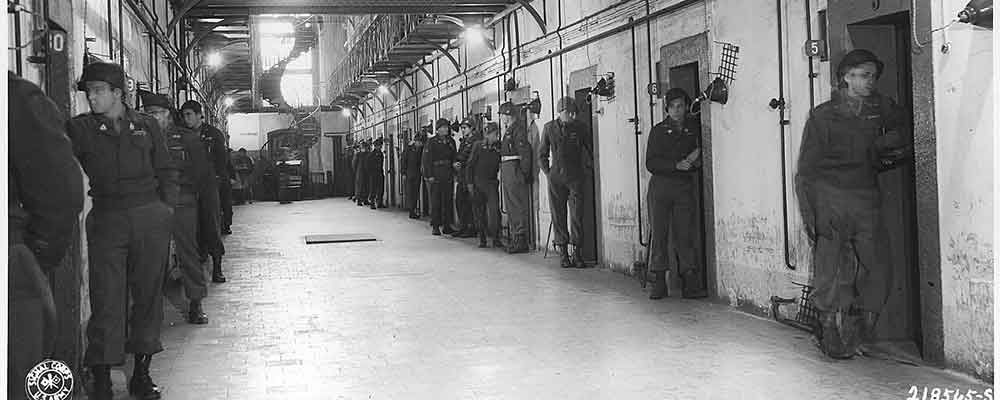
At the same time, the trials also placed some boundaries around the “I had no power” defense. It was certainly true that some defendants had extremely narrow spheres of authority, but others were using “obedience” as a smoke screen for their real influence. The court did its best to distinguish those without meaningful control from those who used institutions to carry out policy. That was an important distinction, since accountability would have been meaningless if every agent could have credibly claimed helplessness.
The enduring point is that moral agency is not extinguished by institutional context. Bureaucracy can dull empathy and create conditions that normalize cruelty, but it is not a free pass for the choices made, the orders followed, and the harms inflicted. Nuremberg made that principle explicit: the system cannot be invoked as a shield for individual action. In contemporary language, it established a hard standard for both power and participation, which continues to shape how the world understands war crimes, state violence, and individual responsibility.
Verdicts, Sentences, and Immediate Impact
The verdicts came in 1946, and they were mixed, with a range of punishments and an indication of due process. Several of the top defendants were convicted and sentenced to death, several to long prison terms, and several were acquitted. That spectrum mattered because it indicated that the tribunal was not an inquisition designed to find everyone guilty. It was trying to do a juridical sorting of roles, degrees of responsibility, and levels of proof, even under great public pressure to exact the maximum number of retributions.
The sentences had a rhetorical power. Executions showed that crimes at a leadership level could entail the maximum consequences, and prison terms indicated that the court was exacting penalties rather than functioning as a firing squad. The verdicts were designed to set an example: the modern state could no longer take for granted that war and mass violence were actions that were political and extralegal.
Public responses were complicated. Many people welcomed the Nuremberg trials as a delayed form of justice, and as a public accounting of crimes that had been denied or minimized. Others criticized the process as “victor’s justice,” in which the winners judged the losers under rules written after the fact. Even the critics, however, had to contend with the documentary record that Nuremberg assembled, which made denial more difficult and forced the world to confront, in administrative detail, what had happened.
What justice could repair was limited. The Nuremberg trials could name crimes, assign guilt, establish principles, but they could not bring back the dead or undo trauma. Nuremberg was not closure for survivors, nor was it a full moral accounting of the war. Its immediate impact was narrower and, in some ways, more durable: it created an official record, set a legal vocabulary for atrocity, and made accountability a public expectation rather than a private hope.
These are the verdicts of the initial defendants of the Nuremberg Trials:
• Hermann Göring — Death sentence; suicide (cyanide) 15 Oct 1946 (sentence not carried out).
• Rudolf Hess — Life imprisonment; died in custody (suicide) 17 Aug 1987.
• Joachim von Ribbentrop — Death sentence; hanged 16 Oct 1946.
• Wilhelm Keitel — Death sentence; hanged 16 Oct 1946.
• Ernst Kaltenbrunner — Death sentence; hanged 16 Oct 1946.
• Alfred Rosenberg — Death sentence; hanged 16 Oct 1946.
• Hans Frank — Death sentence; hanged 16 Oct 1946.
• Wilhelm Frick — Death sentence; hanged 16 Oct 1946.
• Julius Streicher — Death sentence; hanged 16 Oct 1946.
• Walther Funk — Life imprisonment; released for ill health 16 May 1957 (sentence ended early).
• Hjalmar Schacht — Acquitted 1 Oct 1946 (no IMT sentence to carry out).
• Karl Dönitz — 10 years; released after completing term 1 Oct 1956.
• Erich Raeder — Life imprisonment; released for ill health 26 Sep 1955 (sentence ended early).
• Baldur von Schirach — 20 years; released 30 Sep / 1 Oct 1966 (at midnight).
• Fritz Sauckel — Death sentence; hanged 16 Oct 1946.
• Alfred Jodl — Death sentence; hanged 16 Oct 1946.
• Franz von Papen — Acquitted 1 Oct 1946 (no IMT sentence to carry out).
• Arthur Seyss-Inquart — Death sentence; hanged 16 Oct 1946.
• Albert Speer — 20 years; released 30 Sep / 1 Oct 1966 (at midnight).
• Konstantin von Neurath — 15 years; released for ill health 6 Nov 1954 (sentence ended early).
• Hans Fritzsche — Acquitted 1 Oct 1946 (no IMT sentence to carry out).
• Martin Bormann — Death sentence in absentia; sentence never carried out (later confirmed dead 2 May 1945).
Hermann Göring‘s Suicide
The final indignity of Hermann Göring’s suicide overshadowed the scheduled events at Nuremberg because it upended the tribunal’s order on the very eve of his execution. Having been sentenced to hang, he committed suicide in his cell via, most likely, a capsule of cyanide and denied the process its last word.
How did he get the cyanide? Uncertainty on that score is part of the story. One long-running hypothesis has been that Göring hid poison among his personal effects that were smuggled past searches, including some version of items as banal as toiletries. Others have given more credit to smuggling, or suborning help from someone who already had access, because a capsule could only have arrived in his cell by circumventing security.
The most specific allegation of “complicity” came many decades later from U.S. guard Herbert Lee Stivers, who claimed to have been given a disguised vial of medicine and told to smuggle it inside a fountain pen, at the request of a German woman. (The confession has been received with some skepticism by historians, but it remains the best-known version of events, in part because it addresses the logistics of the problem: a prisoner with few contacts was still in human contact.)
Whether the poison was stashed in early or late, the result was the same: Göring took the last decision for himself. He took the meaning of the sentence from the public sphere: he refused to be seen dying “like a common criminal” on the gallows.
That, in turn, mattered because Nuremberg had been a performance of sorts, an effort to show the world that the most elite kind of crime would be judged by legal process rather than retribution. The suicide was a move to claim that final image for himself.
It also chipped away at the sense of institutional control. The highest-profile defendant had apparently found a way to beat the system; the result could be questioned as chaotic. The deeper historical record was more robust. The verdicts, the archives of the trial, the legal analyses, and the precedents did not evaporate with Göring’s suicide. In a perverse way, the self-inflicted death made Nuremberg’s central lesson more visible: powerful men will take advantage of any chink in the armor if that will allow them to avoid responsibility, which is exactly why the rules, evidence, and enforcement would need to be stronger in the future.
Critiques and Controversies
The first, and most common, criticism of Nuremberg is the “victor’s justice” complaint: the winners wrote the rules, chose the defendants, and then acted as the judges. Critics emphasized that the tribunal was an international military court created after the fact, raising fairness concerns about judging people under newly defined legal categories. Supporters responded that the crimes were so vast that an international solution was required, and that many of the charges were based on existing laws of war rather than fabricating everything anew. The perception problem, however, never completely went away, as the court derived its authority as much from power as from principle.
Selective prosecution was another controversy. Nuremberg focused on Nazi leadership, but it did not try Allied conduct, and it mostly sidestepped questions that could have potentially implicated the victors. There were blind spots, then, if the goal was a universal standard of judgment: if certain categories of behavior were prosecutable, why only some of them? Historians as sympathetic as David Boardman have written that political reality shaped the docket. The Nuremberg trials were both a moral project and a geopolitical act, and that combination meant that selectivity was inevitable.
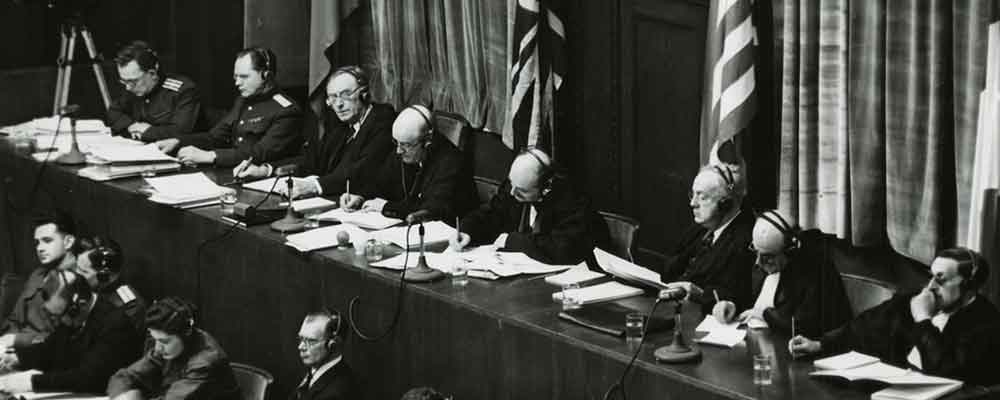
Questions of due process came up throughout. Defendants had lawyers, could cross-examine, and could present their own arguments, which differentiated Nuremberg from a form of summary punishment. But there were procedural issues, too: the rules of evidence were more flexible than in many national courts, and the flood of documents made it hard for the defense to interrogate every claim in depth. Some critics suggested that the trial’s very scale and speed risked turning proof into overwhelm. Supporters replied that the alternative- no trial or a purely symbolic trial- would have been worse for both legitimacy and the historical record.
Political pressures hung over the courtroom as well. The Allies wanted a clear public message that the Nazi regime was criminal and that leadership responsibility was real. That need influenced prosecutorial strategy, media coverage, and the framing of charges. The emerging Cold War also complicated Allied unity, putting tension around what to emphasize and what to de-emphasize.
These controversies do not negate the importance of Nuremberg, but they help explain why it remains a debated moment. The trials created a powerful legal vocabulary and an enduring historical record, but they also bore the fingerprints of wartime victory and postwar geopolitics. Nuremberg’s legacy, as a result, is a double one. The Nuremberg trials advanced accountability, but also revealed how hard it is to build “universal justice” in a world where power still sets many of the terms.
Nuremberg’s Global Legacy
Nuremberg’s greatest legacy may be a new presumption: that mass atrocity can be subject to a court’s judgment, and not merely a politician’s condemnation. It helped to make it seem routine, rather than exceptional, that individuals (not just states) could be held accountable for waging aggressive war, for war crimes, and for systematic persecution. That principle did not bring an end to violence. But it altered the terms of legitimacy: leaders now had to fear that the “policy of the state” might later be treated as the policy of criminals.
This framework came to bear on the modern tribunals as well. The United Nations-backed courts for the former Yugoslavia (ICTY) and Rwanda (ICTR) reanimated Nuremberg’s essential logic and extended it to fresh conflicts. These courts used a wealth of new evidence and command-structure data to reconstruct how large-scale atrocities were actually organized. In the process, they also developed more precise doctrines of individual and command responsibility, and created a working procedural model for a complex international trial.
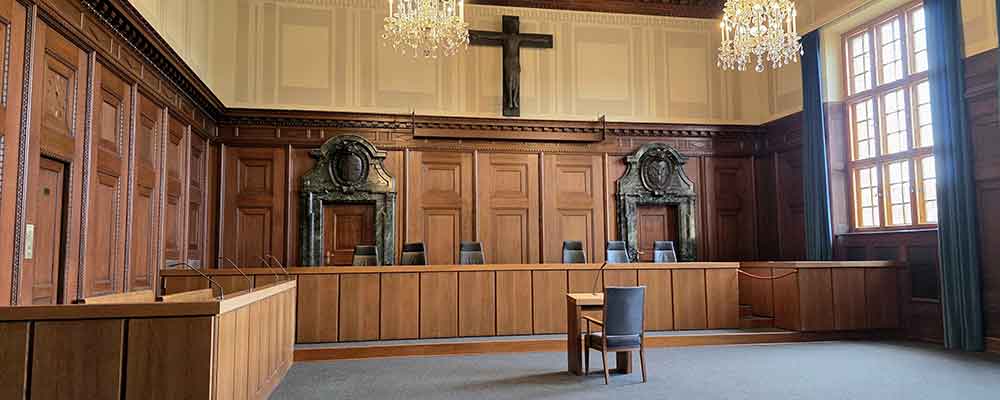
Nuremberg also helped set the tone of the postwar legal order. Its ideas seeped into the broader human-rights framework that emerged after 1945, in which sovereignty was no longer regarded as an absolute barrier to international scrutiny. The message was that there are minimum standards of human treatment that the world can name, record, and (in principle) enforce. In practice, that enforcement has been patchy at best. But the legal and moral baseline has shifted.
In that light, the International Criminal Court (ICC) reflects a long arc. It embodies an attempt to make accountability more permanent, rather than ad hoc: an institution that can outlast any single war or state. The ICC still faces real political constraints and depends on state cooperation. But its continued existence and actions demonstrate just how far the Nuremberg precedent has traveled, from one courtroom in a destroyed city to an ongoing international legal project.
The concept of genocide is one strand of that legacy, but with important caveats. The main trial at Nuremberg used “crimes against humanity” as a more central legal tool, while the Genocide Convention and later legal developments after Nuremberg (such as the work of the ad hoc tribunals and international jurisprudence) have refined and specified how mass, group-targeted violence could be legally defined and prosecuted. The link is real: Nuremberg created new momentum and a legal imagination for the naming of atrocity. But the modern law of genocide developed through later treaties and courts, and continuing debates about proof, intent, and scope.
The Cultural and Moral Afterlife of the Nuremberg Trials
Nuremberg forged memory by codifying atrocity in names, documents, and verdicts. The Nuremberg trials cemented basic facts of the historical record at a time when denial and “fog of war” defenses were already emerging. Orders, meeting minutes, and deportation paperwork as courtroom evidence made the Holocaust and Nazi crimes more difficult to dismiss as exaggeration or conspiracy. In the following decades, that record poured into education, museums, and public commemoration not as abstract horror but as a documented policy carried out by identifiable institutions and leaders.
The Nuremberg trials also re-framed the understanding of responsibility. Instead of approaching mass violence as a tragic and byproduct of war, Nuremberg set it as a premeditated administrative project. That moral framing shaped later generations learning about the Holocaust through the lens of perpetrators, systems, and choices. It encouraged a more analytical form of remembrance: not only mourning victims, but also studying how ordinary bureaucratic processes can produce extraordinary evil.
Accountability as deterrence is still a matter of debate. On one hand, some argue that the prospect of prosecution can restrain leaders and commanders, especially if they think evidence will be preserved. On the other hand, many perpetrators gamble they will not be caught, or that political forces will protect them. In that view, Nuremberg’s deterrent power is very limited. Yet even when deterrence fails, symbolic justice can still matter by setting a moral boundary and affirming that victims were wronged by law, not just by fate.
Nuremberg also became a model for documenting atrocities. The Nuremberg trials showed investigators and prosecutors how to build cases from paper, photographs, film, and witness testimony, and how to present that evidence to the public in a controlled environment. The method mattered because modern atrocity often leaves records: orders, logs, budgets, and communications that can be collected if institutions act quickly. Nuremberg helped establish the idea that preservation is part of justice: if you secure documents and testimony early, you protect truth from being rewritten later.
Finally, the trials left a moral lesson that transcends WWII. They showed that the law can name crimes even when it cannot repair loss. Nuremberg could not restore lives, but it could refuse silence and refuse myth. The Nuremberg trial’s lasting cultural impact is this insistence: atrocity must be recorded, judged, and remembered as a human decision, not an unavoidable natural disaster.


![[VIDEO] How Fur Farms, World War II, and a Bomb Created Germany’s Raccoon Invasion](https://historychronicler.com/wp-content/uploads/2025/07/Screenshot-2025-07-07-at-1.57.45)


