The Murder of Julius Caesar and the Death Spiral of the Roman Republic
 Reading Time: 35 minutes
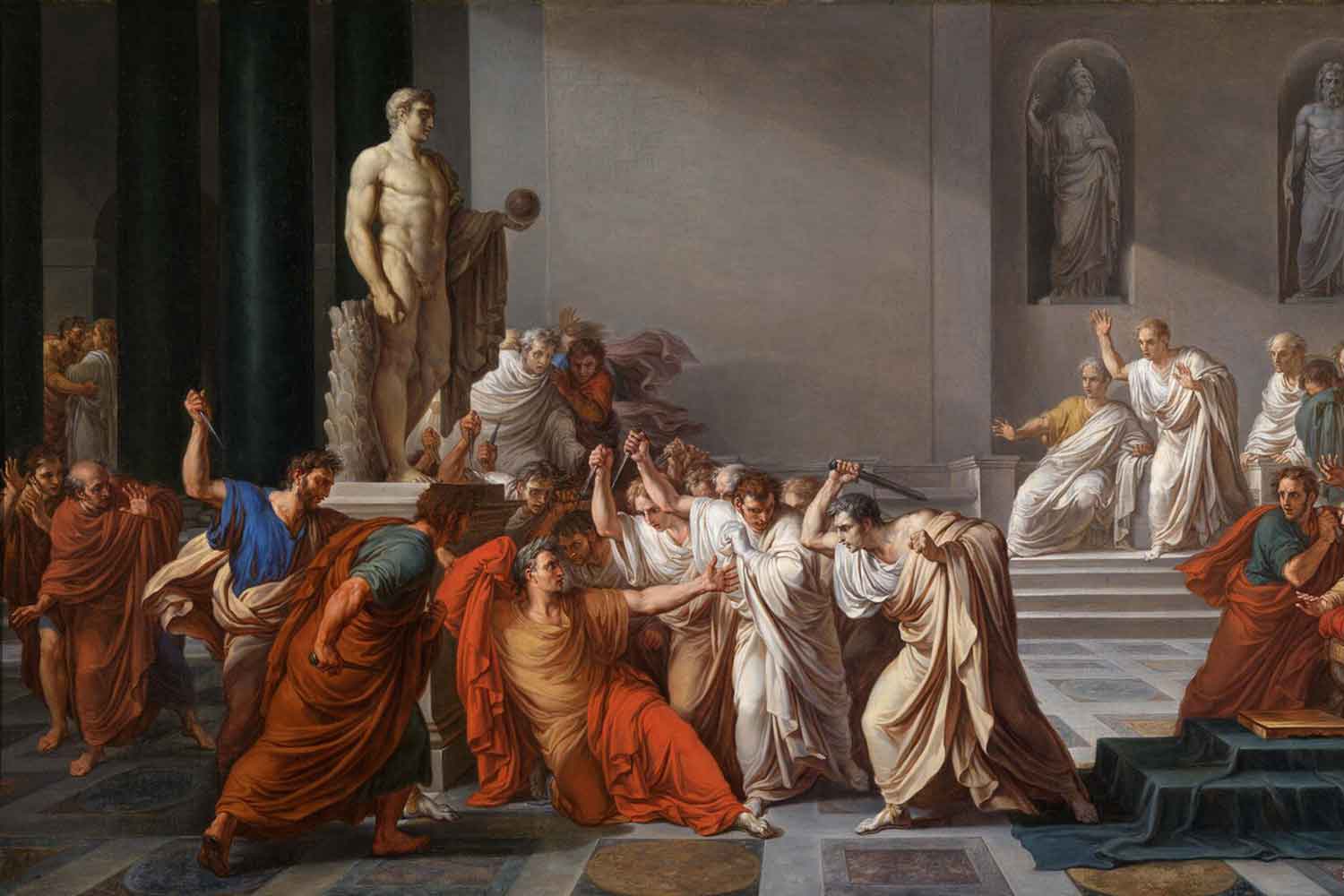
 On the Ides of March, 15 March 44 BCE, Julius Caesar attended a meeting of the Senate at the Theatre of Pompey. He had entered the room as Rome’s most powerful man. He had just been named dictator for life, and senators crowded around to offer him honors that seemed to many like a king’s. Minutes later, conspirators closed in around him under cover of a petition. The meeting became an ambush as senators produced daggers and stabbed the man they said had turned into a tyrant and threatened the liberty of the Roman people.
The assassins thought they were saving the Republic from tyranny, but Caesar’s murder did not restore the old political order. It shattered what was left of trust in Roman government and opened the way to renewed civil war. This article covers the conspiracy against Julius Caesar, the attack, the public reaction that turned against the killers, and the rise of Mark Antony and Octavian. The daggers that were meant to save the Republic instead pushed it toward its final death spiral.
Rome Before Caesar’s Murder
The Roman Republic was already damaged long before Caesar came to the Senate on the Ides of March. In 44 BCE, Rome still had consuls, senators, elections, and courts. But the customs that had made those institutions function well had badly decayed. Politicians no longer trusted each other to accept defeat without resort to force. Public office was seen as something to be seized rather than shared within a stable order.
Growing wealth inequality fed a long crisis in Roman politics. Conquests had brought immense new wealth to Rome, but much of it went to elite families, financiers, and landowners. Small farmers struggled, veterans demanded land, and the urban poor needed patrons and public grain. Reformers such as the Gracchi had tried to solve these issues generations earlier, but their violent ends showed how dangerous reform had become.
Violence also became a political tool. Armed gangs, bribed voters, and public intimidation could help sway elections and trials. Politicians could hire mobs to disrupt opponents. Accusations of corruption, bribery, and treason circulated among rivals. Writers such as Cicero gave voice to a Republic filled with fear, faction, and decayed norms. The Senate could still claim authority, but the state had lost some control over the forces it unleashed in its streets.
Military ambition made that crisis far worse. Generals such as Marius, Sulla, Pompey, and Caesar made their names through conquest, and soldiers who expected rewards from them personally. Sulla had marched on Rome and ruled as dictator decades before Caesar, an act that shattered an old boundary: armies could now be used as a political weapon inside the Republic itself.
By Caesar’s time, individual commanders could be more powerful than the offices they held. Pompey’s triumphs in the East gave him enormous prestige, while the Gallic conquest gave him vast wealth, veterans, and unrivaled military authority. Julius Caesar did not cause the Republic’s crisis out of nothing when he crossed the Rubicon in 49 BCE. He revealed how weak the system had become in the face of a general whose army obeyed him more than it did the Senate.
Caesar’s murder therefore occurred in a Republic under severe stress. The conspirators thought that removing one man could restore liberty, but Rome’s ills were far deeper than Julius Caesar’s personal ambition. Wealth was unevenly distributed, elections were corrupted, violence had become normal, and soldiers were loyal to generals who could reward them. The murder happened not in a healthy Republic suddenly threatened by tyranny, but in a damaged political order already tipping toward rule by one man.

Caesar’s Rise to Power
Julius Caesar was a politician, a general, a public speaker, and a maestro of alliances. The son of an ancient patrician family that had lost much of its wealth. He quickly learned that ancestry was helpful but insufficient. Caesar built a career by winning the popular opinion, taking risks, and fashioning himself as a champion of the ordinary Roman against a small senatorial elite.
His career developed through holding public office and strategic largesse. He held successive positions of quaestor, aedile, praetor, and consul. As aedile, he spent money on games and public entertainment, gaining popularity with the urban mob while amassing debt. Ancient authors such as Suetonius and Plutarch describe a man who understood spectacle. Caesar also understood how popularity could translate to votes, influence, and protection in Rome.
Caesar’s greatest political alliance was the First Triumvirate, an informal partnership with Pompey the Great and Marcus Licinius Crassus. Pompey had a string of military victories and the support of military veterans. Crassus was extremely wealthy. Julius Caesar had the political dynamism and the consulship of 59 BCE. The triumvirs each had support within the state and pushed through measures each man wanted but might have found difficult to achieve alone. The alliance was not a legal office, but it shifted the balance of power in Rome.
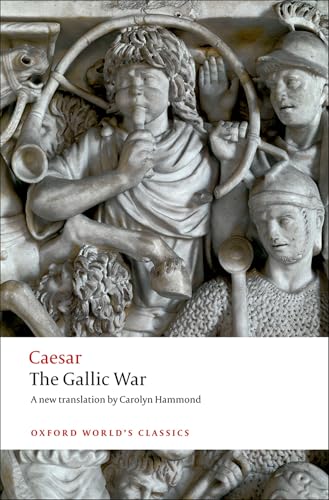
Caesar’s consulship was followed by a command in Gaul. This was the point at which he became more than a Roman politician. Caesar conducted campaigns across Gaul from 58 to 50 BCE, defeating tribes, building alliances, and expanding Roman control farther and wider than it had previously been. He presented the campaigns in his own Commentaries on the Gallic War as necessary, disciplined, and heroic, but they were also political messaging for a Roman audience. He accrued vast spoils of war and imperial honors, and his soldiers came to know him well and developed a deep personal loyalty to their leader.
Caesar’s conquest of Gaul brought him great reward. He had wealth from spoils, and his war-won reputation brought him fame. He also had the political support of a large army that had fought under his command for years. Caesar’s army was a political force as well as a military one. Roman generals had always understood the value of a strong reputation, but his Gallic victory made him one of the most famous and successful commanders of his generation. Admirers even believed he could be Rome’s protector and conqueror.
Caesar’s success made him a political threat to his rivals. Conservative senators feared that Caesar would return to Rome with far too much prestige and far too many personally loyal veterans. Pompey had been a partner in the First Triumvirate, but he moved away from Caesar after the death of Crassus and the death of Julia, Caesar’s daughter and Pompey’s wife. The personal and political connections holding the First Triumvirate together fell away. Confrontation began to look like the likeliest outcome for Roman politics.
In 49 BCE, Julius Caesar found himself in a position to either surrender his command and face possible prosecution in Rome or march south with his army. He crossed the Rubicon River, the traditional limit at which a Roman general was forbidden to bring an army into Italy. Ancient tradition has Caesar saying as he crossed, “The die is cast,” though the exact Latin wording is disputed. Whatever the words, the act was clear. Caesar had chosen civil war.
Pompey and many senators fled Italy, believing that they could muster power in the provinces against Caesar. He acted swiftly, presenting himself as defending his dignitas and the rights of the Roman people. The civil war spread from Italy and Spain to Greece, Egypt, Africa, and other provinces. In 48 BCE, Caesar defeated Pompey at the Battle of Pharsalus. Pompey fled to Egypt, where he was murdered before Caesar arrived.
Victory allowed Julius Caesar to dominate the Roman government. He repeatedly accepted dictatorship, and his control was evident in officeholders, a calendar reform, veteran settlement, an expanded Senate, and planned new military campaigns. Some Romans admired his clemency toward defeated enemies and saw his energy as a reformer and successful leader. Others perceived the same actions as proof that the Republic had become dependent on one man and his will.
Caesar’s rise made him both admired and feared because he seemed to embody the problems of Rome. To his supporters, he was intelligent, generous, victorious, and capable of restoring order. To his enemies, he was a military strongman whose accumulated honors and offices threatened liberty. His career showed that the Republic could still produce great leaders, but the Republic could no longer contain them. By 44 BCE, Caesar’s power had become the central question of Roman politics, and his success had made compromise almost impossible.

Dictator for Life
In early 44 BCE, Julius Caesar accepted the title dictator perpetuo. The word perpetuo has often been translated as “for life,” but it made a more significant change to the office of dictator. The Roman dictatorship began as an emergency office intended to be temporary. The dictator would restore order, finish a job, and resign. Caesar’s new title redefined the position as one without end. It implied that the crisis in Rome had no end, and one man would always stand above the cycle of elections and shared rule.
The increasingly grand honors for Caesar made the fear worse. Statues of him joined the images of gods and kings. He was given special seats at public events, the right to wear unique clothing, and ceremonies that elevated him above other citizens. Ancient writers like Suetonius, Plutarch, and Cassius Dio describe a rising level of flattery around the dictator. Some of the honors may have been political theater, but to many Romans they seemed to be steps toward kingship.
Kingship had a bitter meaning in Roman memory. The founding story of the Republic had centered on the expulsion of the kings in 509 BCE. Romans were taught that liberty began when royal rule ended. Even centuries later, the word “king” could sound like an insult. A Roman might be able to accept strong leadership in war, but open kingship was associated with arrogance, slavery, and loss of civic freedom.
The tension over his power became public during the festival of Lupercalia on February 44 BCE. According to Plutarch and Suetonius, Mark Antony offered Caesar a diadem, a type of royal crown, before a crowd. Julius Caesar refused it, and the people applauded. Antony offered it again, and Caesar refused again. Supporters could later say the scene proved Caesar rejected kingship, but critics suspected a more sinister meaning. Was the whole act a test to see how much the people were willing to accept?
The uncertainty mattered as much as the act itself. If he truly did not want any crown, why allow the question to be staged at all? If he refused it only because the crowd responded poorly, what might happen on another day? Senators who were already uneasy with his power saw the Lupercalia episode as a sign of things to come. Julius Caesar did not need the title of king if he already wielded the authority of one.
By the spring of 44 BCE, many senators felt the traditions of the Republic were being hollowed out. Elections, magistracies, and Senate debates still happened, but his will stood above them. His supporters saw stability, reform, and mercy after years of civil war. His enemies saw the slow death of shared government. The title dictator for life convinced many of them that waiting would only make Caesar harder to remove.
The Conspiracy Forms
The men who conspired against Julius Caesar felt his power had become too great. Some of the most important were Marcus Junius Brutus, Gaius Cassius Longinus, and Decimus Junius Brutus. They were not outsiders bent on tearing Rome down. They were senators and aristocrats, former allies of Caesar, who said they were defending the Republic from tyranny.
Cassius was one of the chief instigators. Ancient authors such as Plutarch portray him as a sharp, ambitious, and resentful man who hated his growing power. He had fought against Caesar in the civil war but had been pardoned and given office. That act of mercy had not eliminated his fear and anger. In Cassius’ mind, Caesar’s rule endangered Roman liberty and the status of men like himself.

Marcus Junius Brutus provided the conspiracy with its most potent symbol. The family name of Brutus was associated with Lucius Junius Brutus, a legendary figure who supposedly helped to overthrow Rome’s kings and was said to be the first Roman consul. Whether the family connection was direct mattered less than what Romans thought it meant. A Brutus taking action against a would-be king gave the plot a claim on history.
Decimus Junius Brutus was another key conspirator, often overshadowed by Marcus Brutus in ancient sources. He had served Caesar and been close to him. That made his position all the more treacherous. According to ancient sources, he was one of the men who helped to persuade Caesar to attend the Senate meeting on the Ides of March. In betraying Julius Caesar, Decimus Brutus showed the conspiracy had reached into Caesar’s own inner circle, not just among avowed enemies.
Motives varied among the conspirators. Many feared monarchy. Many wanted to defend the Senate’s authority. Others had personal grudges or feared that Caesar’s rule left them with no future except obedience. The conspirators called themselves “Liberators,” a name designed to show they had saved Rome from tyranny. Yet the name concealed a weakness. They could agree that Julius Caesar must die but could not agree on the kind of government that should follow his murder.
That would prove a fatal flaw. The conspirators planned the assassination more carefully than they did its aftermath. They expected the Roman people and the Senate to welcome the return of liberty, but they misjudged Caesar’s popularity, his veterans, and the power of his name. The conspiracy was organized in defense of the Republic, but it lacked unity and a vision for how to restore it once Julius Caesar was gone.
Why Julius Caesar Was Vulnerable
Julius Caesar was vulnerable because success had made him careless. Victory had convinced him of his own luck. He had fought battles, a civil war, the enmity of political rivals, and years of danger. By 44 BCE, he had bested the Pompeian faction, accepted honors without peer, and risen above the normal boundaries of Republican office. Success made him appear invulnerable to his supporters, but at the same time, it made him less careful at the very moment when hatred around him was reaching a crescendo.
He also lessened the protections around him. The ancient writers Suetonius and Plutarch report he dismissed or limited his bodyguard. It might have been for reasons of pride, because he did not want to appear afraid. It might have been from a principled belief that living in fear was not a life at all. In either case, this made the public attack possible. A ruler surrounded by soldiers would have been a far more difficult target to reach. A dictator moving among senators could have been trapped by men he knew and trusted.
The ancient sources also record warnings and omens in the days and hours leading up to the assassination. Suetonius and Plutarch list strange portents, public rumors, and the infamous warning to “beware the Ides of March”. Caesar’s wife Calpurnia is said to have dreamed of his death and begged him to skip the Senate meeting. All of these stories may have grown in the telling, but they indicate how later Romans believed his fall was surrounded by warning signs he ignored.
Julius Caesar reportedly considered staying home for a while. Then one of the conspirators, Decimus Junius Brutus, whom Caesar trusted, coaxed him into going. Plutarch quotes Decimus as mocking the idea that he would not come to the Senate out of fear of dreams and warnings. He also claimed that senators were waiting to bestow honors on Caesar. If he did not show up, it might be taken as a sign of weakness or an insult.
Trust was the key to the plot. The conspirators could not defeat Caesar in open battle, so they depended on access, friendship, and routine. Decimus could talk to him as an ally. Other senators could approach him as petitioners. The Senate meeting provided a public setting and a political disguise for the murder. Julius Caesar was not vulnerable because he lacked defenses. He was vulnerable because some of the enemies he knew still looked like friends.

The Ides of March
Julius Caesar had set out on the morning of March 15, 44 BCE, to attend a meeting of the Senate. He ignored warnings and turned aside portents that later writers would make ominous. The Senate did not meet in the old Senate House in the Roman Forum. The original building had been damaged and was not in use. Senators instead gathered in the curia (senate house) built against the Theatre of Pompey.
The scene was ironically significant. Pompey was Caesar’s great rival in the civil war, and Caesar was now entering a meeting that took place in a building within Pompey’s theater complex. Ancient writers such as Plutarch, Suetonius, and Appian describe the scene as having been carefully stage-managed. The conspirators wanted Caesar in a public place where senators could gather close to him without alarming him.
They came to him in groups, as if to petition. Tillius Cimber came to ask him to recall his exiled brother, and this pretext allowed the conspirators to crowd around Caesar. He refused, and they closed in on him. Tillius then pulled at Caesar’s toga in an apparent act of supplication, and ancient sources make this the signal for the attack.
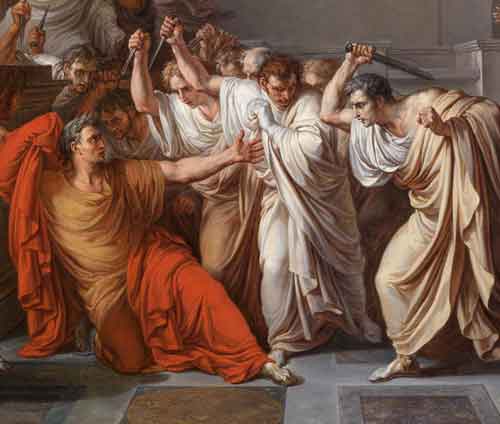
Casca is said to have dealt the first blow and to have wounded Caesar on the neck or shoulder. Julius Caesar fought and cried out against his attacker, though the words he said are reported differently in different sources. At that point, the other conspirators drew their daggers. A scene that had begun as a formal petition then turned into a concerted attack in the middle of a meeting of the Senate.
He was surrounded by men who knew him, owed him, or had received his mercy, and this made the attack all the more shocking. The daggers came from many hands, which meant that the murder of Caesar became a shared political act rather than the deed of one assassin. Suetonius says he received twenty-three wounds, but only one was thought to be fatal.
The Ides of March became a famous day because it marked the moment when public law joined with private violence. The assassins chose a senatorial context for their act to make it appear to be a defense of liberty. But the setting itself displayed how Rome had fallen. In a place set aside for debate, petition, and government, senators determined the future of the Republic by using their knives.
Caesar’s Death and the Famous Last Words
Julius Caesar was stabbed repeatedly in the Senate meeting at the Theatre of Pompey. Ancient sources give the number as twenty-three wounds. Suetonius adds that only one wound was judged deadly, a detail that gives the scene a sense of wanton cruelty. Caesar was not murdered by a single assassin. He was cut down by a group of senators who wanted the murder to stand as a collective act against tyranny.
Suetonius and Plutarch are the two most important ancient writers on the assassination. Suetonius, in The Twelve Caesars, offers a detailed and dramatic account of the attack and the wounds. Plutarch, in his Life of Caesar and Life of Brutus, is more concerned with character, motive, and the theatrical impact of the moment. They do not agree in every detail, but together they determined how later generations imagined the Ides of March.
The most famous line associated with the death scene death is “Et tu, Brute?” Yet that phrase is a quotation of questionable antiquity. It is from William Shakespeare’s play Julius Caesar, written more than sixteen centuries after the murder. Shakespeare’s line seized the emotional moment of betrayal, and especially the notion that Brutus’s participation wounded Julius Caesar more deeply than the steel itself.
Ancient sources differ about whether he spoke at the end. Some suggest that he said nothing once he saw Brutus among the attackers. Suetonius says he said a Greek phrase meaning “You too, child?” but even that tradition is uncertain. The silence may be as meaningful as any speech. Later writers wanted Caesar’s death to have the last words, but history leaves the moment partly in shadow.
One of the most powerful images is Caesar’s fall next to the statue of Pompey. Pompey had been Caesar’s great rival, defeated in the civil war and murdered in Egypt. Now Caesar died in a building named for Pompey, at the hands of men who claimed to be restoring the Republic. To ancient readers, the scene seemed steeped in irony. He had bested Pompey in life, but now fell in Pompey’s shadow.
The famous last words matter because they show how memory reshapes history. The real assassination was already a dramatic moment, but later writers gave it sharper symbols: Brutus, silence, betrayal, and Pompey’s statue. Whether Caesar spoke or not, his death became more than a murder. It became a scene through which Rome tried to explain the breakdown of trust, friendship, and Republican order.
The Assassins’ Fatal Miscalculation
The conspirators succeeded in assassinating Julius Caesar, but they failed to seize control of the state. On the day he was murdered, Julius Caesar was the leader of Rome. In the hours after the attack, the assassins marched around the city shouting liberty. But Caesar had been one man, and he was dead. The conspirators did not control the army or the state treasury. They did not command the loyalty of senators or the Roman people.
Ancient writers from Appian to Plutarch give the impression that the assassins acted both boldly and hesitantly. They had killed the man that they feared, but they had not stopped the institutions, ambitions, and precedents that had made him strong.
The main problem for the assassins was that they assumed incorrectly about the reaction of ordinary Romans. They thought they would be welcomed as champions of liberty. The conspirators even called themselves “Liberators,” as if their action could be directly connected to the traditional Roman hatred of kings. While some senators may have silently cheered, the crowd’s reaction was more uncertain. Ordinary Romans remembered his victories and popularity. They also expected to get presents in his will. Caesar’s veterans had cause for concern. His death might mean that their land and reward payments were at risk.
The conspirators had planned their murder carefully, but they had not prepared the state that would take his place. They had no detailed program for returning to Republican rule. The conspirators made no plans to deal with Caesar’s laws, his new offices, his veterans, or his many supporters. They also did not have a ready answer for how Rome could return to “normal” after years of civil war. Removing him was simple compared with the work of restoring trust in a broken political system.
The decision to spare Mark Antony also came back to haunt them. Some conspirators reportedly wanted to kill Antony as well, but Brutus wanted to keep their hands clean. This may have made the plot seem like a less bloody affair, but it also left one of Caesar’s closest allies alive. Antony was consul, popular with soldiers, and an expert in public politics. He soon became the most dangerous survivor of Julius Caesar’s faction.
Political murder may create a vacuum, but it did not create a restored Republic. Caesar’s enemies had removed the dictator, but they had not removed the anger, ambition, and armed loyalty that had marked Roman politics in recent years. Mark Antony could rally Caesar’s supporters to his side. Octavian would soon claim Caesar’s name and inheritance. The Senate would have little control over either man. The result was not liberty, but another struggle over who would command Rome.
The fatal miscalculation of the conspirators was that the Republic could be saved by a single dramatic act. They saw him as the disease of Roman politics, when he was also a symptom of its deeper collapse. The old system had already been undermined by violence, personal armies, and a general atmosphere of mistrust. Caesar’s death did not heal those wounds. Instead, it opened them up, and left Rome waiting for the next strongman to step into the space he left behind.
Rome Reacts
Rome was not seized by a spontaneous outburst of joy. The city first lapsed into disorder and panic. Senators who had not been involved in the conspiracy did not know if there were going to be more deaths. Crowds heard only rumors before they realized what had happened. Caesar’s friends were in shock, while his opponents did not know if the people would applaud the killers or turn against them.
The conspirators had many senators fleeing the meeting place. They moved around Rome after the murder, saying that they had restored liberty to the city. But they were weaker than they had thought. According to Appian and Plutarch, they were trying to turn the murder into a public service, not a private crime. The assassins wanted the Senate and the people to see them as legitimate protectors of the Republic. However, the streets did not clearly belong to them.
Mark Antony became the decisive figure in what happened next. He was still consul and had not been killed with Julius Caesar, so he still had legal authority. The Senate also wanted stability, because open conflict in the city might bring disaster. The result was an uneasy compromise between Antony, the Senate, and the conspirators. No side was willing to fully trust the others, but all sides needed time.
Under this agreement, Caesar’s official actions were ratified. His laws, appointments, and decisions would remain in force. This meant that many senators and officeholders were protected because they had done well under Caesar’s rule. At the same time, the assassins were given a temporary pardon, or amnesty, for the killing. Cicero later wrote about these anxious days in his correspondence.
The compromise postponed open war, but did not end the crisis. Julius Caesar’s supporters were still demanding honor for the dead man. The assassins still wanted recognition as Liberators. Antony still had power and ambition, and access to Caesar’s papers. The Senate wanted to satisfy all sides but lacked the power to control them. Rome had been brought out of immediate danger, but only by deferring the deeper conflict into the near future.
Mark Antony’s Funeral Speech
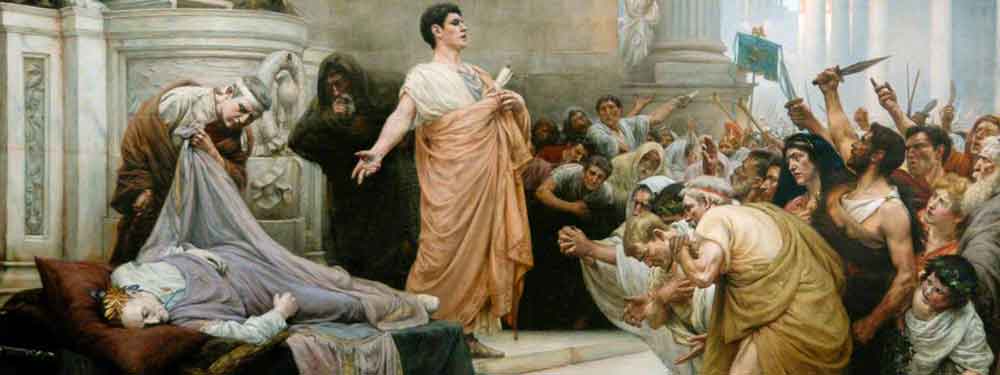
Julius Caesar’s public funeral became the critical turning point after the assassination. At the time, Rome was still undecided. The Senate had endorsed a shaky compromise, Caesar’s acts had been confirmed, and the assassins had not yet been punished. Mark Antony, as consul and Caesar’s ally, saw the funeral as an opportunity to shift the mood of the city. What had begun as a ceremony for the dead became a weapon for political gain.
Antony had no need to argue like a lawyer in a court. Instead, he needed to make the crowd feel. The ancient writers Appian, Plutarch, and Suetonius describe the funeral as a spectacle of mounting emotion. Antony praised Julius Caesar, reminded the people of his victories, and offered him as a leader who had loved Rome. The assassins had proclaimed Caesar a tyrant, but Antony portrayed him as a murdered benefactor.
The reading of Caesar’s will won the crowd to a more sympathetic view. He had left money to Roman citizens and opened his gardens for public use. These gifts counted. In death, Julius Caesar remembered the people, not the privileged class. Many Romans no longer saw the murder as the defeat of tyranny, but as the killing of a man who had given them honor, wealth, and hope.
The most dramatic moment of the funeral came with Caesar’s bloodstained toga. Ancient sources tell us that Antony had it readied and then pointed out the wounds caused by the conspirators’ daggers. Whether every detail was accurately remembered or added and embellished by later writers, the effect was undeniable. The crowd could see the violence, not merely hear about it. Caesar’s body and his clothing became evidence against the men who had proclaimed that they saved liberty.
The funeral shifted the mood from bewilderment to rage. The people began searching for the assassins, and some accounts say mobs were breaking into the men’s homes or threatening their safety. Brutus, Cassius, and the other conspirators could no longer count on public support in Rome. The funeral had shown that Caesar’s name could still be used as a weapon. Instead of ending his power, the murder made him a martyr in the eyes of many of the citizens he had once ruled.
The assassins were forced to flee Rome because they had lost the streets. The legal pardon they had obtained meant little once the crowds turned against them. Antony’s funeral speech had found their weakest point: the men had killed Julius Caesar, but they had not won the people. From then on, the struggle was no longer about one dead dictator. It had become a contest over his memory, his followers, and the future of the Republic.
The Arrival of Octavian
The murder created a new variable the conspirators had not fully anticipated: Gaius Octavius. Octavius was Caesar’s great-nephew. He was still young, still away from Rome at the time of the assassination. He had no long record of command or distinction in consulship. He had no fame to match Antony’s. The recent adoptive son of the dictator, Gaius Julius Caesar Octavianus, as he was legally named for a time, came to be known by history simply as Octavian.
Octavian’s fortunes altered with Julius Caesar’s will. That document revealed his final gift to his great-nephew. In his will, Caesar made Octavius his legal son and principal inheritor. The young man thus went from grieving relative to presumptive successor. His position allowed Octavian to take Caesar’s place in a way Antony could not. It was legal and historical, not just physical. Caesar’s heir became, by rights, Caesar’s spokesman and standard-bearer.
The ancient authors Suetonius and Appian recount Octavian’s acceptance of his inheritance. The potential for personal danger did not dissuade him. By taking his great-uncle’s name, Octavian also took on his namesake’s memory, followers, and uncompleted aggrandizement. He made good use of this advantage. Octavian knew a name could be a weapon.
Julius Caesar had been murdered, but his veterans had not forgotten him, nor had the people of Rome. Octavian took to presenting himself as the ruler’s dutiful son. He had fulfilled the initial duties of mourning. Now he would fulfill Caesar’s wishes and serve as executor of Caesar’s will. Octavian’s own generosity was tied to Caesar’s gifts and would honor his adoptive father’s legacy.
Veterans were a particularly important factor in the situation. Julius Caesar had acquired many of his veterans through campaigns in Gaul and the civil war. Their loyalties had not perished with him. Octavian could rely on both his inheritance and his new name, his promises to the veterans, and his proclaimed intent to finish his legacy to ingratiate himself with Caesar’s old troops. To soldiers who had served Caesar, Octavian could present himself as a means of continuity. Supporting Octavian became protecting Caesar’s honor and the payments Caesar had promised.
This brought Octavian into a difficult relationship with Mark Antony. Antony had fully expected to be Caesar’s leading man among the assassins, both as the most senior, surviving ally and friend of Julius Caesar, as consul, and as a military man with experience. Octavian immediately posed a problem to Antony. He did so without first being Antony’s peer or equal. Antony could not match Octavian in age or military record, but Octavian had what Antony could not: the name of Caesar, as well as the title of Caesar’s son and adopted son.
The result was that the political struggle following Caesar’s murder was no longer a contest only between conspirators and Caesarians. It became an internal contest among his closest followers. Antony wished to lead through office and through command. Octavian wanted to lead as Caesar’s son, heir, and inheritor. His murder was supposed to restore a multi-man republic. Instead, it had set a young inheritor on a path of gathering power in his own right by using Caesar’s name and memory.
From Rivalry to the Second Triumvirate
Mark Antony and Octavian each claimed their place at the head of the cause Caesar left behind. Antony had the rank, the experience, the consulship. Octavian had Caesar’s name, his adoption, his inheritance. Antony treated the younger man as a nuisance at first. That was a mistake. Octavian showed that fidelity to Caesar’s memory could be as compelling as any office.
The Senate tried to use that rivalry in its own defense. Cicero became one of Antony’s most virulent opponents, attacking him in a series of speeches later called the Philippics. He hoped Octavian could be used as a temporary weapon against Antony, then controlled or guided by the Senate. It was a dangerous gamble. The Senate needed Octavian’s soldiers, but those soldiers would follow Octavian rather than the Republic.
The struggle first turned against Antony. Octavian cooperated with senatorial forces, and Antony was driven back after fighting in northern Italy. Yet the victory did not restore senatorial control. Octavian demanded recognition, office, and power. When the Senate hesitated, he marched on Rome and forced his way into the consulship. The old institutions were still speaking the language of law, but military pressure was deciding the outcome.
The next step was an alliance of Octavian, Antony, and Marcus Aemilius Lepidus. In 43 BCE, they formed the Second Triumvirate. This was not like the earlier First Triumvirate of Caesar, Pompey, and Crassus, an informal political partnership. The Second Triumvirate was granted emergency legal powers to reorganize the state. In practice, it put Rome under the control of three armed rulers.
Their rule began in revenge and fear. The triumvirs issued proscriptions, lists of enemies who could be killed and whose property could be seized. Appian and Plutarch describe the terror of this period, as political opponents, personal rivals, and wealthy targets were hunted down. Many lives were taken, and it was clear that Caesar’s murder had not restored liberty. It had made organized political killing more open.
Cicero was the most famous victim. Antony wanted him dead for the Philippics and his public opposition. Octavian, who had once benefited from Cicero’s support, allowed the killing as part of the bargain. Cicero’s death symbolized the collapse of the Republic’s old voice. The man who had defended senatorial government with words was destroyed by a new order built on armies, revenge, and shared power.
Civil War Against the Liberators
When the people of Rome turned against the assassins at Caesar’s funeral, Brutus and Cassius could no longer feel safe in the city. They fled east, seeking refuge in Roman provinces where they could find money, armies, and distance from Antony and Octavian. The eastern Mediterranean had been the source of forces and treasure for Roman commanders for centuries. In the aftermath of Julius Caesar’s death, it became the base of operations for those who had claimed to kill him in order to save the Republic.
Brutus built power in Macedonia and the surrounding regions, while Cassius organized strength in Syria and Asia Minor. Cities were coerced into giving money, and local rulers were intimidated into taking sides. The ancient writers Appian and Plutarch describe this process in some detail. Communities in the east had been free citizens of Rome, but now the Liberators spoke to them of freedom. In the realities of civil war, that ideal took second place to the need for soldiers, ships, supplies, and money.
Publicly, however, the claim remained simple and consistent. The Liberators had murdered Caesar to end tyranny. Brutus and Cassius made that case to cities, communities, and armies, arguing that they were the true defenders of liberty, of the Senate, and of the old Republican order. Brutus issued coins showing daggers, a pile of corpses, and the cap of liberty around the severed head of Caesar. The head had once been the dictator’s, but the dagger and the cap had become symbols of freedom. It was a deeply ironic image. To save the Republic, the assassins of Julius Caesar had had to act like military strongmen.
Antony and Octavian could not allow the Liberators to establish themselves as powerful figures in the East. The Second Triumvirate had been formed in part to pursue Caesar’s killers, and revenge gave its rule public purpose and a simple message. If Brutus and Cassius survived and went free, the murder of Caesar would remain unfinished business for his supporters. The conflict would therefore move toward a climactic confrontation between the three triumvirs and the two Liberators, and this would take place near Philippi in Macedonia in 42 BCE.
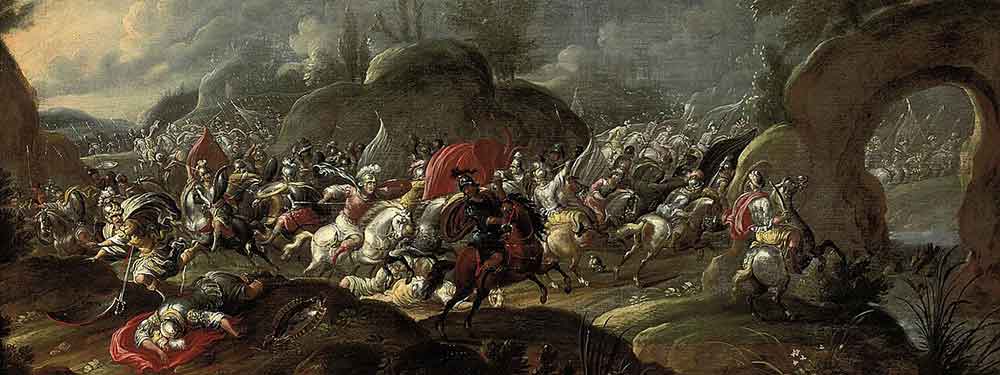
The Battle of Philippi was not a single, clean event. It unfolded over two major battles with much confusion, dust, mistakes, and shifting news from different parts of the field. Antony had his best success against the forces of Cassius, while Brutus was able to threaten the camp of Octavian. The inconclusive and mixed result of the first battle created uncertainty and doubt. In that fog, Cassius decided that the cause had failed and took his own life.
Plutarch presents that moment as tragic, since Cassius killed himself without knowing that Brutus had won an advantage on the other side of the battlefield. Cassius’s death weakened the Liberator army and removed one of the conspiracy’s strongest and most successful organizers. The cause of liberty now rested almost entirely on Brutus, whose symbolic value could not replace the partnership of leaders that had held the movement together.
A second battle was fought, and this time Brutus’s forces were defeated. With escape unlikely and his army destroyed, Brutus also chose suicide as the better ending. Ancient accounts often treat this death with a sense of solemn drama, even when they also condemn the assassination of Caesar for which Brutus claimed to speak. Brutus had sought to restore the Republic, but he died as a defeated general in another Roman civil war.
The deaths of Brutus and Cassius effectively ended the immediate “Liberator” cause. Caesar’s leading assassins were both gone, and Antony and Octavian could claim to have taken vengeance for the murdered dictator. Philippi did not bring peace to Rome; however, it did bring only a decisive shift in the struggle. The Republic remained trapped by the same forces that had destroyed it: armies loyal to individual commanders, politics in the hands of those seeking revenge, and power determined by war rather than by law.
The Republic Falls Further
Caesar’s murder had fortified the logic he had died trying to overcome. The conspirators wished to reinstate government by Senate, law, and election. The political logic after his murder showed the contrary to be true. Power rested with those who had soldiers to command, rewards to give, and the will to survive violence. The killing had shown no institution to be strong enough to break the crisis non-violently. Rome turned once again to the bearing of arms.
The triumvirs divided the Roman world between them. Antony held the east, Octavian the West, and Lepidus was left with a diminished portion. Appian says that hard bargaining, military pressure, and forced settlements marked this period. Rome called itself a Republic but treated its territories as the private possessions of rival commanders.
The old offices did not all vanish from the city at once. Consuls were elected, the Senate continued to meet, and laws were still published. However, these institutions had lost most of their independent power. The effectiveness of their decisions depended on the will of powerful men with armies at their backs. Public life continued to speak the language and show the appearance of Republican government, but not its reality. The Republic had become the husk of a bygone age around the body of military power.
Legitimacy could now come from new places. Armies spoke more than assemblies. Money became more important because soldiers and supporters had to be paid. Control over Caesar’s memory also became a powerful source of legitimacy because his name and story still held emotional power among veterans and the general citizenry. Octavian emphasized his position through adoption and inheritance to present himself as Julius Caesar’s true successor. Antony emphasized his long service alongside Caesar and his actions avenging him.
Julius Caesar became a more powerful force in death than the assassins had imagined possible. His memory became something men could fight over. Caesar’s soldiers, laws, will, and divine honors could all be wielded by ambitious men as sources of authority. The killers had hoped to destroy a dictator and restore the Republic. Instead they created a competition over who had the best right to continue Caesar’s project.
That competition would eventually be reduced to the competition between Antony and Octavian. Lepidus was edged out, the assassins were dead, and the Senate had little power to change the course of events. The murder of Caesar had not ended the rule of one man; it had merely postponed the question of which one man would succeed. The final contest between Antony and Octavian grew from the same wound that had been opened on the Ides of March, and its outcome would decide the Republic’s fate.
From Actium to Augustus
Antony and Octavian’s partnership eventually ended. Brutus and Cassius were dead, Lepidus had been sidelined, and the Roman world was now divided between two powerful men. Antony had much of the East, and Octavian had Italy and the West. Each would claim to be a champion of Rome, but both could not survive under the Republic’s old system.
Antony’s relationship with Cleopatra allowed Octavian a significant advantage. She was the queen of Egypt, a wealthy, talented, and politically significant woman. She was an ally to Antony as well as his lover. To those who supported Octavian, she was a foreign queen subverting the authority of a Roman general. Ancient historians such as Plutarch and Cassius Dio write that Octavian portrayed the war as one for Rome’s survival, threatened by eastern decadence and the power of monarchy.
Octavian was careful with his propaganda. He never portrayed the coming war as merely a personal conflict with Antony. Octavian channeled public resentment towards Cleopatra, making Antony appear a victim of her influence. Antony’s eastern settlements on Cleopatra and her children made such charges easy to believe. Octavian could cast Caesar’s old friend as the consort of a foreign queen.

In 31 BCE, Antony and Cleopatra met Octavian at the Battle of Actium in western Greece. Octavian’s talented commander, Marcus Vipsanius Agrippa, had played a crucial role in the campaign leading to the battle. The engagement ended with the breakaway of Antony and Cleopatra’s fleet, which sailed away to their eventual defeat. Their flight did not save them, but only made their cause appear lost. Support for Antony and Cleopatra rapidly began to crumble.
Antony and Cleopatra fled to Egypt, but Octavian pursued them. In 30 BCE, as defeat closed in on him, Antony committed suicide. Cleopatra died soon after, by the traditional account, by suicide, but ancient sources give conflicting details. Egypt was brought under Octavian’s control, and the last of Caesar’s killers’ serious rivals was defeated. The civil wars that had wracked the Roman world since Caesar’s assassination had, at last, produced a clear victor.
Octavian was left as Rome’s sole leader. He was at pains not to use the titles of king or dictator for life, which had contributed to Julius Caesar’s fall. In 27 BCE, Octavian accepted the name Augustus, presenting his power as a restoration of the old order. The offices of the Republic remained in place, but real power was Augustus’s alone. Caesar had been murdered to save the Republic, but his death had created a path to Rome’s first emperor.
Did Julius Caesar’s Murder Save Anything?
The assassins argued that they had killed Caesar to free the Republic. Brutus, Cassius, and their fellow Liberators thought they had killed a man who threatened to make himself king in all but name. They were defenders of liberty, they insisted, not common murderers. Writers in antiquity, from Plutarch to Appian, repeat the phrases they used to cloak the killing in language of liberty.
It was not enough to stab Caesar and declare that he was dead. Caesar was not the sole source of Rome’s problems. He was the most obvious result of problems that had been growing for generations. Killing him did nothing to restore trust in elections, to weaken the private armies of Rome’s governors, to end political violence as a way of life. Stabbing Caesar in the back did not fix the Republic. The assassins cut down Julius Caesar, but the system that had created Caesar remained broken.
The underlying problems were still there. The soldiers of Rome were still loyal to their generals who paid them and promised them land. Violence in politics was still business as usual. Wealth was still grossly unequal, and still most citizens needed patrons to succeed. The Senate was still there, but it was divided and weak, no longer capable of reigning in ambitious generals. These forces were not banished from Rome on the Ides of March. In the absence of any one man to control them, they became more dangerous.
There is some truth to the argument that Julius Caesar might have established a more stable monarchy had he not been killed. He may have continued to rule through Republican offices, while retaining the real power for himself. He may have continued to try to stabilize and lead Rome through reforms at home, conquest abroad, and the force of his personal authority. It would not have been the old Republic, though. By 44 BCE, Rome was already far too changed from government shared by a variety of competing magistrates.
What the killing of Caesar did preserve, for a time, was the idea. At least some Romans still thought that the idea of liberty was worth preserving and defending. Brutus and Cassius would become exemplars of resistance to tyranny for centuries. Symbolism is not enough to govern a state, though. Their act had moral power for those Romans, but little else to govern a damaged state.
Caesar’s murder accelerated the very process the Liberators sought to halt. It made Caesar a martyr, gave Antony a cause, gave Octavian a legacy, and pushed Rome back into civil war. The Liberators’ daggers did not reopen the road to freedom in the Republic. They paved the way for a new leader, who would be more careful than Caesar, and far more successful.
Why Caesar’s Assassination Still Matters & Conclusion
Julius Caesar’s assassination is still relevant today because it reminds us of the limits of political violence and the risks involved with using it. The conspirators thought that a single dramatic gesture was enough to end tyranny and restore the Republic. Instead, Caesar’s murder produced fear, outrage, and competition for revenge. The ancient historians who described it, Appian and Plutarch, among others, present the days following his death not as a triumph of liberty, but a scramble for more violence.
Violence can also transform a leader into a symbol. Julius Caesar had been a deeply polarizing figure during his life, but now he could serve as a cause. Antony manipulated the public’s grief at his funeral. Octavian made use of his name, adoption, and memory in his quest for power. The conspirators thought that killing Caesar would end his influence for good, but in fact it made his legacy politically valuable to those who would claim to avenge him.
The Ides of March forces us to ask difficult questions about tyranny, liberty, law, and legitimacy. When does forceful leadership become dominion by one man? When does opposition cross the line into murder? Can a broken political system be set right by violence? The conspirators called themselves Liberators, but their act of violence bypassed the law of the Republic they purported to uphold. That contradiction is why Caesar’s death has been one of history’s most contested political murders.
The deeper lesson concerns institutions that become so weakened that they can no longer manage peaceful change. Rome still had elections, offices, courts, and Senate sessions, but there was no longer trust. Rival leaders had access to armies, money, mobs, and personal loyalty. Once those forces replaced restraint and compromise, the Republic could not be easily restored. Caesar’s murder revealed that weakness rather than remedying it.
The final image is one that haunts the historical imagination: Caesar surrounded by senators, bloody daggers raised, in a place where debate was once possible. The conspirators thought they were pruning tyranny before it could take root and become permanent. In fact, their act cleared the path to more civil war, more violence, more revenge, and eventually one-man rule under Augustus. Caesar’s murder did not save the Republic; it helped seal the evidence of how close to death it already was.
This is why the Ides of March is still one of history’s most quoted warnings: A state cannot long be preserved on law alone if its leaders no longer respect the limits of their power, defeat, or the peaceful transfer of power. Julius Caesar fell because many in the state feared monarchy, but the Republic fell because it had already lost the habits necessary to remain free: trust, restraint, a shared sense of duty, and faith in the rule of law.


