How the Printing Press Triggered Europe’s First Information Revolution
 Reading Time: 20 minutes
 The printing press revolutionized a world in which books were scarce, copied slowly, and expensive to produce. In manuscript culture, scribes reproduced texts by hand, working in monasteries, universities, or professional copy shops. Months of work were needed to complete a single book, and mistakes could be introduced with each copy. Knowledge was written down, but access to it was limited, particularly for those outside the clergy, wealthy households, the courts, and schools.
By the mid-fifteenth century, Johannes Gutenberg of Mainz was part of that system’s transformation. Movable-type printing changed not only the price of books. It altered how and where ideas moved, who read them, and how rulers and religious leaders could be held to account. In this article, we examine manuscript culture, Gutenberg’s innovation, the spread of books and pamphlets, and the relationship of print to religion, science, politics, censorship, misinformation, and the first mass information network in Europe.
Europe Before the Printing Press
Before printing, European books were generally copied by hand. A scribe wrote out each page, letter by letter. Books were slow to produce, costly, and relatively easy to control. A beautifully copied manuscript might be made, but it would be fragile and relatively rare. Knowledge and information might be available in written form, but not at the speed or range of later print. Texts could be spread and shared by travel or trade, but they did not flow as quickly as a printed book.
Copying and preserving texts had been an important function of monasteries, especially religious ones. Monks copied scripture and commentaries, lives of the saints, and older classical texts, as well as their own charters, legal collections, and administrative records. Universities created a demand for more books, as students and teachers needed tomes of law, medicine, theology, and philosophy. In the growing towns, professional scribes and manuscript workshops served the need. Medieval Europe was already a civilization with a serious appetite for reading and writing by the time of Gutenberg.
Books would remain costly because every copy required labor, writing materials, time, and supervision. Even parchment might be costly, and while paper was cheaper, it did not eliminate the labor of hand copying. Ownership remained limited to churches and monasteries, courts and universities, officials and wealthy households. Books were rare for most ordinary people; although they could hear texts read aloud, they might see pictorial versions in churches, or read short written notices, widespread access to books remained limited.
The slowness of text movement made it easier to control information. Churches, courts, universities, and rulers could influence or regulate what was copied, read, taught, stored, used, or condemned. A manuscript might pass from one city to another, but each new copy was work. Ideas could spread by letter, sermon, traveler, merchant, and wandering scholar, but this tended to be a movement between smaller networks and individual contacts, not mass audiences.
Europe before Gutenberg was not silent, however, nor was it unchanging. Towns were growing, schools were spreading, universities were teaching, and religious communities wanted more devotional and instructional texts. Merchants wanted records. Officials wanted law codes and forms. Students wanted books. A need and desire for writing was growing before movable type, and Gutenberg’s printing press mattered because it served that need at a scale that manuscript culture could not.
Gutenberg and the Invention of Movable Type
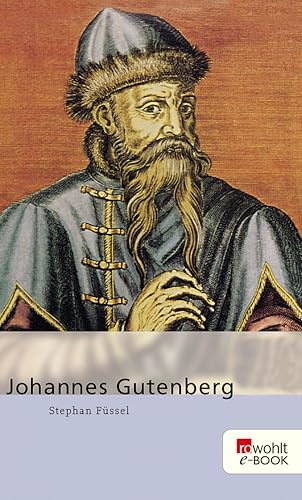
Johannes Gutenberg of Mainz was a central figure in this printing revolution. In the middle of the fifteenth century, Gutenberg created a practical system for using movable type in Europe. Other cultures had invented printing before, and East Asia had developed movable type centuries before Gutenberg. Gutenberg’s role was to make the process functional, in a way that could be spread and developed, leading to book production on a very different scale.
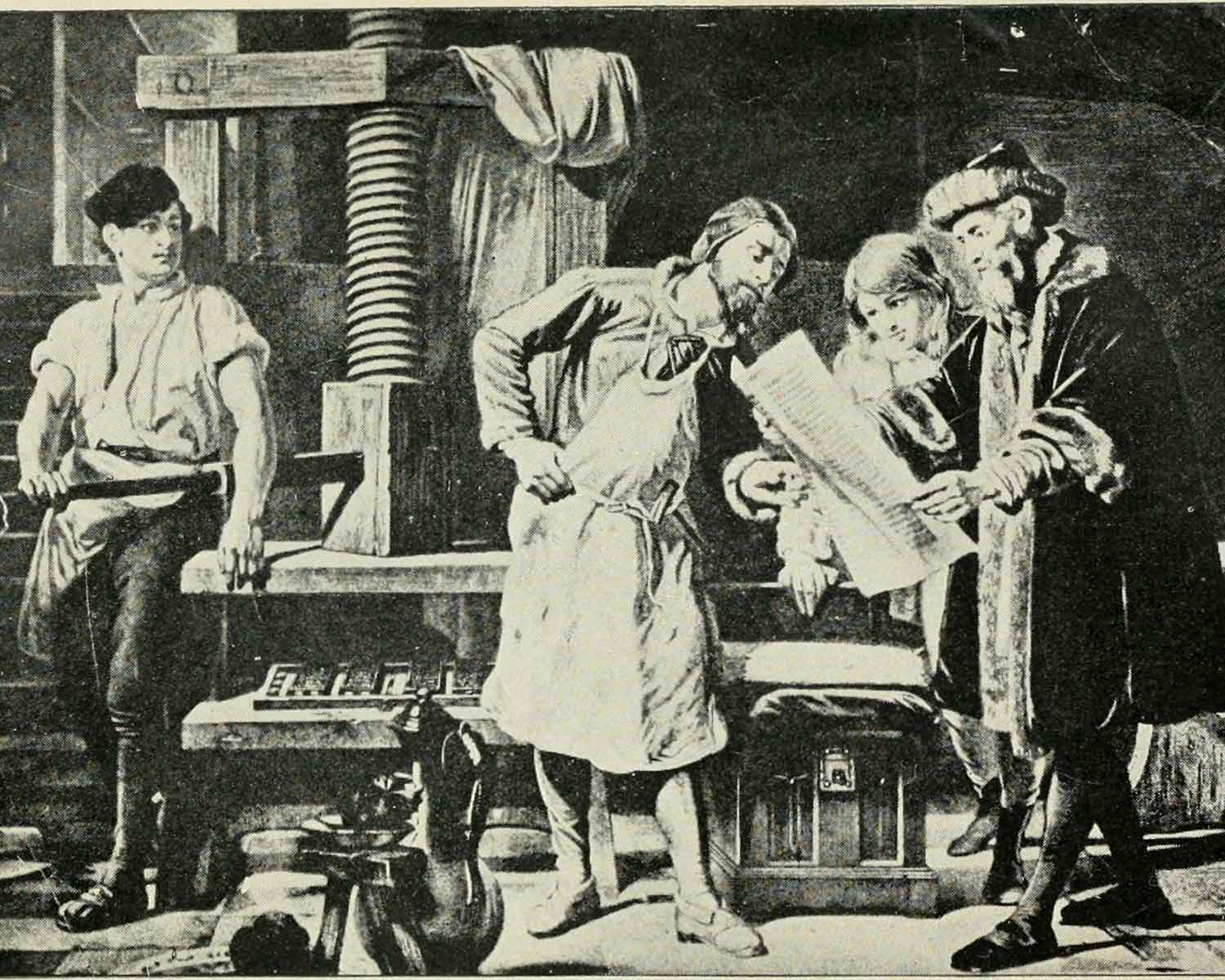
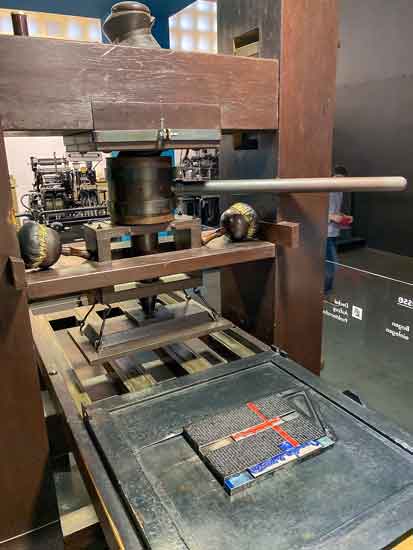
Gutenberg’s key innovation was the combination of different skills and technologies. Movable metal letters, which could be rearranged, inked, and reused for printing, were central. Ink that would stick well to the type, a press that could apply steady pressure, and metalworking to cast reliable letters were also required. This was not a single object or invention. It was a practical production system.

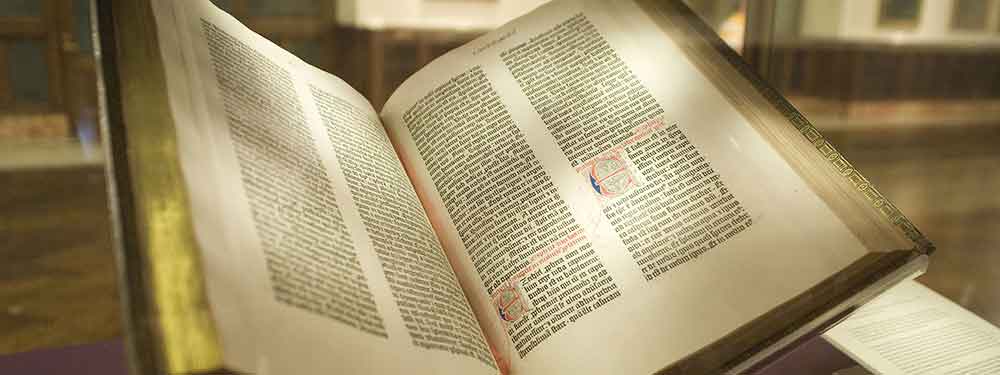
The most famous symbol of this new age was the Gutenberg Bible. Printed in the 1450s, this book proved that movable type could produce a large, attractive, and readable volume, matching the beauty of hand-copied manuscript versions. Surviving copies still reflect the ambition of the printing process. This was not just about making cheap texts. Gutenberg was demonstrating that printing could be on a par with hand-copied books in prestige and quality.
Moving type could make repeated copying far faster than manuscript work. Cast letters could be rearranged from one page to the next and reused for many future projects. A team of printers could create large numbers of similar copies in the time it would take a small number of scribes to copy a much smaller number by hand. This was a dramatic change in the economics of knowledge. Printing meant more copies, wider circulation, lower long-run costs, and faster spread of ideas.
Gutenberg did not invent books, writing, reading, or the desire to learn. Europe already had scribes, libraries, schools, universities, and eager readers before the Gutenberg press. The revolution lay in scale, speed, and repeatability. Texts did not have to circulate only through slow hand copying. They could be reproduced repeatedly, allowing ideas to have a much wider reach than medieval manuscript culture.
Why Printing Was Revolutionary
Printing was revolutionary because it changed how fast copying could happen and how many copies could exist. A manuscript had to be laboriously handwritten, but a printed page could be set in type and printed over and over. This did not make every book cheap in a single step, but it did reduce the price of multiple copies. In time, more copies of more texts could reach more readers than was possible in manuscript culture.
It all centered on repeatability. Printers could make many nearly-identical copies of the same work. That mattered because readers in different towns could now study the same text, with fewer variations between their copies. Errors would still occur, but print made it easier to compare different editions, correct errors, and spread revised versions. Knowledge was no longer based on a single local manuscript or a single isolated library.
Standardization transformed scholarship and teaching. Students could work from similar textbooks. Scholars could refer to the same editions. Religious readers could compare sermons, Bible translations, and theological arguments. Lawyers, officials, and administrators could access printed laws, forms, decrees, and records. Print helped create a wider world of shared texts, where more people could discuss the same words.
Printed material also traveled well. Books, pamphlets, broadsheets, and letters could circulate by cart, ship, pack animal, and merchant network. A text printed in Mainz, Venice, Basel, Paris, or Antwerp could cross borders to find readers far from where it was produced. Ideas no longer had to rely solely on slow hand copying or local teaching. They could travel through Europe with new force.
This is what makes the printing press an early part of the information revolution. It changed how quickly information could travel, how many copies could exist, who could access it, and how public debate could work. The printing press did not just produce more books. It created a new system for sharing, arguing over, preserving, and challenging ideas. That system helped reshape Europe’s religion, politics, science, education, and culture.
The Explosion of Books, Pamphlets, and the Book Trade
Print shops multiplied after Gutenberg. Mainz did not remain the primary center of production. Printers took their trade to other cities that also were growing: places that drew merchants, universities, clergy, and readers. Venice, Paris, Basle, Antwerp, and Nuremberg all were key sites of printing. In each of these cities, printing was local in its initial development. But these cities also connected printing into a Europe-wide trade.
The variety of material available for sale also increased. Printers produced large volumes of religious works, school texts, law books, calendars, broadsheets, and utilitarian handbooks. Devotional texts could enter households without extensive libraries. School texts and reference works became more widely available to students. Official documents and legal forms could be purchased by officials and lawyers. Access to the written word was not equal or universal, but the reach of print expanded.
In particular, the pamphlet (treatise) became an important part of the information economy. It was short, cheap, and easy to transport. A book was a larger investment of money and time for a reader or purchaser. A pamphlet could be sold and read immediately, taken home to be read aloud or shared among neighbors, or sent to the next town. Pamphlets became an important way to air arguments and gain support during moments of religious and political upheaval, faster than censors or authorities could control them.
Broadsheets and single-page prints also developed new kinds of public communication. They could carry news, images, songs, ridicule of one’s enemies, or simple explanations of current events. Images circulated by woodcut could also reach people with limited reading ability. A printed image could make a political, religious, or social argument at a glance. This helped to give print a public life that was not focused on scholars and the already well-to-do owners of libraries.
The new information economy also created new professions and roles. Printers, publishers, booksellers, editors, translators, and engravers were at the center of how ideas moved. They made judgments about what readers would purchase. They accepted financial risks, faced or evaded censorship, and connected authors to markets. The press did not simply generate more books. The press created a network of people for whom information was a business, a weapon, and an agent of change.
Printing, Literacy, and Vernacular Languages
The printing press and literacy fed into each other. As more printed books and texts appeared, reading became more useful in everyday life. Print offered devotional texts, calendars, schoolbooks, pamphlets, laws, songs, and practical handbooks. The more such uses of reading multiplied, the more families, communities, schools, and religious organizations had reason to value literacy. Print did not make readers from scratch, but it gave reading a more prominent place in society.
Literacy did not suddenly become universal. Print did not erase the many people across Europe who still could not read. Nor did books automatically become equally available to everyone who lived. Affluence, gender, place, and education all conditioned how far direct access to printed texts might take one. The capacity to use printed works could reach further in town than in the country. Rural laborers and the poor had less access to books than urban merchants, students, clerics, and officeholders. Printed works could also reach nonreaders when other people read them aloud in homes, workshops, taverns, churches, or public spaces.
The cheapness of printed texts made reading more attractive in part because it brought the wider world into reach. A literate individual might follow religious controversy, learn prayers, read about a trade, understand the law, or catch a snippet of news from elsewhere. Small books and pamphlets also made a written culture less tied to the building of great libraries. Print began to change reading from a relatively esoteric skill for scholarly professionals into a more useful skill for business, religion, education, and public life.
Print and the printing press also fostered the expansion of vernacular languages. Latin continued to have a key role in the university curriculum, the churches, the law, and many learned fields, but a growing range of works appeared in German, French, English, Italian, Dutch, Spanish, and other spoken languages. This was significant because it created a possibility for lay readers to encounter texts using words closer to their own speech. Religious reformers, political authors, poets, and practical writers all seized on vernacular print as a means of reaching new audiences.
Gradually, printed books also began to standardize written languages. Printers had to make choices about spellings, grammatical forms, punctuation habits, and page design. The books that they produced had forms that were copied again and again across multiple editions and print runs. That process did not create fixed languages at once, but it did begin to reduce regional variation in written languages. Later, dictionaries, grammars, Bible translations, and schoolbooks furthered this development.
The outcome was an expansion of the reading public. Increasingly, laypeople could be exposed to religious arguments, political claims, medical remedies, farming advice, travel experiences, and moral exhortations without going through the clergy or scholars alone. This shift did not make Europe a more equal or fully literate society, but it did change who could participate in written culture. Print offered more people a way in to debates that had once been limited to a narrower circle of educated elites.
The Printing Press and the Reformation
One of the most potent illustrations of the printing press’s power was the Protestant Reformation. Criticism of religious ideas and institutions had long existed, of course, but print gave these ideas new speed and reach. A local dispute could suddenly become a regional argument, and a European controversy. The press helped bring about a situation in which religious controversy could outpace the pace of church authorities, bishops, and universities.
In 1517, Martin Luther wrote his Ninety-Five Theses, a document that began as an argument against the sale of indulgences and other church practices. Luther may or may not have nailed the theses to the door of the Wittenberg church, as is often said, but their rapid dissemination was not in doubt. Printers turned a debate into a public controversy in weeks. Luther’s pamphlets circulated rapidly through German towns and cities, reaching a growing readership that would never have attended a university disputation.

Pamphlets were key to this transformation. Reformers such as Luther found an audience for short, direct works that printers could publish quickly and that buyers could take home or sell. Sermons, Bibles, catechisms, woodcuts, polemical essays, works of biblical scholarship, doctrinal commentaries, and public letters all brought religious disputes to a growing public. Many of these texts appeared in vernacular languages. Those who might struggle to read complex Latin or Greek texts could more easily access the vernacular. Moreover, even if people could not read, they might hear printed works read aloud.
Print also helped disputes move beyond local control. A bishop might condemn a sermon in a city, but printed copies might already be circulating or being shipped into another diocese. A university might declare a claim false, but printers could be distributing the argument to merchants, students, nobles, and town councils. It became harder to silence a reform simply because it was not based on a single pulpit, a single manuscript, or a single local readership.
Catholic writers also employed the print. They energetically and skillfully defended church doctrine, attacked Protestant claims, published catechisms, circulated sermons, and advocated their own reforms. The Catholic Church’s response was not merely censorship, although censorship mattered. It was also a contest in print. Writers, theologians, printers, and church authorities all used the same technology to compete for belief and loyalty.
The printing press did not cause the Reformation on its own. The movement arose out of religious, political, social, and economic tensions that already existed in Europe. But the printing press did help to turn reform from a local and personal challenge into a movement that could spread across Europe. It provided religious arguments with a larger public. It made religious controversy harder to contain. It showed that printed words could make some of the most powerful institutions in Europe tremble.
Print as a Weapon: Religion, Politics, and Propaganda
The printing press spread knowledge, but it also multiplied conflict. Printers and authors discovered that debate, dispute, and the spread of information also meant that religious and political conflict was more difficult to control. An inflammatory sermon, libel, or attack might once have been a local affair but in print it could spread around a city, a region, or a nation. Print also allowed authors to address large numbers of people that they would never meet.
Polemics – books and pamphlets that aggressively attacked, denounced, or defended an opponent or an idea – became one of the most popular forms of printed conflict. Clerical writers published accusations of corruption, heresy, ignorance, tyranny, against their rivals and opponents. Politicians followed suit, denouncing kings, government officials, rebels, and foreign enemies in print. Private disputes or disagreements could quickly become matters of public record.
Images made print even more efficient and even more direct. Woodcuts, cartoons, and illustrated pamphlets could speak to people with only basic literacy skills. An image of a cleric or bishop taking bribes, a foolish king making a mistake, or a reformer standing bravely against corruption could make its point with immediacy. Printers relied on images that were simple, emotional, and easy to remember. Print made the complex straightforward and the many became the few.
Authorities, rebels, reformers, city governments, and church leaders all learned to use print for their purposes. Governments printed law codes, royal decrees, proclamations, and official explanations of policy and action. Rebels, opposition figures, and critics of the government printed their own pamphlets and often circulated them secretly. City governments learned to use print to announce new rules and explain the need to maintain order. Church authorities used print to publish doctrine, answer their critics, and warn their followers against false teachings.
The press therefore became a useful tool for the forces of power and order, but it also became a tool of resistance. A king might use printed proclamations to command obedience, but his critics could use printed pamphlets to challenge the justice of that king. A church might publish a catechism, but reformers could publish their attacks on church practice and organization. The same technology that helped a ruler demand obedience also gave his opponents a means to organize resistance.
This dynamic also helped to heighten the conflicts that fuelled the Thirty Years’ War. By the early seventeenth century, printed sermons, pamphlets, broadsheets and illustrated attacks had already begun to convert religious and political conflicts into public campaigns. Catholic and Protestant authors vilified their enemies not just as competitors, but as existential threats to true religion, legitimate rulership, and social harmony. During the crisis in the Holy Roman Empire, print helped to disseminate fear, blame, and confessional rage far beyond local battlefields. News of victories, massacres, betrayals and alleged plots could help to harden opinion across broad territories. The war was not caused by print alone, but print made its divisions more bitter, more rapid, and more difficult to contain.
The result was not an age of reasoned debate, but a noisier, more public world. Books, pamphlets, and periodicals spread learning and the word of scripture, law, science, and education, but they also spread insult, fear, propaganda, and division. Europe’s first information revolution would change not only what Europeans knew, but how bitterly they fought over truth, authority, and belief.
Censorship and the Fight to Control Print
Authorities soon discovered that printing was too fast to ignore. Books, pamphlets, and broadsides moved faster than previous methods of control. Popes and princes, universities and city councils all feared texts that attacked doctrine, defied authority, or preached rebellion. If print could spread orthodoxy, it could also spread skepticism.
Regulation became one of many reactions. Printers often needed licenses, official permissions, or privileges from the church or civic authorities to publish certain books. Authorities banned, confiscated, or destroyed other texts. Printers could be fined, imprisoned, have their equipment confiscated, or be forced into exile. Each punishment risked a printer’s livelihood, and all assumed that authorities did not regard print as innocent. They believed that print could shape what people believed and what they did.
The Catholic Church’s Index of Forbidden Books was one of the most well-known institutions. First published in the sixteenth century, the Index cataloged books that Catholics were not allowed to read without special permission. It contained Protestant texts, writings deemed heretical, and later books considered dangerous to faith or morals. The Index was a sign of a broader anxiety that unfettered reading could undermine religious authority.
Censorship was hard to enforce because the printing press helped move materials across borders. A book banned in one city might be printed in another. A pamphlet prohibited by one prince might be smuggled through trade routes, carried by wandering students, or hidden with other merchandise. Printers used false names, clandestine presses, and foreign publishing centers. Once copies were in circulation, it was nearly impossible to destroy every single one.
The efforts at print censorship reveal how important printing had become. Authorities rarely feared powerless media. They feared print because it could replicate arguments, preserve forbidden ideas, and reach audiences beyond old channels. Control over books was control over education, worship, politics, and memory.
The battle over print became a battle over truth, authority, and obedience. Who had the right to determine what people should read? Was truth better maintained by control, or discerned by debate? Could subjects question princes or believers question church leaders? The printing press could not answer these questions. But it forced Europe to confront them with new urgency.
Printing, Science, Maps, and Exploration
Printed books made it easier for scholars to build on shared knowledge. Before print, a scholar might study a single handwritten manuscript, the errors of which had multiplied as it was copied from place to place over time. Printed editions made it possible for readers in different cities to work on the same text, check and correct each other’s work, and more easily refer to what had been written earlier. Knowledge could be more common, more permanent, and more contestable.
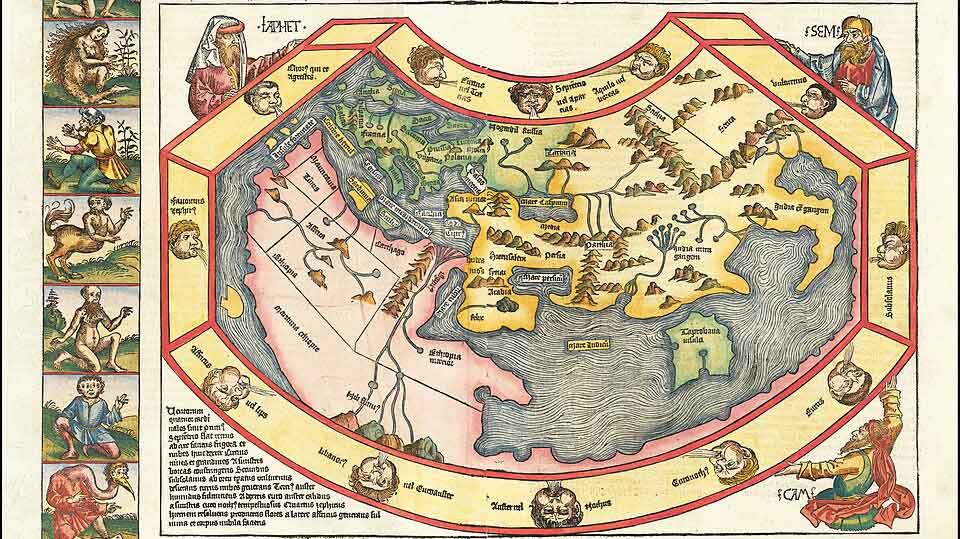
Images as well as words could be important. Diagrams, tables, anatomical illustrations, star charts, maps, and technical drawings could be widely copied and reprinted. This mattered in fields where accurate visualization was part of knowledge. A printed diagram of a human corpse, a model of a planet, or a machine might teach more exactly than words alone. Print made some forms of complex knowledge easier to copy, analyze, and argue about.
In later centuries, scholars used this world of print to overturn older knowledge. The works of Copernicus on the sun-centered cosmos, Vesalius on anatomy, Galileo on the heavens, and Newton on mathematical physics all built on a culture of printed books and scholarly communication. Printing did not single-handedly create science, but it helped scholars test, criticize, preserve, and publicize their new claims.
Print helped create a common world of reference across Europe. A scholar in Italy, Germany, France, England, or the Low Countries might find themselves answering the same published argument. Errors might be exposed by many readers. Old editions might be corrected in new ones. This helped create a wider intellectual community, one in which discovery was less likely to be confined to a single court, school, monastery, or private library.
Maps and travel accounts changed Europeans’ mental image of the world. Printed voyage accounts might describe coastlines, peoples, plants, animals, trade routes, and empires beyond Europe. Maps could be copied, and as new voyages were made and information shared, they could be updated and revised. Exploration became not only the experience of a sailor or the secret of a ruler, but a public topic for readers to follow, debate, and sometimes misunderstand.
Print spread knowledge, but it also spread exaggeration and error. Travel writers repeated rumors, inflated marvels, and described unfamiliar peoples through fear and fantasy. Maps could preserve as many errors as discoveries. The same printing press that enabled scholars to correct knowledge also enabled false claims to have a longer and more visible life. Europe’s information revolution expanded the world, but it also showed that more information was not the same as more truth.
Misinformation, Uneven Access, and Myths About Print
Information came faster, but so did misinformation. The printing press helped to spread learning, but it also helped rumors spread farther. A false story did not have to rely on gossip, sermons, or handwritten copies alone. Once printed, it could be sold, shared, read aloud, and carried into the next town. The same speed that gave advantages to reformers and scholars also gave advantages to fear and falsehood.
Printed misinformation had many forms. Fake letters, sensational pamphlets, political slander, religious attacks, and witchcraft literature all found markets. A dramatic accusation could destroy reputations or deepen public panic. At times of religious conflict, printed warnings about heresy, corruption, plots, or divine punishment could intensify division. Print gave claims a new authority because words on a page often looked official, even when they were not.
Print also gave false claims a new permanence. Spoken rumors might disappear, but printed rumors could be saved, copied, and quoted. A mistake in one edition might reappear in another. A false map, forged document, or exaggerated travel report could influence belief long after its first publication. The printing press expanded access to knowledge, but did not automatically expand accuracy.
The benefits of print were also uneven. Scholars, merchants, reformers, rulers, officials, clergy, and urban readers benefited the most in the first generations. They had money, schools, trade routes, and reasons to use print. Many rural communities and poor households had less access. Some people encountered print only when others read texts aloud to them or when images and broadsheets appeared in public spaces.
Several other popular misunderstandings need correction. Gutenberg did not invent books, writing, or literacy. Manuscripts did not disappear overnight, and scribes continued to work long after printing became widespread. Printed books did not quickly become cheap for everyone. Early books could still be very expensive, especially if large or decorated. The change was real, but it took generations to unfold.
The printing revolution was not instant, but it was lasting. It changed how Europe stored knowledge, debated religion, taught students, spread news, and challenged authority. It widened access, but it also created new problems of control, trust, and misinformation. Like later media revolutions, print brought both promise and danger. It gave more people a voice, but it also forced Europe to consider which voices to believe.
Why the Printing Press Still Matters and Conclusion
The printing press still matters because it reshaped the relationship between information and power. Before print, rulers, churches, universities, and courts could control texts more easily because copying was slow and access was limited. Printing did not destroy authority, but it made authority harder to protect from challenge. Once ideas could move through books, pamphlets, broadsheets, and translations, power had to answer more voices.
Print made ideas easier to preserve, reproduce, debate, and challenge. A text could survive beyond one manuscript, one library, or one local audience. Readers could compare arguments, quote the same editions, and respond in print. Scholars could correct errors. Reformers could spread criticism. Rulers could issue laws and proclamations. Opponents could answer them. The printed page became a battlefield of belief, evidence, persuasion, and memory.
The printing press also set a pattern for later media revolutions. Newspapers changed public politics. Radio carried voices across nations. Television made events visible in homes. The internet made information instant and global. Each new technology widened access, but each also created new struggles over truth, control, and authority. The same question returned again and again: who gets to speak, who gets to decide, and who can be trusted?
That pattern began in Europe when books moved from rare manuscripts to repeatable printed objects. A work no longer had to be copied slowly by hand to reach new readers. It could be reproduced in many copies, carried by trade, read aloud in public, debated in schools, condemned by authorities, and reprinted in another city. A book became more than an object. It became a vehicle for movement.
Europe’s first information revolution began when knowledge could be copied faster than power could fully control it. The printing press spread learning, faith, conflict, science, propaganda, and doubt. It did not make Europe instantly modern or universally literate. Yet it changed the rules of communication. After Gutenberg, ideas could travel farther, survive longer, and challenge authority with a force manuscript culture had never known.


