13 Tragic Jousting Deaths of the Nobility That Changed Medieval History
 Reading Time: 20 minutes
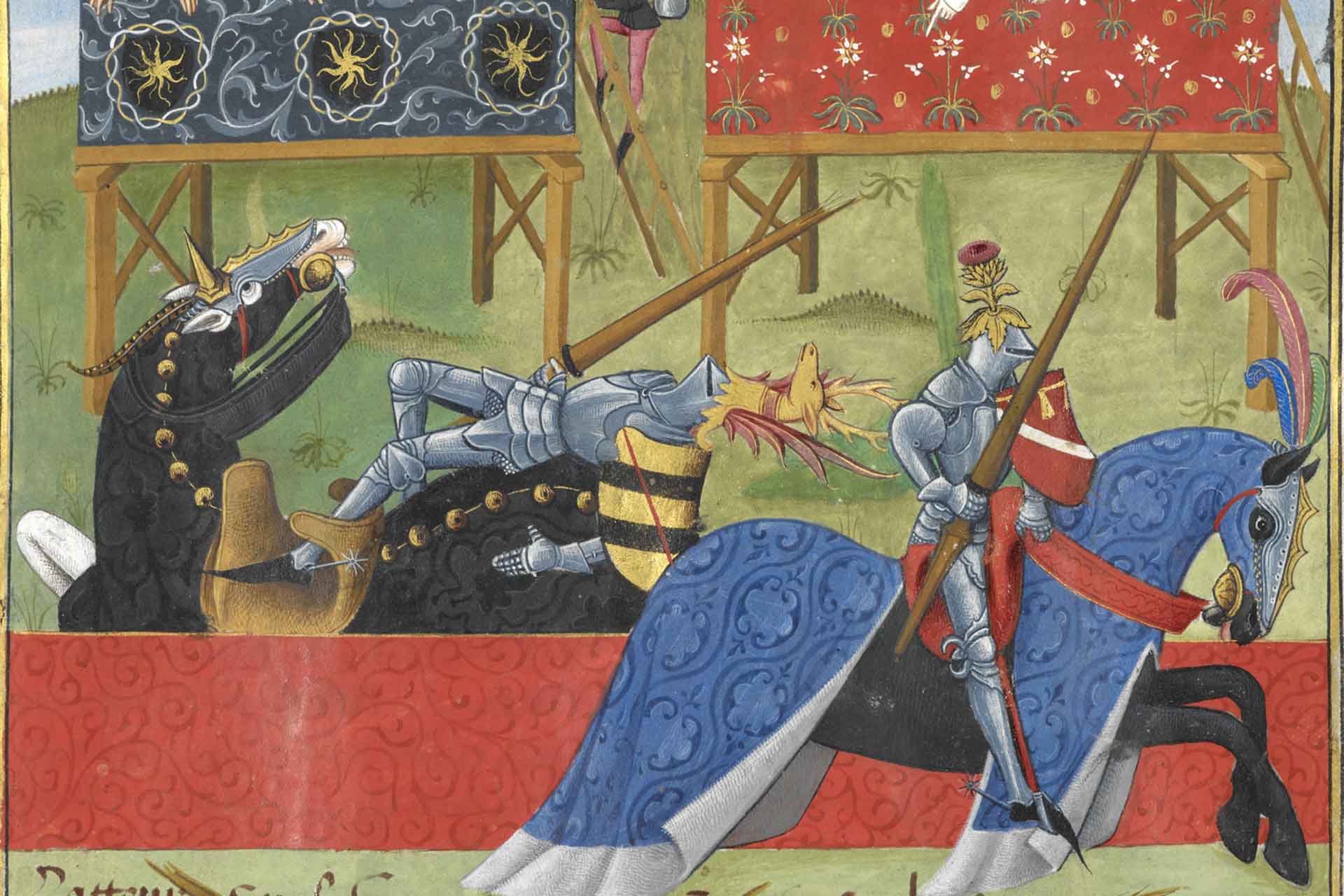
 Jousting deaths could change dynasties, extinguish noble bloodlines, and shift the balance of power throughout medieval Europe. But medieval sources often used the word “tournament” to refer to various dangerous events. It might mean a formal lance-to-lance joust, a mass mounted melee, a fall from a horse, or violence that had broken out around the contest. Because chroniclers were not always precise, the following accounts identify the reported cause of death while noting when the evidence is unclear.
Early tournaments were typically large mock battles, in which teams of mounted knights fought across open ground. Controlled individual jousting became more prominent in the fourteenth and fifteenth centuries, when barriers, rules, and specialized armor made the contests more formal. This shift explains why early chronicles might say only that a noble was “killed in a tournament,” without indicating whether a lance, collision, trampling, or nearby violence had caused the fatal injury.
15 Noble Jousting Deaths That Reshaped Medieval History
1. Hugh de Mortimer, heir to the lordship of Wigmore — shortly after 1175
Type of incident: Tournament combat, exact form unknown
Cause of death: Killed during a tournament at Worcester.
Hugh de Mortimer came from one of the strongest families in the Welsh Marches. He was the son of Hugh de Mortimer, lord of Wigmore, whose castles and manors gave his family influence across an unstable border between England and Wales. The elder Hugh had fought private wars, defied royal power, and submitted to Henry II. As an expected heir, the younger Hugh represented the future of a dynasty that would produce barons and earls, as well as some of the closest associates of the English crown.
Family records say that Hugh died at a tournament in Worcester after 1175. The surviving notice does not specify if he died in a formal joust, mounted melee, or a fall from his horse. A mass melee is possible because twelfth-century tournaments were usually more like mock battles, with groups of armored horsemen charging and fighting across open ground. However, the fragmentary evidence does not permit a confident determination of the weapon, the opponent, or the sequence of events.
Hugh’s death eliminated a possible successor before he could assume control of Wigmore. He left no children, so the family’s inheritance passed through another branch of the family, placing his younger brother Roger in line for the lordship. The case shows how a tournament or jousting death could disrupt succession even when it did not trigger an immediate national crisis. For a Marcher family, the loss of an heir also opened questions of castles, military obligations, estates, and alliances in one of medieval England’s most contested borderlands.
2. Geoffrey II, Duke of Brittany — 1186
Type of incident: Mounted tournament melee or fall
Cause of death: Reportedly thrown from his horse and trampled.
Geoffrey II was the son of Henry II of England and Eleanor of Aquitaine, and was born into the ruling Plantagenet dynasty. Through marriage to Constance of Brittany, Geoffrey became Duke of Brittany, making him ruler of a key buffer region between England and France. He was ambitious, involved in the politics of the day, and allied himself with his brothers against his father on numerous occasions. Geoffrey was therefore both a useful ally and a potential threat within a dynasty that was already riven by rivalry and competition.
Geoffrey died in Paris in 1186, after participating in a tournament. The most familiar account states that he fell from his horse and was subsequently trampled by horses or riders while fighting. Twelfth-century tournaments were generally uncontrolled mounted melees and such a death was not impossible in the chaos of knights charging one another. Not all medieval sources support the familiar account. Roger of Hoveden tied his death to the tournament, while other sources or versions of accounts state he died of illness. The cause of death is therefore uncertain.
His death had significant implications for the Plantagenet succession. His wife was pregnant, and their son Arthur would be born several months later. Arthur would later claim the English throne in right of his father, becoming a major threat to his uncle King John. Geoffrey’s death, therefore, did not remove Brittany from Plantagenet politics. It instead resulted in a contested inheritance, intensifying family rivalries and contributing to the unrest that characterized John’s reign.


3. Hugh de Mortimer, Lord of Wigmore — 1227
Type of incident: Tournament combat, exact form unknown
Cause of death: Fatal injuries received during a tournament.
Hugh de Mortimer, the second Lord of Wigmore, was the son of Roger de Mortimer, a great Marcher baron with possessions across the English-Welsh border. He was also the nephew and namesake of the previously mentioned Hugh de Mortimer, who died in a tournament after 1175. Hugh’s wife was Annora de Braose, with whom marriage two important Marcher lineages were joined. Castles, manors, and military service of the sort required by this office brought Hugh into contact with a peerage for whom defense of their lands and martial prowess were essential to their familial identity.
The Mortimer History Society is more specific than the Grand Chronicle, which simply reports that Hugh died at a tournament. According to this site, he died sometime in 1227, but the surviving account provides no immediate details about the cause of death. Hugh could have been killed with a lance in an individual encounter, wounded by blows in a mounted melee, crushed after a fall from his horse, or died from other injuries suffered in a previous riding accident. In the early thirteenth century, tournaments could still be an extremely violent affair in the sense of mock battle between groups of armed horsemen, and, as such, there was a significant risk of grievous injury.
Hugh died without a son and the lordship of Wigmore passed to his half-brother Ralph de Mortimer, who later married Gwladus Ddu, a daughter of Llywelyn the Great, to strengthen the family’s Welsh ties. The children of this marriage laid the foundations for the Mortimers to become one of the most important noble families in England, and Hugh’s death, in some ways, therefore, affected the line of inheritance rather than leading to its extinction, placing the lordship of Wigmore in the branch that would later produce some of the greatest Marcher lords and Roger Mortimer, the first Earl of March.
4. Floris IV, Count of Holland — 1234
Type of incident: Traditionally described as a formal joust
Cause of death: Mortally wounded by an opponent during a tournament.
Floris IV inherited the title of Count of Holland in 1222 after the death of his father, William I. His family’s territory had gained increasing significance along the North Sea coast, and their house had close ties with other noble families in the region. Floris’ own marriage to Matilda of Brabant bound him to one of the leading dynasties of the Low Countries. The count engaged in disputes with the bishop of Utrecht, gained the Land of Altena, and took part in the campaign against the Stedingers in 1234.

On July 19, 1234, Floris was killed in a tournament at Corbie in northern France. Later accounts routinely describe the event as a formal joust and name the Count of Clermont as Floris’s opponent in the engagement that would prove fatal, and several add a romantic disagreement with Clermont’s wife as the context for the battle, but all these details enter the story in later tradition and cannot be taken as certain. The death of Floris at the tournament is well-attested, while the circumstances of the encounter are uncertain.
Floris’s untimely death left Holland to his young son, William II. The boy would later become king of Germany and extend the family’s reach well beyond the county. Floris’s death thus occasioned an immediate period of regency but did not arrest the family’s growing influence. It also illustrates how a tournament intended to display the courage of nobles could suddenly remove a ruler from power, disrupt succession, and place the political domain in the hands of regents.
5. Gilbert Marshal, 4th Earl of Pembroke — 1241
Type of incident: Fall from a horse during a tournament
Cause of death: Thrown, caught in a stirrup, and dragged.
Gilbert Marshal was the son of William Marshal, the famed knight and statesman who served four English kings and became Earl of Pembroke. Gilbert inherited the earldom in 1234, after the death of his elder brothers. He was the head of one of the most powerful baronial families of the time and had also married Margaret, a sister of King Alexander II of Scotland. Gilbert Marshal’s lands, castles, and family connections made his survival a key concern for both the Marshal dynasty and the English Crown.
Gilbert Marshal took part in a tournament near Ware on 27 June 1241, in defiance of King Henry III’s prohibition on such events. While jousting, his horse is said to have become unmanageable, throwing Gilbert from the saddle. With his foot trapped in a stirrup, the horse dragged him along the ground, crushing and maiming his body. He was carried to Hertford Priory, where he died later that day. The account of his death, as recorded by Matthew Paris, makes it quite clear that this was a riding accident and not a death inflicted by an opponent’s lance.
Gilbert had no legitimate children, so the earldom passed to his younger brother Walter Marshal. The succession was initially somewhat uncertain, as Walter Marshal had also been present at the forbidden tournament. This incensed Henry III, who at first threatened to confiscate the family’s castles. Walter Marshal eventually succeeded to his brother’s lands and title, but the male line of the Marshals continued to falter, dying out only a few years later. Gilbert Marshal’s death, therefore, precipitated the division of one of medieval England’s greatest estates between the family’s female heirs.

6. Ludwig, Duke of Bavaria — 1289
Type of incident: Formal lance encounter
Cause of death: Spear driven through the neck.
Ludwig was the first son of Duke Ludwig II of Upper Bavaria (nicknamed “the Severe”) and his wife, Matilda of Habsburg. On his father’s side, Ludwig was a member of the influential Wittelsbach dynasty, and on his mother’s side, a grandson of King Rudolf I of Germany. In his rank as the duke’s eldest surviving son, the young Ludwig was first in line for substantial Bavarian and Palatine holdings and would have continued the family line at the center of imperial politics.
In 1290, an imperial assembly was held in Nuremberg, and Ludwig participated in a formal mounted contest with Albrecht II of Hohenlohe-Möckmühl. According to later records, the two agreed to ride with special vigor. Albrecht’s lance hit Ludwig in the neck, inflicting a serious wound. Ludwig did not die on the spot, but he reportedly passed away about ten days later. Later records often get the date wrong and claim that a certain Krafft von Hohenlohe caused Ludwig’s death.
The death of the presumed heir to Upper Bavaria before he could ascend the ducal throne was a setback for the House of Wittelsbach, but Ludwig was left with two younger brothers, Rudolf and the later Emperor Ludwig IV, to carry on the family line. The incident could also have sparked greater unrest, since supporters of the duke of Bavaria were said to have clashed with noble families that served closer to the royal court. The city officials of Nuremberg took measures to protect the public streets and buildings until the fight was resolved. The tournament, intended to show noble harmony, had instead revealed how easily an accidental strike that caused a jousting death could alter succession and imperial politics.
7. William de Warenne — 1286
Type of incident: Tournament accident, exact form unknown
Cause of death: Killed during a tournament at Croydon.
William de Warenne was the only son and heir of John de Warenne, 6th Earl of Surrey, one of the richest and most powerful nobles in England. The Warenne family was one of the oldest in the kingdom, with major estates across England and Wales, most notably at Lewes, Reigate, and Conisbrough. William was also the maternal half-nephew of King Henry III through his mother Alice de Lusignan. William’s marriage to Joan de Vere also united the Warenne lands with another major aristocratic family.
The Annals of Lewes Priory record that William died at a tournament on December 15, 1286. The brief entry does not explain the cause of death, nor does it indicate if he was struck by a lance, crushed in a mounted combat, unseated from his horse, or wounded in some other way. Later accounts have alleged that he was killed by rivals during or after the tournament, possibly taking advantage of the commotion as cover. However, there is no strong contemporary evidence for a deliberate killing, so the cause of death remains most safely described as an accident at a tournament.
William’s death meant that he never became earl or succeeded to his father’s vast estates. He did leave a young son, also named John de Warenne, who succeeded his grandfather as Earl of Surrey in 1304. The death, therefore, left the family’s inheritance in the hands of a child and created an unexpected interruption to the expected and normal transfer of power from father to son. Although the Warenne line did continue, the death of William also illustrated the power of a single tournament accident to remove a mature heir from the line and create years of potential uncertainty around one of the greatest of English noble inheritances.
8. John I, Duke of Brabant — 1294
Type of incident: Formal joust or individual lance encounter
Cause of death: Lance wound to the arm, followed by fatal complications.
John I, Duke of Brabant, ruled Brabant from 1267. One of the most popular warrior princes of his generation, he was a member of the House of Reginar who advanced his family’s standing through marriage, warfare, and diplomacy. His most important victory was the Battle of Worringen in 1288. The forces of Brabant overcame a rival coalition in battle, gaining Limburg for Brabant. Medieval and subsequent writers recall him as John the Victorious, a ruler who carefully mixed reputation at court with actual military success.
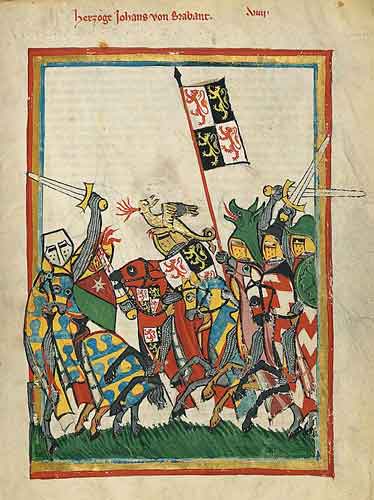
John attended a series of marriage celebrations at Bar-le-Duc in 1294 and took part in a mounted encounter often described as a joust. Pierre de Bausner suffered a lance injury to his arm. Although the wound did not appear fatal at first, John died soon afterward, likely of uncontrollable blood loss, infection, or other complications that medieval medicine could not treat. His death in a tournament was notable because he had fashioned his public image around personal courage, combat prowess, and chivalric skill.
John’s son John II succeeded to Brabant and Limburg, so the dynasty did not suffer a disputed succession. Nevertheless, the duchy lost an experienced ruler whose victory at Worringen had been a turning point in the balance of power in the Low Countries. His death also became a warning about the violence lurking behind the chivalric spectacle. The same tournaments designed to showcase noble strength could unseat a ruler in a single pass, leaving heirs to defend political gains that had taken years of war and negotiation to secure.
9. William Montagu, 1st Earl of Salisbury — 1344
Type of incident: Tournament accident, probably mounted combat
Cause of death: Fatal injuries sustained during a tournament at Windsor.
William Montagu was one of Edward III’s oldest friends and most trusted servants. He assisted the young king in unseating Roger Mortimer in 1330 and served in many military and diplomatic missions in Britain and Europe. In return, Edward granted him land, offices, and the restored earldom of Salisbury in 1337. Montagu’s career benefited a family that would stay closely linked with the English crown and the early phases of the Hundred Years’ War.
Montagu participated in a major tournament at Windsor in early 1344. Chronicler Adam Murimuth blamed his death on injuries sustained at this event, but did not detail the final moment. He might have been struck by a lance, pinned by a mounted collision, or severely injured in a fall. He outlived the tournament for a time, but died on 30 January 1344. The cause is sometimes later reported as extensive bruising, but it cannot be confirmed.
His teenage son, also named William, succeeded him as earl and to the family’s extensive estates. The younger earl would later be an important commander in Edward III’s wars, so the Montagu dynasty did not decline with his death. Nonetheless, the king had lost a seasoned adviser whose loyalty helped consolidate his power. Montagu’s death demonstrated that tournament risk affected more than young knights eager to prove themselves: an experienced soldier and leading nobleman could also be eliminated by an injury from a courtly contest.
10. John de Beaumont, Lord Beaumont — 1342
Type of incident: Tournament combat, likely melee or mounted collision
Cause of death: Fatal injuries during a tournament at Northampton.
John de Beaumont was the son of Henry de Beaumont, an older veteran soldier and competitor in the Scottish earldom of Buchan, and Alice Comyn. By marriage to Eleanor of Lancaster, Beaumont joined one of the preeminent royal families of England and became a close associate of Henry of Grosmont. He succeeded to the title of Beaumont in about 1340 and sat in the Parliament of England as a young baron. The combined lands of his family, his father’s military service, and his marriage to one of the Lancastrian house made Beaumont a figure of importance beyond his years.
Chronicler Adam Murimuth wrote that Beaumont was mortally wounded at a tournament in Northampton in 1342. Accounts written later in the century state the event was an extraordinarily violent one, which saw many nobles wounded and horses killed, but they do not name an opponent or a single mortal weapon. It is possible that he died after falling or being trampled to death, or being crushed between mounted forces in a group fight, as opposed to in a conventional joust. 14 April is usually given as his date of death, but later royal documents in his name cast some doubt on the order of events.
His death left his young son Henry as the obvious heir to the barony. The young widow Eleanor of Lancaster was to be one of the great heiresses of England, and later married another politically powerful figure, Richard FitzAlan, Earl of Arundel, another instance of elite marital alliance. The Beaumont title would remain in the peerage, but the death of an adult lord at the beginning of the Hundred Years’ War left the family without a politically useful figure, and estates, marriages, and influence often devolved to guardians and extended family.
11. William Montagu, son and heir of the 2nd Earl of Salisbury — 1382
Type of incident: Accidental strike during tournament combat
Cause of death: Reportedly killed accidentally by his father.
William Montagu was the only legitimate son and heir apparent of William Montagu, 2nd Earl of Salisbury. The earl was a veteran commander of the Hundred Years’ War and one of the original knights of the Order of the Garter. The younger William married Elizabeth FitzAlan, daughter of Richard FitzAlan, Earl of Arundel, uniting two powerful noble families. If he had lived, he would have inherited the earldom and the lands and influence that the Montagus enjoyed at royal court.
William died as a result of a tilting accident at Windsor on August 6, 1382. Later accounts claim that he was killed by his father, who accidentally struck him. However, the brief surviving descriptions of the accident do not spell out what exactly happened. A lance may have struck William in a pass, or the two riders may have collided in the lists. The basic claim – that the earl accidentally killed his son during the tournament – is widely repeated, but the specific details should probably be treated with caution.
The death of William left the Earl of Salisbury without a legitimate male heir. When the earl died in 1397, the title went to his nephew John Montagu rather than to a son. The accident therefore redirected the family succession, and also ended the anticipated father-to-son succession of the earldom. The event was also an unhappy echo of family history, since the young man’s grandfather had died of injuries linked to a tournament at Windsor in 1344.
12. John Hastings, 3rd Earl of Pembroke — 1389
Type of incident: Formal joust
Cause of death: Lance entered the lower body or groin.
John Hastings inherited the earldom of Pembroke as a young child on the death of his father in 1375. The Hastings and Mauny families also held significant landed possessions in England, Wales, and Ireland, and his marriage negotiations tied him to two other powerful families. His first wife was Elizabeth of Lancaster, a daughter of John of Gaunt, and this marriage was later annulled. His second wife was Philippa Mortimer, a member of the influential house of the earls of March.
The seventeen-year-old earl participated in a joust at Richard II’s Christmas court at Woodstock in 1389. Riding a course against a “gentilman banneret” (later sources name this opponent Sir John Des), a lance hit Hastings in the groin or lower abdomen. The blow was fatal, and he died on December 30. Unlike a number of the earlier tournament deaths, this case was an individual jousting accident, rather than a mass mounted melee.
He was childless, and with his death, the direct male line of this branch of the family died out. The earldom of Pembroke and the Barony of Mauny both became extinct, but other lands and titles fell to more distant relations. Competing claims on the Hastings inheritance dragged a number of families, including the Greys, into decades of dispute. In his case, a single broken lance had eliminated a potential line of succession and dispersed a major noble estate among rival claimants.
13. Henry II, King of France — 1559 (Although technically in the Renaissance)
Type of incident: Formal joust
Cause of death: Splinters from a shattered lance entered his eye and skull.
Henry II was King of France from 1547 and a member of the Valois dynasty. The son of Francis I and the husband of Catherine de’ Medici, he further united the French crown with one of Europe’s most storied families through his marriage. Henry continued the nation’s wars against the Habsburgs and centralized royal power at home. He concluded the decades-long conflict with the Peace of Cateau-Cambrésis in 1559, and royal marriages for his daughter Elisabeth and sister Marguerite to Philip II of Spain and Emmanuel Philibert, Duke of Savoy, respectively, were to bolster France’s place in Europe through a network of marital diplomacy.
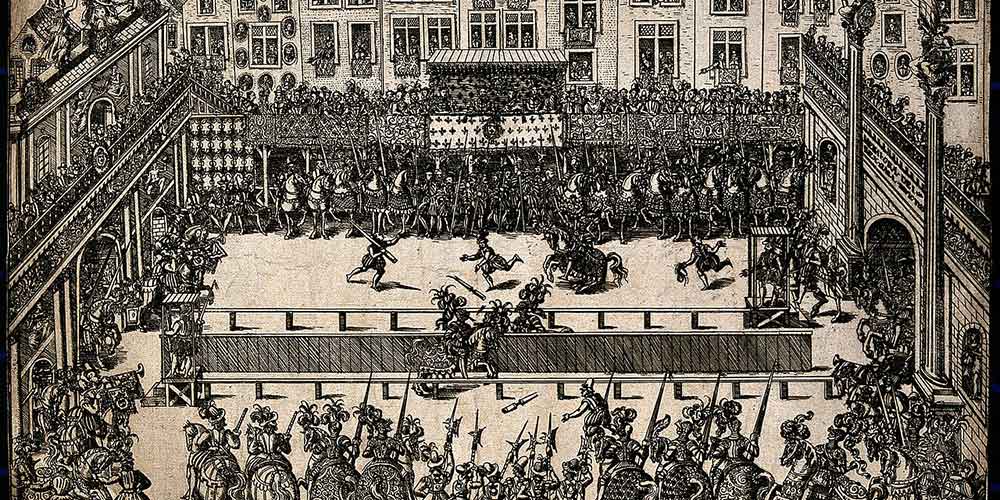
Celebrations in Paris included Henry’s entrance into a tournament commemorating both the peace and royal marriages. On June 30, he made a point of taking one final pass at Gabriel de Montgomery, captain of the Scottish Guard, during the joust. Montgomery’s lance broke on impact with the king’s helmet. Splinters from the shaft penetrated the visor and into the king’s right eye and skull. He was tended to by physicians, including Ambroise Paré, but the king experienced infection, seizures, and serious brain damage in the following days and died eleven days after the accident, on July 10, 1559.
Henry’s son, Francis II, who was only fifteen at the time, was now king. Henry’s unexpected death after a reign of twenty-two years further destabilized royal authority and opened greater opportunities for Catherine de’ Medici and the nation’s most powerful noble family, the Guise. France fell into a period of religious and political crisis from which it could not recover, resulting in the French Wars of Religion. Although Henry died in the early modern period rather than the Middle Ages, his death was Europe’s most famous jousting fatality and further tarnished the reputation of royal tournament combat.
Two Additional Incidents that Resulted in Jousting Deaths
Unnamed participants at the Little Battle of Châlons — 1273
Type of incident: Mounted melee followed by uncontrolled violence
Cause of death: Weapons, trampling, and crossbow fire.
The names and family histories of most of the combatants killed in the Little Battle of Châlons are not recorded in the surviving accounts. They were probably knights, retainers, foot soldiers, and spectators in the retinues of the noble households assembled near Chalon-sur-Saône.
A fight then replaced the tournament: according to chroniclers, the count attempted to pull Edward off his saddle after their lances had shattered, but the king remained seated, spurred his horse on, and dragged his adversary off his own mount. From then on, the mounted groups, the infantrymen, and missile troops joined the fray. Blood was spilled, horses and men fell, and some accounts say that the combatants used crossbows or bows. The contest thus became a “Little Battle”, because it was no longer sport that could be governed.
The broader significance was what the event demonstrated about tournament culture. Noble households arrived at the event with armed entourages, and a personal affront could immediately turn ritual combat into warfare. Edward survived and continued his journey to return home and be crowned king, but the fighting enhanced his reputation as a fierce and dangerous warrior. It also illustrated why rulers attempted to regulate tournaments: a courtly event could easily become a battlefield before order was restored.
Unnamed knights and squires at a German tournament — 1241
Type of incident: Large mounted melee
Cause of death: Combat wounds, falls, trampling, and collisions.
The names and family backgrounds of the men killed at Neuss are not preserved in a full list. The tournament participants included medieval knights and squires drawn from across the German nobility and from the households that armed, trained, and sustained them. For the noble families concerned, these individuals included heirs, younger sons, military retainers, and potential marriage partners. Their losses, therefore, had consequences that reached far beyond the tournament field, even though no single dynasty features preeminently in the surviving account.
The disaster took place at Neuss on the Rhine in May 1241 during a large mounted melee rather than a controlled one-on-one joust. The number of fatalities is variously stated: some later summaries say more than eighty died, while other research has suggested a figure of about sixty. Hot, dry weather and the movement of many hundreds of horses produced a choking cloud of dust. The exhaustion of many riders, combined with their mail, padded clothing, and heavy equipment, reportedly led to some deaths by suffocation as well as by violence, so that the environment became as deadly as the fighting itself.
As the victims remain largely nameless, the exact impact on individual inheritances cannot be traced. The scale of the loss, however, made the Neuss tournament one of the deadliest recorded events in medieval tournament history. It made clear that nobles could die without a lance wound and without falling beneath an opponent’s horse. Heat, dust, crowding, and heavy armor could turn martial display into mass death, and the arguments for tighter rules and safer forms of competition gained some support.
The Deadly Cost of Chivalric Glory
These jousting deaths show that tournaments were never just harmless pageantry. A broken lance, spooked horse, faulty stirrup, or out-of-control melee could disinherit an heir, divide an estate, or send a child to the throne. Nobles were at the heart of military and political life, so their deaths often impacted marriages, alliances, royal succession, and the balance of power beyond the lists.
Over the centuries, stronger barriers, special armor, blunted weapons, and more rules channeled and controlled jousting, but risk never disappeared. The death of Henry II of France in 1559 showed that even the most refined equipment could not always protect its wearer. These cases also demonstrate the central contradiction of tournament culture. Nobles entered the lists to show their courage and protect their honor. At the same time, the spectacle could unravel the families and political order that tournament culture aimed to celebrate.


