From General to Emperor: How Napoleon Seized Power—and What It Cost Europe
 Reading Time: 22 minutes
 Napoleon Bonaparte was a revolutionary general who did something unthinkable for 19th-century Europe: he crowned himself. In an era that professed to have had enough of kings, he forged a new type of monarchy built upon military conquest, political intimidation, and public spectacle. The rise of Napoleon Bonaparte was more than just the power-grab of a singularly ambitious man. It was also the result of a France in need of stability, willing to make peace with uncertainty in exchange for an illusion of order.
In this essay, I will argue that Napoleon’s rise to power combined military genius, impeccable political timing, and a modern sense of propaganda and spectacle. Every victory expanded his legend, and every crisis in Paris expanded the space for a ‘savior’ to step in. But the price was paid in Europe. Napoleon’s consolidation of France as the ‘empire of his will’ led to years of war, occupation, and resistance across the continent, with redrawn borders, mobilized societies, and a legacy that historians still cannot agree on whether it was for reform or empire.
France After the Revolution
By the end of the 1790s, France was tired of revolution and didn’t quite know what “normal” was anymore. The Directory that took over after the Terror was supposed to bring some sort of stability to the country, but often looked fragile and venal. Elections were fought, governments were reshuffled, and conspiracies were constant. French citizens had lived through frequent changes of regime, shifting laws, and acts of violence in public life. It made political future look always provisional.
Instability was not just constitutional but experiential. War had become normal, with men sent on long campaigns and borders kept on edge. At the same time the economy had faced repeated shocks. Prices fluctuated, trust in institutions was thin, and stories of corruption followed the Directory like a cloud. The state could still function, but it often looked like it was operating on a hair-trigger of nerves and improvisation rather than trust.
Fear of chaos began to act as its own political fact. Years of turbulence made many people less interested in abstractions than in security—safe streets, reliable courts, and a government that could at least pay, tax, and enforce decisions. When politics feels like constant crisis, the promise of order begins to sound like liberty. That mood did not ensure dictatorship, but it did create a market for a leader who could claim to be competent and strong.
This is where Napoleon’s particular appeal lined up with the moment. Military victories gave him credibility that politicians lacked, and they carried the aura of discipline, clarity, and results. A successful general could cast himself as above faction, even if he was not. He could claim to be both of the Revolution and also its reset. In a worn-out country, “strong man” solutions become more attractive not because people forget liberty, but because they fear collapse more than control.
The Directory’s fragility made the transition easier. Had the government been trusted, a coup would have been treason. But when leadership seems corrupt and ineffective, a takeover can be cast as a rescue. Napoleon’s ascent did not happen in a vacuum. It happened in a France primed to accept that one decisive figure might be the price of stability—and that price would soon be paid across Europe.



Napoleon’s Early Rise
The rise of Napoleon Bonaparte started with the fact that he was a newcomer. Napoleon was born on Corsica shortly after the French had taken control of the island from the Genoese, and he grew up with both a keen sense of ambition and of rank. The military schools of France had given him the opportunity to advance, but he still felt like a provincial upstart eager to prove he had a place in a society controlled by the old families and their patronage networks. Napoleon found artillery to be a good fit, as it was a branch of the military that was based more on technical ability and careful planning.
The chaos of the Revolution opened the door. The old structures were starting to break down, and rapid advancement was now possible for officers who could deliver results and were willing to show they were on the right side of the political divide. Napoleon saw himself as a man of ability in a time of politicians. He was not swept up by events so much as learning how to navigate the factions, use patrons to his own ends, and not get crushed by the political winds.
One of the first major boosts to his reputation was Toulon in 1793. This was a time when the French Republic was trying to retake a strategic port from a combination of royalist forces and foreign navies. Napoleon’s handling of the artillery and organization of the attack was important, as it helped to establish him as someone who could get the job done. Toulon was significant because it was both effective tactically and proved his political reliability. He had shown that he could win, but also that the Republic could trust him with power.

Napoleon’s reputation was further bolstered by his role in defending the revolutionary government in Paris against various uprisings. He quickly developed a reputation as someone willing to act decisively when politicians felt their positions were being challenged. This made him useful to those in power who feared instability, and usefulness is often the first step towards influence. Each successive crisis made him more visible, and each successful result made the next step up in the hierarchy easier to justify.
However, the true breakthrough in his career came with his actions in Italy. Placed in charge of an army that had been struggling against its Austrian and Spanish enemies, he moved quickly and with confidence. He preferred to strike at his enemies before they could coordinate a response, which led to his winning battles. This produced money, supplies, and prestige, and he used all of those to keep his army on his side and the public supportive.
Italy was the birthplace of the Napoleon myth, as he was able to defeat larger coalitions, redraw the map, and come across as something of a statesman in his correspondence. By the time this campaign was over, he was no longer simply an officer who was being promoted. He was a national figure with considerable momentum.
Strategy That Built His Legend
Napoleon’s battlefield reputation was built on one simple habit: he moved faster than his enemies expected. He stressed marches, forced decisions early, and sought to act before the enemy coalition could react or coordinate. Speed was not just athleticism; it was planning, based on the assumption that if he could arrive first at the key point, he could turn a broad enemy front into a series of isolated pieces that could not support one another.
He concentrated his forces at the decisive point. Rather than distributing them evenly across his front, he sought out the place where one powerful blow could shatter the enemy’s intentions. This did not necessarily mean one enormous battle, but it often did. When he saw the possibility for a decisive victory, he sought it. A major success could end a campaign in a single stroke, saving time, money, blood, and fatigue. It could also be exploited to gain a better negotiating position at the peace table. A decisive victory could produce political benefits that resonated back home.
Logistics made this possible. Napoleon’s armies were based on organization, aggressive requisition, and flexible movement that could at least partially break their dependence on slow supply wagons. He also saw artillery as a system and a force multiplier, rather than simply a weapon. Concentrated guns could shatter enemy formations, support attacks, and create shock at critical moments. The result was an operational style that did not freeze once a campaign began. Routes and plans were shifted mid-campaign without immobilizing the structure.

Operational flexibility became part of the legend. Napoleon was often willing to take short-term risks, shift direction, and exploit openings as they became available. He would use screens and feints to confuse his opponent and then commit his best forces against the enemy’s weakest point. The point of the maneuver was to control the tempo: if the enemy was reacting to your movements, they were fighting on your timetable, not theirs.
Victory became a recruiting tool in itself. Success would attract soldiers, officers, and allies who wanted to be associated with the best. It would also produce resources such as captured supplies, contributions, and political capital that could pay for the next campaign. In this way, strategy became a source of power: each battle victory built Napoleon’s army, his image, and his capacity for command. The legend was created not just by tactical success, but by the cycle that turned battlefield results into political authority.
Propaganda and the Making of a Hero
Victory was only part of the struggle; the rest was controlling the narrative at home. Napoleon’s army bulletins were designed to be read aloud, copied, and circulated; a single campaign became a continuous flood of reassurance. Losses could be minimized, setbacks could be re-characterized, and enemy strength could be exaggerated. So that even a hard-fought win would look like a stroke of genius. Facts could be fudged (if necessary), but the tone was never in doubt: France was winning, and Napoleon was leading.
Images did the rest. Paintings, medals, parades, celebrations—all these shaped him as calm, disciplined, historically ordained. Accuracy was less important than emotional clarity: if the public could see Napoleon as order itself, calm in the eye of the storm, then political power might be built on reputation. In a France exhausted by instability, a heroic image offered psychological comfort, and comfort can lead to loyalty.
Narrative control became political leverage. Each glorified campaign made it harder for rivals in Paris to dismiss Napoleon as just another general. Popular esteem also discouraged opponents from attacking him personally: criticism risked being seen as a betrayal of the nation’s victories. In short, propaganda turned military success into both shield and ladder: protecting him from political storms, but also raising him above the ordinary factional scramble.
Myth was never exactly the same as reality, of course. Napoleon was undoubtedly talented, but he also benefited from luck, enemy error, and the disunity of his opponents. Some of his most significant victories came when opposing armies failed to coordinate, or when their governments miscalculated the speed of the French advance. The hero story distilled a complicated world into a single cause: Napoleon’s will. That was also what made it believable.
The result was a modern-style political brand based on war. Napoleon did not wait for history to tell his story; he told it himself. Bulletins and imagery combined to create a public persona that could survive controversy and justify power. When he finally seized control, many French citizens already felt like they knew him well—because his story had reached them well before his politics.
The Egypt Gamble and the Political Pivot
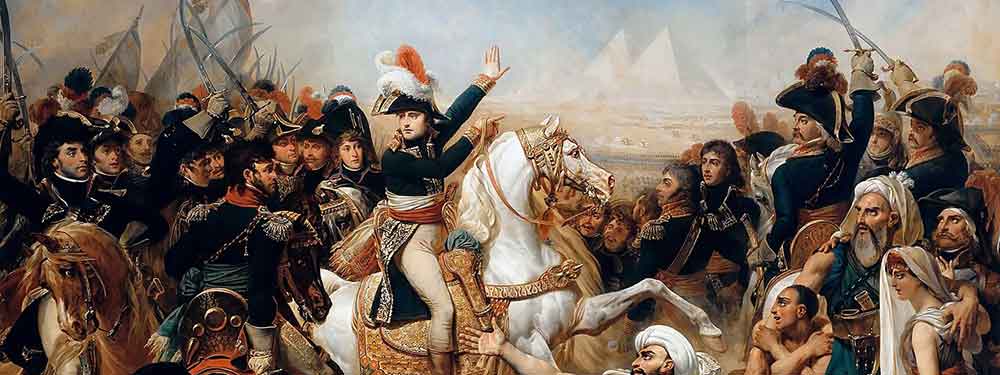
Egypt offered Napoleon an opportunity to harm Britain without confronting it directly. If France could position itself to threaten the supply lines and influence that connected Britain to trade and power in Asia, that would alter the equation in the wider war. Egypt was also a chance for glory. If the French seized a storied place where three continents met, it could cast Napoleon as more than a military man. It could cast him as a figure of world-historical consequence.
The initial gamble was bold, and the early returns were positive. Napoleon triumphed in pitched battles on land, but British control of the sea determined the campaign’s outcome and the security of the French supply line. The burden of maintaining a hold on Egypt was much greater than taking it. The strategic advantage was in doubt. But Napoleon was as much a player in the political field as the strategic field. He cast the expedition as an enterprise that combined military victory with a higher civilizational purpose, one more resounding than the daily facts on the ground.
He also deployed tightly managed news as an instrument for shaping his reputation. Bulletins and dispatches were emphatic in their messaging, trumpeting success, playing down losses, and framing difficulties as evidence of fortitude. The objective was to ensure that France heard the story of relentless forward momentum. If the campaign offered no clear strategic gain, it would offer another kind of victory: a myth of audacity, discovery, and mastery over an ancient and legendary place. It would also be politically instrumental in the future.
The decisive moment came when Napoleon decided when to leave. He returned home when the Directory was vulnerable and public confidence in civilian authority was flagging. The timing made the exit seem like destiny. He returned not as a commander of a failed mission but as a famous commander with the glamour of distant conquest and the aura of someone who acted while others bickered.
Back in Paris, Egypt was a means to an end, not the end itself. The campaign served to help Napoleon rebrand from soldier to a savior-like figure who could plausibly claim to have seen the world and to whom the world of French politics appeared a target of rescue. The irony was that Egypt’s strategic value was questionable, but its political value was enormous. It gave Napoleon the story of a great man—and he used that story to rationalize the next phase: taking power in France.

The Coup of 18 Brumaire
The Directory was unpopular, unstable, and widely viewed as corrupt by 1799. France was still at war, the economy was weak, and factions in Paris feared both royalist restoration and a renewal of popular radical violence. These conditions created an ideal environment for a coup disguised as “salvation.” Napoleon’s recent fame and prestige made him the ideal public figure: he presented an image of authority in uniform, and he had the influence to threaten rivals who had little public support.
Behind the scenes, the coup was a network of politicians who wanted to replace the Directory but did not want to provoke another Terror. Emmanuel-Joseph Sieyès, one of the most important thinkers of the era, was at the heart of designing a new regime and needed a powerful general to make it credible. Napoleon provided his brother Lucien Bonaparte (who had ties to the legislature) and a circle of ambitious officers willing to do the work. It was a mixture of ambition and anxiety: civilians created the legal veneer and the army provided the force.
In practice, the coup’s mechanics involved the manipulation of procedure and control of space. The legislature was moved outside of Paris under a cover story of security, while troops loyal to Napoleon “guarded” the proceedings. With lawmakers physically isolated and surrounded, debate was tenuous. Napoleon’s presence on the scene transformed political disagreement into a test of bravery. Confusion, shouting, and intimidation took care of the rest. The point was not to win an argument but to make normal politics impossible.
When resistance was encountered, the coup’s managers reverted to a familiar tactic: declare an emergency and then present the new arrangement as temporary and necessary. Lucien Bonaparte helped to frame opponents as a threat to the nation, giving troops a justification to clear the chambers. The coup worked because it replaced deliberation with momentum. In a crisis, people are often satisfied with the first decision, especially when it is accompanied by bayonets.
The immediate result was the Consulate. The Directory was abolished, and Napoleon emerged as First Consul, the primary executive in a new system that promised “order” and stability. The change was sold as a correction, not a revolution: France would maintain the language of the Revolution but end its chaos. In reality, 18 Brumaire was the turning point where republican instability became one-man rule in slow motion: a political seizure wrapped in legality, powered by the army, and sold as national salvation.
From First Consul to Emperor
The natural next step in consolidating power was to make his regime feel permanent. As First Consul, Napoleon acted quickly, centralizing the administration, reorganizing the police, and streamlining the government so that all officials were hierarchically accountable upward rather than outward. The careers of rivals were quietly ended by a combination of legal reforms, political pressure, and manipulated elections, leaving little room for organized dissent. Stability returned, but a stability dependent upon one man’s authority and will rather than political competition.

Legitimacy would also be found through plebiscites. The Consulate used public ballots to borrow the language of popular consent. These votes were not free elections by modern standards, but Napoleon at least had the popular mandate to claim that his authority came from the nation rather than the court. In France, fatigued from years of instability, the appearance of consent was a significant factor. Plebiscites made political change appear lawful and collective, even when the decision had already been made at the top.
Step by step, his position was transformed from consul to ruler for life. Each successive expansion of power was presented as necessary to maintain order and ensure continuity. The logic was simple: if France had at last achieved stability, why risk returning to chaos? That argument had a powerful hold on a population that remembered both the Reign of Terror and the Directory’s weakness. Napoleon presented himself as the necessary bulwark against both royalist restoration and radical reawakening.
The crowning moment was the transformation of the Republic’s leading general into an emperor in 1804. This was significant because it reintroduced monarchy in a post-revolutionary state that had presented itself as anti-royalist. Yet, it was not a simple return to the old order. Napoleon’s empire was designed to have the trappings of modernity—grounded in the rule of law, an effective bureaucracy, and career advancement based on merit—while still firmly centralizing power at the top.
In practical terms, an empire meant permanence and a dynasty. A crown implied succession, continuity, and a political order that could outlive the founder. In France, it offered stability; for Europe, it announced ambition without limits. The First Consul had taken control in order to “save” the Revolution. The Emperor would use that control to remake the continent—and the costs of that ambition would be paid for in years of war.
Governing Power
Napoleon ruled by a process of state centralization. He reinforced the bureaucracy, appointed subservient prefects to manage the departments and made local government more directly responsible to Paris. The result was a better-ordered and more consistent system of governance. The trade-off was less local autonomy. The police service was also expanded to help keep administration in line and suppress dissent. Measures of surveillance and censorship were implemented to root out conspiracy and prevent popular disturbance. The balance he struck was a repressive one: the French would be stable and orderly, if necessary by force.
Legal reform was one of his more lasting instruments. The Napoleonic Code streamlined and simplified many laws and rules. This replaced a confusing patchwork of regional customs with more coherent regulations about property, contracts, and civil life. It also enshrined legal equality for men (at least on paper) and reinforced property rights, which found favor among those who feared a resurgence of aristocratic power. But the reforms also emphasized patriarchal authority within the family, demonstrating how the process of “modernization” could open new rights in one domain while curtailing them in another.
Napoleon also struck a church-state settlement in an effort to ease social tensions. After years of revolutionary turmoil with the Catholic Church, he brokered a pragmatic peace to restore religious life without compromising state control. The settlement ended much of the popular unrest, while allowing clergy and institutions to continue operating under closer government supervision. It was not a restoration of the old order. It was a bargain that sought to stabilize the new one.
Finance and war were always in the background. Napoleon needed an economy that would feed his armies, produce weapons and supplies, and pay state salaries. The emperor balanced taxation, administrative efficiency, and resources extracted from occupied territories to fuel continual military operations. Victory financed the machine, and the machine required more victory. That drive is part of the price of the story: governance in France was constructed to support war abroad, and the pressures of perpetual conflict left their mark on nearly every aspect of the Napoleonic state.

What It Cost Europe
Napoleon’s takeover consolidated Europe into a state of perpetual war. Battles were no longer rare, brief affairs between modest professional armies. Campaigns stretched on, powered by mass armies as the state grew conscription, taxation, and administration to keep them in the field. War became permanent, structuring budgets, political life, and even day-to-day experiences from Madrid to Moscow. Even when Napoleon held up the prospect of “peace through victory”, victory brought only more people to add to the map of those who would need to be defeated next.
Conquest brought occupation. Defeated states were reorganized, forced into alliances, or placed under rulers beholden to Paris. Tribute payments, forced contributions, and requisitions flowed resources into Napoleon’s war machine. Borders shifted back and forth as kingdoms were dissolved, merged, or redrawn to reward allies or punish enemies. For many Europeans, sovereignty began to seem a temporary condition based more on the next campaign’s results than on the stability of law or tradition.
Civilian suffering was built into the system. Conscription brought sons and workers away from farms and workshops, depriving communities of labor and families of breadwinners. Marching armies took up supplies, demanded lodging, and disrupted the countryside and towns they passed through. Economic life bent to the war machine’s needs, while blockades and trade policies pinched both merchants and consumers. Even if a region wasn’t a battlefield, it often paid for the fighting through taxes, shortages, and forced “support” of occupying troops.
Pressure also spurred nationalism and resistance. Napoleon promised to spread modern administration and the end of old privilege, but many Europeans experienced French rule as foreign domination. Resistance movements were organized in occupied areas, and local identities hardened in the face of conquest. Spain became a harbinger: guerrilla war there showed that an empire could win battles and yet bleed itself white. Across Europe, people were learning to talk about “nation” not just as a matter of culture but as a political claim worth fighting for.
By the time Napoleon fell, Europe was changed and scarred. Some of the reforms would stick around, but so would memories of occupation, mass death, and upheaval. The final irony is that Napoleon’s attempt to bring order created a new kind of instability, one that drew entire societies into the experience of war, and taught Europe that power could be reorganized very quickly, very violently, and very repeatedly.
Turning Points That Undid Him
Spain was the first nation to bleed Napoleon white. The effort to control the peninsula devolved into a savage guerrilla war that turned an occupation into an exercise in attrition. The French could win battles and seize cities, yet the countryside remained hostile. Supply lines were constantly harassed, garrisons pinned down, and French prestige eroded as resistance proved both stubborn and contagious. Spain demonstrated to the rest of Europe that Napoleon could be resisted, and it forced him to divert time and troops into a war that never delivered a decisive payoff.
The Continental System, for its part, created more insidious damage. Designed as a stranglehold against Britain, the blockade of trade required an entire continent to subjugate its economic habits to French demands. The policy did not work as advertised, but rather created smuggling, resentment, and selective pain. Merchants, port cities, and even allied states felt the pinch, and enforcement became a source of constant tension between the French and their supposed partners. The policy also forced Napoleon to open new fronts as he tried to compel Europe to comply with the blockade, rather than to shrink the circle of his enemies.
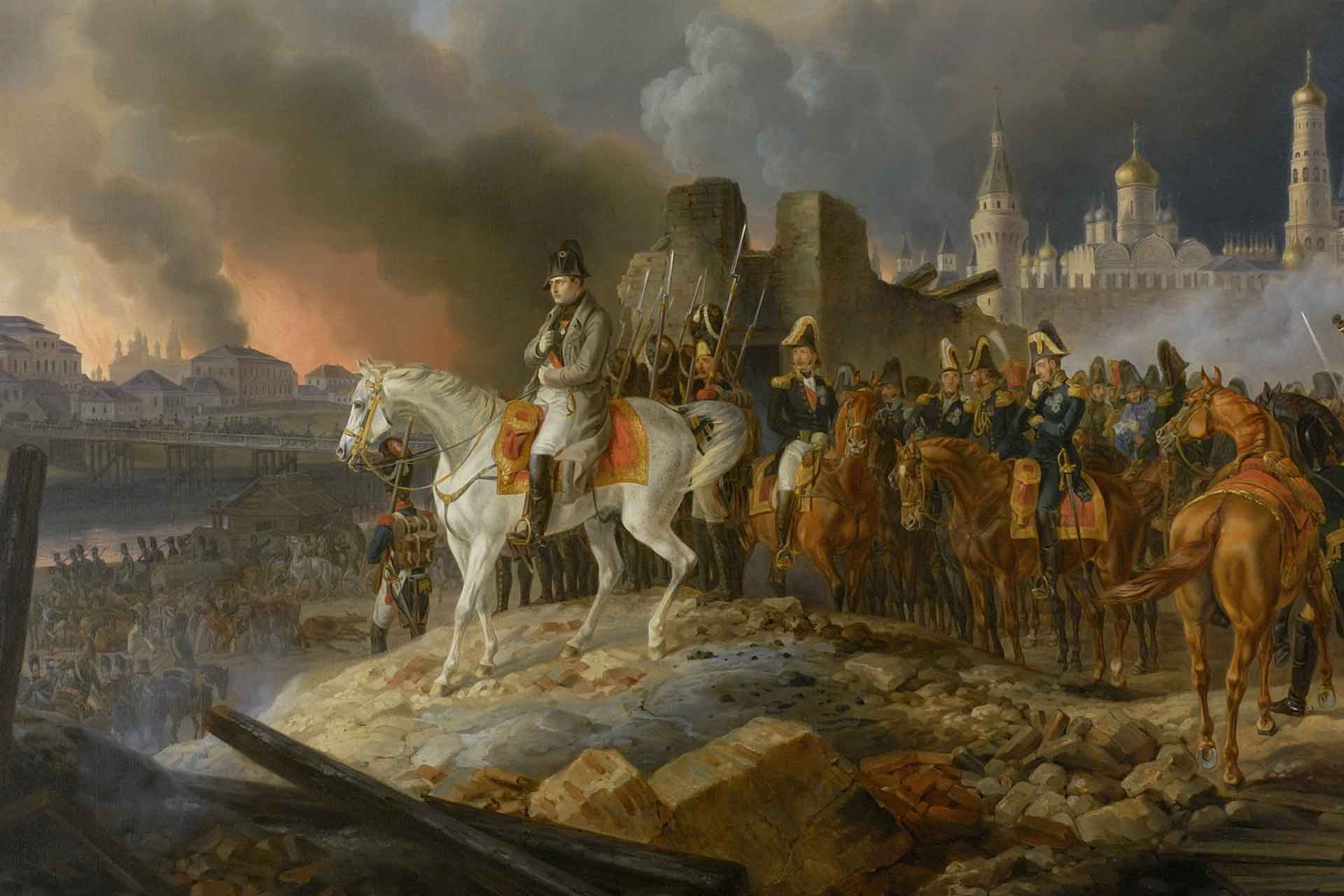
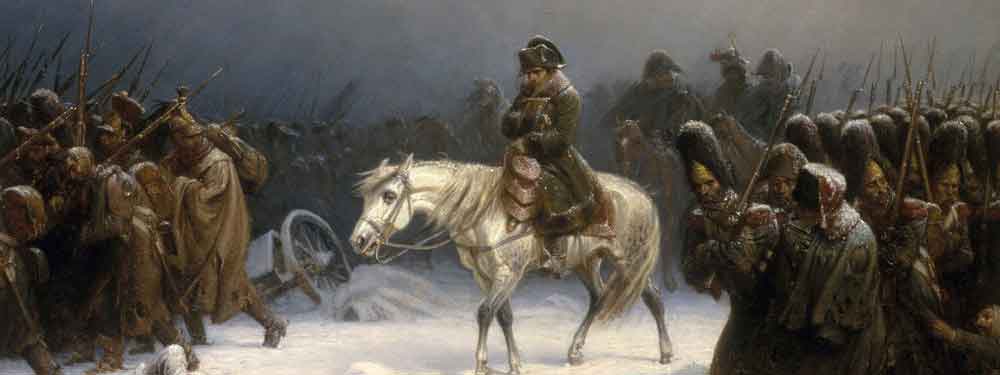
Russia in 1812 was the decisive turning point that ended the myth of French inevitability. Napoleon’s invasion was designed to both force compliance and demonstrate French dominance. The refusal of the enemy to meet the French army in decisive battle on its own terms, combined with distance, logistical overreach, and local endurance, turned the campaign into a catastrophe. The retreat from Moscow destroyed the Grand Army’s center of gravity and shattered the aura that Napoleon could not be defeated. Even the French feared that the Emperor could be weakened, which in turn weakened him politically as much as militarily.
After 1812, the coalition’s war effort grew in strength as confidence returned to the other side. States that once were content with a cautious peace were now better at coordinating their war effort, pooling manpower and resources, and holding out against separate deals. Napoleon could still win battles and campaigns, but he could not easily replace the trained soldiers, horses, and officers lost in the earlier disasters. The war shifted from a campaign of shock to a war of sustained pressure.
The road to Waterloo was paved by his shrinking options. Napoleon’s return to power could still generate a rally-around-the-flag effect, but the rulers of Europe had been taught that compromise would only postpone, not end, war. Waterloo was decisive not because it was Napoleon’s first defeat, but because it closed the last political door. After years of war, occupation, and resistance, the French Emperor was no longer seen as a stabilizing force in Europe. He was seen instead as the engine of instability, and the coalition was determined to stop that engine for good.
Legacy and Debate
For better or for worse, Napoleon redefined modern governance. His administrative reforms, codification of laws, and institutional developments left a durable foundation for the modern state, earning admiration from historians for his role in consolidating parts of it. But he was also a centralizer who concentrated power, limited political dissent, and treated elections as tools of the state rather than a check on it. His ability to bring stability was intertwined with his restriction of the political sphere. This paradox—that the same hand can both reform and repress—raises a question that echoes down the centuries: How much centralization and control is “reform,” and when does consolidation give way to empire in domestic guise?
That question is sharpened by his approach to military innovation. The “Napoleonic model” of warfare is one of speed, the decisive concentration of force, flexible operations by independent corps, and the pursuit of advantage. Napoleon’s campaigns altered how European armies waged war: how they thought about campaigns, mobilized manpower, and approached morale in combat. Even his enemies eventually adapted to him, forcing changes in their own organizations and coalition strategies. In that sense, Napoleon’s battlefield legacy is not just the victories he chalked up but the modernization forced upon all his rivals.
Napoleon is remembered and admired because he often seemed to be merit in motion. He came up by ability in an age when birth had often been the decisive credential, and he styled himself as the guardian of certain revolutionary gains, like careers open to talent. His legal and administrative reforms had an enduring appeal to those who craved a more predictable state after years of upheaval. For some, he is the archetype of competence and the model of a leader who could make the state work.
Napoleon is also hated and reviled because his competence was linked to conquest. He presided over demands for sacrifice on a continental scale, imposed dependent regimes, extracted tribute, and started a war of such dimensions that it could consume entire societies for years on end. The language of liberty from the Revolution often had to travel in uneasy alliance with occupation and conscription. That is the great contradiction at the heart of the Napoleonic myth: the coupling of liberation and empire. This makes it difficult for him to honor unreservedly.
Napoleon is ultimately a subject of debate because he exemplifies a modern dilemma. Strong institutions can be built with strong hands, but strong hands often have difficulty letting go. The Napoleonic story is not just the tale of one man’s rise and fall; it is about the question of whether stability bought with concentrated power is worth the cost and whether a reformer who places the crown on his own head can ever be extricated from the wars the crown makes.
Our Conclusion on Napoleon’s Rise
Napoleon took power through a combination of war and politics, translating battlefield fame into the claim that only he could save the situation. The victories that made him indispensable also made him confident enough to reconstruct France’s institutions around himself. He did not seize power by accident. He leveraged crisis, propaganda, and legality to make a coup look like a rescue, then leveraged reform and control to make the rescue look like permanence. In the short term, many French citizens received what they had most wanted after years of upheaval: stability, a predictable government, and a leader who delivered results.
The long-term lesson is that stability imposed by force begets new, larger-scale instability. Napoleon’s centralized order required perpetual war, and perpetual war in turn required ever-deeper mobilization, ever harsher extraction, and ever wider occupation. What began as a promise to end chaos metastasized into a continental struggle that redrew borders and inflamed resistance. Napoleon demonstrated that a single man can impose order with breathtaking speed, but he also demonstrated how costly that order becomes when it is maintained by conquest.